The Subculture of Vinyl Record Fans

After I wrote Back to Vinyl I started buying used LPs again and playing them on a hand-me-down JVC direct drive turntable.  I quickly realized there’s a psychology to loving vinyl records.  I can identify several common behaviors that vinyl record collectors share, and I’m slowly discovering a subculture to vinyl record fans and collectors.  It’s not a big subculture, the majority of its members are older and they’re dying off, but a new generation of record fans are emerging as sales of vinyl records increase, and young people discover the joy of “owning” music they can hold in their hands.  Some members of this subculture have collected huge archives of music history, while others just like records because they are fun way to play music.  And sure, some fans are just stubbornly refusing to accept the new technology they consider cold and impersonal.

Overall though, record fans remind me of other dying pop culture fandoms I’ve belong to, like pulp magazine collectors, silent film buffs, old time radio enthusiasts, pre-code Hollywood movie fans, who become guardians of popular arts of the past.  Much of the music vinyl fans preserve has been converted to newer digital formats, but far from all.   It’s a shame copyright laws are so restrictive because these people hold thousands and thousands of forgotten treasures that will be lost.

I’m not trying to proselytize for vinyl, or even convince my readers to start playing records again, I just want to describe the subculture a tiny bit, it’s quite fascinating.  But if you do have some old records, you might get them out and try playing them again.  And maybe some of these behaviors are ones that will appeal to you.

Shopping

Record stores have all but disappeared. Even music sections in stores like Target and Walmart are shrinking.  Back in 1965, when I was 13, I developed a passion for haunting record stores, and I think the older record shoppers today have stuck with vinyl so they can maintain this pleasure.  Shopping for digital music just isn’t the same experience.  Devoting a Saturday afternoon to record shopping appeals to a certain kind of person, similar to people who go antiquing every weekend or those who routinely shop at garage sales and flea markets.  Most vinyl aficionados love finding used 78/LP/45 bargains and often hope to stumble upon a rarity at a babble-to-your-friends low price.

Internet shopping, subscription music and digital downloads are extremely convenient, but that kind of music buying isn’t a fun activity like shopping for records.

Collecting

The instinct to collect is animalistic, like a squirrel hoarding nuts, and some collectors amass gigantic collections that represent library or museum level archives of musical history.  Like a baseball fanatic with their stats, record collectors know thousands, if not millions of datum about songs, performers and recordings.   They become music historians.  Just read “The King of 78s – Joe Bussard” and admire the photos of Joe’s collection that include over 50,000 records.
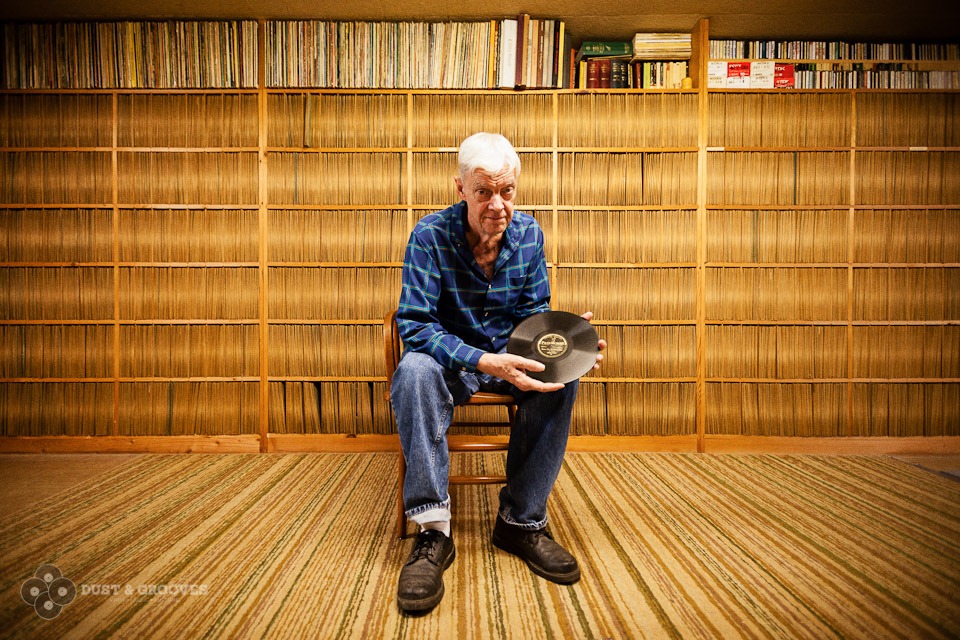
Joe Bussard, Frederick, MA.. Born July 11, 1936, has what believed to be the largest 78 RPM record collection in the world.Dust & Grooves is a photo and interview project documenting vinyl collectors in their most intimate environment: their record room.
www.dustandgrooves.com (C) All Rights Reserved to Eilon Paz & Dust & Grooves

[Photo used by permission. Photo by Eilon Paz for Dust & Grooves]

There are many kinds of record collectors.  Some just seek everything recorded by a favorite band, or collect one kind of music, like Motown or soundtracks.  Some people might be like me, just a nostalgic old fart looking to re-find all his old favorite albums that he lost contact with over the decades.

Like shopping, collecting triggers our hunting instinct.  It feels good to have an elusive album to pursue and find.

Sound Quality

The most fanatical of record collectors are the audiophiles that claim vinyl is the best medium to listen to recorded music.  I don’t think this is true, but I don’t want to start any flame wars right now.  I’ll ignite this battle over high fidelity in another essay.  However, I do think vinyl has a quality to its sound that appeals to certain people.  They often describe this quality as warmth.  Highly skilled audiophiles swear they can hear details in vinyl records they don’t hear on CDs or from listening to .mp3 files.  For example, read Ariel Bitran observations about Rush’s bass player in “Enter the Void of Cygnus X-1: A Vinyl vs. CD Comparison (Kinda)” or Beatles fans discussing the latest vinyl releases of the Fab Four in “The Ultimate Beatles Sound Test.”

I aspire to have listening skills like these audiophiles, but I don’t have them now.  When I read Bitran I admire his ability to discern details in musical performances.  I have zero musical skills on my own, but I passionately love hearing music.  Mostly I passively consume music as a way to energize my brain, or stimulate various emotions and feelings.  Generally, I digest music whole, letting it make me high.  But sometimes, when I have the time to concentrate and study, I like to observe all its parts, admiring the components of a song like studying how a clock works by examining the gears and springs.  The parts to study take many forms – the sound of the instruments, composition, lyrics, melody, the performance of the musicians, the way the song was recorded, and so on.  People who love vinyl often have these skills.

Gadgeteers

At first I was going to include playback equipment in with sound quality, but the love of gadgets is a behavior by itself.  Most people are happy to listen to music on an iPhone or car stereo and never give the equipment two thoughts, or even one.  Although there are high end CD players, most people who play music on CDs consider all players equal.  Audiophiles who love vinyl often become obsessed with the equipment records are played on.  Extremists will spend the price of a house for their stereo gear, and even hipsters with little money, will hunt ancient audiophile level turntables, amps, pre-amps, speakers, etc. at bargain prices.

I’m afraid I’ve got the gene for gadgets myself.  The old JVC turntable I have is plenty good to play old records, but I’ve already talked my wife into buying me an Audio-Technica AT-LP120 turntable for my birthday.  I hope it won’t be my gateway drug to expensive audiophile gear.  I think I’ve got my friend Janis hooked and will give her the JVC.

Hipsterism

Vinyl has become hip.  Modern bands often sell vinyl to their most fervent fans.  Vinyl has become trendy among young folk who have caught the bug, which is strange because they have chosen to embrace a technology outdated before they were born.  This is sort of like guys my age who find old cars from the 1930s and rebuild them.  And on the Internet I’ve read many blogs by young women who have taken to vinyl after stealing their parents albums and equipment, admiring it’s retro style.  Albums and a turntable have a cachet like a black dress and pearls, where an iPhone docked to a Bose sound station is more like jeans and a t-shirt.

The popular culture of digital technology is so huge and pervasive, that running across a person who still plays records makes them enchantingly eccentric.

Subculture

I believe lovers of vinyl make up a subculture on their own, like comic book fans, although record collectors are a very small subculture.   You’d think we’d see Leonard or Sheldon play LPs on The Big Bang Theory, but they haven’t so far as I know.   Occasionally you’ll see this subculture in movies, like Ghost World and High Fidelity.   Although vinyl is making a comeback, I think it’s flying under the pop culture radar, and expect it to actually die out as its older fans die off.  I don’t know if hipsters can keep the vinyl technology alive, although many artists are trying to get their fans to buy vinyl.  I wonder if returning to the days of LPs, EPs and 45s would do away with song piracy?

A great web site that explores this subculture far deeper is Dust & Grooves, run by Eilon Paz, and to get some idea of the diversity of vinyl collectors and collections look at their Archive page.

Eilon Paz chronicles the world of vinyl lovers in words and photos.  Paz is currently working on a book about vinyl collectors, but it would be fantastic if that could evolve into a Ken Burns style documentary.  To get some idea what such a film might be like watch:

My Return to Record Shopping

I thought I’d illustrate these behaviors by how they are already coming out in me just a week after deciding to try vinyl records.

After writing the essay Back to Vinyl I went out and bought four used LPs at Spin Street.

I was not feeling good that first shopping trip – I have a bad back, and it was bothering me more than usual last weekend, but I wanted to shop for records like I used to.  I was able to force myself to stand for about 30 minutes to go through Spin Street’s collection of used LPs and pick out four albums.  They were having a sale, buy three get a fourth free.

The fun of shopping for records again brought back that old pleasure of flipping through  bins of albums hoping to discover something great.  I stopped LP shopping back in the 1980s when Peaches went out of business and CDs took over.  I still bought 2-4 CDs a week, but shopping for them was never as fun as looking at the huge album covers of LPs.  The little 5 inch CD covers never had the impact of the 12 inch rock art vistas of LPs.

Standing is hard for me, but the endorphins produced by album hunting made my back feel better – at least until I got home and they wore off.

The four albums I found in order of discovery are:

  • Peter Gunn by Henry Mancini (Crown Records CST 138)
  • Wendy Waldman by Wendy Waldman (Warner Brothers BS 2859)
  • Heart Like a Wheel by Linda Ronstadt (Capitol SW 11358)
  • Child is Father to the Man by Blood Sweat & Tears (Columbia PC 9619)

I was very excited to find Child is Father to the Man by Blood Sweat & Tears because I have been thinking about this album for years.  I bought it in 1968 because I liked Al Kooper, and it was his current project at the time.   Kooper was always doing something new and exciting back then.  However, I lost access to this album when I sold all my albums to finance leaving home after my first year a Dade Jr. Community College in 1970.

I played side one first, Sunday night, and was surprised that I only remembered one song, “I Love You More Than You’ll Ever Know,” the second cut.  I guess forty years is an effective brain erasing tool – but why did I even remember that one song?  I think I have more memories about the album history than memories of the music on it.

Shopping and finding this album was one kind of excitement, but listening was a different kind of experience.  It triggered memories I hadn’t thought about in 44 years.  How is that possible?  How is such data stored in the chemical structure of the brain?  Of course, these memories were fragmentary and faulty.  I had to consult Wikipedia to validate some, and recover other information.

Kooper was the founding band leader for Blood Sweat & Tears for this first album, but was replaced by the singer David Clayton-Thomas, which most people remember as the vocal leader of the band after the group got famous with the second album.  Kooper then went on to do Super Session and The Live Adventures of Mike Bloomfield and Al Kooper, that also came out in 1968.  Al Kooper was legendary for playing organ on Bob Dylan’s “Like a Rolling Stone” in 1965, and according to Wikipedia played on hundreds of other albums.  Child is Father to the Man was his big project to combine jazz and rock, along with elements of folk and just goofy experimental stuff.  Think rock music with horns.

child is father to the man

When I found the album in Spin Street’s bin I had a rush of joy – it’s great to find something you’ve been looking for like this, and I quickly checked the condition.  It wasn’t great, but I thought it was worth taking a chance on.  I was surprised how well it sounded.  I have a very old JVC turntable that was given to me, and I was playing an album that could be 40+ years old.   It all still worked.  I loved the spatial arrangement of the musicians that let me hear everything distinctly.  There was some pops and crackles but they were only noticeable between cuts or when the music was very quiet, and that didn’t annoy me at all.

The Blood Sweat & Tears album sounded warm, like vinyl addicts always tout, but it also seemed quieter.  I’m used to modern music that is highly compressed that gives an intense sense of loudness and punch.

Next up was Peter Gunn soundtrack by Henry Mancini.  I own this on CD, so it’s fresher in my mind.  Susan, my wife, spotted this first at Spin Street and the cover and sleeve was in such bad shape that I almost rejected it immediately.  I then examined the heavy, translucent red vinyl and even though it had some minor damaged, the disc looked pretty good.  I’m not a professional classifier, but I’d call it VG.  It looks like this photo I scrounged from the web, except that the cover is so bad that the front and back barely stick together.

peter gunn

When I put the red disc on the turntable and started playing it I was shocked by how great it sounded.  I was impressed.  I loved the sound much more than I ever loved playing my CD version.  I thought, wow, those vinyl fanatics are right.  I wanted to compare it to the CD, but I couldn’t find it.  Hey, I’m bad about alphabetizing and re-shelving.  Besides it was a night for LPs.

The opening cut, the classic “Peter Gunn” theme, was like visiting an old friend, and as each succeeding cut played and I remembered the tune, there was a new dimension to the sound and how heard it.  For years I’ve been adapting to a new way of listening to music.  Either I’m listening to playlists with absolute favorite songs that I play over and over, or I’m impatiently clicking through new albums hoping to find another hit to add to my playlists.  Listening to a LP is very different.  You put the record on, sit down, relax and go with the flow.  If there’s a cut you don’t like you still listen to it.  I found myself relaxing into the pace of listening to album sides that night.

Listening to albums requires being open and accepting.  You experience each cut as it comes on – it’s more like being at a concert.  It’s not about hearing what you want, but listening to what you get.   Album collectors often listen to far more diverse types of music than casual iTunes listeners.

Peter Gunn by Henry Mancini is the soundtrack for the television show Peter Gunn which originally aired from 1958-1961.  I barely remember the show, but the theme song pops up pop culture time and again.  Listen to it and see if you don’t think it’s familiar.

Next up was Heart Like A Wheel by Linda Ronstadt from 1974, an album I’ve never owned.  I bought this album because I wanted to hear something new from the old days.  I would have bought this album back then if I had had more money.  I often see while flipping through bins of musty old albums today, ones I remember flipping past forty years ago and remember wishing that I could have bought them back then.  Like the road not taken, it was the album not bought.  I’m going back and taking the other road to see where it leads.  You can do that with music, books, movies and television shows, you just can’t do it with life.

heart like a wheel

Reading the liners notes to Heart Like A Wheel I noticed musicians and singers that I remember being on albums I did buy at the time.  And strangely enough, one of the background singers was Wendy Waldman, because the fourth album I bought last Sunday night was Wendy Waldman’s first album.  I’ve been hoping to find her LP Which Way to Main Street, which has been popping up in my memories lately.  The album I found at Spin Street was her self-titled debut album, Wendy Waldman.  Of the three LPs I’ve owned by Waldman, all were labeled PROMOTIONAL COPY – Not for Sale.  It’s a shame all the promotion didn’t make her more famous.

Wikipedia doesn’t even have an entry for Wendy Waldman, and I don’t know why.  But it did redirect me to a group I hadn’t known about, Bryndle, where Waldman was part of the lineup with Karla Bonoff, Andrew Gold and Kenny Edwards.  And guess what?   Bonoff, Gold and Edwards also played and sang on Heart Like a Wheel, as well as the Wendy Waldman album I bought.
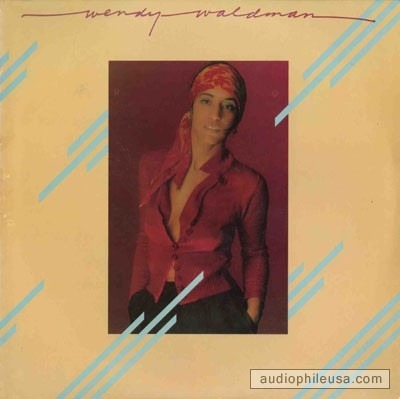
wendy waldman

This is why you have to buy used vinyl – many albums never made it to CD or iTunes.   I recently discovered that two of Waldman’s albums, including Which Way to Main Street have been reprinted, and I think on vinyl, but the site isn’t clear about that.  I’ll have to check it out!

As you can see, with one decision to try vinyl records again, I’ve fallen down a rabbit hole like Alice.  There’s no telling where this will lead.  I bought these four albums last Sunday, and then Monday after work I bought four more, and yesterday, Saturday, I bought seven more at Shangri-La Records.

  • Willis Alan Ramsey by Willis Alan Ramsey (Shelter SR-2124)
  • Barbra Streisand’s Greatest Hits by Barbra Streisand (Columbia 9968) – sealed no less
  • Mirage by Fleetwood Mac (Warner Bros. WB K 56952)
  • Judith by Judy Collins (Electra 7E-1032)
  • The Tin Man Was A Dreamer by Nicky Hopkins (Columbia KC 32074)
  • A Period of Transition by Van Morrison (Warner Bros. BS 2987)
  • Breakfast in America by Supertramp (A&M SP 3708)
  • Carolyne Mas by Carolyne Mas (Mercury SRM 1-3783)
  • Thirty Seconds Over Winterland by Jefferson Airplane (Grunt BXL 1-0147)
  • Howlin Wind by Graham Parker (Mercury SRM 1-1094)
  • It’s Like You Never Left by Dave Mason (Columbia KC 31721)

So in little over one week my record collection expanded to 16 albums.  And looking at the list it appears I’m stuck in the 1970s.  I was thrilled to find the Nicky Hopkins album.  I love his piano for Quicksilver Messenger Service and The Rolling Stones, and on Jeff Beck’s first album Truth.  Hopkins was an epic session piano player.  He played for The Beatles as a group and on many of their solo albums.  The Tin Man was a Dreamer has a real treat, “Edward” a version “Edward, The Mad Shirt Grinder” that I’ve always loved off of Quicksilver Messenger Service’s Shady Grove.

Videos About Record Collecting

Part I – Back to Vinyl

Part III – Audiophiles and the Quest for High Fidelity

JWH – 11/17/12

Why Do I Read Science Fiction?

My friend Laurie called me today to ask, “Why do you read science fiction?”  Laurie is a professor of reading education at the university where I work and she’s writing an article on book clubs and reading.  She told me about an essay she read on why women read romance novels and she thought about me and my love of science fiction.

american-science-fiction2

That’s a good question I told her.  Why do any of us do the things we do?  If you’re a college football fanatic can you explain why?  If you’re a CPA, can you tell us about the path you took to get into that profession?

I am a lifelong science fiction fan.  I don’t like mysteries.  I don’t like thrillers.  I don’t like romance novels.  I love movie westerns but seldom read western novels.  I like science fiction movies, but they aren’t my favorite movies.  I think literary novels are the most rewarding books to read, yet I still spend most of my reading time consuming science fiction novels.  Why?

Discovering the Science Fiction Genre

I assume, as a professor that specializes in reading, Laurie wants to know how to get kids and adults involved with reading.  Maybe she assumes if she knew why bookworms want to read she could help non-readers find the books they will like.  There is some truth to this.  When I was in the third grade my teacher and parents sent me to summer school because they claimed I couldn’t read well.  My problem wasn’t reading, but what to read.

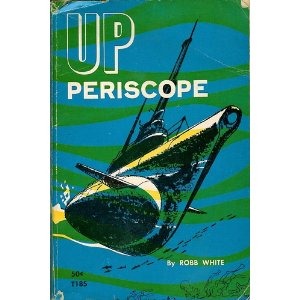
I remember going to my first summer school reading class.  It was cramped wedge shaped room, that was really a storage closet for books.  There were few places to sit.  The teacher told me to pick out a book from a twirling rack of paperbacks.  I took my time and carefully selected Up Periscope that, if I remember right, was a Scholastic paperback for kids, meaning it was probably abridged.  I started reading it.  I got into it.  As far as I can remember, the summer school teacher never gave me any lessons in reading – he just provided fun books to read.  Hell, I knew how to read.  Up till then I didn’t have anything worth reading.

up-periscope

So, starting in the fourth grade I began prowling the school library at Lake Forest Elementary in Hollywood, Florida for interesting books.  Then we moved to Homestead Air Force Base in 1961, while I was in middle of 5th grade, and my dad took me to the base library.  That’s where I discovered proto science fiction books.  During these years Alan Shepard and John Glenn made their historic flights into space.

At this time I didn’t know there was a category of books called science fiction.  As a kid growing up with television in the 1950s I saw a lot of science fiction movies and television shows.  I’d watch The Wizard of Oz every year on television.  I watched Topper and other fantasy and SF shows.  They weren’t a special genre yet.  I also loved cartoons, westerns, sitcoms and everything on TV pretty much.

patchwork girl of oz

The first books I remember discovering at the Air Force Base Library were the Oz books, and one of my favorites was The Patchwork Girl of Oz.  I read all the Baum titles, but didn’t like the Thompson books that were written after Baum died.  I then switched to Danny Dunn, Tom Swift, Tom Swift, Jr. and Hardy Boys books.  I still didn’t know there was a genre called science fiction.  My reading was unguided, but it was shaped by the books in the library.  I guess access to books is a big factor.

dannydunn

In the sixth grade, my teacher Mrs. Saunders read us books after lunch, and she got me hooked on A Wrinkle in Time by Madeleine L’Engle.  I think that got me to realize that there were far out books that weren’t part of a children’s book series.  I remember going up and down the shelves at school looking for books that had space ships on the cover.  There weren’t that many.  I found Jules Verne and H. G. Wells this way though, but still didn’t realize there was a category of books called science fiction.

I suppose if Laurie knew exactly what book to give a potential reader she could capture them for life.  But how does she know what book?  Maybe that’s what her article will be about.

a-wrinkle-in-time

When I wasn’t reading I was watching TV shows like The Twilight Zone.  It was wonderful.  Beginning in the fall of 1963, when I was starting the 7th grade, and still only 12, The Outer Limits came on.  I was addicted to it right from the start.  We moved temporarily back to Hollywood, Florida, right around the time JFK was killed, and then to rural South Carolina, where we lived out in the country and I had a 35 mile school bus trip twice a day.  During this time I got out of the reading habit.  Playing in the woods every day was more exciting, but I still discovered Journey to the Center of the Earth, The Time Machine and Dolphin Island by Arthur C. Clarke that year.

This is another clue.  I’ve always read less when I had more exciting things to do.  If you want to hook people on books, get them to read when there’s not much to do.

Then in the second half of 1964 we returned to Florida, and I started 8th grade at Homestead Junior High where I had a very special English teacher.  I wish I could remember her name, but she had one teaching technique that changed my life.  She offered to raise any student’s grade one letter if they’d read 6 books, 6 magazine articles and 6 newspaper articles each 6 week period and write a report on them.  And she provided a list of approved authors.  On that list was Robert A. Heinlein, so I read The Red Planet for the first of many times.  I wanted more Heinlein and rode my bicycle over to the Air Base Library and asked the librarian about Heinlein.  The airman took me to the adult side of the library and showed me the science fiction section, which contained dozens of Heinlein novels.

This is when it all fell into place and I finally discovered a category of novels called science fiction.  I had finally found my genre.  Some people will read anything, and other people like to stick to what they like.  How can you interview a person and quickly determine their genre?

The Importance of Teachers and Libraries

You will notice in the above narrative that three teachers played a very important role in helping me to discover science fiction.  First, the summer school reading teacher, second Mrs. Saunders my 6th grade English teacher, and finally my name forgotten 8th grade English teacher.  Later on my 12th grade English would turn me onto literary books like A Portrait of an Artist as a Young Man, The Stranger, Catcher in the Rye,  etc.  None of these teachers told me to read science fiction.  They just presented a selection of great books and I responded to the ones that resonated with my soul.

Another factor in this narrative is libraries.  I have very fond memories of libraries, especially the Homestead Air Force Base Library – it’s legendary in my memories.  I needed libraries until I could earn my own money and go to bookstores.  When I got my first punch the clock job at 16, I bought the 12 Heinlein juveniles directly from the publishers with my first paycheck.  I was so hooked on reading at a young age that books were my primary form of entertainment.  I’m not sure that can be quickly instilled in a grown person.

But Does This Answer Laurie’s Question?

My history so far explains how I discovered certain books, but it doesn’t explain why I wanted to read them in the first place.  I loved my childhood, and I’m very nostalgic about growing up, but I had alcoholic parents and we moved around an awful lot.  I went to a lot of different schools.  If we play the home shrink self-examination game I have to figure I read books to escape a stressful environment.   So why science fiction?

I was born in 1951, and Sputnik was launched when I was in 1st grade.  We landed on the Moon the summer I finished the 12th grade.  Alan Shepard took his 15 minute flight into history when I was in the 4th grade.  I grew up with NASA and my formative school years covered Project Mercury, Gemini and Apollo.  I was influenced by NASA, rock and roll, television and movies.  The undercurrent of the 1960s was all about the future and revolutionary social change.  How science fiction is that?

As a little kid I couldn’t buy into religion.  I didn’t believe in heaven, but wished to go to outer space.  I didn’t believe in God, but thought wise aliens might come down from the skies.  I didn’t believe in life after death, but life extension might be possible.  Science fiction promised a future reality that seemed far more real than the religion of the older generations.

Making Friends with Other Science Fiction Fans

Because my family moved around so much I got good at making friends, and I always found a best friend quickly.  The quality I looked for most in a friend was the love of science fiction.  I told Laurie if she wanted to understand this aspect of becoming a science fiction bookworm then all she needed to do was read Among Others by Jo Walton.  There’s a reason why Among Others has won all the science fiction and fantasy awards – it speaks to my kind.  Laurie, maybe you can hook people on books if you can find what books friends will read together?

among others

Why Do I Continue to Read Science Fiction?

To be honest, I can easily find books I like better than science fiction, but I often stick to the genre because growing up programmed me to love science fiction.  I keep reading science fiction hoping to find books that have the same sense of wonder I discovered in childhood.  I don’t often find it, but sometimes I do, like with Ready Player One by Ernest Cline or Spin by Robert Charles Wilson.

Laurie, among science fiction fans we talk about a quality that makes science fiction great:  sense of wonder.  I grew up in an age of wonders, and science fiction just happened to have more wonder than any other form of literature.  But I think science fiction represents a deeper desire.  At least for me, science fiction promised travel to far out places, to greener pastures.  It hasn’t delivered though.

To understand this very deep driving force Laurie, you’ll have to read a novella, “The Star Pit” by Samuel R. Delany.  Follow the link to my review.  It’s a story about people facing limitations.  We’re all fish in an aquarium, poking our heads into a glass wall hoping to swim further.   It was written by a young black gay man in the middle of the 1960s and he knew about limitations and used science fiction as a metaphor to explain the crush of living with barriers.

I think “The Star Pit” is the key to understanding how to find books that people will love – it requires finding stories people will identify with at a deep emotional level.  “The Star Pit” is about a father who lost contact with his children due to alcoholism and wild living.  Years of regret later, the man hires an older teenager who is wild and unmanageable, and tries to be his mentor.  That kid is envious of an even younger teenager who is wilder still.  All three characters are tortured by what they can’t have in life.  I read this story when I was 16 and wanted far more from life than I could ever have, and “The Star Pit” made a lasting impression.

“The Star Pit” meant so much to me because I had an alcoholic father who couldn’t communicate with me, and I was a teenager who did drugs to go to far out places.  I imagined my dad as a boy wanting to be a pilot, and I was a son that wanted to go into space, and neither one of us could ever get off the ground.

What readers want is emotional, intellectual and psychological resonance.

Starting with my earliest books I picked out stories about characters going on amazing fantastic adventures.  Oz and Outer Space are otherworldly destinations that I can never reach.  The reason why I loved “The Star Pit” at 16 is it helped me realize I’ll never get where I want to go and I have to learn to accept that.  I knew my father, because of his drinking, failed to learn that.

Science fiction is a substitute for all the places I’ll never reach in this life.

JWH – 11/13/12

Back To Vinyl

In case you don’t know what I mean by vinyl, it’s what we used to call records – LPs, 45s and 78s – albums with big twelve inch square covers.  Vinyl sales are growing while CD sales are shrinking.  Why would a retro technology make a comeback?  Audiophiles have always claimed that vinyl had a superior sound, but many audio engineers also claimed that was silly too.  Who knows?  Who cares?  Well, enough people to keep a retro technology alive.  Enough people to entice me into thinking about moving into the future by returning to vinyl records.

I have a few friends that extoll the virtues of vinyl.  And on the web I’ve read many enticing essays about the superiority of vinyl.  These fans chronicle a never ending quest for the perfect sound, claiming they hear more than us pedestrian CD and MP3 listeners.  Their extreme love for music is infectious.  So I have to wonder, has music listening become too easy?  Has convenient and abundance ruined our passion for songs?  Maybe a rare 12” vinyl treat is the natural way to acquire new music.

Why I Gave Up LPs The First Time Around

I gave away all my LPs when I started listening to subscription music on Rhapsody.  I had over 1,500 CDs, and a four foot wide shelf of LPs left.  My LPs had survived several house moves, often never even getting listened to in some places.  When I moved to this house, I decided not even to unpack them.  Since a new generation of music technology was coming out, subscription music, I could get rid of albums that required technology two generations back to play.

I bought a USB turntable to convert my albums to mp3 that weren’t available on CD or Rhapsody, but that turned out to be too much work to be worthwhile.   Plus, the scratches, pops and skips got recorded and that only emphasized the lameness of vinyl.  LPs were out-of-date technology, so why not let it go?

Then I met a Katrina refuge and she lamented losing all her albums, so I offered her mine, and threw in the turntable.  That was about six years ago.

Also, there’s another “thing” that killed LPs a very long time ago.  We stopped listening to music together.  Digital music is great for personal music.  We’ve all retreated from reality with our noise cancelation earphones.  I wrote about this five years ago, “Why Has Listening to Music Become as Solitary as Masturbation?

Is It Crazy To Think About Going Back to Vinyl?

Recently a friend, Doug, mentioned a song he wanted to find, “Stoney End” by Linda Ronstadt.  I checked MusicStack for him and found the album it was on, Stoney End by Linda Ronstadt & The Stone Poneys (Pickwick SPS-3298).  It turns out Doug already had this album but not the turntable to play it on.  I was tempted to order it for myself thinking it might be fun to listen to a record I can no longer buy from 1972.  There have been many times lately where I’ve wanted to hear a song I remember only to discover that it never made it to the CD world, and isn’t on any of the music subscription services.

ronstadt_linda_the_stone_poneys_stoney_end_lg

Now here’s the thing.  If I was willing to download illegal music I could probably find anything I wanted on the Internet because I’ll bet aficionados have ripped pretty much everything to .mp3, or so I would think.  However, I have no idea how to search for stolen music, nor do I want go down the dark alleys of the internet looking for out-of-print music.

What are my options if I want to hear long forgotten songs?  First, I could wait and eventually they might show up on subscription music sites.  Second, I could buy the original vinyl recordings used.  Or, third I could just let them stay forgotten.

On the Flip Side - Ricky Nelson

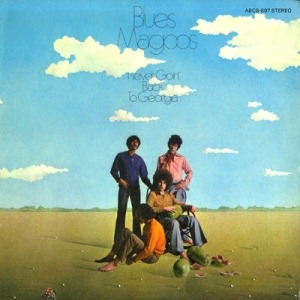
I used to own On the Flip Side LP but gave it away when I gave away all my LPs.  I’m starting to regret that, but at the time it was a pain to maintain LPs and the stereo equipment to support them.  I also figured one day everything would show up in digital on subscription music services.  Another album I just had to hear again was Never Going Back to Georgia by The Blue Magoos.  I tracked that one down about a year ago and my friend Lee gave me an old turntable to play it on.  I even had to buy a cheap pre-amp because my modern day receiver no longer supports turntables.  I now have a library of 1 LP.  Talking to Doug about albums that never made it to CD makes me want to buy more.

Never-Going-Back-To-Georgia

Vinyl is a Costly Addiction

The trouble with returning to vinyl is it’s an addiction.  I was just reading on Amazon about a guy buying a $400 turntable and really loving it, and then his customer review had an update at the bottom saying he had just bought a $900 turntable.  He also warned buyers:  “$400 for the turntable is just a drop in the bucket, plan on spending double to triple that to get EVERYTHING you need. Nice phono preamp, carbon fiber brush, alignment tools, decent plastic lined sleeves for all that new vinyl you about to buy, tweaks, gadgets, cleaning supplies, etc…”  He also said, “Plan ahead and budget for a record cleaning machine, after you own a few albums you will want it. Even brand new sealed vinyl has dust and will crackle and pop” and “50 year old used records sound like………50 year old used records.…”

Reading reviews of turntables makes me wonder if I even have the technical skills to set one up, adjust it, and know if it’s playing correctly.  The audiophiles make it sound worse than rocket science.  And that knock against 50 year old records dings my enthusiasm because the records I want will all be 30-50 years old, or even older.  Another fear is getting addicted to 78s.

Collecting

I think buying vinyl also appeals to the collector in us.  When my friend John wrote about John Lennon’s Jukebox, I immediately wanted to track down and buy those 40 singles that were Lennon’s favorite songs.  Vinyl lovers often have whole walls of albums.  This isn’t a bad hobby, but it could become an obsession.  I can see myself getting up early to hit the garage sales every Saturday morning, and constantly visiting the used record stores, and Goodwills, hoping to find some elusive gem.  Or getting hooked on Ebay.

Nostalgia

I think the main appeal of wanting to return to vinyl is nostalgia – I want to go home again – to my teen years when I loved buying LPs.  Or I just want to hear songs again that I haven’t heard for 40-50 years.  I’ve done this a few times in my life already.  I first heard On The Flip Side when it was shown on Stage 67, a show from the 1966-1967 television season on ABC.  About twenty years ago I thought of that show and tracked down a used soundtrack of the show.  I actually loved the album, and played it several times, but eventually forgot about it.  I was into CDs then, and CDs were much easier to deal with.  But when I gave away my LPs, I did take the time to record On the Flip Side to MP3, and it’s playing while I type.  So I still have it as two long MP3s, each a whole recording of a side.

To be honest, hearing On the Flip Side playing now is a nostalgic rush, but I doubt I’d want to play it over and over.  Maybe once every five years.  And my mp3 recording reminds me clearly of the flaws of vinyl because I hear the pops, skips and clicks that disappeared with the invention of CDs and mp3 files.

Would On the Flip Side be more wonderful if I was playing it on a good turntable hooked up to a great stereo setup, with perfectly configured speaker spacing?  I don’t know.  I’d have to spend quite a bit of money to find out.  And if I spent all that money and I loved it, would it mean I’d start searching out more old albums?  How many are lost in my memories?

I have a complete set of The Rolling Stone magazine on DVD, and I’m amazed by all the albums reviewed that I never heard of, or played or have even seen since.  It might be great fun to start in 1968 and see how many albums I can find that deserved to be rediscovered.  Or is that bullshit?  Shouldn’t everything worth listening to already be reprinted and available today on CD or subscription music?

And would I end up like the other vinyl addicts, always wanting more expensive turntables, cartridges, styluses, pre-amps, receivers, and speakers?

man-from-uncle-1

Many of the albums I fondly remember did have CD reissues, but strangely enough some like The Man From U.N.C.L.E. or Our Man Flint didn’t seem to have the exact cuts or cuts in the same order as my memory.

I think the urge to buy LPs is to hold the same cover and to listen to the same cuts in the same order that I played them 40-50 years ago.  Is capturing this past worth all the effort?  And if I was to be truly faithful to the past, shouldn’t I seek out an old console stereo like I had as a teenager, or even a portable record player like I started out listening to when I was 12?  Why spend hundreds for turntables that didn’t exist in 1965?

Getting Old and Sappy

I think what I miss the most is shopping at record stores and playing my new discovers for my buddies.  Or even going to record stores with my pals, and spending a couple hours deciding how to best spend the two dollars I had burning a hole in my pocket.  For $10 a month today I get access to more albums than any record store I’ve ever been in.  As a kid I could only afford to buy one or two albums a week.  When I first started buying albums, when I was 13-14, I had to mow lawns, babysit or go without lunch at school to get LP money.  Maybe those treasures that were so hard to come by back then, are now the same treasures I seek to find now?  Maybe they need to be just as hard to come by again to get the maximum fun?

I don’t know if I’ll go back to vinyl or not.  I’m awful tempted to buy myself a $216 turntable at Amazon, a Audio-Technica AT-LP120 and give them a try.

Part II – The Subculture of Vinyl Record Fans

Part III – Audiophiles and the Quest for High Fidelity

JWH – 11/9/12

From Words to Films: Cloud Atlas, The Life of Pi, The Hobbit, Anna Karenina

Yesterday I saw Cloud Atlas at the theater, and it had previews for The Life of Pi and The Hobbit.  I’ve also seen recent previews for Anna Karenina.  All books I’ve read.  While watching the preview for The Life of Pi I wondered what Yann Martel and David Mitchell are feeling now that their words have become movies.  Do they feel like gods creating new worlds?

Lucky writers type words on their computer and a few years later those words become images on the big screen.  How marvelous must that feel for a writer?  Of course, a writer creates all their characters and scenes in their head by themselves, and a movie requires hundreds, if not thousands of people to create images on the screen for us to see.  And often, they aren’t the same visions the writer first imagined.  I can’t imagine David Mitchell picturing so many of his characters looking like Tom Hanks, but Tom Hanks with the help of make-up artists have fleshed out Mitchell’s characters in a world of pixels that is so much more vivid than printed words on a page.

I have to admit while watching the previews that I wished I could write something worthy of filming.  Few books are given birth on the big screen, so it’s a very rare honor that few writers get to enjoy. 

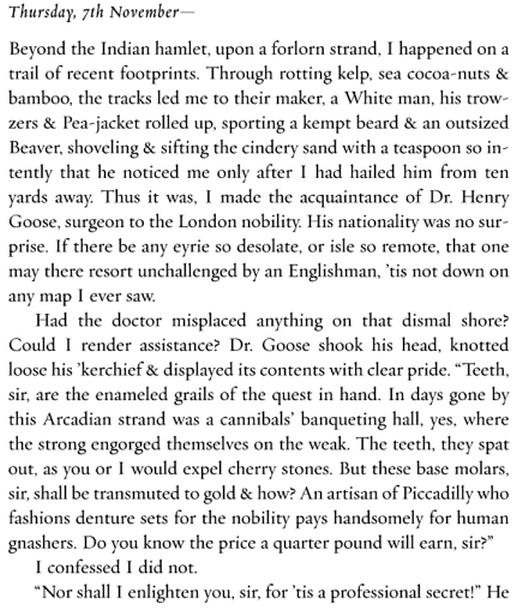
Look at the opening page of Cloud Atlas by David Mitchell – I saw it acted out yesterday.  It’s not the same at all, these words inspired a movie scene on the beach.

cloud-atlas


Next, watch this clip:


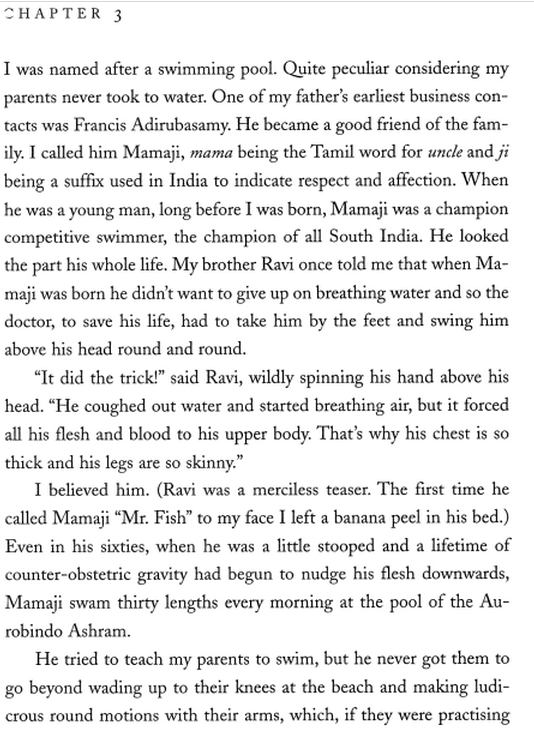
Now read from the The Life of Pi by Yann Martel.


Life-of-Pi


And then look at the trailer for The Life of Pi:


These are just two examples.  I wish I had the time and technology to show several examples, with the exact book pages and filmed scenes.  Both Cloud Atlas and The Life of Pi are books of astounding feats of imagination.  I’m sure bookworms hope all their favorite books will become films, but few do.  I’d love to see The Windup Girl by Paolo Bacigalupi made into a movie.   That book also exhibited tremendous feats of imagination, although it’s a bleak view of the future.  I’m thinking movie makers prefer upbeat stories based on fantastic events.

I wonder how many writers sit down to write a story they hope will be filmed?  If you’ve read Cloud Atlas or The Life of Pi, you probably thought like me at the time that it would be impossible to film these stories.  Watching the preview of The Life of Pi made me realize that anything a writer can think up movie makers can film.  Watching the preview of Anna Karenina made me realize that movie makers are going far beyond what writers can do with words.  I don’t think any one mind can imagine so much beauty, color and vivid detail.

anna-karenina-kk

Look at this photo and then read Tolstoy’s words:

Anna was not in lilac, the colour Kitty was so sure she ought to have worn, but in a low-necked black velvet dress which exposed her full shoulder and bosom that seemed carved out of old ivory, and her rounded arms with the very small hands. Her dress was richly trimmed with Venetian lace. In her black hair, all her own, she wore a little garland of pansies, and in her girdle, among the lace, a bunch of the same flowers. Her coiffure was very unobtrusive. The only noticeable things about it were the wilful ringlets that always escaped at her temples and on the nape of her neck and added to her beauty. Round her finely chiselled neck she wore a string of pearls.

Well, they got the ringlets.  Can any words ever describe what we actually see?  What is the power of Tolstoy’s words that have made Anna Karenina one of the greatest novels of all time?   It is a novel that has inspired the production of many movies.  Will there be additional productions of The Life of Pi and Cloud Atlas?  Will Martel and Mitchell be as inspiring as Tolstoy?

Like I said, I wish I could write a story other people felt compelled to film.  The old saying is, a picture is worth a thousand words, well that means most novels have about 100 pictures in them.  But novels are really about characters fighting adversity, and that’s where movies and books really overlap.  I believe if I wanted to write a novel worth filming, I’d need to create unique characters facing unique conflicts.  Words are great for that.

I think it’s fascinating to read the words that become movies.  I think it’s even more fascinating see characters on pages become characters on screen.  I think it’s also fascinating  for stories to come alive before our eyes in the dark that we once read as black marks on white pages.

[By the way, is film even a valid word to use regarding movies anymore?  Are movies still filmed?  Or do they use high resolution video cameras?  In our modern times both novels and movies appear on screens.  I guess I could have talked about stories that appear in black and white on small screens and in color on large screens.  Is that the transformation good stories should expect – more pixels with great color depth?]

JWH – 11/5/12

Samsara (2011)–Ron Fricke Shows Us the Diversity of Mankind

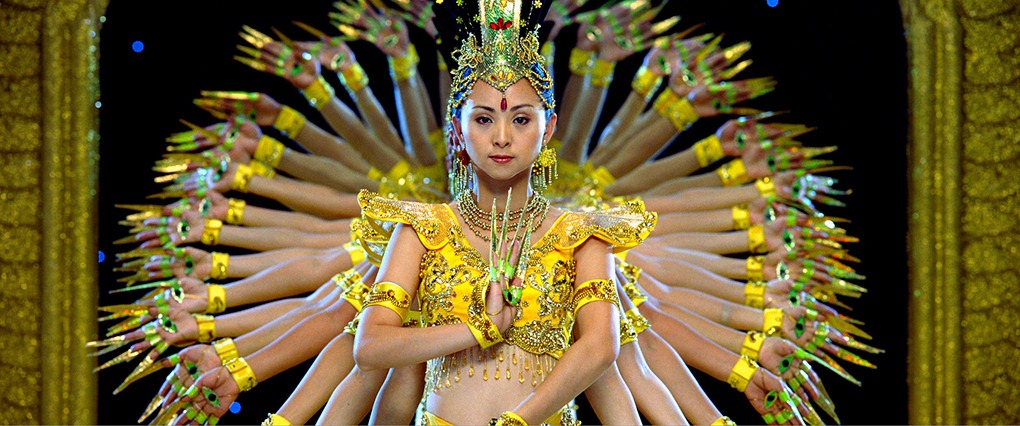
It is impossible to express how beautiful Samsara is to see on a big screen.  If you’ve seen Baraka or Chronos at the theater, then you’ll have the best idea of what you are in store for visually.  And this film is all about visuals.  It’s a documentary without narrative.  Beautiful hypnotic music, gorgeous exotic music, lush sacred music adds to the impact of the visuals, but this film is all about seeing.

If a picture is worth a thousand words, your mind will race through an encyclopedia worth of words as you watch Samsara.  It’s a rush.

I can’t emphasize this enough, but to truly experience this film you need to go see it in a theater.  I have Baraka on DVD and watch it on a 56” TV, and I love it.  But it’s not the full experience.  Nothing I can say can convey the full impact of the film.  No photograph or film clip does the film justice.

Now I warn you, this is an intensely intellectual film, even though it has no words.  Many people, will find it boring – if you have a fascination about this reality we live in, then your lifetime of thoughts will make this film great.  Your mind will create a narrative as you watch.  This show is a head trip, and your thoughts will script the film as you watch.  You’ll write it different every time you watch it.  The many scenes from around the world are meant to trigger deep philosophical responses. 

Samsara will probably only play one week in your town, so if its on, go see it while you can.

Be sure and set this clip to the highest resolution and watch it full screen.  Or visit the official site and watch the clip there.

Samsara was filmed in 25 countries with 70mm film, and converted to digital with a 8k scan, creating a 20 terabyte file.  That’s a lot of details to shoot up into your brain in one hour and thirty-nine minutes.  Most Blu-Ray films come in around 20 gigabytes, so Samsara has a 1,000 times more bytes of detail.

samsara_01

Samsara is a spiritual ride around the globe, zooming in on monasteries and prisons, jungles and deserts, slums and hi-rises, the poor and the rich, the beautiful and the grotesque, the living and the dead, a baby in the womb, and people in their coffins.

Samsara and Baraka shows how immensely diverse our world is.  It makes you realize that your view of reality, the one you’re so obsessed with, is really so very small.  Just before Samsara came on tonight they had a preview for The Hobbit.  That preview entices movie goers to come see a fantasy world rich in landscape and full of colorful fantasy beings.  It was a thrilling preview until Samsara came on.  The real world Samsara made the fantasy world of The Hobbit seem pathetic and dull.

samsara_02 

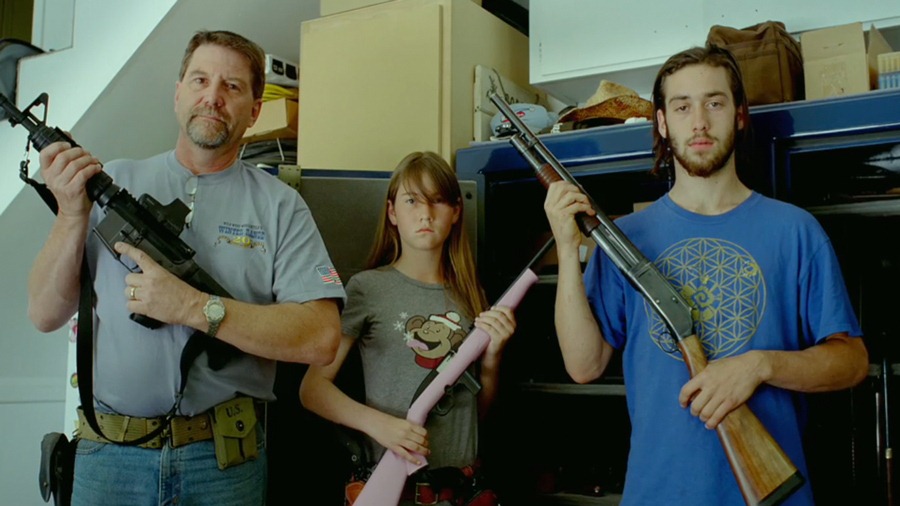
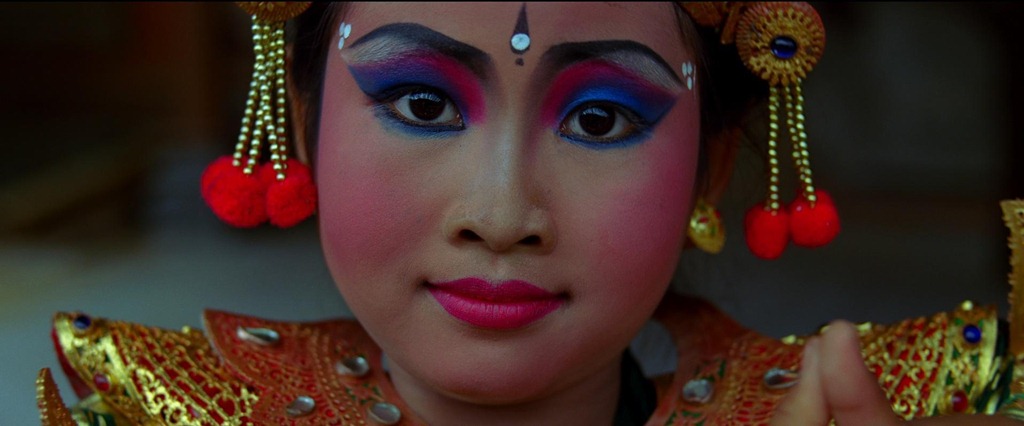
It’s very hard to describe Samsara because it doesn’t stay on any scene for very long.  Each clip is glimpse of a subculture from around the world.  Only a well traveled world traveler will know about most of these sites and people.  There’s even a humorous look of gun owners from around the globe, and beautiful sequences of bullet manufacturing.

samsara_03

Samsara spends quite a lot of time showing exotic locations of religious worship.  This was also true of Baraka.  I believe the filmmakers must be very spiritual people, but I see what they show in a different light.  I see the temples as relics of history, and their worshipers as primitive souls trying to hang onto a dying past in our fast pace world that’s constantly changing.  Our modern world, shown at night, looks like red blood cells coursing through veins.

samsara_04

The Buddhist monks carefully create a mandala with colored sand, but in the end they destroy their creation.  I assume to make it again the next day.  That focus on creating the details in the image is a kind of worship, or prayer.  Filming Samsara is the same kind of worship.

samsara_05

There will be scenes that might shock, disturb or disgust you, but they are all filmed so beautifully that I have to assume that the filmmakers see everything on Earth in a spiritual light.  Many of the scenes are just exotic people that live their lives so much different from ours.  Seeing the film makes me realize how parochial I am.

samsara_06

If Samsara isn’t at a nearby theater, then buy Baraka on Blu-Ray.  You can watch the entire film online, to get some idea of how Ron Fricke sees the world.  Watch it at least long enough to study the faces of the snow monkeys bathing in the warm water.  Think about how they see this world.  Think of the snow monkey watching this film like an alien from outer space seeing our world for the first time.  I’ve watch Baraka many times now, and I want to be the snow monkey.

Samsara and Baraka will not appeal to a lot of people.  I’m sorry that’s so.  People really should spend one evening watching a movie that so much different from their usual multiplex fare.  Take a trip around the real world, it’s more far-out than any CGI world ever created – even Avatar.

JWH – 11/2/12