The Dangers of Building Your Own HTPC and Living Without Cable TV

As I reported earlier in FYI: DIY-FIY (Do-It-Yourself, Fix-It-Youself), my HTPC started crashing intermittently, the worse kind of electronic failure to troubleshoot.  I tried everything to fix it.  Eventually I decided it must be something wrong with the motherboard, so I bought a new motherboard and new CPU, one of those new AMD A6-3500 CPU/GPU combos.  For a few weeks it worked beautifully, much better than the old machine, but then it started acting up.  This time something different, it just wouldn’t boot.  In the rebuild I used a new, but old hard drive for the boot drive so I could save my recordings off the old boot drive, and use it as a second drive.  The only parts from the original machine was the case, 2nd power supply and the original memory.  I had two theories.  One, the used hard drive was bad, or two, the original memory was my problem all along and it had gotten worse.

Now all of this is very aggravating.  I had gotten used to having a home theater PC connected to my den television and now I’m making do with off the air broadcasts, Netflix discs and streaming, and a Roku box.  This still provides more TV than I have time to watch, but it doesn’t let me record shows.  However, this time around I have a backup DVR.

I bought a HD HomeRun Dual network TV tuner.  It was a snap to install.  Just plug in the over-the-air antenna, Ethernet cable and power cable and run a small install program on each of my PCs.  Now I can bring up Windows Media Center on any computer in my house and watch live TV, or record TV from two tuners.  Very slick.  So I can still record shows while my HTPC is broken but now I have to watch them on this computer.  This also simplifies my HTPC setup because it no longer has a TV tuner card in it.  And because I bought the new A6 with Radeon HD 6530D graphics it doesn’t have a video card either.  The new HTPC worked much better and drew less power.  Great until it started crashing.

I was so happy when I got the HTPC going again.  I thought I’d have years of worry free service, but dang, I must have jinxed myself, because the new HTPC is completely dead now.

The other day I ordered some new memory and just tried it out, but it wasn’t the fix.  I’m now hoping it’s the old hard drive, and not other bad motherboard.  So sometime in the future I’ll have to take everything apart again and start troubleshooting all over again.  Another troubling idea is the HTPC is being damaged by electrical spikes.  But this is a long shot.  However, the 2nd hard drive went out just before the machine started crashing.  I’ve bought a UPS to protect it in the future.  It already had a good APC surge protector.   

But I’m putting off fixing the HTPC off for awhile.  I want to get some other things done this weekend.

This is a real lesson in building your own computers.  Normally you buy a computer and it comes with a 1 year warranty.  You can even buy extended warranties.  If something goes wrong you take it back and someone else fixes the machine or gives you another one.  When you build your own machine and it stops working you’re the one that’s got to fix it.

More than that, this whole affair of giving up cable TV has taught me a number of things.  Comcast got me addicted to DVRs, so giving up cable means learning to live with live TV or building your own DVRs.  I’ve starting to wonder if DRVs are worth all the trouble.  I love the simplicity of only having 5 channels I care about, instead of over 200.  But even then, how much do I even care about those 5 channels?  The absolute gem is PBS. 

When my HTPC died I had 200 documentaries I had recorded from PBS that I wanted to watch.  This is very revealing.  Why hadn’t I just watched those shows when they aired?  TV documentaries are like the books I buy but don’t read.  I keep thinking I’m going to watch those shows or read those books, but my to-be-watch and to-be-read lists just get longer and longer.

Last night my friend Janis was over and we were just going through the Netflix menu on my Roku.  I’ve got 196 shows in my queue waiting to be watched, and we found dozens of foreign movies we wanted to watch in the suggestion lists.  There is no shortage of TV to watch.  Then why do I want to hoard TV shows on a DVR?   Isn’t this like going to a restaurant and buying a meal with the intention of eating sometime in the future?

I have a hang-up about controlling time.  My DVR infected me with a time control disease.  I think hoarding books is a time control disease.

I am tempted to simplify my TV watching yet again and give up the DRV and HTPC.  I’d miss playing Rdio and Rhapsody through the den stereo, but I’ve also rediscovered the greatness of just listening to a CD again.  CDs sound so much better than streaming music and MP3s.  I’ve been going retro in the last several weeks.  I’ve been buying DVDs of old westerns and watching one every night before I go to bed.  It shows I can live without cable TV, or even HTPC TV, or even broadcast TV or even Netflix.

Which makes me ask:  Does it matter what’s on TV?

JWH – 7/21/12

Is Cynicism a Side-Effect of Aging? – The Mark Twain Syndrome

Samuel Clemens, known famously as Mark Twain, became extremely bitter and pessimistic about the human race as he got older.  I’m 60 and I’m starting to feel I’ve caught a touch of pessimism myself, so I’m wondering if I’m developing the Mark Twain Syndrome?  And will I get more negative as the years pile up?

Mark-Twain-by-Alvin-Langdon-Coburn

Is cynicism a side-effect of aging?

Now Twain had a lot of reasons to feel depressed and bitter.  His wife, and two of his three daughters, died before he did.  He made fortunes and lost them.  He ran up staggering debt.   In his old age he had to constantly tour the world giving talks so he could honorably pay off his creditors.  Plus he saw a lot of the world that he just didn’t like, and he felt he had good reasons to think humans were a nasty species.  Twain died in 1910, so he never knew the horrors of the 20th century, but the vicious satirical stories he wrote in his later years feel spot on to modern readers.

I would think anyone following the highly polarized politics of the 2012 presidential election would feel depressed about our political system.  I would think anyone studying how humans treat the environment and our fellow creatures would feel gloomy about the Earth.  I would think anyone comparing the growing greed of the rich versus the expanding misery of the poor would feel doomed over the fate of mankind.  It’s hard not to believe that homo sapiens aren’t going to use up every last resource on this planet and never feel guilty.

How can you have faith in Congress when the national debt grows and all they can talk about is tax cuts?  How can feel good about America when one party stonewalls the other for four years in hopes of winning the next election?  When did serving the party become more important than serving the country?

Our current economic calamity is due to a man-made economic catastrophe.  Billions were stolen but no one was ever put on trial.  And the rich are spending billions to get a President in office so they can go back to business as usual.

I can’t help but believe that a perfect storm of national collapse is brewing.  Is the U.S. in decline like the Roman and British empires were long ago?

Here some of the factors:

  • Growing economic chaos
  • World-wide shift to fundamental religious thinking
  • Global warming
  • Diseases becoming immune to our medicines
  • Population growth
  • Dwindling resources
  • Relentless pollution
  • Accelerating species extinctions
  • Uncontrolled debt
  • Political polarization
  • Aging population
  • Growing segment of population that’s not in labor force
  • Escalating crime and corruption around the world
  • Rising healthcare costs
  • Rising food costs

Now, do I dwell on all of that because I’m getting older?  If I was young would I feel that all of those issues were just problems to be easily solved?  I don’t know.  It’s not like I want to walk around with a sandwich sign proclaiming “The End is Near” but I feel like I’m on a fast train and the brakes just went out.  Is that feeling caused by getting older?

How do you know when things are bad or when you’re just feeling bad and think civilization is in decline?

Conversely, when I read about developments in science, technology, medicine, I feel positive and my thoughts about the future are uplifted.  Science is the one constant positive – but most people reject science.  What makes me feel good makes other people feel bad.

When I was young and read about Mark Twain I hoped I’d never become bitter and negative like he did.  Even now I try to stay positive.  But its not easy.  Oh, if I keep busy and ignore the problems I’m as happy as a two-year-old with a box of cookies.  And I tend to think that’s how most folks handles the problem–they eat more cookies.

When I was young, growing up with the Mercury, Gemini and Apollo space programs, I assumed we’d have permanent bases on the Moon and Mars by now, and men and women would have explored the entire solar system.  In my teens, I felt before I died engineers would be drawing up plans interstellar spacecraft.  Maybe not manned ones, but at least for interstellar robotic explorers.  I think part of my disappointed about getting old is none of this has happened.

I’ve read enough history to know that the present has always been on the tipping point of chaos.  I should feel confident that we’ll continue to bumble though.  But I’ve also read enough history to know that nations rise and fall, and that all over the globe there are sites where people live who think about their country’s former glory.  We revel is the decline of communism, but who is to say capitalism will last?  Personally, I think free market capitalism will fail under overpopulation.  We have over 12 million people defined as unemployed, but we have over 87 million people not employed, or considered unemployable.  This population is over 16, not in jail or in military service that doesn’t work.  They are retired, mentally or physically can’t work, gave up trying to find work, or won’t work.  Less than half the U.S. population has jobs and they must fund the living expenses for the entire population.  Capitalism isn’t creating enough jobs.  It’s worse in other countries.

And the people who are working and paying taxes want to pay less.  This is at a time when our economy depends on socialism.  The reality is the U.S. has been a socialistic country since the 1930s.  To reject socialism now means condemning tens of millions of poverty.  The growing nostalgia for fundamental religious beliefs and conservative values is no solution at all.  It’s just a plea, “Stop the world I want to get off—why can’t things be the way they used to be?”

Now I’m dwelling on the bad again.  Are my worries just from getting old?  Or do we all have something to be depressed about?

JWH – 7/15/12

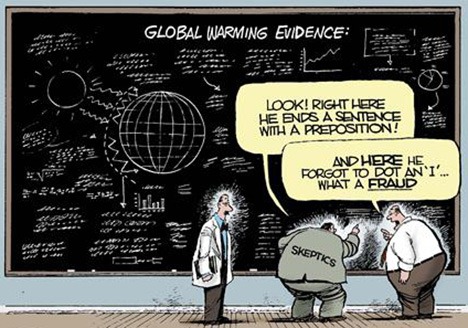
Have the Climate Deniers Won the War–Or Just Built the 21st Century Maginot Line?

How often do you see a big documentary on Global Warming on TV now-a-days?  Sure, the nightly news often mentions global warming when it runs stories on hurricanes, tornadoes, floods, fires and other extreme weather events, or when it does stories on habitat changes for animals, plants and insects, but you seldom see big documentaries about climate warming anymore.  Nor is climate change a hot political issue for the presidential elections.  Obama hasn’t made it an issue, and when climate change does come up in Congress or State Capitols it’s often by politicians suppressing climate change data or bills, or even writing laws against collecting climate data.

Read these articles to see what I mean:

Are the climate change deniers and skeptical scientists right?  Do we have nothing to fear from global warming?  Or are they complete deniers of reality and have built a political Maginot Line to convince the American public we’re all safe from the global warming threat?

Many of the reports above are from writers attacking the idea of global warming and climate change.  They consider themselves fighting fear mongers.

gwcritics

Now you can read for yourself the reports about the climate from NOAA – State of the Climate.  This ain’t light reading and you have to concentrate on the data, charts and graphs.  If you search the web you can find reports from other agencies and countries.  On one hand you have the scientists studying the data, and on the other hand people, including some scientists, but mostly right-wing activists who say the data is all wrong, deceptive or incomplete.

Who do you believe?  The folks you want to believe?  Doesn’t that make us all reality deniers?

We spend untold billions on defense because we fear attacks on the United States.  If global warming is the threat scientists say it is, it’s more of a security threat than we’ve ever faced by any war.  We have a long history of going all paranoia over reds, but why greens?  Some people even believe the greens are the new reds.  But the greens are trying to protect America, but the public doesn’t want to believe that.

There is something deeply psychological going on here and I don’t know what it is.

If everyone is sticking their heads in the sand, what do you do?  If the collective says, “Let’s pretend nothing is happening, and it will all go away,” what do you do?

If you look at the climate history charts, the scientists appear to be right, so how long do we keep looking at the data and seeing it relate to reality before everyone with their heads in the sand and their butts in the air start thinking, “Hey, my ass is on fire!”

To tell the truth, I’m starting to wonder if there’s a huge scientific reality to denying.  That’s it’s part of human nature.  That no matter how bad things get, the deniers will keep denying global warming, and finding reasons to think things are okay.  That denying reality is MUCH bigger than science.  That if I read enough history I’d find that the deniers have always won the war on denying.

Or is it simply, to conservatives liberals always have to be wrong, no matter what, and on every subject.

JWH – 7/11/12

Survivors (BBC 1975-1977)

Ever since I gave up cable TV years ago I’ve discovered I really love finding a TV series and watching it from the first to last episode.  Preferably from Netflix streaming, but DVDs are an okay second choice.  Watching a complete TV series is like enjoying a very long novel.  I listen to novels all the time, so I’m used to their length in hours.  Average novels are 10-20 hours.  Recently I listened to Anna Karenina and it was 42 hours.  I’ve just finished 38 episodes of Survivors which ran on the BBC for three seasons (series as they say) from 1975 till 1977.  Each episode was slightly less than an hour, so the entire run was equal to one long novel.  It’s a shame actual novels aren’t filmed this way.

Survivors is a post-apocalyptic story set in England about a handful of people who survive a world-wide plague.  In the course of the story we hear that only 1 person in 5,000 survived, another time they guessed 1 in 10,000.  This plague is far more virulent than the famous Black Plague of the middle ages.  Viewers assume the plague was engineered as a bio-weapon from the opening credits.

survivors 

In the first season Greg, Jenny and Abby each find themselves alone among the dead.  They strike out on their own with very different plans but they eventually meet up and work to survive together.  Most of the episodes deal with finding food, encountering other bands of survivors with different agendas for surviving, wild dogs and rats, and much talk about how to start civilization all over again.  The driving plot of the first season is Abby’s desperate need to find her son who was away at boarding school when the death came.  Greg and Jenny agree to help her enthusiastically at first, but as the season progresses and chances dim, become reluctant to keep traveling.

In the second season, Jenny and Greg have settled with others on a farm and the season is about rebuilding civilization at the rural level.  Charles, a new main character replaces Abby.  Each episode deals with various post-apocalyptic issues, like having babies, finding medicine, fighting roving bands of thugs, producing methane for tractor fuel, handling dysfunctional people, how to decide who does what jobs, making alliances with other settlements, developing trade, and so on.  Many fans didn’t like this season because the action slows.  Stories are about raising sheep and cabbages.  I actually like the second season quite a lot.  Each episode dealt with true post-apocalyptic problems.

For the last season, Jenny, Greg and Charles travel most of the season seeing other settlements, promoting trade, and hoping to get electricity going again.  Our characters do a lot of horseback riding around rural England and Scotland.  Fans felt the action picked up in the third season. 

It’s too bad this show is 1970s television technology because the bucolic scenery, old manor houses, and rustic farms would have been beautiful in modern high definition.  There was a 2008 remake of Survivors that only ran for two short seasons that gives us a taste of what could have been.  The original series never had big production values but that never bothered me because after-the-collapse stories are among my favorite fictional themes, and living is inherently low tech in such a scenario.

Overall, I really enjoyed Survivors, which is only available on DVD through Netflix, so I had to wait patiently for each new disc.  Sadly, the discs are old and scratched so I don’t know how much longer they will be available.  There is a 6-disc set of the entire three seasons at Amazon that came out in 2010, but I wonder how long they will stay in print.  Plus the set is on 5 double-sided “flippy” DVDs and 1 single sided DVD.  In England and Australia the set was on 11 single sided discs.  I consider it bad form, lack of respect and cheapness to put shows on double-sided DVDs, which keeps me from buying it.  I enjoyed the series enough that I know I’ll want to watch them again in the future, but I don’t want to buy it with flippy discs. 

Evidently this show still has lots of fans in England, but it’s little known in America.  That’s too bad because it’s a intriguing show.  It’s not fantastic, but it is thought provoking and I liked the characters.  I was sad they fired Carolyn Seymour who played Abby at the end of the first season.  And many appealing secondary characters get killed – but hey, that’s what life would be like after the collapse.  Survivors introduced many secondary characters over the course of the three seasons, several of which I really got to like before they disappeared or were killed off.

The show had lots of room to grow because of all these additional characters, and I’m sorry the producers and writers didn’t explore their lives more.  Instead of 13 episode seasons the concept could easily have supported 26 episode per year, and the entire show could have run five or six years without running out of interesting topics to pursue.  But then I like technical stuff.  I’d gladly would have watched several episodes about getting the steam trains running again, or getting tractors to run off of methane.  The 1970s was a big back to nature era and this show would have been perfect for the Mother Earth News crowd.

To me, the Gold Standard of post-apocalyptic novels is Earth Abides by George R. Stewart.  In England I assume it’s The Day of the Triffids.  Only Earth Abides takes its story into the third generation after the collapse.  When they remade Survivors in 2008, they should have started with the second or third generation after the original 1975-1977 series.  The actors who play Abby, Jenny and Greg are still alive, so it would be interesting to see them reprise their roles as grandparents.  Instead they modernize the original series and brought in a ridiculous secret government program.

Since Mary Shelley’s The Last Man, every generation has imagined what life would be like if civilization collapsed.  The list of novels is long, and there have been many movies dealing with the theme, but there have been few television shows covering the topic. Survivors, both 1975 and 2008, are the standouts, along with Jericho from 2006-2008.

JWH – 7/8/12

Global Warming On Trial–A New Type of Reality Show

Although global warming is well accepted in the scientific world, the concept has been strongly rejected by much of the American public.  Since CSI type television shows are very popular, as well as court and crime dramas, I’ve wondered if this conflict on global warming doesn’t present us with a potentially new type of reality TV show.

Put global warming on public trial.  Let both sides of the argument present witnesses and testimony.  Let the TV viewers be the jury.  It will be hard to develop the show without bias, but if it’s designed right, we might get close to impartiality in the structure of the trial.  The prosecution will be the scientists with the crime being that humanity is causing global warming.  The defense will be all the people who believe humanity is innocent.

To make the show more interesting, it would be appealing to have real trial lawyers working each side of the case, and maybe even a real judge, or judges to preside over procedures.  This would be an expensive show to produce, and it could take months to play out.  To make it more appealing, we should allow the public to vote on the progress in each episode, and to vote on aspects of how the trail is being conducted.

I know the public will vote the way they feel now about the subject – how impartial is Dancing with the Stars?  It will be interesting to see if the numbers change though.  Can people be persuaded by facts?

This could be the trial of the century, and people love those.  Certainly, global warming could be the crime of the century.

If such a show was developed, it could be very popular.  I’m tired of the old reality shows.  Having a more realistic reality show is appealing.  And once this case is over, pick another.

JWH – 7/7/12