The Tools We Use for Thought Processing

Most people seldom see their words, only hear them. Writing is like capturing thoughts in amber. In the 21st century the common denominator of written communication is the text, which gives scant exercise for thought processing. Writing is our way of making our minds look sharp to others in the same way we edit our appearance with clothes and makeup. Sadly, we judge people more on their physical appearance than on their mental looks. When reading social media, note how your friend’s words reveal their mind’s fashion. Few people realize how unimaginative their inner styles appear, with their clichéd, repetitive, second hand thoughts. Few people on Facebook create original thoughts, but link to other people’s ideas they find stylish.

Learning to write is like learning to put on makeup, eventually you can transform a ordinary mug into something sexy. Learning to write is like going to the gym to buff up your thinking muscles. The tools we use to write, to process our thoughts, are like the tools we use to make our bodies look beautiful. Bodies and minds have a certain degree of plasticity that allows us to shape who we are. Writing is all about shaping the mind to produce clear and precise thoughts.

There is something special about putting words to paper. When humans went from memorizing words to writing them down, a magical transformation happened to civilization, as beautiful chronicled in The Information by James Gleick. Can you imagine the sense of wonder those Sumerians felt long ago putting stylus to clay and realizing their words could last long past their own lives? That must have been mind blowing – sort of like discovering the World Wide Web back in the early 1990s.

As someone who desires to write, I constantly observe my limitations with forming words into structures that communicate what I’m thinking. Our thoughts are jumbled and disorganized, and I assume other people are like me, in that we don’t think clearly and exact. In our minds we don’t automatically generate organized paragraphs. Putting words to paper is a way to crystalize inner chatter, but it’s also a translation from vague mental impressions to a linear progression of words on screen. From first draft to last, our thoughts constantly churn, so writing becomes rewriting, as we seek to recursively shape a single flash of inspiration out of constantly changing insights to that original idea.

Do the tools we write with affect how we express ourselves? Would authors tell their stories differently if they wrote it with pencil, pen, typewriter, computer or by dictating it into their iPhone? Would a novel written on a desktop be different from one written on a laptop? I started thinking about this when Nicholas Carr mentioned Friedrich Nietzsche’s typewriter in his book The Swallows. Carr’s book is about how the Internet is ruining our attention span for long narratives. Nietzsche switched from pen to an early typewriter that was called The Writing Ball, or The Hansen Writing Ball, a beautiful Victorian era machine that any steampunk fan would kill to acquire.

The Writing Ball 3

Nietzsche’s friends told him his writing changed when he started using this typewriter. Nietzsche got painful headaches from writing with his pen, and the typewriter allowed him to write with his eyes closed. Evidently, the machine altered how he expressed his thoughts. It empowered his writing.  Mark Twain, had tried this twenty years earlier but failed. Twain was one of the first writers to use a typewriter, in the 1870s. He gave them up, claiming typewriting made him swear. But his manuscript for Life on the Mississippi was submitted as typewritten from his handwritten manuscript.

From Twain to now, writers have migrated from pen to typewriter to computer. Some still write with pens. I have met writers, like Joe Haldeman, who prefers to write his first drafts by pen – and he uses many different colored pens, and writes in bound volumes of blank paper, with his own illuminations like ancient monks at their scrolls. When you read or listen to writers talk about how they capture their words, it’s obvious that the tool does matter.

I never spent much time writing with a pen, but I wished I had. I remember in junior high buying cheap Sheaffer fountain pens and trying. Maybe if I had owned a Monte Blanc pen I would have fallen in love with handwriting. Would I have become a different person if I had become a pen and paper writer? People who use pen or pencil claim to have a more intimate relationship with their words. That is probably true, because they shape each word with a skill that is unique to the writer. And I imagine elation or pain shows through in the tracks of the pen unlike the uniform stamp of the letter a typewriter makes on paper, or the lowly pixel leaves on a LED screen.

pen2

I adapted to machine writing a very long time ago.  I started with a hand-me-down manual typewriter, but soon my parents bought me a cheap Smith-Corona electric typewriter, probably thinking it would be good for my school work. I spent years with that machine, eventually typing mimeograph stencils to make fanzines and apazines. Typewritten pages captures words, but you must completely retype the page after each edit. Producing second and third drafts were tension filled endeavors because any typo caused outbursts of anger. Retyping was stressful.

I’ve looked through my possessions but I can’t find any relics from that era of my life. How the Smith-Corona allowed me to express my thoughts would have been different from how I express them now. Typing allowed me to write as fast as I think, and I seldom retyped to produce clean second copies. So my original thoughts would have been preserved. If every time I rewrote something in this essay was called a draft, there might be hundreds.

smith-corona

Ultimately, it appears writers get to the same ending when their handwritten, typewritten or computer written text gets set in print. I’m not sure if a powerful AI program could tell from looking at a book what kind of writing tool the writer used to compose his story. I suppose all the editing functions of a word processer can be done with pen and ink and using the mind as a word buffer. But I don’t know. The more I read about how thinking can change the brain because the brain is so plastic, I’m thinking our tools do reshape our minds. I’m just not sure if they effect the final output.

I loved the hum of electric writing, and eventually fell in love with the golf-ball typewriter, the IBM Selectric, the standard writing machine in offices for decades. I could sit for hours just dumping my thoughts out onto paper. I wish I had examples of that writing. I’m pretty sure it was as ugly as a hex software dump. What changed my life dramatically was combining the computer and typewriter.

selectric

The first word processor I used on a job, back in 1977, was a standalone machine called an IBM MT-ST machine, which combined a Selectric typewriter with two magnetic tape drives. Although, cumbersome to use, the MT-ST machine was a revelation. It took on the job of retyping drafts by remembering all the perfectly type portions of the earlier draft. You played out tape one that contain the original draft until you reached the edit, skipped over the bad part, typed in the new sequence, which was also recorded on tape two, and continued copying the good content until the next edit. When done you had a new fresh paper copy and a recording of it on tape. This was one giant leap for mankind when it came to writing – word processing.

mtst

Using the MT-ST at work made me want to have one at home, but that was out of the question until the price of computers came down.

By 1978 my work bought an Apple II computer which I didn’t get to use in my job, but coveted and borrowed when I could. It converted me to the microcomputer revolution. I eventually got to use a lot of different Apple II and III models, and sadly had the job to surplus a lab with over forty of them, at the end of their era. Writing on early microcomputers was iffy at best, requiring learning a lot of arcane commands, but it was word processing.

Around 1981 we bought a CPT machine to replace the MT-ST, that looked like the one below. I went shopping with my boss and we also looked at the legendary Xerox Star which I really wanted, but they didn’t buy. Man, it would have been great to claim I was one of the early users. Just after getting the CPT machine I switched jobs and got to install and train people on the new IBM PC.

CPT word processor

By the late 1970s and early 1980s, I had found a way for me to own my own word processing machine, when I started  buying early 8-bit home computers like the Atari 400 and Commodore 64 that had simple word processing programs. It was then when I gave up typewriters. Throughout the 1980s and early 1990s, I was on a never-ending quest to find the perfect word processor program that suited my personal needs. For a while I thought it would be Word Perfect. But once Windows 95 came out, and I got to use Microsoft Word, that has been my tool of writing ever since. Word has changed a lot over the last twenty years, always refining how words leave our fingers and are stored digitally, only to be reorganized over and over again.

Even though I’m enchanted by the memory of handwriting, I could never go back. Me and my keyboard are one. I sometimes wonder if I can jump into the future and talk to my computer, but I can’t imagine editing and rewriting by verbal commands. I suppose if Word adds a Siri like helper so I can say, “Read me the second paragraph.” And then I tell the computer, “Write this sentence in its place,” and dictate a whole new sentence, I could begin to adapt.

Can you imagine Homer composing The Iliad? He never got to write anything down, and all the drafts were in his head. I wonder if he got friends to help, by reciting a scene to someone and then asking them to recite it back to see how it sounded. I use to have a speech synthesizer read my essays back to me. It was very helpful.

So far I’ve only covered mechanical tools for thought processing. Hypercard, Gopher, HTML, Wikis and blogging all changed how I processed my thoughts for others to see. Now I can add pictures and videos, and I can link to other documents. A document on the web is much richer than one printed on paper. One reason the web is so popular is it does allow for easy self-expression. If you follow your friends regularly on Facebook you eventually get to learn how they think in a way different from just listening to them talk. Young people might be evolving past written words to expressing thoughts in voice and video.

Large books have always been the most complicated expressions of crystalized thinking we have. Some take decades to write and involve interviewing thousands of people and reading thousands of articles and books. They reflect armies of thinkers working towards a single vision. However, the more information we have to process the harder it is to mentally visualize the work. There are tools for that too, like my current one, Xmind, which has just released v. 6.  Writers have been using tools like outlines, index cards, databases, spreadsheets, OneNote, Evernote, and all kinds of software tools to focus research for writing. I think Mind Mapping software is very useful, and potentially can be far more effective than I’ve succeeded with it so far. It’s like putting little abstractions of thoughts into bubbles, and then connecting the bubbles in creative ways.

Blogging has been a wonderful tool for thought processing. I’d recommend making it an integral part of K-12 education. Most kids are required to write, and even write research papers, but they are only read by teachers. If students knew that anyone would be reading their work, including their friends, they might try harder at learning to write well. Peer pressure is a powerful formative tool. As a thought processor, blogging combines the best elements of word processing with HTML, multimedia and networking. Combining a smartphone and blogging makes a kid into a documentary film maker, magazine writer, editor, and publisher, on equal standing with The New York Times with potential access to a world-wide audience.

JWH

The Insulting Parts of Interstellar

By James Wallace Harris, Tuesday, November 11, 2014

This is not a review of Interstellar. The film is thrilling, emotional and big fun. Go see it. It has some astounding special effects and amazing sense of wonder concepts.

No, what I want to write about is the philosophical implications of the science fiction as presented in Interstellar. The film makes a great touchstone to contemplate the nature of science fiction. Science fiction reflects our collective ambitions about exploring reality and the future of mankind. At the deepest level of desire, science fiction fans want to travel into space, especially to the stars and other worlds. Interstellar even travels to other galaxies, something seldom seen even in the most ambitious science fiction stories.

interstellar_poster_0

Science fiction also reflects our desire to control reality, and sees us as the master of our own fate. Science fiction is a rejection of the metaphysical, which believes humans are the minions of divine beings. Science fiction is hubris at its best (or worse, depending on your belief in God). Science fiction is the ultimate expression of human powered evolution.

The trouble with science fiction is most of humanity doesn’t buy into the dream, they prefer metaphysical fantasies. In Interstellar, NASA is a forgotten aspect of the government, and schools teach that the Moon landings were faked. The movie suggests that the human race gave up on the idea of the final frontier, and that it’s not until humanity is about to become extinct that we finally discover our next stage of evolution is to travel to the stars.

I thoroughly enjoyed Interstellar as an entertaining movie, but some of its philosophical implications rankled me. It suggests that humans are destined to use up the Earth, and when we do, abandon it like an old computer sent to the landfill. The movie makers suggest the savior for our species is to travel to the stars with the help of higher dimensional beings. That smacks of guardian angels to me.

I want humans to travel the stars, but not because we selfishly used up our planet. Besides, I want to colonize space now, and we need to find real reasons to do so. Positive reasons.

In the film, no one campaigns to save the Earth. The conflict is between our descendants who endure our legacy, and those who want to run away. That idea sucks big time. I’m sure the movie makers thought it was just an easy justification for the plot, but I find it offensive. Yet, their attitude is not uncommon. Republicans pretend our sins of self-destruction aren’t ours, while the Democrats are perfectly willing to accept we’re to blame, yet do nothing to stop us from destroying ourselves.

Interstellar sees Earthly humanity expiring and says, “Let’s go to the stars” to start over. Now, here is where I get into spoilers by explaining how we’re saved. One part of the solution involves New Age mumbo-jumbo, and the other part involves 1930s style super-science mumbo-jumbo, the kind found in books by E. E. “Doc” Smith. Neither solution will save us, nor are they philosophically appealing. They each say we need the help of higher powers. Bullshit.

We already know the science to save our planet – we choose not to. Abandoning Earth for the lifeboats is not an ethical solution. It’s about as noble as the Republican’s head in the sand plea of denial, or the Democrats mea culpa “The buck stops here but I ain’t going to do anything about it because the Republicans won’t play fair” whine.

I also find it offensive that the story in Interstellar suggests we need the help of super-beings. That’s one reason I don’t like religion – it shirks responsibility. We don’t need some divine daddy or fifth dimension super being to save us. If we can’t save ourselves then we deserve to go extinct. The movie cops out on its cop out, but I don’t like it’s philosophical solution either.

To me, the science fiction in Interstellar wimps out. Real, hard-core, science fiction is about humanity pulling itself up by its own bootstraps, using real science we discovered. To a degree the movie does that, and that’s exciting, but the ending of Interstellar is much like the ending of 2001: A Space Odyssey, which I also found philosophical insulting. Arthur C. Clarke in his two most famous stories, 2001 and Childhood’s End suggests we need outside help getting to the next stage of existence, and that help involves superpowers that are damn close to metaphysical. I find that really distasteful.

I’m a believer in evolution, which doesn’t allow for outside helping hands. You either climb up out of the slime on your own, or you go extinct.

Colonizing space or traveling to the stars is a great ambition, but we need to go on under our own steam, and after we become good caretakers of the Earth. I think if we’re going to destroy everything we touch I imagine our alien neighbors, higher dimensional beings and the gods would prefer we just stay home.

JWH

How Many Novels Can Be Our Best Friends?

By James Wallace Harris, Monday, November 10, 2014

Is it possible to know a book like a good friend? Does reading a book one time give us that best friend closeness? People often say a book changed their life, so we know some books can inspire great passion by what about lasting relationships? Does one reading let us experience the full intent of a book? I’ve read some of my favorite books many times, but I doubt I could analyze them with any depth, not like a professor of literature does with a classic. I’ve found entertainment rather than enlightenment in the books I’ve consumed. I want to change my ways. I want to pick some books and get to know them very well.

The old saying, “Too much of a good thing can be a bad thing” can be applied to almost anything. However, when I ask, “Can we read too many novels” I’m going beyond that. Most people read for pleasure. Reading is an escape, and it’s fun, so what’s the harm of reading as much as we want? Even that line of attack is not where I want to go. Sure, there’s more to life than reading books, but it’s up to all of us to decide if we read too much. When I ask, “How many novels can be our best friends” I’m asking if some books deserved to be more than just read quickly to find out what happens in the end.

Asking questions is a way to explore deeply into a subject. But I’m not questioning the value of reading for fun, I am wondering if always reading a new book isn’t hurting my ability to appreciate novels at a higher level. I’m wondering if reading too many books is like having too many friends. Are my relationships with books, even my most favorite, really just acquaintances and not close friendships? I’m not suggesting I find my perfect reading companion and become best friends forever, although that might lead to the deepest understanding possible for a novel. I am asking if reading too many books makes us miss out on the depth that novels can give us.

If you’ve ever read any great literary criticism, you’ll know that some people get a lot more out of a novel than the average reader. Just read an issue The New York Review of Books or The London Review of Books and tell me how sophisticated of a bookworm you feel afterwards.

I admit my fiction habit, is one where I consume mass quantities of words. I read in a hurry to finish, and then rush to the next story anxious to have another page turning narrative to follow. Lately, I’ve been researching the topic of effective thinking, and I realize that even though think about books more than your average bookworm, I’m far from being in the professional leagues of story masters.

This leads me to wonder if I shouldn’t have books that I get to know very well. And how many books should be on that list? Could I ever claim to be a true friend to one hundred books? I doubt seriously if I could even memorize the titles of one hundred books, so one hundred is probably too many. However many there should be, I should be able to recite their names as if they were my children. Yet, over a lifetime, I’m guessing we find between 25-100 books that resonate so well with our souls that list could be our reading fingerprint.

In Fahrenheit 451 the characters became one book they memorized. I don’t want to be monogamous to one book, but I wonder how many literary companions I could pick and still be faithful to them all? If all seven billion plus people on this planet made a list of favorite books, how many books would it take before we’d all have a unique list? Would any two people on planet Earth pick the same 15 books? Or does it take 20 or 25 before absolute uniqueness shows up? Wouldn’t it be strange if it was as small as 8? Tragically, there are millions, maybe billions of people that don’t read for fun at all.

Another way to approach this problem is to ask how many books would I’d be willing to study in 2015, including reading criticism for each novel, and to write an essay that explores the deeper knowledge I’ve discovered about story. As someone who daydreams about writing a novel, this could be very educational. Right off the bat, I’m thinking twelve, one for each month. But is that too ambitious? Are there even twelve books I’d devote extra time to in 2015?

How shall I pick? I could easily select twelve old favorites I’ve reread many times, but to be honest, they’d include a lot of books I learn to love as a kid, and they’d mostly be science fiction. Obviously I should pick old favorites that still have depths to explore, or pick new books I feel will expand my literary knowledge. But they also need to be books I’d be willing to read again and again. I can imagine picking twelve and breaking up with nine after I’m done. If I continue to pursue this quest I expect in several years to have a dozen books I’ll really feel are my best fictional friends.

I want to reread some books to get more out of them, and I want to read some new books that will push my reading skills. I wanted to pick mostly famous books so there will be plenty books about those books. I’m also thinking I’d like read books that have been made into movies, just see to how they are interpreted. I’m pretty sure I want books that have audio editions, so I can read and listen. Here’s a list of books I’m considering getting to know in 2015:

  1. Pride and Prejudice by Jane Austen (1813)
  2. Madame Bovary by Gustave Flaubert (1857)
  3. Out Mutual Friend by Charles Dickens (1861)
  4. Crime and Punishment by Fyordor Dostoyevsky (1866)
  5. The Way We Live Now by Anthony Trollope (1875)
  6. Sister Carrie by Theodore Dreiser (1900)
  7. The Age of Innocence by Edith Wharton (1920)
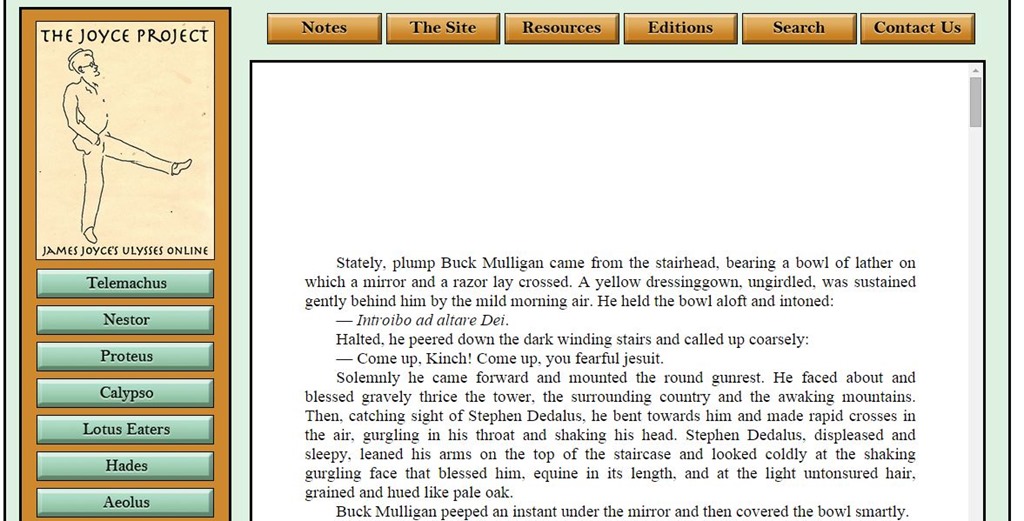
  8. Ulysses by James Joyce (1922)
  9. The Magic Mountain by Thomas Mann (1924)
  10. Journey to the End of The Night by Louis-Ferdinand Céline (1932)
  11. Their Eyes Were Watching God by Zora Neale Hurston (1937)
  12. Native Son by Richard Wright (1940)
  13. Under the Volcano by Malcolm Lowry (1948)
  14. Lolita by Vladimir Nabokov (1955)
  15. Things Fall Apart by Chinua Achebe (1958)
  16. The Golden Notebook by Doris Lessing (1962)
  17. One Hundred Years of Solitude by Gabriel Garcia Márquez  (1967)

Mostly these are new books I hope I’ll love to get to know, but a few are old books I want to reread because I think I missed a lot the first time around. In some ways I feel like I’m moving into a new phase of life, because none of these books are science fiction. I’m not giving up on science fiction, but I feel I’ve overdone the genre. I do think I’ve reached a stage where I could pick my 25-50 all-time favorite science fiction novels. For the last ten or twelve yeas I’ve been rereading the science fiction books I read when I was in my teens and twenties, and most didn’t hold up. My ultimate list will be those that do. Sadly, most novels don’t even deserve to be read once. Most of us are pretty slutty when it comes to going to bed with a book. There are a lot of faces and names we’ve quickly forgotten. Is it any wonder that I’m asking if we have too many one-night reads, and not enough serious literary relationships?

JWH

Can Science Fiction Change Republican Minds About Climate Change?

By James Wallace Harris, Sunday, November 8, 2014

The other day I was talking with my science fiction reading friends about whether or not science fiction can change public policy or opinion about the future. On one side of the argument, we had the belief that science fiction is only entertainment, on the other, some believed science fiction can enlighten people. I was on the side of science fictional enlightenment, but when asked to produce a list of books that actually changed public thinking, I was stumped. My only example was Orwell’s Nineteen Eighty-Four. I think Orwell produced a number of memes about life in a totalitarian state that it has shaped political thought ever since. Just think how often his book was referenced during the recent NSA scandal.

Wind_Up_Girl_by_Raphael_Lacoste-600px

Back in the 1950s and 1960s, two science fiction novels were bestsellers that warned people against the atomic war apocalypse – Alas, Babylon by Pat Frank, and On the Beach by Neville Shute. Neither are much remembered today, but then again, few people today worry about WWIII anymore. Did reading about Armageddon help us avoid it?

Despite the success of some of the new climate fiction (cli-fi) novels, I’m not sure they’re making an impact. Nineteen Eighty-Four is something Republicans can understand and embrace because it resonates with their political thinking, but how many conservatives have read Forty Signs of Rain by Kim Stanley Robinson, or the brilliant The Windup Girl by  Paolo Bacigalupi? There’s a good chance that most people don’t read books that don’t match their current thinking.

After the mid-term elections it’s pretty obvious that the majority of Americans want Republican leaders, even if Republicans are against their personal interests. For example, Obamacare is proving most successful in red states. Republicans are extremely united in their opposition to climate change politics. Their denial of reality is amazing. And they’re absolutely consistent by siding for profit over environment. Nor do we see conservatives showing any signs of moving in new directions. Is there any book or movie that could make red state voters change their minds?

This is where I wonder about the power of science fiction, or just the power of art. Can any novel or movie actually change people’s minds if they already believe differently? Over my lifetime I feel I’ve constantly evolved because of my empathy with fictional characters. My own life is not as diverse as the life I see on TV, the big screen or in the pages of books, so I honestly feel I know more about people from art, than from just knowing them. I feel art expands my view on reality and changes me. But that could be an delusion.

Do I read liberal books because I’m already liberal, or because previous read liberal books made me liberal? Do conservatives read conservative books because they are conservative, or have conservative books made them conservative? If I read conservative books and conservatives read liberal books, would we change our views? I don’t know. Maybe genes override outside input.

Personally, I think the United States is making a fatal mistake by ignoring climate change and by choosing to destroy the environment. I could be wrong, and I’ve been wrong plenty of times, but on this issue, I think I’m right. Is there any way I could present my views in a novel that would convince people who don’t think like me to change their minds? Can anyone write a Nineteen Eighty-Four type story that would inspire millions to change their votes and avoid the future we’re racing to meet?

JWH

Will We Still Be Using Microsoft Windows in 2044?

By James Wallace Harris, Friday, November 7, 2014

When Windows 8 came out I disliked it so much I began preparing to switch to Linux. I’ve been playing with Linux since I had to assemble it from pieces off of Usenet News, but it never became something I wanted to use 100% of the time. I thought Windows 8 was finally going to push me into being a Linux guy full-time. Then Windows 10 Technical Preview came out and I realized I can’t give up Windows. As long as I can use all my old favorite programs I’ll be tied to those programs forever, and if Windows doesn’t get too weird, I’ll always want to stick with Microsoft.

Windows-10-Preview-Build

Does that mean I’ll be using Windows in the 2020s and 2030s and even the 2040s?  I don’t know. My friend Mike has switched to Macs, and I’ve used Macs at work since the 1980s. I love Macs, but I’m too cheap to own one. If Apple sold a $99 copy of OS X to put on a cheap Intel box I might have become a Mac user long ago. But they didn’t, and I never bought one. I still help friends with their Macs, and when I do, I have no trouble using the operating system, but it’s not the old comfortable operating system that Windows has come to be for me.

Years ago, just as Windows 95 was coming out, I helped a retiring professor set up a computer he planned to have for the rest of his life. He wanted DOS and Wordstar 3.3. That’s what he knew and loved, and that’s what he wanted to stick with. I wonder if he’s ever modernized? But don’t we all become addicted to what we know? I have a friend who recently got married and her husband talked her into switching to a Mac. She’s having a very hard time. He was positive Macs were so easy to use that she would be won over. It hasn’t worked out that way. She’s extremely non-techie, and what little computer skills she has are completely adapted to Windows.

I’m not sure desktop Linux will ever catch on. First off, there’s no such thing as desktop Linux, there’s endless Linux distributions, each based on a different desktop UI, each configured by some distro dude, in his image of user perfection. Linux has become so Balkanized that its almost impossible to stick with any kind of consistency. The reason I hated Windows 8 is because Microsoft abandoned the desktop metaphor and wanted to force full-screen windows on us. I don’t mind my tablet or smartphone not using a desktop metaphor, but I sure as hell want my desktop computer to use it.

If Windows is always reasonably close to what Windows 7 is, I’ll probably stick to it. I know we like to think the future will always bring us dazzling new inventions, but I’m quite happy with the keyboard, mouse and desktop UI. I’m quite anxious to have larger, higher resolution monitors, and slicker, more sophisticated software, but I’m a stuck in the rut of the desktop metaphor. One thing I hate about the new Windows 10 is they moved away from the old way of showing files and folders, pushing us towards a Metro look. I’m hoping protests will bring back the old way, or I can just find a way to configure the old look. Those colored squares are downright ugly.

I guess Microsoft feels compelled to change things to justify selling us a new version of the OS, but I don’t want too much change. I just want Windows to always become more rock-solid. If Windows 11 looked exactly like Windows 10, but just had a way under the hood to repel all virus attacks and malicious software, I’d buy that upgrade. If Windows 12 protected my files with unlimited versioning, and automatic backups to the cloud that was as secure as my money in the bank, I’d buy it too even if it looked exactly like Windows 10.

Microsoft needs to quit moving my cheese.

Over time, don’t we all become fuddy-duddys about how we like to do things? Won’t we all become fussy old coots who get irate if someone moves our icons? Won’t we all throw geezer tantrums when Microsoft or Apple tries to make us learn new stuff? I don’t mind useful new features, or elegant ways to integrate functionality, but I don’t want my old ways of doing things thrown out. I guess I’m becoming an old fart. Sorry. (No, I’m not.)

JWH