By James Wallace Harris, Thursday, September 29, 2016
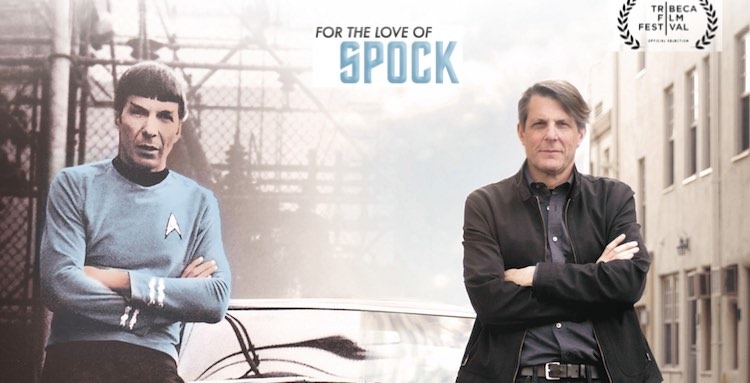
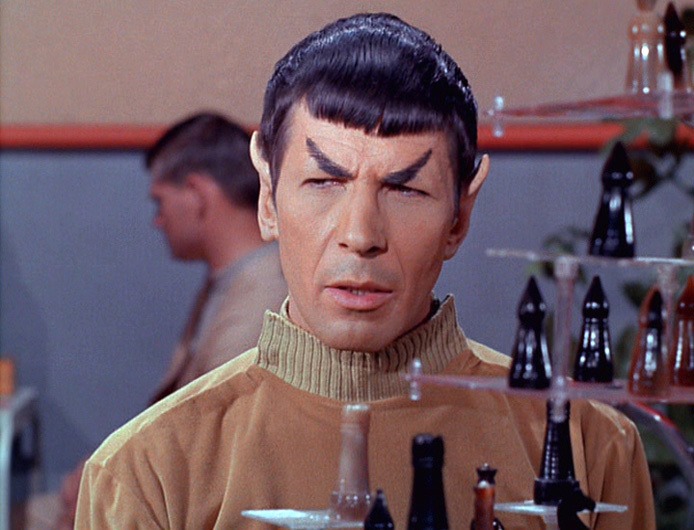
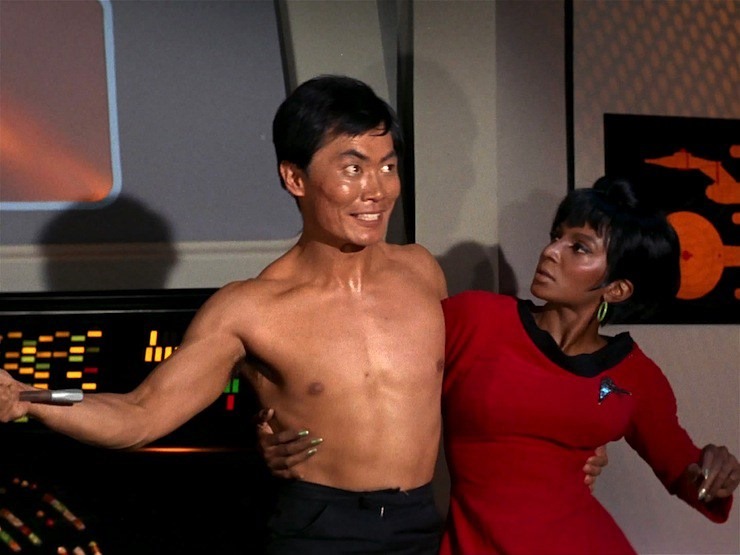
50 years ago tonight, “The Naked Time,” the fourth episode of Star Trek was shown. “The Naked Time” allowed the actors to chew the scenery, but wasn’t that science fictional. The context of Star Trek was very science fictional, with a spaceship exploring the galaxy, but often the episodes plot’s were centered around mundane conflicts or fantasies. Mostly the show liked allegories over speculation. My assumption then and now, was television and movie science fiction had to appeal to millions, and thus any real science fiction was watered down.
This will reveal my media snobbery, but I’ve always felt science fiction I read was more advanced than science fiction I watched. That might be less true in 2016, because television has evolved a great deal in fifty years, but I think it’s still true. Because we’re celebrating the 50th anniversary of Star Trek premiering in 1966, I thought it might be fun to look at the other science fiction from that year. Were the 1966 SF novels and short stories more sophisticated than first fifteen episodes of Star Trek? I’m not comparing the quality of storytelling, but examining which science fictional ideas from 1966 was most innovative.
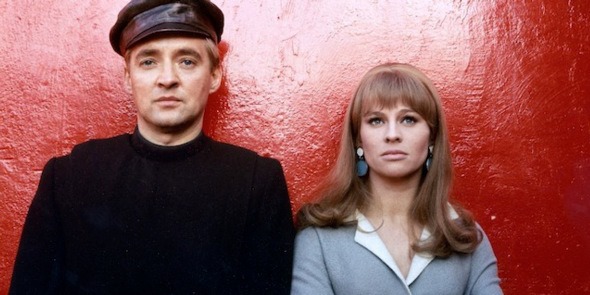
It’s rather ironic that the beautiful film version of Fahrenheit 451 premiered in England just days after Star Trek. Directed by François Truffaut, Fahrenheit 451 was science fiction attacking a future where people gave up reading for television and comics. Few episodes of any version of Star Trek can compare to that film, but why haven’t we seen celebrations of its 50th anniversary? Why have we seen no public praise for the novels and stories below turning 50? Star Trek was loved by millions, and I’m afraid the science fiction books and magazines of 1966 were read by just thousands at the time.
We think of Star Trek as classic science fiction, but what most fans love are the characters, and the show’s allegorical content. If you compare it to the science fiction that was being written in 1966, I don’t think Star Trek was innovative, at least in terms of science fictional ideas. It was innovative television. And don’t get me wrong, I’m not knocking Star Trek. It was fun, and I’m very nostalgic about it. I’m just trying to put it into context of written science fiction of 1966.
The two Hainish Cycle novels by Ursula K. Le Guin that appeared in 1966, were far more mature science fiction than what Gene Roddenberry was pursing. Even the two short novels published by the youthful Samuel R. Delany were far more philosophical, and intellectual. And if you compare the two tales of young men named Charlie, “Charlie X” and Flowers for Algernon, you’ll see that Star Trek went for the easy and obvious. And let’s face it, Star Trek just couldn’t take us to the strange alien headspaces that Philip K. Dick, R. A. Lafferty, and Cordwainer Smith could. Nor did it have the style of Roger Zelazny or J. G. Ballard. And it certainly didn’t have the elegant beauty of what Keith Roberts was writing. And it’s a real shame that Larry Niven, Anne McCaffrey, Keith Laumer, Gordon R. Dickson, Jack Vance and Fred Saberhagen weren’t writing for Star Trek because they had wonderfully cool ideas for galactic civilizations – although Desilu didn’t have the budget to produce what they imagined.
A great deal of science fiction from the 1960s assumed humans will be part of a galactic civilization in the future. The difference between the famous TV show and what we read was the depth of those assumptions. Star Trek existed between the two most remembered science fiction novels of the 1960s: Dune by Frank Herbert (1965) and The Left Hand of Darkness by Ursula K. Le Guin (1969). Can you imagine Captain Kirk visiting Arrakis or Gethen? What kind of exploration of those societies could a 50 minute TV show give us? Especially, when the plots usually involved Kirk being held hostage, and centering around escape.
Television
| Episode | Idea |
|---|---|
| “The Man Trap” | Alien that can shape shift, or telepathically make people think it looks different. Reminds me of “Who Goes There?” (1938) and The Body Snatchers (1954). |
| “Charlie X” | Human raised by advanced aliens and taught psychic powers, must learn to live with normal humans. Reminds me of Stranger in a Strange Land (1961). |
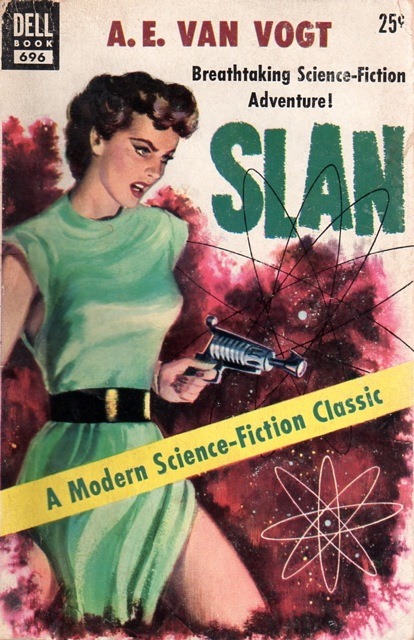
| “Where No Man Has Gone Before” | Two humans acquire god-like powers. Reminds me of Slan (1940). |
| “The Naked Time” | Disease causes crew to lose their inhibitions. |
| “The Enemy Within” | Transporter creates two Captain Kirks – one aggressive the other passive. |
| “Mudd’s Women” | Space age mail-order brides with siren like abilities. |
| “What Are Little Girls Made Of?” | Robots replace people. Reminds me of Philip K. Dick. |
| “Miri” | On a mirror-Earth, the crew meet children that have very long childhoods and die when they reach puberty. |
| “Dagger of the Mind” | About a penal colony and mind control. |
| “The Corbomite Maneuver“ | Advanced alien plays cat and mouse with Enterprise. |
| “The Menagerie, Part I” | Mr. Spock commits mutiny. |
| “The Menagerie, Part II” | Mr. Spock takes Enterprise to planet where aliens can control human thoughts. |
| “The Conscience of the King” | Unmasking a mass murderer. Made me think of Nazi war criminals in hiding. |
| “Balance of Terror” | The Enemy Below played out with Romulans. |
| “Shore Leave” | Crew visits a planet where thoughts come true. This was written by Theodore Sturgeon but it felt like something Thorne Smith would have written. |
Novels
| Title | Idea |
|---|---|
| Babel-17 Samuel R. Delany |
Linguistics, poetry. Language influences thought and perception. Code breaking an enemy alien language. |
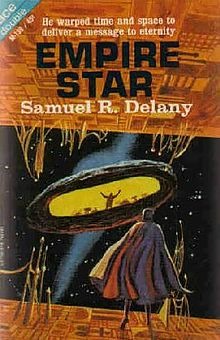
| Empire Star Samuel R. Delany |
The novel referenced in Babel-17. About simplex, complex and multiplex thinking. |
| Colossus D. F. Jones |
A U.S. military supercomputer takes control and allies with a U.S.S.R. supercomputer. |
| Destination: Void Frank Herbert |
Developing an artificial consciousness, and cloned humans. |
| Earthblood Laumer & Brown |
Trying to find lost mythic Earth after humans moved to the stars. |
| Retief’s War Keith Laumer |
Intergalactic diplomatic hijinks and humor. |
| Flowers for Algernon Daniel Keyes |
Mentally challenge young man artificially evolved into a genius. |
| Make Room! Make Room Harry Harrison |
A 1966 extrapolation of year 1999, speculated about the horrors of an overpopulated world of 7 billion. |
| Mindswap Robert Sheckley |
A comedy about a man who vacations across the galaxy by swapping his mind into various alien bodies. |
| Now Wait for Last Year Philip K. Dick |
Drug causes time travel and addiction during a time of war with aliens. |
| Planet of Exile Ursula K. Le Guin |
Anthropological study, and racial conflict on a colony planet. |
| Rocannon’s World Ursula K. Le Guin |
An ethnological mission to another planet. The word ansible, for faster-the-light communication was coined here. |
| The Crystal World J. G. Ballard |
Apocalyptic novel about life on Earth turning into crystal. |
| The Eyes of Heisenberg Frank Herbert |
Genetically modified humans, and longevity. |
| The Moon is a Harsh Mistress Robert A. Heinlein |
An artificial intelligent sentient machine evolved out of a network of computers on the Moon. The AI joins an anti-colonial rebellion against Earth. |
| The Solarians Norman Spinrad |
Space opera, about a star-drive that can destroy stars. |
| The Dream Master Roger Zelazny |
Citizens of an overpopulated Earth suffer psychologically and use dream therapy where their therapist enters their dreams. |
| This Immortal Roger Zelazny |
A devastated Earth is now a tourist destination for alien races to view our ruins. |
| The Watch Below James White |
Humans are stranded underwater. Think if The Poseidon Adventure had been science fiction. |
| World of Ptavvs Larry Niven |
Earth and “Belters” in a cold war, with story of ancient alien discoveries, and telepathic amplifiers. |
Short Stories
| Title | Idea |
|---|---|
| “Neutron Star” Larry Niven |
Humans and aliens study a neutron star. |
| “Light of Other Days” Bob Shaw |
Invents slow glass, where light can take years to pass through, thus capturing scenes from the past. |
| “The Last Castle” Jack Vance |
Far future humans battle enslaved aliens |
| “For a Breath I Tarry” Roger Zelazny |
After the extinction of mankind, a sentient computer remembers our species |
| “Call Him Lord” Gordon R. Dickson |
Aristocrat from galactic empire visits old Earth. |
| “Bookworm, Run!” Vernor Vinge |
About an uplifted chimpanzee. |
| Pavane stories Keith Roberts |
About an alternate history of England where Queen Elizabeth was assassinated and Protestantism failed, and the technology we know never developed. |
| “Day Million” Frederik Pohl |
Love affair between two altered humans on what would be the millionth day AD. |
| “In the Temple of Mars” Fred Saberhagen |
Humans versus intelligent machines. |
| “Nine Hundred Grandmothers” R. A. Lafferty |
Humans visit planet and learn about a strange ontology. |
| “Riverworld” Philip José Farmer |
Humans reincarnated in another existence, one that stretches along one immensely long river. |
| “The Ship Who Killed” Anne McCaffrey |
Spaceship with a cyborg soul. |
| “We Can Remember It for You Wholesale” Philip K. Dick |
Recording false memories. |
| “Under Old Earth” Cordwainer Smith |
A visitor to an underground world without laws. |
| “The Age of the Pussyfoot” Frederik Pohl |
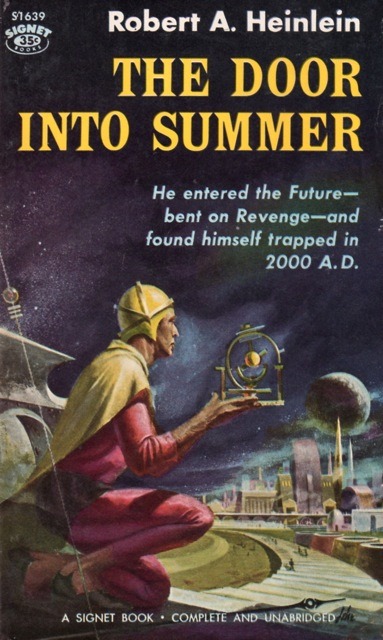
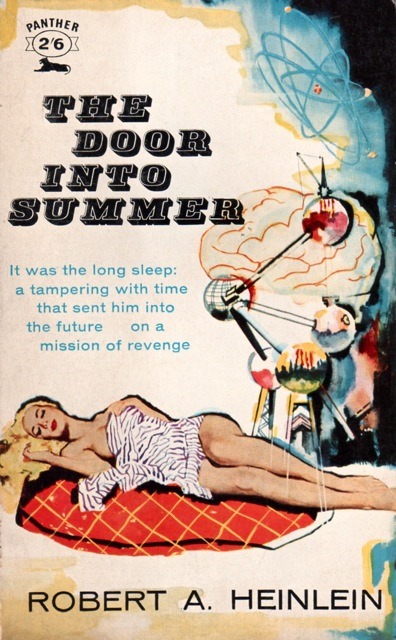
A man from our time visits the future via suspended animation. He is given a computerized personal assistant. |
| “When I Was Miss Dow” Sonya Dorman |
Sexless alien impersonates a woman to understand gender. |
| “You: Coma: Marilyn Monroe” J. G. Ballard |
Contemplating geometry and time |
| “The Primary Education of the Camiroi” R. A. Lafferty |
About a society where everyone is expected to be an expert. |
| “Behold the Man” Michael Moorcock |
Time traveler looks for Jesus. |
| “The Keys to December” Roger Zelazny |
Genetic modification. |
| “The Secret Place” Richard McKenna |
Science versus myth. |
Films
| Title | Idea |
|---|---|
| Fantastic Voyage | Raquel Welch is made small enough to travel in tiny submarine inside a human body. |
| Fahrenheit 451 | About a near future where books are banned, and society wants people to watch large flat-screen TVs or read comic books instead. |
| Seconds | A rich middle-age man buys rejuvenation and attempts to be young again living with bohemians. |
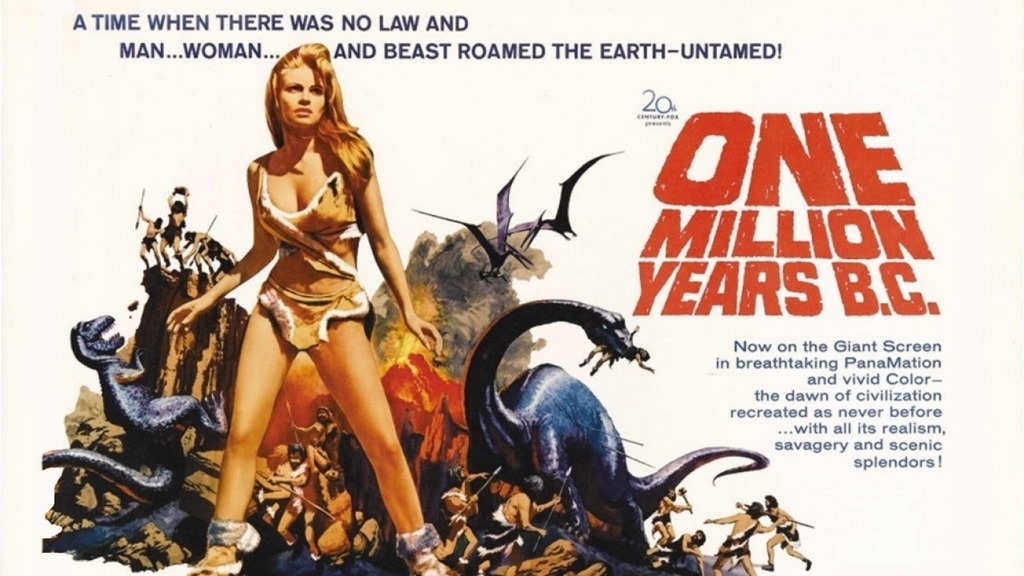
| One Million Years B.C. | Raquel Welch is cavewoman back when humans lived among the dinosaurs. (Not joking) |
Is it surprising how many stories involved intelligent computers? In 1966, mainframe computers were common, but few people interacted with them. AI was a concept them emerged in the 1950s, and science fiction had grabbed it. Most of science fiction before the 1950s dealt with exploring the solar system. The idea of interstellar travel and galactic civilizations boomed in the 1950s, so by the 1960s writers were refining those ideas. Writers blended AI with spaceships. And sociology, anthropology, and psychology was embraced. Stories about human colonized worlds and aliens became richer. Much of the science fiction we read in the 21st century is based on science fictional ideas first developed in the 1950s and 1960s. What’s really evolved since then is the art of storytelling. We exist in a Baroque period of science fiction, where novels are gigantic, and often multi-part, but still exploring the same ideas science fiction fans first encountered in 1966.
JWH