Are We Being Cheated Out of Ebook Cover Art?

By James Wallace Harris, Tuesday, September 27, 2016

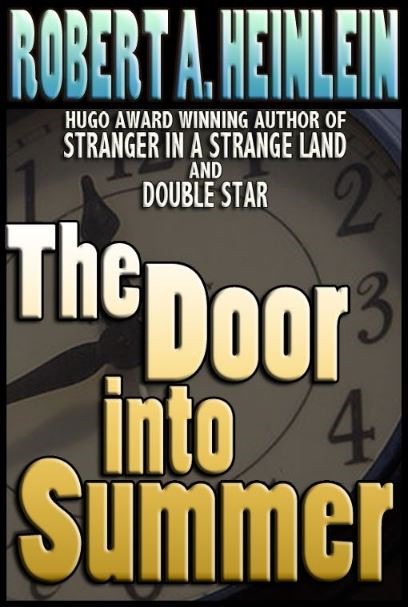
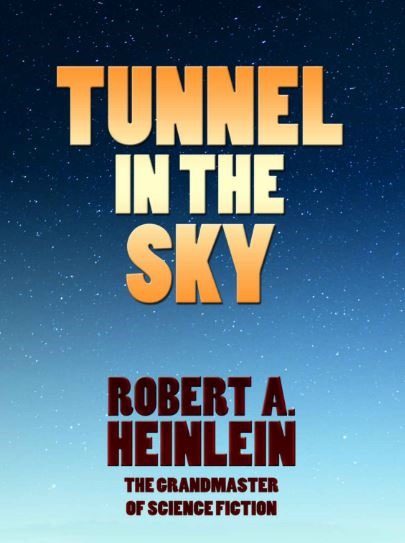
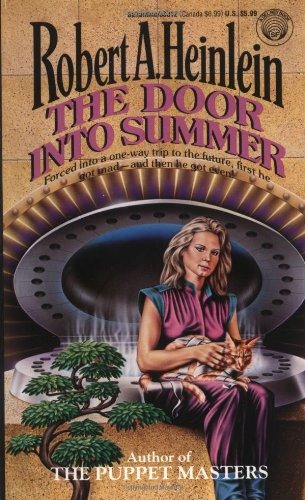
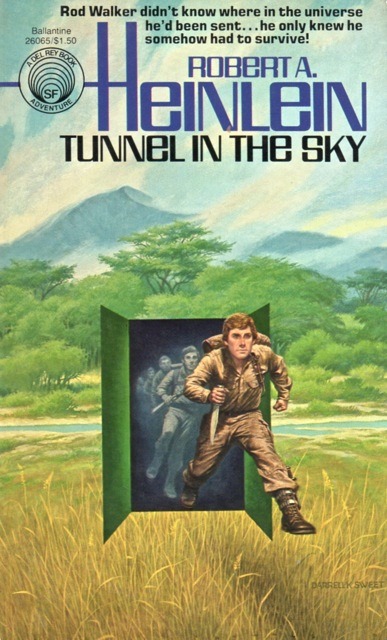
I’ve always loved dust jacket art on science fiction hardbacks. I also love cover art on science fiction paperbacks, and cover art on science fiction magazines. But what the hell is happening with covers for ebooks? I can understand when self-published authors create their own covers and they look awful. But why are we seeing covers like this:

The-Door-into-SummerTunnel-in-the-Sky-ebook

These new ebook editions have no copyright page or publisher listed inside. At Amazon, under publisher, they give: Robert A. Heinlein. As cheapo ebook covers these aren’t terrible – but they aren’t appealing either. I guess they decided that no art is better than bad art, and I’m thankful for that.

I assume publishers spent money on cover art when the covers often sold books. And I guess, since ebooks aren’t displayed in bookstores, publishers feel little need to sell books by their covers anymore.

If you look at the cover art from 2016 – here’s a selection at the old SF Signal site, and look at a selection of cover art from the 1960s and 1970s at Science Fiction and Other Suspect Ruminations, you’ll notice, at least in my mind, that cover art is less creative.

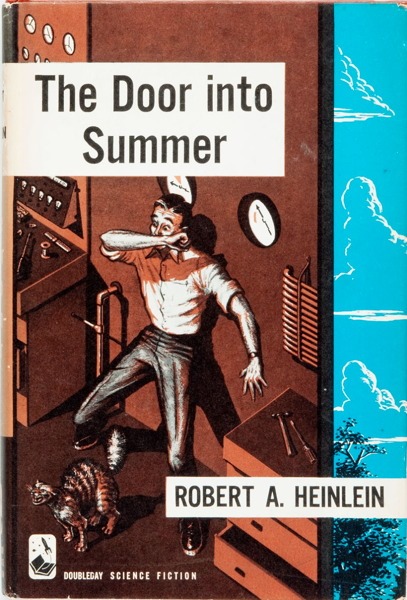
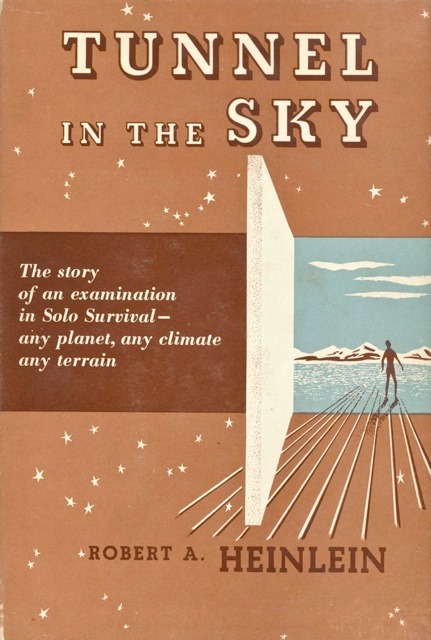
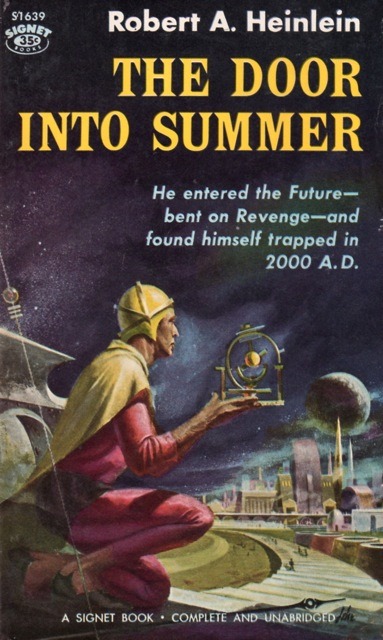
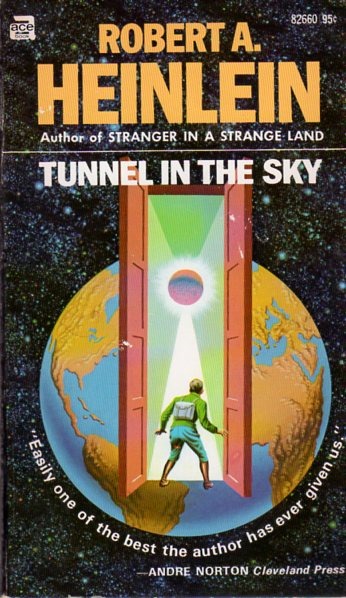
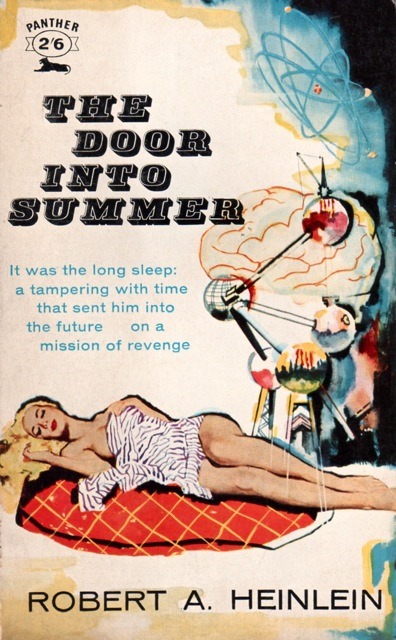
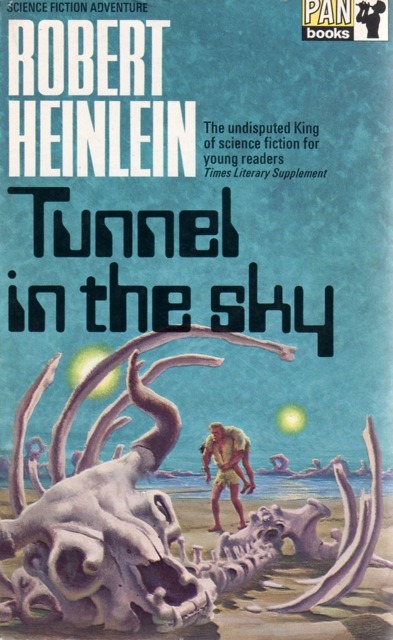
For fun, I thought I’d give a brief history of these two covers. Tunnel in the Sky has never had any great covers, but some of them were not bad. The Door into Summer has one great SF cover, and a couple interesting ones. Clicking on the covers should bring up larger images.

First off, their original hardback covers from the 1950s:

The-Door-Into-Summer-1957Tunnel-in-the-Sky-original

Now their early paperback covers:

The-Door-Into-Summer-1959Tunnel-in-the-Sky-1970

A couple foreign editions:

The-Door-Into-Summer-1960Tunnel-in-the-Sky-1968

Later 20th century paperback editions:

The-Door-Into-Summer-1993Tunnel-in-the-Sky-1977

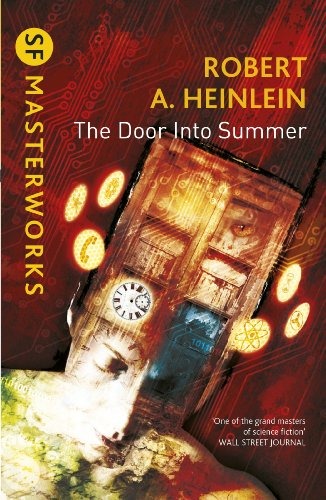
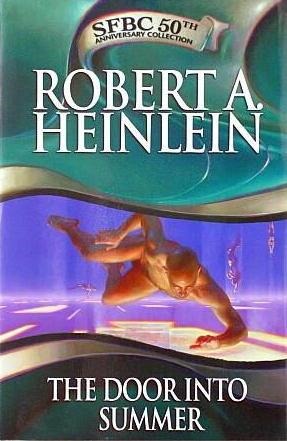
Some 21st century versions:

The-Door-Into-Summer-MasterworksTunnel-in-the-Sky-SFBC50

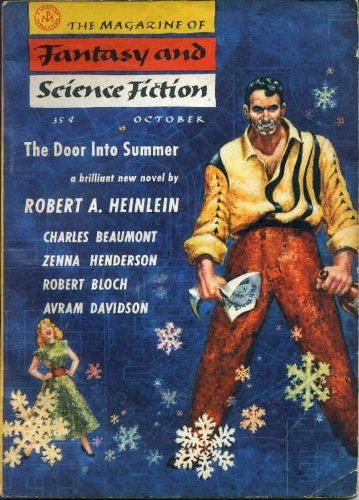
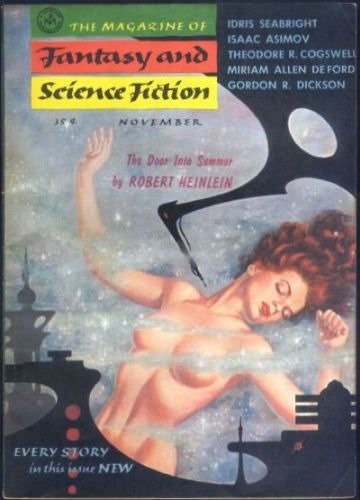
And for some extra fun, here’s what The Door Into Summer looked like when it appeared  in F&SF.

The-Door-Into-Summer-F&SFThe-Door-Into-Summer-F&SF-2

These aren’t masterpieces of cover art, but they are a lot more appealing than the current covers. Can you understand why I feel cheated?

I still miss the cover art from 12” LP covers. The art on CD cases were never the same. Is migrating to digital media destroying the wonderful world of cover illustrations?

JWH

Aging, and Reading Science Fiction

By James Wallace Harris, Friday, September 23, 2016

Humans are either doing something, or thinking about doing something. Evidently as we get older, we do less, but do we also think about doing less?

Do you ever wonder why we do the things we do? Why do we read science fiction? Most people read for entertainment and escape. Most bookworms dedicated themselves to one genre, even though there are so many wonderful kinds of storytelling. Why have we fixated on science fiction? When I was young, I mass-consumed science fiction, almost shooting it in my veins. Now the craving is falling off. I’m afraid there might parallels to my sex drive. When young we want sex all the time, because our hormones are in full production. When we get old, biology begins to fail. Desire may stay, but practicality wanes. Isn’t that true of science fiction too? I don’t fantasize about young women anymore, so why should I keep reading about going to Mars? Now that I think about it, my reading tastes have changed as I’ve gotten older.

VIRGIL-FINLAY--Galaxy-Science--October-1956_900

When we were young, our hormones compelled us to procreate. What motivated us to read science fiction? Have you ever psychoanalyzed yourself about that? I have a theory. I doubt its any more scientific than dream analysis, but its worth considering. I believe we read science fiction because we wanted to exist in a different location in time and space. I think all bookworms want to be somewhere else. Literary, mystery and romance fans are quite content with this reality, maybe preferring a slightly different temporal location. Generally, they want a little more than their ordinary life gives them. SF/F fans appear to reject the mundane completely. Fantasy fans want to visit exotic places that can’t exist, and science fiction readers want to live in places that could exist, but on the edge of probability. In other words, science fiction readers want a degree of believability in their fantasies. Of course these fantasies are generally no more realistic than the sex fantasies of horny teenagers.

Strangely, as I’ve gotten older, my science fictional fantasies have become more realistic and closer to home. So have my thoughts of sex. I wonder if mystery fans who once loved thrillers now prefer cozies? If readers of romance novels imagine more realistic lovers?

frpaul_01_amazquar_1929win_ralph124c

We’re motivated by what we don’t have. Few people are content to sit and claim, “I have everything I need and want right here.” Most of us are tied to the mundane routines of our life. A few bold folks enact their dreams with great effort and determination, but most of us just VR what we want with books and television. If we live on a steady diet of science fiction, shouldn’t we assume its an indication of what we really want? Or, do we really desire, to just sit in a chair, holding pulped wood and stare at black ink stains, and imagine far out ideas?

I’m getting older, but not that old. Old enough to still dream, but too old to believe. Let’s say I’ve reached that age when I can’t pretend I’m young. If NASA or a beautiful woman offered to make my youthful fantasies come true, I’d probably turn them down. No use proving myself an old fool. So why do I still love books about colonizing the Moon and Mars, or generation ships traveling to other stellar systems? Or do I? Have my science fiction fantasies changed with age? I think reading science fiction is also a kind of collective fantasizing, or collective dreaming. This still parallels the sex drive. Sex is about making children, and children are about making the future. Everyone is future oriented to a degree. Science fiction fans just project a little further than average. But as we get older, the future has less potential. So don’t our fantasies become smaller? (By the way, if they had Viagra for your science fiction drive, would you take it?)

O--REILLY-American--20th-Century.-Science-Fiction-Plus--story-illustration_900

Of course, science fiction isn’t always about the future. For young readers who love Military SF, they could join the Army today. For readers who crave romantic science fiction, there are plenty of romantic locations on Earth, many of which are quite alien and exotic. And fans of post-apocalypse could travel to Syria, if they really wanted to live what they read. Bookworms could live more exciting lives if they made the effort, but is that what we really want? I use to think yes. Now I think no.

What we really want are spaceships, cities on Mars, brilliant chatty robots, contact with alien intelligent beings, immortality, to download ourselves to virtual computer worlds, or supplement our brains and bodies with cybernetic attachments. Or do we? I seldom chat with Alexa, my cybernetic companion. And if I had to really choose between retiring to Mars or Florida, I’m pretty sure I’d pick the Sunshine State. And I’m not looking forward to hearing aids, exoskeletons,  and cataract replacement lens.  Nor does living forever have any appeal to me.

Being old has changed my attitude towards science fiction. I’m less concerned with new science fiction, preferring to study the history of science fiction. Older people reevaluate their lives. Well, I’m an old science fiction reader, reevaluating the genre. For some reason, science fiction stories written in the 19th and 20th century are more fascinating than reading science fiction stories written in the 21st century. WTF? What a pitiful excuse I am for a science fiction fan. Well, so what.  Now, I’m just more interested in how I got here, rather than where I’m going. When I was young, where I was going was everything. Now, not so much.

I just started reading The Scarlet Plague by Jack London, from 1912, and it immediately reminded me of Earth Abides (1949) and The World Without Us (2007). How long have we been thinking up the same old science fictional ideas and assuming they are innovative? That reminds me of the essay, “The Graying Lensmen” by Alec Nevala-Lee. There is value is studying SF history. Alec is focusing on the 1940s, but I think we need to go further back.

All of this is making me rethink the common assumptions of science fiction. Maybe the future isn’t visions of science fiction coming true, but more science fiction. Science fiction that repeats itself. I used to think serious science fiction prepared us for living in the future, and less serious science fiction provided amusement and escape in the present. Now I’m wondering if the purpose of science fiction is a cognitive tool, for thinking science fictional thoughts. Religion, science, mathematics, history, logic, philosophy, journalism, etc., are all cognitive tools for understanding reality. Science fiction is not a very precise tool, more like religion than science. But thinking science fictionally, is a way to contemplate reality. I’m wondering if we think science fictionally different as teenagers, than we do collecting social security?

JWH

Where No Man Has Gone Before

By James Wallace Harris, Thursday, September 22, 2016

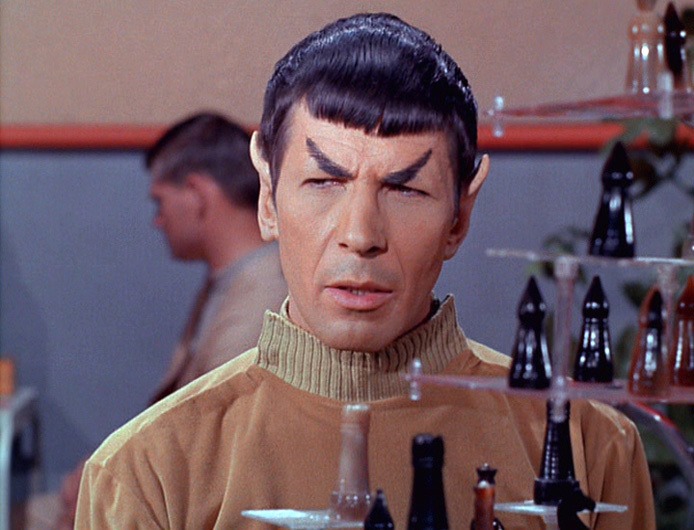
Fifty years ago tonight, “Where No Man Has Gone Before,” the second Star Trek pilot, was the third episode of the series to be shown in the U.S. (It was the first to be shown in the United Kingdom.) This was the first Star Trek episode I really liked in 1966. Partly because it had cool ideas, partly because it had Sally Kellerman, but mainly because of Mr. Spock. Leonard Nimoy shaped his famous character over many episodes. Spock was the only main character from “The Cage,” the first pilot, to carry over to the second pilot. Its fascinating to see how the famous Vulcan evolves in these early episodes. In “Where No Man Has Gone Before” Mr. Spock wants to kill Gary Mitchell as soon as he thinks he’s a threat, and at one points strides around with a very large phaser rifle looking like a hot-headed enforcer. This aggressive nature disappears after this episode.

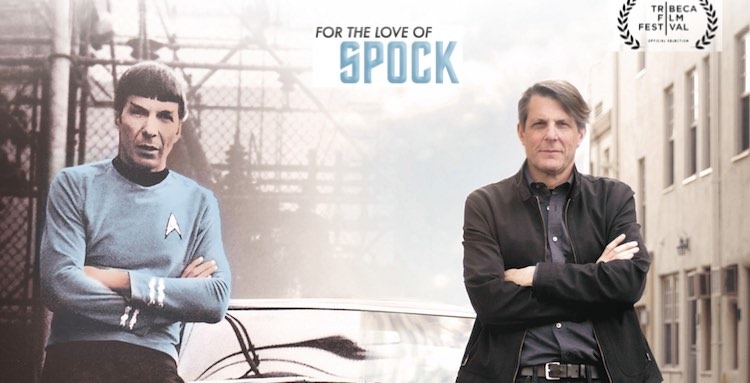
Last night I watched For the Love of Spock, a documentary about Nimoy and Spock made by his son Adam Nimoy. I highly recommend this film, which I rented on Amazon, as well as rewatching these early episodes to see how the Spock character emerged on the show. Mr. Spock even looks different in each of several episodes.

Love-of-Spock-movie-poster

For the Love of Spock is a wonderful tribute to Leonard Nimoy, and a history of a fictional character. I actually learned more details about Nimoy from William Shatner’s recent book, Leonard, but more about Spock from the documentary. Shatner’s book was about a friendship. The subtext of Adam Nimoy’s film was father and son. Nimoy was so much more interesting than his most famous creation, so I assume detail biographies in the future will be worth reading.

Mr. Spock was the only character in Star Trek that I really liked. In an interview in For the Love of Spock, William Shatner admitted feeling professional jealousy in the early days of the show, when Nimoy got the larger portion of fan attention. Shatner said Roddenberry told him that he should embrace Nimoy’s good fortune because that fan mania would make both Shatner and the show a success. I’m not sure Star Trek would have succeeded without Mr. Spock. And, this documentary could have been called Where No Man Has Gone Before, because its about a real man becoming a myth in his own lifetime. Early on Nimoy tried to escape that fate and wrote, I Am Not Spock. Eventually he wrote, I Am Spock.

For those who wish to know all the compulsive details of the episode “Where No Man Has Gone Before,” I recommend reading about it as Memory-Alpha. What I want to do is continue my remembering of 1966 impressions of the show and compare them with my 2016 viewing. Every time I write about these old episodes of Star Trek I feel like I’m trying to get into character, of me in 1966. Seeing photographs and home movies of Leonard Nimoy and his family from the 1950s and 1960s reminded me just how different things were back then compared to today. In just a few years, normal life changed. Television is no measure of reality, but the transition from 1966 to 1969 was somewhat like going from That Girl to All in the Family. But the fifty-year transition was like the background life you saw in The Fugitive evolving into the background life you see in Breaking Bad.

Where-No-Man-Has-Gone-Before-mr-spock

Living from 1966 to 2016 could be filmed as “Where No Human Has Gone Before.” The fourteen-year-old kid who watched Star Trek in 1966 assumed the future would be dramatically different. I never figured we’d evolve powers like Gary Mitchell, but I expected the future would be science fictional. What’s weird is we’re living in a very science fictional era, but everyone seems to be wearing clothes fairly similar to 1966. People look about the same. Houses look about the same. Cars are different. TVs look different. But living rooms and bedrooms are very similar.

In 1966 you saw more ordinary, even homely people, on TV. Today, everyone is beautiful and buff. There were lots more character actors back then. Nimoy always said he wanted to be a great character actor. It was Shatner that wanted to be a lead. The walk-on characters you saw on Perry Mason often seemed like people you saw on the streets back then. If you want to see normal people today you have to watch the local news, or Walmart people on YouTube, because TV isn’t very representative.

To be honest, a story about flying to the edge of the galaxy and having two people become god-like in their abilities, is about as realistic in 1966 or 2016 as reading Greek Mythology or Marvel Comics. In 1966 I wished I could speed-read like Gary Mitchell, once his latent psychic powers emerge. It would have been great help with homework. But why did the writers of this episode assume Humans 2.0 would have no ethical qualms about killing 1.0 Humans? What was cool in 1966 to a 14-year-old kid, seems lame to a 64-year-old man. Why couldn’t writers imagine evolved humans actually being better beings?

Either as science fiction or allegory, the plot of “Where No Man Has Gone Before” reveals the pitiful nature of our species. Our one tool solution for every problem, no matter how smart we are, is to kill, kill, kill. In that, Star Trek pegged the future, our present.

It’s a shame we all didn’t become more like Mr. Spock, or at least more creative, like Leonard Nimoy.

JWH

Aliens With God Like Powers–“Charlie X”

By James Wallace Harris, Thursday, September 15, 2016

Fifty years ago tonight, the second episode of Star Trek, “Charlie X” was first shown on NBC. As usual, follow the link to Wikipedia’s excellent summary. An even more extensive history is at Memory Alpha.
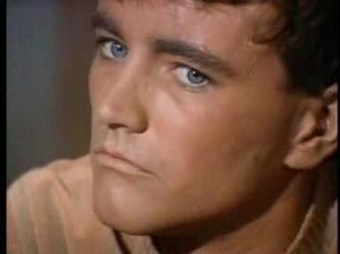
Charlie XI enjoyed “Charlie X” more than I did “The Man Trap,” both in 1966 and 2016, but not by much. The story is rather simple. The Enterprise rendezvous with the Antares to take on a passenger, a young man named Charlie Evans, who has been raised by aliens. He knows little of human ways. Charlie is friendly and anxious to please, but when his feelings gets hurt, he has god-like powers to punish his tormentors. On the Enterprise he meets a woman for the first time, and is smitten with her. Things don’t go well.

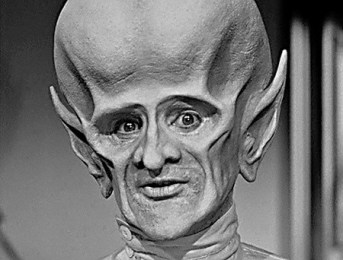
Even in 1966 this plot seemed borrowed. Stranger in a Strange Land was fresh in my memory. Charlie, like Valentine Michael Smith, had been raised by aliens, never seen girls before, and had god-like powers. They both could make people disappear with a thought. I had also seen “It’s A Good Life” on The Twilight Zone, based on the famous short story by Jerome Bixby. It featured a young boy with god powers who would do horrible things to people who displeased him. Much like Charlie. The story also reminded me of “The Sixth Finger,” one of the early episodes of The Outer Limits, about a man who artificially evolves to have, yes, you guess it, god-like powers.
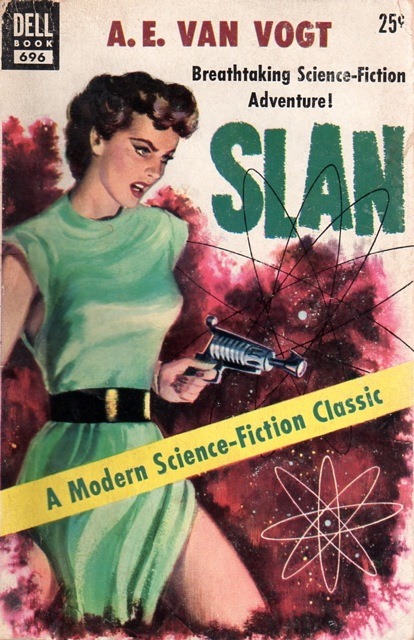
SLAN1953

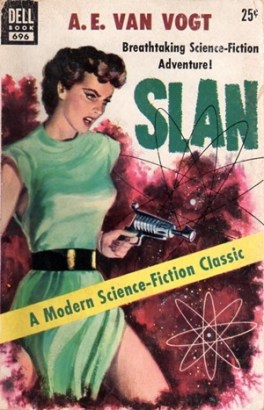
Science fiction has a history of aliens with immense powers, or evolved humans with superpowers (Odd John, Slan, The Hampdenshire Wonder). But are god-like powers even possible? For humans, aliens from the sky, or even gods? Charlie makes the Antares instantly disappear with a thought, while light-years away. Is this science fiction or fantasy? Did Gene Roddenberry really think humans had untapped psi-powers? Did Heinlein? As a kid I took things literally, and imagined such things might be possible, but I don’t anymore.

As I’ve written in earlier essays about Star Trek, I have to watch the show and judge it by science fiction and by allegory. Gene Roddenberry, who wrote the original story for “Charlie X” was an atheist. Star Trek often dealt with aliens with various kinds of god-like powers, and generally Captain Kirk is pitted against them. Are these stories allegories showing humans v. gods?

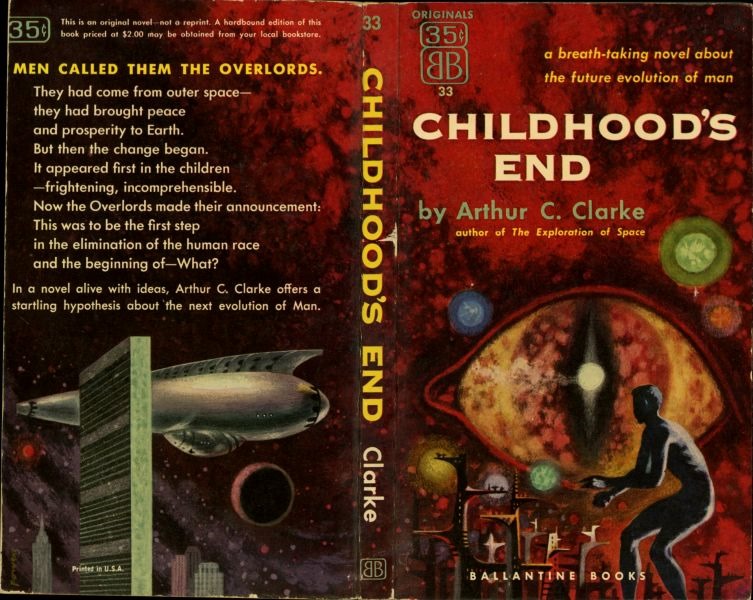
Sometimes we’re given stories in science fiction where the goal is to evolve to the next level – i.e., Childhood’s End, or 2001: A Space Odyssey. But I never liked those stories because they reject normal human existence. Who really wants to have powers like Charlie Evans or Valentine Michael Smith? I now think of these stories as philosophical tales rather than science fictional speculation, which I did as a kid. Isn’t “Charlie X” a rejection of God? Who wants to be friends with someone who can punish you with a thought? Would you even want such a person for a father figure?

Aren’t ESP powers a kind of evil? Aren’t ESP powers a Pandora’s Box we should never want to open? If you could do something with a thought, would you ever learn how to do anything for real? But what is the science of thought power? There’s none. It’s wishful thinking. Any reality where thoughts had such powers would be less than real. Like a dream, or computer simulation. When it comes down to it, don’t we actually need the limitations of reality? Remember The Matrix movies, where Neo learns earlier versions of the Matrix failed because existence was too easy and perfect.

Why did Heinlein accept the powers, but Roddenberry reject them? Why do so many crave the superpowers of superhero comics? The two classic science fiction novels by Alfred Bester, The Demolished Man and The Stars My Destination, deal with telepathy and teleportation. Would you really want either power? Honestly? Have you read Dying Inside by Robert Silverberg? Telepathy is a curse.
the man with the sixth fingerAre there any super-powers worth having? If you could fly, and no one else could, wouldn’t that be psychologically isolating? Even being gifted is hard on most kids. Being absolutely beautiful or sexually irresistible has its downfalls. We don’t want to be average, but we don’t want to be outliers either. Athletes who break records would find it disappointing if they had no real challengers.

If you’re too far from the norm you risk becoming another species. And on Star Trek, the aliens that humans have the most contact with are the ones that are like us – Vulcans, Klingons, Romulans. Of course that’s due to needing human actors. Could Captain Kirk be pals with a Horta, from the “The Devil in the Dark?” Once they learn the creature is only protecting its young, we relate to that, and accept it. Isn’t the whole diversity movement about realizing we’re all the same, and differences shouldn’t isolate us? I could be friends with a Horta if we found something in common – for example, like talking about science fiction. Have you ever wondered if aliens on other worlds have science fiction?

The crew of the Enterprise liked Charlie Evans as long as he was acting human. When he used his powers they feared and hated him. What does that say about us being friends with god-like beings? Was that the intended message of “Charlie X?” It’s the message I got. In the end, Charlie Evans wanted to stay with the humans, and he wanted to be human, but his powers corrupted him. Charlie had to return with the aliens that raised him.

So what’s the lesson here? Ultimately, both science fiction and allegories have something to teach. In 1966, I expected science fiction to explore actual possibilities. At the time I accepted FTL travel and matter transmitters, but I had problems with lots of the plots. Now that I’m older, I see in 2016 that Star Trek was seldom scientific speculation about the future, but often allegories about the present.

If “Charlie X” wasn’t a dig at God, who or what was it satirizing? I wonder if it was Age of Aquarius hippies, Transcendental Meditation, Aldous Huxley, Timothy Leary, psychedelic drugs, and other 1960s movements that promised to take people to states of higher consciousness. The kind of people who were wanting to be like Valentine Michael Smith. The kind of people who read Slan and hoped they would be one?

I watch old episodes of Star Trek to fathom science fiction in 1966. I was fourteen then, and didn’t comprehend all that science fiction could be, or was trying to be. I was a gullible kid who wanted the wonders of SF to be possible. I think some of it was written to promote space exploration. On the other hand, I think most of science fiction was personal commentary on culture by quirky writers like Philip K. Dick and Kurt Vonnegut. Gene Roddenberry wasn’t that different from Rod Sterling. Star Trek eventually developed a reputation for promoting a utopian view of the future. That might be true starting with Star Trek: The Next Generation, but I haven’t started rewatching it yet. So far, I see no utopian aspects of the Federation in the original series.

JWH
Why Science Fiction and Fantasy Are Fundamentally Different

By James Wallace Harris, Monday, September 12, 2016

I’m endlessly annoyed that science fiction and fantasy are linked together in the public’s mind. Philosophically, they are polar opposites, Science fiction is the enemy of magic, and magic is the foundation of fantasy. These two forms of literature parallel two opposing philosophies of reality: science and religion. We all exist in one reality, but we have chosen to explain reality in two contradictory ways: evolution and magic. Religious fundamentalists understand this distinction, which is why they are so fervently opposed to evolution and science. If you understand evolution there is no need for God. If you understand the Christian theology, there is no need for evolution.

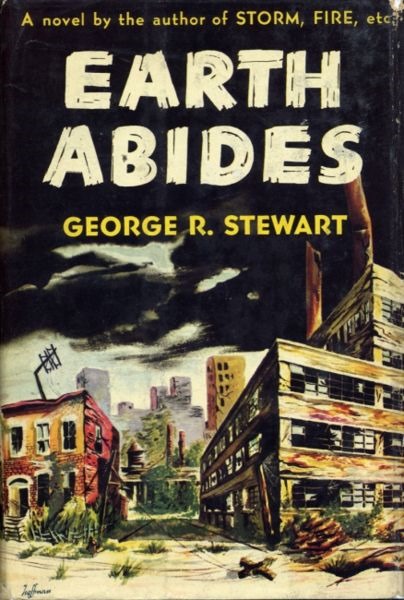
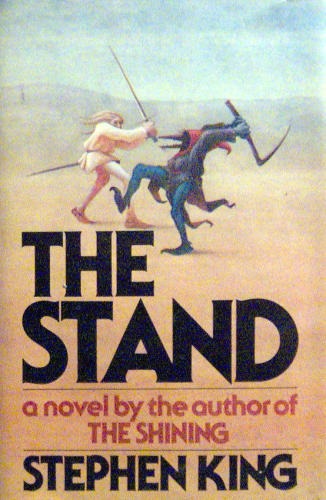
Most people try to incorporate both belief systems into their world view, but that only shows they don’t understand the profound and complete differences between the two. You can’t have God and Evolution as the primary creator of life on Earth. You can’t have Science and Magic. Earth Abides by George R. Stewart is an excellent example of science fiction. Because Randall Flagg is a driving force in The Stand by Stephen King, it makes that book a fantasy novel, even though it follows in Earth Abides footsteps. Once you add the supernatural (magic) to a story it can’t be science fiction, even if it’s using a standard science fiction concept and setting. I bring up these two books because they are both nominated in polls for the best science fiction books of all time. (And yes, I know many writers want to create hybrids, like All the Birds in the Sky by Charlie Jane Anders.)

Earth AbidesThe Stand

Even though I don’t like that science fiction and fantasy are always lumped together, I can understand why. Most people want to believe in magic, but they accept science. That’s why they pray when they fly in an airplane. Most people are clueless to how their smartphone works, but they accept technology as magical. When folks go in for surgery they ask their friends to talk to God for them, even though the outcome depends on the surgeons’ scientific knowledge and evolutionary biology of the patient.

Magic is based on the power of the word. Magicians work by incantation. They learn their spells through study of arcane knowledge. God said, “Let there be light” and there was light. God creates with the power of words.  The person who wrote The Gospel of John understood that when he said, “In the beginning was the Word, and the Word was with God, and the Word was God.”  When primitive people tried to understand how reality worked they came up with the logic of magic, and the power of words. That’s why magical spells are so important to magicians, they are imitating the power of God. It’s also why most religions disavow magic.

Science, which came very late in human development, assumes there is no magic, and words don’t create but describe. Science assumes everything can be explained through observing reality. Technology is applied science. Science assumes there are no magical beings, no magical forces, and no magic itself. For any story to be truly science fiction it must assume magic does not exist. For any story to be fantasy, magic is an integral part of its reality. That’s why Star Wars is fantasy, and not science fiction.

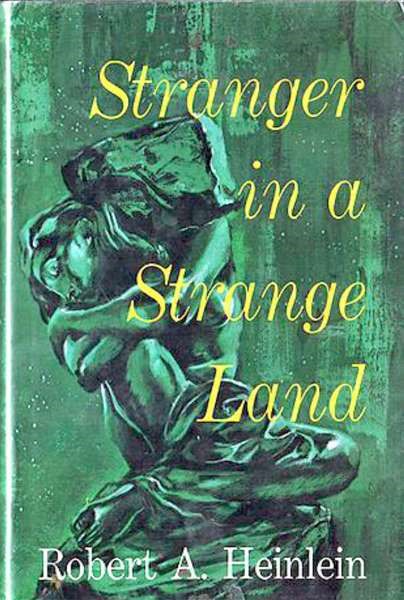
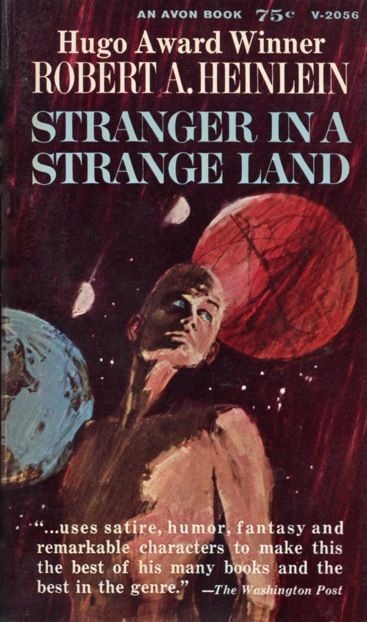
Stranger in a Strange LandStranger in a Strange Land Avon

Science fiction is far from perfect, and far from scientific. Probably one reason the public lumps science fiction and fantasy together, is all to often science fiction claims magical concepts can be scientific. A great example is Stranger in a Strange Land by Robert A. Heinlein. There were many science fiction writers in the 1950s that desperately wanted to believe in extrasensory powers. Writers and editors like John W. Campbell, Robert A. Heinlein, Arthur C. Clarke, or Theodore Sturgeon, believed humans could evolve to have god-like powers, or possessed untapped psychic potential that could be developed. Heinlein proposed that Valentine Michael Smith was raised by ancient beings on Martians that taught him to use such powers. But is that science fiction or fantasy?  Mike essentially works miracles. Stranger in a Strange Land is an anti-science fiction novel. Heinlein even melds religion and God into his story. Some have claimed Heinlein was being satirical, but Heinlein also wrote essays about his beliefs in ESP, and even predicted science would prove the existence of the afterlife one day.

Childhood's End

I am working on the fourth edition of the Classics of Science Fiction and I’ve come up against a problem. The Stand by Stephen King is often cited in polls where fans vote for their all-time favorite science fiction novels. But how can a novel with a character like Randall Flagg be science fiction? But then, how can Stranger in a Strange Land or Childhood’s End be science fiction? One point in Heinlein and Clarke’s favor, is back then they believed ESP type powers would be scientifically provable in the future. In the 1930s, 1940s, and 1950s there were theories about ESP, and scientists conducted experiments to detect latent psychic powers in humans. Others theorized that future species of mankind might evolve such powers. In the years since, science has not found a shred of evidence to support such theories, and we have to assume such wild talents are only fantasy. Yet many people still want to believe. Nearly all the powers of super-hero characters represent a desire for magic. We don’t like being ordinary and powerless, so we love stories with characters who have powers. Unfortunately, science fiction writers aren’t immune to such desires for magic.

Should I delete any novel from the Classics of Science Fiction list whose theories have been shot down by science since they were written? I doubt even Stephen King thought The Stand was science fiction when he wrote it. King is an exceptional storyteller, and uses whatever ideas are useful to forward a story, but I doubt if he’s concerned with their scientific validity. And probably many science fiction writers, if not most, choose story over science. But for me, I’ve always thought the essential quality of science fiction was theorizing about the scientifically possible. I want science fiction to be anti-magic. I read science fiction to imagine what’s possible for humans to create with science, and not with magic. But all too often, science fiction is corrupted by our desires, and we ignore our understanding of science.

Many of the stories from The Twilight Zone, The Outer Limits and Star Trek in the 1950s and 1960s dealt with ideas we thought were science fictional back then, but after a half-century of scientific advances, should be seen as fantasy today. Isn’t it about time we begin discerning magic from science?

I’ve been watching the new miniseries, Jonathan Strange & Mr. Norrell, based on the novel by Susanna Clarke. That’s what inspired this insight into what distinguishes science fiction from magic.  Like the immensely popular Harry Potter stories, we enjoy tales where magic exists. But I wonder how many fans of fantasy actually believe magic is possible? We do know that all believers in the various world religions do believe in magic. They don’t like to call their miracles magic, and often abhor talk of Earthly magic, or even claim it sinful, but all scriptures about miracles work in the same way as stories about magic.

We science fiction fans need to learn to spot the use of magic in science fiction stories. No matter how much we love The Demolished Man or The Stars My Destination, and claim they are classics of science fiction, they are fantasy. But so is the matter transmitter in Star Trek and the time machine in the classic H. G. Wells novel. The main reason the public lumps science fiction and fantasy together is because we all want to believe in magic. More than likely, faster-than-light travel will prove to a magical idea, and words like hyperspace travel, warp drives and wormhole travel are just magical incantations by writers.

Which brings me back to my problem. Should I list The Stand in the Classics of Science Fiction list? Or other books that fans routinely think of as science fiction. For example, I can’t see why so many vote for Animal Farm by George Orwell in a science fiction poll, or Alice in Wonderland. By the way, I’m only talking about polls specifically for science fiction, and not polls for science fiction and fantasy books. I can make an editorial decision and just leave them off the list. Or I could list them in red. I’ve thought of listing any book that was never meant to be science fiction in red, and books that were legitimate attempts to be science fiction in the past, but are now obviously fantasy, in blue.

JWH