Is Facebook a Hive Mind?

by James Wallace Harris, Sunday, July 9, 2017

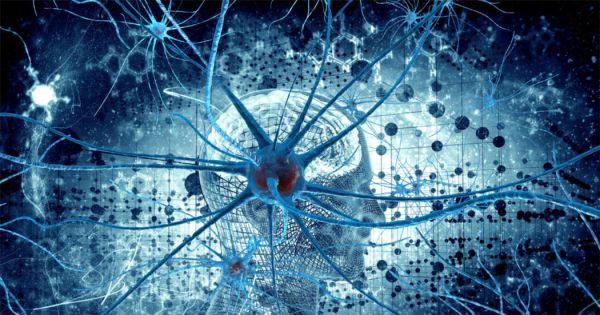
Science fiction has long predicted humans meeting alien races that belong to a hive mind. The most famous example is probably the Borg from Star Trek: The Next Generation. Currently Internet Live says there are 3.7 billion users on the internet, with over 2 billion on Facebook – that’s out of 7+ billion humans. What will it mean if humanity joins a singular bio-cyber-system that allows us to interconnect?
hive-mind-1

Some people think of the hive mind in negative terms, with everyone thinking in lockstep fashion. Other people believe the hive mind could be positive, a worldwide communion of souls. I’m somewhat in the middle. Technology can produce an iPhone or an A-bomb. Also, the term hive mind is currently defined in different ways, so we need to work out a common definition.

But let’s compare Facebook to the past. The earliest forms of mass communication were the newspaper and journal, but it wasn’t until radio and television that we started talking about the impact of mass communication. 530 million people watched the moon landing. That’s a lot of people for one shared memory, especially when we were only 3+ billion. It’s not uncommon now to see a silly sentimental video on Facebook shared by tens of millions.

The difference with Facebook and older media technology is the mass audience replies. Facebook allows people to respond to what’s being broadcast to the masses. That should be good, right? We get our say. Unfortunately, what’s heard sometime is ugly.
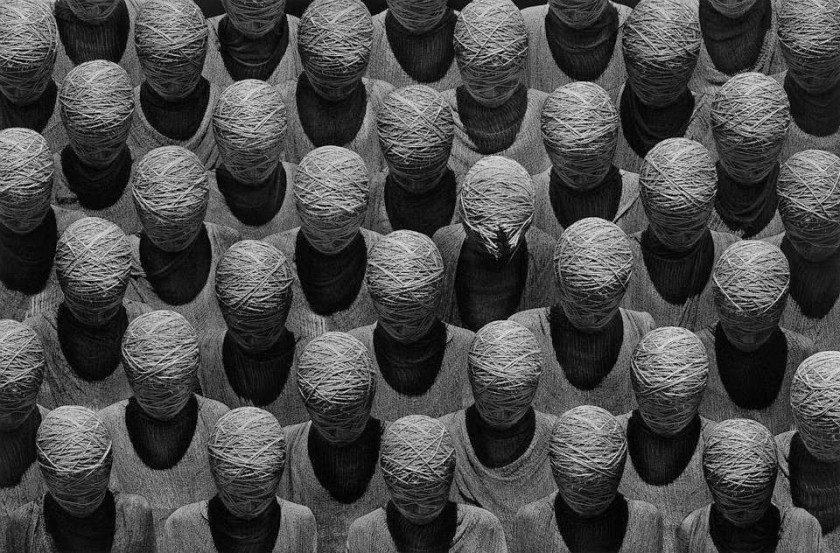
Hive-Mind-2

Humans aren’t like ants and bees. We don’t have rigid roles within our society. We don’t work together in unison for some common purpose. Humans are often in conflict. But that conflict can be anything from disagreement over a movie to starting another world war.

I’m not sure where Facebook will take us, but I have noticed one interesting trend. When I got my first modem back in the early 1980s I connected to services like CompuServe, Prodigy, GEnie, AOL and various Bulletin Board Systems (BBS). In each case, I joined forums to discuss books. When I got on the internet I discussed books on Usenet News. After the web took hold I discussed books on Yahoo! Groups. At each technology stage, I was able to discuss books with more people around the world.

Via blogging and Twitter, I guessed there were just a few hundreds of fans of old pulp magazine still around. After I got on Facebook I discovered many thousands.

Lately, Yahoo! Groups, my favorite method for online book clubbing, has been dying. In one book club, we formed a Facebook group to support our Yahoo! Group. Then my co-moderator left the Yahoo! Group to manage the Facebook. His group currently has 3,617 members, whereas the Yahoo! Group membership has dwindled down to less than 12 active participants. The other day I joined a Facebook group for Western movie fans, it has over 25,000 members. They answered a question in minutes I’d been Googling for days to find.

Technology that allows thousands of people with a shared interest to connect is not a hive mind, but it’s something new. Mass communication has always been a misnomer because the conversation was always one-way. Facebook is creating two-way communication – true communication. Right now we share our minds over funny cat videos, get-togethers with friends, family events, pop culture tidbits, and polarize over political views. The potential of the Facebook technology is still unknown.

What if Donald Trump used Facebook instead of Twitter? Twitter can be two-way communication, but usually, it’s not. Twitter is a favorite tool of cyber bullies. Facebook can be more like virtual get-togethers. Facebook is more inclusive because it is family friendly. That is more of your entire family probably uses Facebook than Twitter.

I doubt Trump would read replies to his posts on Facebook, but wouldn’t both sides of our political divide have to reply in the same place? That would probably the largest flame war ever. A riot in cyberspace. However, what if the Like icons became an instant poll so Trump would have immediate feedback on his ideas. (We’d also need a dislike button icon added to the array.) Wouldn’t that be kind of hive mind like? A president could know rather quickly what voters thought. That’s a sharing of minds.

If Facebook became real-time Gallup Poll for global opinions wouldn’t that produce science fictional results that change our future? Whether we call it a hive mind or not doesn’t really matter. But we want to call it something. Our own individual minds work through a cooperation of many subfunctions. If we create technology that allows billions of humans minds to create gestalt functions we need to name and study them.

JWH

Writing About Science Fiction

by James Wallace Harris, Wednesday, July 5, 2017

I have a new essay up at Book Riot, “What Do We Talk About When We Talk About Science Fiction?” It’s always fun to see other sites publish something I’ve written. And it’s an essay I’m proud of and want people to read. However, I’m not sure it’s the essay I intended to write. I don’t know if you have ever written an essay but if you have, do the thoughts you want to write ever come out the in the words you type?

Book Riot

Inspiration is often a vague idea, or maybe just a feeling. When you start writing about that momentary impulse other ideas start flowing out too. Ideas you haven’t thought of before, or planned. Quite often an essay will take off in a new direction, even a better direction. When I first started writing “What Do We Talk About When We Talk About Science Fiction?” I planned to list and categorize all the main topics of science fiction. I felt there were a finite set of topics we label as science fiction. The essay covered that somewhat, but not in the way I planned. It veered off into another thought, that science fictional ideas are descended from myths, religion and fantasy stories. I ended up saying when we talk about science fiction we’re talking about ideas that we’ve been talking about ever since we shared Europe with the Neanderthals. Science fiction has redefined some of those ancient desires. The few that have any kind of scientific possibility we call science fiction, the rest we call fantasy, religion, or myths.

Since I hang out in book clubs and forums devoted to science fiction I talk and write about science fiction a lot. More often than not we end up talking about stories, storytelling, plots, characters, authors, publishing, reviewing, cover art, and all the things that go into the making of the genre of science fiction, but not the actual philosophy of science fiction. It usually comes down to whether or not the story entertained us, rather than did the story have an original speculative idea.

I actually believe science fiction is a very limited area of discourse. I believe science fiction is the act of speculating about specific unknown aspects of reality. I believe reading a story that makes us think about life on alien worlds is science fictional, but I believe that’s different from enjoying an adventure story that’s set on another world with aliens.

I often wonder if the stories we’ve inherited from myths and religions are the entertainment versions of once serious speculations about reality. That one-day science fiction from the 20th century will be like us reading about Greek mythology. Will they ask, “Did they believe these stories were true?”

When Robert A. Heinlein wrote stories about people living on the Moon in the 1950s he thought his stories were speculating about the possibility of colonizing the Moon. He wanted his stories to inspire a generation that would actually go into space and build the high frontier. Now we read those stories for entertainment or nostalgia.

I’ve always believed the science fiction magazine was where the cutting edge of science fictional ideas first appeared. But few people read those magazines anymore. I’m out of touch with most of the popular SF novels. Few of them seem to be serious science fiction speculation. People want a thrill ride, not philosophy.

I’m not sure all the serious speculative ideas of science fiction haven’t become part of our everyday culture. Forbes, a magazine devoted to business regularly covers astronomy, cosmology, theoretical physics, and space travel at its website. Artificial intelligence and robots are now part of the corporate bottom line. Miracles of biotechnology and engineering are on the news every day.

So what are we talking about when we talk about science fiction? I worry science fiction is a dying area of philosophy that’s being transformed into entertainment category. For Example, why is a sequel to Blade Runner coming out soon, and not an honest version of Do Androids Dream of Electric Sheep? PKD was a weird-ass philosopher, not a writer of action hero adventure stories. In many ways, movie and television science fiction is stuck in the era of Planet Stories and never reached what was going on in Galaxy, F&SF and IF in the 1950s, much less what came out in the 1960s and 1970s.

p.s.

I used the essay as a post of the Facebook group Space Opera Pulp and some of the people also said that movie science fiction wasn’t like what we used to read. So maybe I’m not alone in thinking science fiction is changing.

JWH

Is it Science Fiction Yet?

by James Wallace Harris, Thursday, June 29, 2017

I’ve been a science fiction fan my whole life. For sixty years I’ve waited for various science fictional concepts to come true. One of my favorites is intelligent robots. Around the time I discovered science fiction watching old movies on my family’s black and white TV scientists were inventing the concept of artificial intelligence. Back then, the 1950s, they had great hopes and made bold predictions. Over the years some of their predictions have come true, but not the technological singularity when machines become smarter than us. They could still become self-aware, but what if they don’t have to, what if they become much smarter than us even without sentience?

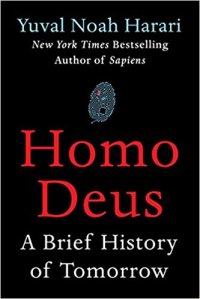
Homo Deus by Yuval Noah HarariYesterday I was reading about David Cope and his computer program Experiments in Musical Intelligence (EMI) in Homo Deus by Yuval Noah Harari. Harari described a challenge to Cope from Steve Larson, a professor of music. He proposed playing before an audience a real Johan Sebastian Bach piece, a piece composed by EMI imitating Bach, and a piece composed by himself. After the performance, they’d ask the audience to identify the composer of each. The audience thought the EMI piece was Bach, the Bach piece by Larson, and the Larson’s piece by EMI. You can read Harari’s “The Mozart in the Machine” for more of what he has to say, but I think it’s far more illustrative to listen to EMI.

This is rather beautiful – but is it art or creative? EMI is just a computer program that analyzes music styles and then imitates those styles. On one hand, it says our creative works have set patterns. Was Bach aware of those patterns, or was his composition a work of his unconscious? Obviously, EMI is an unconscious machine that composes.

In the 1950s when AI was new, scientists claimed if a computer could play chess it must have the special qualities of being human because playing chess is such a complex human activity. When Deep Blue beat Garry Kasparov in 1997 humans decided that chess playing wasn’t that special.

Here is a piece by EMI in the style of Vivaldi. Doesn’t it feel like EMI has captured something special?

I imagine, but I am not sure, that brilliant human composers could imitate other composers in the same way. Harari’s point is EMI composes music that moves human listeners emotionally. That somehow the computer program can capture the sublime. Of course, we like to assume our sublime experiences are the most complex and deepest of our lives. Isn’t EMI, maybe with the aid of deep learning, just figuring out how to push our buttons? How simple was it?

Homo Deus is an impressive book, but also disturbing. On one hand, it could be a handbook for a masterclass in science fiction writing. On the other hand, some could feel it’s like Biblical prophecy predicting the end of humanism. We live in a time after the Enlightenment where a large part of the world still accepts Old Testament thinking. So when Harari says liberal philosophy and humanism will be supplanted by techno-humanism it’s hard to believe. Won’t the world be 70% Old Testament thinkers, 20% humanists, and 10% techno-humanists?

What happens when we have true AI? What will the world be like with 90% unconscious machines, and 10% conscious? As Harari points out, humanism is based on the idea that all people are equal and they all deserve equal rights. But will biologically/genetically enhanced people feel that way? Will Human 1.0 accept Human 2.0? Will both of them accept AI 1.0? What will AI 1.0 think of Humans 1.0 and 2.0?

Corporations are backing robots over people. Capital is shifting to very few humans, and they want to eliminate all labor. Futurists talk of guaranteed minimum incomes, but capital doesn’t even want to pay for universal healthcare, so why would it support tax money going to completely support humans who can’t find work in a cyber economy?

Although I loved reading science fiction all my life, I’m not sure I’ll like actually living it. I thought my science fictional future would involve me traveling to Mars. Or owning a robot that did housework. But it looks like robots will colonize space, and take over all our jobs on Earth.

What are we suppose to do? Go to live in a virtual reality? Meditate and find our inner selves? Become artists? As Harari points out with EMI, robots will outdo us as artists too.

It will be fascinating to read science fiction stories read by writers studying Harari. If you belong to a species third down from the top how do you redefine existentialism or religion?

JWH

Do I Have Diabetes?

Here are the symptoms from the American Diabetes Association (ADA) symptoms page:

  • Urinating often
  • Feeling very thirsty
  • Feeling very hungry – even though you are eating
  • Extreme fatigue
  • Blurry vision
  • Cuts/bruises that are slow to heal
  • Weight loss – even though you are eating more (type 1)
  • Tingling, pain, or numbness in the hands/feet (type 2)

I do pee a lot, but I thought it was because of my prostate was getting old. Now I wonder. The reason why I thought something might be wrong is I’m napping more, especially after meals. I was getting more and more tired. Then I thought maybe I wasn’t getting enough protein. I’ve been on this plant based diet for over a year, and it has little protein and fat. So, I started eating protein bars and even tuna, which is a big deal for me since I’ve been a vegetarian since 1969. That turned that problem around. But then I read protein helps with insulin processing. It’s amazing how many factors we have to consider maintaining our health.

HealthPro Easy-Touch

I figured a little science experiment was in order, one that I could make into a blog post. I bought a glucose testing kit, the kind diabetics use to test their sugar levels. I figured I’d test before and after meals for several days and keep a record. But I kept putting off starting my experiment. Then I told an old friend who has diabetes about my plans and he went after me like a drill sergeant badgering me to get on the bounce. I did. Thanks.

One reason I didn’t think I had diabetes is I get my blood work done very regularly because my doctor hounds me about my cholesterol levels. She’s always said my glucose levels were good. Here are my fasting glucose numbers from doctor’s office for the last few years: 101, 90, 83, 77, 81, 75, 87 mg/dL. The acceptable range from the lab is 79-115 mg/dL.

My home glucose meter gave me these readers for the last 7 days taken in the morning: 92, 95, 88, 84, 95, 93, 92. That suggests my meter is in the same ballpark as my lab work. However, I’ve read that home meters are only accurate to +/- 20 points. I once had what I thought was a high reading, and I retested immediately, and it dropped 18 points. This suggests I can’t trust single readings and must look at averages over time.

The ADA recommends the first-thing-in-morning reading should be in the 80-130 mg/dL range. The American Association for Clinical Endocrinologists (AACE) recommends < 110 mg/dL. So, by both associations, I’m okay for fasting numbers.

But what happens when I eat something? Both the ADA and AACE have recommendations for glucose numbers for 2-hours after eating: ADA recommends < 180 mg/dL for nonpregnant adults, and AACE recommends 140 mg/dL. My home testing had these numbers when I checked at the 2-hour mark after eating: 123, 143, 124, 125, 131, 106, 99, 98, 115, 141, 112. On average, I’m fine by both ADA and AACE. But I twice went over the AACE guideline for individual readings. In both cases after I ate my breakfast cereal which has blueberries, blackberries, and strawberries. My breakfast cereal is a health food cereal with 8g of sugar, but the almond milk has 16g.  So, if I eat a meal loaded with sugars I’m pushing the AACE limit. And those two examples might just be within the +/- 20 error. I’ll have to continue to monitor my sweeter meals to know for sure.

To test things, I ate my standard breakfast at different times, and the results were the same. However, on some days I exercised before the 2-hour mark and the scores came down. That could be the exercise, or it could be those high figures were within the error margin. I don’t know. I’ll keep testing. By the way, they emphasize handwashing before using the test strips because food on the fingers will alter the reading.

I tend to go on junk food benders. I was tempted to eat a bunch of junk food (meaning sweets for me) and see what it did to my numbers. However, I’ve been eating healthier for weeks and I don’t want to start another bender. Once I start eating sweets I can’t stop.

Overall, I think I don’t have diabetes, but that I need to watch out. By the lab work numbers, I don’t even fall into the pre-diabetes range. However, doing my own testing shows I’m okay by the ADA, but iffy by the AACE when I fill up on meals with more sugar in them. Some of my healthier meals let me get back to the morning fasting range within 2 hours, and well within the 2-hour after eating ranges.

I believe this little experiment showed me that eating right and exercising does have a physical impact on my body, at least my glucose levels. Tracking my numbers might help me lose weight. Because I’m overweight, I’ve worried about diabetes. I have friends with diabetes or pre-diabetic. It’s scary. It will be interesting to see if I do lose weight if my ability to stabilize after eating a sweet meal happens quicker. Of course, as I work hard to control my weight and cholesterol I automatically eat what diabetics should eat.

Too bad they don’t have a FitBit that constantly reads out glucose levels. Such tech might provide biofeedback to eat healthier and lose weight. This little glucose testing kit has proved to be very useful and revealing. I’m going to report my findings to my doctor and ask for an A1C test, which is supposed to be more accurate than the tests I’m doing now.

JWH

How Much Time Do You Spend Consuming Pop Culture?

by James Wallace Harris, Saturday, June 24, 2017

In past centuries, living left little free time. Survival was all time-consuming. Twelve-hour workdays were the norm once. Few people had time for hobbies or pursuing pop culture. And if we weren’t working we were raising families or maintaining our little castles.

Times have changed. The work week keeps getting shorter. More people choose not to have kids or even marry. Some people spend as much time watching TV as working. And a lot more people are retired or unemployed. Probably, if you’re not depressed, strung out on drugs, or chasing someone to have sex with, you’re consuming popular culture with all that extra time.

Pop culture

How many hours a week do you spend reading, watching television, going to the movies, listening to music, binge-watching the internet, looking at comic books, going to museums, attending plays, or any other popular pursuit reported on by Entertainment Weekly? And what about video games? Or VR? Are they pop culture or something new?

Are the hours starting to add up? Is mass consumption of pop culture good or bad? I really don’t know. As a retired person I realize most of my time is occupied with pop culture pursuits. I’d like to think I’m consuming art, that I’m psychologically imbibing in the most creative cuisine our culture offers. Is that true? I also like to believe I’m learning about the past through consuming popular culture from other eras. For example, how well can I understand the 1920s from reading Fitzgerald, Faulkner, Wharton, Joyce, Lawrence, and Hemingway, listening to old jazz, watching silent films, look at art, and reading history books?

Would the time I spend on consuming pop culture be better spent on hobbies? TV watching and going to the movies are a big part of my social outlet. Music and reading are solitary pursuits. Hobbies are generally solitary too. I could get up every day and do something more productive than consuming art and writing about it.

Most biological beings spend most of their time looking for food, mating, rearing their young, and avoiding being prey to other biological beings. Isn’t it rather fascinating that humans excrete art and consume it? We used to say humans were the only animals that made tools – until we discovered a whole bunch of other tool using species. Then we said humans were unique because we have language. Well, we discovered that wasn’t true either. More and more we’re finding examples where animals play, have friends, and show curiosity. But do other animals create art? What about the bowerbird?

Satin-Bower-Bird-Nest

Is art tools we make to stimulate our minds? Or is art external remembrances we make for shared memories? Pop culture is art for the masses. Art used to be unique, a one of a kind piece. Pop culture depends on mass producing artwork that we like to share. Pop culture feels more nourishing to my soul than air, water, and food, although I couldn’t survive without them, and I could survive without pop culture.

Maybe I shouldn’t use the word soul. The soul doesn’t exist. It was a creative fiction of religion. (And couldn’t religion be the first pop culture creation?) Even though science cannot find any evidence for the soul, and philosophers have refuted its existence, we all feel we have one. Science shows we are not minds and bodies, but just bodies that are biologically programmed to react to our environment. So what is pop culture?

Pop culture is something we add to reality. Of course, we rearrange atoms and molecules that already exist to create art, but there is something new there. Yesterday I read “All the Animals that Love Touchscreens” and learned another way humans are not unique. Pop culture is something that even animals might perceive.

Pop culture is mass-produced art. But that also means it is art that can be saved and preserved. Pop culture artifacts remember aspects of our collective souls. There’s that word again. Religion is wrong about immortal souls. Nothing lasts forever. Neither we, our culture or our art will survive forever.

If you spend several hours a day watching television you’re consuming pop culture. Is it just a way to kill time. To distract you from life? Or do you value pop culture as an artistic achievement?

JWH