When Sense of Wonder Wanes

by James Wallace Harris, Monday, January 22, 2018

The essential goal of science fiction is to inspire a sense of wonder. Science fiction is most powerful to young readers. Many hardcore science fiction addicts spend the rest of their lives strung out trying to recapture that sense of wonder they found in youth. Sadly, sense of wonder fades in two ways. We become jaded as we age, and science fiction becomes dated.

Amazing-Stories-1928-Nov-small

The dynamics of this loss of wonder came to me as I listened to the new audiobook edition of The Science Fiction Hall of Fame Volume One, edited by Robert Silverberg that was first published in 1970. I enjoyed listening to these old science fiction stories tremendously, but that joy was fueled by nostalgia for my lost sense of wonder. I’ve been recommending this audiobook widely because I want science fiction anthologies to succeed in the audiobook marketplace. However, I got an email from my friend Mike that makes me want to write a warning to go along with my recommendation.

Mike was enjoying the stories until he got to “The Roads Must Roll” by Robert A. Heinlein, a story that first appeared in 1940. I told Mike this was the weakest story in the book for me. I’ve read it many times, and have heard two audio versions. All the stories in The Science Fiction Hall of Fame were voted into the collection by the newly formed Science Fiction Writers of America after 1965. Each included author could only have one story. I never could understand why they picked “The Roads Must Roll” for Heinlein. I would have picked “The Menace from Earth.” But evidently, this story still had a sense of wonder to the SFWA members when they voted for it. But I first read “The Roads Must Roll” just before they voted when I was a young teen, and the idea of rolling roads seemed stupid to me even then. They were older and voting their nostalgia.

Then Mike sent me this email about “Microcosmic God” by Theodore Sturgeon from 1941:

I think “Microcosmic God” is a terrible story. It makes the plot of “The Roads Must Roll” seem intelligent and elegant.

The two main characters are dreadful. Kidder is a cold-blooded killer who happily massacres the Neoterics whenever they have not followed orders to his satisfaction. Conant is a silly Saturday afternoon matinee villain who wants to take over the world. Oh, brother! Conant reminds me of Snidely Whiplash. How do you take a story seriously with flat characters like Kidder and Conant?

The Neoterics are a clumsy deus ex machina. You might as well give Kidder a magic wand and a book of spells. This is one of the most preposterous plot devices ever devised. It takes stupid to a new level.

There is no character development. The plot is stale nonsense, complete with bad guys spinning their revolvers on their trigger fingers. I’ve seen better plots in Charlie Chan movies.

I don’t know how or why this is considered a good story by the science fiction community. It’s awful.

Mike is completely right in his criticism, but I still enjoyed the story because I could imagine the sense of wonder it created in 1941. Even though it depicts cruel events, they are widely imaginative. I even gave it an A when I sent Mike my grading of the stories:

  • A+ “A Martian Odyssey”
  • A- “Twilight”
  • B- “Helen O’Loy”
  • C “The Roads Must Roll”
  • A “Microscopic God”
  • A- “Nightfall”
  • C “The Weapon Shop”
  • A+ “Mimsy Were the Borogoves”
  • A++ “Huddling Place”
  • A- “Arena”
  • A “First Contact”
  • B- “That Only a Mother”
  • A “Scanners Live in Vain”
  • A+ “Mars is Heaven”
  • A “The Little Black Bag”
  • B “Born of Man and Woman”
  • B+ “Coming Attractions”
  • A “The Quest for Saint Aquin”
  • A+ “Surface Tension”
  • B+ “Nine Billion Names of God”
  • B “It’s a Good Life”
  • A+ “The Cold Equations”
  • A “Fondly Fahrenheit”
  • B+ “The Country of the Kind”
  • A+++ “Flowers for Algernon”
  • A+++ “A Rose for Ecclesiastes”

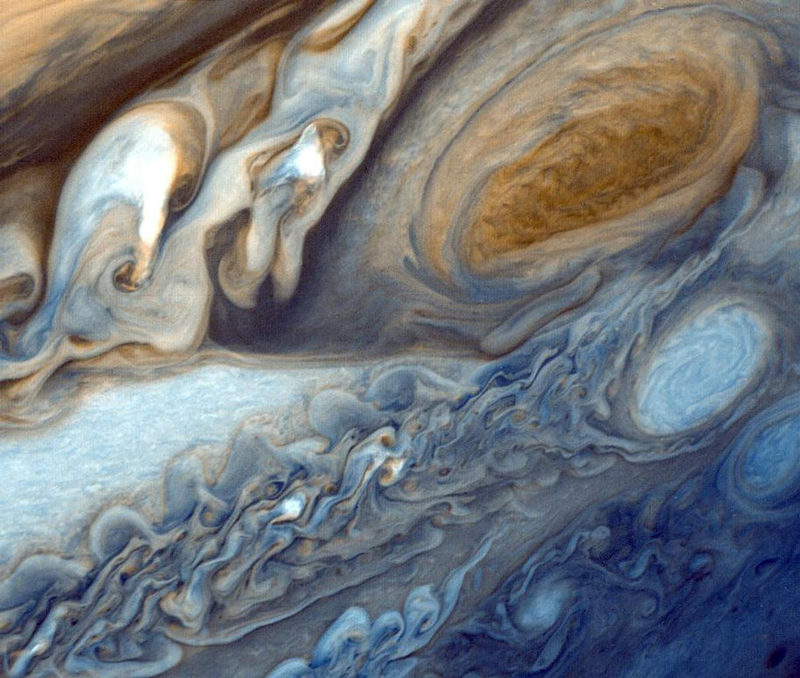
Jupiter-red-spot

I’ve wondered for decades if 21st-century young people reading 20th-century science fiction stories would find a sense of wonder in them. The golden age of science fiction is supposed to be twelve, but would a 12-year-old today still find a sense of wonder in The Science Fiction Hall of Fame? Has its sense of wonder faded?

I know my own sense of wonder is in decline, but then so is my heart and mind. As we get old we wear out. My sense of wonder isn’t what it used to be. For example, I just read Ocean of Storms (2016) by Christopher Mari and Jeremy K. Brown. If I had been twelve when I read it, I believe my sense of wonder would have been wowed. It essentially recycles 2001: A Space Odyssey (1968) and Rendezvous with Rama (1973) with the movie Apollo 13 (1995) and adds modern thriller clichés, evil conspirators, contemporary politics, genetic manipulations, and a bunch of hard to believe details. If I hadn’t already encountered all those classic science fiction ideas I would have loved this book. Because I was jaded by a lifetime of science fiction thrills, this book was only ho-hum. It offered me nothing new.

Ocean of Storms was our modern selection for my science fiction book club this month, the classic selection was A Journey to the Center of the Earth by Jules Verne (1864). The Verne book was more fun to read, but it offered no sense of wonder either. Its science is completely dated. However, it was fun trying to imagine how 19th-century readers had their sense of wonder blown away. Was science fiction in the 1800s more mind-blowing to its readers because they knew far less than we do today?

As an older science fiction fan, it’s extremely rare for me to encounter a new science fictional idea. In fact, I can’t come up with a recent example. Maybe Spin (2005) by Robert Charles Wilson or Quarantine (1992) by Greg Egan. Most of my enjoyment of science fiction comes from understanding the history of science fiction and working to comprehend the classic stories in the context of their times. I admire current novels like Aurora (2015) by Kim Stanley Robinson for using science fiction to speculate about the limits of space travel, but I generally don’t find much sense of wonder anymore.

Science fiction has become adventure stories set into older science fiction speculative ideas. It’s retreads of retreads. Modern science fiction is often far better written than older science fiction, and modern science fiction writers have superior storytelling skills. But the sense of wonder I found in my teens is gone.

Don’t feel too sad for me. I now find a sense of wonder in studying science fiction. Science fiction used to provide me a sense of wonder about the future, now it provides a sense of wonder about the past. There are two types of science fiction. The common form is entertainment, but the form I like are those stories that explore the event horizon between what science knows and what science might discover. I believe the stories included in The Science Fiction Hall of Fame were selected because at one time they all speculated on possibilities existing on that event horizon. Just because science has advanced, destroying most of that speculation doesn’t mean their feats of imagination are diminished.

JWH

Remembering Old Science Fiction Short Stories

by James Wallace Harris, Tuesday, January 16, 2018

I was messaging a friend in South Africa this morning, Piet Nel, about reading old science fiction short stories in retrospective anthologies and best of the year annuals. Piet is reading through the Terry Carr’s Best Science Fiction of the Year series (1972-1987), but he doesn’t have them all. This morning’s message told me how he used ISFDB.com to find the stories in The Best Science Fiction of the Year #4 elsewhere. #4 was the first volume he didn’t own. For example, here are all the places “Born with the Dead” by Robert Silverberg has been reprinted. Piet already had four copies of that story in other anthologies. Piet was able to find all the stories #4, either in books he owned or online.

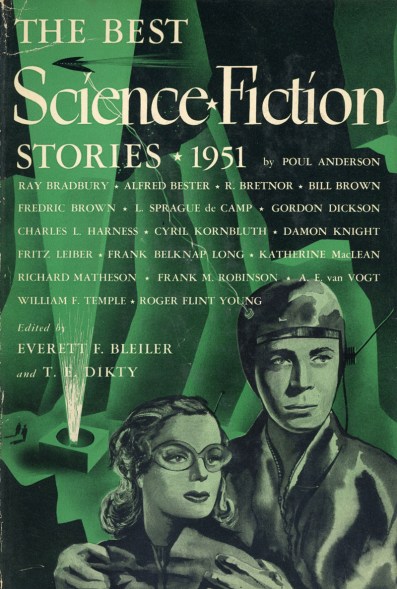
I thought I’d take the same approach to The Best Science Fiction Stories 1951 edited by Everett F. Bleiler and T. E. Dikty because I can’t afford to buy it. That annual came out the year I was born. By chance this month, I’ve already read two of them, “Born of Man and Woman” by Richard Matheson and “Coming Attraction” by Fritz Leiber when I listened to The Science Fiction Hall of Fame Volume One. [See the results of this game at the end of this essay.]

The-Best-Science-Fiction-Stories-1951-ed-Bleiler-and-Dikty

This morning I read an essay by James Jackson Toth, “Too Much Music: A Failed Experiment in Dedicated Listening” that resonated with me. Toth laments that streaming music is overwhelming him and he longs for the days when he had a limited collection of records he knew intimately. I feel the same way about science fiction. I’m not giving up on reading new science fiction, but my old mind can’t grasp much more new stuff. I’ve decided my specialty of knowledge will be science fiction published from 1946-1985. I need something to hang onto, and this will be it. Mostly, I chose this topic because I already know a bunch about it — why bother becoming a specialist in something other than what’s already crammed into your mind. But also, I’m attracted to this era because I enjoy talking with other folks that also love this era too.

This got me to thinking:

  1. How many people love to read old science fiction short stories from this era?
  2. What SF short stories from this era are anthologized the most?
  3. What are the essential anthologies to collect to get the top stories of this era?
  4. What stories would I put into an anthology if I was an editor of SF 1946-1985?

It’s not that I haven’t thought of these ideas before, and answered some of them in “The Best Science Fiction Short Stories.” That’s the most popular essay I wrote for the Classics of Science Fiction site. CSF is not a very popular, but that page has gotten 2,600 hits. Not many in the big scheme of things, but it suggests there’s a fair number of readers like Piet and I. Overall, I would guesstimate there are not that many fans of old science fiction short stories, probably much less than a thousand in the world, and we’re dying off all the time. I’m sure young folk would rather watch Black Mirror, Philip K. Dick’s Electric Dreams, Dust films, Short of the Week Sci-Fi, or The 7th Matrix for their short science fiction fix. I love these shows too, but I forget their details almost immediately.

Baby boomers were born 1946-1964 but I would think their formative reading years lasted until 1985. Only a small percentage of boomers got into reading science fiction, and for most of them reading science fiction was only a casual interest. I do know there are around 11,000 members to Space Opera Pulp, a group on Facebook for people who love covers to old science fiction magazines. Probably for most of them, that’s a minor nostalgic diversion. I wonder how many still buy, collect, and read old SF stories?

There are a handful of blogs that reflect a love for old science fiction short stories. That suggests we are the keepers of a very weak flame. I see many of the same names posting comments at these sites. Are we the fans of a dying art form? I don’t think science fiction is dying out, but I do think new science fiction gets most of the attention. Pop culture is inherently linked to generations, and the Baby Boomers who loved reading science fiction short stories from 1946-1985 make up a dwindling cohort. There is a bit of generational overlap, with folks older and younger than Baby Boomers still loving science fiction from that age of science fiction digests.

There are more anthologies than ever collecting the best short science fiction of the year, including one from the prestigious Best American Series. And there’s plenty of places that publish new short science fiction. I believe the readership is smaller today than we I was growing up, but the science fiction short story is still going strong despite the overwhelming popularity of media science fiction. I’d love if I could read and retain knowledge of all this new stuff, but I can’t. I try, but it’s a struggle to remember. Reading new stories from the past will also be difficult to remember, but reading them feels like I’m finding missing pieces of a puzzle I’ve been working on my whole life. Filling in those blanks are reinforced by surrounding memories, so that might help to learn new stuff.

And, I do find more and more pleasure nostalgically returning to old science fiction, and I don’t think I’m alone. Maybe I can keep it in my head. I think it is a mentally good thing to have a specialty to care for when aging.

Here are some sites I read by fans of old science fiction stories. (There are more, but memory limits me at the moment. Be sure and send me your link if you focus on this era of science fiction.)

Game Results

These are the stories I have for The Best Science Fiction Stories: 1951 edited Everett F. Bleiler and T. E. Dikty. Links are to ISFDB. This goes to show how well some stories from 1950 have lasted, although I should admit that the anthologies I own them in were assembled decades ago. I guess I should admit that they are mostly forgotten stories.

Stories I Have in Anthologies

Stories I Have in Magazines

Stories I Don’t Have

JWH

Could A Robot Read Jules Verne?

by James Wallace Harris, Friday, January 12, 2018

I’m listening to the AmazonClassics audiobook edition of Journey to the Center of the Earth by Jules Verne, a novel originally published in France in 1864, and first translated into English in 1871. The translation I read was by F. A. Malleson, from 1877, and is considered a pretty good translation. Verne suffered from many bad translations, often ruining his reputation in the English speaking world.  The story is impressively narrated by Derek Perkins. His voice perfectly matches this 19th adventure tale. This audiobook sounds more thrilling and real than most of the silly movie and television productions I’ve seen.

Journey to the Center of the Earth 26Journey to the Center of the Earth 36

However, I have one problem with Verne’s story. It’s not very believable. Of course, it’s well over a century-and-a-half since Verne imagined it, and science has progressed a great deal, but was it even believable in his day? I wish I had an AI robot that could read and understand fiction and nonfiction. I want to talk to it like Alexa but it would be much smarter. I want my AI mind to crawl across the web and answer questions for me. Google is so goddamn stupid that it drives me crazy. I searched for [19th-century reviews of “journey to the center of the earth”] but it only brought up modern reviews of recent book editions and movie versions. I thought my query was quite explicit. If Google is such a leader in AI, why can’t it understand my query? Don’t you get tired of all the crap Google searches return?

I want to build an AI mind that I could input texts of all the science fiction stories and novels from the 19th and 20th centuries and have it analyze those works by correlating that content with information found on the internet. Journey to the Center of the Earth was originally published in a magazine for boys. I’ve love to find diaries, journals, essays, and books by 19th-century readers who read Journey to the Center of the Earth when it came out and to know their reactions. Verne adds a good deal of science from his day into his story to make it sound plausible, but was it?

Hollow Earth theories and stories go back much further than Verne. Were its proponents and speculating on real possibilities and taken seriously? Or, were they the UFO nutters of their day? I get the feeling that the concept of dinosaurs had inflamed 19th-century imaginations and Verne used his story to speculate how dinosaurs could still exist. He was doing the same thing that Doyle’s The Lost World and Crichton’s Jurassic Park did, creating a theory to present live dinosaurs. I have many theories about the evolution of science fiction, and having an AI collaborator could really help.

I’d love to build an AI robot that I could chat with me about science fiction. I picture talking my digital companion like Mannie did with Mike in The Moon is a Harsh Mistress (1965) by Robert A. Heinlein. I imagine creating my AI friend like the AI machines in When HARLIE Was One (1972) by David Gerrold or Galatea 2.2 (1995) by Richard Powers, where Harlie and Helen came into consciousness by interacting with a human mentor. I fantasize talking with this AI and collaborating on articles about the history of science fiction. And what if it woke up and became conscious?

Computer scientists are building AI machines using machine learning to do all kinds of things today. If they can master games like Chess, Jeopardy, Go, and old Atari 2600 games, or analyze MRIs and X-rays for cancer, why couldn’t they learn everything to know about science fiction.

Lately, I’ve been thinking about learning ML (machine language) using Python. I’ve been daydreaming about building a machine after reading (“Deep Confusion: Misadventures in Building a Deep Learning Machine,” “The $1700 great Deep Learning box: Assembly, setup and benchmarks,” and “Build a super fast deep learning machine for under $1,000“) or just paying for a hosting service like Paperspace. There’s a new edition of Python Machine Learning: Machine Learning and Deep Learning with Python, scikit-learn, and TensorFlow by Raschka and Mirjalili that could get me started, or Hands-On Machine Learning with Scikit-Learn and TensorFlow: Concepts, Tools, and Techniques to Build Intelligent Systems by Aurélien Géron.

Of course, I doubt if I could ever program such a fantastic AI machine or even learn the basics of ML at my age. I’ve been watching a series of videos from Google Developers on Machine Learning Recipes. I’ve also been reading about Natural Language Processing with Python, a book I bought years ago when this idea first came to me. The concepts aren’t hard, but it would be just the first steps on a journey of ten thousand miles. I’m not sure I have the concentration power or memory space anymore. I’m probably too old and too feeble minded to do it, but that doesn’t mean some youngster couldn’t.

I’m quite envious and jealous that young people today can choose this kind of work for their career. I programmed databases during my work years, and that was fun enough, but imagine getting to develop robots, AI minds, and machine learning? What an exciting time to be a programmer.

JWH

Creative Blogging

by James Wallace Harris, Sunday, January 7, 2018

Events in my life are leading to a perfect storm for writing about blogging. I’ve been discussing blogging with my friend Laurie who is a professor of reading. She plans to include blogging in a course she’ll teach this spring. Laurie introduced me to the idea of multi-genre research papers, which is an alternative to the five-paragraph essay used in high schools. She was asking me about blogging because she wanted her students to use a blog for their progress reports. When I heard the concept of multi-genre writing I immediately thought of blogging because blogging is at heart multi-genre, or at least in the way these academics are defining the term. Blogging is both multi-media and multi-genre. I’ve been trying to convince Laurie that her students’ multi-genre research papers should be blogged.

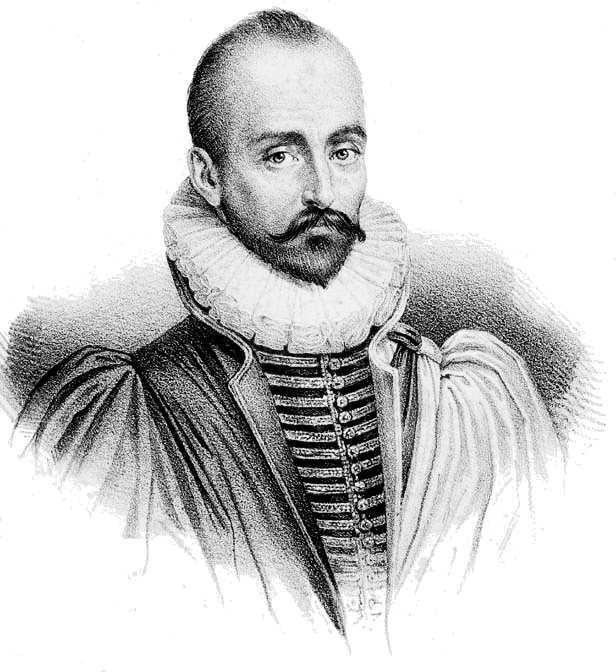
Michel_de_Montaigne

Concurrent with this I’m reading for my nonfiction book club How to Live: Or A Life of Montaigne in One Question and Twenty Attempts at an Answer by Sarah Bakewell. Michel de Montaigne is legendary for developing the personal essay, and he has inspired countless readers and writers for centuries. Montaigne should be considered the Patron Saint of Bloggers. Montaigne retired early and became a contemplative, developing a personal philosophy by writing about his experiences. [Here’s an excellent essay, “Translating Montaigne” to help you find a copy of his work to read.]

And I just got The Sense of Style: The Thinking Person’s Guide to Writing in the 21st Century by Steven Pinker. Pinker is a cognitive scientist and approaches writing and grammar through studying how the brain works at communication. Pinker realizes that we all read and write differently since we’ve all moved online. I’m anxious to dive into this book because I want to scientifically and systematically improve my blog writing.

Then there’s the book I read last year, The Art of Memoir by Mary Karr. She combines teaching writing with understanding memory. Writing the personal essay is all about recalling details when our brains are very poor at remembering. We constantly trick, lie, and delude ourselves, and learning why is both psychologically rewarding and artistically challenging. Contemplating the limits of memory is a fantastic tool for understanding how to write.

I’ve written two essays recently about blogging, “Blogging in the Classroom” and “Using Blogging to Accelerate Learning.” What I’m advocating is we start requiring children to blog their school work to teach them about reading, writing, memory, thinking, and history. Essentially what I’m asking is everyone become a Michel de Montaigne to write their personal history. I also expect them to be historians, teachers, preachers, scientists, philosophers, naturalists, and so on, to write about the world at large too. For example, here is Peter Webscott’s “Reading the world – visiting Montaigne’s Tower.” It is an example of a multi-genre essay about visiting Montaigne’s house. This kind of writing is how we should explore our personal experiences and thoughts, and blogging is how we can save those insights for a lifetime.

Creative blogging should be our tool to write our autobiography, one that is preserved, even after we die. Creative blogging is how we should communicate our deepest thoughts to our family and friends. Only the closest people to you will ever take the time to read your blog. Learning who they are is revealing. Blogging has the beautiful side-effect of showing which of our interests bores other people. That will probably scare you. Learning to know what you care about most and how much your friends and family care about what’s important to you is quite enlightening. It teaches how you are unique. It also teaches you how you overlap with other people, and that’s the key to friendships.

I also wrote this a couple years ago, “77 Things I Learned From Writing 1,000 Blog Essays.” Strangely, painful truths are wonderfully educational. I could probably come up with 177 things I’ve learned from blogging today. It keeps growing.

JWH

Reading Mentors

by James Wallace Harris, Wednesday, January 3, 2018

Years ago, after reading Outliers by Malcolm Gladwell I contemplated how my life had been shaped by not having a mentor growing up. Looking back now, I see I had mentor-like encounters. My reading was guided by random external influences and that worked as a kind of mentorship. We expect teachers to be mentors, but they can’t, not really, not with so many students.

This is going to be a long essay to explain how I select books today to read and why. I feel compelled to jump back and write a history of my evolution of discovering what to read. Looking back, I wish I had known right from the first that some books are significantly better than others — that I should seek out the best. I also wish I had read from a wider range of subjects — that I could have had far more favorite subjects. And I wished I had learned at an early age that some books can be like junk food — making me addictive to empty calories.

Society expects schools to pick the best books for children, but I always rebelled against their choices. How can we raise kids to be better book selectors?

Bookstore reading

Can teachers ever select books perfectly customized for the individual student? How can teachers avoid turning off students by promoting the reading of unrelatable classics? How can parents and teachers overcome the urge to make kids read the books they loved so passionately but might not be relevant to their children’s lives? If only one book is taught in any given class period what are the odds that all the students will respond to it? Is the goal to teach reading – the ability to decipher fiction and nonfiction – or to teach kids how to find the right book that will provide them cognitive maps to reality? Are kids ever taught the dangers of reading? Are they ever warned that books can become a crippling addiction? Are they ever taught that books can spread dangerous beliefs, delusions, prejudices, hate, and lies? I wished I had learned those things early on.

It has occurred to me that how I found books have always influenced what I read. And what I read has always determined the direction of my life. Thus, I need to be more careful with how I find books. If you are not a bookworm you probably won’t understand this insight. Back in 1971 when I first took a computer course they taught us this acronym: GIGO (garbage in, garbage out). Before that, I remember hippies preaching, “You are what you eat.” From this, you might assume I’m about to write an essay on “You are what you read.” However, I’m going to take one step back and write, “You are what you find to read.”

The first book I can remember is Treasure Island by Robert Louis Stevenson. My mother read it to me in the third grade (1959/60) after I had seen the film version with Wallace Beery. If my mother had chosen a different book for me I would have followed a different path as a bookworm? Both my parents were readers of tattered paperbacks. I remember mother reading Perry Mason and my father reading Mickey Spillane. Neither encouraged me and my sister to read. I guess they assumed our teachers would do that.

Evidently, at the end of the third grade, my teacher told my parents I had a reading problem and should attend summer school for reading. I vaguely remember going to a small, wedged shape room, probably a large closet rather than a classroom. The teacher told me to find a book and start reading. I went over to a twirling wire rack and found a small paperback titled Up Periscope. I started reading. It turns out I could read just fine. I don’t remember the summer school teacher ever giving lessons or even talking to him again. I was just bored by what they made us read in class. That twirling rack was an important book mentor and changed the direction of my life. The lesson I learned was I could pick my own books.

Starting in the 4th, 5th and 6th grades what I chose to read was determined by the school libraries and the physical locations where I came to browse. I was my own reading mentor. I remember always going to the beginning of the A’s of the kid’s section at Homestead Air Force Base Library in the 5th grade (1961/62). That got me reading Tom Swift (Appleton) and Oz books (Baum). Eventually, I worked up to the Hardy Boys (Dixon). I would have tried a greater variety of books if I hadn’t gotten hooked on series.

My sixth-grade (1962/63) teacher, Mrs. Saunders was the first teacher to be a book mentor. She’d read us books after lunch. I remember her starting A Wrinkle in Time by Madeleine L’Engle and me rushing to the library after school and checking out a copy to finish on my own.

When I started the 7th grade (1963/64) at another school I found When Worlds Collide (Edwin Balmer and Philip Wylie) again by browsing the beginning of a range. That simple routine was a reading mentor of sorts. By then I’d range up and down the alphabet looking for the kind of book I liked. I’d read a lot of so-so books. Books were like television or cookies, I consumed them as fast as I could. They were a commodity. I didn’t know there were great books. That’s when I could have used a reading mentor most. If only someone had only shown me how to find purpose in reading, rather than using reading for cheap thrills. If only a wise reader had shown me how to compare books to reality, or taught me about the quality of writing.

At this time I was fixated on space travel and biographies. I read for vicarious adventure. I found a numbered series that published cut-down biographies for children. I remember reading books about Ben Franklin, Aaron Burr, PT-109 and John Kennedy, and Blackjack Pershing. The numbered series acted like a mentor to me because I wanted to read them all. It also showed me that some people are more interesting than others, worthy of being written about. I wish I had had a reading mentor that that taught me that living is better than reading. On my own, I decided reading life was superior to real life.

In the 6th and 7th grade, my schools gave us order forms for Scholastic Books. I still didn’t know there was a genre called science fiction but I was drawn to science fiction books. Because of Scholastic Books, I discovered Jules Verne and H. G. Wells (too far down the alphabet to discover on my own I guess). These were the first books I bought after begging my mother to write a check. This was my first taste of owning and keeping books. I wish I had had some way of knowing what the other books were like on the Scholastic list. This was my first time I encountered a book list or publisher’s catalog. In a way, the Scholastic sales flyer was a kind of reading mentor.

Scholastic Order Form 1963

If I had found different books in the As and Bs at Homestead Air Force Base Library I could have taken a different path. I picked the Oz books because of the annual showing of The Wizard of Oz on television. Now that I am older I sometimes wish I had not started down the path of fantasy stories. I can see now that I didn’t pick what I chose to read. My tastes had already been shaped by television, which makes it another kind of mentor.

The first person to truly influence my reading was my 8th grade (1964/65) teacher. I’m sad I can’t remember her name because she was very important. She had an approved reading list. To keep the grade we earned from tests during each six week period we had to read three books, three magazine articles, and three newspaper articles — otherwise, our grade was dropped one letter. We could raise our grade each period if we read five of each. Eighth grade was the year I struggled with grammar, so I was able to turn my Cs into Bs by reading. This teacher is memorable for two reasons. She introduced me to Robert A. Heinlein and got me to read books other than science fiction. She also taught me library research and how to make bibliographic lists. This teacher couldn’t be a personalized reading mentor to all her class sections, so she worked out a method of inspiring reading and allowing us to choose our own books from an approved list.

Because I asked a librarian about Heinlein, I was shown the adult science fiction section at the Homestead Air Force Base Library. It was small, only two half-height bookcases of four shelves each. Those shelves shaped my reading for a year. Again, a limited set of books becomes a reading mentor.

In the 9th grade (1965/66) I started earning money mowing lawns and babysitting. This got me into buying albums and books. Having money and a bike let me ride to used bookstores. Because I was a science fiction fan I mainly bought books from the science fiction section. I could only afford cheap books. I mainly bought ten-cent used paperbacks that were very old. That limitation was a kind of reading mentor. I mass-consumed science fiction paperbacks from the 1950s. Even today I realize that shaped my personality more than anything else.

It’s a shame I didn’t know better. I should have read more widely. In junior high, I did branch into nonfiction reading books about science, nature, space travel, exploration, history, maps, sailing, etc., but it was still a limited focus.

In the 10th grade (1966/67) I joined the Science Fiction Book Club. This defined my reading for years. Also in the 10th grade, while going to school in Mississippi that only required 16 credits to graduate, I had two library study halls in a six-period day. Science fiction was rare in Charleston, Mississippi, so I began reading more nonfiction.

In the 11th and 12th grade I worked and went to school so I stopped watching television and got little reading done. (This also became true after I got married and worked full time.) Being a bookworm requires the luxury of time.

In the 1970s while in college, I joined the Book of the Month Club and The Quality Paperback Book Club. This broadened my reading somewhat. So these book clubs became reading mentors. Book clubs allowed me to acquire hardbacks at a discount, but the two monthly selections also became a reading mentor too.

By this time I was regularly reading the science fiction magazines, F&SF, Analog, Galaxy, If, Amazing, and Fantastic. These periodicals had book reviews, and they became another reading mentor. In the late 1960s or early 1970s, I read a review of Heinlein in Dimension by Alexei Panshin. That started me reading books about books. However, I seldom branched out of science fiction. It wasn’t until I became an English major in the later 1970s that I began studying books outside the genre. But even then I rebelled against what my professors wanted me to read. For every required classic I was forced to read to pass a test, I read ten or twenty books of my own choosing.

Unfortunately, most of the books I chose were science fiction, with a smattering of popular science and biographies. Now let’s jump ahead about thirty years. Amazon.com changed my reading habits a lot. But what really changed my reading habits was Audible.com. From listening to books read by wonderful narrators I learned I was a very poor reader myself. I also discovered my poor reading habits caused me to read too fast and love books that could be read fast. Once I started listening to books I tried all kinds of novels and nonfiction I would never have enjoyed before. Suddenly, I loved 19th-century novels. Ones that previously had turned me off by all the slow tedious descriptive bits. I also got into long rambling nonfiction books.

I have to say audiobooks have been my best reading mentor. I was reading around 12-20 books a year during the 1980s and 1990s. Mainly because of work and being married. From 1963-1973 I probably read several books a week. From 2002-2017 I read one book a week, or about 52 a year, mostly because of Audible.com. Not only did I read (listen) to more books, my range of reading topics exploded like a nova.

Then around ten years ago, I started blogging and writing about books. I began to think more about what reading meant. I read more book reviews. The internet gave me access to book commentary from all over the globe. I read blogs by other bookworms and discovered whole reading vistas I had missed. Sites devoted to books and reading maniacs showed me countless paths other bookworms had taken.

Since the 1980s I’ve been fascinated by meta-lists. I created one for science fiction, first for a fanzine, and then for the internet. Since then I’ve found others creating general fiction meta-lists, like The Greatest Books, or even collections of meta-lists like Worlds Without End. These are another kind of reading mentor.

Then there is Goodreads and Listopia where millions of readers gather to discuss books. I can even browse what books family, friends, strangers, and famous people read. That’s another kind of mentor.

Finally, in recent years I’ve been greatly influenced by Best-Books-of-the-Year lists, and especially meta-lists that collect them all together. For example, here is “The Ultimate Best Books of 2017 List,” a meta-list created by Emily Temple, where she combined 35 lists covering 520 different recommended books. These annual lists have been getting me to read 6-10 books each year I never would have tried before, and often they turn out to be the very best books I read in the year.

In conjunction with the Best-of-the-Year meta-lists is ebook bargain sales. I subscribe to a half-dozen email newsletters that tell me what books are on sale each day as ebooks. I’ve already bought three books from Temple’s 2017 list. It’s hard to resist trying a book that is on ten or more Best-Books-of-the-Year lists for only $1.99. That makes for a powerful reading mentor.

It turns out the wisdom of crowds is true. It might make the best reading mentor of all I believe. I would think if kids in school had access to meta-lists of books kids like themselves were recommending it might be an excellent mentor to aid teachers.

It would be great to have had a human reading mentor growing up. To be honest, I was never trustful of grownups as a kid. I was a know-it-all little schmuck who wanted to make my own decisions, even if they were bad. I was greatly inspired by my peers, but let’s be truthful here too, my peers were not that wise. We were all too influenced by trends. Plus, I became addicted to science fiction at an early age, which made me ignore most everything else to read.

A while back I wrote, “What 12 Books Would You Give Your 12-Year-Old Self.” Even if I had a time machine I doubt I could have been much of a mentor to my younger self. We all wish we had known what we know now back then, but we forget that most of us are hard of hearing when it comes to taking advice. Today’s kids seem more connected to their parents than kids of my generation. Maybe today parents can be mentors. Rich folks have always been great mentors to their children. I do believe Malcolm Gladwell was right in Outliers that the kids who succeed in life start early and have mentors.

We try to design education curriculums that has the wisdom of mentors, but I’m not sure if such one-size teaches all plans can ever succeed. We know the internet inspires both good and bad in children but will we ever be able to channel its chaos? I wonder if kids can find other kids on the internet who could act as their reading mentors and provide the kind of wisdom I missed growing up. Teachers might try to catalog the best young adult bloggers to show their students. And I assume the internet allows teachers to be far more in tune with their students than teachers of my era.

JWH