Will People Change vs. Can People Change?

by James Wallace Harris, 2/28/24

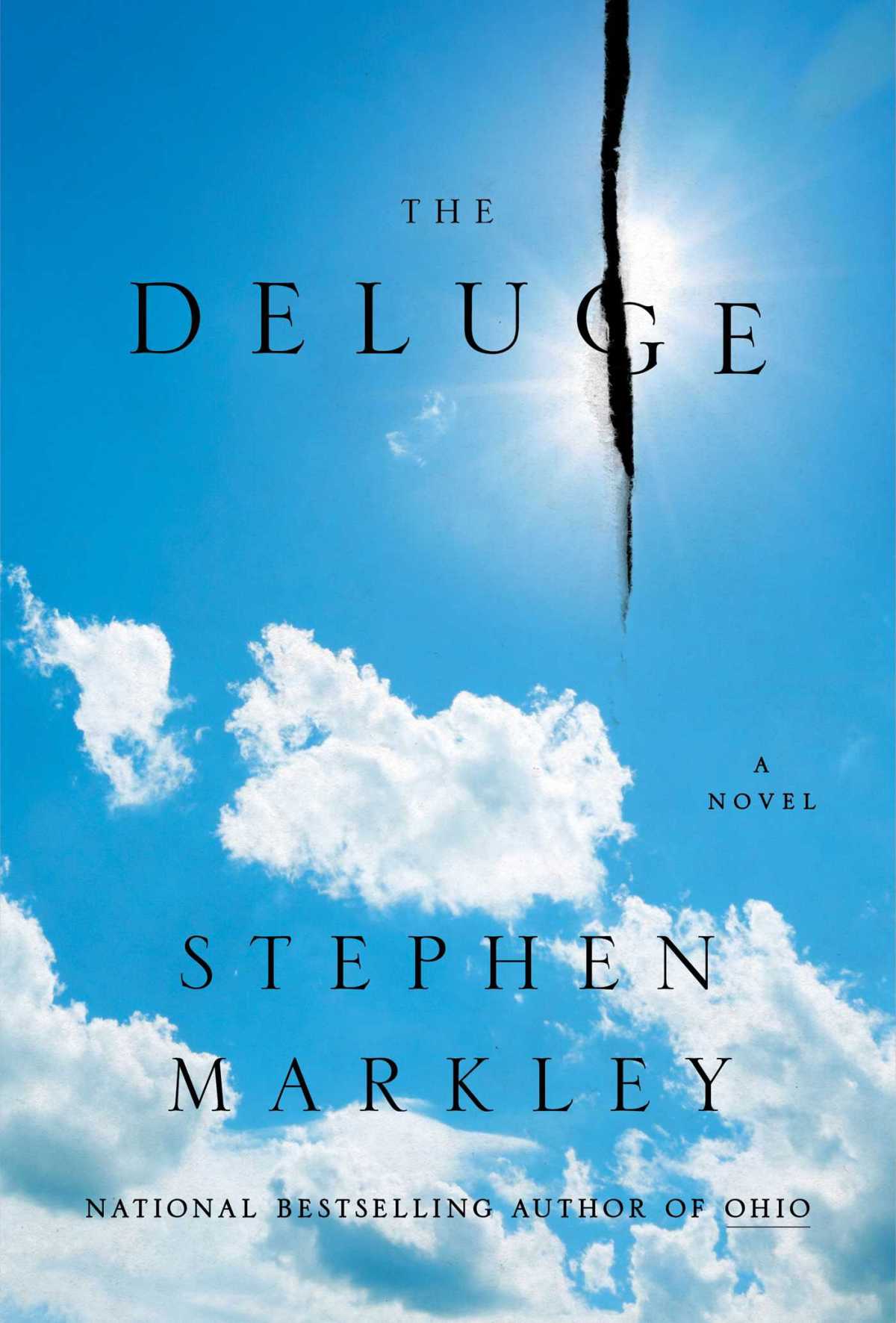
I just finished listening to The Deluge by Stephen Markley, a book that speculates on what the next sixteen years could be like. The book is almost nine hundred pages in print, and over forty hours on audio. Reading this book feels like it’s compressed the last twenty years of polarized political conflict into a forty-hour long disaster film. It’s intense.

Markley uses a large cast of characters to dramatize how people on the left and right will battle for control over the next five U.S. presidential election cycles. Most of the story involves two groups of characters, those working within the political system, and those who decidedly don’t. Markley portrays an ultrasecret ecoterrorist group that works to force change by violent acts versus a dedicated group of political wonks that labor in Washington to influence both parties. Dynamic women characters lead both groups. (By the way, I disliked both women. The only character I cared about was a drug addict in Ohio, who Markley uses as a kind of everyman.)

To further spice up the story, Markley explores the growing power of computer surveillance, artificial intelligence, privacy, and how everyone can be tracked.

I’m not going to review the details of The Deluge because I want to use my reading experience to talk about a specific response to reading the book. I’ll link major book reviews at the end in case you’re considering reading the book. I can say liberals will be terrified by the conservatives in this story, and conservatives will by horrified by these fictional liberals.

The Deluge is about climate change. We could have solved that problem by now if we had acted promptly twenty years ago. The government could have added a tax on all fossil fuels and then raised it slowly month by month. For example, by adding ten cents to the federal tax on gasoline each month. If we had started this in the year 2000, gasoline would be approaching $30 a gallon today. That would have forced people and corporations to make the changes needed.

That tax revenue could have been used to overhaul the power grid and for developing renewable energy technologies. If we had taxed carbon properly, we wouldn’t be fighting over climate change today. That didn’t happen. It didn’t happen because the people who owned trillions of dollars in fossil fuel reserves made sure it didn’t happen. They built a political and religious coalition to fight with them to protect that wealth.

All that’s beside the point now. What Markley envisions is the breakdown of the United States over the next sixteen years so it’s obvious to all we need to do something. The Deluge includes dramatic scenes of a massive fire that destroys Los Angeles, a massive flood that overwhelms the Midwest, and a massive hurricane that devastates east coast states. These events caused the insurance industry to collapse, leading to economic chaos. Markley doesn’t overplay all this. His fictional disasters are realistic, only somewhat larger than what we’ve already experienced, killing just hundreds or a few thousand people in each event, but having an enormous impact on politics and the economy.

Reading The Deluge makes readers ask themselves: Will American change soon? But I ask: Can people change at all?

Before reading this novel, I had seen two insightful videos about climate change that ask the same questions. The first video makes a careful case saying people don’t change and if there is a solution for avoiding climate change it must work with the psychology of how people act. The second video summarizes the first video with impressive summations of it and this tweet. (I wish I could summarize what I watch and read this well.)

Over the two hundred thousand years that our species have existed on this planet, we haven’t changed. Our societies and technologies change, but not us. Over those two hundred thousand years we have developed four major cognitive tools to understand reality: religion, philosophy, mathematics, and science. Only science using mathematics has consistently proven it can consistently describe reality. If you don’t believe that I wouldn’t fly in an airplane.

Science is not black and white. It’s statistical and hard to understand. But science has overwhelmingly shown that adding more CO2 to the atmosphere is turning up the temperature. The parts per million of CO2 in the air acts like a thermostat. Add more CO2 turns up the temperature. The only way to return to the weather we liked in the past is to return to the CO2 levels of the 1960s, but we keep adding more. The only way to stop adding CO2 is to completely stop using fossil fuels. And if we want to turn down the thermostat, we need to remove CO2, which isn’t easy. That’s why taxing carbon is the only way to force us to change, but we won’t do that, because it’s not in our psychology.

However, The Deluge suggests when things get bad enough, we’ll change. It ends hopefully. People even have hope for their children and grandchildren.

Personally, I don’t think we will change. If you want to know what the next sixteen years could be like, read The Deluge. If you believe people can change, and we’ll do the right thing eventually, read The Deluge. If you don’t believe we’ll change, I wouldn’t bother with the book unless you like looking at train wrecks. And if you suffer from depression, I suggest avoiding reading this novel at all costs. I seldom get even the slightest depressed, but this book bummed me out.

Reviews:

JWH

2022 Book #2 – Bewilderment by Richard Powers

by James Wallace Harris, 1/16/21

I often wonder how young people today feel about the future. The only way to have hope is through massive acts of denial. Susan and I never had children, so I don’t know what it’s like to answer their questions as they grow up. Do you lie? Do you hide the news? What do you tell them about the metal detectors in the schools? How do you explain our handling of pandemics or climate change? What do you teach your kids about race relations and the politics of hate? What do you tell your kids about the thousands of failures we are facing as a society?

This is the core of the new novel by Richard Powers. Bewilderment is about raising a nine-year-old kid with emotional problems. He’s probably on the autism spectrum but is very high functioning. He probably has other learning disorders, but nothing is definite. He has trouble in school and his teachers want to medicate him with powerful psychoactive drugs. He has hair-trigger tantrums. His mother has died. How would you cope with such a kid? To make matters worse, the setting is the near future where things have gotten even worse than today. Imagine what the U.S. would be like if Trump was on his third term.

Bewilderment is not marketed as science fiction, but it’s set slightly into the future and talks about technology that might be possible soon. The story often references science fiction and uses its techniques, so I do consider it a science fiction novel. It’s the most gut-wrenching science fiction novel since Flowers for Algernon. If that novel wrecked you emotionally, you might not want to read this one. I found this one even more emotionally devastating.

Theo Byrne is the widower father of Robin (Robbie), a nine-year-old boy who is smart enough to know that humanity is on an insane self-destructive path and he can’t stop asking why. Robbie relentlessly wonders why his father, his teachers, or any of the adults he meets don’t act rationally. Robbie acts out, sometimes violently, sometimes in tantrums, demanding truth and honesty. Robbie is the one sighted person in the land of the blind. Robbie is the person we should all be. And Theo is constantly at his wit’s end trying to help his son.

Teachers want to control Robbie with psychoactive meds, and Theo is looking for any solution but that. Theo is a great dad. He constantly tries to engage Robin in insightful learning. Theo has two tools for calming Robbie. One, he calls on his memory of reading 2,000 paperback science fiction novels for engaging stories to divert Robbie from his meltdowns. Second, Theo is a scientist developing simulations of exoplanets for the day a new space telescope will be launched. He gets Robbie involved in these possible worlds that could be discovered soon. The basis of Theo’s work is to develop as many simulations as he can, so when the telescope detects certain conditions with an exoplanet they can match it to the simulations and quickly understand what we might be seeing.

Theo uses his simulations to visualize being on other planets to engage Robbie’s attention. This works at times, but often it only fuels Robbie’s awareness of what we’re doing to the planet Earth. For a nine-year-old, Robin can extrapolate brilliantly. His bullshit detector never fails.

Bewilderment progresses through one year of Theo’s and Robin’s life. Robbie is obsessed with memories of his dead mother, who was a lawyer for all the save-the-world causes. It’s through learning about his mother that Robbie finds some hope of controlling his emotions.

Like I said, most people will not consider Bewilderment a real science fiction novel. Bewilderment doesn’t have spaceships, galactic empires, time travel, robots, or dystopias — well, other than our own. The reason I like to think of Bewilderment as a science fiction novel is it uses all the sense of wonder I grew up with to give us hope for the real future we’re about to enter.

Unfortunately, Bewilderment shows our science fiction dreams are going to fail us. Or more exactly, we are going to fail them. The rap sheet for our species is long. The list of what we’re destroying grows every day. One of the things Richard Powers believes we’re destroying is our positive science fiction dreams. That like me, he worries about what hopes young people can still find in science fiction.

Science fiction has always been about hopes and fears regarding the future. What happens when science fiction only has fears to work with?

JWH

Can We Build Tornado-Proof Houses?

by James Wallace Harris, 12/15/21

The recent tornado in Mayfield, Kentucky has me worried. I’m old, retired, and have health issues, so having my home destroyed would be immensely stressful. I feel so sorry for people in disasters like this, but especially when I see old people having to be helped because they are so helpless. I fear being helpless.

One thing I noticed in the pictures from Mayfield is some buildings survived the devastation. My friend Connell told me after Hurricane Andrew hit Miami they realized how houses were poorly constructed and made changes to the building codes. The newer homes are much more hurricane-resistant. I’m wondering if the same kind of codes can be applied to protect homes from tornadoes.

However, I don’t want to wait for new building codes or move to a new house. I doubt there are practical retrofit possibilities. One of the things that trouble me about tornadoes and other forms of weather damage is having to leave my home. If the house is a complete loss, there’s no choice, but what if there’s only some damage? Say a tree crushes one side of the house. I’d want to rebuild, and I wouldn’t want to leave my partially good house either.

So I’ve been thinking of something else. People use to have storm cellars. What if I could have a tiny home or a mother-in-law wing addition to my house that was built to strict specifications, could it survive a tornado? Something that Susan, the cats, and I could live in while our house was being rebuilt, or when storms are about to happen. Would this be practical? And how much would such a building cost?

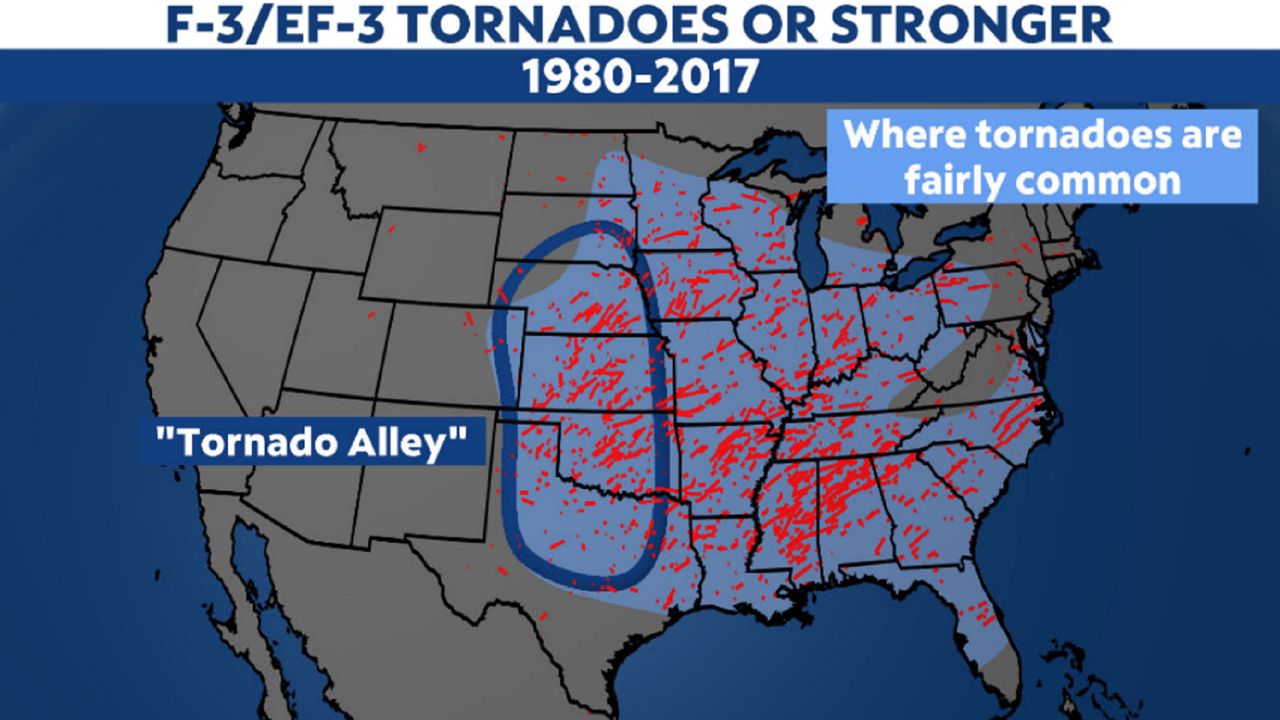
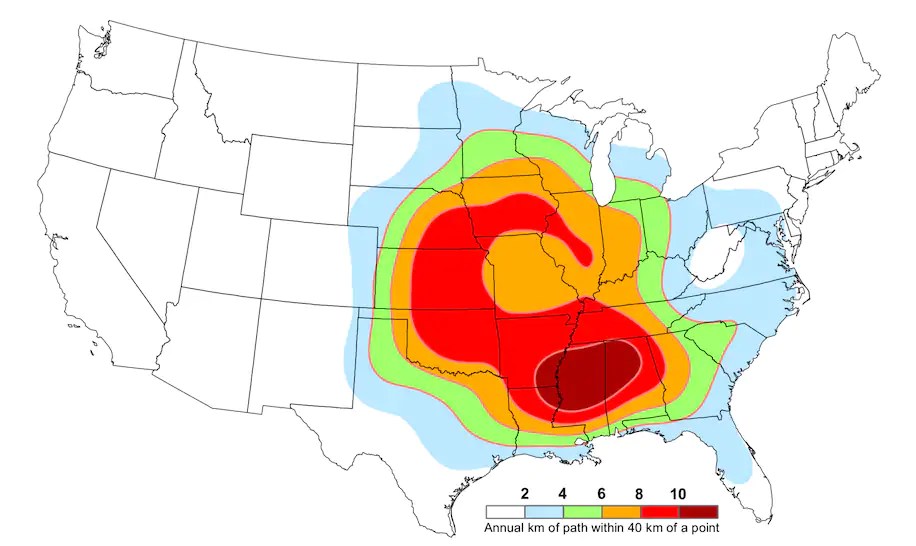
Is Tornado Alley Shifting to the Southeast?

I’m starting to see reports that Tornado Alley is shifting to the east, with some maps putting it where I live in Memphis, Tennessee. Other people are saying it’s not shifting with widening.

This article says tornado alley is an outdated concept and suggests a new shape.

Then I saw this article about high winds. Now that’s pretty scary.

How big would a lifeboat house or addition have to be? Should it be partially underground? Or could it be built with concrete blocks and a steel frame to withstand most weather-related disasters? It would need to have a bathroom and shower, but otherwise, everything could be in one room, including a kitchenette. Should we assume water and sewer systems survive most disasters? What about gas lines? Or should it be totally self-sufficient?

This is something to think about. Maybe it’s a business opportunity for a new industry. Could a prebuilt pod be designed and mass-produced to reduce the cost of such a need? Basically, a tank-like RV or small house trailer that could be partially buried might be a good design.

Remember the bomb shelter craze of the 1950s and 1960s? Maybe we’ll have a new climate change shelter craze?

JWH

The End of Civilization – Again

by James Wallace Harris, 11/29/21

When I was growing up in the 1950s annihilation by atomic war was a common worry. Kids were taught duck and cover drills, people built fallout shelters, we routinely heard Conalrad tests on the radio, and popular culture was full of stories about WWIII. The famous Doomsday Clock stayed set just minutes from doomsday.

Over the decades there has always been the world is ending forecasts. Some chicken little is always yelling the sky is falling. The new vogue is to claim civilization is collapsing. Routinely following the news makes it hard to ignore such fears.

What if civilization is collapsing? What should we do? The science is quite solid on climate change, and we’ve been warned for decades, but for decades we’ve done nothing significant. A fair number of folks are buying rural plots of land and AR15s but that hardly seems to be a practical solution for everyone.

My guess is most people are ignoring all the gloom and doom, or else going crazy in their own quiet squirrely way. I don’t think there is much we can do. The reason why many analyzed trends lead to possible apocalypses is that the natural thing for everyone to do is to keep doing what we’re always been doing. Humans aren’t big on intentionally making drastic changes to their lives.

If we’re not going to do anything to avert the forecasted catastrophes, then what are we going to do instead? Anxiety and depression are so self-destructive. It’s much too early to panic. We could party like it’s 1999, but the end isn’t that close yet. Enduring resignation will probably be a common plan, but that’s emotionally draining. Taking up Zen Buddhism or meditation might be useful. Enjoying the simple pleasures of life has always been an excellent choice. Ditto for pursuing creative hobbies.

Developing a positive perspective should be helpful. Civilizations always collapse, but often over decades or centuries. There will be a rush to hoard or consume everything left. The well-to-do will grab what they want, which is always more than they need. The practical will learn to live with less without agonizing over what they no longer have. For most citizens the collapse of civilization will be in such slow motion they will hardly notice it. It’s only the unfortunate who become refugees from random catastrophes that will feel the harshest impacts. So knowing how to relocate will be a valuable skill. There are certain preparedness precautions to take, but since nothing is certain, it’s not practical to go overboard with such measures.

Probably most useful is the ability for understanding the true reality of things. Don’t get caught up in delusions, fears, panics, but also avoid over-optimism and Pollyanish thinking.

I bring all this up because of some videos I’ve been watching. I have no idea how valid they are, but I consider the increase of such thinking as a kind of pulse-taking. What do you think of these videos? These three accept doom but try to find a positive perspective with dealing with such doom. They offer wisdom.

If you are a routine YouTube watcher and are signed in, watching these three videos will cause YouTube to offer you more of the same. There are quite a lot of these videos, so be careful. Don’t get overwhelmed.

JWH

Sometimes We Really Do Want More Government Regulations

by James Wallace Harris, 4/27/21

Please watch this fifteen minute video from NBC News. It is the most insightful news story I’ve encountered this year because it encapsulates many of the essential issues about the future.

This video illustrates why lack of regulations and resource management leads to ordinary citizens and the environment losing to big business. Corporations and people with money wanting to make more money are searching the globe for places where they can get any kind of competitive edge with their investments. Basically, big business and rich individuals will gentrify every last acre on the planet, pricing ordinary people off their land.

Southeast Arizona has very little surface water and rainfall. For decades homeowners, family owned farms and ranches, and towns have been sipping off the top of their aquifer. As long as rains replenish that aquifer, life in the desert is sustainable. However, global corporations have discovered this Arizona land is essentially unregulated and the water is there for the the price of sinking deeper wells. This makes it profitable for corporations from around the world to exploit this area. Raising hamburgers and cattle feed in the desert seems insane until you realize the real value of water.

Water is the new gold rush, and some locales are trading their water for jobs and investments. However, once that water is gone, that locale, that environment will die. Keep an eye on this trend. You’ll see it everywhere once you start looking.

As the corporations put millions into exploiting this land, drilling ever deeper into the aquifer, they have gained control of the land because ordinary people can’t afford to extend their wells deeper, and are thus force to sell out and move. Local control over land is going to disappear.

A kind of corruption is taking place. Politicians back the corporations because they follow the money. Notice how toady the politician is in this video. People who don’t own land and just want jobs align themselves with the corporations. And even though the corporations claim they are there for the long haul, the reality is they are there as long as they can make a profit. Once they suck the aquifer dry or it becomes too costly to pump that water out of the ground, they will leave.

This is happening all over the world. The long term results is the total land area that is sustainable for life on Earth is shrinking. The dynamics of what’s happening here also reveals various kinds of inequality in action. Ordinary people can’t compete. Neither can nature. Basically, outsiders with money have all the power. If the local government had regulations about land and water use they could preserve their old way of life. They could build a sustainable society. Corporations have played the democratic system to get what they want. Read Dark Money by Jane Meyer or Evil Geniuses by Kurt Anderson for fuller explanations.

Right now we have an exploitation society. The rules are simple. Anything you can do that others can’t stop you from doing, you can do. Individuals can’t compete against corporations. And since corporations are rigging the laws, there’s little people can do – unless people take back their democracy. But it might be too late. There is little demand for sustainability. Corporations want to make money, and individuals want jobs. Unless people can create jobs that coexist with sustainable economies, things won’t change.

When you watch this video think about the two opposing groups. On one hand, you have the global demand for meat and dairy, which includes all of us, and a few individuals who have been living in southeast Arizona for decades. Corporations just fulfill the global demand. But what if the global demand becomes greater for sustainability and the environment? We all have to want it, or it won’t happen.

JWH