Getting Too Close to Helpless

by James Wallace Harris, July 14, 2022

For this essay, I’m defining helpless as being in a situation where we can’t help ourselves or get help from someone else. As I get older I worry that someday my wife Susan or I will find ourselves in a completely helpless situation. This weekend it almost happened. Our hot water heater in the attic broke and water was pooling on the sheetrock of the ceiling above my computer room. A seam then spread open and water was draining onto the floor. Susan and I had to find a solution fast and several times I wasn’t sure we would.

First, we were lucky I discovered it so soon. I have an overactive bladder so I’m frequently going back to the bathroom which is annoying. But in this one instance, it put me Johnny-on-the-spot as I went down the hall to the bathroom. The pool of water was only in the middle of the floor.

I yelled to Susan and ran into the kitchen and pulled the filled garbage bag out of the tall kitchen trash can and ran back and put that under the water flow. I saw that it would fill pretty fast so I ran back to the kitchen and got the recycle bin and dumped the contents out on the floor and took it back to the room. By then Susan was there with a pile of towels.

I then went out into the hall, pulled down the attic stairs, and rushed up into the attic. The hot water tank is right next to the stairs and I could see the overflow pan was full and not draining. Damn. I went back down the stairs and ran outside and unscrewed the hose from the outside faucet and dragged it back into the house and up the stairs and connected it to the flush drain. It didn’t have a faucet handle but a slot so I yelled for Susan to get me a large screwdriver. I tried to turn off the hot water heater but it would only let me shut it down to pilot light. For some reason, I couldn’t make the button turn to the off position. I looked at the pipes and saw a red handle so I turned it all the way to what I hoped was an off position. When I had the screwdriver I opened the flush faucet and water started spraying everywhere from a leak in the hose connection. I turned it off.

Two weeks ago my back was hurting so much, that I could barely walk, so I was thankful I was able to be going up and down the stairs. I was moving at a frantic pace but I was calm. I wondered what would have happened if I couldn’t go up the stairs. I don’t trust Susan on the attic stairs. It was then I realized I could be helpless. If I couldn’t fix this problem I had to get someone else. Help means either doing it yourself or finding someone who could. I was suddenly scared I couldn’t, and we’d be helpless. I know this is a minor emergency, but it was enlightening.

Then I went back down the stairs and called our regular plumber. I told them immediately I had an emergency of running water but they made me give me my information first before they told me they couldn’t have someone out until Monday. It was Saturday afternoon, but I thought it was Friday. So I called another plumber thinking I might catch someone still there. The same thing happened. Wanted my information before telling me the soonest would be Monday.

I got some duck tape and went back upstairs and wrapped the hose. I turned on the drain again. It didn’t shoot water. I went outside and saw that water was coming out of the hose. I then went back to the computer room and dragged the first bucket to the front door and emptied it on the front porch. I took the empty bucket and swapped it for the full and emptied it.

I felt I had a bit of breathing room. Then Susan said she still heard running water.

I went to the computer and looked up emergency plumbers. I found one that claimed 24/7 service and called them. Same thing. Can’t come until Monday. I then ran to the hall closet and got my T-wrench and went outside to the street to turn off the water to the house. However, I couldn’t get the valve to budge. I figured I had to call MLG&W to come shut off the water. I didn’t want to do that because I didn’t know how long they would take to get here, and I didn’t want to go days without water.

I went back upstairs and realized that I had shut off the gas, not the water. I started looking around. This time I looked at the top of the water tank, which almost goes to the ceiling of the attic. There I saw water spraying from around the intake pipe, but I also saw another turn-off handle. I gave it a quarter turn and the water stopped running.

That gave me a sense of release. The flow of water from the computer room ceiling slowed, and in about fifteen minutes it stopped. I called the plumber and made an appointment for Monday.

However, I kept wondering what would have happened if I hadn’t been able to shut off the water. What would we have done? What would Susan have done if I wasn’t home? She probably would have called a neighbor, her brother, or MLG&W. I pictured us taking turns swapping filled buckets all weekend, even taking sleeping shifts at night.

It’s incidents like this when I want more control. I should have been prepared. I should have known where the water shut-off to the tank was located. I thought I was prepared by buying the tool to shut off the water at the street. When the plumber came Monday I ordered a new tank and ordered an automatic shut-off device that works with a water sensor in the overflow pan. I also ordered a new overflow pan and all new drainage pipes. But is that enough? I prefer not to deal with another computer room flood. This was the second. Years ago the HVAC installers made the mistake of putting in the condensation pan at a tilt – a tilt away from the drainage outlet.

We don’t have complete control of our lives. On the news that night there were stories about flooding in the east that ruined entire homes. Our flooding was nothing, so I was thankful. However, knowing we can’t control everything doesn’t stop me from worrying about becoming helpless. One sight that always scares me when I see it on the news is when first responders have to rescue old helpless people.

I know I’m worrying about the inevitable, but that doesn’t stop me from worrying. It doesn’t stop me from thinking of ways to be prepared. If I designed houses I wouldn’t put the HVAC and hot water heater in the attic. Every house should have a little machine room on the ground floor, with a floor drain and sensors for flooding. This house has had a hot water heater in the attic since 1952 and things have been mostly good 99.9999% of the time.

Getting old has made me worry about my body breaking down or my house breaking down. I realize there are things I can do to help myself. I also realize there are things I depend on Susan to help me do. And I know there will be other things I will have to depend on friends or hired help. This flooding incident has made me think about the times I might not find any kind of help. Generally, that’s never a problem because we have each other. But it’s a thought.

JWH

How Do You Label Your Existence?

by James Wallace Harris, 5/3/22

Now that I’ve been retired for eight years, I realize I can no longer call myself a programmer, which is the way I identified myself during my middle years. Because Susan and I never had children, I’ve never been a parent, and thus can’t be a grandparent in my waning years, which is a label some of my retired friends proudly embrace.

My new identity is a retired person, but that’s not much of an identity and I’m not sure I like using that label, but I do. I spend most of my time reading and writing about science fiction short stories, which gives me a little bit of a purpose. I can’t call myself a scholar, but I do study that subject in depth. It’s just a tiny subject that’s not very relevant but does give my existence a purpose. I’m not sure I can justify my existence by calling myself a science fiction fan.

I guess I could call myself a blogger but don’t know how satisfying a label it would be to use. I’ve always wanted to be a scientist or philosopher but I’ve never come close to actually being either.

I look around and see people defining their existence in various smaller ways. One prominent label that is often in the news is Republican. Some of these people treat being a Republican almost like a religious identification and evidently find great identity with it. They even take great satisfaction in calling themselves a Republican or a Conservative. I’m a liberal but don’t get off on calling myself one. I think that’s one of the big differences between the two parties. Conservatives are a lot more organized, and they seem to get a lot of satisfaction out of being part of their group. I think being young and liberal is more of an identity thing. It was for me.

I observe people finding meaning in their existence in all kinds of ways. I know many people who are ardent travelers. They use the term traveler to define themselves. Many of them act like their purpose on Earth is to travel. They find self-worth by recalling the places they’ve been. I’ve noticed there are a lot of travelers with YouTube channels. I wonder if they feel like prophets of traveling?

I’m on the fringe of many subcultures. Take audiophiles for example. They find meaning in their never-ending question to achieve higher fidelity playback, I’m too cheap to go all the way with that group. I’m not a sports fan, but they are quite common around here, and they seem to find great happiness in identifying with their teams. There seems to be an overlap between sports fans, Christians, and Republicans, in that they all love their group identity and get immense satisfaction when their group wins or converts folks to the team.

I relate to many of my friends through the kinds of entertainment we share. Much of the conversations I have with my friends, deal with discussing shows and movies on television. I’m also a bookworm and find kinship with other bookworms. I’m not a foodie, but I know a lot of people who find dining out an important aspect of existence.

I believe people get more existential meaning from their pursuits when they have a strong label for themselves. The average person might love dining out, but someone who calls themselves a foodie obviously gets more meaning from it than those of us who just enjoy chowing down. And if people call themselves a gourmet, they feel even more important about themselves, like they were philosophers of the tablecloth.

That’s my trouble. I no longer have any good labels to define myself. I guess the best is Bookworm. It’s the one I’ve embraced since childhood. I’ve never been one for nice cars or clothes. I spend my money on books. I don’t travel because I prefer to read.

However, I have to wonder, when I lay dying in my La-Z-Boy, will I look back and feel my existence was well spent with all those books?

JWH

Does Retirement Cause ADHD?

by James Wallace Harris, 3/11/22

I’ve been retired for eight-and-a-half years and I feel it’s been one long slow physical and mental decline. Of course, that feeling of decline could just be natural aging. I can understand why my body is wearing out, I mean, what machine runs for 70 years without breaking down? But comprehending my mental decline is a little harder to visualize. I know the brain is also a physical mechanism but it doesn’t feel like one.

What if that decline isn’t entirely due to aging?

I know is I’m having a harder time focusing. This morning, I asked myself, what if that lack of focus isn’t due to aging? It occurred to me that maybe having all my time free is destroying my focus, and making me mentally lazy.

Let me use a rather icky analogy. I have an overactive bladder. Tests show my bladder has shrunk. One theory put forth by my doctor is I developed the habit of going to the bathroom as soon as I felt the need. That conditioned my bladder, and it shrank.

What if being able to do anything I wanted. when I wanted, has shrunk my attention span? My days are spent flitting from one fun diversion to another, but never sticking with any task for very long. After eight years, I now have the time-on-target of a butterfly.

For example, I have a very hard time sticking with TV shows and movies. I switched to watching YouTube videos a couple years ago because they were shorter. However, they’re starting to feel too long. I watch a few minutes of one, then click to another. Similarly, I’ve switched from novel-reading to short story reading.

My days are filled with a routine of chasing one interest after another. I do the same kind of flitting on my phone, spending many total hours during the day compulsively checking Facebook, email, Flipboard, Apple News+, Spotify, Audible, Scribd, Feedly, Wordle, Quordle, Octordle, Twitter, NY Times, NY Times Crossword, Google, Wikipedia, etc. That might be another culprit to consider.

Every night I try to watch TV after dinner. I used to watch the news faithfully, now I skip through the 30-minute recording in a few minutes. I used to watch Jeopardy faithfully, now I skip days, and if the topics aren’t appealing, I hit the old back button to return to the menu to find something else. I record countless movies on TCM I want to watch, but each evening I go through my recordings trying four, five, six movies, often just watching them for a few minutes each.

Every so often I find a movie or TV show I’ll stick to. I used to love binge-watching shows but seldom do that anymore. I end up clicking on YouTube and watching short videos. Especially ones that last under 5-10 minutes. When I tire of TV I switch to reading or listening to music or doing puzzles or blogging. I can always find something I enjoy doing, it’s just that I don’t stick with anything long.

I would say I was bored or depressed, but I don’t feel bored. I actually enjoy this constant grazing of different activities. I now check YouTube three times a day for new videos. I’ll read for a little bit, then listen to music for a while, then write on a blog, enter data for CSFquery, play with the cats, take a nap, eat a snack, visit a friend, go to the bookstore. There’s always something else to do.

When I worked I had to focus on my job from 8:30 – 5:00 each day. I wonder if that discipline gave me the ability to focus in general? During my work years, I could watch a 3-hour movie without getting the least bit restless. Or write for several hours until I was worn out and starving.

Has aging ruined my attention span or lack of discipline?

I’ve thought of a way to test this hypothesis? Start sticking to one project again and build up discipline. Then see if that beefed-up ability to focus crosses over and improves my attention span in other areas. It’s sort of like my bladder. I’m retraining it by waiting longer before I go pee.

I have no desire to go back to work but maybe I can find one task I can work at until I can stick with it for three or fours hours straight. I’m going to work at this, but I just remembered something. Before I retired my ability to focus at work was waning. Maybe it is old age. Some people train with weights. I need to train with focusing. Then I’ll know.

JWH

Can We Build Tornado-Proof Houses?

by James Wallace Harris, 12/15/21

The recent tornado in Mayfield, Kentucky has me worried. I’m old, retired, and have health issues, so having my home destroyed would be immensely stressful. I feel so sorry for people in disasters like this, but especially when I see old people having to be helped because they are so helpless. I fear being helpless.

One thing I noticed in the pictures from Mayfield is some buildings survived the devastation. My friend Connell told me after Hurricane Andrew hit Miami they realized how houses were poorly constructed and made changes to the building codes. The newer homes are much more hurricane-resistant. I’m wondering if the same kind of codes can be applied to protect homes from tornadoes.

However, I don’t want to wait for new building codes or move to a new house. I doubt there are practical retrofit possibilities. One of the things that trouble me about tornadoes and other forms of weather damage is having to leave my home. If the house is a complete loss, there’s no choice, but what if there’s only some damage? Say a tree crushes one side of the house. I’d want to rebuild, and I wouldn’t want to leave my partially good house either.

So I’ve been thinking of something else. People use to have storm cellars. What if I could have a tiny home or a mother-in-law wing addition to my house that was built to strict specifications, could it survive a tornado? Something that Susan, the cats, and I could live in while our house was being rebuilt, or when storms are about to happen. Would this be practical? And how much would such a building cost?

Is Tornado Alley Shifting to the Southeast?

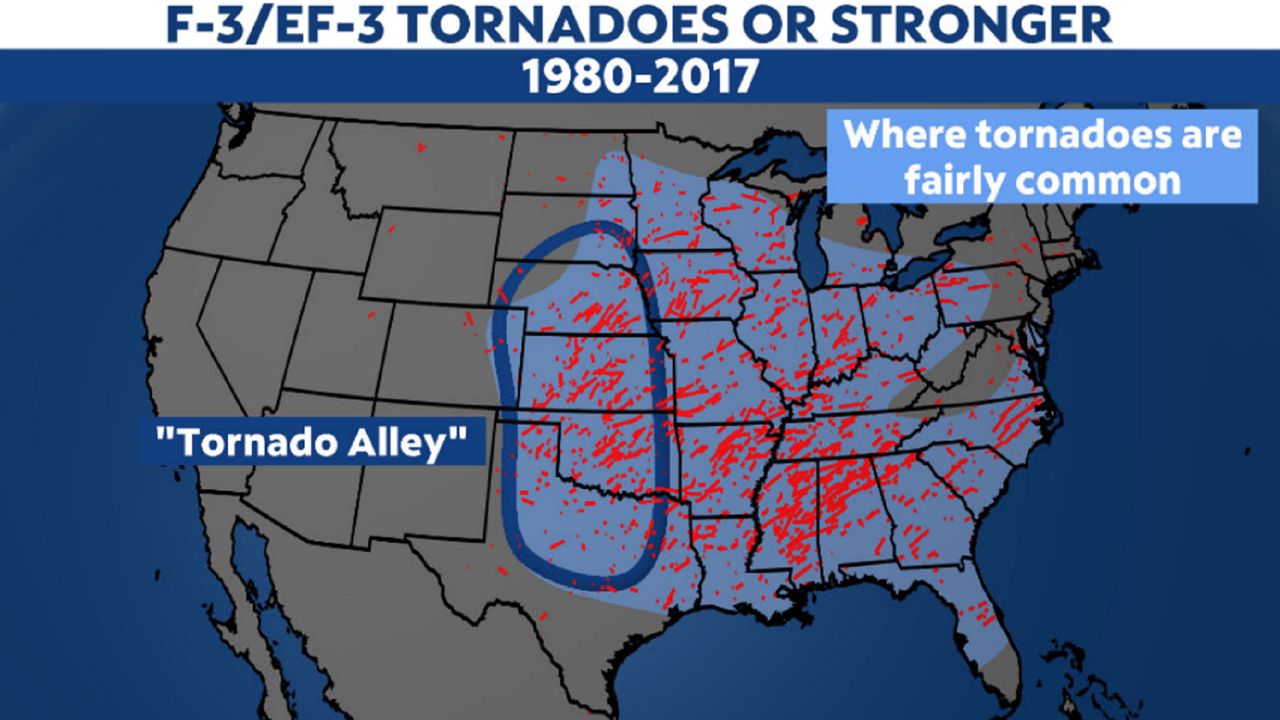
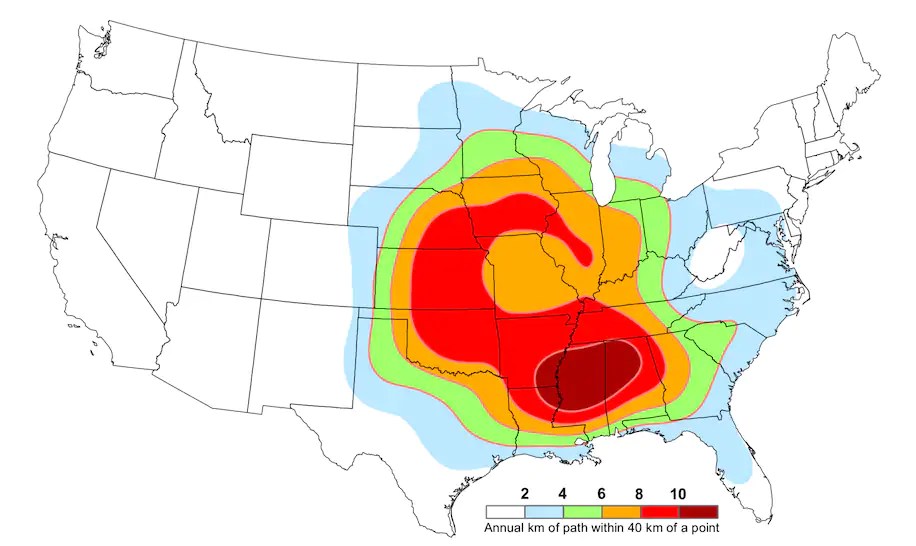
I’m starting to see reports that Tornado Alley is shifting to the east, with some maps putting it where I live in Memphis, Tennessee. Other people are saying it’s not shifting with widening.

This article says tornado alley is an outdated concept and suggests a new shape.

Then I saw this article about high winds. Now that’s pretty scary.

How big would a lifeboat house or addition have to be? Should it be partially underground? Or could it be built with concrete blocks and a steel frame to withstand most weather-related disasters? It would need to have a bathroom and shower, but otherwise, everything could be in one room, including a kitchenette. Should we assume water and sewer systems survive most disasters? What about gas lines? Or should it be totally self-sufficient?

This is something to think about. Maybe it’s a business opportunity for a new industry. Could a prebuilt pod be designed and mass-produced to reduce the cost of such a need? Basically, a tank-like RV or small house trailer that could be partially buried might be a good design.

Remember the bomb shelter craze of the 1950s and 1960s? Maybe we’ll have a new climate change shelter craze?

JWH

Why Am I Peeing 30 Times a Day and Other Mysteries of Getting Older?

by James Wallace Harris

I am being forced to become a detective, but the mystery I must solve is not one of who did it, but why is my body out to get me. Sometime in the future we will all die, but before we’re done in we’ll fear many possible assassins. For most of us, our murderer will be a natural cause, but which one? Our last years will be spent running away from various suspects, always looking for clues to who our real killer will be. But the older we get, the more suspects show up, complicating the mystery.

All my friends in my age group suffer from something, many have dodged several bullets, and a few haven’t. Like all the machines we’ve owned over our lifetime, our bodies will wear out, part by part, until they can’t be fixed anymore. Unfortunately, being a machine that’s breaking down is not a fun experience. Like an old car, we never know which part will need repairing next. And continuing this metaphor, most of us aren’t skilled repairmen. We can only guess about what’s causing our breakdowns, and even when we do hire an expert, we never know if we’re getting the right repairs.

I’m currently dealing with two medical mysteries. The primary one is why do I pee thirty times a day. I went to a urologist and had a Urolift assuming it was a common male problem of an enlarged prostate. Although the Urolift improved flow, the procedure failed to stop my excessive peeing. Evidently, I had two problems.

Before the Urolift I had hoped the procedure would fix me and I’d be back to normal. However, I’m learning in old age we seldom get back to what we once were. Atul Gawande analyzes that hope of returning to normal in his book Being Mortal. We all believe doctors can fix us, but that isn’t always true, especially the older we get. That’s when we try to fix ourselves with sleuthing our own medical mysteries.

I’ve been watching many videos on YouTube about the causes and cures of frequent urination. I feel myself grasping at straws hoping to find any help. For example, Dr. Oz recommends consuming ground flax seeds to calm an overactive bladder, and Dr. Berg recommends following a keto diet to reduce insulin resistance that can cause frequent urination. My own urologist has prescribed Myrbetriq to relax my bladder muscles but it made my prostate/bladder ache, and my urges to pee stronger and somewhat painful. Katy Butler warned in her book The Art of Dying Well against anticholinergics, the common medicine prescribed for overactive bladders, because of their dangerous side effects. My own internist is against them too. Evidently, a large number of older people have overactive bladders and we’re all looking to solve the mystery of why it’s happening to us and how to fix it.

I’ve taken a different approach. I had hoped the Urolift would have left me peeing like a teenager again, which the sale testimonials promise, but when I informed my urologist that magic hadn’t happened, he said it took months and years for my bladder to learn its current habits, so it might take just as long to break them. I went home feeling relieved with this bit of hope. In fact, for several days after that office visit I only peed 24 times a day. But then the frequency went back up.

I wondered if that was a clue. Could that sense of relief brought on by hope have relaxed my bladder, even just a bit? Could I consciously try relaxing my bladder through stress reduction or meditation? I bought a chem flask with a milliliter gauge and have started measuring my output, along with logging my frequency. A healthy person will pee 250-400 ml when they go and maybe up to 800 ml when they really hold it, but I only produce 50-70 ml during my frequent visits to the bathroom, and even less when my bladder is having fits.

From what I’ve learned people of all ages can have urine retention, but it’s more common in oldsters. I already know that several of my organs are wearing out, so why not the bladder? But if it’s a matter of muscles, either for contraction or relaxing, can I make changes with exercise, diet, or mind control?

By the way, those are some of the many approaches we take when trying to solve our own medical mysteries. There’s several, often approached in this order:

  • Time will make it go away
  • Prayer will heal it
  • Diet will help it
  • Exercise will overcome it
  • Pills will cure it
  • Surgery can repair it
  • Meditation can relax it
  • Alternative medicine might fight it

When you have a medical mystery you keep trying to solve it like a complex Sudoku puzzle. We always want to believe we can fix something and return to normal, but part of aging is the realization that some things are out of our control.

But what’s particularly frustrating is assuming something can be fixed if only we can find the right evidence and clues. The trouble with medical problems is all the variables and interactions. It’s almost impossible to get a definitive answer.

While working on my pee problem my gallbladder said, “Hey, pay attention to me!” Turns out I have gallstones. I’ve had a couple minor gallbladder attacks, but since I’ve seen someone with a major attack I’m positive I don’t one the kind requiring an ambulance. At first, I thought, let the doctors rip out my gallbladder because I’ve known a number of people that’s had that procedure. Then I started learning about possible consequences of living without a gallbladder. After ultrasounds, bloodwork, and a CT scan, my doctor has recommended a wait and see attitude. While doing all that poking around though, they also found fatty deposits and a cyst on my liver. So I feel like a ticking time bomb. But these new issues only adds to the list of my failing parts and systems.

I don’t mean to sound like I’m boo-hooing in my blog. I’m just reporting on a mental process I find interesting about getting older. And like I said, I know so many people with all kinds of medical problems, nearly all of them worse than mine. In fact, I can’t think of anyone my age or older I’d trade bodies with.

I’ve just reached an age where stoicism is the only practical philosophy. I know one of my organs will fail, and murder me, but not which one. But does it matter? It will be out of my control. The frustrating thing is thinking we can control things, and we can to a very limited degree. But evidently, part of aging is learning when we can’t.

JWH