How to Save The World by Reading Science Fiction

by James Wallace Harris, 1/26/21

Many people have the inner confidence that the world will always muddle through. That we’ll solve our problems naturally through the unfolding of uncontrolled events. Other people believe as the population of humans grow, we’ll eventually reach a breaking point and things will fall apart. If you read Jared Diamond’s Collapse, you know the history of the world is a history of failed civilizations. Whatever goes up must come down, and if you’re the kind of person that uses numbers and graphs to anticipate the future, it doesn’t look good.

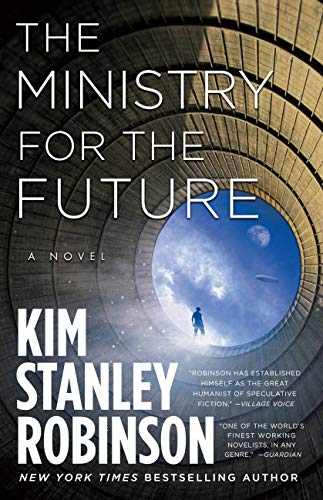
Kim Stanley Robinson has written a science fiction “novel” where he imagines humanity intentionally solving our big problems. The book is called The Ministry for the Future. It’s hard to recommend this book because people who expect a novel to work in a certain way could have difficulty reading it. I’ve already written about how The Ministry for the Future isn’t structured like a typical novel so you might want to read that essay before buying it.

The Ministry for the Future imagines how humanity could save itself. It’s just one possible scenario, but it does offer more hope than I’ve seen elsewhere. Now, it’s not entirely Pollyannaish, because it also assumes a massive economic depression and worldwide acts of terrorism will force us to change at times too, warning us there are no easy solutions, and to expect a bumpy ride.

The chief task to saving our planet is reducing CO2 in the atmosphere. Robinson suggests this can mainly be done by inventing a new worldwide currency he calls the carbon coin. Like the gold standard, this currency will be based on carbon kept out of the atmosphere. Once worldwide financial institutions back the carbon coin, and people and corporations realize future wealth depends on it, there will be an incentive to keep CO2 out of the atmosphere. At one point, Robinson says we’ll pay Saudi Arabia to keep its oil in the ground and that will create more worldwide wealth. That’s hard to believe, especially if you watch this film. (Really, watch this film.)

Robinson also imagines many giant geoengineering projects, including pumping water out from under glaciers to slow their pace into the oceans. He also assumes we’ll pursue different kinds of carbon sequestering combined with switching to renewable energy sources. These are all technical solutions that we’re considering today, but Robinson also has several chapters about why many of our current big ideas will fail.

The whole goal is to get CO2 back down to 350 ppm. Near the end of the novel, which spans many decades, CO2 peaks at 475 ppm. Robinson promotes the success of the real 350.org movement in the book. Last month we were averaging 413.95 ppm of CO2, so we’re currently about half-way to Robinson’s future in real life. To get back to 350 ppm we’ll have to stop using all fossil fuels and retrieve a lot of CO2 already in the atmosphere and put it away somewhere safe. Generally, that’s into trees, or sequestered. So, Robinson imagines the world reforesting on a vast level. But can you really imagine that we’ll stop taking oil, gas, and coal out of the ground? That’s trillions of dollars in wealth that people have invested trillions of dollars to own.

Concurrent with the CO2 problem is the extinction problem. Robinson also embraces Half-Earth Project to give half the Earth back to wildlife based on E. O. Wilson’s book Half-Earth: Our Planet’s Fight for Life. Within Robinson’s novel, huge tracts land are purchased to create wildlife corridors to connect the larger national parks around the world. This is a beautiful vision that I hope comes true. But to achieve it would require buying up small towns and destroying roads on a vast scale. That adds another giant expenditure for saving the world. Robinson claims this will add jobs and eventually grow the economy, but will people see saving animals as an investment?

Robinson foresees two horrible sources of good for the earth that are evils for people. A giant worldwide depression will slow the release of CO2, and he imagines vast networks of ecoterrorists that will stop air and sea travel by any machines that run on fossil fuel. Robinson pictures us returning to clipper ships and dirigibles, as well as new kinds of electric planes and ships that use renewable resources.

In this book Robinson doesn’t dwell on rising seas and other natural disasters like he has in her earlier novels, but he does focus on the refugee problems. He imagines we’ll eventually develop a global citizenship status that will allow us to fairly resettle the millions of refugees. Will we be that wise and kind?

All of this is just a tip of the iceberg among Robinson’s speculations. Overall, The Ministry for the Future is a very hopeful story, but you must read between the lines to account for all the horrors. However, his first chapter is an extremely dramatic scene of one terrifying ecocatastrophe, and I can’t recommend reading it highly enough. It’s available online to read.

After finishing The Ministry for the Future, I keep asking myself: Will we really save ourselves? Robinson believes we’ll more than muddle through, and even find triumph in our achievements. Robinson is almost gung-ho for the future. Americans can’t even pull together in a crisis like the Covid-19 pandemic, so why expect us to pull together at far greater challenges? Will we muddle through despite ourselves? I don’t think so. Humans have always muddled through in the past because there were always been an abundance of options and resources. Solving climate change is where the Ponzi scheme of Capitalism finally comes due. Saving ourselves will require moving to a new paradigm for the politicaleconomy. I’m not sure that will happen. In fact, I seriously doubt it. Why? Because it will require humans to work together at a level of cooperation that we’ve never shown in the past.

Kim Stanley Robinson is an optimist. I’m a pessimist looking for hope. I believe it’s important to read science fiction novels like The Ministry for the Future because we need to all ask ourselves if such dreams are possible. Are we capable of making these kinds of changes in our lives? My hope says its theoretically possible. My pessimism says no.

If you haven’t really thought about how we’ll save ourselves in the future, then you might want to read The Ministry for the Future. It’s not a fun page turner, but I believe it covers most of what you’ll need to consider.

JWH
The Psyche of Blind Faith

by James Wallace Harris, Saturday, January 9, 2021

This essay is not about Donald Trump or politics, but I’m going to use the January 6th riot at the Capitol as an example of blind faith. In the days following the riot several news reports have appeared where followers of Donald Trump have denied he was the instigator of the riot, and in some cases, that the rioters were not the real followers of Donald Trump.

The evidence for Trump instigating the riot is overwhelming, and growing, as law enforcement and the media assemble a timetable of events and clues. I can easily see January 6th becoming the subject of future congressional hearings like those covering the JFK assassination where we heard weeks and months of testimony. In the end, most people will believe that Trump was the inciter-in-chief in the same way the congressional investigations concluded that Lee Harvey Oswald was the lone gunman. But like lone gunman deniers, there will always be deniers to Trump’s guilt.

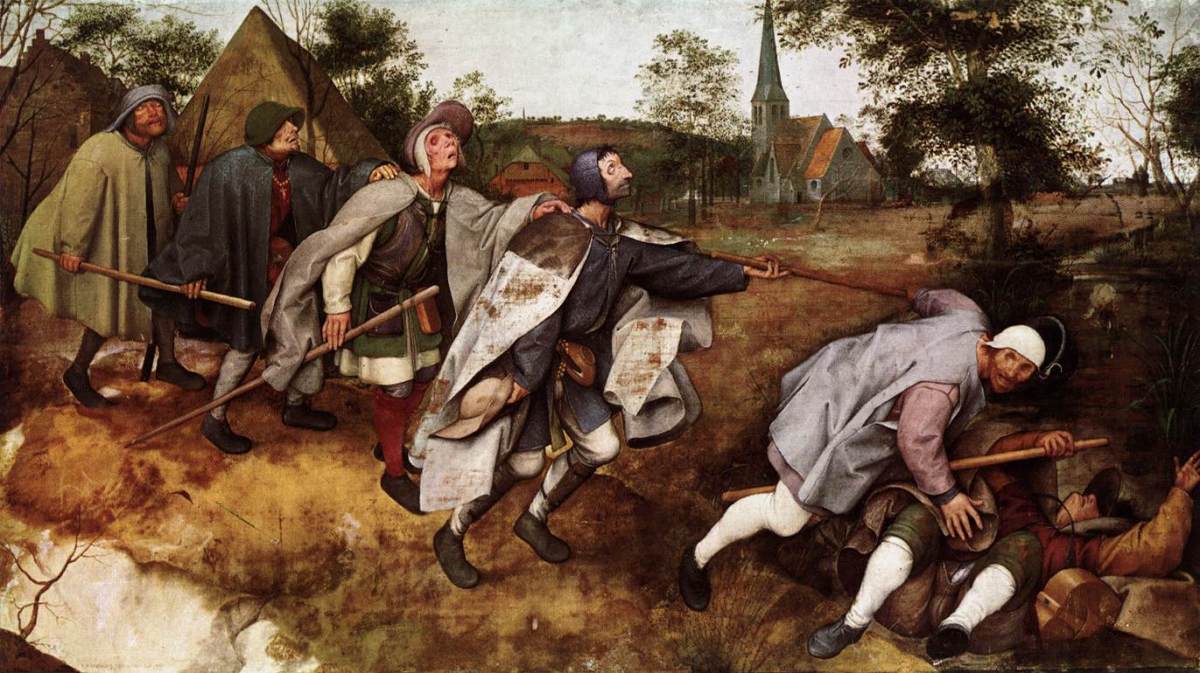
This kind of denial comes from a psychology of blind faith. I find that psychology fascinating. We see blind faith everywhere. What allows some people the ability to tune out aspects of reality to maintain their faith in a particular belief? One good example is the free-market capitalists whose faith keeps them from seeing pollution, climate change, wealth inequality or any other negatives to capitalism. They must deny all evidence to the contrary to maintain their faith in the purity of Milton Friedman’s teachings.

The ultimate example of blind faith came just after the crucifixion of Jesus. The followers of Jesus saw that he was dead. However, they couldn’t accept that death, so they invented a faith to prove he still lived. Their blind faith created a new view of reality that they see but others don’t.

The only way to maintain blind faith is through denial. I now see denialism everywhere, which implies blind faith is everywhere.

Donald Trump inspires blind faith in his followers. What causes that? How does it work? Why him? It’s obvious that no amount of evidence can penetrate such faith. It’s a survival mechanism. Believers obviously benefit from other positive mental states once they let go and accept a faith. Once a faith is accepted any threat to that faith is also a threat to the new sense of wellbeing.

This blind faith is why I’ve given up talking with my conservative friends about Trump. The wall between us is impenetrable. To talk with them feels just like being John Cleese trying to convince Michael Palin the parrot is dead.

The inspiration for this essay.

JWH

Will Americans Ever Be United?

by James Wallace Harris, Wednesday, July 30, 2020

We might be the United States, but we’re hardly a united people. Hasn’t the melting pot of the world produced a particularly unhomogenized population?

If you pick any year in our history and study it, divisiveness is the norm. This has got me to wondering, are there topics of agreement that we mostly share?

For example, if we pass a law that means we want 100% of the people to abide by the law. Yet, a law can be passed by only a fraction of the population. Does it really make sense for 50% of the people to say how 100% of the people should act? But we’ll probably never get 100% agreement on anything. So, shouldn’t we think harder about what percentage of the vote equals a proper majority?

Would it be fair to require an 80% majority? That would still mean 20% of the population would oppose the law and would probably be unhappy. But it would also mean 80% of the population would be happy.

What we have is a happiness v. unhappiness ratio. Right now, we have a 50/50 ratio, which explains why our society is so polarized. Wouldn’t America be somewhat happier with a 60/40 ratio? And even happier with a 75/25 ratio?

We’re never going to have a 100% happy society. But shouldn’t we try to reduce the unhappy portion of the equation? My guess if we agreed to make 60% the required majority to win any vote, we’d see a shift in the contentment of the nation.

Ideally though, we’d eventually need to increase that to 75%, but right now that would be an impossibility. Just developing a 60% consensus would take a tremendous effort, mainly in learning how to make compromises.

Restless in an Age of Anxiety

by James Wallace Harris, Monday, May 18, 2020

To paraphrase Rodney King, “Why can’t we all be normal?”

Usually, I’m a very laid back guy, but a slow restlessness is building up in me. It could be the weeks of confinement, but I doubt it. I’m retired and seldom went out before the pandemic. The U.S. is closing in on 100,000 deaths from Covid-19 and millions want to get out again. That makes me nervous, but I’m not sure if it explains my uneasy sense of restlessness. What makes me more nervous is millions of people want to believe the pandemic won’t get them. That might be part of it. Some people want to deny the coronavirus like they deny climate change, but I’ve been living with deniers for decades, so that might not be it either.

They interviewed a scientist on 60 Minutes yesterday and he said people need to recognize the certainty of physics, chemistry, and biology. Reality doesn’t give a damn about what we believe. It’s foolish to believe in mind over matter. And that makes me restless when I realize the inevitability of the objective reality. I’ve always wanted to believe I could outwit determinism.

I might also be feeling restless now because I need prostate surgery for my BPH. I’m scheduled to see a urologist and expect to have some kind of surgical procedure done. Peeing all the time isn’t normal, so maybe I’ll find peace if they can fix me. I’m hoping it’s like my two heart procedures. I had a heart arrhythmia for years and they went in and zapped something inside my heart and I was normal again. Anxiety was deferred. Another time, I was having chest pains and breathing problems, and they went in a stuck in a stent, and I was normal again, bringing another kind of peace. I know the urologist will rotor-rooter my you-know-what, and hopefully, I’ll be normal again. I also know until I’m physically normal again, I’ll worry about the possible complications and side-effects, and that’s a source of the restlessness too.

However, I don’t think my current restlessness is completely anxiety over having surgery. I wish politics could return to some kind of normalcy. I’m tired of having a crazy incompetent megalomaniacal crook being a rampaging bull in the White House. I want some dull-ass politico that just works at bi-partisan politics, statesmanship, foreign affairs, and leadership the heals the nation. It sure would ease my nerves if I didn’t feel our capital was Clowntown.

It also makes me nervous when protestors bring their guns into capitol buildings. Protesting is an honest outlet in a democracy. And I accept that people have the right to own guns, I just don’t want to see them. Seeing them at protest rallies makes me nervous. How do you tell a second amendment rights protester from a mass shooter? They all look like crazy angry white guys with guns. Don’t get me wrong, I like guns. But I don’t like seeing them out in public unless they are being carried by a person in uniform — either the police or military. It makes me nervous seeing guys with guns on their belt at concerts and other social gatherings. I don’t think they will protect us from bad guys, and seeing their guns make me think of beserk killers. At least armed women keep their guns hidden in their purses. Part of the problem with the protesters with assault rifles is they look like people cosplaying their favorite action heroes, but that’s unnerving because it also looks like they’re grown men playing acting with real guns. I’m all for people owning guns, but I only want to see civilians with guns in their homes, at the shooting range, or out hunting. Otherwise, I’ll think they’re a crazed shooter of school children or concert goers.

Another thing that’s gnawing at my sense of normalcy if the economic meltdown. The United States has a tremendous economic engine, but it’s taking a massive hit right now. It’s unsettling to think of how many tens of millions don’t have jobs, that millions of companies might go under, and that a whole generation is being delayed from starting their chosen careers. This is a time we should all stay calm and find a way to work together, but instead, everyone is arguing. Without wise leaders in times of crisis, incompetent leaders create the feeling we’ve all shipped out on the Titanic. We need a Lincoln, Roosevelt, or Churchill, not the Great Tweeter.

Living through a world-wide crisis in the middle of a polarizing political conflict is the wrong time to make decisions based on party affiliation. Taking sides because of single-issue positions is insane right now. We need to create comprehensive solutions that work holistically for every citizen. Politics based on greed and self-interest is going to undermine everything. It’s time to remember old adages like “United we stand, divided we fall.”

I want the pandemic to go away so life can go back to normal. But physics, chemistry, and biology will not allow that. Reality has thrown us a curve that demands we think differently, far outside any box we’ve ever known. Instead, we’re being drowned in insane conspiracy theories.

My friend Connell said he thought the internet would bring enlightenment by spreading knowledge faster and wider. Instead, the net spreads chaos and ignorance. Maybe the world would feel less crazy if I unplugged? The trouble is technology offers us the ability to form a hive mind, one with seven billion concurrent parallel processors, but instead of being seven billion times wiser, collectively we’re acting like the biggest single asshole with the worse case of Dunning-Kruger ever.

If would make me less restless if the country was run by leaders who were experts in their fields rather than yahoos who just think they are. We need to set job requirements for our politicians, ones that show they have the experience needed to do the exact tasks of their titles.

I have no idea how we find our way back to normal. That old curse, “May you live in interesting times” is one vicious curse. I wish we all had duller lives at the moment.

There is one last thing I’m considering. I’m wondering if I’m getting restless from getting older. I’ve never really worried about aging before. But then I never felt getting old before. I have felt my body failing before. Having my heart flake out is very educational about dying. And chronic pain is also instructive. But what’s more insidious, is diminishing vitality. I logically knew getting old meant slowing down and I accepted that cognitively. But I didn’t know what it felt like. I didn’t know what having a slow leak in my mental drive feels like. I think that’s making me restless. It’s not depressing me — yet, but it is nagging me in an interesting way. I realize I don’t have the psychic energy to do the things I want, which tells me to conserve my psychic energy. In other words, it’s time to seriously Marie Kondo my desires and ambitions, and that also creates a sense of restlessness.

That explains another reason why I want to get back to normal. I don’t want to waste my dwindling supply of motivating energy worrying about the pandemic or politics or crazy guys with guns. Writing this essay reveals that I need to let such things go, but I’m not sure I can. And letting things go also creates a sense of restlessness. It’s hard to come up with the right combination of attitudes to preserve my dwindling psychic drive.

JWH


Lessons From Black Swans

by James Wallace Harris, Wednesday, March 18, 2020

We always learn something from black swan events, such as the 9/11 attacks and the 2008 financial collapse. First, we’re always shocked by changes that many predicted and see the obvious warnings in hindsight. With the current pandemic, we’re now realizing just how many books and movies imagined an event like this one, and we asked ourselves “Why weren’t we prepared?” There were those who warned us about terrorist attacks and economic bubbles but we didn’t listen to them either.

Basically, people are hopeful. Or at least, they need to turn a blind eye to fear of the future. After the black swan lands, we become so fearful of another similar landing that we become paranoid for decades. We’ve spent trillions on worrying about terrorism since 9/11, and whenever Wall Street got the sniffles we’ve freaked out worrying about another giant economic downturn. Singapore was better prepared for COVID-19 because it had already experienced a SARS outbreak. We do learn, it just takes a big kick in the head first. On the other hand, some groups like Boomers and the Faithful are still living in denial about the current black swan. And preppers are having a big “I told you so” moment.

It now looks like this pandemic will hurt more Americans than terrorisms and wars, and damage the economy far more than any shenanigans of big business. We hope the coronavirus will clear up in weeks, but it could change the country for decades, just like other black swans. Events like this pandemic will also identify the grasshoppers and ants in society. Aesop’s fable told us not to always party and put away for tomorrow. This plague is going to sicken more people financially than medically. Far from everyone heeded the advice to set aside six months of living expenses, but really, how many ever imagined they would be told to stay home for months? I expect the lessons learned from surviving this pandemic will affect how people live for decades to come. And that too could affect the long term economic outlook. And I bet getting vaccinated for everything offered will become a lot more popular.

You’d think we’d start learning how to handle black swans. We’ve known for a very long time that if some people eat bats in China or monkeys in Africa diseases that previously only existed in animal reservoirs would jump the dam to dwell in us. We’ve had decades of experience containing these pathogen breakouts, knocking them back, and knowing if we failed the disease would become part of our regular lives. Every year cold and flu viruses flare up and travel around the world because so viruses are entrenched in us. If we don’t contain the coronavirus it could house itself permanently in Homo sapiens and either become an annual flareup or a chronic problem like TB. We don’t know enough yet, to say which.

For the year 2017, the CDC said these were the leading causes of deaths in the U.S.:

  • Heart disease: 647,457
  • Cancer: 599,108
  • Accidents (unintentional injuries): 169,936
  • Chronic lower respiratory diseases: 160,201
  • Stroke (cerebrovascular diseases): 146,383
  • Alzheimer’s disease: 121,404
  • Diabetes: 83,564
  • Influenza and Pneumonia: 55,672
  • Nephritis, nephrotic syndrome, and nephrosis: 50,633
  • Intentional self-harm (suicide): 47,173

If the coronavirus isn’t contained, and it looks like it won’t be, it could become another regular item on this list. The $64,000 question is where it will rank. Until we develop herd immunity and the experience of many years of living with mutated versions of the SARS/coronavirus, we won’t know. Eventually, it might become no more deadly than the other annual influenzas. But if it is truly ten times more deadly than the flu, it will come in at #3 behind heart disease and cancer. To handle that will require a complete transformation of our medical system. My guess is coronaviruses won’t be that deadly once humans develop natural and vaccinated immunities, but it will rank above Influenza and Pneumonia, or it will expand that category greatly.

What we have to do now is learn how to avoid COVID-19 until a vaccine can be developed. That means avoiding people for the next one to two years. I’m not sure we’re prepared to do that. But it also means learning to live in a new way — a much more germ conscious way. Should we allow so much airline travel if it confers such potential danger? So many economies depend on tourism. China has already announced bans on eating wild animals, but can they make hundreds of millions of people give up a multi-billion dollar industry that people have relished for centuries?

Can we invent personal bunny suits that protect us from diseases? Ones that are reusable, machine washable, and even fashionable? Can we invent vaccines that anticipate new diseases? Do we really need to congregate by the thousands? Will we just accept a certain level of death in society for the activities we love? We embrace cars knowing that 1.25 million people are killed by them every year — so maybe we’ll embrace gathering in sports arenas for ball games and rock concerts and just accept the related fatalities. Who knows what we will decide.

At first, I thought we were overreacting to the coronavirus. Everything is shutting down in my city which has only two infected people. I worried that thousands of people will be crushed financially. But the more I read about how European hospitals are being overrun by pandemic patients, and what it’s like to need a respirator to survive, that I now worry that we’re not panicking enough. I also assume if political leaders are freaked out enough to do all the things they are doing, then it’s probably going to be much worse than I feared. Political leaders aren’t known for quick action.

The die has been cast. Our society has committed to sheltering in place. Some people are thinking it will be for three weeks, but I don’t see how that’s possible. If the disease disappears with summer, I can see us getting a reprieve until next winter, but that means we need to hunker down for three months. Then we can run around for four months before taking shelter again. The goal is to wait it out until a vaccine is tested and distributed. Can we shelter in place for that long?

What if vaccines aren’t ready until Fall 2021? It means we have to learn a new way to live. How do we do our food shopping? How do people work and get paid? How do you go to the dentist or get your car repaired in the middle of a pandemic? If you need non-critical cataract or prostate surgery do you still go? It’s not going to be as bad as living through the Blitz in London or surviving Stalingrad, but it might be as challenging and inconvenient as living in America during WWII.

That’s the shocking thing about black swans — normalcy is suddenly disrupted — but we adapt. At least the people in history have. I’m already skilled at staying home for days at a time, so I don’t see learning to do it for weeks or months being a problem. But I do know most people might go crazy with cabin fever. And I worry about all my single friends. Sheltering at home for long periods by yourself might be deeply psychologically damaging. Many of my single friends also sneer at Facebook, but it might be a great social outlet during the plague months.

I’m lucky Susan moved back home last year after working a decade out of town. I’m also lucky that I have a wide-ranging set of internet friendships to keep me socially active. And I’m further lucky in that I have a long list of things I’ve been meaning to do. I generally ignore my to-do lists in favor of socializing, so maybe I’ll actually get some of the things done from those lists.

The most fascinating thing is we don’t know how this will change us. It’s another black swan about to land.

JWH