Why It’s So Important to Remember What I Read in 2021

by James Wallace Harris, 12/30/21

Reading is my sixth sense, how I explore the larger reality I can’t observe with my classic five senses. Every year I can only read so many books, making it important to wisely select the novels, nonfiction books, short stories, and articles I do read. Reading changes me. I shape myself by what I read. Each year I work to become more conscious by what I select to read. However, this self-improvement effort is very much like my efforts to eat healthily and avoid junk food. I’m never a saint.

At seventy, my mind is becoming like an old suit with moth holes. Words and thoughts leak out of my consciousness through little missing places eaten away by the moths of time. Remembering is something that’s become very important to me, as much as sex was on my adolescent mind.

The Reading List by Sara Nisha Adams is the 52nd and last book I read in 2021. It’s an accomplishment to read so many books in one year. And 52 is a good number. It means I averaged one book a week, and that’s a nice reading pace.

I’ve always wanted to be one of those superbookworms who could read 100 or 200 books a year, but my mind and memory can’t handle that much new content. I like to think one book a week is what my mind can handle, but I’m probably fooling myself.

52 is probably too many but I’d hate to read less. I feel I did a pretty good job of picking worthwhile reads, ones I still remember reading at the end of the year, but I have to admit, some of them were not necessarily the best books I could have picked. I will try harder next year. The problem is the conflict between reading books that expand my awareness, and books that soothe my soul.

One way to remember the books I read in 2021 is to remember my favorites, the ones I’d recommend. Links are to essays I wrote during the year.

New Fiction

New Nonfiction

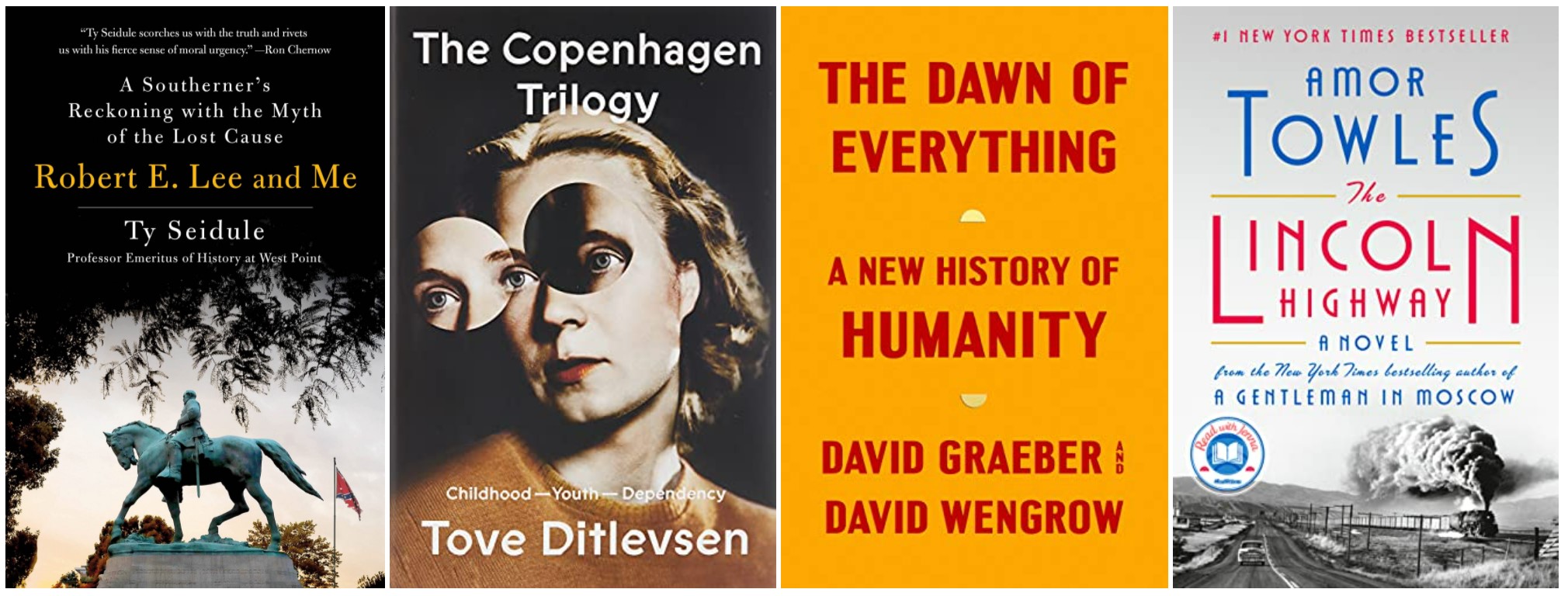
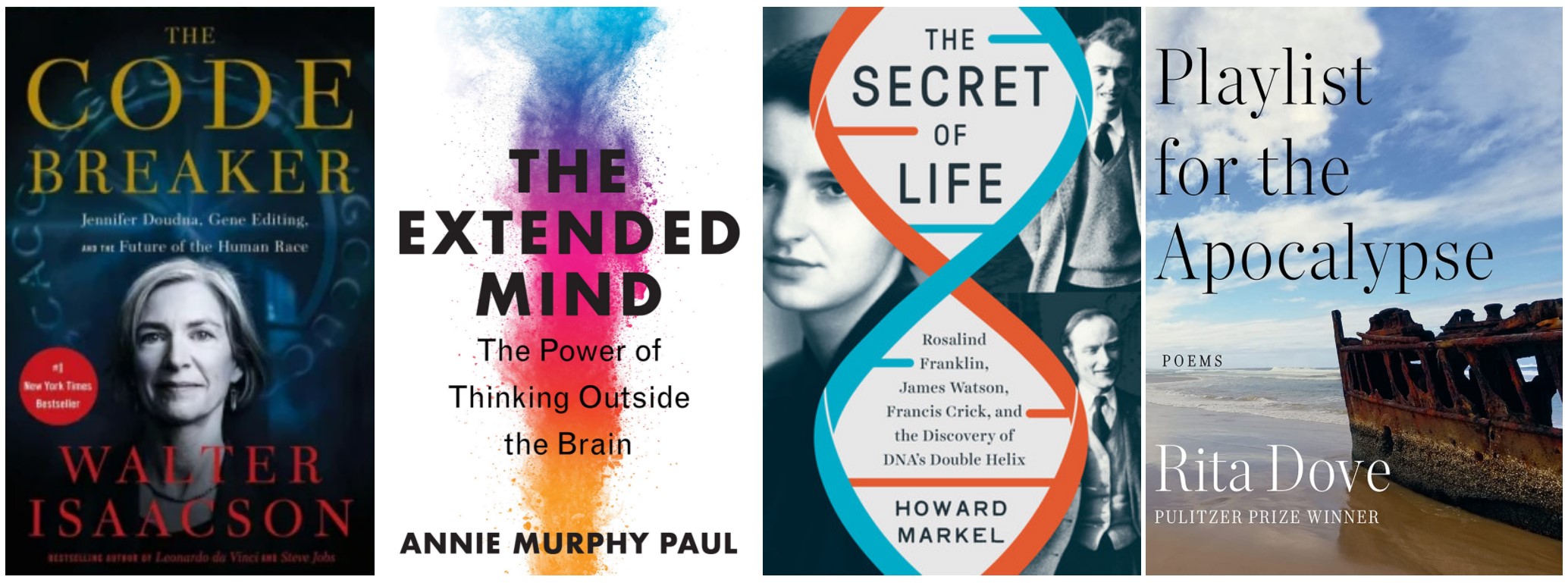
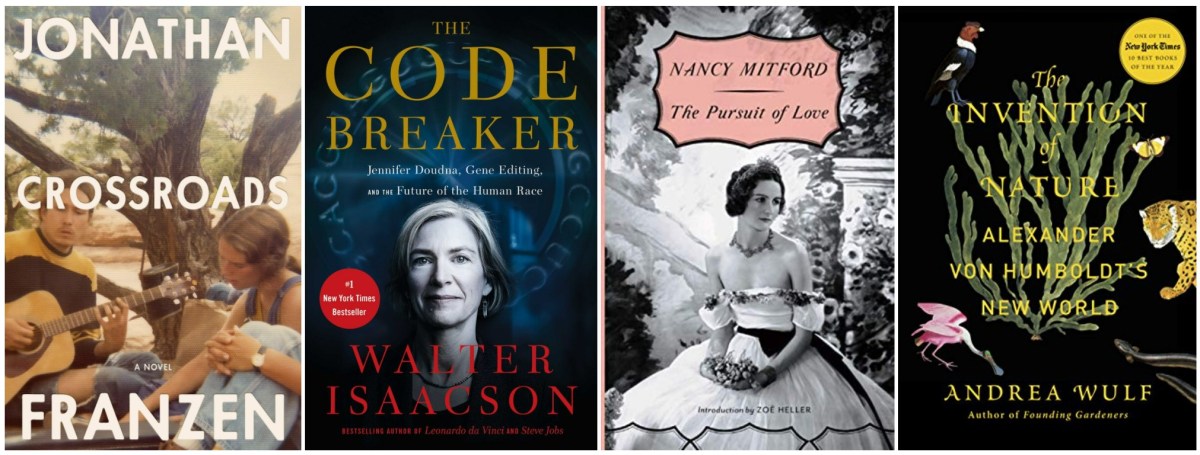
  • The Code Breaker – Walter Isaacson
  • Robert E. Lee and Me: A Southerner’s Reckoning with the Myth of the Lost Cause – Ty Seidule
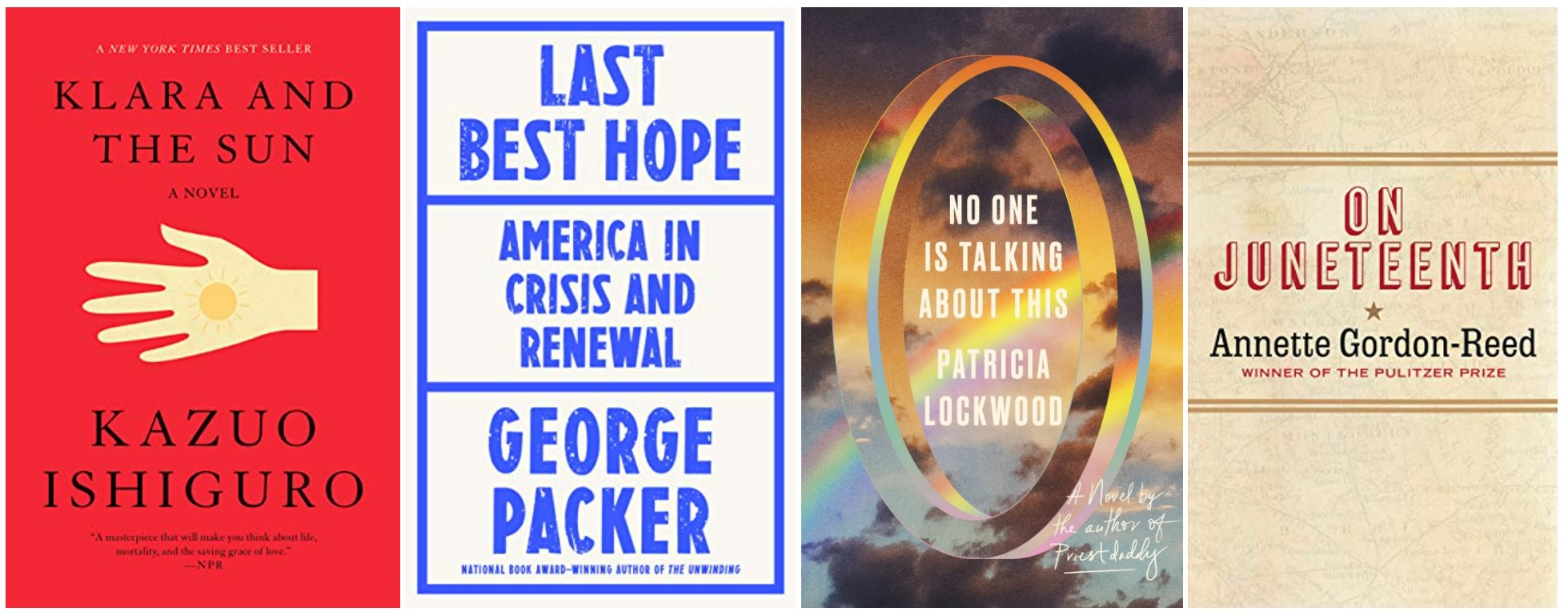
  • Last Best Hope: America in Crisis and Renewal – George Packer
  • The Premonition: A Pandemic Story – Michael Lewis
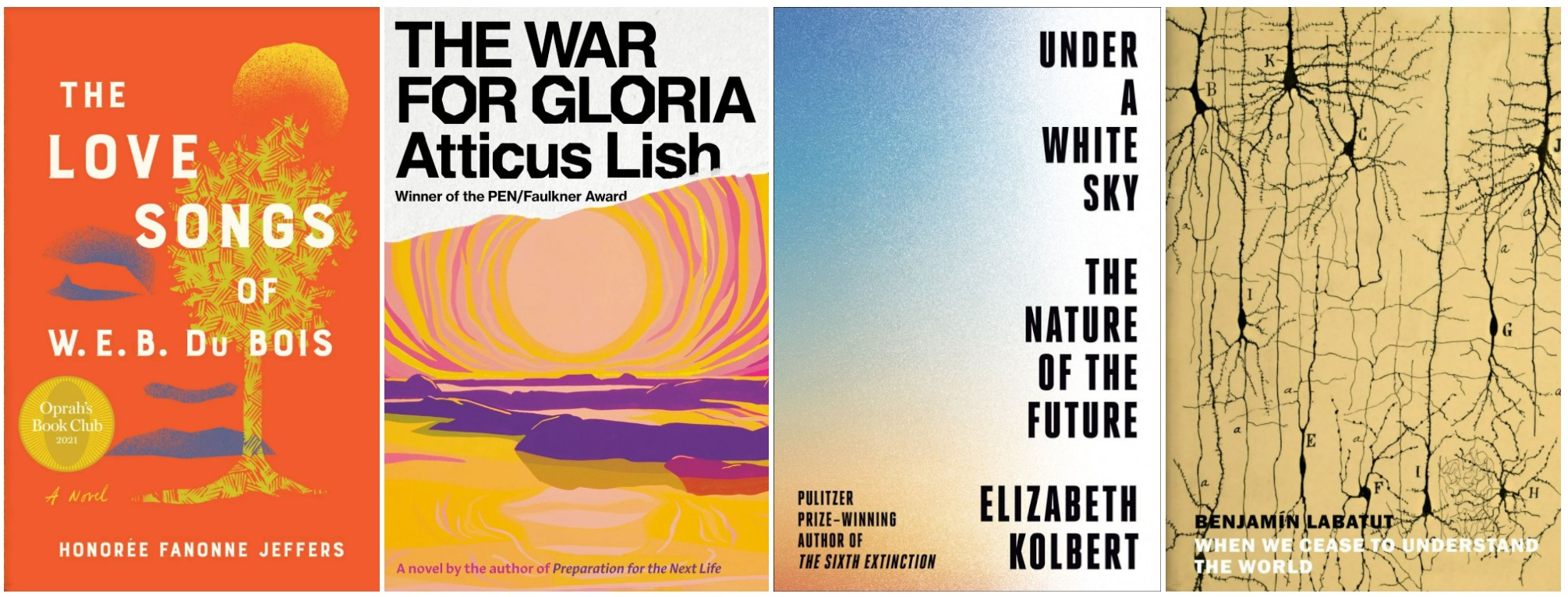
  • Under a White Sky – Elizabeth Kolbert

Old Fiction

Old Nonfiction

  • The Invention of Nature – Andrea Wulf
  • Evil Geniuses – Kurt Andersen
  • The Art of Dying Well – Katy Butler
  • Hackers – Steven Levy
  • The Sisters – Mary S. Lovell
  • LikeWar: The Weaponization of Social Media by P. W. Singer

Another way to remember is to recall why I read certain books. I’m in a two-person book club with my friend Linda, I’m also a member of an online nonfiction book club, I’m in a Facebook group that reads science fiction anthologies, I have a personal reading goal to read all 25 volumes of The Great SF Stories edited by Isaac Asimov and Martin H. Greenberg, I like to read science fiction novels, I love to read popular science books, and I enjoy reading some contemporary and classic fiction.

Two-Person Book Club With Linda

  • Evil Geniuses: The Unmaking of America – Kurt Andersen
  • Horseman, Pass By – Larry McMurtry
  • 21 Lessons for the 21st Century – Yuval Noah Harari
  • Leaving Cheyenne – Larry McMurtry
  • The Art of Dying Well – Katy Butler
  • Robert E. Lee and Me – Ty Seidule
  • The Code Breaker – Walter Isaacson
  • Elderhood – Louise Aronson
  • Last Best Hope: America in Crisis and Renewal – George Packer
  • Crossroads – Jonathan Franzen
  • The Premonition: A Pandemic Story – Michael Lewis

Linda went on to read several more Larry McMurtry books, but I just couldn’t keep up with her.

Online Nonfiction Book Club

  • Underland: A Deep Time Journey – Robert MacFarlane
  • The Sisters – Mary S. Lovell
  • Robert E. Lee and Me – Ty Seidule
  • The Invention of Nature – Andrea Wulf
  • Noise (didn’t finish) –
  • Uncanny Valley (read in 2020) – Anna Weiner
  • Ten Lessons for a Post-Pandemic World –  Fareed Zakariia (didn’t finish)
  • Fermat’s Enigma – Simon Singh (didn’t finish)

I had read The Sisters, Uncanny Valley, and The Invention of Nature on my own and nominated those books. I skipped four books this year: Entangled Life by Merlin Sheldrake, Forgetting by Scott A. Small, Kindred by Rebecca Waggs Sykes, A Promised Land by Barack Obama.

Nonfiction I Picked

  • Hackers – Steven Levy (reread)
  • Yesterday’s Tomorrows – Mike Ashley
  • LikeWar: The Weaponization of Social Media – P. W. Singer
  • A People’s History of Computing in the United States – Joy Lis Rankin
  • Fifth Avenue, 5 A.M. – Sam Wasson

I love reading about the history of computers, and the history of science fiction. Fifth Avenue, 5 A.M. is about the making of Breakfast at Tiffany’s. I also love reading about pop culture history.

Facebook Group – Best Science Fiction and Fantasy Short Fiction

  • Year’s Best SF 1 – ed. David Hartwell
  • Orbit 1 – ed. Damon Knight
  • The Very Best of the Best ed. Gardner Dozois
  • The Year’s Best S-F, 5th Annual Edition – Judith Merril
  • The Dark Side – ed. Damon Knight
  • World’s Best Science Fiction 1968 – ed. Donald Wollheim
  • The New Space Opera ed. Gardner Dozois
  • The Year’s Best Science Fiction 3rd Annual – ed. Gardner Dozois
  • The Big Book of Science Fiction – ed. Ann and Jeff VanderMeer (58% finished)

This group gets me to read a great deal of science fiction short stories. We discuss one short story a day, but I don’t read every day’s story. Still, probably over 200 stories. I really enjoy this group, and I’m learning a tremendous lot about the history of short science fiction. I’ve probably read over 400 short stories this year because of other SF anthologies and magazines I read on my own.

The Great SF Stories

  • The Great SF Stories 16 (1954) – ed. Asimov/Greenberg
  • The Great SF Stories 17 (1955) – ed. Asimov/Greenberg
  • The Great SF Stories 18 (1965) – ed. Asimov/Greenberg

I’ve been working through this 25-volume series since 2018. I’ve become immensely fond of this series. It’s a shame they are out of print. I own all twenty-five in paperback, but I read them on my iPad from pdf copies found on the internet. I keep hoping the Facebook group to vote to read the entire run. We do start volume 25 on the 29th of this month. I’d love to finish off the series in 2022, but that would be reading 7 more volumes in 2022 and that probably won’t happen.

Science Fiction

  • The Ministry of the Future – Kim Stanley Robinson
  • The Man Who Fell to Earth – Walter Tevis
  • Klara and the Sun – Kazuo Ishiguro
  • Children of Ruin – Adrian Tchaikovsky
  • The Clockwork Man – E. V. Odle
  • Past Master – R. A. Lafferty
  • Of Men and Monsters – William Tenn
  • Lords of the Psychon – Daniel F. Galouye
  • The Dying Earth – Jack Vance
  • The War of the Worlds – H. G. Wells
  • Danny Dunn and the Anti-Gravity Paint – Abrashkin & Williams
  • A Gift of Time – Jerry Merritt
  • The Best of Walter M. Miller, Jr. – Walter M. Miller, Jr.
  • To Say Nothing of the Dog – Connie Willis

That’s a total of 26 science fiction books. Far more science fiction than I believe I should be reading. Each year I tell myself I should read less science fiction and more other kinds of books, but I can’t seem to break my life-long science fiction addiction.

General Fiction

  • Horseman, Pass By – Larry McMurtry
  • Leaving Cheyenne – Larry McMurtry
  • The Girl on the Boat – P. G. Wodehouse
  • The Pursuit of Love – Nancy Mitford
  • Love in a Cold Climate – Nancy Mitford
  • Don’t Tell Alfred – Nancy Mitford
  • Crossroads – Jonathan Franzen
  • The Corrections – Jonathan Franzen
  • The Reading List – Sara Nisha Adams

I’m disappointed that I didn’t read a new 19th-century classic. Last year I read War and Peace. I did read The War of the Worlds, but I’ve read it a couple of times before. I had planned to read Madame Bovery.

2021 Books

  • Klara and the Sun – Kazuo Ishiguro
  • Yesterday’s Tomorrows – Mike Ashley
  • Robert E. Lee and Me – Ty Seidule
  • The Code Breaker – Walter Isaacson
  • Last Best Hope – George Packer
  • Crossroads – Jonathan Franzen
  • The Premonition – Michael Lewis
  • Under a White Sky – Elizabeth Kolbert
  • The Reading List – Sara Nisha Adams

Each year I aim to read a certain number of books that come out during the year. Nine is pretty good for 2021, but I’m going to aim for 12 in 2022.

JWH

Identifying the Best Books from 2021 to Read in 2022

by James Wallace Harris, 12/18/21

December is the time when we get loads of best-books-of-the-year lists. I enjoy looking at all those lists because I love finding the books that are the most recommended. I can’t read everything. I can’t even read everything that’s great.

I’m lucky to read 4-6 new books as they come out during the year, and sometimes they are among the ones critics have loved. That’s satisfying. For any given year I probably read 10-12 of its best books, that’s including fiction and nonfiction. That’s out of thousands of books published each year, so I get a microscopic sampling of books published. That’s why I work to find the best books, and by best, I mean the most talked about, the most recommended, the most newsworthy books.

I read on average one book a week, or 52 books a year. Most of them are older books, usually from the 20th century, sometimes from the 19th, and on rare occasions even older. I don’t want my head stuck completely in the past, so I try to read 10-12 books each year from the most recent two years. I usually discover a handful of books as they appear during the year, and then identify several more to read in the following year from the end-of-the-year lists.

Over time I’m discovering the most useful best-of-the-year lists. Here are the lists I’m using this year:

Books We Love – NPR. NPR lists over 2,800 books, but they provide a filtering system to help you zero in on the ones you might prefer. Their site has yearly lists back through 2013. Just the button for Staff Picks lists 179 books, that’s way too many. What I do is study the covers. And then go on to other best-of-the-year lists. It’s like the old TV quiz show Concentration, I try to spot covers again from memory. But instead of finding the pair, I try to find covers that are shown on the most lists.

Of their Staff Picks I’ve already discovered the following during 2021:

New York Times Critics’ Top Books of 2021. This is another very long list. But they also offer another shorter list, The 10 Best Books of 2021. Sadly, the long list doesn’t include cover photos, so it’s harder to play my Concentration cover game, so reading the short paragraphs about them is important. And The New York Times even offers an even longer list, 100 Notable Books of 2021, this time with covers. The critics at the Times picked many of the books the NPR critics picked, and many books I’ve already heard some word of mouth. These are the ones I want to try so far:

Vogue, Vulture, and Time have recommendations that are often similar to NPR and The New York Times. Time also recommends another book I’ve already read: The Code Breaker by Walter Isaacson. That makes me feel I did pretty good finding books coming out during 2021. And they recommend Empire of Pain: The Secret History of the Sackler Dynasty by Patrick Radden Keefe that’s been on most of these lists. I’m just not interested in that subject, but with so many recommendations I feel maybe I should try it. These lists also reinforce the books I list above that I already want to read.

Publishers Weekly has a website system like NPR that recommends way too many books to consider but has a filter system to narrow things down by genre and interest. Their database goes back to 2010, and their lists have links to the original reviews. Once again I’m seeing the same covers of books I’ve been wanting to read, but I’ve spotted two additional books to add to my list from their Top Ten List: All That She Carried: The Journey of Ashley’s Sack, A Black Family Keepsake by Tiya Miles and The War For Gloria by Atticus Lish. I’ve been remembering those two covers from the lists I’ve been seeing, and their descriptions are enticing.

I believe I’ve found a total of 23 books from 2021 that interested me most, and I’ve already read 7 of them. That leaves 16. I doubt I’ll get all 23 books read in the coming year. It depends on how many 2022 books attract my attention first, or how mired in the past I become. If I read all 23 that will double my normal current book consumption habit.

There is one last list to mention, Goodreads Choice Awards 2021. These are voted by members of Goodreads. Sometimes the bookworms pick the same books as the critics, and sometimes not. However, this list at Goodreads uncovers a lot more fun genre titles.

Lastly, I’ve discovered that if I keep these recommended novels in mind, sometimes they appear in sales at Bookbub, or in the Kindle Daily Deal, or on Audible. Also, many of them come to Scribd, a book subscription library. I think of Scridb as Netflix for books. Five of the sixteen books I want to read are already available at Scribd. It’s a bargain at $9.99 a month.

JWH

Once Upon a Time the Future was So Bright We Had to Wear Shades

by James Wallace Harris

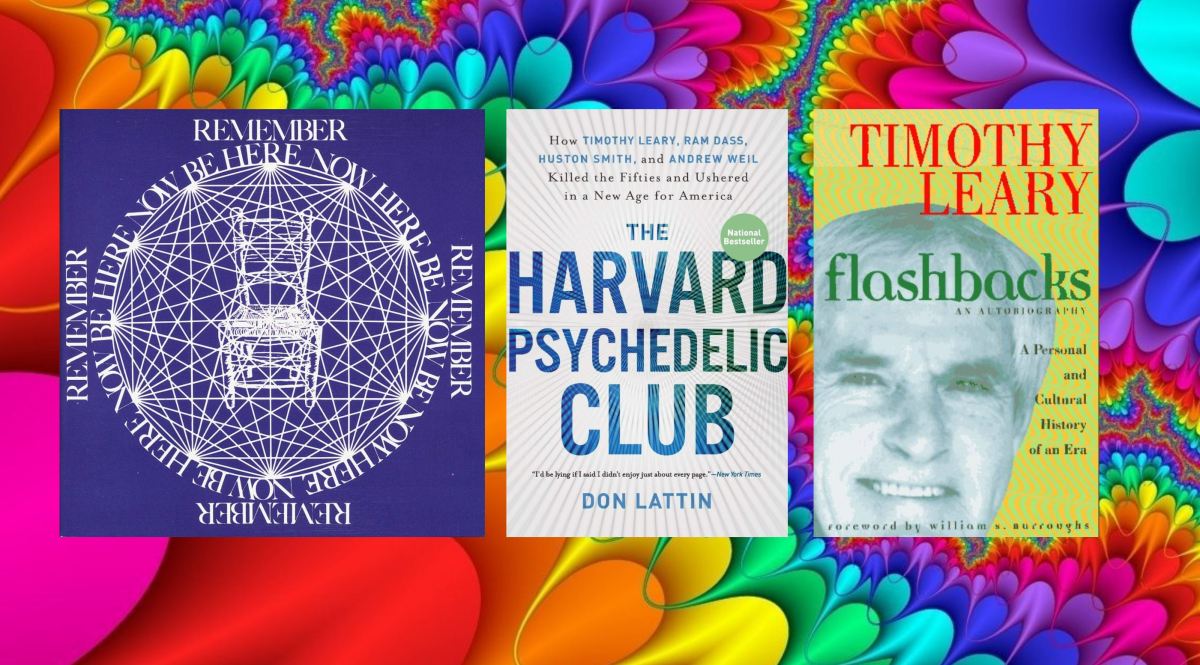
Between Camelot and Reaganomics existed the counterculture. For a very short while we thought we were entering the Age of Aquarius. Of course, it was a childish utopian dream, but a very positive hope. What happened to that dream? Reading The Harvard Psychedelic Club: How Timothy Leary, Ram Dass, Huston Smith, and Andrew Weil Killed the Fifties and Ushered in a New Age for America by Don Lattin reminded me of those hopes and dreams. Lattin explains what happened to four of the people who sold us some of that hope. Of course, those four weren’t the only ones. Back then, there was an entire army of John the Baptists promising heaven on Earth if we only believed.

In the sixties many of us thought by the 21st-century we’d have conquered war, disease, poverty, injustice, prejudice, inequality, and be living in a society where everyone had equal opportunity to achieve both spiritual and material wealth. We expected to create a world civilization that would make Jesus, Buddha, and all the past prophets and philosophers proud. We expected science to answer all our questions, and for technology to build ecological sustainable lifeboat Earth before we launched our spiritually-wise selves across the galaxy. Some of us called this anticipated transformation the Age of Aquarius, then The New Age, while hoping for the age of The Final Frontier.

Space travel never went beyond low Earth orbit after 1972. After three days of love, peace, and happiness it’s been Altamont every day since. And the doors of perception only led to tragedy and heartache. All our planned communities failed.

Just look at us now. You’d think the second coming had happened and no one was chosen, and we’re begun a thousand year streak of doom. There are damn few Pollyannas left on Earth that can see rays of hope for the future. Unlike Christians who have waited two thousand years without giving up their faith, the counterculture gave up theirs rather quickly. I read where psychedelic drugs are trying to make a comeback. And there are embers of spirituality still trying to rekindle the world but never do. What made us dream such big dreams in the sixties?

Before the dawning of the Age of Aquarius I was a straight-lace kid. I was gullible and believed what I was told. The U.S. Air Force guided my father and the Southern Baptist Church guided my mother. They had expectations for what I should believe, and I had no objections to those expectations. Well, not until 1963 or 1964. During my 12th and 13th year I changed. Looking back I could say it was merely puberty, but the whole country began changing at the same time.

Reading The Harvard Psychedelic Club got me to thinking about those years and changes. Changes that had began much sooner than 1969 or 1970 when I first tried psilocybin and LSD. The making of my counterculture had begun before the drugs, with rock and roll and science fiction. Reading The Harvard Psychedelic Club referenced many books I had read back then that shaped my thoughts. I began wondering about all the influences that had reprogrammed me during the sixties and seventies that gave me utopian ideals.

I remember in 11th grade sometime after the 1967 protest at the Pentagon, when a group of us kids waiting for the school bus discussed the coming revolution as if it was a certainty. Even as a dumbass high school kid I thought it weird that we expected such a huge social transformation. But those hopes kept building. Then in 1968 and 1969 Hair and its music was all the rage and people began talking about The Age of Aquarius. The hope became more than a political transformation, the counterculture began to expect a whole new age, which became the focus of the 1970s. I think all our foolish fantasies ended when Reagan was elected in 1980. By then I was married and working at the job I’d stay at until I retired.

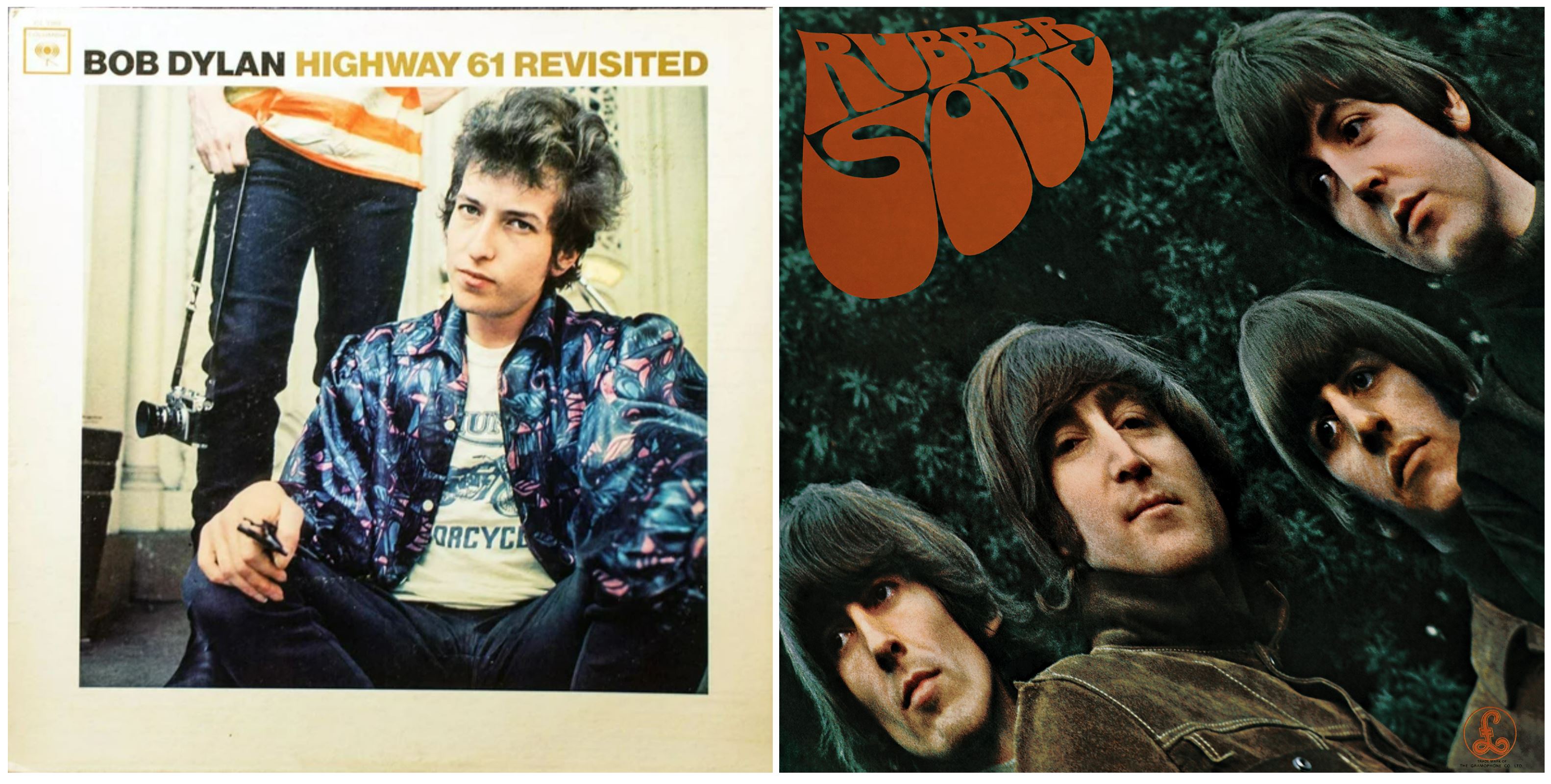
My transformation was really an intersection of countless ideas that came from books, magazines, newspapers, television, movies, songs. We think everything comes from the internet today, but before the world wide web we had plenty of informational input. Reading The Harvard Psychedelic Club reminded me of those books and other information sources, and all the prophets behind those words. For example, I don’t know if people today have any idea of the impact The Beatles and Bob Dylan had on their fans. Rock music was our gospel.

In 1962, when I was eleven, I got hooked rock and roll and science fiction. In 1963 I began rejecting religion when I started noticing that the people at church did not follow what was preached. A Joycean year of doubt ended in 1964 when I realized I was an atheist. I was just 13. My mother still tried to make me go to church but I felt like I was a spy, a pretender, a fraud. I didn’t have a new philosophy yet, but I was open, and about to try many.

Then in 1965 I read Stranger in a Strange Land by Robert Heinlein and got into Bob Dylan because of “Like a Rolling Stone.” I was still very straight-laced. I remember watching anti-drug and anti-smoking films at school and I was positive I’d never be stupid enough to do drugs or smoke cigarettes.

But only two years later, in early 1967, I read an article in Popular Science about LSD. Instead of sensationalizing the drug with fear and loathing like the news did on TV, the article described LSD as a tool for medical research and exploring the mind. That sounded science fiction. That sounded like something for me.

I can’t remember when I first heard about Timothy Leary. I’m pretty sure I heard about LSD well before I heard about Leary and his famous “Tune In, Turn On, and Drop Out” saying. In late 1968, or maybe early 1969, I read The Electric Kool-Aid Acid Test by Tom Wolfe. That book didn’t turn me onto Timothy Leary either, but The Beats. I knew about Leary in the sixties, but he always seemed like some kind of media clown. Around this same time I began reading The Rolling Stone magazine. It became my main source of counterculture propaganda.

But remember, I was also mass consuming science fiction, which was changing too with its own New Wave revolution. I remember Stand on Zanzibar by John Brunner had a huge impact on me, as did Ellison’s anthology Dangerous Visions.

I wish I knew when I first bought Stewart Brand’s Whole Earth Catalog. It was probably the early 1970s, but it might have been sooner. The 1970s brought a flood of influential books and magazines. Isaac Asimov and Arthur C. Clarke had made me aware of overpopulation in the mid-1960s, but by the late 1960s and early 1970s, the environmental movement was giving us plenty of reasons to change our ways.

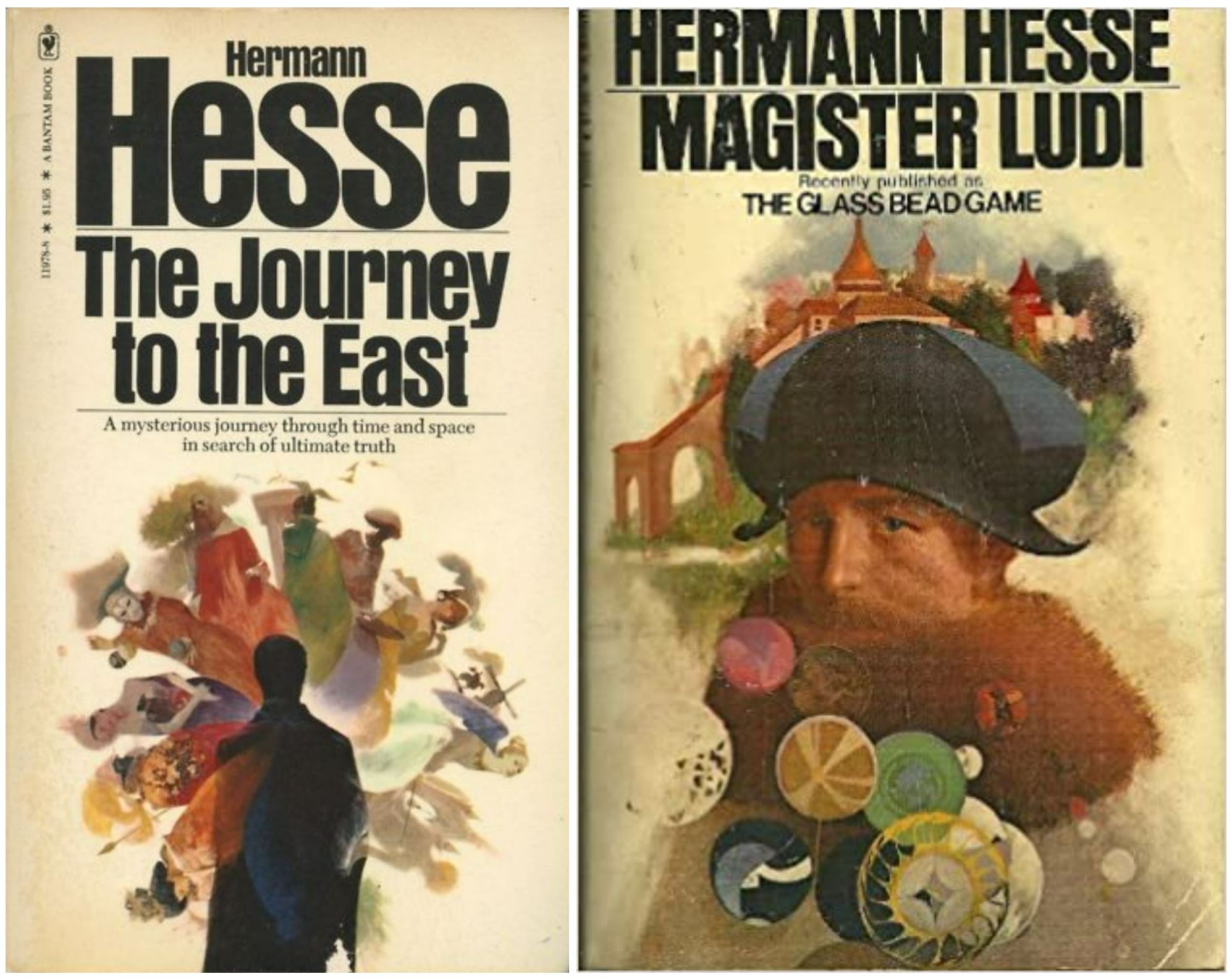
By the mid-1970s I became open to trying religion again, but mainly Eastern religions. Be Here Now by Ram Das (Richard Albert), books by Alan Watts, Aldous Huxley, and Herman Hesse, and New Age Magazine made me think that spiritualism and mysticism had some answers.

I wasn’t stupid, I knew the dreams were doomed. Books like The Population Bomb, The Limits of Growth, and Future Shock, among many others like them, kept me grounded. Plus, the science fiction books I was reading became more realistic and pessimistic about the future.

Still, we had a great deal of hope about the future. We thought we could solve all our problems. We had the knowledge, we had the technology, we knew the solutions, it was only a matter of getting everyone to work together. That’s when the dream ended. We never could work together. We all separated into our own personal trips. No matter how much visionaries preached, we never could agree.

Reading The Harvard Psychedelic Club also covered the decades of falling apart. Alpert, Weil, and Smith were able to rebuild their lives and become constructive, but not Leary. Their lives parallelled my life and I’m sure all other counterculture true believers. We found ways to be here now. To make do with reality. To give up on our utopian fantasies.

Looking back I also remember what life was like when we were chasing those dreams in the 1960s and 1970s. Things were bleak. The war, the riots, the prejudices, the inequalities, the crime, the bombings, the protests, the generation gap, the oil crisis, the burning rivers, the pollution, the urban decay.

Drug taking and believing in utopian futures were symptoms of the disease, not cures. Much like similar symptoms today. The right-wing countercultures of today have their parallels with the left-wing countercultures of the 1960s and 1970s. But there’s one big difference. We no longer need to wear shades when looking towards the future. That’s rather sad. No, that’s depressingly tragic.

JWH

CRISPR: Book v. Documentary

by James Wallace Harris, 8/18/21

I’ve been learning about the gene editing tool CRISPR for years in bits and pieces. From reading news and magazines articles I had a vague idea that science had made a tremendous breakthrough, one akin to science fiction imagined in GATTACA and Brave New World. CRISPR/Cas9 will allow us to heal people with inheritable genetic diseases or cure people with conditions caused by defective genes, but more than that, it will allow us to program our own evolutionary developments, and change our reproductive germlines.

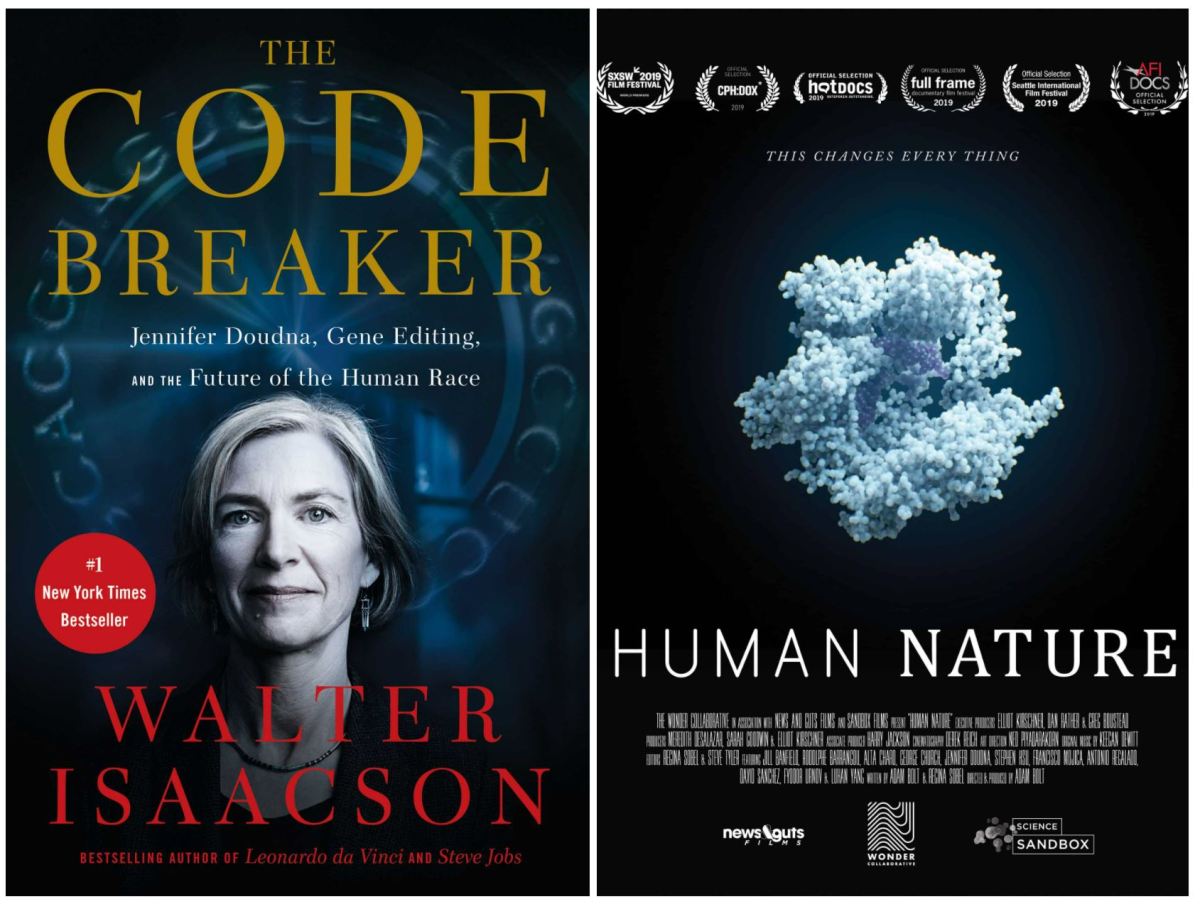
I don’t want to try and summarize CRISPR/Cas9 to you in detail because I’m recommending your read The Code Breakers by Walter Isaacson or watching Human Nature. But if you want a quick overview, here’s the Wikipedia entry.

My focus is to compare learning from a book versus a documentary. I’ve already acquired what I would consider rumors about CRISPR via Flipboard and The New York Times. Those are casual, everyday ways to absorb tidbits of information. But what’s the next level up? That depends on the time you’re willing to spend, and the amount of details you wish to digest.

Human Nature (2019) is a 1 hour and 35 minute documentary that’s currently available to Netflix or PBS Documentaries on Amazon subscribers, or to rent or buy from Amazon and other video sources. It’s a superior documentary that quickly covers the background of CRISPR with impressive infographic and animations, while interviewing the major scientists, then moving into the thorny ethical issues of gene editing, before finally wrapping things up by speculating about the future. After watching Human Nature you’ll have a good sense of what CRISPR can do and its science fictional impact on society. The documentary claims CRISPR will change the world more than the internet.

On the other hand, if you want go beyond the Gosh-Wow level, you could read Walter Isaacson’s new book, The Code Breakers. It’s 16 hours and 4 minutes on audio, or 552 pages of reading. The book tells the same story as the documentary but with far more detail. The framing of the book is a semi-biography of Jennifer Doudna, who shared the Nobel Prize with Emmanuelle Charpentier in 2020. Walter Isaacson is noted for his biographies (Leonardo da Vinci, Albert Einstein, Steve Jobs, Ben Franklin), and The Code Breakers is sort of a biography of Doudna, at least when it comes to her scientific career.

But The Code Breakers is much more. It’s a history of a technology that has emerged in our lifetime, and a chronicle how scientists work to discover and apply that new technology. We learn about publishing papers, going to conferences, building labs, forming startup companies, and competing for the Nobel Prize. If you loved books like The Double Helix by James Watson, The First Three Minutes by Steven Weinberg, or The Inflationary Universe by Alan Guth, then you should love this one too. I especially admired how Isaacson’s interviewed the various scientists competing for fame and glory, because he knew that they knew he was giving Doudna the scientific fame over them. Recognizing who came first in a discovery is a challenging piece of detective work that Isaacson pulls off with the skill of a master lawyer working the jury.

What also impressed me was how Isaacson told this complex story. I can’t imagine amassing so much information and then weaving it together into a compelling narrative. I’d love to see a documentary about how Isaacson researches and writes his books.

The Code Breakers will take you much further than the Human Nature regarding how genetic editing history unfolded, but the documentary has its own virtues, especially in compelling visuals. However, I wanted to go even further into learning how CRISPR works. Neither the book nor the documentary gave me the step-by-step concepts of what the lab work was like. Because CRISPR is so damn interesting, I went searching for even more information on YouTube. Both the book and film claims using CRISPR is easy, and that anyone can order educational kits to use the technology. I just couldn’t visualize that.

This short clip gave me more of what I wanted, but it’s still not enough, but I’m going to continue looking for more videos like this one. However, I also found this video about one of the CRISPR kits.

The trouble with wanting to understand even more is I run into the limits of my understanding. I found the 2012 article from Science that’s at the heart of the book. I can read it, and even spot ideas covered in the book and documentary, but 95% lies behind an event horizon of jargon I can’t penetrate. Just look at this one paragraph:

I love popular science books and magazines, but I have to take the working of real science on faith. I don’t like that. I’m hoping to find other books and documentaries that will help me in my quest to visualize how scientists do their work in a step-by-step process. Throughout the book Isaacson wrote about the experiments involved in discovering CRISPR, but I have no mental picture of what they were like.

For example, x-ray crystallography was often mentioned as a vital skill in this lab work. Seeing this video helps me visualize more of the narrative. What I would love is a Ken Burns type documentary, a 10-part series that visually illustrated The Code Breakers.

CRISPR is another example of the positive potential for our future, and another example that validates science. Sure, CRISPR offers all the potential evils of H-Bombs, but it also proves we have great abilities to solve incredibly complex problems.

I feel lucky to have experienced digital revolution, and I’d love to live long enough watch the gene editing revolution unfold. By the time the 2040s and 2050s roll around, society will be transformed again. But then, there will be other transformation happening in the same time frame. Our efforts to slow climate or our failure to do so will reveal another massive transformation. Talk about Future Shock…

JWH

How Will We Remember the 1960s?

by James Wallace Harris, 5/16/21

Anyone who knows me, or reads my blog, knows I’m obsessed with memory. Even before my memory access speeds began declining I’ve always felt a desperation to hang onto what I learned even though I know most of it slips naturally away. I guess all those tests in school gave me a complex about poor recall.

Memory has many fascinating aspects, especially all the ways our memories fool us. We believe things are true because our memories tell us they’re true. Even when confronted with conclusive evidence, we often prefer what our memories tell us to external facts. All through my sixties I’ve been examining what I thought I remembered from growing up in the 1960s. Too often, the impressions I’ve maintained have proved wrong.

Because of an online discussion about science fiction in the 1960s my instant recall told me there must have been several hundred great science fiction novels published during that decade. However, as the discussion progressed my memory had trouble dredging up all those great titles.

My memory gave me the illusion there were enough wonderful science fiction novels published in the 1960s to fill a huge bookcase. Where did that impression come from? I assumed because my memories told me I read hundreds of science fiction novels I loved while growing up. Were those memories true? Thinking about it now I realized there are a number of ways to double check my brain’s records:

  • Look up the actual number of successful SF books published in the 1960s
  • Recall and list all the books I remember reading in the 1960s
  • Recall and list all the SF books from the 1960s I read in later decades
  • Research the memories of my contemporizes about what they read
  • Find out what books young science fiction fans read today from the 1960s
  • Read what literary scholars studying the 1960s consider the best SF books

I realized that my initial reaction to the online discussion was I wanted young people to replicated what I found great in the 1960s. That’s a typical old person hope, but it’s completely unrealistic. Newer generations are busy consuming all the books coming out in their own decade. What they read from past decades is always very minimal.

In other words, younger generations and scholars get a distillation of the past. Not only that, but they are going to interpret the past by current day mindsets. The chances of them experiencing what I remember is very small. So why do geezers want their cherished past persevered? Is it to validate their own memories? Is it the hope of keeping the things they loved alive across time?

For whatever reason, I want the essential aspects of the 1960s remembered accurately by history. The trouble is I’m not sure I correctly remember the 1960s myself. I’m probably not. Maybe what I’m doing is trying to write my own correct history now that I’m older and working on my wisdom skills.

For the purpose of this essay I’m using science fiction novels as one tiny test case of remembering the 1960s. I have a model in my head built from memories of what the 1960s were like. I’m interested in the mental models people are constructing today about that decade. Even focusing on this one microscopic piece of pop culture leaves many problems regarding memory to consider.

Is my white male American viewpoint of the 1960s science fiction too limiting? Do my contemporaries who were women and minorities remember 1960s science fiction differently? Bookworms growing up in Russia, China, Brazil, Vietnam, etc. will have experienced a much different decade than I did. For the purpose of this essay, I’ll focus on the U.S., however Great Britain plays a large role in my memory too. I also read fanzines back then where readers from around the world, including countries where English wasn’t the standard language, reviewed books. But this only provided hints of what science fiction was being published in foreign countries.

The online discussion I mentioned above got started because we read a link to “An Uneven Showcase of 1960s SF,” a 2019 review from The Los Angeles Review of Books covering The Library of America’s two volume set American Science Fiction: Eight Classic Novels of the 1960s, which remembers these eight novels:

  • Poul Anderson, The High Crusade (1960)
  • Clifford D. Simak, Way Station (1963)
  • Roger Zelazny, … And Call Me Conrad (This Immortal) (1965)
  • Daniel Keyes, Flowers for Algernon (1966)
  • R. A. Lafferty, Past Master (1968)
  • Joanna Russ, Picnic on Paradise (1968)
  • Samuel R. Delany, Nova (1968)
  • Jack Vance, Emphyrio (1969)

Our group was asking: Are these books really how literary history will remember 1960s science fiction? Personally, I don’t believe any of them will make it to the long term pop culture memory of 2050. However, Library of America does give us a clue with their other published science fiction books. That’s because their famous uniform volumes focus on authors and not works. So far they have published sets on these SF writers:

PKD also produced significant work in the 1950s and 1970s, but it seems his 1960s novels are the most remembered. Le Guin’s career covered decades but her most famous science fiction came out in the 1960s and 1970s. Vonnegut is also mostly remembered for his 1960s novels. Bradbury was mainly famous for his work in the 1950s, and Butler for work in the 1970s and 1980s.

The Library of America will not be the sole arbiter of who remembers science fiction from the 1960s, but I do believe they have made good guesses so far, at least for American Sci-Fi. But using Library of America and the SF authors they favor, are these then the science fiction novels future readers will remember 1960s science fiction by:

  • The Man in the High Castle (1962) by Philip K. Dick
  • A Wrinkle in Time (1962) Madeleine L’Engle
  • Cat’s Cradle (1963) by Kurt Vonnegut
  • Martian Time-Slip (1964) by Philip K. Dick
  • Rocannon’s World (1966) Ursula K. Le Guin
  • The Three Stigmata of Palmer Eldritch (1965) by Philip K. Dick
  • Planet of Exile (1966) by Ursula K. Le Guin
  • City of Illusions (1967) by Ursula K. Le Guin
  • Do Androids Dream of Electric Sheep? (1968) by Philip K. Dick
  • The Left Hand of Darkness (1969) by Ursula K. Le Guin
  • Slaughterhouse-Five (1969) by Kurt Vonnegut
  • Ubik (1969) by Philip K. Dick

Of course this leaves out works by the most famous science fiction writers working in the 1960s, the so called Big Three of SF:

  • A Fall of Moondust (1961) by Arthur C. Clarke
  • Stranger in a Strange Land (1961) by Robert A. Heinlein
  • Fantastic Voyage (1966) by Isaac Asimov
  • The Moon is a Harsh Mistress (1966) by Robert A. Heinlein
  • 2001: A Space Odyssey (1968) by Arthur C. Clarke

Actually, The Big Three of SF writers were more famous for their work in the 1950s. Probably the single most remembered work of science fiction from the 1960s is Dune by Frank Herbert, and that’s because of all the movie versions. But growing up in the 1960s the two most famous new writers were Delany and Zelazny. Will any of their most famous novels be remembered? They each got an entry in the LoA set, but what about their other 1960s novels?

  • The Dream Master (1966) by Roger Zelazny
  • Empire Star (1966) by Samuel R. Delany
  • Babel-17 (1966) by Samuel R. Delany
  • The Einstein Intersection (1967) by Samuel R. Delany
  • Lord of Light (1967) by Roger Zelazny
  • Damnation Alley by Roger Zelazny

There were many novels I loved or remember reading great reviews from back in the 1960s that were missed by the Library of America set. I’m not sure how famous they are today, or if they are still worthy of reading:

  • A Canticle for Leibowitz (1960) by Walter M. Miller Jr.
  • Flesh (1960) by Philip Jose Farmer
  • Rogue Moon (1960) by Algis Budrys
  • Venus Plus X (1960) by Theodore Sturgeon
  • Catseye (1961) by Andre Norton
  • Dark Universe (1961) by Daniel F. Galouye
  • Time is the Simplest Thing (1961) by Clifford Simak
  • Little Fuzzy (1962) by H. Beam Piper
  • The Dragon Masters (1963) by Jack Vance
  • Lords of the Psychon (1963) by Daniel F. Galouye
  • The Man Who Fell to Earth (1963) by Walter Tevis
  • Davy (1964) by Edgar Pangborn
  • Simulacron-3 (1964) by Daniel F. Galouye
  • The Wanderer (1964) by Fritz Leiber
  • All Flesh is Grass (1965) by Clifford Simak
  • Bill, the Galactic Hero (1965) by Harry Harrison
  • Destination: Void (1965) by Frank Herbert
  • The Genocides (1965) by Thomas M. Disch
  • The Age of the Pussyfoot (1966) by Frederik Pohl
  • Earthblood (1966) by Keith Laumer and Rosel George Brown
  • Make Room, Make Room (1966) by Harry Harrison
  • Mindswap (1966) by Robert Sheckley
  • The Witches of Karres (1966) by James H. Schmitz
  • The World of the Ptavvs (1966) by Larry Niven
  • The Butterfly Kid (1967) by Chester Anderson
  • Camp Concentration (1967) by Thomas M. Disch
  • Chthon (1967) by Piers Anthony
  • Lords of the Starship (1967) by Mark S. Geston
  • Restoree (1967) by Anne McCaffrey
  • Soldier, Ask Not (1967) by Gordon R. Dickson
  • Those Who Watch (1967) by Robert Silverberg
  • Why Call Them Back From Heaven? (1967) by Clifford Simak
  • Dimension of Miracles (1968) by Robert Sheckley
  • Dragonflight (1968) by Anne McCaffrey
  • Hawksbill Station (1968) by Robert Silverberg
  • The Last Starship From Earth (1968) by John Boyd
  • The Masks of Time (1968) by Robert Silverberg
  • Of Men and Monsters (1968) by William Tenn
  • Past Master (1968) by R. A. Lafferty
  • Rite of Passage (1968) by Alexei Panshin
  • The Andromeda Strain (1969) by Michael Crichton
  • Bug Jack Barron (1969) by Norman Spinrad
  • Fourth Mansions (1969) by R. A. Lafferty
  • Macroscope (1969) by Piers Anthony
  • The Pollinators of Eden (1969) by John Boyd
  • The Ship Who Sang (1969) by Anne McCaffrey
  • A Specter is Haunting Texas (1969) by Fritz Leiber
  • Up the Line (1969) by Robert Silverberg

And what about British invasion SF writers who made such a big impact on the genre in the 1960s:

  • The Trouble with Lichen (1960) by John Wyndham
  • The Wind from Nowhere (1961) by J. G. Ballard
  • A Clockwork Orange (1962) by Anthony Burgess
  • The Drowned World (1962) by J. G. Ballard
  • Hothouse (1962) by Brian Aldiss
  • Greybeard (1964) by Brian Aldiss
  • The Dark Light Years (1964) by Brian Aldiss
  • The Whole Man (1964) by John Brunner
  • The Squares of the City (1965) by John Brunner
  • Colossus (1966) D. F. Jones
  • The Crystal World (1966) by J. G. Ballard
  • Earthworks (1966) by Brian Aldiss
  • The Watch Below (1966) by James White
  • Chocky (1968) by John Wyndham
  • The Final Programme (1968) by Michael Moorcock
  • Pavane (1968) by Keith Roberts
  • Report on Probability A (1968) by Brian Aldiss
  • Stand on Zanzibar (1968) by John Brunner
  • Barefoot in the Head (1969) by Brian Aldiss
  • Behold the Man (1969) Michael Morecock
  • The Jagged Orbit (1969) by John Brunner

Or from the rest of the world

  • Solaris (1961) by Stanislaw Lem
  • Planet of the Apes (1963) by Pierre Boulle
  • Hard to Be a God (1964) by Arkady and Boris Strugatsky
  • The Second Invasion from Mars (1967) by Arkady and Boris Strgatsky
  • His Master’s Voice (1968) by Stanislaw Lem

If you were born after the 1960s, especially after the year 2000, how many of these novels have you read, or have even heard about? Years ago, I wrote an essay about what I thought might be the defining science fiction novels of the 1960s. At the time I guessed these dozen would be remembered:

  1. Solaris by Stanislaw Lem (1961)
  2. Stranger in a Strange Land by Robert A. Heinlein (1961)
  3. A Clockwork Orange by Anthony Burgess (1962)
  4. The Man in the High Castle by Philip K. Dick (1962)
  5. A Wrinkle in Time by Madeleine L’Engle (1963)
  6. Dune by Frank Herbert (1965)
  7. Flowers for Algernon by Daniel Keyes (1966)
  8. The Moon is a Harsh Mistress by Robert A. Heinlein (1966)
  9. Do Androids Dream of Electric Sheep? by Philip K. Dick (1968)
  10. Stand on Zanzibar by John Brunner (1968)
  11. Slaughterhouse Five by Kurt Vonnegut, Jr. (1969)
  12. The Left Hand of Darkness by Ursula K. Le Guin (1969)

I stand by these twelve for now, but I believe in the long run, only a few, if any, will be remembered by the reading public in the 2060s. Dune has the best chance of being remembered, but will it really go the distance? It was #35 on PBS’s The Great American Read, the only 1960s SF novel on the list, so that’s one indicator.

Do we remember the pop culture of the past because of the artists or their works? We remember books by Charles Dickens and Jane Austen from the 1800s, but did their stories stick to us first, or was it something about Dickens and Austen that make us read their work? I believe “Eleanor Rigby” survives because we can’t forget The Beatles. That Baby Boomers love of The Beatles was passed on to their children and grand children.

Even with one hit wonders like Little Women (#8 on the PBS list), I believe Louisa May Alcott is why we remember her book. Somehow her powerful personality anchored her in time. Ditto for literature of the 1920s. Don’t we really remember the novels of the 1920s because of our fascination with Hemingway, Fitzgerald, Lawrence, and Joyce? Or do their biographical reputations grow as more readers consume their books?

My guess is the current public’s sense of 1960s science fiction comes down to Philip K. Dick and all the biographical attention he’s getting, and because so many of his stories have been filmed. Back in the 1960s, Heinlein, Asimov, and Clarke were the Big Three of SF, mainly because of their successes in the 1950s. Stranger in a Strange Land and The Moon is a Harsh Mistress are still remembered today, getting special editions and new readers, but my hunch is Heinlein’s appeal is fading, and as a teenager in the 1960s he was my J. K. Rowling. In other words, my cherish memories will not be how literary historians remembers science fiction the 1960s.

I just don’t see modern bookworms hanging onto to most 1960s SF writers today. In terms of literary cults, I’d say Ray Bradbury might be next after PKD, and possibly Ursula K. Le Guin. Dune is the major SF novel from the 1960s, but there seems to be little interest in Frank Herbert. Look how Tolkien has become legendary as a figure of literary interest. I consider that a clue to future literary remembrances. If the public doesn’t also take an interest in an author, I think it’s less likely their books will be remembered.

At the last World Con a Hugo award was given to a speech that’s erasing John W. Campbell’s reputation. Will Heinlein and Asimov be next? As much as my memories tell me that Heinlein, Asimov, and Clarke were great, I’m not sure the collective pop culture memory feels the same way. This makes me sad, but I’ve got to come to terms with it.

When I take the time to think about what I actually remember, and compare those memories to external data, I realized I did read hundreds of SF during the 1960s, but the vast majority of them were first published in the 1950s. I joined the Science Fiction Book Club in March of 1967 and often got its two main selections. At best that could have been 60 new titles, but sometimes the main selections were 1950s reprints, so I figure the number was smaller, and I didn’t read every book. Thinking about things, I read many 1960s SF novels after the 1960s, in fact I’m still reading for the first time SF books from the 1960s. But even with all them, I could not assemble a list of hundreds of great SF books from the 1960s.

My memory was mostly wrong. I was able to find just under a hundred titles for this essay. I’d bet that between 1,000-2,000 SF novels were published during the 1960s, which sounds like an impossible lot, but it takes only two years nowadays to publish that many SF titles.

Memory has always been a distillation process. Each night we forget most of what happened the previous day. I don’t think the Library of America picked the most memorable eight SF novels to remember the 1960s. But then every science fiction fan who lived through the sixties will recall a different eight titles. And it would be unfair for me to want my eight favorites to be the ones remembered. However, I’d really love to know what eight SF novels from the 1960s will be remembered and read in the 2060s. Who will be the Jules Verne and H. G. Wells of the 20th century?

Update: 5/25/21

Because of a comment below by my old friend Jim Connell I realized asking a 15-year-old SF fan today about 1960s is like asking me back in 1965 what I thought about science fiction from the 1910s. At the time I had not even read A Princess of Mars or Tarzan of the Apes, or even The Skylark of Space. Over the next fifty-five years I would eventually read several novels, both literary and science fiction from the 1910s, but I can’t say I’m intimate with the pop culture of that decade. I’ve read 9 of the 70 books listed here for the 1910s, and know of several more from movies and reading about them.

Thus my memory of science fiction from the 1910s gives me roughly an idea of what younger people might know about science fiction from the 1960s.

JWH