All The Things We Forget

by James Wallace Harris, Wednesday, February 5, 2020

The last time I went to a barber was in the 1970s. I got married in 1978 and my wife cut my hair after that until I went mostly bald, at which point I’d just mow my own head. But in the 1950s and 1960s, I probably went to the barber every 2-3 weeks. I’m sure, several hundred times. I have a few vague impressions being at a barbershop, but for the most part, all those memories are gone. I can remember having butch cuts, crew cuts, flattops and haircuts I had to comb. Those were in the years before the Beatles. After that, I tried very hard to avoid the barber. Maybe that suppressed the memories of haircuts.

There are 3,650 days in a decade if we don’t worry about leap years. And at age 68 I’ve lived around 25,000 days. Other than what I ate today, and maybe yesterday, I’ve forgotten roughly 75,000 meals. I know I had a lot of dinners with my family growing up, but except for a few fleeting images of Thanksgivings, I can’t remember them.

I have more memories of sitting with my parents and sister watching TV. I’m better at remembering people, but it’s an accumulation of countless vague encounters. The more vivid memories generally involved great joy or great pain. Average got forgotten, and I imagine 99.999% of my life was quite mundane.

I know I hated going to Sunday School and church when I was growing up. We even went on Wednesday night sometimes. But I can only remember a handful of specific events at church. So, did we go all the time, or did I only think we went all the time?

If I work hard I believe I can remember all the pets we had, but I’m not sure of all their names. I spend a lot of time with my cats now. They are always nearby or sleeping on me. I can’t remember how much time I spent with my pets growing up. I remember fleeting moments of playing with them, but not the day-to-day living. Now that I think about it, I believe my mother expected dogs and cats to live outdoors. I can remember our dogs walking us to school and meeting us afterward, but I don’t remember them sleeping with me or hanging out in my room.

One area of memory I really regret losing is memories of my classmates and teachers. I’d spend about 200 days a year with them, and at the time knew all their names and could tell you stories about each of them. I did pay attention — then. But it’s all gone now.

Because my family moved around so much I attended many different schools. There were schools I’d ride my bike miles rather than take the school bus. I tried to always walk or ride my bike, although when we lived in South Carolina the second time, out in the country, the school bus ride was 35 miles. The thing is, I can’t remember how I got from home to school in all those schools. Oh, there were a few places where we lived just a couple blocks from school and I can remember, but I’ve looked at Google’s Streetview trying to find my way around old neighborhoods and I can’t.

Am I alone in forgetting all these kinds of things? Am I alone in wish I had a photograph of all my bikes?

I had a very happy childhood. I’m very nostalgic for those years, but they were chaotic and stressful because of my parents’ alcoholism and our constant moving. I watched a lot of television and read a lot of science fiction to keep sane. And that’s what I remember most. In the last couple of decades, I’ve been rewatching those old shows and rereading those old books. That has only reinforced their memories. I now have better memories of TV and books than of my parents.

If I only focused on the present would I even think about the past at all? However, getting old seems to inspire looking backward. I noticed that many young people photograph everything they do and put it on Facebook, including their meals. I wonder what that will mean to them when they get old, having so much documentation?

There are so many things I wish I had photographs of now. And videos would be better yet. I wish I had pictures of every friend I made, of every teacher, classmate, and every classroom, every pet, house, car. I wish I had multiple photographs of every room of every house I ever lived in. I wish I had photographs of all the TV sets, record players, and radios I used. I even wish I had a few photographs of going to the barber and Sunday School.

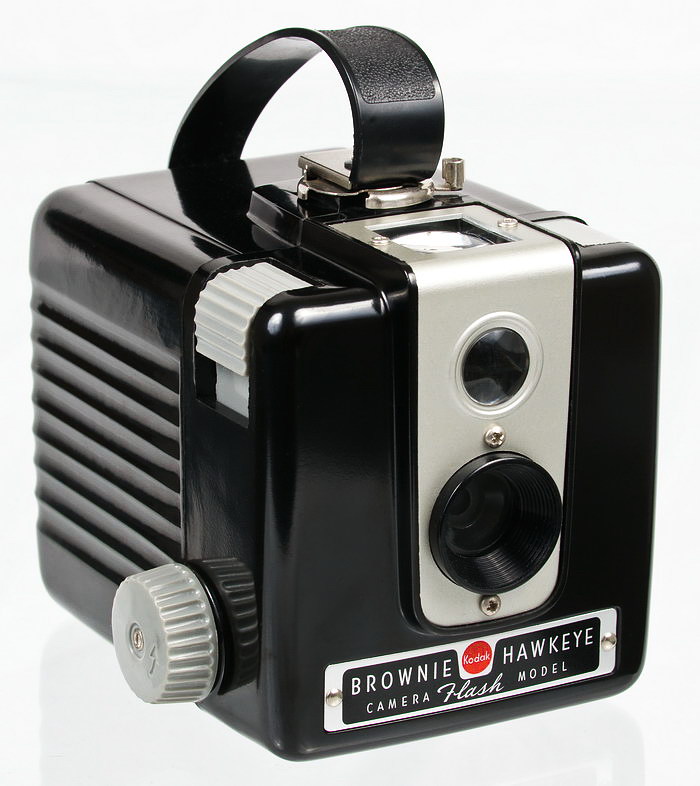
I’d love the documentation of my past because it might trigger memories. I don’t think I’d need snaps of 75,000 meals, but a few hundred would solidify my sense of who I was. My parents had an old Brownie Hawkie camera, but I think they only shot two rolls of film of me and my sister. I figured they also shot two rolls of themselves before we were born.

That’s just 48 photos to document my youth. I really envy kids growing up with smartphones today. (But why aren’t I snapping pictures with mine now?)

JWH


Trying To Control My Insane Impulse to Buy the Past

by James Wallace Harris, Friday, January 24, 2020

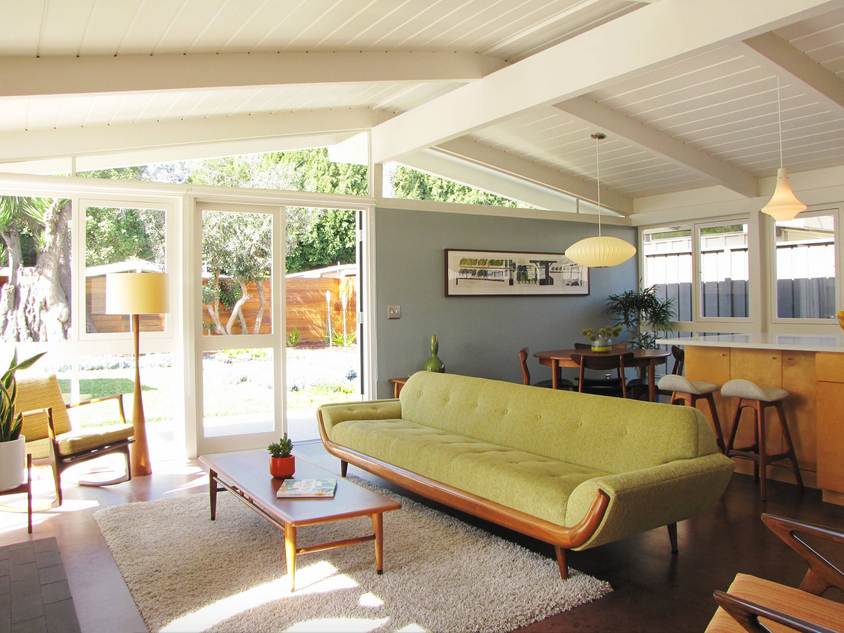
Lately, I want to buy the past. For example, I’ve been craving old computers I couldn’t afford back in the 1980s. Or I’ve been compulsively buying old books and magazines on eBay I once own when I was a teen in the 1960s. And now I dream of buying a mid-century house and fixing it up to look like the 1950s Florida of my childhood. Maybe even get a 1957 Pontiac to match.

What explains those impulses? I used to have in-the-moment impulses like eating junk food or getting laid, but my decrepit stomach gets upset at one and my elderly dick has become erratically indifferent to the other. That makes me wonder if buying the past is a kind of compensation for two of nature’s most basic impulses. If it is, it doesn’t work because I’m still hungry and horny.

Life used to be more satisfying when I could get satisfied.

Buying old stuff does provide a fleeting moment of pleasure but as soon as the UPS delivery person delivers my goodies I pack them away and think about the next relic of the past to purchase. A carton of Ben & Jerry’s would keep me happy for two evenings, and getting lucky would alleviate horniness for a few moments to a few days depending on my age in life.

Television used to be a great balm for itchy urges, but nowadays watching Perry Mason shows remind me of 1962 or viewing YouTube inspires collecting and renovating antiques of my twenties. If I had never watched The 8-Bit Guy I don’t think I’d be craving an Apple IIGS right now. I can understand where the genetic programming for pizzas and pussy come from, but what explains the biology driving me to buy decaying runs of Galaxy Science Fiction?

Getting old is nothing like I expected. I thought I’d go bald and become wrinkled, yet essentially be my same old self. I never imagined a time when I couldn’t drink Dr. Pepper and eat German chocolate cake. I was warned that my dick would wear out, but I assumed so would the horniness. That really wasn’t fair. I feel like Henry Bemis when his glasses broke.

Henry Bemis

My retirement years are everything I never planned. Why didn’t they warn us? I have all this time to indulge my whims and have all the whims of my youth, but being young when you’re old isn’t very practical. I still have a future. Maybe even a future as long as my working years. Everyone asks you when you are a kid, “What are you going to be when you grow up?” But who asks, “What are you going to be when you get old?”

I think I need new cravings. I need new urges and ambitions that suit a decaying body. Something more fulfilling than the urge to guzzle Metamucil. When we are young we study to understand the world and prepare for our working decades. I think I need to study for becoming a successful old person. I don’t need a retro 8-bit computer, what I should crave is a 128-bit computer and an engaging task that will maximize its use.

I need to be buying the future.

JWH


Writing Lessons from Envy

by James Wallace Harris

Basically, my blog is where I write what I think. I polish my essays to be more readable, but I’m too lazy to be more ambitious. Blogging is piano practice for writing but seldom produces professional-level writing. Blogging improves writing skills, exercises the brain to think clearer, but is too casual to produce art. Lately, whenever I read an exceptional essay I feel both envy and regret. Envy for craft, and regret for laziness. It’s time to up my ante.

I recently wrote about rereading Brave New World fifty years after first reading it in high school. Then I read “BRAVE NEW WORLD Revisited Once Again” by the science fiction writer Thomas M. Disch in On SF. I was amazed by how much better Disch had done with the exact topic. He opens with:

Just fifty years ago, at the dawn of the new era that dates from the death of Henry Ford, a young, half-blind, upper-class Englishman published a novel destined to become—along with Orwell’s 1984—one of the two most enduring prophetic visions of the future ever to clatter from the typewriter of man. The novel was Brave New World, its author Aldous Huxley, and the vision was of the Jazz Age gone to heaven. Anything goes in A.F. (After Ford) 632, but what goes particularly well are those two pillars of the affluent society, sex and drugs. What has been eliminated from that society as being subversive and destabilizing is: family life, passionate love, social nobility, and any art but the “feelies, ” fashion design, and dance music. Here’s a sample of the song lyrics and the lifestyle of A.F. 632:

Orgy—porgy, Ford and fun,
Kiss the girls and make them One.
Boys at one with girls at peace;
Orgy—porgy gives release.

I realized this was a complete lesson in writing. Here’s my opening paragraph:

I first read Brave New World in high school back in the sixties. Rereading it again in 2020 reveals that it was entirely over my teenage head. I doubt I got even 5-10% of Aldous Huxley’s satire. Although I expect high school and college students of today have both the education and pop-culture savvy to understand it better than I did, it’s really a novel to read after acquiring a lifetime of experience. When I first read Brave New World I was already mass consuming science fiction so it was competing with shiny gosh-wow sense-of-wonder science fiction. I remember liking Brave New World in places, especially the free sex and Soma, but I thought the story somewhat boring and clunky.

My paragraph was more about me than Brave New World. I feel Disch and I are both trying to get people to reread Brave New World but his lead-in is a better salesman. His paragraph is dense with details about the book, while mine has too many details about myself. Should I even be the subject? My intent was to convince people the book deserves a second reading by my experience, but I could have done that without talking about myself.

Do visitors to this blog want to know about me or the topic of my discussion? Blogging is intended to be personal, and I have a number of followers for this blog, but the essays with the most hits are from people searching Google on a specific subject. Those readers aren’t interested in me. I could have written my first paragraph without any mention of myself and still provided the same data.

I consider this blog, Auxiliary Memory, to be my personal blog and Classics of Science Fiction to be a reference site. Maybe I should use a different style of writing for each.

Information is the key. When people read, people either want specific information or entertaining information. And web readers want quick information. I’m a wordy bastard. This essay is already longer than what the 99% want to read. But I haven’t covered my topic. I could describe a dozen insights I’ve learned from Disch’s essay and make this post 3,000 words long. Or I could put each insight into a different post.

If information is the key, then information density is the essence of great writing. I’m still impressed by how much Disch conveys about Brave New World in his first paragraph. I believe his summary says even more in fewer words.

My final quarrel with the book is one of emphasis from my first reading. I’ve always had a sneaking fondness for the world Huxley invented. I know I’m supposed to disapprove. But I would like to try soma just once, and I wouldn’t say no to a night at the Westminster Abbey Cabaret dancing to the music of Calvin Stopes and his Sixteen Sexophonists. The lyrics of the songs may be sappy, but I’ll bet they’ve got a good beat. As for the feelies, I suppose the plots are pretty simpleminded, but any more so than Raiders of the Lost Ark?

This is not to endorse all the sinister theories of Mustapha Mond, only to suggest that fun’s fun, and that some of the targets of Huxley’s satire are mean-spirited, insofar as he is making a case against pop culture, sexual candor, and the consumption of alcoholic beverages.

Relax, Huxley. You worry too much. Have a gram of Tylenol. Things could be worse. This might be 1984.

Disch’s reading reaction that Huxley’s dystopia is alluring is close to mine. Disch combines story description with story reaction into the same sentence where I separated them into different paragraphs.

My envy of Disch’s writing inspires me to work harder, but it also makes me ask myself a lot of psychological questions about why I want to write. Blogging and other social media appeal to our urge to express ourselves. On many levels, I worry that’s appealing to our ego and vanity. Of course, we also call our activities on social media sharing. But what exactly are we sharing? Ourselves, information, promotion of cool things, memories, passions — the list goes on and on. When a writer produces a work to be read, they are also asking readers to use up some of their time.

The best thing I learned from my six weeks at the Clarion West writers’ workshop was “Great writing is the accumulation of significant detail.” I believe what I learned from my recursive reflection between these two pieces is: “Great writing is the accumulation of significant detail that wastes the least time for the reader.”

That’s a single lesson at one recursive turn. With another cycle, Disch’s prose sparkles for me because I just reread Brave New World and all his allusions resonated. That wouldn’t be true for people who haven’t read the book. That insight reflects back again, and I see I admire Disch’s essay because we both reread Brave New World late in life after first reading it when young. Seeing that lets me know great writing isn’t always in the prose but in the sharing. But that reveals the limits of finding the right reader.

I could keep going, but after the 1,178th word, I believe I spent enough of your time.

JWH


The Absolute Best Reason to Subscribe to Spotify (Besides the Obvious One!)

by James Wallace Harris, Friday, October 11, 2019

For the price of buying one album on CD each month, my wife and I rent millions of albums. That’s the obvious reason to subscribe to Spotify. But as an old guy afflicted with crippling nostalgia, listening to playlists assembled from Billboard’s Top 40 and Billboard’s Hot 100 charts for specific years is almost as good as owning a time machine. Lucky for me, there are other year nostalgic fans who diligently track down all the hundreds of songs that chart during a year and organize them into Spotify playlists. For example, here’s a playlist for 1965, with 626 songs.

1965 happens to be the pinnacle of pop music for me. For Spotify subscribers, just search on Billboard Top 40 or Billboard Hot 100 and the year you want. It might come up first in the search, or you might need to see all on the playlist listings. There are many members who make these by-the-year playlists. Some are more extensive than others. I pick the ones with several hundred songs.

If you have Spotify you should be able to click on the above playlist and listen to it now. If you don’t subscribe, I have found a couple of places where you can listen to limited subsets of a year in music.

I discovered Tropical Glen years and years ago. Go to its home page and click on your favorite music year. Here’s the direct link to 1965. Once you pick a year, you can also look at the Cash Box charts for each week. Here they are for 1965.

Recently I discovered a way to look at Billboard’s Top 100 charts by year. Go to Singles Chronology. The same people also have a Top 40 site. I learned this from Slice the Life. Blogger Hans Postcard writes a series of essays reviewing all the singles that charted on a particular year. He’s currently working through 1969, and here’s the beginning of that series. Hans writes a little bit about each song and often has a copy of the song to play.

There’s a psychological reason for listening to songs by year. Read: “What makes us stop listening to new music when as get older?” The article says our musical tastes crystalize around age 13/14, which was 1965 for me. The article says we stop liking new music as we grow older and have less time to listen to current music. Evidently, as we go to work and start families, and life gets busy, we don’t give new music the time it takes to bond with it.

The reason why I recommend occasionally playing by-the-year playlists is that most of us grow up only listening to a portion of the hits for that year. The Billboard Hot 100 charts cover rock, R&B, country, jazz, easy listening, and any single that made it to the chart. That can be around 600-700 songs each year. Quite often I discover songs I love but don’t remember. I probably love them because they are of the same style as the other songs I loved. Or they are lesser hits of artists I love.

I also thrill when a song plays that I haven’t heard for 54 years and it triggers memories I haven’t thought about since I made them. I often play these playlists very loud. That brings out details in the songs so they feel fresh and vibrant. In 1965 I listened to my music on a Sears clock radio which had a 3″ mono speaker. It was low-fi. I’m often shocked by how High-Fi the music was back then.

Listening by the year also reveals how much I was listening to the radio back then. I got my radio for Christmas of 1962 and played it from the time I got home from school till I went to school the next day. I often woke in the middle of the night to hear songs, and sometimes I would dream about the songs that were playing. That radio died in 1968, but by then I was mostly listening to albums. I stopped listening to AM or FM radio in the early 1970s because I couldn’t stand the disc jockeys or ads. But I can tell that I listened to more songs in 1963-1966 than I did in 1967-1972. That’s because in 1967 I got an after school job. I graduated high school in 1969, and when I play the 1969 playlist I’m amazed by how many great songs I just don’t remember hearing back then.

Finally, a really mind-blowing thing is to play the years before you were born. The Billboard charts seem to have begun in the 1950s, but there are users on Spotify that collect the music for earlier years. When I started listening to my radio in 1962, they played Golden Oldies on the weekends, so I am familiar with rock from 1955-1962. But if I play pop songs from 1947 or 1951 its a trip.

Not only do we stop learning to like new music after a while, but we seldom like old music before we grew up. However, if you listen enough it will grow on you. For decades I’ve been learning to like pop music all the way back to the 1920s. I don’t resonate with it like I do with music from the 1960s, but it is growing on me. Sometimes I feel getting older allows me to enjoy older music. I know I now enjoy TV programs my parents loved back when but that I hated.

I sometimes like to play music on headphones when I’m going to sleep. It’s great to wake up and be in a semi-conscious state of mind while hearing music. Often I dream that I’m floating in space with music all around me. It’s pretty damn cool when that happens. Evidently, my neurons like it too, because I can feel them dancing.

JWH


Quantifying My Cognitive Decline

by James Wallace Harris, Thursday, September 5, 2019

I subscribe to a service called Grammarly which checks my spelling and grammar as I write. Grammarly sends me a weekly report on how I’m doing. Two years ago it would tell me I was more accurate than 65-70% of their users, referring to grammar and spelling. I doubt even when I was young it would have been much higher. In recent months that number has fallen to 35-40%. And I can feel it. I have to proof my posts countless times and I still find errors after I’ve published. I’m appalled by how bad my writing has become. If I published my first drafts readers would think they were following Charlie Gordon into his descent phase from the book Flowers for Algernon.

I consider this good quantitative data on my cognitive decline. Grammarly does give me some good news. I’m generally more productive than 98-99% of their users, and my vocabulary is larger than 98-99% of their users. The first is explained by being retired and writing for two blogs. The second reflects long term memory. I can tell it’s my short term memory that’s failing.

I still don’t see this as an early sign of dementia, but I might be deluding myself. I think it’s just an aspect of normal aging. We’re used to seeing our bodies getting old because of all the visible physical changes. We’re not used to mental changes because they are less observable to ourselves and the people around us. Unless we talk or act differently, other people don’t see the changes. And we don’t feel the changes unless we try to do something and fail.

I have been noticing the number of times people ask me why I’m not talking. I tell them I’m just listening to them. Or say I’m thinking. But I believe it’s because it takes more effort to put thoughts into words, and when I do talk I can’t remember words, or I verbally trip when saying sentences. My cognitive problems are the most obvious when writing. If I’m just playing with the cats, watching television, or listening to music I feel fine. I believe we ignore our mental aging by doing less and saying less. Of course, many people also ignore signs of physical aging — that’s why so many foolish oldsters fall off ladders.

The real question is: Can we exercise the mind like we exercise the body? It appears we can slow physical decline by being more active. Is that also true for mental activity? My first reaction when I realized I was making more spelling and grammar errors was to quit writing. But I quickly decided that was the wrong approach. I believe writing exercises the mind. Instead of quitting I should work harder. However, I might need crutches. I thought about pilots who use preflight checklists, or how surgeons now use checklists to avoid making surgical mistakes.

I already pay Grammarly to keep an eye on me, but it’s far from perfect. In fact, when I see errors after I published it means Grammarly and I both missed them. I usually proofread my posts four or five times before I hit the published button. Often the most glaring mistakes are last-minute rephrasing where I don’t proof the whole sentence, or whole paragraph again. But other mistakes come from reading too fast and assuming I’m seeing what I read.

I believe my essays give the illusion that my mind is working just fine. Y’all don’t see how many broke things I fix. I use the internet to cheat. It really is my auxiliary memory. And I have unlimited do-overs. Most importantly, I can take all the time I need to say what I want.

I’ve always been a good typist. It’s been the most useful skill I learned in high school. What I typed used to be what I thought. Thoughts came out of my fingers. That’s no longer true. Now my fingers give me sound-alike words, leave out words, type words twice, and even throw in extra words. Quite often I end up typing just the opposite of what I was thinking. While typing this paragraph I created 8-10 alternate words to what I was thinking. Just that could explain the halving of my accuracy score in Grammarly.

[When proofing the above paragraph I had a new insight. What if my typing is as accurate as ever, and I’m merely typing jumbled thoughts when I once transcribed clear ones?]

Writing isn’t the only way I’m seeing increased cognitive problems. The other day I wrote “Untying a Knotted Plot” about my difficulty of understanding a short story. I had to read it four times. Admittedly, it is a complicated story. The author even wrote a couple of comments to help me. That essay was extremely difficult to compose. I struggled with trying to comprehend the story and write about it clearly. Every time I typed the author’s name I looked at the magazine to verify the spelling. I still got it wrong three out of eight times. I proofed the hell out of that piece because errors seem to be popping like popcorn. I felt like I was playing a very desperate game of Whack-a-Mole.

There’s another reason to keep writing. I want to document my own decline. Like the researchers in Flowers for Algernon, they tell Charlie to keep a journal. I’m going to be my own researcher and subject. I think it’s useful to be aware of my diminishing abilities. Aging is natural, and I accept it. I’m willing to work to squeeze all I can from my dwindling resources. What’s vital is being aware of what’s happening. The real problem to fear is becoming unconscious to who we are. Like Dirty Harry said, “A man’s got to know his limitations.”

The reason why Flowers for Algernon was such a magnificent story is that we’re all Charlie Gordon. We all start out dumb, get smart, and then get dumb again. Charlie just did it very fast, and that felt tragic. We do it slowly and try to ignore it’s happening. That’s also tragic.

JWH