Is the Day of the Disc Done?

The other day I bought a new Sony BDP-S5100 Blu-ray player to replace the old LG player that was having a lot of trouble playing Blu-ray discs.  Strangely, two of my friends separately asked me the same thing, “Why did you do that, isn’t Blu-ray dead?”  Then my friend Mike wondered if it was possible to give up his Netflix disc account to just live with Netflix streaming.  My wife has already given up her disc account, and so have many of my friends.

I’ve wondered about cancelling my Netflix disc subscription, but there are still plenty of movies, television shows and documentaries that aren’t available on streaming.  In fact, I recently joined ClassicFlix to get old movies Netflix doesn’t offer on disc or streaming.  And often I recommend films and TV shows to friends and they often report back they aren’t  on streaming, like Project Nim.

bd

Yet, I’ve got to wonder if the writing is on the wall, and if the disc isn’t under Hospice care.  I hardly ever play my CDs anymore, preferring to stream music.  And my DVD/BD collection sits ignored in a dark closet because I stream or rent.  Since the quality of streaming is constantly improving, I feel less and less need to buy Blu-ray discs.  I dropped my Blu-ray option on Netflix because the LG players was giving me so much trouble, but at ClassicFlix, Blu-ray discs are not extra, so I started getting them again.  They are wonderful, but some some HD streamed movies are nearly as good.  Movies like The Big Trail and The Apartment were just stunning in Blu-ray, so I want that quality if I can get it.

If I dropped Netflix discs and ClassicFlix discs, a whole world of video would be cut off from me.  I have added Warner Instant Archive streaming, which is like Turner Classic Movies.  I also get Hulu Plus and Amazon Prime.  I have years of streaming content waiting to be watched, and by the time I finished them all, years more of viewing would be added, maybe even the stuff I now get on discs.  If I was patient, everything will eventually come to streaming.

And then there’s the question:  Won’t canceling disc rentals and not buying discs speed up the move to everything being streamed?  Isn’t it a kind of protest against discs and a vote for streaming if people shun discs?

Blu-ray isn’t quite dead because if you want the best possible picture, Blu-ray is it, but streaming technology is nipping on its heels.  Netflix is even working on 4k streaming.  I probably shouldn’t have bought that Sony BDP-S5100 player, but hell, it was a good deal at $79.  It’s a marvel of technology, and about 1/3rd, or even 1/4th the size of the BD player.  Plus it plays BD discs MUCH faster, and it plays the discs the BG player wouldn’t.   And it also plays CDs and SACDs, and it has Gracenote built in, making CD playing more visual.  There’s even more, it has a host of smart TV features with many channels that I don’t even plan to use, because I own a Roku 3, but if I didn’t they would be very cool.

Yeah, I think, the writing is on the wall.  This will probably be my last disc player.

Back in the 1960s I often wondered what life would be like in the 21st century.  I never imagined living without LPs, or even conceived of the CD or DVD.  Yet, many science fiction books and movies imagined a future where we’d be less materialistic.  I guess that’s coming true.

JWH – 1/28/14

LibraryThing v. GoodReads: What I Want From a Book Database

My friend Mike and I have been discussing book databases.  We both use online services, but we’ve been thinking about what features would make a perfect book database to carry around on a smartphone or tablet.  I’ve tried several online programs, a few mobile apps, as well as few desktop programs.  Every book database reflects a different idea how to manage books, but none approaches the concept how I expect such a program to work.

Lists

A book database is essentially a list making program, but bookworms want different kinds of lists.

  • List of all books owned
  • List of all books we’d like to own
  • List of all books read
  • List of all books owned but unread – our TBR (To Be Read) list
  • Books in series
  • Books by authors
  • Books by genre
  • Books by subjects
  • Books by year published
  • Books by date read
  • Books by price

Because there are so many different book database programs I assume there are millions of bookworms out there with piles of books they want to manage – but manage differently from everyone else.  If listings were the only feature people wanted, then using Word, Excel, or Access would be all we needed.  Or even just Notepad.

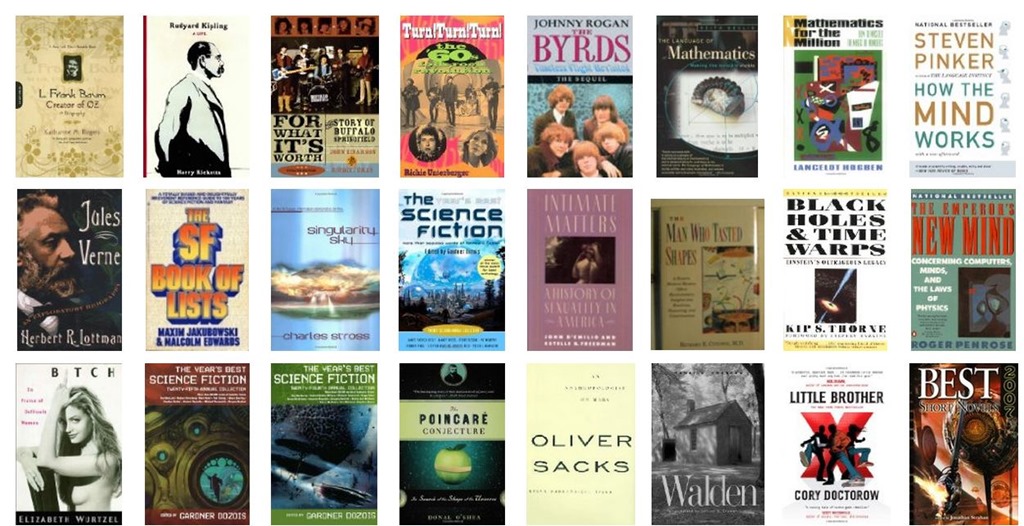
The advantage commercial databases have is for creating super powerful lists.  I especially love the various book cover listings.  LibraryThing gives me many ways to look at my book covers, which I find very inspiring.  It often triggers a desire for what I want to read next.

librarything-cover-view

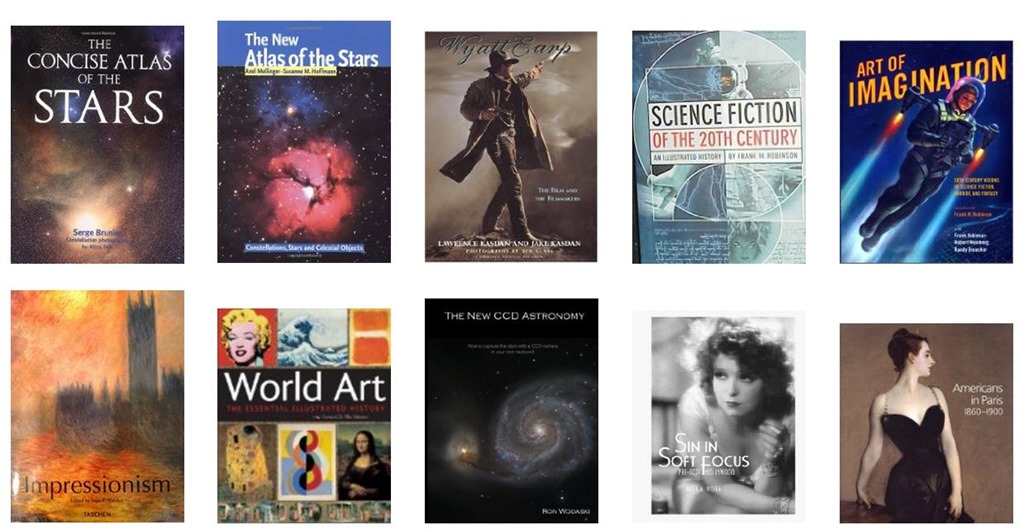
I can even change the size of the covers.

librarything-cover-view2

Personally, I want much more than a list, and I assume other bookworms do too.  But what other features are essential?

Social v. Private

The obvious next big difference is whether you want your library public or private.  LibraryThing and GoodReads are designed for social bookworms who want to find out what other people are reading, reviewing, and leaving comments about.  Book Collector, Readerware, iBookshelf, etc. are designed to catalog your collection only.  After playing with all these programs I decided I wanted to go social, although my needs might dictate needing two or more book database systems to do everything I want.  As long as you have a mobile device with a data connection, then online programs will work fine when you’re out at a used bookstore and wanting to know if you already own something.

One of the coolest features of LibraryThing is their Zeitgeist page, which shows how popular books are through various metrics.  Also, for each author, you can see how successful their books are with other readers – for example, here’s three of my favorite writers, Robert A. Heinlein, Jack Kerouac and Philip K. Dick.  This offers far more information than just listing my books.  I can see who else likes my favorite books, and read their reviews.  Checking the same authors on GoodReads shows different, but often correlating information.  See Heinlein, Kerouac and Dick again.  And if you’re a collector, GoodReads offers links to editions, like all these versions of Do Androids Dream of Electric Sheep?

LibraryThing also matches my collection with other collectors and lets me know about other bookworms with reading interests like mine.  It’s rather eerie to go through a stranger’s cover display and see so many books I own or have read, or even notice we share the same larger interests in genres and subjects.

Sitting down with either LibraryThing or GoodReads teaches me so much more about my books than just listings them out in programs like Book Collector, Readerware or iBookshelf.  However, LibraryThing and GoodReads aren’t the obvious winners.  Especially if you have a large collection of books, magazines, comics, videos, etc.  Then what you want is a library database that can catalog your entire collection.

Library Catalogs

All the programs I’ve found so far are built around books and using ISBN as a quick entry tool.  Real libraries, like public and university libraries, use card catalog software that can track any kind of media you want in your library (books, music, video), including special collection items like photographs, letters, paintings, tape recordings, etc.  Unfortunately real library software, like Small Library Organizer, also includes check out systems, which are not needed for private collectors.  There are even several open source library cataloging systems, that use standard library database formats like the MARC record for defining any media in a library collection.

The online programs LibraryThing and GoodReads can catalog huge collections, just look at the 5000 Largest Personal Libraries at LibraryThing.  I would imagine LibraryThing would be cumbersome to use for thousands of books.  If you have thousands of books I’d think you’d want a desktop program like Readerware or Book Collector – but those programs require separate programs to handle video and music.  You have to live with that, or consider going to a real library card catalog system.

What I Really Want

I don’t want to just manage my personal library as a list of books.  I want to mentally grok my library.  I have about 700 physical books, and another 400-500 audiobooks, and 100+ ebooks.  That’s too many to remember what I own.  That’s too many to remember for thinking about what to read next.  That’s actually too many to even care about.  I’m not a book miser.  I’m a book lover, and having too many children to love means I’m not giving them their proper attention.  I need to put some of my books out for adoption.

I want to book database that helps me remember what I have in my collection, and that means having a great visual cover interface.  Right now I consider LibraryThing the hands down winner.  But there’s one feature that LibraryThing or GoodReads doesn’t do that I really want, and that’s a text field where I can add my comments, reviews copied from the net, quotes from the book, etc.  I want each book to have a page I can pop for annotations.

Look at the Main Page at LibraryThing for The Catcher in the Rye.   On the left is a menu of additional information about the book.   Here’s the same book at GoodReads.  As much as I like GoodReads, I think LibraryThing is the winner.

I actually have many of my books in both databases, but it’s very hard to keep them synced.  But as of tonight, I’m going to devote myself to getting my LibraryThing catalog up-to-date.  When I get through I’m going to try to delete my catalog at GoodReads and export my updated LibraryThing listing to it, and then work harder to keep all my new purchases added to both systems.  Both programs are great.  I just love LibraryThing more.

Strangely enough, I want to delete books from my book database.  Sure, those that I’ve gotten rid of, but also books I might own, but don’t really care about.  I’ve decided that the important thing is to list the books I love, or want to read, more than just the books I own.  I want my book database to be a system for the books I want to study, remember, annotate and review.  I want to forget the forgettable titles, and memorize the great books.

When all is said and done, I want my book database to define me by the books I care about.  When I die, I want my book database to be my memorial that defines my life.  I wish LibraryThing was a true library catalog program.   I wish it could include music albums, films, and copies of famous photographs and paintings.  So all you masters of C++, fire up your editors and get to coding.

JWH – 9/25/13
Buying Vinyl Records Can Be So Goddamn Annoying!!!

I wonder if the phrase “You Can’t Go Home Again” also applies to technology too?  Can we return to living with older inventions?  Why haven’t some people rejected television and returned to radio?  There’s always some Luddites.  Just last week CBS Sunday Morning had a piece about people going back to typewriters.  Really?  Who wants to go back to carbon paper and liquid paper after using a word processing?   Who would even want to return to WordPerfect or WordStar after using Microsoft Word?

Many people want to return to vinyl records.  I’ve been trying to go home again with music too, but it’s like the Thomas Wolfe novel.  I’m having trouble.

I love shopping for old records.  I love the big 12” covers.  But nostalgia is not all its cracked up to be.

I love old records, until I play them.  If they play without incident I love the heck out of them.  But if they skip, skate, crackle, pop, hiss, it shoots my blood pressure way up and pisses me off.  It makes me want to smash the record and give up LPs for good.  But I don’t.

It’s such a crapshoot to buy old records.  Come on, how much can we expect from half-century old plastic? 

I’ve bought LPs that looked mint and they’d have a constant background hiss.  I’ve bought records for one cut, and that cut, and that cut only, causes my stylus to skate.  But I’ve also bought records covered with fine scratches that sound wonderful.  It’s weird, but the heavy beat up old records from the 1950s and 1960s often play far better than the thin, nearly new looking records of the 1970s and 1980s.

Part of my problem is my “good” turntable.  It tracks so light that any imperfection causes a record to skate or skip.  My good turntable is hooked up to my good stereo.  I buy records hoping to find the wonderful warm sound of vinyl.  I play them loud.  So when a record acts up, I hear it jarringly loud, which makes it all the more annoying.  The good turntable is designed to make the records sound better, and to protect LPs from wear by lightly tracking through the grooves.  If a LP doesn’t play well on the good turntable I put it on the bad turntable in my computer room.  This older player, with its much heavier tone arm and tracking, can often play records the good turntable can’t.  But I have to listen to problem records on my computer speakers, which are Klipsch THX and sound good, but they aren’t like listening to the Infinity floor standing speakers in the den.

Maybe I should always use old technology to play old records, and new technology to play new records.

Many audiophiles claim LPs sound superior to CDs, but I disagree.  Yeah, LPs have a warm sound that’s very appealing, but it’s not why I buy records.  Modern CDs sound technically superior by far.  I buy records to travel back in time.  I want to go to a record store and shop for a new LP discovery.  I want to flip past hundreds of albums and find one I want to take a chance on.  I want to bring that album home, put it on the stereo, kick back in my recliner and listen with all my might.  And if I get lost in the experience, thrilled by discovering something wonderful, I find blissful pleasure.

All too often now I’ll be deep in reverie and BLAM! – the tone arm slams into some microscope imperfection.   Or WEEEEEERRNT! as it slides over a portion of the cut.  This is so goddamn irritating.  This seldom happened decades ago when the LPs were new.  And even now it doesn’t happen as much as you’d imagine for such ancient technology, but it happens enough to wonder why I bother with retro tech.  Digital technology is infinitely more convenient and reliable.

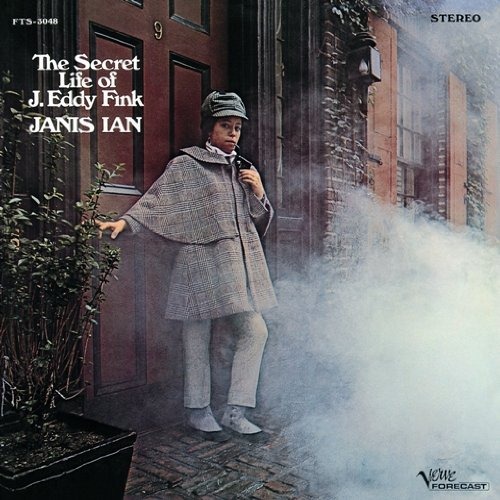
Like here’s a favorite LP I fell in love with back in 1968 that I recently rediscovered and bought on vinyl, The Secret Life of J. Eddy Fink by Janis Ian.  The copy I found even had the blue paper insert with a couple extra poems.

secret-life-of-j-eddy-fink

Coming home, I was so happy to have found this LP again.  I put it on with great expectations.  Then it didn’t play right.  I could have save myself a trip and $5.  It’s available to play online for free at Janis Ian’s website, and doesn’t skip there (although the site fades out the end of the song in a way so she’s not giving you’re the real thing).  I do have the same songs on a CD I bought years ago, Society’s Child: The Verve Recordings, or from Rdio, but it’s more fun to play from an LP that looks like the LP I owned 45 years ago.  Because it doesn’t play from the good turntable it ruins the whole experience and fun of buying the album.  It will play from the bad turntable and that’s a consolation, but it deflates the fun.

Does it really matter if a song comes from squiggles on vinyl, pits on a CD, or via electrons over the internet?  Why am I trying to go to a long ago past, when I have a bright and shiny present to explore?

I was buying a lot of old records.  I’ve bought 61 albums since the beginning of the year, but I’ve stopped.  I suppose I could switch to very expensive 180 gram new albums, which run $20-50, but I won’t.  I’ve gone back to mostly listening to Rdio.  It has about a million albums.  I’m not hurting for music to listen to.  It was just fun trying to find lost albums.  I just missed record stores and flipping through bins of records.  But I guess I can’t go home again.

I haven’t completely given up on vinyl.  I’m just more careful.  I’m learning to be a more savvy vinyl shopper.  I keep my eye out for LPs that have never been reprinted, or the CDs have long gone out of print too.  I use digital for most stuff, and vinyl for when digital lets me down.

I guess I’m an old fart when I claim that buying music online is not the same experience as shopping for records in a store.  That something has been lost by modern ways.  But I am willing to admit that the new ways, with modern technology, are far superior.  If I was forced to choose between Rdio and records that played perfectly every time, I’d pick Rdio.  If I was forced to choose between Amazon and bookstores, I’d pick Amazon.  The world wide web is better than CompuServe and GENIE.  I’m not crazy.  I do know a 2013 Ford Mustang is technically superior to its 1965 classic ancestor, even though people will pay far more for the older model.  Nostalgia sells, but modern technology is superior.

We might talk about going home, but now is better.  For instance, a couple weeks ago I got a heart stent.  In 1968 I’d have been shit out of luck.

JWH – 5/25/13

How to Take Notes in the Shower?

For some reason my mind just races in the shower and I get all kinds of good ideas for blog essays while scrub-a-dub-dubbing in the shower.  However, I forget most of them.  I try to hang onto at least one idea, so that after I get out of the shower, dry off, get partly dressed, exercise, get completely dressed, eat breakfast and back at the computer, I can write it down.  Often even that single idea doesn’t make it to the more permanent memory of  my word processor.  I really should learn to type in the nude while wet.

So I did a couple of Google searches, “writing notes in the shower” and “how to write in the shower?”

As you can see, I’m not the only one with this problem of wanting to take notes in the shower.  It seems showering is well known for stimulating ideas for writers.  Karen Woodward made a homemade scuba writing tablet with materials from Staples in “How To Write In The Shower.”  However, Amazon has a ready made Scuba slate that’s cheaper than Karen’s put together solution.  The problem with both solutions is erasing the board.  But one of the customer reviews at Amazon suggested a Mr Clean Magic Eraser, which my wife has been buying lately, erases the slate well.  Amazon also offers a larger Scuba slate.  I ordered the smaller one for $7.78 with free Prime shipping.

The little scuba slate turned out to be good enough for now.  Capturing my thoughts usually only takes 2-3 lines, and the small slate, about the size of of a trade paperback, can handle 4-5 notes on each side.  I write with water streaming all over me and what I’m writing.  Pretty cool.  Problem solved.

However, I noticed there were other good solutions, include Aqua Notes, a waterproof notepad specifically designed for the shower.  It’s $7.00 plus $3.99 shipping at the site for a 40 page pad, or $10 at Amazon.  I’m going to try this next if the slate doesn’t work out in the long run.  This solution could get expensive.  However it has an advantage over the slate in that you can pull off a page and take it to the computer.

I expect the scuba slate to solve my immediate problem, but I’d like more elaborate permanent solution.  I need a system for taking notes all the time, and from any location.  My iPod touch has a good voice recorder app called Recorder.  I used to own an Olympus digital recorder for dictating notes until I rocked on it with my La-Z-Boy.  Digital recorders are great for in the middle of the night note taking, but I wouldn’t want to take one into the shower, or even a steamy bathroom.

But wouldn’t it be cool to have a smart home that constantly listened to me?  Or even talked to me?  Over the years I’ve seen various science fiction movies where houses had AI butlers built into them.  Now wouldn’t that be cool?  Of course I might go crazy talking to my house all the time.  In the future they might have personal robots that I could chat with and they’d take notes, and be my very own Dr. Watson, but I can’t count on that now.

I created this blog to record my thoughts and called it Auxiliary Memory because I wanted to record my thoughts.  I forget too easily, and I’m forgetting more all the time.   I often reread my older blog posts amazed at forgetting ever writing them.  There is even a movement called lifelogging to record everything a person does in their life, see “Lifelogging 101:  How to record your life digitally.”

Gordon Bell and Jim Gemmell wrote a book Total Recall:  How the E-Memory Revolution Will Change Everything.  Bell was a researcher for Microsoft that became the subject of MyLifeBits, an early lifelogging project.

Now, I’m not actually interested in recording my whole life.  I want to record ideas.  I often write in my head thinking I’ll get up and write it all down later, but I don’t.  What I’d really like is a brainstorming recorder.  I just searched “brainstorming recording” on Google and got hits.  See, everything I think about has already been thought of before.  It’s nice to know I’m not the only one with these crazy ideas.

Ultimately I’d like a transparent way to record my thoughts, then mind map them with XMind, research and collect additional information and store that research in Evernote, and finally write it all up in an essay.  Sooner or later some savvy young inventor will invent an app that does all those things at once.

JWH – 9/26/12

How Microsoft Can Make Extra Millions When They Roll Out Windows 8

Dear Microsoft,

When Microsoft rolls out Windows 8 they could make some extra corporate chump change by selling a new version of Windows 7 that’s designed for the “I hate Windows 8” crowd.   I have a feeling there’s going to be millions of Windows 7 fans that will swear they will give up their favorite OS when it’s pried from their cold dead fingers.

I’ve installed two pre-releases of Windows 8 so far, and I just don’t like it.  Sure it has some slick new functions, but I just don’t like the way it looks.  I keep trying Mac OS and Linux, but I prefer Windows 7 by light years.  I just don’t want Windows 7 to go away.

I build my own computers and I worry that Microsoft will stop selling Windows 7.  So Microsoft, I’d like to buy a copy of Windows 7 that I could put on any machine I build in the future.  I know that operating systems only have a limited supported life, but I’d like to stretch my use of Windows 7 until I die.   I’m 60, and I only expect to live another 15-20 years.

Y’all are still supporting Windows XP which came out in 2001, so I should at least get another 12 years out of Windows 7.  The trouble is the weird activation restrictions.  I don’t blame you for copy protecting your product but it does make my plans more difficult.  How about selling a version of Windows 7 with some kind of activation scheme that ties it to me and any machine I build for home use.  It would be nice to also be able to buy a Family pack version for 3 machines.

I know it’s mean of me to call your new baby ugly, but I’m sure you’re used to old farts not wanting to try newfangled ideas.  Just whip up some kind of marketing campaign – Windows 7 Forever – and make a few extra bucks off us stick-in-the-muds.  I really don’t want to switch to Mac OS and Linux is perennially clunky.

Thanks.

Jim