Fiction v. History

by James Wallace Harris, 9/25/22

Ken Burns’s new documentary, The U.S. and the Holocaust, punched me in the soul. No documentary has ever moved me as much, and I’ve seen a lot of them. And it’s not because it’s about the Holocaust. I’ve even read about most of the painful facts it presents before. No, the gestalt of this film, which is well over six hours, is to set off an epiphany about our relationship with history.

At the highest level, the documentary asks: What did Americans know about the treatment of the Jews under the Nazis from 1932 to 1945 and when and how did they learn it? But to answer that question Ken Burns and company have to describe what Americans were like during those years. The U.S. and the Holocaust give a different history of America for those years from any I’ve ever encountered from people, in school, reading, at the movies, or on television.

Maybe the best way I can describe it is to say: Everything that has horrified me about living through the years 2016 to 2022 existed in the 1920s, 1930s, and 1940s. The documentary cements a theory that I’ve been developing in recent decades – that people don’t change and even the percentages of the population that hold specific opinions don’t really change either.

The documentary set off this existential conundrum: Why didn’t I already know what the documentary revealed? Or did I just filter it out? Republicans are in an uproar over Critical Race Theory and other curricula that they’re afraid will upset their children. I imagine they will be just as upset at The U.S. and the Holocaust. I knew about the wide popularity of the KKK and eugenics in the 1920s. I knew Americans were mostly isolationists and anti-immigration in the late 1930s. But the documentary gives us a different take on history than what I was taught.

I have to wonder since FDR was president from 1932-1935, have we always gotten the Democratic party’s view of that history? I wonder if Ken Burns has rounded out the historical period by adding the Republican party’s take on those years? I do know the documentary feels very synergistic with today’s politics.

I love old movies from the 1930s and 1940s, and none of the hundreds of movies I’ve seen from that era convey what I learned from The U.S. and the Holocaust. My grandparents, parents, aunts, and uncles, all lived through those years, and none of them ever described the mood of the country revealed in the documentary. I’m a bookworm that has read countless works of both fiction and nonfiction about America in those decades, giving me some of the details from in the documentary, but not in the same gestalt. Two books that come to mind are One Summer: America, 1927 by Bill Bryson and In the Garden of Beasts by Erik Larson.

After I watched the Ken Burns documentary I read The Plot Against America by Philip Roth. It’s a kind of science fiction novel, an alternative history where Charles Lindbergh wins the 1938 presidential election and for many of the reasons described in the documentary. Roth was born in 1933, and he makes himself the point-of-view character in his novel. Young Phil is only 8 when it begins and 10 when it ends, but his viewpoint is mature. It’s about the anti-Semitism of those years.

I thought The Plot Against America was a well-told story about Jewish life in Newark, New Jersey 1938-1942. I thought Roth’s alternate history speculation was well done, deriving from the kind of knowledge I got watching The U.S. and the Holocaust. But the story is mainly a personal one, and its gestalt is different from the documentary.

Last night Susan and I watched Radio Days for the umpteenth time. It’s Woody Allen’s nostalgic look back at those same years. It completely ignores all the political history of The U.S. and the Holocaust. Radio Days is like both movies from that period and later films that worked to recall that era. They all filter out the nastiness of racism and xenophobia that existed in America back then. Although some of it came through in the film The Way We Were, and the book version of Breakfast at Tiffany’s.

And just before I watched the three episodes of The U.S. and the Holocaust I read Revolt in 2100 which contains a 1940 short novel by Robert A. Heinlein called “If This Goes On….” Heinlein imagined America would go through decades of The Crazy Years, before undergoing a second American revolution that created an American theocracy. I was disappointed that Heinlein didn’t do more world-building for his novel, but after seeing the Ken Burns documentary I understand his inspiration for writing it. It’s obvious that many Americans back then wanted a Protestant theocracy. Consisting of only white people from England, Germany, and some Scandanavian countries.

I think it’s important to distinguish fascism as a political philosophy from the Nazis, who were also fascists. What many Americans wanted then and now is basic fascism, and the Philip Roth novel shows how America could have turned fascist.

The other day I saw a quote on Facebook that went something like this: If you get warm and fuzzy feelings reading history then you’re not studying history. I’m on the third volume of world history by Susan Wise Bauer, and it’s brutal. Most people want to romanticize history, which is what we get from novels and movies. The Republicans don’t want CRT taught because they want their kids to feel all warm and fuzzy studying American History. The new Ken Burns documentary will not leave you feeling warm and fuzzy.

My current theory is humans can’t handle reality. That we develop all kinds of psychological delusions to filter reality out. We prefer our fantasies. And popular history along with pop culture gives us nice takes on the past that allows us to cope. It’s also why most people’s theory of how reality works is no more complex than a comic book. It’s why we’ve always clung to religion. It’s why I have a life-long love of science fiction.

We just can’t handle complexity. There are plenty of real history books that document the reality of the times they cover, but they aren’t widely read. Maybe the Republicans are right, and history is too brutal for children. But maybe we keep repeating history because we’re all too wimpy to handle history.

I’m getting so I can’t stomach the historical lies of Hollywood, but I don’t know if I can handle all that much real history either. I used to think that maybe four percent of the population was mentally ill. In recent years, I’ve upped that to forty percent. But lately, I’m thinking there’s an entry for all of us in the DSM-5.

JWH

When Will Women Have a Constitutional Right to an Abortion?

by James Wallace Harris, 6/25/22

Predicting the future is impossible, but we can speculate. The Supreme Court just changed its mind about how it interprets the Constitution regarding a woman’s right to an abortion, so can we expect it will change its mind again? Congress could pass a law giving women a right to an abortion but the Supreme Court could knock it down. The most lasting solution would be ratifying an amendment to the Constitution. That probably won’t happen anytime soon. But when might it be possible?

Anti-abortionists fought to reverse Roe v. Wade for half a century, will it take that long for the political pendulum to swing back? Polls show that a majority of Americans want abortion to be a legal right for women, so how did anti-abortion voters win? The common answer is they joined forces with the conservatives. The conservatives have also worked for decades to get what they want, and are succeeding because they have formed a tight coalition among several special interest groups.

I would assume feminists would have to join several other special interest groups and work with the Democrats to get what they want. Is that possible? What alignment of special interests would beat the alignment of specialist interests the Republicans have formed?

We must admire the conservatives for their dedication, focus, and work to get what they want. Are liberals willing to make an equal effort? Will liberals make a more significant effort to join school boards, get elected in city and state governments, work to influence law school curriculums, and do everything else the conservatives have done since the 1970s?

I have read many books about how conservatives have achieved their political goals over the last fifty years. Many of their tactics have not been honest or ethical. Will liberals go to such extremes? We are currently watching the conservatives subvert democracy to game the system. They have been sowing doubt on all the tools liberals would use to get what they want, especially science, education, medicine, journalism, and common sense.

Liberals have always relied on intellectual proof to fight for what they want, and conservatives have completely undermined intellectualism. Liberals can’t rely on logic to get what they want. They will need to build a coalition of passionate wants. Conservatives have won what they wanted with well-managed minority interests. Can liberals find enough minority interest groups to create a larger coalition than the conservative groups? They have the feminists, LGBTQ+, some minorities, environmentalists, and anti-gun, but who else? They used to have labor, but that’s not so anymore.

It would be great if the liberals could claim the scientists, but scientists are often people first and scientists second. The Republicans have done well with certain religious groups, are there other believers that would passionately support the liberals?

Are there interests that liberals could take back from the conservatives? The core driving force of conservatives has been anti-taxes. Greed is the most powerful political interest of all. If the Democrats could find ways to solve social problems by spending less money it would be a huge factor. If Democrats could find ways to improve the financial health of families and individuals without increasing taxes it would also help. Voters want security, stability, and law and order. Republicans have always been able to capitalize on that more than Democrats. If liberals want to swing the pendulum back their way, they need to change that.

I doubt I’ll live long enough to see the political pendulum swing back to the liberal side. The conservatives are still gaining momentum. I’ve seen a lot of change in my life, and if I live another ten or twenty years I expect to see a lot more. I never imagined that Roe v. Wade would be overturned. But then, the future has always been everything I never imagined.

JWH

How Game of Thrones Reflects History Like Two Opposing Mirrors

by James Wallace Harris, 6/15/22

My friends Linda, Connell, and I are rewatching HBO’s Game of Thrones, and this time around I can’t help but compare it to current politics and the books on ancient history I’m reading. When I saw the series years ago I only thought of it as an epic fantasy. This time I feel George R. R. Martin distilled millennia of human history into one fictional story.

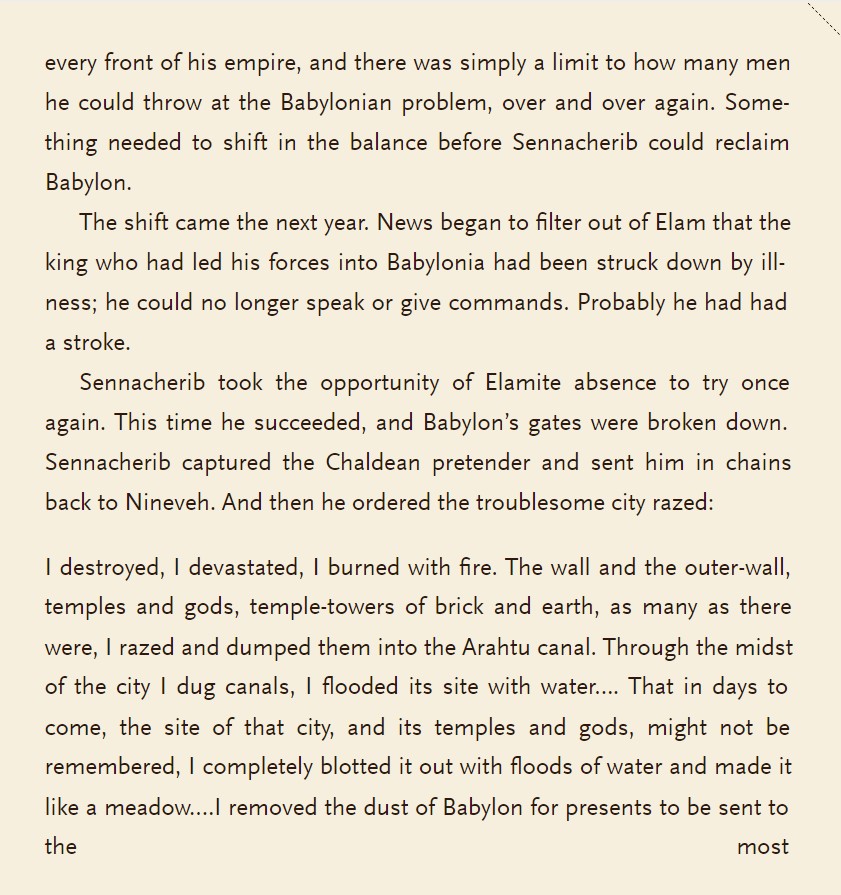
I’ve lost count of the times a real game of thrones has played out in my study of history. By now I’ve read dozens and dozens of accounts of power plays for a throne. One example from ancient Egypt deals with an assassination attempt on Rameses III from The History of the Ancient World by Susan Wise Baurer:

THE FAULT LINE running through Egypt, temporarily plastered over by victory reliefs and building projects, was still liable to crack open at any point. Rameses III held the throne by right of his father’s coup, and he was not immune to power plays.

Towards the end of his reign, one of his lesser wives hatched a plot to assassinate the king by mob violence. Scribes who recorded the affair during the reign of Rameses’s successor say that she began a campaign to “stir up the people and incite enmity, in order to make rebellion against their lord.”10 Apparently she hoped that the mob would not only remove Rameses III, but also his appointed successor—his son by another wife—so that her own son would become king.

A harem plot to kill the pharaoh was hardly unknown, but this one was remarkable for the number of people involved. The court recorder lists, among others, the two royal standard-bearers, the butler, and the chief scribe. The overseer of the herds was accused of making wax figures of the king, apparently for use in an Egyptian form of voodoo;11 the chief steward was convicted of spreading dissension. The conspiracy apparently stretched all the way down into Nubia: “Benemwese, formerly captain of archers in Nubia…was brought in because of the letter which his sister, who was in the harem, had written to him, saying, ‘Incite the people to hostility!’”12

The records of the conspiratorial accusations end, in monotonous regularity, with either “He took his own life” or “The punishments of death were executed upon him.” The exceptions were three conspirators who merely had their noses and ears cut off, and a single acquittal: a standard-bearer named Hori, who undoubtedly lived the rest of his years in disbelief that he alone had survived the purge.13

By the time the trials dragged to a close, the intended victim was offstage. Rameses III himself had died of old age.

That trial reminds me of the current Jan 6th hearings. I wonder how people will study January 6th in future history books?

Donald Trump’s campaigns to stay in political power remind me of Game of Thrones too. Trump wants the 2024 presidency like the Game of Throne characters wants the Iron Throne. I imagine Trump pictures himself as Tywin Lannister, rich and powerful, but he’s actually more like Robert Baratheon, a leader in name only who shirks his kingly duties to wench and hunt. All of Trump’s would-be advisors remind me of the treacherous advisors in King’s Landing. People like Steve Bannon obviously want to be a puppetmaster to the powerful in the same way Littlefinger and Varys pulled the strings on those who would rule Westeros.

This year I’m on my fourth book about ancient history and there is one obvious lesson that stands out above all others: Beware of rulers. There are always people, usually men, who believe they should rule, and they think nothing of getting thousands or even millions of innocent people killed to fulfill their ambitions.

The alpha humans always want more. The betas connive to be alphas. And the rest of humanity, the omegas, are the pawns in the game of thrones. To the ruthless, the 99.99% of humanity are the Star Trek red shirts in their personal fantasies. We see that with Putin in Ukraine right now. I’ve started another book, Bloodlands by Timothy Synder, that focuses on Hitler and Stalin’s roles in killing 14 million people from 1933 to 1945. Why do we let our rulers have so much power?

Until humanity can rule itself without ambitious psychopaths we’re going to repeat the same loop forever. In the history books, there have only been a couple of minor incidents where the ordinary citizens protested their role as cannon fodder. Most of history is about one ruler after another waging war. When will this infinitely repeated story horrify us enough to break free of the cycle? Since Game of Thrones was such a huge hit, maybe we love things just the way they are?

Eight seasons of Game of Thrones is about endless warring and the remembrances of wars. The story ends and we think there will be peace, but history tells us that won’t be true. Why don’t we get other stories in history and literature? Why not the stories of those people who built the beautiful cities we see in Westeros and Essos? Why is it always conflict and destruction?

Why do we mainly remember the monsters of history and literature? None of the major characters in Game of Thrones are good people. Is this why Trump and Putin are so well-loved in their respective countries? Are the rest of us just fans, taking sides while watching the game play out? Is that our only role, to pick a team to follow? Go Starks! Go Lannisters! Go Trump! Go Putin!

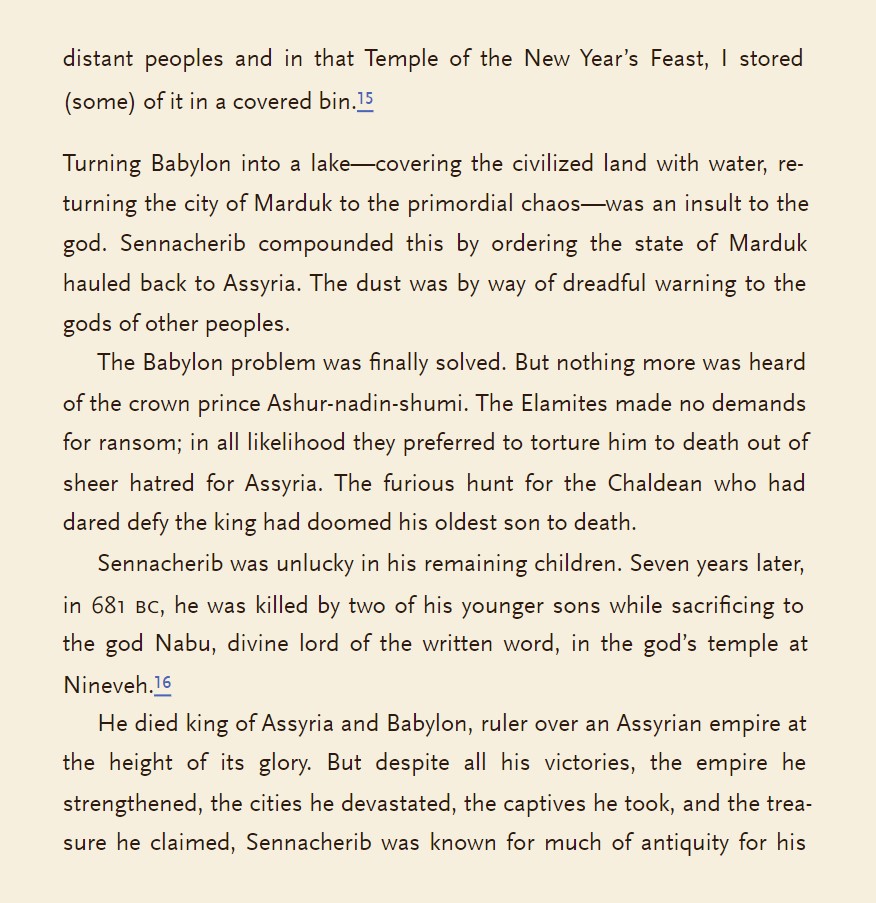
Below is one of my favorite and telling passages in The History of the Ancient World. In chapter 52, history intersects with the Old Testament and 19th-century literature. It’s not that I endorse what’s being reported, but I think it reveals something deeply psychological in the human race, especially when you compare these events of almost three thousand years ago to today. This passage reminds me of the destruction of cities in Ukraine and King’s Landing in season eight.

JWH

Why Do We Keep Repeating History When We Know We’re Repeating History?

by James Wallace Harris, 5/16/22

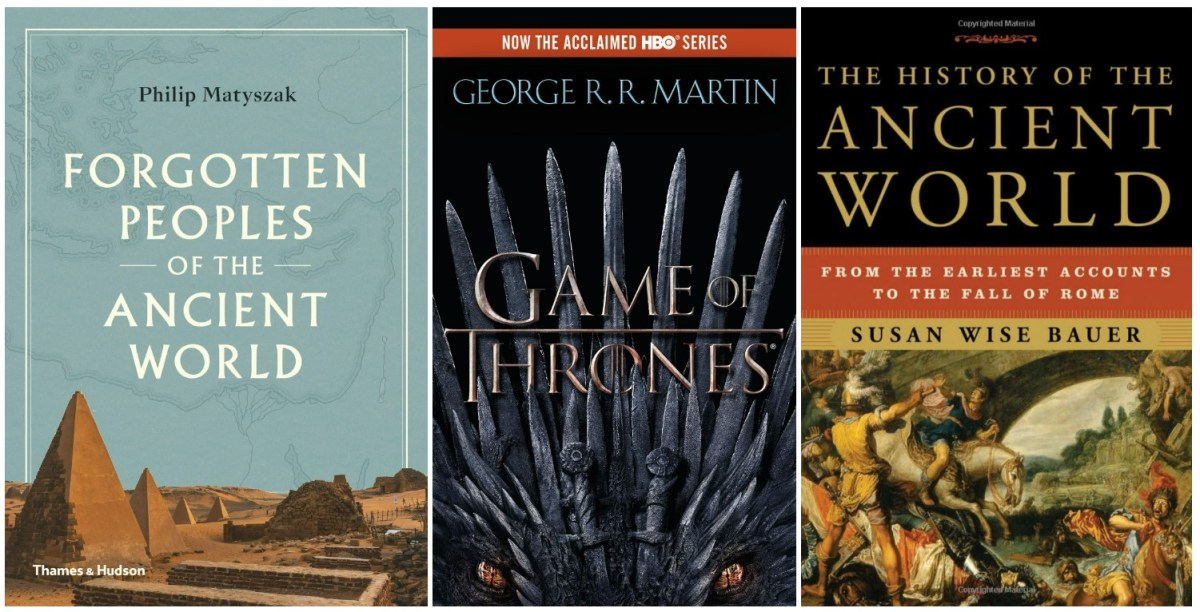
I’m listening to and reading Forgotten Peoples of the Ancient World by Philip Maryazak. It’s a quick overview of 40 civilizations of early history beginning with the Akkadians and ending with the Hephthalites. To be honest, I had only heard of less than half of these civilizations, mostly because of references in the Bible or from Greek and Roman history.

I’ve never studied ancient history much but I’ve recently gotten hooked on it, especially after reading The Horse The Wheel and Language by David W. Anthony, The Dawn of Everything by David Graeber and David Wengrow, and The Writing of the Gods by Edward Dolnick. The first two were a slog to get through but I still admired them. The Writing of the Gods was sheer fun and would probably appeal to many readers. Forgotten People of the Ancient World is a breezy summary, which I’m thoroughly enjoying, but it doesn’t go too deep. Perfect for me right now, but I’ll want to know more later. Actually, the entries on Wikipedia cover more for each civilization than Matyszak’s chapters, but his book integrates a digestible narrative with inspiring photos and maps making it easier to read.

When you read/listen to one summary of a civilization after another, it’s pretty damn obvious that humankind is on repeat mode. Humanity is Phil Connors in Groundhog Day, but we never learn how to break the cycle. You’d think with all this history we’d figure it out the secret.

Some cycles are obvious, like the rise of powerful leaders. Why do we call Alexander III of Macedon the Great? Sure, he conquered a lot of territories but he also killed, destroyed, and plundered. We hate Putin today for what he’s doing in Ukraine, but how was Alexander III of Macedon any different? We really should call Alexander, Napoleon, Hitler, Putin, and every other empire builder the monsters of history.

That’s the number one cycle we keep doing over and over, which is to allow egomaniacs to become rulers. We’ve tried to avoid that by creating democracy, but as you can see from recent times that doesn’t always succeed at controlling men who want more. And even then democracies sometimes go around and destroy other countries too, just like would-be emperors. Humans have this thing about destroying their enemies and expanding their territory. Like Rodney King, I must ask, “Can’t we all just get along?”

A less obvious cycle we repeat is the reverberation between big government and small government. All the successful civilizations grew, needing central control to keep things organized. The central government of the Akkadians had to build vast irrigation systems which required taxes and governmental infrastructure. There are always people who resent that. They rebel and undermine the central government and civilization erodes and eventually collapses. Why can’t we find a balance between secure political structures and personal freedoms?

We fail to be good stewards of the Earth and overtax Mother Nature with our endless growth and consumption. Nor do we save for the future to withstand random destructive acts of nature. Humanity is no Boy Scout, it’s never prepared.

Another hit on the Top Repeat list is ignoring reality. We feed our hatreds and greed with crazy ideas and justifications. We’re always our own worst enemy.

I feel like we’re living in end-of-civilization times. Reading about history is somewhat soothing but for a strange reason. It promotes stoical thinking.

Here’s a neat video on YouTube about how chaos theory predictions patterns of disorder in ordered systems. We live with entropy, and civilization is anti-entropic. It helps to understand both chaos and complexity theory. It won’t help the world to know this, but at least it explains some things.

JWH

Just Who Slept With the Pods?

by James Wallace Harris, 5/14/22

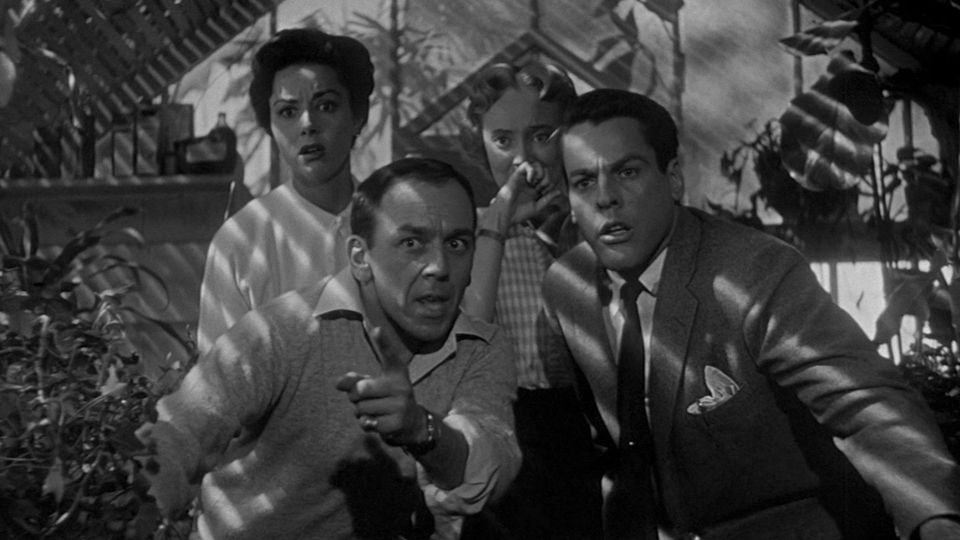
In the 1956 film, The Invasion of the Body Snatchers, Dr. Miles Bennel (Kevin McCarthy) realizes his friends and neighbors are changing. One by one they all start thinking alike and that worries him. If you haven’t seen this famous film about the pod people you should. It’s based on a 1954 Collier’s serial by Jack Finney called The Body Snatchers, which was then published as a book in 1955.

The story is about an invasion of pods from outer space that transform people if they sleep in the same room with one. Back in the 1950s, the story was seen as an allegory about communism. Finney has said he didn’t target communism specifically when he wrote the book, but most readers and moviegoers did back then.

In 1951, Robert Heinlein had published a similarly themed novel called The Puppet Masters. In that story, flying saucers land with creatures that attach to our backs, and take over our bodies and minds. Heinlein was an arch anti-communist, and his story was intended to imply the evils of a commie takeover.

In 1953 Robert Sheckley’s story, “Keep Your Shape” reflected a liberal’s paranoia. It appeared in the November issue of Galaxy Science Fiction. Sheckley rewrote the story for his collection Untouched by Human Hands and gave the story a much more elegant ending and a different title, “Shape.” It’s a humorous story told from the aliens’ point of view, about how they invaded the Earth twenty-something times and always failed. The aliens come from a rigid society of shape-shifting creatures whose God dictates that everyone has to maintain a certain shape. On Earth, the aliens are corrupted by our freedom when they see that we take so many different shapes. Sheckley’s story was anti-establishment and anti-conforming.

My point in mentioning all these stories is I feel like the conservatives have been sleeping with pods or have an alien riding on their backs. I feel this because they all seem to speak the same way. It’s kind of creepy to see political ads for Republicans because they all claim to toe the party line better than any other Republican. They all claim to hold the same beliefs. And their followers all repeat the same soundbites. I’m sure conservatives feel the same way about us liberals.

A couple days ago The New York Times ran a book review called “Where Have All the Liberals Gone?” The conservatives have made the term liberal such a dirty word that liberals are now calling themselves progressives. Conservatives have aligned themselves so tightly with Donald Trump that it reminds me of the fanatics who follow Putin and everything he says.

It makes me feel like the Kevin McCarthy character wondering when I will fall asleep and wake up a pod person. I no longer think of communism when I watch Invasion of the Body Snatchers, I think of everyone following one leader, one strong man’s view. If you look at history, the dangerous horrors of the past didn’t come from ideologies, but from single men pushing their view of reality onto everyone else.

I no longer understand what conservative or liberal philosophies means, even if they ever had a consistent description of their goals. I’m now thinking it’s always been individual men pushing their own philosophy onto other people. (I use the word men because I can’t think of any women dictators in history. I hope women won’t mind me being sexist in this instance.) That’s why Trump is so popular – people resonate and relate to him. He is their political philosophy, no matter how you label it.

I want a true democracy. But I don’t think it will ever work when winning is defined as a 50% majority. I think it needs to be at least 60%, and better yet, a winning majority should be defined at 75%. I want to live in a society where we work to compromise and create laws that attempt to make 100% of the population happy. It will always fail to reach 100% agreement, but if we could work out compromises where 60-75% of the population come to some kind of agreement, then I think we could escape our never-ending political polarization.

Right now we vote for our self-interests. And we vote for candidates that come closest to those self-interests. I have to accept that Trump is a beacon shining on what a lot of people want. But as long as half the country wants something different we’re going to have a miserable society.

When 50% is the finish line for any political agenda, we’re going to be ruled by pod people. I think real democracy begins when 75% of the population hammers out good compromises. I don’t think one politician with one point of view could ever find that many followers. Maybe we should move away from politicians and have referendums on everything. If we can’t find ways to get three-fourths of us to agree, then we should do anything.

It doesn’t matter which side of the political spectrum you live on, if we have minority rule, or even 50% majority rule, half the country will always feel they are living with pod people.

JWH