Dang, I Broke My TV Watcher

by James Wallace Harris, 11/5/22

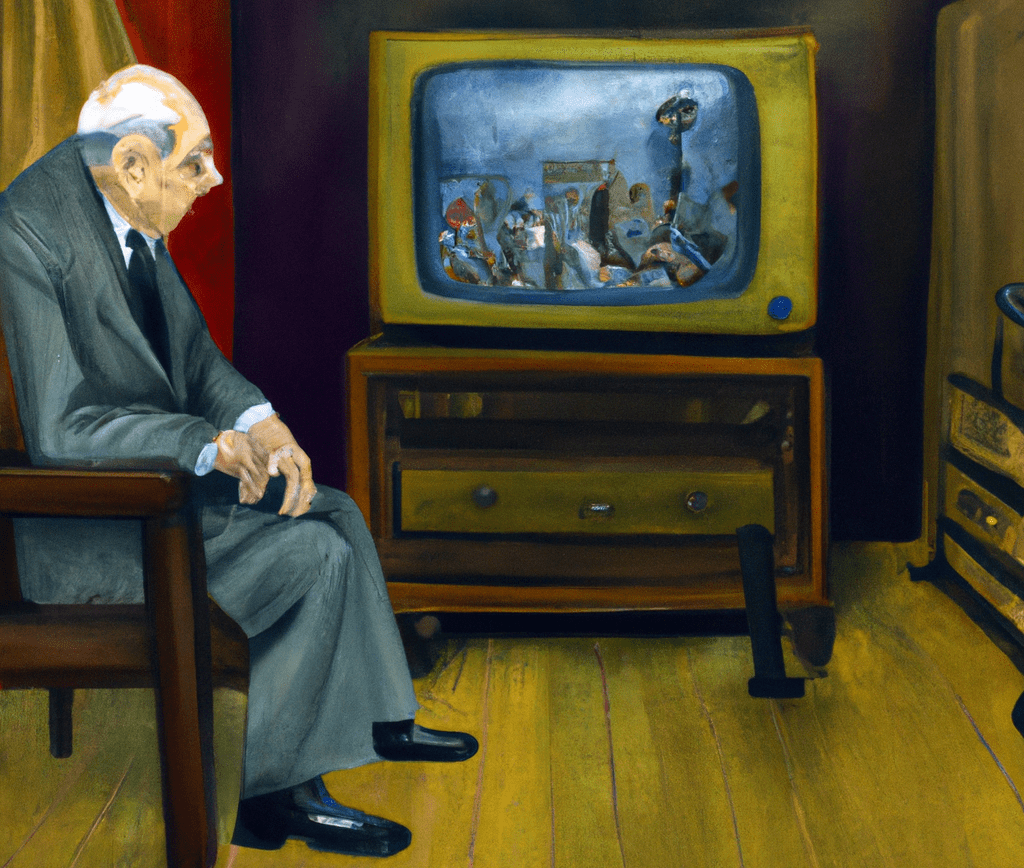
I seem to be losing my ability to watch television. In the past year or two, when I try to watch TV by myself, I have the hardest time getting into a TV show or movie. If I’m watching television with Susan or a friend I have no trouble settling into the show, but if I’m alone, I often abandon a show after five or ten minutes. Because I’m a lifelong TV addict used to filling my evenings with the boob tube, this is disturbing.

I’ve got sixty-seven years of solid practice watching TV, so why am I losing this skill now? Some of my earliest memories are of watching TV when I was four. I started watching television with the 1955-1956 season, but sometime in 2021, I began noticing I had a problem, maybe even earlier, but it’s painfully obvious in 2022.

The TV watcher part of my brain has broken. And it’s not for trying. Every evening I try getting into several movies and TV shows. Every once in a while, I find one that my mind will latch onto, but it’s getting rarer. So I’m developing some theories about why my brain is broken.

The Gilligan Island Effect

I loved Gilligan’s Island back in 1964 when it first aired. But as I got older I could no longer watch it. My friend Connell and I use Gilligan Island as our example of being young and stupid. Whenever I catch it on TV now I cringe and wonder how could I ever been so easily amused. That feeling is also true for The Monkees. It embarrasses me to recall those were once among my favorite shows. Now I understand why my dad used to pitch a fit when they were on, telling me and my sister we were morons.

As we age we become more sophisticated in our pop culture consumption. I assumed that development stopped when I got into my twenties because I pretty much watched the same kind of shows for the next several decades. However, with The Sopranos, TV jumped a level in sophistication, and for most of the 21st century, I’ve been consuming ever more sophisticated TV content.

What if my TV-watching mind has gotten jaded with all TV? So everything now feels stupid like Gilligan’s Island did when I got a couple years past twelve?

The TV Buddy Effect

As I said, I can watch all kinds of TV shows and movies if I’m watching them with other people. And looking back over my life I realized I watched a lot of TV with other people. With my family growing up. With friends when I was single. With Susan for most of my married life. With my friend Janis when Susan was working out of town Mondays through Fridays.

When Susan retired and Janis moved to Mexico, things changed. Susan now wants to watch her favorite TV shows from the 20th century and I don’t. So she sits in the living room with her TV and cross-stitches while watching endless reruns of her favorite shows. She likes old shows because she doesn’t have to look at them while she sews. I sit in the den and try to find something to watch on my own. Over the last few years, I’ve had less and less luck until I’m starting to wonder if I can’t watch TV alone at all anymore.

Susan and I do watch some TV together. Around 5:30 we watch Jeopardy and the NBC Nightly News that we record. It’s a family habit and the cats sleep in our laps. On Wednesdays we watch Survivor.

This year I was able to binge-watch Game of Thrones. I had watched it as it came out, and when two of my friends living in other cities each expressed a desire to rewatch the entire series I joined them. I discussed each episode with Linda and Connell in separate phone calls.

The YouTube Effect

Let me clarify something. I can watch about an hour of YouTube a day, and I can channel surf trying to find something to watch for another hour. (By the way, that drives Susan crazy. Another reason she likes watching TV by herself.)

My dwindling ability to watch TV has coincided with my growing love of watching YouTube TV. I have to wonder if watching endless short videos and constantly clicking from one subject to another has broken the TV watcher in my brain, so I can’t stick with longer shows.

The Relevance Effect

Last week I binge-watched A Dance to the Music of Time, a four-part miniseries based on the twelve-novel series by Anthony Powell. I had seen it before, but because I was now reading the books I wanted to watch it again. That seems to suggest if I have a good reason to watch television that I have no problem sticking to a show. My mind isn’t completely defective. I’m now on the fourth book in the series, and I’ve bought a biography of Powell and a character concordance to supplement my reading. The series has over 300 characters.

Knowing the Magician’s Tricks Effect

Another theory I’ve developed deals with my studies in fiction. As I read and think about how fiction works, I’ve paid more attention to how movies and television shows are constructed too. I’ve noticed that I often quit a movie or TV show when I spot the puppeteer. I can hardly stand to watch a mystery or thriller nowadays because they seem so obviously manipulated.

Male Aging Effect

I remember now how my uncles as they got older stopped watching TV except for sports, and even then, still not often. My male friends stopped going to the movies years ago, and I’ve finally stopped myself. I’m now doing what Susan and I used to laugh about her father – going to sleep in his den chair after dinner. Since we bought Susan’s parent’s house when they died, I’m going to sleep in the very same den, around the very same time – 7:30.

Conclusion

Because I sometimes find shows that hook me, I figure my TV watcher isn’t completely broken. I do worry that it will conk out completely. Right now I spend my evenings listening to books or music, and I worry that those abilities might break if I overuse them. I’m thinking my TV watcher needs new kinds of TV content to watch, but I have no idea what that would be.

With so many premium channels cranking out so many kinds of quality shows for the last two decades, I worry that they’ve done everything to death. One reason my mind responded so well to YouTube is the content is very different from regular streaming TV content. But I feel like I’m about to reach the end of YouTube too. I’m starting to think TV shows and movies are like clickbait, that once you’re used to all the variety of bait, you become jaded and stop clicking.

JWH

p.s. I’m using DALL-E 2 to generate the art for my blog.

Can Fiction Educate As Well As Nonfiction?

by James Wallace Harris, 11/2/22

I turn 71 this month, and getting older is getting harder. Being old is nothing like I imagined. That’s a problem for me because I like to be prepared, and being prepared requires anticipating the possibilities.

Last year I read The Art of Dying Well: A Practical Guide to a Good End of Life by Katy Butler. It’s a useful handbook giving tips about healthcare for the elderly, plus Butler relates plenty of stories about people she met who were going through a variety of issues as they approached death. I learned a lot from her book. People tend to decide between two paths toward the end of life. Some want to take advantage of everything medicine has to offer, and others prefer to take a gentler path, choosing less aggressive medical procedures, or even refusing treatment. One of the best lessons of the book is doctors will go to extremes to keep you alive unless you learn to say no. And for me, the important part of The Art of Dying Well is learning when to say no, and how to decide what you want before you lose control of your situation.

When I read Olive Kitteridge by Elizabeth Strout this week, I was surprised by how it inadvertently taught many of the same lessons. Although it’s called a novel, it’s a collection of thirteen interrelated short stories, and often those fictional stories were like the case studies in Butler’s book. Olive is in her late sixties at the beginning of the book, and seventy-four at the end. I was particularly horrified by the final accounts of Olive’s husband, Henry.

Olive Kitteridge is a book that offers a series of intense emotional impacts. And most of them made me think about how I will deal with a particular issue if it should happen to me. Henry’s fate is the hardest to contemplate. One day he and Olive are going to the grocery store and when he steps out of the car, he falls to the ground. He’s had a sudden stroke that leaves him blind, unable to walk or talk, and probably has left him deaf. He’s put in a nursing home where he needs to be cared for like a small child. To me, that’s scarier than anything Stephen King ever imagined. And how do you prepare for something like that?

It would help to have all the proper legal paperwork ready. And it would help if others knew your wants. That’s covered in the Butler book, but it’s covered in more detail in Elderhood: Redefining Aging, Transforming Medicine, Reimagining Life by Louise Aronson. Aronson is a doctor who eventually got into geriatric medicine. Her book is heavier than The Art of Dying Well, with more clinical details. It has a tremendous wealth of information, but I found Aronson’s structure for her book somewhat disappointing. Elderhood has a clearly laid out structure but Aronson doesn’t always stick to it.

Both nonfiction books are excellent handbooks for anticipating getting older, especially for the medical and legal details. But the novel, Olive Kitteridge, was also excellent for the same purpose, but in a different way. I guess it’s a handbook for philosophically preparing for our last years. Some of its most important lessons were about communication, or more precisely, the lack of communication.

Much of the novel is about waiting until it’s too late to express our true selves. One of the strongest reasons why people want an afterlife is so they can meet up with dead loved ones. Is that because we really want to tell them something? Or that we really want to ask them something? I know that’s true for me.

I loved reading Olive Kitteridge enough that I’m going to read more Elizabeth Strout books and have already started on Olive, Again – a sequel with additional short stories about Olive Kitteridge and the people she knew. I’m also keeping The Art of Dying Well and Elderhood to reread again and again as I get older.

JWH

What If I Didn’t Come Back From The Dead?

by James Wallace Harris, 9/3/22

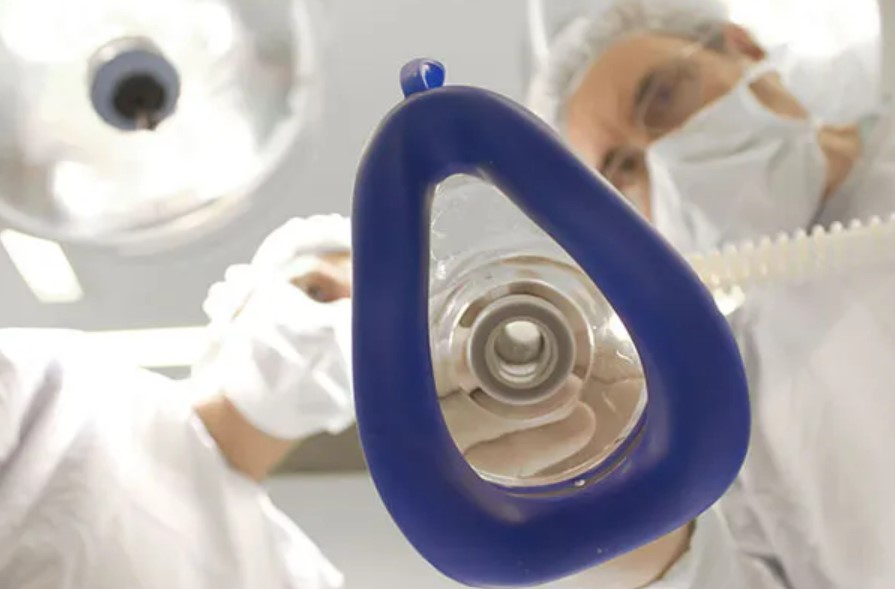
Last Monday I had hernia surgery and was under general anesthesia for over two hours. Being anesthetized is maybe the closest thing to being dead. Our conscious self is turned off so completely that it feels like we’re gone for good.

Interestingly, my book club book this month is Being You by Anil Seth and he introduces the study of consciousness with the discussion of general anesthesia. This was the fifth time I was put under so beforehand I was contemplating being gone. And I kept asking myself: “What if I don’t come back?” I thought it was philosophical fun to imagine nonexistence.

Mostly I thought about people I would miss but if I didn’t exist I wouldn’t feel anything. I think of death being like how things felt before I was born. I feel the only existence we know is this one. But my atheist beliefs could be wrong. I wondered how it would feel if I came to, but in another existence. I’ve always hoped if that happened I would be given all the answers to my questions about this existence.

My hunch is this existence is our only one. That reality is filled with many infinities but infinite existence isn’t one of them. Mostly I thought if I wasn’t coming back I should do a lot of paperwork before I might die to help Susan out. But I didn’t do that for two reasons. First, I assumed I was coming back. Second, because I’m lazy.

Still, it felt very weird and fascinating trying to imagine not existing.

Before my surgery, I had a long talk with my surgeon and he agreed to do everything I wanted. I was worried about two things. I was afraid lying on the surgical table for hours would inflame my spinal stenosis. I worried that I couldn’t hold my pee for that length of time because of my overactive bladder. I told him of these fears weeks before the surgery. He said he would try to arrange my back on the table like I needed and would give me a catheter but I would have to wear it for a few days at home. So I practiced lying flat each day before the surgery. Then on the day of the surgery, I told him to not worry about positioning me for my back but do whatever was best for his work. I also asked for the catheter to be removed before I came to and if I couldn’t pee on my own in recovery they could put it back in.

He seemed glad I practiced lying flat and agreed to my method with the catheter. This made me very happy and cleared all my worries. My surgeon then said he wanted to pray for me. I said sure. I’m not the kind of atheist that’s against religion or religious rituals. I am actually grateful for any prayers I receive.

I was impressed by the length of his prayer. He carefully went over all my problems and concerns and then covered all his goals in great detail while asking God for help. It was reassuring on several levels. First, it let me know how closely he listened to me, and second, it carefully laid out his working plans. But it fits in with my contemplations on nonexistence. And his prayer set the right mood for the occasion.

I felt that we each used a different language for understanding our shared existence. I use the word Reality for what he calls God. He believes in a personal relationship with God whereas I think I’m interacting with infinity and randomness. What he calls God’s will I call the unfolding of evolving randomness. Prayer assumes we can ask for blessings. I assume I will get what will be but I’m on one long lucky anti-entropic run of fabulous luck. The big difference is my surgeon believes there’s an existence after this one and I think death is oblivion. I’ve always been exceedingly grateful for this existence.

Well, I did come back. I’m writing this on my iPhone with one finger. The surgery went very well but it was more involved than my surgeon expected. I had no back pain after the surgery. And for 24 hours my back felt limber and young. Even after the drugs wore off it hasn’t been bad at all. And I peed right away when they rolled me back to my room after recovery. And in the days since I haven’t had much pain. I did without drugs except for a couple Tylenol and later, a couple of ibuprofen. However, I am suffering from a swollen scrotum which is typical of this operation and why I’m not sitting at the computer.

I’m quite glad to be back but I’ve learned that God’s will or reality wasn’t finished with me regarding this surgery. We never get what we picture, and my surgeon’s prayer didn’t cover post surgical complications. I thought going under inspired a lot of philosophical musings, but it turns out dealing with an expanding scrotum, generates even more existential thoughts.

One side effect of this experience is to feel sorry for women and their boobs. I imagine my affliction feels somewhat like getting a breast implant. My package is so much bigger it’s freaking me out. Having a sensitive globular appendage is not convenient. It gets in the way, making sitting and walking weird. So I imagine having two would be more than twice as inconvenient. And the size of my burden is still smaller that what most women have to deal with. I now regret every time I ever wished a woman had bigger breasts.

Yes, I came back, but to something I never imagined. But then, the future has always been what I never imagined.

If there is a God and he/she/they willed these big balls on me then I hope it’s God’s sense of humor and not punishment. So I will close with a prayer: “Dear God, please make my scrotum normal again. And if you intended a philosophical lesson help me learn it quickly. Amen.”

JWH

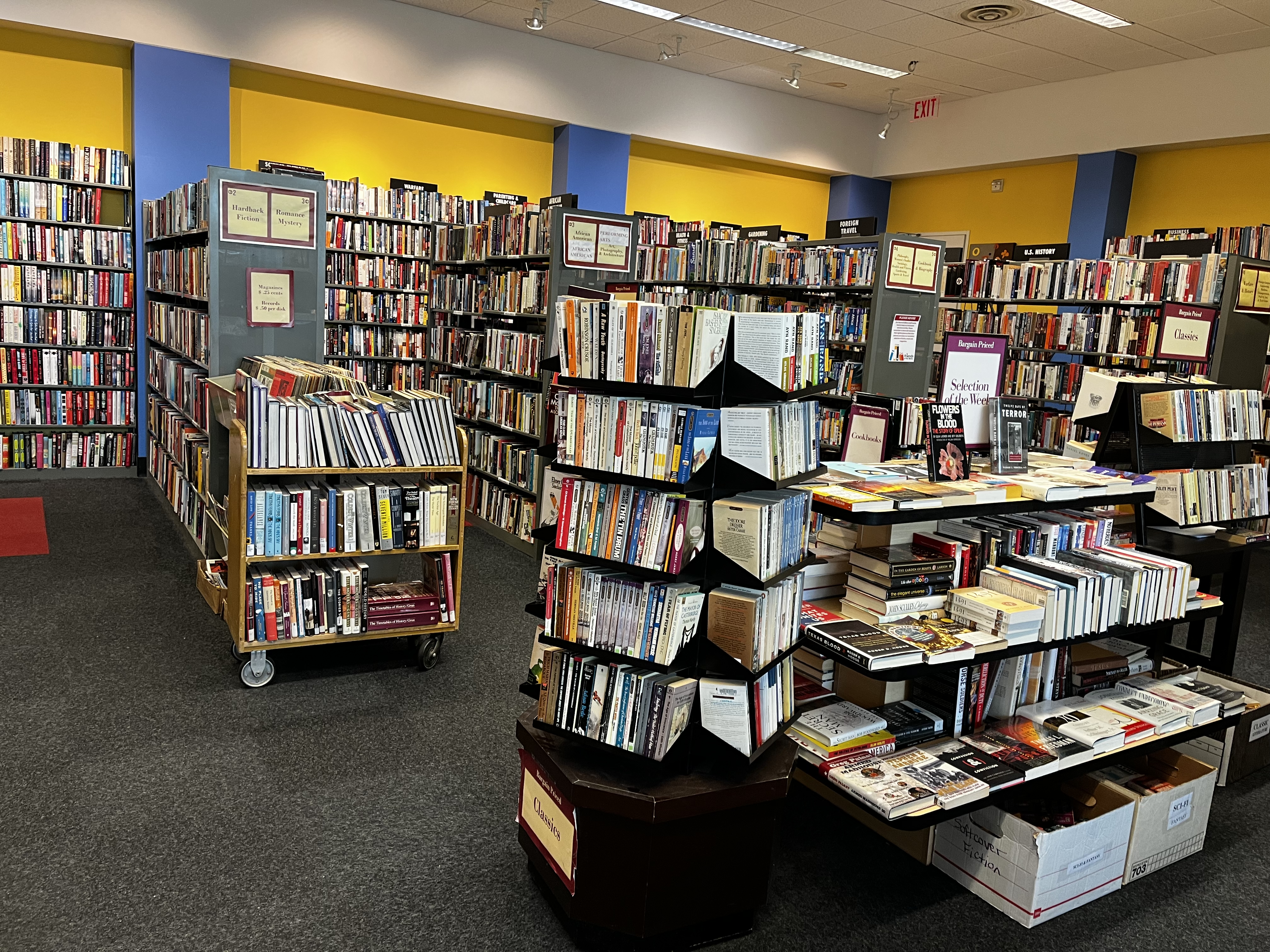
To Go, or Not to Go — To the Bookstore?

by James Wallace Harris, 7/21/22

Each morning before I get out of bed I plan to do something with my day. It’s never very ambitious because of health problems, lack of discipline, and laziness. And things seldom go according to plan. Today I decided to donate ten books to the library bookstore. That impulse came from getting a new toy. I feel like Jerry Pournelle in his old columns for Byte magazine called “Chaos Manor.” In those columns, Jerry would get a new computer which would cause a cascading series of problems. I got a new little tube amp, a cheap one, to set up a better stereo system in my bedroom. That single act has caused a domino-falling cascade of problems to fix.

The only place I have to put a stereo in my bedroom is on top of two bookcases. That’s okay if I don’t care about sound quality, but this new little tube amp sounds great — if the speakers are at ear level — but sounds like crap next to the ceiling. For me to solve this problem, will require moving two Ikea Billy bookcases and replacing them with a piece of furniture 72 inches wide and roughly 24-30 inches high.

“Ah-ha!” you might be thinking. “He’s finally getting to the part about going to the bookstore.”

Well, not quite. This is going to be a long story about getting old and how my aging mind and body affect my decision-making at seventy.

The quick and easy solution to my problem was to go into the dining room which we’ve converted into a gym and take the TV credenza and put it in the bedroom in front of the bookcases. That left the TV on the floor for now, but I had to give up exercising when my back went out a few weeks ago, so I can worry about it later. Since I’ve become semi-invalid the easiest solutions are the ones that work with the least effort.

If Susan and I had had the foresight to have children we could have gotten them to move the bookcases into the dining room, left the TV on the credenza, and then sent those kids to Ikea to get a cabinet for the stereo. Unfortunately, back in the early 1980s, we didn’t anticipate this need.

My back has gotten somewhat better. I can do a little lifting. I don’t want to do too much because I might screw it up again. I figured I could unload a shelf or two each day in stacks on the floor. There are two cases with six shelves each. You do the math. I could put slides under the cases and push them into the dining room, and then reverse the process of loading them back up. Ikea also offers delivery and assembly for a fee. Thus, without offspring, and if I’m patient, I can get the job done in a week or two depending if Ikea can deliver that quickly.

But is this the best long-term solution? Susan has long complained that she doesn’t want to deal with all my books after I depart this world — whenever that might be. I keep telling her she can just call Salvation Army or a book buyer, but maybe all those books are my responsibility?

This morning I decided I would start going through my books and weed out enough to empty two bookcases. I figured I could carry ten or twelve books to the library bookstore each week and eventually, I’ll donate two bookcases worth of books. So after doing my spinal stenosis physical therapy exercises I pulled the first book off the shelf I thought might be the first of ten I would part with today. It was The Long-Winded Lady by Maeve Brennan.

I opened it up to a random page and started reading. Whoops. There went my plan. Maeve wrote lovely little essays about living in New York City for The New Yorker. The first one I read was about seeing a young woman collapse on the street outside her restaurant window. The next was about an evening walk to see a farmhouse that had been moved from downtown to Greenwich Village. I bought this book after seeing a documentary, I think on HBO, about another writer who met Brennan before she died. That writer had discovered Maeve on the street after she had become homeless. I’d like to see that documentary again, but I can’t remember its title.

I’m afraid every book I pulled off the shelf had a story behind it, one that made me want to keep it. I have more books than I could read in another dozen lifetimes. It might take me years to find and decide which books I could give away that would free up two bookcases full of books.

That left me so despondent that I went to the library bookstore and bought five more books.

JWH

p.s.

The other night Janis and I were jabbering on the phone about all the hoarders we know. We felt horror at what has befallen our friends. Now I need to worry if that affliction needs to be added to my recognized list of afflictions.

Getting Too Close to Helpless

by James Wallace Harris, July 14, 2022

For this essay, I’m defining helpless as being in a situation where we can’t help ourselves or get help from someone else. As I get older I worry that someday my wife Susan or I will find ourselves in a completely helpless situation. This weekend it almost happened. Our hot water heater in the attic broke and water was pooling on the sheetrock of the ceiling above my computer room. A seam then spread open and water was draining onto the floor. Susan and I had to find a solution fast and several times I wasn’t sure we would.

First, we were lucky I discovered it so soon. I have an overactive bladder so I’m frequently going back to the bathroom which is annoying. But in this one instance, it put me Johnny-on-the-spot as I went down the hall to the bathroom. The pool of water was only in the middle of the floor.

I yelled to Susan and ran into the kitchen and pulled the filled garbage bag out of the tall kitchen trash can and ran back and put that under the water flow. I saw that it would fill pretty fast so I ran back to the kitchen and got the recycle bin and dumped the contents out on the floor and took it back to the room. By then Susan was there with a pile of towels.

I then went out into the hall, pulled down the attic stairs, and rushed up into the attic. The hot water tank is right next to the stairs and I could see the overflow pan was full and not draining. Damn. I went back down the stairs and ran outside and unscrewed the hose from the outside faucet and dragged it back into the house and up the stairs and connected it to the flush drain. It didn’t have a faucet handle but a slot so I yelled for Susan to get me a large screwdriver. I tried to turn off the hot water heater but it would only let me shut it down to pilot light. For some reason, I couldn’t make the button turn to the off position. I looked at the pipes and saw a red handle so I turned it all the way to what I hoped was an off position. When I had the screwdriver I opened the flush faucet and water started spraying everywhere from a leak in the hose connection. I turned it off.

Two weeks ago my back was hurting so much, that I could barely walk, so I was thankful I was able to be going up and down the stairs. I was moving at a frantic pace but I was calm. I wondered what would have happened if I couldn’t go up the stairs. I don’t trust Susan on the attic stairs. It was then I realized I could be helpless. If I couldn’t fix this problem I had to get someone else. Help means either doing it yourself or finding someone who could. I was suddenly scared I couldn’t, and we’d be helpless. I know this is a minor emergency, but it was enlightening.

Then I went back down the stairs and called our regular plumber. I told them immediately I had an emergency of running water but they made me give me my information first before they told me they couldn’t have someone out until Monday. It was Saturday afternoon, but I thought it was Friday. So I called another plumber thinking I might catch someone still there. The same thing happened. Wanted my information before telling me the soonest would be Monday.

I got some duck tape and went back upstairs and wrapped the hose. I turned on the drain again. It didn’t shoot water. I went outside and saw that water was coming out of the hose. I then went back to the computer room and dragged the first bucket to the front door and emptied it on the front porch. I took the empty bucket and swapped it for the full and emptied it.

I felt I had a bit of breathing room. Then Susan said she still heard running water.

I went to the computer and looked up emergency plumbers. I found one that claimed 24/7 service and called them. Same thing. Can’t come until Monday. I then ran to the hall closet and got my T-wrench and went outside to the street to turn off the water to the house. However, I couldn’t get the valve to budge. I figured I had to call MLG&W to come shut off the water. I didn’t want to do that because I didn’t know how long they would take to get here, and I didn’t want to go days without water.

I went back upstairs and realized that I had shut off the gas, not the water. I started looking around. This time I looked at the top of the water tank, which almost goes to the ceiling of the attic. There I saw water spraying from around the intake pipe, but I also saw another turn-off handle. I gave it a quarter turn and the water stopped running.

That gave me a sense of release. The flow of water from the computer room ceiling slowed, and in about fifteen minutes it stopped. I called the plumber and made an appointment for Monday.

However, I kept wondering what would have happened if I hadn’t been able to shut off the water. What would we have done? What would Susan have done if I wasn’t home? She probably would have called a neighbor, her brother, or MLG&W. I pictured us taking turns swapping filled buckets all weekend, even taking sleeping shifts at night.

It’s incidents like this when I want more control. I should have been prepared. I should have known where the water shut-off to the tank was located. I thought I was prepared by buying the tool to shut off the water at the street. When the plumber came Monday I ordered a new tank and ordered an automatic shut-off device that works with a water sensor in the overflow pan. I also ordered a new overflow pan and all new drainage pipes. But is that enough? I prefer not to deal with another computer room flood. This was the second. Years ago the HVAC installers made the mistake of putting in the condensation pan at a tilt – a tilt away from the drainage outlet.

We don’t have complete control of our lives. On the news that night there were stories about flooding in the east that ruined entire homes. Our flooding was nothing, so I was thankful. However, knowing we can’t control everything doesn’t stop me from worrying about becoming helpless. One sight that always scares me when I see it on the news is when first responders have to rescue old helpless people.

I know I’m worrying about the inevitable, but that doesn’t stop me from worrying. It doesn’t stop me from thinking of ways to be prepared. If I designed houses I wouldn’t put the HVAC and hot water heater in the attic. Every house should have a little machine room on the ground floor, with a floor drain and sensors for flooding. This house has had a hot water heater in the attic since 1952 and things have been mostly good 99.9999% of the time.

Getting old has made me worry about my body breaking down or my house breaking down. I realize there are things I can do to help myself. I also realize there are things I depend on Susan to help me do. And I know there will be other things I will have to depend on friends or hired help. This flooding incident has made me think about the times I might not find any kind of help. Generally, that’s never a problem because we have each other. But it’s a thought.

JWH