Overcoming Inertia in Retirement

By James Wallace Harris, Tuesday, July 19, 2016

In retirement you can do whatever want – if you’ve have the drive. Otherwise you do what you feel. That distinction might be meaningless to many. (I imagine old hippies replying, “If you’re following your feelings, you’re doing what you want.”) The difference defines ambition.

All too often I feel like kicking back in my recliner to daydream about writing while listening to favorite songs on Spotify, rather than actually writing at the keyboard. Just now I was lazing in my La-Z-Boy when this essay occurred to me. I told myself this morning my number one priority was to finish the essay I’ve been working on weeks for Book Riot, and then finish an idea I have for Worlds Without End. (I do have growing guilt over not working on them, but writing this is what I’m feeling.) The trouble is both Book Riot and Worlds Without End each have an essay in the can waiting to be opened, so the pressure to write another isn’t that driving. (BTW, I’m not blaming my laziness of them.)

countdown to ecstasy

In the middle-third of my life, I hated being trapped in the nine-to-five world of work. Before that, in the first third, I hated being imprisoned in the K-12 school system. But I’ve got to admit without that outside pressure I never would have learned much, or put in my 35-years of work. (At least I’m honest about my laziness.)

If this sounds like I’m wishing for someone to crack the whip over me, I’m not. Na, I’m just whining about my own lack of drive. I didn’t have it then, and I don’t have it now. I’ve always admired people who live like guided missiles, always on target. And that’s the confusing thing about retirement. It feels like I’ve reached the target. The social security years can feel like being in the queue for nonexistence. How we fight that is important. It defines the game in the last third of life.

Don’t assume I’m depressed. I’m never bored. I go to bed every night near midnight, regretting the day is over, and wishing I had more time. Every day I do get a few things done I want, but mostly I overindulge my whims. And that’s quite satisfying too, in a heroin kind of analogy. My problem is I have too many things I both want to do, and feel like doing. My lament is I spend too much time with Ben & Jerry’s, and not enough with broccoli. (Not literally, just another analogy.)

Being the puritanical atheist I am, I’m hung-up on doing productive work in my existential random existence.

Most people think retirement is all about not working – not me. I might have a minor guilt trip about being unproductive, but I’m not about to get a job, paid or unpaid. I won free-time millions in the retirement lottery, and just need to figure out how to wisely spend them. This means creating my own definition work. Right now, I gauge productivity in essays. Any day I finish an essay, feels like a productive day. Even if I write a navel-gazing one like this.

If I actually write a hard-to-conceive, hard-to-implement essay, that takes great effort and research, I feel like I’ve climbed a mountain. That’s when I believe I’ve won out over inertia. It’s how I redefine rolling my rock.

JWH

Why Can’t I Lose Weight?

By James Wallace Harris, April 13, 2016

I know how to lose weight. I lost 29 pounds last year by following a plant based diet. I could eat all I wanted from an approved list of foods, didn’t go hungry, and my doctor was ecstatic. My blood work numbers hadn’t looked so good in decades. Then I started cheating on my diet. I didn’t gain weight, but I stopped losing weight. My blood work numbers ratted on me, and my doctor started nagging again. I cut back on my cheating. Three months later my numbers convinced her to do a happy dance. (For some reason I really love making her happy.) She even told me I could go six month without another blood test. In the moment of feeling successful, I foolishly promised I’d lose another 25 pounds.

Ha-ha, like some crazed sweet-seeking mammal I’ve since gained 8 pounds. I just can’t resist food. Why can’t I control my eating? Why can’t I lose weight? Why can’t I keep weight off once I work so hard to lose it?

Of course millions of people are asking these same questions. Why can’t we lose weight? Why can’t I be like Mr. Spock and do the logical thing? Evidently, I’m suffering from multiple personalities. One being inside me, the one writing this essay, wants to eat healthy, lose weight and be a different person. There’s another person in me that’s illogical and hungry. That person insists I go out for Ben & Jerry’s ice cream, but eat pizza on the way. And I’ve got to tell you, when Mr. Junk Food gets his way, we both feel pretty damn satisfied.

Mr. Spock advises me to write up a mission statement about what to eat, print it up on a nice card, and meditate on that message before every meal. But then my wife and I get hungry for dinner, don’t feel like cooking, or even going to a good restaurant, and end up pigging out on Taco Bell. I weighed two pounds more the next morning. Where did Mr. Spock go? Mr. Junk Food can shanghai my self-control in an instant. I need to kill Mr. Junk Food. Is that even possible? Self-exorcism? But what would life be like without that cute little devil on my shoulder?

Mr. Spock has already settled on a diet.  He assures me if I just followed it, I’d be healthy, happy and fat no more. He did get us to read a number of books, and took control long enough to prove that his solution works. I keep telling myself to read those books every day until Mr. Junk Food disappears—but it’s not working. I’m beginning to think Mr. Junk Food stunned Mr. Spock and transported him to another planet. He obviously overheard we were planning on dieting again.

Why can’t I be sensible? Why are my urges as polarized as liberals and conservatives? Why do I have friends who eat everything they can stuff down their gullet – and still stay skinny? Why isn’t feeling better incentive enough to eat healthy? My heart and back loved when I lost the 29 pounds. I think one reason I cheat is because I feel better, but I won’t let myself gain too much because I fear the return of pain. I remember what I felt like before I got my stent, and that helps fight off Mr. Junk Food. But only to a degree. Most of the spinal stenosis pain and numbness in my legs have gone away because of losing weight. The plant-based diet is also an anti-inflammation diet. When I follow that diet I don’t need pills, and I don’t feel the inflammation. Mr. Spock informs me of this logic every day. Why can’t I listen all day long?

Yet, eating two bags of M&M’s and drinking a Dr. Pepper would feel like winning a million bucks right now. Hell, I just realized just how bad off I am. I’d rather be a skinny person who could eat all the junk food they wanted than be rich. That’s how bad I want some Mint Oreos at the moment. (Who’s writing this essay now?)

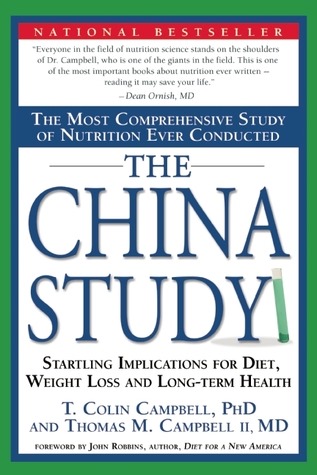
 Prevent and Reverse Heart Disease - Caldwell B Esselstyn MDThe China Study - T Colin Campbell PHD

Eat To Live - Joel Fuhrman MDThe Forks Over Knives Plan

JWH

The Vital Role Emotions Play in Decision Making

By James Wallace Harris, Thursday, November 5, 2015

In the summer of 1966, when Star Trek first appeared on television, I became fascinated by the character of Mr. Spock. Spock was half human and half Vulcan, and was constantly at war with his emotions. Vulcans believe rational beings are not emotional, so poor Mr. Spock had to use massive will-power to suppress his feelings. That appealed to me immensely. Then in the 1970s I took up various New Age pursuits that taught me to calm my mind and tame my emotions. Thus, I’ve always thought emotions were burdensome. That emotions got in the way of clear thinking. Last night I learned I was completely wrong. Brain research shows that we can’t make decisions without emotions.

Decision-making-relies-on-emotion

Now I wonder if I’ve always been a indecisive person, with little drive, because I’ve kept my emotions on a very even keel. I learned as a child to crave stress-free living, and have arranged for a very calm life. I am contemplative and philosophical, rather than active and driven. I always wanted to be a science fiction writer, but assumed I was never unhappy enough to succeed. People I know who are writers are emotional, often disturbed and even tortured by their passions. I always thought I didn’t commit to writing because I lacked the pain to inspire me. Now I wonder if didn’t pursue my goal because my lack of emotions made me indecisive. Or maybe pain inspires not as power to animate, but as a series of decisions that direct.

I am reminded of an old fantasy story, where a magical coin if found by the main character who doesn’t know it’s power. Every time he wants to decide something, he flips the coin. Because the coin is magical, each decision moves him towards a magical reality. Evidently our feelings weigh our decisions and lead us to the reality they want.

I learned about emotions and decision making last night watching episode 4 of The Brain with David Eagleman on PBS. This mind-blowing six-part series is shaking up my beliefs about how the brain works. Eagleman showed us a woman who was in a motorcycle accident and her brain was damaged in an area where her emotions and logic meet. She can no longer make even the simplest of decisions. Checking out articles on Google Scholar I learn this knowledge has been around for a while, often inspired by studies on people who had similar brain damage.

This information also makes me wonder about artificial intelligence. Machines won’t have emotions, so how will they decide? My old friend Bob Beach always argued that self-aware machines would turn themselves off. Without emotions they couldn’t even make that decision. AI machines will be able to process massive amounts of data, but how will they weigh their decisions? Up until now we’ve believed we made decisions based on logic – weighing the pros and cons, but evidently that’s wrong.

Actually, we should have deduced that without brain studies. How often do we decide on the side of illogic?

Table of Contents

Exercising My Attention Span

By James Wallace Harris, Thursday, July 23, 2015

Few people can read an entire article on the internet, no matter how short, including this one. I know I can’t.

My attention span has become a 90-pound weakling. I wish my focus was a Olympian weightlifter. I’m quite confident I won’t make such a dramatic transformation at age 63, but I do wonder if mental exercises lead to heavier feats of focus.

Here’s an example of my current ability. I can focus on Sudoku, Crosswords or Chess for maybe five minutes. I can handle maybe ten minutes of Words With Friends. If I’m inspired I can write on a blog for a couple hours, but if I’m not, I peter out in about twenty minutes. I have a hard time sticking with a movie on TV if I’m by myself. If I go out, or have friends over, I have no trouble watching a whole show. But if I’m by myself I might take 2-3 nights to finish a film. A sitcom has to be great for me to stay to the end. I seldom give them a second try. When I was younger I could watch TV for hours and hours.

Sudoku

I have kept my stay-on-task muscles toned for reading. I have read 43 books so far this year, mostly on audio. I listen while I walk, or when I fix food, eat and clean up. I can eyeball read a book if I really like it in about a week, doing 40-60 pages a night. When I was young I could read a book in a day. I have a damn hard time finishing shorter works of fiction, especially novelettes and novellas, which used to be my favorite length.

All of this makes me wonder if the duration of my attention span is related to age. Does getting old mean losing the ability to stay on task? I’m not unhappy with my activities. I just flitter from book to TV to music to computer to magazine. I fill up my days always wishing I had more time. I’m not bored. But I have changed.

Chess

To be honest, I’m 327 words into this essay and I already want to take a nap. Before I retired I could spend hours focused on a programming problem. Now I never program. I can’t tell if it’s because it’s not required, or I don’t have anything fun to automate, or I just can’t keep my mind on the project long enough to get started. I do have programming ambitions.

I knew that getting old meant slowly becoming physically weak. I also knew I’d have trouble with memory, and I do. I didn’t anticipate diminishing ability to concentrate. I always thought being retired meant I had all the time in the world to do what I wanted to do—I’d just do things slowly, hobbled by forgetfulness. I’m paying a lot more attention to old people in movies because they are blazing a trail I’m following. By the way, go see Mr. Holmes.

Crossword

Now I’m not complaining. This condition doesn’t hurt or make me frustrated. It is what it is. I just wonder if I could beef up my attention span to pre-retirement levels because I’ve let my mind get flabby from lack of exercise, or is my decline just a physiological side-effect of aging?

When I woke up this morning I set myself three tasks. First, cook some pinto beans in a crock pot. They are cooking. Second, clean off my two desks. Task not done, but it should happen. Third, start research on an essay I’ve been thinking about for weeks and brainstorm it in X-mind and Evernote. Haven’t even thought about it again until now.

I wonder, as a kind of experiment, if I could train myself to work up to an hour a day on Sudoku puzzles, Crosswords and Chess, if that would strengthen my attention span and allow me to work longer at other mental tasks? Many older people do brain games to exercise their memory and thinking ability. I wonder if brain games will extend my ability to concentrate? Research if iffy on that.

I have stuck with writing this essay for three hours. However, if I came across it while surfing the net I would scan it in twenty seconds and jump on to something else. Maybe I should just practice finish reading essays instead of deducing the positions of numerals in nine 9×9 grids. Marie Kondo has made me change when it comes to tidying up. Maybe other self-help techniques work too.

Further Reading

JWH

My Never Ending War On Procrastination

By James Wallace Harris, Tuesday, January 6, 2015

The first book I read for 2015 was Solving the Procrastination Puzzle by Timothy A. Pychyl. The short book had a few good insights, but the introductions annoyed the crap out of me. It seemed like the author was procrastinating from getting down to the point of the book.  The link above takes you to Pychyl’s website where he had a bunch of resources to help fight procrastination.

zen7

I’ve been procrastinating my whole life. Why do today what you can put off until tomorrow is my motto. However, tomorrow has arrived today, with a huge to-do list.  Let’s hope 2015 is the year I get things done. One technique I’ve discovered after trying all sorts of software and web based to-do lists is to wake up and think of five things to do today. I don’t use any software or Moleskin products, but just right them down on a scrap of paper.

Since I’m going easy on myself starting out, I’m picking five relatively simple things to do. Things like “- put up Christmas decorations” or “- reply to Linda’s email.” I threw myself a curve this morning “- clean out my email inbox.” I’ve been procrastinating on that one for a week.  A week ago I had zeroed out my inbox, now its back to 293. Email is insidious.

One way I shirk my tasks if by writing a blog like this one. Damn, I should have written “- write blog about getting organized.”  I don’t allow writing down tasks if I do them before I write them down – doesn’t seem sporting. Mornings, when I wake up, but I’m still too lazy to get up, are the best time for thinking of tasks without doing them. If I go to bed having done the tasks I thought up that morning makes the day feel productive, even if they were tiny jobs.

Another gimmick I’ve found for organizing my shit is to just do a task when I think of it. This helps since I often forget it before I can find my piece of paper. This only works if the task is pretty small – like folding clothes out of the dryer or cleaning the sink with comet when I see it needs it.  Those kind of tasks only take a few minutes. I’ll never stop and quickly write a novel to get it out of the way, but doing impulse tasks are quite satisfying. Last May I wrote “Does An Organized Desk Mean and Organized Mind?” I’m slowly making those ten tips into habits. I’m quite proud that I always do the dishes immediately after eating, even when I have company. And I’m slowly improving on decluttering. But I’m still far away from being organized and disciplined, at least by my dreams of getting bigger tasks accomplished.

In some ways, my eating self-control relates to my getting tasks done self-control. I strictly followed my no junk food diet last summer until the night of Halloween, when I couldn’t resist Trick or Treating myself. One Reese’s cup on October 31st, and I went on a chocolate bender that lasted until December 31st. Now that I’ve abandoned the chocolate and ice cream again, I seem to be focusing more on getting things done.

Since I’m retired, I imagine some of my friends wonder why I just don’t let myself go, do whatever I feel like, and have fun all the time. I’ve tried that – often, and it is a lot of fun. But it seems learning to be disciplined helps with having unlimited free time. I seem to have more time when I’m active. I know that sounds bizarre, but it’s very easy to sit down after breakfast, start listening to music and quickly discover it’s four-thirty in the afternoon. Being retired has taught me why the British dressed for dinner in the jungle.

By the way, I got a nice Christmas present from Worlds Without End.  They put my defining SF books by decades series in their database. Thanks to Dave Post and all the editors over there. If you’re looking for ideas for science fiction books to read, check out Worlds Without End.

JWH