Is Travel Evil?

by James Wallace Harris, Tuesday, June 4, 2019

I read two works this morning that makes me ask if travel is evil. The first was a short story “A Full Life” by Paolo Bacigalupi at the MIT Technology Review. I’m going to spoil the story since I doubt most of you will take the time to read it. It’s about a young girl named Rue, 15, who moves across the country several times as her parents seek work fleeing climate change catastrophes. Bacigalupi pours it on thick and heavy, showing weather-related heartache in Colorado, Austin, Miami, New York, and Boston. Poor Rue is one unlucky girl.

With each move, Rue gets encouragement from her grandmother, Nona, who extols the wonderful life she’s lived, of drinking espresso in Italy and meditating in Kyoto. Nona consoles Rue that travel is what makes life worth living each time Rue’s family is forced to move. In the end, Rue comes to hate her grandmother because she realizes all that travel done by Nona’s generation is what destroyed the world for Rue’s generation.

I don’t know if magazines coordinate their publishing efforts, but The New York Times featured this essay, “If Seeing the World Helps Ruin It, Should We Stay Home?” by Andy Newman about how travelers are devastating the environment is a perfect afterward for Bacigalupi’s story.

Most people want to do something about climate change, at least theoretically. We just can’t change our habits, the way we live now. I’m sure people in the 19th century that owned slaves knew it was wrong too, but they couldn’t give up their way of life either, so they rationalized, to themselves and each other.

I don’t mean to sound holier than thou, I worry a lot about the future, but I do little to improve it. Does that make us evil? Are we all living some Greek tragedy where we know our fate but can’t avoid it?

I’m currently reading Democracy May Not Exist, But We’ll Miss It When It’s Gone by Astra Taylor. Taylor would interview people asking them to define what democracy meant to them. Everyone defined it in terms of freedom, especially to do what they wanted. None of them felt democracy was about equality, even though in the time of the American and French revolutions, equality was part of the definition. Equality can mean many things, including sharing in the wealth, but also sharing the costs of freedoms.

What Taylor figured out is people want the opportunity to do what they want, and that’s how they defined democracy and freedom. They didn’t care about inequality as long as everyone had equal opportunity. But what are the costs of opportunity?

Democracy doesn’t mean freedom, but rule by the people. It means we’re all responsible for running things. I don’t know why everyone in Taylor’s survey redefines democracy to mean freedom. I guess they figured if we’re running the joint we can do what we want.

I tend to think we all want to do what we want, and we don’t care about the consequences. Is this evil, or just human nature? We may think visiting Venice or Paris is enriching our lives, but what are the costs to everyone else?

My friends keep saying I’m dwelling on depressing topics. And that I must be depressed. I’m not. I’m fascinated by the interesting times in which we live. (A Chinese curse is to condemn your enemy to live in interesting times.) As a kid, I was fascinated by the Titanic. I even wished to time travel back to 1912 to be on that doomed ship. In a way, I’ve gotten my wish. We’re all passengers on the Titanic. I consider problems entertaining challenges. Are there solutions to climate change? Are there ways to travel that don’t doom the future? I think there are.

The most fascinating problem for me is: Will we solve our problems? If we are the rulers, then it’s our job. But I think Taylor’s survey about democracy is more revealing than my first thoughts. Maybe everyone does think democracy means we’re all free to do our own thing.

JWH

Does Donald Trump Reveal the Percentage of Liars in America?

by James Wallace Harris, Sunday, November 4, 2018

To liberals, it’s obvious that Donald Trump is a compulsive liar. There are countless websites and newspapers that track his malarky. But what do his supporters think? Are they savvy to his fibs and accept Trump’s lies because he gets them what they want? What percentage of his followers believe he’s actually truthful? How many think his lying is only routine political shenanigans? What percentage are forgiving Trump for just being careless with facts?

I worry that there’s a significant percentage of Trump supporters who think lying is an effective way to get ahead. Does that imply that millions of Americans use lying in their own lives? Trump’s current approval rating is at 40%. Does that mean 40% of Americans approve of lying? Or even that 40% of Americans are liars?

Is Trump aware of his own false statements? Or is he psychologically blind to them? He could be a wheeling and dealing con man who says whatever is needed to get what he wants, a P. T. Barnum of politics believing we’re all suckers. I expect biographers will analyze this endlessly for centuries.

What worries me is the acceptance of Trump’s lying. Will this set a precedent? I don’t think many Americans trust politicians, but they used to expect a certain level of integrity, or at the very minimum, a certain level of an appearance of integrity. Has Trump thrown that out the window? Depends on your politics. Will any kind of integrity ever return to politics?

The Fifth Risk by Michael LewisTrump knows almost nothing about everything, but he’s got a Ph.D. in political corruption. The nightly freak show news programs that chronicle Trump’s daily antics diverts us from what’s going on all levels of government where his policies are becoming true. Just read The Fifth Risk by Michael Lewis. His appointees also use lying to get what they want too, although many of them are more skilled at lying than their master.

I’ve always hated lying and liars. I always assumed most people didn’t lie. Now I wonder. How much do people lie in their day-to-day lives? Has Donald Trump revealed that 40% of Americans are liars? Or is that 20% liars and 20% gullible believers? Donald Trump claimed he was going to drain the swamp in Washington, but has instead turned the entire nation into one massive swampland.

There’s a science fiction novel by China Miéville called The City & The City where millions of people live in one location but see two cities. Half see a city named Besźel and the other half a city named Ul Qoma. Each has their own language and culture yet occupy the same physical space. Residents of each must have a passport and go through customs to visit the opposite city. When they do they drive the same roads but hear a different language and see a different city. I’m afraid that’s how our country is becoming.

The current political climate worries me. I see the large crowds at Trump’s rallies and I wonder about those folks. They seem like the same people we see at work, play, worship, or shopping. Yet, they adore a man who tens of millions of other normal folks see as a pathological liar. I suppose it could be like climate change and his followers deny his lying. But that’s just as troubling. Do they really believe he’s not lying, or just lying that they don’t?

I worry that Trump’s supporters see a different reality than liberals. Liberals think conservatives see the false one, but conservatives are sure liberals are the deluded ones. I believe this will continue to be true if most citizens can’t tell lies from the truth. We should all work to eliminate lying, but can such a plan succeed if such a large percentage of the population find lying so rewarding?

JWH

Inequality and Overpopulation

by James Wallace Harris, Saturday, October 20, 2018

In the 21st-century countless problems threaten our survival. Long before climate change can drown us, inequality and overpopulation will dissolve our civilization. People tend to obsess on a single issue when all our problems are interrelated. Republicans have laser-focused on reducing their taxes while denying all other threats due to their expense. Our economy is a million times more complex than a nuclear power plant, yet Republicans feel they can control it with just one knob.

Nuclear power plant control room

We won’t solve problems we refuse to see. The past tells us we need a convinced percentage of the population before we act. History also shows progress is slow, and sometimes humans never change. We live in politically terrorizing times. The frog in boiling water analogy Al Gore used for climate change works for all the problems we need to solve today. In the middle of the last century, John Calhoun’s experiments with rat and mice overpopulation probably say more about our times than we want to believe. Watch the video if you don’t believe me or this longer one, Down the Rabbit Hole.

https://www.youtube.com/watch?v=0Z760XNy4VM

Today, most people ignore the issue of overpopulation even though most of our social problems are directly connected to 6 billion too many humans. Deniers claim food production has always grown faster than population, so we don’t have to worry about overpopulation. However, starvation was never the sole threat of too many people.

If you regularly watch TV news, the same stories cycle over the same periods of days, weeks, months, and years. And with each new iteration, these same problems intensify. I have been pessimistic about the future for decades. I don’t know if my pessimism is the natural one of old age or there’s real evidence for worry.

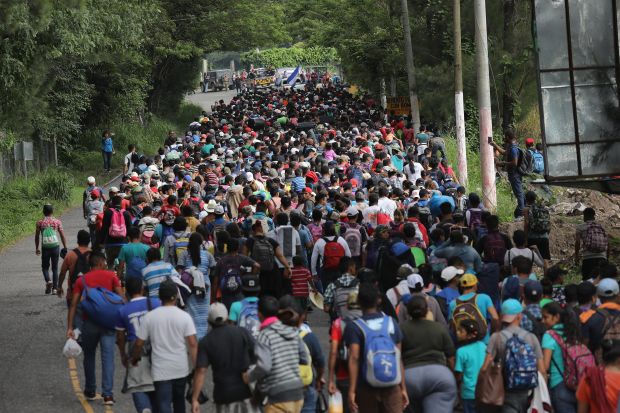
Honduran migrant caravan October 2018

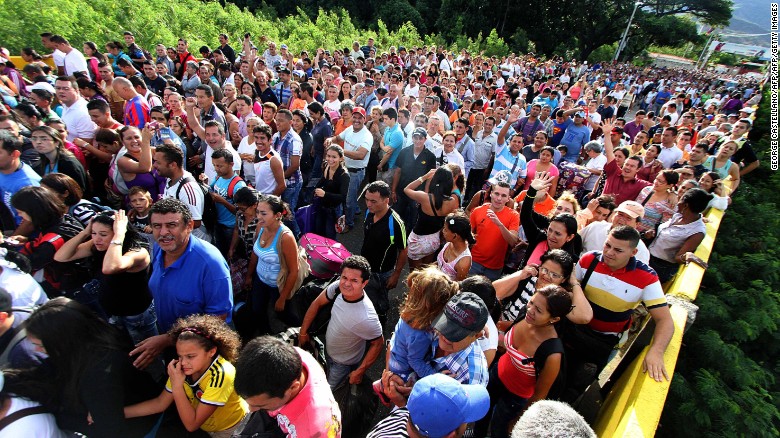
The new Honduran migrant caravan is much larger than the last one and Donald Trump is panicking. Trump thinks he can control the border. The past tells us that won’t work. Whenever people suffer they move to where people don’t. Just look at Venezuelans pouring into Columbia in the photo below. Don’t the two groups look similar? Haven’t we seen them before? Won’t we see groups grow ever larger and more frequent for the rest of our lives? How are they different from those fleeing hurricanes Florence and Michael? Imagine yourself in such a group. It’s almost certain you’ll either be a refugee in your lifetime, or you’ll be building walls to keep them out. What will it take to avoid both fates?

Venezuelans migrating to Columbia.

This isn’t overpopulation, but inequality. Overpopulation and inequality are related. When populations conflict over war, there is inequality of peace. When there are extremes of rich and poor, there is economic inequality. Where society deems a physical trait of the body superior to another there’s racial inequality. When society treats men differently than women, there is gender inequality. When there are more people than jobs, there is work inequality. When one species takes all the natural resources, there is inequality of lifeforms.

If you watch the Mouse Utopia Experiment film, it’s easy to forget you’re seeing mice and see us instead. As the population grows on Lifeboat Earth, the passengers will fight over the remaining rations. We can’t solve overpopulation right now. We can solve the inequality to reduce the conflicts until we reduce our numbers. If we don’t, nature will do it for us.

Republicans believe the needs of the few outweigh the needs of the many. They are not the ethical Vulcans from Star Trek. The only way our species can survive all the problems we’ll face in this century is by providing equality to all. That will require turning all the knobs in the control room in subtle ways until we find the correct settings. A difficult but not impossible task. And it’s not just for our country. If anywhere in the world one group is singled out and not given equal rations and opportunity, this lifeboat will sink. We have grown so large, that even a 1% minority is 70 million people, a powerful force.

We fail because we lack empathy for people unlike ourselves. I recommend two essays to prove my point. I could list thousands, but please read these two to see if they don’t change your mind. They are “The Case for Reparations” by Ta-Nehisi Coates and “The Longest War” by Rebecca Solnit.

No matter what kind of walls you build to keep out whatever kind of refugee your fear, that wall will never be big enough. The only way not to need walls is to create equality uniformly everywhere. As long as you believe you can wall yourself in you’re doomed.

World-War-Z-photo-zombies-1

JWH

Aren’t Republicans the True Disciples of Darwin?

by James Wallace Harris, Friday, October 12, 2018

I’m beginning to see my liberal hopes for social justice are naïve and conservatives are survivalists acting on animal instinct and not theology.

In “Notes from the Fifth Year” from We Were Eight Years in Power by Ta-Nehisi Coates, he describes why he does not believe in cosmic justice or God. As a kid, Coates got beat up and learned he could only rely on himself for help. He saw that in society too. Our hunger for justice is the desire to be protected, but Darwinian laws of red tooth and claw overrule theology and legal systems. As a liberal, I want society to be just and protective, but I’m realizing that counters my own atheistic and scientific beliefs. What I find ironic is Republicans who claim to be Christian, a belief in cosmic justice, want laws and government that affirm Darwin. That I, an atheist, an avowed disciple of Darwin, really want a Christian society. It’s it hilarious when Christians act evolutionary and atheists yearn for grace?

I thought “Notes from the Fifth Year” both brilliant and depressing. It reminds me of a film I saw on the internet of a big green snake coming out of a woodpecker’s hole while the woodpecker frantically fights to pull the snake out to save its nest. I knew people were on the ground filming and watching this struggle. I wanted the woodpecker to win. It kept pecking the snake, and the snake would grab it by the wing, and the bird would struggle free, fly away, but then immediately return to attack the snake again. Its only hope was itself. I wanted the bird to win. I wanted the people on the ground to find a way to pull the snake down. But like Coates, I realized there is no help for the woodpecker except its own efforts to survive.

More and more I see Republicans as survivalists fighting with all their might to save their way of life. They don’t want to pay taxes to help other people because they want that money to protect themselves. They don’t want laws to help other people, only laws that to protect themselves. They’re against minorities, immigrants, and poor people because they threatened their survival. They offer no alternative to Obamacare because they believe in the survival of the fittest. They don’t really disbelieve climate change but deny the expense of global warming because it threatens their pocketbooks. They’d rather have dollars in their paychecks than a clean environment or a just and equal society.

The Republicans are the snake in the tree, not the valiant woodpecker because they are strong and can take what they want. Coates is right, we live in an atheist reality where the powerful prevail. And the strong won’t help the weak. It’s against their nature.

I find it hard to believe Republicans claim to be Christians. They don’t believe in the fishes and the loaves. They don’t believe in turning the other cheek. They don’t believe loving thy neighbor. They don’t believe the meek shall inherit the Earth. But they’re positive camels can go through the eyes of needles.

I now assume Republicans are Darwinians on Earth but Christians after death. They believe in easy Christianity, where merely saying “I believe in Jesus” is a ticket to heaven. But what happens if Dietrich Bonhoeffer’s The Cost of Discipleship is right, and true Christianity is far more expensive?

I’m an atheist that wants humans to create a society that overcomes the laws of Darwin. Even though I’m not a Christian, I felt Jesus wanted to create a heaven on Earth where everyone is treated equally and just. Am I naïve and the Republicans realistic? Conservatives believe the City of God lies beyond death, whereas liberals want humanism to construct it on Earth.

We can now see that Republicans have given up any pretense of ethics. With them, the end justifies the means, and their means are Darwinian, not Christian. Back in the early days of the Environmental movement, the idea of Lifeboat Earth emerged. It’s a great analogy. There’re always people in lifeboats who feel they deserve the rations than the others, and that the weak should be put off the boat. That’s very Darwinian. Aren’t Republicans acting like the ruthless in a lifeboat?

JWH

We Need a New Frontier Because the Final Frontier is a Bust

by James Wallace Harris, Monday, September 10, 2018

Are you jaded with science fiction on television? Have you stopped seeing every new Sci-Fi flick at the theater? I have. On Wall Street, investors always assume a bull market won’t last. I’m wondering when the current science fiction bubble will burst?

During the pulp era, there were more western titles than any other genre. In the 1950s, there were more westerns on television than other types of shows. Then the genre all but disappeared. Could that happen to science fiction?

Westerns disappeared as western frontiers faded, and science fiction replaced westerns in popularity because it offered new frontiers.

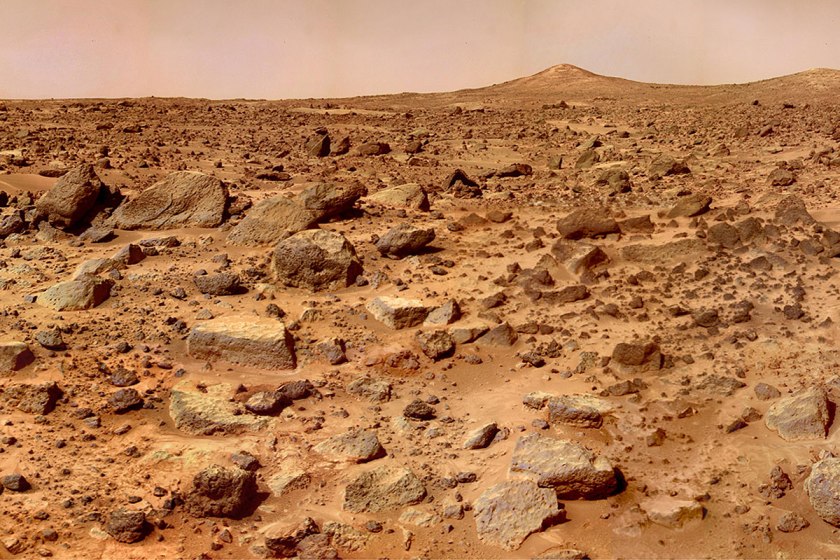
Mars

If this observation is true, then science fiction won’t go away until a new genre offers an alternative frontier. Today, science fiction is often dystopian. The final frontier is tarnished by the reality of science. A few million still hope to run off to Mars to escape the looming apocalypses on Earth, but most know the Martian frontier is a destination only robots could love.

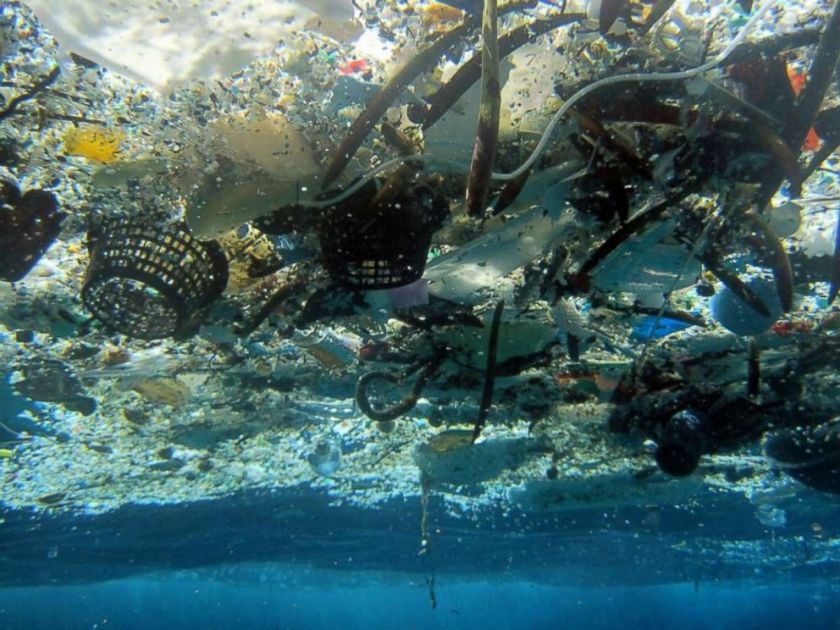
Science fiction has failed at convincing Earthlings to colonize other worlds. Instead, we stayed home and trashed the only sustainable planet for our species. Are there any frontiers left to offer new hope? Back when the Space Age was dawning, science fiction also envisioned colonizing the oceans. That idea never caught on and we’ve only sent our plastics to dwell there instead.

Oceans

Are there any frontiers left for our dreams? We need a new genre that inspires us to clean up the Earth. We need stories where a sustainable ecology/economy is the new frontier. We need fiction that depicts healing of the Earth. We need optimistic tales that aren’t fantasy. We need practical utopias.

And, this is very important, we need to stop using fiction to escape. Hasn’t fiction become the frontier that’s replaced science fiction? Aren’t we all trying to live in the imaginary worlds of books, movies, television shows, comics, computer games, and virtual reality? I have to wonder if we don’t all believe we’re passengers on the Titanic and fiction is our heroin.

JWH