
by James Wallace Harris, Saturday, December 31, 2016
December 31st is my time to contemplate my year in reading. I pick my favorite novels and nonfiction books, and I pick my book of the year. Unfortunately, I’m disturbed to discover that I don’t have any favorite novels for this year. Usually, I read several works of fiction that profoundly move me. This year none did. I need to concentrate on finding great novels in 2017.
I read several good novels, but none that had a deep impact. That’s partly due to so much rereading. Stand on Zanzibar and Hyperion are fantastic books, but this was my third reading for both, and I’m not inclined to list them as books that wowed me this year. I will say I was most impressed with the stories I read by Philip Wylie, Barbara Pym, Charlie Jane Anders, Walker Percy, and Keith Roberts, which were all new reads. I enjoyed them, admired them, but I’m not sure I’d recommend them to a general audience. Each will appeal to a selective group.
I read 55 books this year, about average for me. I read 15 books published during the year, which fulfills the goal I made in 2015 to read more new books. I failed at reading fewer novels. I meant to read only 12 but read 23.
Nonfiction was another matter in 2016. I’m going to have a very hard time picking my top five nonfiction books. Here are the books I wholeheartedly recommend as solidly good books that should appeal to most readers of their topics:
- Science Wars (Great Course lecture) by Steven L. Goldman (the philosophical evolution of science)
- The Search for Philip K. Dick by Anne R. Dick (PKD during his best writing years)
- The Hare with the Amber Eyes by Edmund de Waal (art and memory, excellent example of memoir)
- I Am Alive And You Are Dead by Emmanuel Carrere (the best bio on Philip K. Dick)
- How Great Science Fiction Works (Great Course lecture) by Gary K. Wolfe (history of science fiction)
- Between the World and Me by Ta-Nehisi Coates (black lives matter)
- Dark Money by Jane Meyer (corruption in America)
- Jesus Before the Gospels by Bart D. Ehrman (memory)
- Furiously Happy by Jenny Lawson (hilarious humor and mental illness)
- Saving Capitalism by Robert B. Reich (title says it all)
- When Everything Changed by Gail Collins (why women’s rights had greater impact than computers 1961-2007)
- Sex Object by Jessica Valenti (personal view of being a sex object)
- H is for Hawk by Helen Macdonald (raising a bird of prey, excellent memoir)
- Girls & Sex by Peggy Orenstein (statistical reporting on being a sex object)
- Leonard by William Shatner (loving memory of Mr. Spock)
- A Brief History of Misogyny by Jack Holland (exactly what the title says)
- The Big Picture by Sean Carroll (sweeping overview of cosmology, physics, and philosophy)
- Time Travel: A History by James Gleick (all the ramifications of time and time travel)
- Are We Smart Enough to Know How Smart Animals Are? by Frans de Waal (the nature of consciousness)
- The Bible Unearth by Israel Finkelstein and Neil Asher Silberman (comparing archeology to Bible history)
- The Undoing Project by Michael Lewis (all about Daniel Kahneman and Amos Tversky)
- Hillbilly Elegy by J. D. Vance (poor and white in America, fantastic example of memoir)
- The Soul of a New Machine by Tracy Kidder (pushing people to their creative limit, state of the art creative nonfiction)
- Who Wrote the Bible? by Richard Eliott Friedman (textual analysis, history, religion, and authorship)
Top 5 Nonfiction Books of 2016
- Who Wrote the Bible? by Richard Eliott Friedman (1987)
- Are We Smart Enough to Know How Smart Animals Are? by Frans de Waal (2016)
- Hillbilly Elegy by J. D. Vance (2016)
- Dark Money by Jane Meyer (2016)
- Jesus Before the Gospels by Bart D. Ehrman (2016)
It was extremely hard to limit my favorites down to five. Most of the nonfiction I read this year were exceptional reads. Quite often, as I read these books, I assumed I had my book of the year.
Because I didn’t have a novel of the year, that makes the book of the year obvious:
Book of the Year

This is pretty amazing considering I’m an atheist. You might think I’m secretly religious since I also picked Jesus Before the Gospels as another top five book. Ehrman’s book is really about memory, and I’m obsessed with the topic of memory. I’ve tried to read The Bible several times in my life, but always bog down in the boring books of the middle. All the best Bible stories are in The Book of Genesis, The Book of Exodus, the four Gospels, and The Book of Revelation. What Friedman does is explain the documentary hypothesis, its history, and evolution, and then refines it with his latest research and analysis. This made the boring books of The Bible fascinating. Reading Who Wrote the Bible? along with The Bible Unearthed made me see The Bible as history and not religion. Such knowledge only purifies my atheism by showing that The Bible is not what I was told it was as a child. The Bible a wonderful book about learning how humans thought 2,500-3,000 years ago. Figuring out that the Hebrew bible probably had four authors (J, E, D, P) and one editor (the redactor), and why they wrote what they wrote, let me see why it was written. It was really about politics and creating a nation, and not spirituality. (By the way, I know it is still debatable if some of those authors were not teams of writers and editors.)
On one hand, I wished humanity would just forget religion. On the other hand, all the clues to how we thought thousands of years ago are embedded in ancient religious texts from around the world. Studying these works show we haven’t changed, and it’s not likely we will. Our culture has evolved significantly, acquiring knowledge and technology, but the various ranges of human actions, thinking and emotions have not. Knowing this goes a long way to understanding my second favorite book of the year, Are We Smart Enough to Know How Smart Animals Are? by Frans de Waal. Both of these books decode the political events of 2016. We really don’t change. For example, the modern conflict between Sunni and Shiites was reflected in the power struggles described by the Deuteronomists, with the descendants of Moses and Aaron, or why J and E wanted their stories in The Book of Genesis. I picked Who Wrote The Bible? as my book-of-the-year because it added to most new details to my map of reality.
Books Read 2016 (Links are to essays I wrote about these books)
| Steven L. Goldman | Science Wars | 2016-01-07 | Audible | 2006 |
| Elizabeth Gilbert | Big Magic | 2016-01-07 | Library hardback | 2015 |
| Anne R. Dick | The Search for Philip K. Dick | 2016-01-19 | Trade paper | 2009 |
| Edmund de Waal | The Hare with the Amber Eyes | 2016-01-24 | Library hardback | 2010 |
| Emmanuel Carrere | I Am Alive And You Are Dead | 2016-01-26 | Trade paper | 2004 |
| John Brunner | Stand On Zanzibar | 2016-01-29 | Audible | 1968 |
| Graeme Simsion | The Rosie Project | 2016-02-03 | Kindle ebook | 2013 |
| Charlie Jane Anders | All the Birds in the Sky | 2016-02-14 | Audible | 2016 |
| Kurt Vonnegut | Bluebeard | 2016-02-18 | Library hardback | 1987 |
| Gary T. Wolfe | How Great Science Fiction Works | 2016-02-24 | Audible | 2016 |
| Ta-Nehisi Coates | Between the World and Me | 2016-02-24 | Library hardback | 2015 |
| Dan Simmons | Hyperion | 2016-02-28 | Audible | 1989 |
| Jessica Chiarella | And Again | 2016-03-06 | Audible | 2016 |
| Jane Mayer | Dark Money | 2016-03-15 | Library hardback | 2016 |
| John Seabrook | The Song Machine | 2016-03-18 | Audible | 2015 |
| Bart D. Ehrman | Jesus Before the Gospels | 2016-03-26 | Library hardback | 2016 |
| Justine Ezarik | I, Justine | 2016-03-30 | Audible | 2015 |
| Keith Roberts | Pavane | 2016-04-03 | Audible | 1968 |
| Lady Dorothy Mills | Phoenix | 2016-04-10 | Hardback | 1926 |
| Jenny Lawson | Furiously Happy | 2016-04-16 | Library hardback | 2015 |
| Deborah Davis | Strapless | 2016-05-18 | Library hardback | 2003 |
| Paul Kalanithi | When Breath Becomes Air | 2016-05-21 | Library hardback | 2016 |
| Dan Simmons | The Fall of Hyperion | 2016-05-24 | Audible | 1990 |
| Clifford Simak | A Heritage of Stars | 2016-06-01 | Audible | 1977 |
| Robert B. Reich | Saving Capitalism | 2016-06-04 | Audible | 2015 |
| Philip Wylie | The Disappearance | 2016-06-11 | Audible | 1951 |
| B. A. Shapiro | The Art Forger | 2016-06-16 | Kindle ebook | 2012 |
| Gail Collins | When Everything Changed | 2016-06-20 | Audible | 2009 |
| Jessica Valenti | Sex Object | 2016-06-24 | Library hardback | 2016 |
| Rainbow Rowell | Eleanor & Park | 2016-06-28 | Audible | 2012 |
| William Golding | Lord of the Flies | 2016-07-03 | Audible | 1954 |
| Peggy Orenstein | Girls & Sex | 2016-07-07 | Library hardback | 2016 |
| Helen Macdonald | H is for Hawk | 2016-07-20 | Audible | 2015 |
| William Shatner | Leonard | 2016-08-06 | Library hardback | 2016 |
| Ta-Nehisi Coates | Between the World and Me | 2016-08-17 | Audible | 2015 |
| Neil Clarke ed. | The Best Science Fiction of the Years – Volume 1 | 2016-09-14 | Audible | 2016 |
| Barbara Pym | Excellent Women | 2016-09-22 | Audible | 1952 |
| Jack London | The Scarlet Plague | 2016-09-28 | Audible | 1912 |
| Jack Holland | A Brief History of Misogyny | 2016-10-11 | Audible | 2006 |
| Arthur C. Clarke | 2001: A Spacy Odyssey | 2016-10-14 | Audible | 1968 |
| Sean Carroll | The Big Picture | 2016-10-27 | Audible | 2016 |
| Zenna Henderson | Pilgrimage: The Book of the People | 2016-11-01 | Library hardback | 1961 |
| James Gleick | Time Travel: A History | 2016-11-17 | Library ebook | 2016 |
| Frans de Waal | Are We Smart Enough to Know How Smart Animals Are? | 2016-11-19 | Audible | 2016 |
| Edward O. Wilson | Half-Earth | 2016-11-21 | Audible | 2016 |
| Walker Percy | Love in the Ruins | 2016-11-30 | Audible | 1971 |
| J. G. Ballard | The Drowned World | 2016-12-04 | Audible | 1962 |
| Andre Norton | The Stars Are Ours! | 2016-12-07 | Web audio | 1954 |
| Andre Norton | Star Born | 2016-12-12 | Web audio | 1957 |
| Israel Finkelstein, Neil Asher Silberman | The Bible Unearthed | 2016-12-19 | Hardback | 2001 |
| Michael Lewis | The Undoing Project | 2016-12-19 | Audible | 2016 |
| Charles Dickens | A Christmas Carol | 2016-12-24 | Audible | 1843 |
| J. D. Vance | Hillbilly Elegy | 2016-12-25 | Library hardback | 2016 |
| Tracy Kidder | The Soul of a New Machine | 2016-12-28 | Hardback | 1981 |
| Richard Elliot Friedman | Who Wrote the Bible? | 2016-12-29 | Hardback | 1987 |
My goal for 2017 is to try and read more nonfiction, especially new books. I’m not going to worry about how many works of fiction I read, but I do want to work harder at finding the best fiction possible. I also want to stop reading mediocre books.
JWH

 Why are people still reading science fiction from the 1950s? I’m always leery to read science books more than a few years old, but crave science fiction written before NASA was created. I’m not alone in preferring moldy, aged SF, but I have no idea how many other fans are like me. I belong to an online book club,
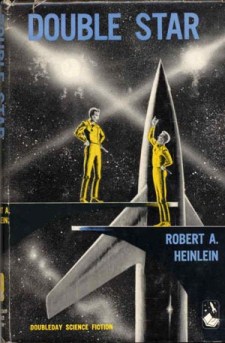
  Personally, I believe the best science fiction books written in the last twenty-five years are better crafted than the best science fiction written in the 1950s. Now I’m talking about writing, storytelling, characterization, plotting, and all the mechanics of creating a book. With every decade I believe the skills of writers are evolving. I also believe the imagination and science that goes into science fiction has constantly progressed over the decades. So, why bother reading old science fiction at all? Few science fiction readers read science fiction from the 1920s and 1930s. It’s just too primitive. Most have stopped reading science fiction from the 1940s and 1950s. The 1960s seems to be the oldest science fiction that many modern readers discover, with books like
  If you remain a science fiction fan long enough you come back around to where you began. Most readers go through a science fiction reading phase, and eventually move on to other genres. Most people just dabble with science fiction. The kind of reader I’m trying to identify is different. Science fiction was their childhood religion, born again into faith in the future, like the theological have a faith in the past. Sometimes I feel my obsession with comprehending old science fiction is a kind of exorcism. I’m trying to deprogram myself. Other times I assume it’s just a dynamic of getting older, and I’m merely seeking comfort reads.
 When I was growing up, the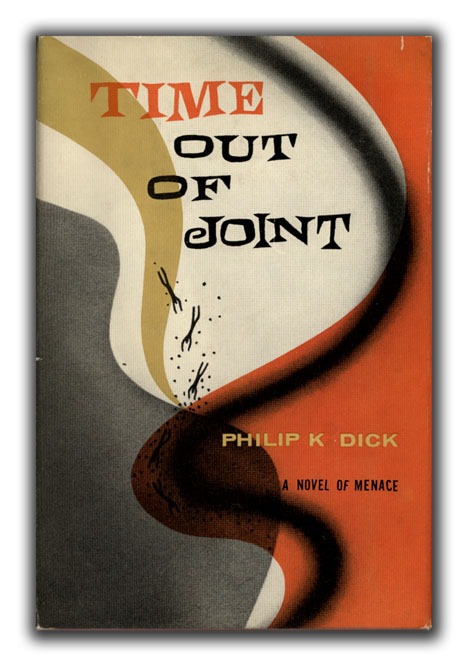
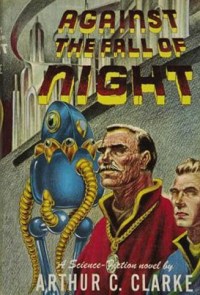 I recently wrote “
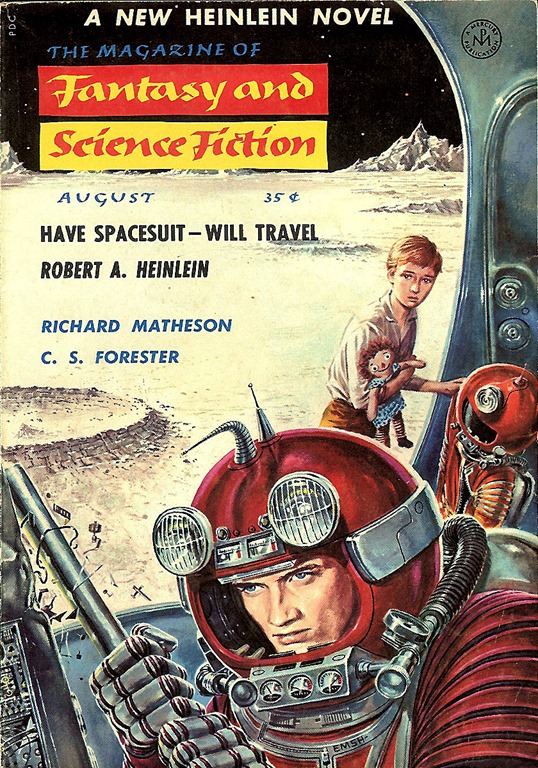
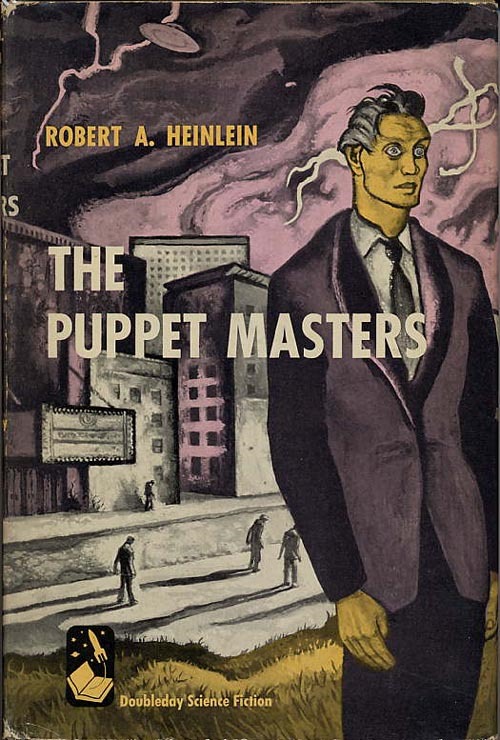
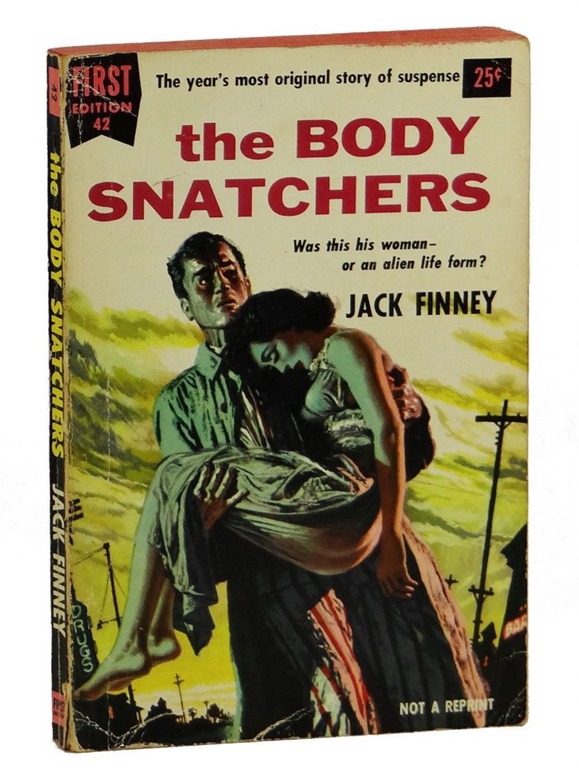
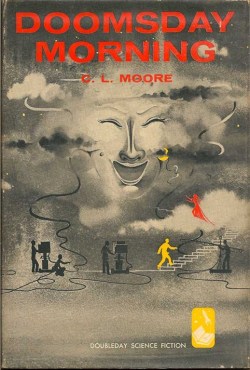
 So many of the great science fiction stories of the 1950s were about the end of the world, or the collapse of civilization. Some of my all-time favorite novels are about the end of the world as we know it, like
 Auxiliary Memory