Analog Reading in a Digital Age

by James Wallace Harris, Saturday, September 22, 2018

I used to be able to sit with my book for hours, lost in reading. Now I’m lucky if I can make myself sit in a chair and read a book for an hour or even thirty minutes. After years of digital reading, I’m craving old fashion books again.

reading in a digital age

How and what I read has changed in these digital times. I don’t know if it’s because I’m getting older or the digital technology is changing me. Other factors come into play too, like having more content and greater variety. Or different ways to read – the printed page, the digital screen, or the audiobook.

I actually spend many hours reading every day, but it’s mostly off my PC, iPhone, iPad or Kindle. And most of those words aren’t from books. When I was younger, I was never much of a newspaper reader. I loved books and magazines. I could read for hours. I still read books, but I often don’t finish them, and I rarely read a magazine anymore. My mind has developed an impatience that leaves me too fidgety for books. Newspapers have long ago disappeared from my life, and magazines have almost faded into nonexistence. I don’t want books to go too.

Every day I spend at least an hour, maybe more reading the New York Times and Flipbook from my iPhone. Flipbook does gather content from magazines, newspapers, and websites from all over the world, so I’m actually reading articles that used to be presented in paper newspapers and magazines. But the experience is different.

In pre-digital times, my days had a smaller selection of articles to read. I would find something that interested me and generally read the entire piece. For some of my favorite magazines, I’d spend hours reading the whole issue. Now I flip past dozens of articles, maybe even a hundred, skim read ten to twenty, and hardly ever finish one. I usually add a few to Instapaper every day telling myself I’m going to go back and study them, but I seldom do.

I’ve become a vacuum cleaner of words rather than a reader. At least not in the old sense of reading. I still finish three or four books a month, but mostly via audio. I’m currently listening to Doomsday Book by Connie Willis. It’s 26 hours and 20 minutes. The action is extremely slow paced, but I’m enjoying it very much. I’m not sure if I’d have the patience to read it. I did eyeball read Men Explain Things To Me by Rebecca Solnit on my Kindle this week, but it was a mere 130 pages.

I finished Solnit’s book aching both to hear it, and to read a paper copy. Psychologically, I felt I wasn’t getting all of what Solnit had to say from the Kindle. I need to hear someone read it with the proper pacing, cadence, and inflections, plus I wanted to see the words on actual paper. I wanted to squeeze every idea out of her book, make notes, and distill all the points into one concise outline. I doubt I’ll ever take the time to do so. I did highlight passages in my Kindle and printed those out so I could discuss them with my friend Linda during our two-person book club. We discussed Men Explain Things To Me twice, but that wasn’t enough. What Solnit had to say was something I wanted to memorize, but sadly, the modern way we read means rushing on to something new.

With audio listening, I can get through very long books, including nonfiction and classic novels I never had the patience to read before. Plus I enjoy them far more. If I read Doomsday Book with my eyes I’d miss so much of its richness, especially all her work with middle English (it’s a time travel story). However, I recently discovered I was missing other aspects of novels by not reading with my eyes.

PBS is running a series now called The Great American Read. Each weekly episode has readers explain why they love their favorite books. I’ve listened to Jane Eyre, a book I would never have read with my eyes. The audiobook had a lush dramatic reading, and I admired the writing and story but didn’t really care for the characters. But when its fans were interviewed on PBS, they read a segment from the book, highlighting the words, and I realized why those fans identified and loved Jane Eyre the character.

I also saw that other readers like to savor sentences in fiction, something I don’t take the time to do. I love audiobooks because they are slow. When I was young I’d speed read through books anxious to find out what happens. I missed a lot. The slowness of audiobooks allows me to get so much more. But seeing the words of Jane Eyre on TV highlighted as a reader read them, I understood to get deeper into a book I needed to read with my eyes and go even slower.

Our technology allows us to feel we’re reading more, giving us the illusion that we’re learning more, but are we? Part of my problem is I buy far more books than I can ever read, and find far more articles each day than I can ever finish. The pressure to consume them all makes me rush by their words. Reading off the computer screen, iPhone screen, iPad screen, the Kindle screen allows me to feel like I’m mass-consuming information, but I’m not sure I’d call that reading anymore.

I love computers and technology. I have no doubts that it has enhanced my life greatly. But I’m realizing my brain can only process so much data per day. Sometimes I feel my aging brain is slowing down, but I’m not so sure. I feel much wiser at 66 than I did at 26. I know I’ve always been a skimmer over knowledge, that I’m a dilettante of learning. Digital technology gives us the illusion we’re more productive, but I don’t think it’s true.

I’m struggling with the psychology of reading. I’m discovering I need to read with both my eyes and ears and on paper, screen and headphones. That there isn’t one way to read. I’m beginning to buy my favorite books on Kindle, Audible and paper and feel the need to process the best books three times. Most books only need one “reading” but some need two or three. I’m also learning that I probably shouldn’t waste my reading hours on those one-time books anyway.

For fiction, I feel the first reading should be audio. Audio has the greatest impact if it’s read by a skilled dramatic narrator. The second reading should be on the Kindle so I can highlight passages, especially if I want to write about the book or discuss it with friends. But for longterm enjoyment, I feel I need to bond with a printed copy of the book, one that I actually admire for its cover, design, fonts, and paper.

For nonfiction, I feel it’s best to start with the Kindle edition, and then go to audio. I like a physical book to flip through randomly. I’ve always loved hardbacks, but I’m starting to think smaller trade paperbacks are nicer for flipping.

I don’t like big heavy books or books with tiny print. So any book that’s hard to hold or requires squinty-eyes to read I leave to audio or Kindle. The other day I almost bought a beautiful hardback edition of Poe’s complete works. It looked new but was only $3 used. But I realized I wouldn’t like holding it. I still regret not buying it, but it was the right decision.

For years now I’ve been buying my favorite books on audio and Kindle, but now I’m also wanting a copy to hold. The hold-in-my-hands copy must have a kind of charm, either a beautiful cover or a unique character. I’m thinking of thinning out my library so the books I keep are ones I loved to hold and read with my eyes. (Thank you Marie Kondo.)

I don’t know why this craving to read books has returned to me now. I don’t feel anti-technology. I would never give up audiobooks or Kindle reading. I guess what I’m learning is no matter how carefully I read a book, with whatever technology, I never get all it has to offer.

JWH


Kindle Tip – Saving 40%

by James Wallace Harris, Wednesday, September 4, 2018

I don’t know why, but sometimes Amazon tells me I have a promotional credit. I never know what they mean. The other day I bought a $1.99 sale ebook and was told I had a promotional credit that would last 60 days on my next Kindle purchase. I just ignored it. Then I bought a $1.99 sale book today and got another promotional credit. This time I read the email more closely.

Sense of Wonder - A Century of Science Fiction edited by Leigh Ronald GrossmanIt said I’d get 40% of my next Kindle purchase. Well, there’s a $40 Kindle book I’ve been wanting but wouldn’t buy because of the high price. It’s a textbook for teaching science fiction. Well, I checked, and it was now priced at $24, 40% less. I quickly bought it. I still think $24 is way too much of an ebook, but I’ve been wanting this book for some time now, and have almost paid the $40 for it a couple of times.

I don’t even know if this involved my promotional credit. It could just be coincidence and this book had a 40% price drop. (Tell me what price you see.)

I’ve researched these credits at Amazon and they seem rather unexplainable. I wonder if they’re just a gimmick to get us to buy more. Or Amazon’s way of justifying to publishers for offering extra discounting.

Does anyone know how these promotional credits work? They’re a mystery to me.

If you buy bargain Kindle books, keep an eye out for your promotional credit. Then go shopping for that ebook you wanted that was priced too high.

JWH

Photoshopping Our Reading

by James Wallace Harris, Wednesday, September 3, 2018.

Recently I read “Problematic Classics: Four Questions to Ask When Beloved Books Haven’t Aged Well” by Matt Mikalatos over at Tor.com. Mikalatos asks what to do when reading a book that expresses hateful views by the author or characters. Basically, he asks: Should I ever recommend such a work? Can I read it privately? Should I read something like it without the hate? or Should I write something like it without the hate? He goes on to mention problems with T. H. White, J. R. R. Tolkien, C. S. Lewis, Roald Dahl, and H. P. Lovecraft.

censorship

I too have that problem. I can no longer read Mark Twain, William Faulkner, Eudora Welty, and other classic southern writers because of the n-word. But that also stops me from listening to Kanye West, Nicki Minaj, and Ester Dean. And I’m not sure I should be censoring those artists. But my liberal upbringing makes me cringe at any utterance of the n-word despite the context.

Mikaloatos wonders if it’s kosher to read old works with hate in them if he can’t recommend them to others. Should a few offensive passages spoil what is otherwise a masterpiece of creativity? There are some nasty parts in The Bible, should we reject it too? Is there anything in this world without flaws?

But this begs the question: Should we read only what’s pleasant and nice? The past is full of nasty hateful people. Then again, so is the present. When I read a book from the 19th century I want it to teach me about what people were like in the past. I don’t want a cleaned up version. It’s enlightening if we understand the past in all its dimensions.

It bothered me when I learned that The Hardy Boys books have been rewritten several times to clean up and modernize the originals. Maybe with some books, we should just forget them, because we don’t want to pass on problems of the past to young readers. But do we want to completely protect the young from the things we don’t want them to become?

It’s troubling to me that Mikalatos’ suggests that we substitute clean modern works that emulate older problem works. This seems Orwellian to me, like how the communists used to retouch photographs to remove dissidents from history. I think there is something dangerous about white-washing history. But that assumes literature is part of history and not a yummy snack that can be reformulated with a healthier recipe. I’d rather read Pride and Prejudice than a modern historical novel that uses the same setting. And is it fair to Tolkien and C. S. Lewis to reject them for an imitator, or to imitate them? That reminds me of Remake by Connie Willis, where one of her characters has the job of removing smoking and drinking from classic movies like Casablanca.

My wife and I watched a Doris Day/Rock Hudson film the other night, Lover Come Back, and we said to each other that this once very squeaky clean film would now be seen as horribly sexist. There would be no way to just photoshop over a few problems, it would have to be tossed out completely if everything from the past had to be politically correct.

There’s a trend by the latest generation to reject the past if it makes them uncomfortable. Life is complicated, hard, vicious, confusing, overwhelming, and it’s both insanely good and evil. I can understand readers wanting books with nicer realities to escape into, but how often should we be escaping reality? Is the only purpose of books to entertain?

First, are we judging the author for their views or their characters views? H. P. Lovecraft was racist and anti-semitic. Mikalatos asks if we can throw away the Lovecraft stories that reveal his hate and keep the ones that don’t, or do we throw away all of his work because they come from a hateful person? I never liked Lovecraft’s stories, but he was very influential on many writers and several of them worked on a shared mythos that’s quite creative. Lovecraft’s work is essential to understanding the history of the horror genre. If I met young readers who loved horror novels I would tell them about Lovecraft, but I’d also warn them of his personal failings.

A lot of people make fun of trigger warnings, but I see nothing wrong with them. I believe stories from the past should come with scholarly introductions that put the story and the author into a historical and literary context without spoilers. And in some cases, I think some stories would require an afterward with further explanations that do have spoilers.

Older folks often make fun of younger folks for not knowing history. If history was the only subjects kids studied in their K-12 years, they’d still be ignorant of most of it. But I do believe younger people today want to reject history more than we did when we were young. They want to photoshop history to make it nicer. They believe if they can ignore the nastiness of reality their world will feel better. And that is true. I don’t watch the local news and I’m much happier living where I do because of it. However, I think if we’re going to wear rose-colored glasses, we can’t tint out all the ugliness.

Sure, we all have to find ways to cope, and if avoiding certain novels, movies, and television shows help, then so be it. I once heard a joke about a man who pistoled-whipped himself every morning so he wouldn’t be afraid of getting mugged. A certain amount of pain can toughen us up, but only so much.

The real lesson to learn is to read about hate without becoming hateful. I was reading Thomas Merton recently and was moved by his faith in goodness. Merton had been a Trappist monk before he died, believed goodness came from God. I don’t. But then I’m an atheist. I do believe in goodness. I believe we can all be better people. That requires knowing what is good, and what is bad. You can’t be good by ignoring the bad because becoming good means overcoming the bad. Our evolution as a species involves constantly mutating into who we want to be by jettisoning what we don’t. Just hiding from evil only means sticking our heads in cotton candy.

Yesterday I went to see BlacKkKlansman. I didn’t want to go because I knew it would be full of nastiness. But I’m glad I went. It was a work of art that everyone should see, but I can also understand some people not being able to handle it. When I left the theater I had a Christian revelation (even though I’m not a Christian). Forgiveness is learning to comprehend what we want to destroy. Or run away from, or ignore. Maybe that’s where I’m going when I say we shouldn’t photoshop our literary history. Or the start. But forgiveness is hard.

JWH


Remembering and Rating Pop Culture

by James Wallace Harris, Wednesday, July 11, 2018

I began keeping a reading log back in 1983 where I record every book I finish reading. I wished I had started this log in the third grade when my mother read me Treasure Island. That was 1960, I was eight, and the first book I remember. The first book I read myself, was Down Periscope, but in an abridged version for kids. That was probably 1961. I figured I finished over a thousand books that I don’t remember between 1961 and 1983.

As you might guess, I’m hung-up on memory. Just remember, this blog is called Auxiliary Memory. My memory has never been great, and now it’s in obvious decline. My reading log has proved valuable on countless occasions and in many ways. Over the years I’ve often regretted not maintaining a movie log.

Recently I began a Pop Culture Log, where I record the short stories, essays, albums, TV shows, movies that I finish each day. In the sixties we had a phrase, you are what you eat. Well, I believe we are the pop culture we consume.

I keep my new pop culture log on a Google spreadsheet online. I now wish I had logged every pop culture work I consumed in my lifetime. Recording all my brain food takes a bit of effort, but is revealing. More and more when I tell my friends about shows or stories I enjoyed I can’t recall their titles. That’s very frustrating.

Aging and struggling with memory reveal details about my identity in those logs. In Westworld season 2 they show different approaches to creating artificial immortality. One method involves teaching an android all the memories and habits of a person until the android can’t be distinguished from the real person. Who we are, often comes from our attitudes towards the pop culture we’ve experienced in our lifetime. On Facebook, I see more and more groups formed around pop culture memories with tens of thousands of baby boomers participating in each. My identity can be partially defined by those groups I joined. (That’s why Facebook is so powerful to advertisers and political pollsters.)

Here’s a snippet of the last couple days. If I tried to record them from memory the day after tomorrow all of them would have been forgotten except maybe The Admirable Crichton. That’s the work that’s given me the most pleasure this week, but it would only take another couple days and I’d forget it too.

Pop Culture Log


I’ve tried to devise the most useful columns. I added a link column, something I don’t have on my reading log of books. That gives me actual details about the work, and is very educational, often expanding my reaction to the work.  Just collecting the entries for the spreadsheet helps me remember more.

My friend Janis recently gave me a box of vinyl LPs she had stored away at her father’s house for decades, mostly from the 1970s and early 1980s. I’ve been playing a couple each day. As you can see, I’ve rated them all three stars. But I wonder what I would have rated them back when they were new. Most stuff from decades ago seems kind of mediocre and blah, but I bet some of those albums sparkled when they first appeared. I know I liked some of them much better then than I do now.  I’ve decided to rate my current reaction rather than trying to discern absolute artistic quality, it’s context in history or its lasting value. The links do that. It would have been enlightening to see how my ratings changed over time.

Rating Systems

There’s all kind of rating systems. The classic school grade (A+ through F). The test score (0 – 100). The 10 scale (0 – 10). Various 3-star, 4-star, and 5-star ratings. I liked what Rocket Stack Rank uses, a 5-star system that’s less judgmental and more practical. I’ve amended their system for my use:

  • 1-star (*) – Technical flaws that annoy. Can’t finish.
  • 2-star (**) – Storytelling flaws ruin the flow. Can’t finish.
  • 3-star (***) – Average. Good. Competent. Even well done. Once is enough.
  • 4-star (****) – Will recommend to friends. Would reread/rewatch. Hope to remember probably won’t.
  • 5-star (*****) – Should win awards, be remembered, and become a classic. Would buy to have permanently. Would want to study and remember.

This system avoids judging art by objective criteria. A graph counting all the ratings should show 80% falling into the 3-star rating, 18% for 2-star or 4-star, and 2% for 1-star and 5-star. Because I only record what I finish, I shouldn’t be listing 1-star and 2-star titles.

The Admirable Crichton - 1957

Of the works rated above only the English film The Admirable Crichton (Paradise Lagoon in the U.S.) based on the J. M. Barrie play (he also wrote Peter Pan) is rated 4-stars. I gave it 4-stars because it’s one I’d recommend to my friends. It was so much fun that I’ve ordered two other film editions of the story, one a silent, Male and Female (1919) that stars Gloria Swanson directed by Cecille B. DeMille, and 1934 pre-Code screwball comedy starring Bing Crosby, We’re Not Dressing.

Rating a work is hard. Janis, who is also my TV watching buddy, and I, both greatly enjoy Glow, a show about lady wrestlers in the 1980s. It gets good reviews, and I know other people who like it too. However, the quality of streaming TV is so great compared to the older broadcast TV that it’s hard to say when a show is worthy of 4-stars. I would definitely say Breaking Bad, The Handmaid’s Tale, The Marvelous Mrs. MaiselThe Crown, Downton Abbey are 5-star shows. And I would say Anne with an E, Humans, FargoWestworld, The Duece are 4-star shows. But really good shows like Glow and Killing Eve aren’t in their class. A 3-star rating includes a lot of very entertaining shows because there’s really a great number of entertaining well-made shows. 3-stars doesn’t mean something isn’t very good. Well-made entertainment is very common today.

My concern is more about memory than artistic judgment. I want just enough information in my logs to trigger hidden memories. I’ve never been sure if bad memory is due to lost memories or poor memory retrieval. If I had kept logs of all the artistic works I consumed in my lifetime it would help me remember, but also it would also describe who I was, something I’m still learning myself.

JWH


Will the Real Charles Dickens, Please Stand Up?

by James Wallace Harris, Saturday, July 7, 2018

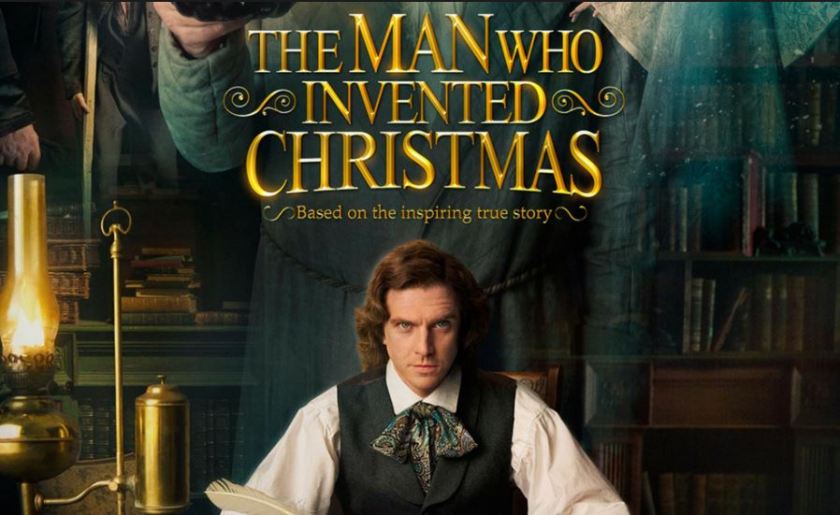
The other night I saw The Man Who Invented Christmas, a delightful film about how Charles Dickens wrote A Christmas Carol. When it was over I asked myself: How much of it was true? I’ve read one short biography of Dickens in the past, Charles Dickens: A Life by Jane Smiley. So I knew some details in the movie were based on truth. But I doubted its facts fit history in the same way the screenwriter presented them.

The Man Who Invented Christmas

After watching the film, I read Mr. Dickens and His Carol, a novel by Samantha Silva. Silva spent fifteen years working on this story, originally written as a screenplay. Her novel featured a more complicated story than the film The Man Who Invented Christmas but invents and fictionalizes a great deal more. The movie is lighthearted and fun, focusing on Dickens’ economic problems and how they inspired him to write A Christmas Carol in a few weeks. The film shows Dickens being haunted by the imaginary characters he created, and I’m sure that’s how many readers picture writers discovering their characters.

Silva’s novel creates a made-up fantasy life for Dickens, that worked to explain the psychological needs that drove him to write A Christmas CarolMr. Dickens and His Carol by Samantha Silva does not even attempt to be historically accurate, creating a fantasy about writing a fantasy. Although her novel was entertaining enough to keep me reading, I was never sure if it was ethical just to make up a fictional alternate history for a real person. Isn’t it a kind of flattering libel? Isn’t it just cashing in on another writer’s fame? Dickens might have loved it, and he might not, but I believe he’d likely want a cut of the royalties.

The film had questionable points too. Over the last decade, I’ve noticed a growing number of novels and movies based on real lives. I find them both compelling and disturbing. I feel we need to ask hard questions about fictionalize biographies?

  • Should we expect biographical fiction to be essentially true?
  • Aren’t these writers just cashing in on famous names?
  • What responsibilities do historical fiction writers have for teaching history?
  • Should we assume all fictional history is just fun fantasy?
  • Is it fair to historical people to remember them as fantasy characters?
  • How do we verify the fictional facts?

With two competing fictional biographies covering the same event, I felt compelled to hunt down facts.

The film, The Man Who Invented Christmas is based on a non-fiction book, The Man Who Invented Christmas: How Charles Dicken’s A Christmas Carol Rescued His Career and Revived Our Holiday Spirits by Les Standiford. This book covers recorded history. But should we assume since the movie is based on it, the movie will be historically accurate? Like novelists, screenwriters invent, and both are selling entertainment to make a buck. My guess is most of the movie is made up.

Now I needed real history to judge my fictional histories. I got out my unread copy of Charles Dickens: A Life by Claire Tomalin, a substantial biography. The Dickens I found here for 1843 was completely unlike to two fictional Dickens in 2018. Sure, some of its details were sprinkled in the two fictional stories but Tomalin’s black and white facts did not paint either colorful Dickens I saw in the film or novel. And each of the colorful Dickens is distinctly different too. For example, in one Dickens confides to his groom, and in another to a young maid. In one, his wife is part of the story, and in the other Dickens’ wife is conveniently shuttled off to Scotland. In each, we meet two different inspirations for Tiny Tim. In one, Dickens is the spendthrift, in the other, Dickens blames his wife.

I’d like to think when I read a historical novel or watch a historical film, I’m actually learning history. But whenever I read history books after imbibing a fictional version of the past, I’m always disappointed. Last year, both Dunkirk and The Crown felt very real historically, but were they? I haven’t read anything to verify them yet.

My memory of Dickens will always be historically corrupted by the visual Dickens of the film, played by a charming Dan Stevens (Matthew of Downton Abbey fame). Silva’s fantasy Dickens will always intrude when I reread Great Expectations and David Copperfield. Is either fair to the real Charles Dickens? Don’t I have a duty to study the recorded facts we have on Charles Dickens? Will the real Charles Dickens, please stand up? Or will we always create an endless parade of make-believe Charles Dickens?

I found both Inventing Scrooge by Carlo DeVito, a well-reviewed book on the specific subject, and the non-fiction book version of The Man Who Invented Christmas by Les Standiford, to be more digestible than the Tomalin biography for knowing how Dickens wrote his most famous story. Her biography was too large, complex, and detailed. I’m not ready for her graduate course just yet, but what I read was damn impressive.

I do want to know the real Charles Dickens. But I found comparing the two nonfiction books on the writing of A Christmas Carol to be revealing about the struggle to understand history. Nonfiction writers must speculate too, even if it’s just in the way they present their facts. When reading nonfiction we must also distrust what we read. We should always be skeptical.

I found the two fictionalize Dickens very entertaining. I don’t think they shouldn’t exist. However, I would say we should never enjoy a fictional account without balancing it with a nonfictional account. To answer my questions:

  • Never assume any fact in fiction is true.
  • Yes, writers are cashing in by using ready-made, well-known characters.
  • Novelists who write historical fiction should always produce an afterward that explain their research and delineate their speculation.
  • Assume all historical fiction is fun and we should get real history from nonfiction.
  • I bet most historical figures would be horrified and amused by how they are remembered. Many would be mad enough to sue if we time traveled them to the present. Which probably explains why so many want their letters and papers burned, or why they work so hard to preserve them.
  • The only way to verify fictional facts is to read multiple nonfictional sources. We can never know what historically happened. There are real people that I’ve read many biographies written about them, and I’d say four is the minimum to start getting a decent feeling for what they might have been like. And that’s only a might of.

Then, I saw another historical film, Mary Shelley (2017). Even though this was a bomb at the box office, I greatly admired it. I really wanted to believe it was true. My wife and I both enjoyed the movie thoroughly, and we didn’t fathom why it’s gotten such a low Rotten Tomato score of 36%.

I want to believe Mary Shelley accurately portrayed Mary Shelley because it shows her as a determined, strong-willed woman, that succeeds against a culture that wanted to crush her. If we love a story about history, we want it to be the truth, don’t we? The film makes me want to know more about the real creator of Frankenstein’s monster and the author of the first real science fiction novel. I guess that impulse is a credit to historical fiction.

Now I need to go read In Search of Mary Shelley, a new biography by Fiona Sampson.

In Search of Mary Shelley by Fiona Sampson

Mary Shelley 2017

JWH