My old buddy Connell and I often talk about the unexpected scientific discoveries made in our lifetime. Back in the 1960s, we both grew up reading science fiction and we had certain expectations about the 21st-century. Now that we’re in our seventies living in that century we realized that science fiction missed so much, and so did our imaginations.
Because we grew up thinking the black and white astronomical photos made by the Mt. Palomar 200″ telescope were the pinnacle of astronomical awareness, we never imagined what the Hubble Space Telescope would show us in color. We never dreamed that astronomers would discover exoplanets or robots would roam the solar system. We thought people had to go to all those places.
Nor did we imagine society being transformed by computers and networks. I never pictured the computer I’m typing on now, or what I could do with my iPhone or iPad.
But one of the biggest discoveries we missed was about animal consciousness. We expected that we’d have to wait for interstellar spaceships to be developed before we’d meet another form of intelligent life. We never realized it was all around us on Earth and in the oceans.
Intelligence and sentience are on a spectrum. We grew up in a time when people believed they were the crown of creation, and all life below us was unconscious and stupid. We’re finally realizing just how stupid we were. See The Cambridge Declaration on Consciousness.
There are so many books to read to illustrate what I mean. The Soul of an Octopus is just one, but a beautiful work by a woman that has learned so much about animals by spending time with them. Sy Montgomery writes in a way that we follow her around as she makes her discoveries. You will fall in love with four beautiful creatures, Athena, Octavia, Kali, and Karma. You will cry when some of them die, but you will also get to meet intelligent alien lifeforms.
I still read a lot of science fiction, I can’t help myself, it’s a lifelong addiction that I no longer try to escape from. But I’ve learned if I really want to experience the far-out I need to read science books, books like The Soul of an Octopus.
My reading goal for 2022 is to read as many intensely great books as I can find. The Soul of an Octopus starts the year with a bang.
Reading is my sixth sense, how I explore the larger reality I can’t observe with my classic five senses. Every year I can only read so many books, making it important to wisely select the novels, nonfiction books, short stories, and articles I do read. Reading changes me. I shape myself by what I read. Each year I work to become more conscious by what I select to read. However, this self-improvement effort is very much like my efforts to eat healthily and avoid junk food. I’m never a saint.
At seventy, my mind is becoming like an old suit with moth holes. Words and thoughts leak out of my consciousness through little missing places eaten away by the moths of time. Remembering is something that’s become very important to me, as much as sex was on my adolescent mind.
The Reading List by Sara Nisha Adams is the 52nd and last book I read in 2021. It’s an accomplishment to read so many books in one year. And 52 is a good number. It means I averaged one book a week, and that’s a nice reading pace.
I’ve always wanted to be one of those superbookworms who could read 100 or 200 books a year, but my mind and memory can’t handle that much new content. I like to think one book a week is what my mind can handle, but I’m probably fooling myself.
52 is probably too many but I’d hate to read less. I feel I did a pretty good job of picking worthwhile reads, ones I still remember reading at the end of the year, but I have to admit, some of them were not necessarily the best books I could have picked. I will try harder next year. The problem is the conflict between reading books that expand my awareness, and books that soothe my soul.
One way to remember the books I read in 2021 is to remember my favorites, the ones I’d recommend. Links are to essays I wrote during the year.
LikeWar: The Weaponization of Social Media by P. W. Singer
Another way to remember is to recall why I read certain books. I’m in a two-person book club with my friend Linda, I’m also a member of an online nonfiction book club, I’m in a Facebook group that reads science fiction anthologies, I have a personal reading goal to read all 25 volumes of The Great SF Stories edited by Isaac Asimov and Martin H. Greenberg, I like to read science fiction novels, I love to read popular science books, and I enjoy reading some contemporary and classic fiction.
Two-Person Book Club With Linda
Evil Geniuses: The Unmaking of America – Kurt Andersen
Horseman, Pass By – Larry McMurtry
21 Lessons for the 21st Century – Yuval Noah Harari
Leaving Cheyenne – Larry McMurtry
The Art of Dying Well – Katy Butler
Robert E. Lee and Me – Ty Seidule
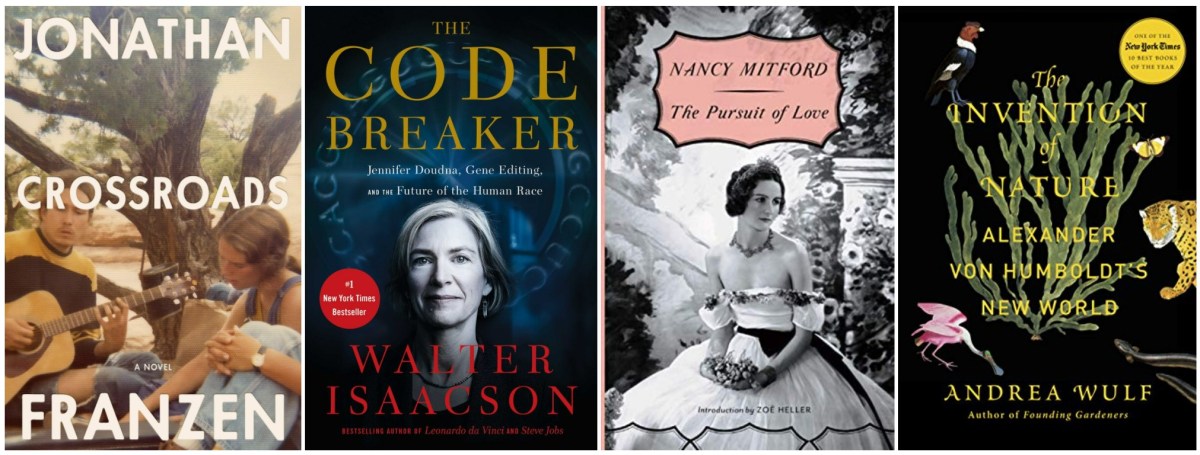
The Code Breaker – Walter Isaacson
Elderhood – Louise Aronson
Last Best Hope: America in Crisis and Renewal – George Packer
Crossroads – Jonathan Franzen
The Premonition: A Pandemic Story – Michael Lewis
Linda went on to read several more Larry McMurtry books, but I just couldn’t keep up with her.
Online Nonfiction Book Club
Underland: A Deep Time Journey – Robert MacFarlane
The Sisters – Mary S. Lovell
Robert E. Lee and Me – Ty Seidule
The Invention of Nature – Andrea Wulf
Noise (didn’t finish) –
Uncanny Valley (read in 2020) – Anna Weiner
Ten Lessons for a Post-Pandemic World – Fareed Zakariia (didn’t finish)
Fermat’s Enigma – Simon Singh (didn’t finish)
I had read The Sisters, Uncanny Valley, and The Invention of Nature on my own and nominated those books. I skipped four books this year: Entangled Life by Merlin Sheldrake, Forgetting by Scott A. Small, Kindred by Rebecca Waggs Sykes, A Promised Land by Barack Obama.
Nonfiction I Picked
Hackers – Steven Levy (reread)
Yesterday’s Tomorrows – Mike Ashley
LikeWar: The Weaponization of Social Media – P. W. Singer
A People’s History of Computing in the United States – Joy Lis Rankin
Fifth Avenue, 5 A.M. – Sam Wasson
I love reading about the history of computers, and the history of science fiction. Fifth Avenue, 5 A.M. is about the making of Breakfast at Tiffany’s. I also love reading about pop culture history.
Facebook Group – Best Science Fiction and Fantasy Short Fiction
Year’s Best SF 1 – ed. David Hartwell
Orbit 1 – ed. Damon Knight
The Very Best of the Best ed. Gardner Dozois
The Year’s Best S-F, 5th Annual Edition – Judith Merril
The Dark Side – ed. Damon Knight
World’s Best Science Fiction 1968 – ed. Donald Wollheim
The New Space Opera ed. Gardner Dozois
The Year’s Best Science Fiction 3rd Annual – ed. Gardner Dozois
The Big Book of Science Fiction – ed. Ann and Jeff VanderMeer (58% finished)
This group gets me to read a great deal of science fiction short stories. We discuss one short story a day, but I don’t read every day’s story. Still, probably over 200 stories. I really enjoy this group, and I’m learning a tremendous lot about the history of short science fiction. I’ve probably read over 400 short stories this year because of other SF anthologies and magazines I read on my own.
The Great SF Stories
The Great SF Stories 16 (1954) – ed. Asimov/Greenberg
The Great SF Stories 17 (1955) – ed. Asimov/Greenberg
The Great SF Stories 18 (1965) – ed. Asimov/Greenberg
I’ve been working through this 25-volume series since 2018. I’ve become immensely fond of this series. It’s a shame they are out of print. I own all twenty-five in paperback, but I read them on my iPad from pdf copies found on the internet. I keep hoping the Facebook group to vote to read the entire run. We do start volume 25 on the 29th of this month. I’d love to finish off the series in 2022, but that would be reading 7 more volumes in 2022 and that probably won’t happen.
Science Fiction
The Ministry of the Future – Kim Stanley Robinson
The Man Who Fell to Earth – Walter Tevis
Klara and the Sun – Kazuo Ishiguro
Children of Ruin – Adrian Tchaikovsky
The Clockwork Man – E. V. Odle
Past Master – R. A. Lafferty
Of Men and Monsters – William Tenn
Lords of the Psychon – Daniel F. Galouye
The Dying Earth – Jack Vance
The War of the Worlds – H. G. Wells
Danny Dunn and the Anti-Gravity Paint – Abrashkin & Williams
A Gift of Time – Jerry Merritt
The Best of Walter M. Miller, Jr. – Walter M. Miller, Jr.
To Say Nothing of the Dog – Connie Willis
That’s a total of 26 science fiction books. Far more science fiction than I believe I should be reading. Each year I tell myself I should read less science fiction and more other kinds of books, but I can’t seem to break my life-long science fiction addiction.
General Fiction
Horseman, Pass By – Larry McMurtry
Leaving Cheyenne – Larry McMurtry
The Girl on the Boat – P. G. Wodehouse
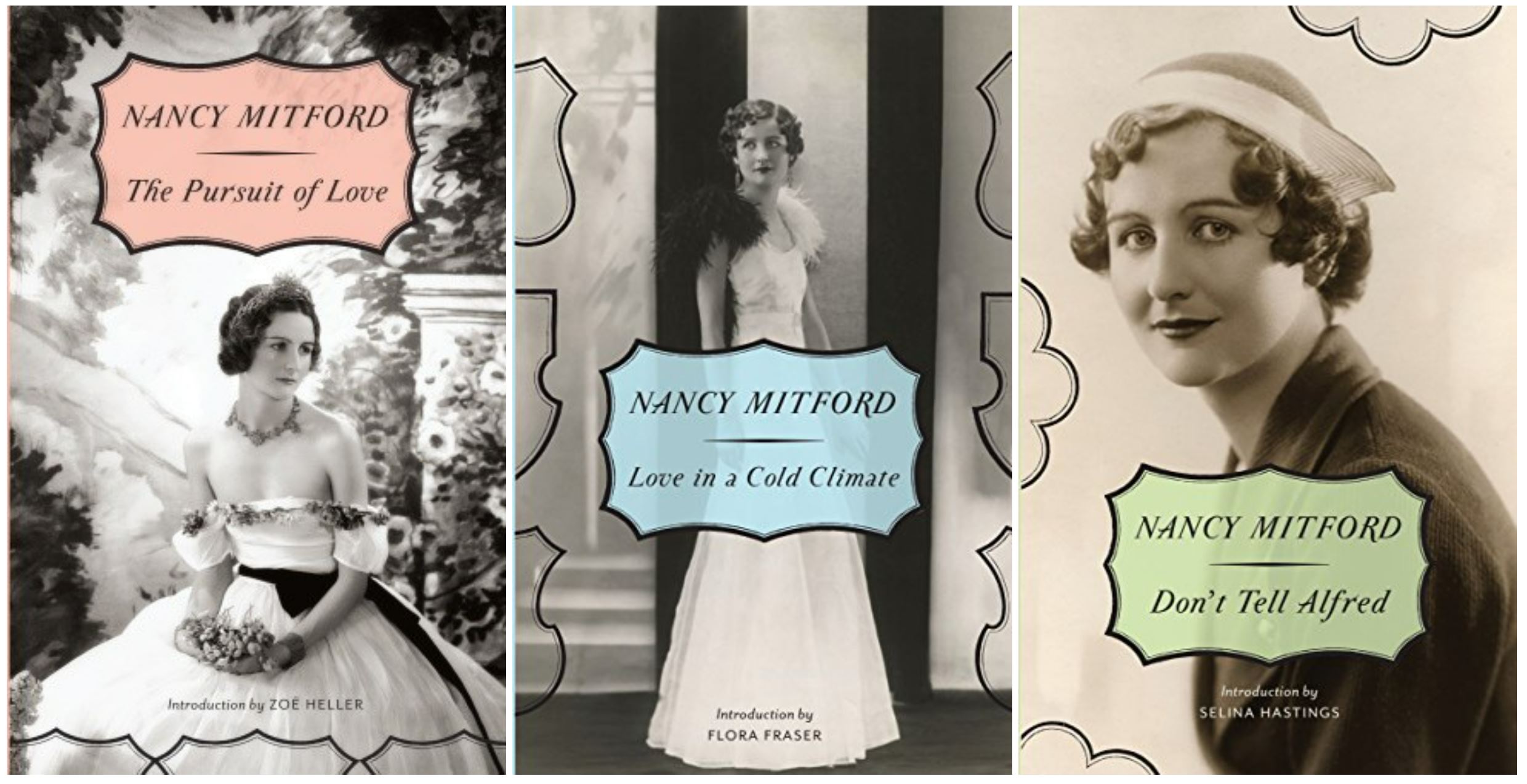
The Pursuit of Love – Nancy Mitford
Love in a Cold Climate – Nancy Mitford
Don’t Tell Alfred – Nancy Mitford
Crossroads – Jonathan Franzen
The Corrections – Jonathan Franzen
The Reading List – Sara Nisha Adams
I’m disappointed that I didn’t read a new 19th-century classic. Last year I read War and Peace. I did read The War of the Worlds, but I’ve read it a couple of times before. I had planned to read Madame Bovery.
2021 Books
Klara and the Sun – Kazuo Ishiguro
Yesterday’s Tomorrows – Mike Ashley
Robert E. Lee and Me – Ty Seidule
The Code Breaker – Walter Isaacson
Last Best Hope – George Packer
Crossroads – Jonathan Franzen
The Premonition – Michael Lewis
Under a White Sky – Elizabeth Kolbert
The Reading List – Sara Nisha Adams
Each year I aim to read a certain number of books that come out during the year. Nine is pretty good for 2021, but I’m going to aim for 12 in 2022.
My friends Mike and Betsy recommended a new TV series on Amazon Prime, The Pursuit of Love, so I gave it a try. This essay chronicles where their casual recommendation has led me.
As I watched the show on Amazon Prime I was reasonably entertained but disturbed by certain details. For a period piece set the 1920s – 1940s it felt over the top. I doubted people really looked and acted like they did in the show. The sense of a revisionist history was further enhanced by the soundtrack that used contemporary music. I called Mike to chat about my impressions, and he agreed. I knew nothing about the novel the show was based on. We both thought the past couldn’t have been much like that, but didn’t know for sure. Of course, we knew it was a rom-com drama and wasn’t meant to be a history lesson, but it kept sideswiping bits of real history, and that was intriguing.
I decided to research its historical accuracy and discovered that the TV show was based on a trilogy of novels written by Nancy Mitford. They were based on her family, and it was then I discovered she was part of a famous group of six sisters. I remembered reading a review of a book called The Sisters by Mary S. Lovell years ago. I read the review because I liked the book’s cover but details within the review put me off. Two of the sisters had been friends with Adolph Hitler, and several family members had supported Hitler, and one daughter married the hated Oswald Mosley, leader of the English fascists. They just didn’t seem to be nice people to read about. The sisters had become notorious, an embarrassment to their parents, hounded by press, which made them sound like depression era Kardashians. Not something for me.
Still, the television show intrigued me. Was it an accurate portrayal of people in England at the time? Or was it a modern interpretation of how 21st-century screenwriters wanted to glamourize that history. I ordered a copy of The Sisters to find out. I figured the biography would tell me. I also discovered there had been two previous television productions of the story, based on: The Pursuit of Love (1945), Love in a Cold Climate (1949). There was a third book in the series, Don’t Tell Alfred (1960). By the way, I think all three TV productions focus on the first book despite two of them using the title from the second book, but the 1980 series goes into the second book.
My assumption that I’d hate The Sisters from reading the review was completely wrong. The family’s biography turned out to be immensely readable and fascinating. All I can say if if you love Downton Abby, there’s a good chance you’ll love this book. I’ve always been partial to biographies, and this one is a good one. A good biography makes you feel like you’re getting to know someone, and in this book, you get close to nine people (mother, father, son, and six daughters).
I learned that Nancy Mitford had lived a real life version of the 1920s, 1930s, and 1940s she fictionalized in The Pursuit of Love. I then wondered if the 1980 miniseries, Love in the Cold Climate, that had been on Masterpiece Theater was a more realistic portrayal to the times? I went looking for it but found it’s not available to stream or buy. I did find a used DVD copy to order, but when it arrived it was a Region 2 disc. Luckily, I remembered had an extra DVD player that was region free. (This version is available on YouTube.)
About this time my friend Anne dropped by and saw the biography. She got excited and said she remembered seeing a show on Masterpiece Theater a long time ago based on the Mitford sisters. I pulled out the DVD, “This one?” “Yes, that’s it!” She got even more excited and we decided to watch it together. This version gives Judi Dench star billing as the mother but she doesn’t get much air time. The only other actor I knew was Anthony Head, and his wasn’t a major part either. I did like this version, and I think I’ll rewatch the 2021 version. The main thing about the 1980 version, was the actors, costumes, and sets looked more realistic to how I picture the 1920s – 1940s. The performances were much more subtle, and being eight parts rather than three, included a lot more of the details and dialog from the novels.
By then I was reading the novel, and had encountered some of the family anecdotes four different ways. This was rather revealing about basing fiction on real life events. For example, Nancy tells in her novel how her father liked to hunt his children on horseback with fox hounds. The novel version is a gussy-up memory, but the two television versions sensationalizes the story. When I read the biography Lovell suggests it was probably one old hound one time with a couple of the daughters. And Jessica Mitford also wrote a book about the same family stories of growing up with her sisters, Hons and Rebels, and gives a different view, but I haven’t read it yet. Nancy later on felt Jessica’s memory had been distorted by her book, and that led to squabbles between them. However, all six girls were always squabbling, and all six became very successful in their own ways.
There is another adaptation of Love in the Cold Climate from 2001 what I want to watch, but I’ll have to subscribe to BritBox to watch it. It’s another 3-part version. I’m curious how they present the time period too.
The Sisters was full of history. The Mitford girls were related to Churchill and connected by marriage to the Kennedys, two of them were pals with Hitler, one connected to de Gaulle, and one had connections with the Roosevelts. They all knew many famous writers and became bestselling authors themselves. They were part of the Bright Young Things set. And if you’re into that kind of thing, they hobnobbed with fellow aristocrats, royalty, while growing up in manor houses, hunting foxes, attending coming out balls, following the season, and doing all those things we saw in Downton Abby. Various sisters lived in London during the Blitz and V-2 bombings, Spain during the revolution, Germany during the rise of the Nazis, and France before and after the war. One sister had to go before the House of Un-American Activities, while another was jailed during the WWII for being married to Oswald Mosley.
Here is a nice animated video that quickly covers the history of the Mitford sisters:
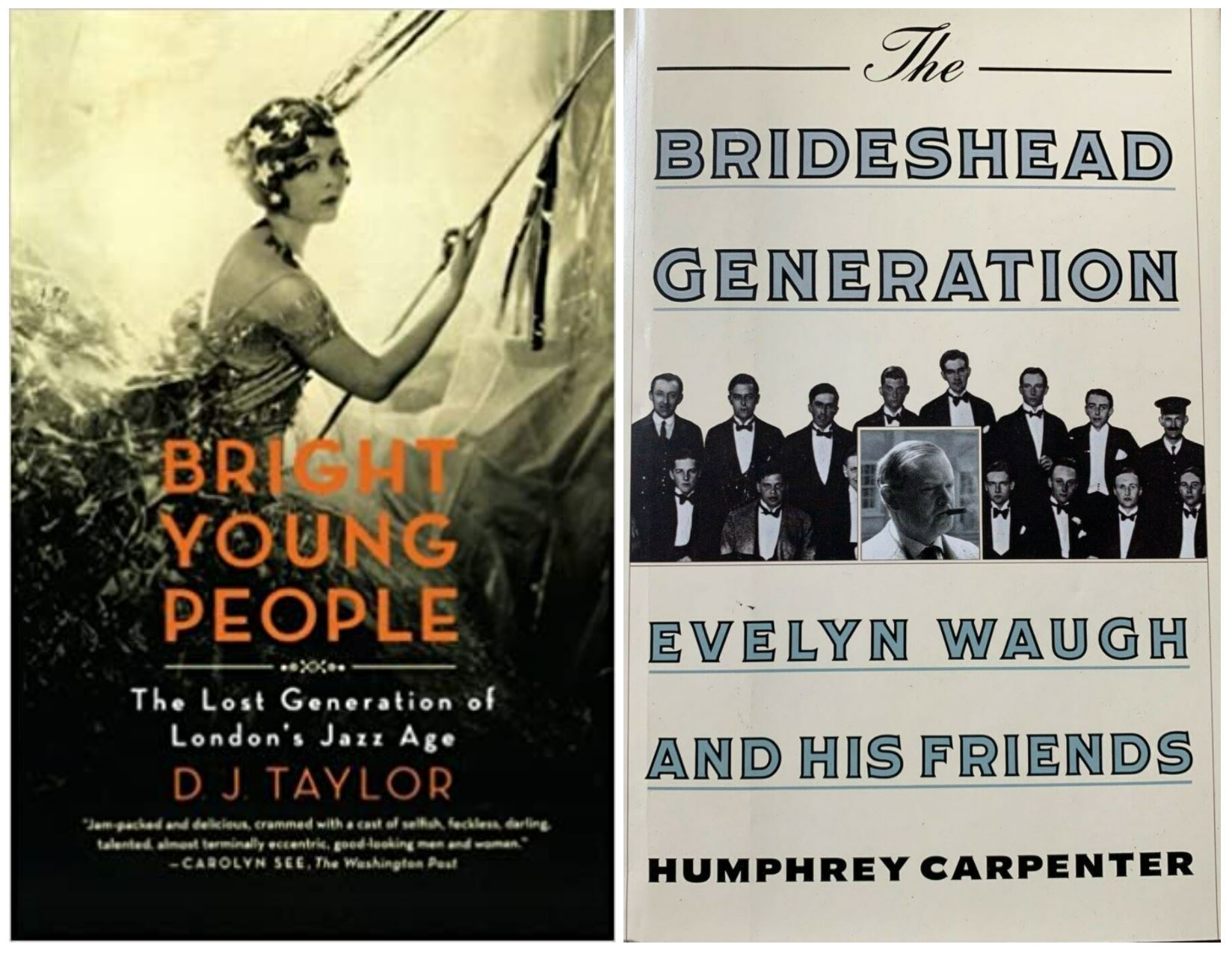
Because of all this history, and wanting to know more about the writers they knew, I ordered two more books to read.
This history fills in a time period after the Bloomsbury group that I learned about as an English major and before The Beatles who made England interesting back in the 1960s when I was growing up.
I fell into this black hole of literary history in the same way I fell into reading a zillion books about The Beats and Jack Kerouac, or all the books I’ve read about the Transcendentalists, or the Lost Generation, or the Impressionists, or certain crowds of science fiction writers. I love how an art movement brings people together.
Collapsed: How Societies Choose to Fail or Succeed by Jared Diamond
Falter: Has the Human Game Begun to Play Itself Out? by Bill McKibben
Seaspiracy – a documentary on Netflix
All indicators point to the collapse of civilization sometimes this century. Despite all the press about this perfect storm of self destruction, few people are willing to worry, and even fewer willing to do anything. Must the conclusion be that failure is our only option?
Most of humanity is either preoccupied with personal problems, or if they contemplate the future at all, assume our species will muddle through as it always has in the past. All the evidence suggests otherwise, that the biosphere cannot absorb the impacts of Homo sapiens without a significant destabilization of its system, which in turn will alter the course of civilization.
Civilizations have always come and gone, and so have species. Nothing lasts forever, not even the Earth or the Sun. It’s rather disheartening to consider what we could have become. We almost had the intelligence to create a global civilization that could have lasted thousands, if not millions of years. Theoretically, we still have a chance, but few people who think about such things give that chance much hope. It would have required everyone pulling together towards a common cause, and we’re just not that kind of species.
However, don’t worry, don’t get depressed or do anything irrational. No need to become a prepper assuming an Armageddon is just around every corner. The collapse of civilization will probably be so slow you might not even notice it. Humans are very adaptable to hard times and excellent at rationalizing things aren’t what they seem. Just take every day one day at a time and enjoy the passing parade of history.
As an individual who reads many books and watch many documentaries like the ones above, I keep thinking we should be doing something. But I realize there’s a problem with that assumption. First, we all need to be doing the same thing, and second, we should all stop what we’ve been doing our whole lives. Now is that going to happen? Is humanity a ship that can be steered or a bullet on a trajectory? It really comes down to the Serenity Prayer,
God grant me the serenity to accept the things I cannot change,
Courage to change the things I can,
and Wisdom to know the difference.
It’s the last line that’s so hard to achieve. What can we change, and what can’t we change? Theoretically we could change everything in society if we could just change ourselves. Is it Pollyannaish to think we could, and fatalistic to think we can’t? I wonder if people have always believed in God just to redirect that burden of responsibility?
If you read the above books maybe you will also ask who is smart enough to understand and solve these problems? If we built giant AI minds that could think their way through these immense challenges, would we take their advice? Aren’t we too egotistical to listen? Or even if a God spoke directly to the world would we obey? I’m not sure that’s in our nature either.
Maybe the only path an individual can take and stay sane is learning to accept and endure. But that doesn’t seem to be the way either because too many people today are angry. Anger means still trying to control. If you watch the news pay attention to anger. Too many hate what’s happening to them. And it’s on both sides of the political spectrum. All the people who fight for freedom and all the people who want rules and regulations are motivated by anger. That’s what I dread about the collapse of civilization, living with all these angry people. And the only solution to that is find a place away from them, but that’s not really possible either, is it?
This is a strange book review. But I find it’s getting harder and harder to review books like these by talking about the issues they cover. I’m down to evaluating their emotional impact. The penultimate question is: Can we do anything? The answer is yes. The ultimate question is: Will we? I used to hope that was a yes too, but my faith is fading.
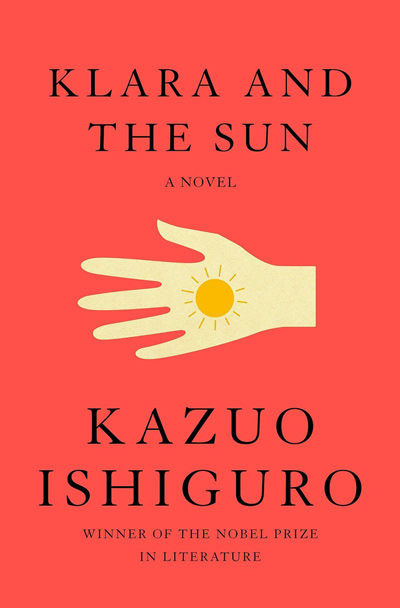
Androids that can pass for humans have become very popular characters in books, movies, and television shows. Klara and the Sun by Kazuo Ishiguro is the second novel I’ve read by a literary writer to explore this theme, the first being Machines Like Me by Ian McEwan. I reviewed it back in 2019. I have to admit that literary writers do a better job at characterization than science fiction writers. Klara is a fully realized being that we come to know from a first person perspective.
And I was impressed with Ishiguro’s science fictional speculation. He develops Klara with a distinctive speech pattern and we learn about Klara’s way of perceiving the world through Klara’s narration. Klara is designed to be a girl robot, an artificial friend, and androids like Klara are referred to as AFs in the book. Other than looks, Klara’s personality has little to identify as female. Klara is a being with growing awareness and Klara’s consciousness grows by observations. We never know exactly what Klara looks like, but since Klara is supposed to be a companion for a teenage girl we have to assume it looks like one.
However, one of my greatest objections to stories about androids passing as humans is giving them gender. For some reason creators of such stories believe AI minds will have gender and that’s illogical. AI minds, no matter what their outer casing looks like will not have gender because they will not be based on biology. Nor will they have human emotions. All of our emotions are tied to our biological subsystems. Writers of these stories seem to assume people will want to buy machines just like themselves. That might be true, but it won’t happen.
Klara starts out life in a store waiting to be bought. I imagined an upscale Apple Store. We slowly learn how Klara thinks about things from its observations. Klara’s vision is broken down into a grid system. Sometimes this appears to help Klara with perspective, sometimes with identifying objects, and sometimes with analysis of the details of specific aspects of what’s Klara sees. If you remember Deckard using the machine to analyze a photograph in Blade Runner, that’s how I envisioned Klara’s visual field. I thought this clever of Ishiguro.
Klara is eventually bought to be the companion for Josie, a young teenage girl around fourteen who suffers from an unnamed medical condition. Josie’s sister died from a similar condition. One of the mysteries of the novel is what they suffer from.
Ishiguro fleshes out this story with many other current science fictional speculations. Some kids, like Josie have been genetically altered (think Gattaca) while others haven’t. Josie’s closest childhood friend Rick hasn’t. The society of this world has also put many people out of work while elevated other humans with high status jobs. In this story, Josie’s mom has such a valuable job, but her divorced dad doesn’t.
Another fascinating theme introduced by Ishiguro is theology. Klara is a Sun worshipper, which is logical since Klara runs on solar power. However, Klara’s simple-minded beliefs are hard to accept. Ishiguro makes his AFs childlike in their thinking. If we ever create AI minds with general knowledge, including a chip with all of human knowledge would probably only add a buck to the cost. AI minds will know all human languages, all of mathematics, physics, chemistry, and biology, all of history, literature, and the arts, all of philosophy, religion, and psychology.
But Klara and the Sun is a story, and for this story, Klara has an innocent faith in the Sun. Giving theology to robots is what made Battlestar Galactica great, and has the same effect here.
Klara and the Sun is really about human relationships, and all the plot complications deal with Josie and her family. Without spoiling the story, it’s what the humans want and fear from machines that make the novel philosophically interesting. Ultimately, I believe Ishiguro rejects our sillier desires for androids that pass for humans such as creating them to satisfy our sexual urges, but even the ones he does suggest seem tied to our basic instincts.
Overall, Klara and the Sun is an enjoyable story, but more and more I’m getting disappointed that writers can’t picture realistic AI beings, or imagine such realistic AI beings’ impact on our society. There are no real reasons to create robots that look like us. There’s no reason to think they will think or feel like we do. And they will certainly have immense intelligences that will dwarf ours. We will probably anthropomorphize them even when real AI beings with general intelligence emerge because that’s our hangup.
But how will AI minds see us? Our behaviors will be inscrutable to them. They won’t be able to imagine love, hate, pain, lust, anxiety, humor, greed, jealousy, pride, and all our other emotions. AI minds will understand us like biologists study all nonhuman living organisms. AI minds will see us through their statistical studies of our behavior and by theorizing on how our behavior coincides with our languages. But could you imagine love, hate, or pain if you’ve never felt them?
Klara believes Josie was helped by the theology Klara imagined, but there is no real reason to believe this is true. If you read this novel, pay attention to Klara’s usefulness throughout the story. Does Ishiguro ever suggest that an AF would be an actual useful companion for teenagers? Or is Klara no more than a sentimental toy?
How will humanity be helped or hurt by AI minds? I think such novels are waiting to be written. So far all the ones about computer overlords or humans passing for human are based on our most basic emotions. Writers need to think outside our brain box we can’t seem to escape.
I actually thoroughly enjoyed reading Klara and the Sun despite my nitpicking about how writers want us to believe we can create androids that will pass as humans.




 Auxiliary Memory