
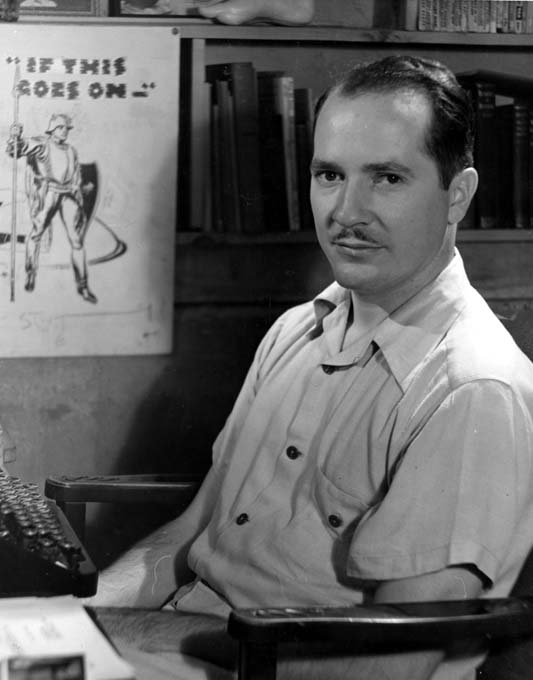
What To Do When Your Favorite Writer Goes Bad?

by James Wallace Harris, Monday, December 3, 2018

This month, I’m forcing myself to read a book I hate for a book club I moderate. The book is Friday by Robert A. Heinlein. I first discovered Robert A. Heinlein in 1964 when I was still twelve and in the 8th grade. By 1966, I believe I had read all his then published novels and most of his published short stories. He was my favorite writer by far, and I was a voracious bookworm. By the end of the 1960s, I was regularly rereading his books.

Then in 1970, Heinlein came out with I Will Fear No Evil. It was the first hardback I bought as a new release. I remembered how excited I was to delve into that book and just how disappointed I was when I read it. I was surprised and disturbed that I could dislike a Heinlein book. Heinlein never wrote another book I liked. His last seven novels, published from 1970-1987 were horrible reading experiences for me. My reactions ranged from bored to being revolted. I’ve never been able to even finish Friday or The Number of the Beast, and never even tried To Sail Beyond the Sunset.

What is strange, is I often encounter Heinlein fans who prefer his later books. When I was younger I assumed the Heinlein I hated was bad Heinlein, but can that be possible when there are plenty of readers who love the works I consider bad? When I was younger I also assumed Heinlein changed. In more recent years I wondered if I had changed. I pretty much loved Heinlein in the 1960s when I was a teenager. Heinlein was a substitute father figure for me because my own father wasn’t around much. Ultimately, in the late 1960s when the generation gap was at its widest, I think I rejected both of my fathers because of political differences. Heinlein and my dad both supported the Vietnam War, and I didn’t.

In the last few years, I’ve thought about giving Heinlein a second chance. Maybe there are good qualities to his “bad” books that I missed. Maybe I am wrong in thinking books can be judged good or bad. Maybe I should also reread the “good” books to see if what I disliked about Heinlein was there all along and I just skimmed over those aspects.

I’ve also thought that Heinlein devolved as a writer as he aged. He did have medical problems that affected his thinking in later years, but supposedly surgery fixed that. Heinlein claimed until to the end of his life that Starship Troopers (1959), Stranger in a Strange Land (1961), and The Moon is a Harsh Mistress (1966) were his best books, the ones that defined his personal philosophy, and the ones he wanted to be remembered and judged by. As I’ve aged, I’ve turned against all his 1960s novels. I now consider his novels published from 1952-1959 as his best, from The Rolling Stones to Starship Troopers. I tend to like many, but not all, of his shorter work published from 1939-1959.

I’m not alone. Many science fiction fans my age prefer the earlier Heinlein. Heinlein was proud of the young-adult novels he wrote in the 1950s, but I don’t think he felt they represented his insight and art. When he went to G. P. Putnam’s Sons in 1959, Heinlein felt he had been freed to write what he wanted. I think that’s when he saw himself as a mature artist and wanted to be respected as a philosophical novelist. I believe he wanted to be another Ayn Rand. I’ve only read The Fountainhead, and I’m not an admirer of Rand, so I can’t really compare them. But I know they both wanted to be influential. From Alec Nevala-Lee new book, Astounding, it seems obvious Heinlein was anxious to make an impact and disappointed that his success didn’t go beyond writing science fiction.

This month I’m making a concerted effort to understand Heinlein from one of his later works, Friday. It was first published in 1982, just six years before Heinlein died. Friday was nominated for a Hugo, Nebula, Prometheus, and Locus award, but did not win any of them. Jo Walton at Tor.com calls FridayThe Worst Book I Love.” She fell in love with the story at 17, but always knew it lacked a plot. Walton says in the end, “Even as it is, I love it for its moments of clarity and beauty. I wouldn’t be without it. I taught myself almost all I know about how to plot by lying awake trying to fix the end of Friday in my head.” That’s far more generous than I could ever be, but then she’s much younger than I am.

I can’t forgive Heinlein for creating a woman character who could rationalize being gang-raped as part of her secret agent job but wanted to slowly kill one of her rapists because he didn’t brush his teeth and use mouthwash first. The story itself is high-minded about accepting different people but spends an inordinate amount of time on when to kill folks for their bad manners. Friday Jones is an artificial person (clone) and rejected because of it, so you’d think she’d be a little more forgiving about all the capital killing snubs she feels.

The conflict in the novel is as contrived as religion. The good guys feel like bad guys to me, willing to kill people for what I think are trivial reasons, but ones they judge as highly offensive. Heinlein never defines his bad guys. They don’t have a philosophy. They don’t have an agenda. They are just a supposedly evil existential threat, ruthlessly killing and committing bad manners. But I wonder if Heinlein’s nebulous bad guys are really us, good guys from a rational world.

The “Boss” character who seems reprocessed from Heinlein’s 1949 story “Gulf” and a secret agent version of Jubal Harshaw from Stranger in a Strange Land is one self-righteous sanctimonious know-it-all. I worry that Heinlein’s great philosophical message is this character’s beliefs? If that is true, then Heinlein’s art is only the conceited gospel of his opinions.

But I have my own faults as a reader to confess. I should have set higher standards for my favorite author long ago. I can’t separate my boyish love of science fiction from any discernment of great writing. It’s taken too long to realize that great writing should be those stories that enlighten me about reality and not the fiction I most want to escape into.

The reason I loved Heinlein in adolescence is that Heinlein shared my fantasy for colonizing the solar system. That was my psychological substitute for religion when I became an atheist at age 13. Heinlein after 1959 gave up on space exploration. His fiction became all about rationalizing his personal philosophies. He gave up his ability to tell a story and create characters. Tragically, he took many of his old characters I cherished and turned them into puppet mouthpieces for this Heinlein philosophy. I never could forgive what he did with the Stone family from The Rolling Stones when turned them into sleazy swingers in The Cat Who Walk Through Walls. Even worse, they all lost their unique voice and became zombies speaking in Jubal-tongue.

But am I being too harsh on my literary hero? That’s why I’m rereading his later books. Maybe I just don’t get it. I’m giving Heinlein one last try. One of my other favorite genres is literary biographies. Most writers are tragic figures. Maybe I need to be more forgiving of Heinlein the man, and not judge him by his bad books. The literary heroes I replaced Heinlein with in the 1970s were Mark Twain, Jack Kerouac, and Philip K. Dick, none were angels, and certainly wrote their share of sinkers. Maybe I need to approach Robert A. Heinlein like I do Jack Kerouac, as a deeply flawed human who tried to justify his existence with his writing. In some ways, Heinlein is my Bronson Alcott father figure, and if Louisa May could come to terms with her crazy father, maybe I should with mine.

JWH


Counting the Components of My Consciousness

by James Wallace Harris, Tuesday, November 20, 2018

When the scientific discipline of artificial intelligence emerged in the 1950’s academics began to seriously believe that someday a computer will become sentient like us, and have consciousness and self-awareness. Science has no idea how humans are conscious of reality, but scientists assume if nature can accidentally give us self-awareness then science should be able to intentionally build it into machines. In the over sixty years since scientists have given computers more and more awareness and abilities. The sixty-four thousand dollar question is: What are the components of consciousness needed for sentience? I’ve been trying to answer that by studying my own mind.

Thinking Machine illustration

Of course, science still doesn’t know why we humans are self-aware, but I believe if we meditate on the problem we can visualize the components of awareness. Most people think of themselves as a whole mind, often feeling they are a little person inside their heads driving their body around. If you spend time observing yourself you’ll see you are actually many subcomponents.

Twice in my life, I’ve experienced what it’s like to not have language. It’s a very revealing sensation. The first time was back in the 1960s when I took too large a dose of LSD. The second time was years ago when I experienced a mini-stroke. If you practice meditation you can learn to observe the moments when you’re observing reality without language. It’s then you realize that your thoughts are not you. Thoughts are language and memories, including memories from sensory experiences. If you watch yourself closely, you’ll sense you are an observer separate from your thoughts. A single point that experiences reality. That observer only goes away when you sleep or are knocked by drugs or trauma. Sometimes the observer is aware to a tiny degree during sleep. And if you pay close enough attention, your observer can experience all kinds of states of awareness – each I consider a component of consciousness.

The important thing to learn is the observer is not your thoughts. My two experiences of losing my language component were truly enlightening. Back in the 1960’s gurus of LSD claimed it brought about a state of higher consciousness. I think it does just the opposite, it lets us become more animal-like. I believe in both my acid and mini-stroke experiences I got to see the world more like a dog. Have you ever wondered how an animal sees the reality without language and thoughts?

When I had my mini-stroke it was in the middle of the night. I woke up feeling like lightning had gone off in my dream. I looked at my wife but didn’t know how to talk to her or even knew her name. I wasn’t afraid. I got up and went into the bathroom. I had no trouble walking. I automatically switched on the light. So conditioned reflexes were working. I sat on the commode and just stared around at things. I “knew” something was missing, but I didn’t have words for it, or how to explain it, even mentally to myself. I just saw what my eyes looked at. I felt things without giving them labels. I just existed. I have no idea how long the experience lasted. Finally, the alphabet started coming back to me and I mentally began to recite A, B, C, D, E, F … in my head. Then words started floating into my mind: tile, towel, door, mirror, and so on. I remembered my wife’s name, Susan. I got up and went back to bed.

Lately, as my ability to instantly recall words has begun to fail, and I worry about a possible future with Alzheimer’s, I’ve been thinking about that state of consciousness without language. People with dementia react in all kinds of ways. From various kinds of serenity, calmness to agitation, anger, and violence. I hope I can remain calm like I did in the bathroom at that time. Having Alzheimer’s is like regressing backward towards babyhood. We lose our ability for language, memories, skills, and even conditioned behaviors. But the observer remains.

The interesting question is: How much does the observer know? If you’ve ever been very sick, delirious, or drunk to incapacity, you might remember how the observer hangs in there. The observer can be diminished or damaged. I remember being very drunk, having tunnel vision, and seeing everything in black and white. My cognitive and language abilities were almost nil. But the observer was the last thing to go. I imagine it’s the same with dementia and death.

Creating the observer will be the first stage of true artificial intelligence. Science is already well along on developing an artificial vision, hearing, language recognition, and other components of higher awareness. It’s never discovered how to add the observer. It’s funny how I love to contemplate artificial intelligence while worrying about losing my mental abilities.

I just finished a book, American Wolf by Nate Blakeslee about wolves being reintroduced into Yellowstone. Wolves are highly intelligent and social, and very much like humans. Blakeslee chronicles wolves doing things that amazed me. At one point a hunter shoots a wolf and hikes through the snow to collect his trophy. But as he approaches the body, the dead wolf’s mate shows up. The mate doesn’t threaten the hunter, but just sits next to the body and begins to howl. Then the pack shows up and takes seats around the body, and they howl too. The wolves just ignore the hunter who stands a stone’s throw away and mourns for their leader. Eventually, the hunter backs away to leave them at their vigil. He decides to collect his trophy later, which he does.

I’ve been trying to imagine the mind of the wolf who saw its mate killed by a human. It has an observing mind too, but without language. However, it had vast levels of conditioning living in nature, socializing with other wolves, and experiences with other animals, including humans. Wolves rarely kill humans. Wolves kill all kinds of other animals. They routinely kill each other. Blakeslee’s book shows that wolves love, feel compassion, and even empathy. But other than their own animalistic language they don’t have our levels of language to abstractly explain reality. That wolf saw it’s mate dead in the snow. For some reason, wolves ignore people, even ones with guns. Wolves in Yellowstone are used to being watched by humans. The pack that showed up to mourn their leader were doing what they do from instinct. It’s revealing to try and imagine what their individual observers experienced.

If you meditate, you’ll learn to distinguish all the components of your consciousness. There are many. We are taught we have five senses. Observing them shows how each plays a role in our conscious awareness. However, if you keep observing carefully, you’ll eventually notice we have more than five senses. Which sense organ feels hunger, thirst, lust, pain, and so on. And some senses are really multiple senses, like our ability to taste. Aren’t awareness of sweet and sour two different senses?

Yet, it always comes back to the observer. We can suffer disease or trauma and the observer remains with the last shred of consciousness. We can lose body parts and senses and the observer remains. We can lose words and memories and the observer remains.

This knowledge leaves me contemplating two things. One is how to build an artificial observer. And two, how to prepare my observer for the dissolution of my own mind and body.

JWH

Can Meditation Overwrite the Unconscious Mind?

by James Wallace Harris, Friday, November 9, 2018

My friend Linda has been getting into meditation. That made me think I should give it another go. I’ve tried meditation many times since the New Age of the 1970’s, but never stuck with it. I currently face two obstacles I want to overcome and wondered if meditation could help. I see at least one article a week show up on Flipboard touting the successes of meditators. They claim science supports the claims of meditation, but I’d want to verify that before I claim it too. I’ve written before about how I feel there are two wills occupying this body – the conscious me, and my unconscious mind whose will seems much stronger than my conscious mind.

older-adult-meditating

The two of us fight over health and creativity. My unconscious mind wants to follow my biological urges. The conscious me wants to become disciplined and be more creative. The conscious me wants to control or eliminate my biological urges and apply all my energy to achieving my goals. My unconscious mind loves to go with the flow and puppet-mastering me into doing whatever it feels like.

This morning I sat erect in an upholstered straight chair, put 20 minutes on my iPhone timer, sat on my hands, and closed my eyes. Meditation usually involves following your breath or focusing on a mantra. I decided to pay attention to my senses and always bring my mind back to one thought: I want to write a short story. I already know which story. I’ve written several drafts but left it unfinished several years ago.

I have two barriers I face every day. My declining health and my declining ability to focus on work. As I sat, and let my mind quiet I noticed the regular tick of the clock on the wall. I observed that tick which was more of a quiet thump, thump, thump…

Then I noticed the faint wail of a train whistle far to the east. I told myself to think about writing. I worked to just empty my mind of words and hold just the urge to write. Time and again my thoughts would flare up. They’d be about writing, but I tell myself to stop thinking words and just observe.

Then I noticed the sound of the HVAC in the attic starting the furnace. My mind went back to the clock and then wail of the train that was getting closer. I had three sounds to follow. My mind felt like it was in a golden sphere of nothingness. My mind began to chatter again, thinking about the details of writing. I brought it back to just the three sounds and the urge to write.

I have no idea how meditation is supposed to do its wonders. Does merely learning to slow and stop thoughts alter the unconscious mind into new programming?

My mind drifted to other thoughts not related to writing. I reigned it in again. I observe the sound of the thump, thump, thump of the clock, the concurrent sound of the approaching train, the sound of the HVAC now blowing air through the vents, and a new sound, the little crashes of the occasional acorn hitting the roof and then rolling off. Then I noticed constant Tinnitus sound in my ears. My ears were singing louder than all the other sounds.

It came to me I should write a thousand words today. Then it came to me I should write about meditation. Then it came to me I should write the fiction first. Then it came to me I should write 1,000 words of fiction the first thing every day. Then I stopped my thoughts and went back to observing the sounds outside the golden glow of my mind.

After a while, my mind got away, and it gave me the first sentence of the story. I thought up more sentences but told my mind to stop. I focused on quieting the mind and observing the sounds.

It kept doing this until the alarm went off.

I got up immediately, went to the computer and wrote 1,039 words of new fiction. The first in a very long time. Is that success due to meditation? I don’t know. Let’s see what I do tomorrow and the following days.

I doubt the success of today’s writing is due to twenty minutes of meditation. I felt good today, after a string of feeling poorly days. I got up and did a Miranda Esmonde-White classical stretch workout, and then 30 minutes on the exercise bike. I then took a nice warm shower. I was feeling pretty damn good when I meditated, so maybe just the momentum of following some positive endeavors help me write fiction. I’ve been wanting to get back into writing fiction for years but just couldn’t make myself try. Mainly, because all my efforts ended in disappointment.

Most creative efforts are achieved by folks when they are young. A few creative endeavors have late-blooming exceptions, and writing is one of them. But I think I’m already older than that oldest late-blooming author I know about. My hope to succeed at something is strictly against all odds. And I understand why. The older we get, the less mental and physical health we have, the harder it is to make ourselves work at disciplined tasks.

I was feeling pretty good today. Except for a pesky hemorrhoid, I’m feeling really good this morning. That’s rare. My back and heart aren’t nagging me at the moment. My mind is a good deal more alert than usual. I have been on this intermittent fast for almost 40 days. I haven’t lost weight, but it seems to be making me feel better and give me more energy. I’m napping less. So one session of meditation probably didn’t get me to write today, but maybe feeling like meditation is another good sign. I hope to do it twice a day from now on. Let’s see if my unconscious mind will stop me, or if I can reprogram it.

I know I’m battling an uphill mental fight while in a physical decline, but I keep hoping there are things I can do to keep the fight going longer. I know at some point declining health and aging will crush my spirit. And even when I can’t actively be creative, I hope for some years of mass-consumption of books, music, movies, and television will keep me happy. I’ve talked to many old people that gave up on everything. I know what the future holds. I’m just fighting a delaying action. But I consider that a positive.

JWH

Three Friends Start Over at 67

by James Wallace Harris, Friday, October 5, 2018

Have you dreamed of starting over – maybe in another career, city, country or even continent? Do you crave new surroundings, conversations, activities, friendships, romances, routines, or even commitments? Do you hunger for something new, something different, something even exotic? Or do you just want the freedom to be yourself, to make all your own choices, to schedule every moment doing exactly what you want?

Three of my friends amazed me recently by rebooting their lives at age 67. Janis after years of planning moved to Guanajuato Mexico, Linda after a lifetime of dedication to husbands and children moved to Denver, and Peggy who thought for a decade she’d be the happiest living on a lake near her brother finally found she was right. Seeing these three women start over by themselves in a new place amazed and inspired me. I’ve been living in the same city for 48 years, married for 40, worked at the same university for 36 years, lived in the same house for 12. (Janis, Linda, and Peggy must think I’m boring!)

I’ve often wondered if I shouldn’t do something different with my life before I die. Up until I got married at 26, I had never lived in one place longer than 18 months, with the average closer to 12. Marriage, work, and getting older settled me down. In my late forties, I started having a heart arrhythmia which eventually gave me a touch of agoraphobia. My ticker was eventually surgically fixed, but I’ve kept the slight agoraphobia. Then my wife Susan started working out of town, and for eleven years I lived mostly alone (she came home Saturday afternoon to Sunday afternoon 2-3 times a month). For the last five years since retiring, I’ve been holed up in the house spending my days pursuing hobbies, and evening socializing with friends. But most of the time I was alone and I got to like that.

Janis, Linda, and Peggy were three women I’ve gotten to know in recent decades. I’ve often listened to them talk about their hopes for happiness. All three have gone through many changes, each different, but including buying and selling houses, retiring, losing or leaving husbands, dealing with children and grandchildren, traveling as much as possible, but ultimately, each thinking about where they could go to be exactly the person they wanted to be.

I am reminded of what I’ve read about women finding themselves in their post-menopausal years when they realize that men and children have dominated their lives, and it was time to put themselves first. I believe Janis learned that in her twenties after a brief marriage, but Peggy and Linda were devoted wives and mothers most of their lives. My wife Susan found a lot of independence when her career blossomed in her fifties and she moved out of town to follow it. And I also discovered being alone strengthened my soul. However, Peggy, Susan and I never learned to live completely alone, like Janis always has and how Linda is experimenting.

JanisThen there is moving to a new location. Janis living in Mexico blows me away. She is a life-long tourist. Her true love is travel. She was a flight attendant for Eastern before it failed, then became a lawyer, and briefly returned to work as a flight attendant in 2001 but that was nipped in the bud by 9/11. She’s been studying Spanish since I’ve known her and finished a B.A. in the language last year. She moved to Guanajuato to immerse herself in conversation and culture. The idea of living in alone another country astounds me. I’m much too chicken to ever do that.

Linda decided she wanted a life where she could make all her own choices and moved to Denver. She’s also a frequent traveler and wanted to live somewhere where people were progressive and liberal. That’s been my dream too, but I’m even too chicken to move to another town in this country.

LindaLinda wrote to me, “First, we’re all so different and so I don’t think what any of us have done would work for you. We’re very different people. What Janis and Peggy have done sound great—but wouldn’t be something I would want to do. I hadn’t really thought about it but 2 of my 5 or 6 best friends have done exactly what Janis and Peggy and I have done—Decided they didn’t like where they were and picked up and moved across the country. I think where we find ourselves when we retire just isn’t necessarily where we want to be and we’re more likely to be financially able to do what we want to do. For me, Denver is so comfortable. The people I’m meeting are well-educated, well-read, welcoming and just nice!  I’ve never had so many people go out of their way to get to know me. And the opportunities for learning and for meeting like-minded people seem way more than I’ve ever noticed in other cities. Maybe it’s just because my head is in a different place. Anyway—this was a great move for me and I am completely content with my decision!

Peggy recently moved to Denver to be near her daughter and grandson but found that Denver was not a good fit for her. Ultimately, she decided to move back south to fulfill a longtime dream of living on a lake. She has been talking about living on a lake ever since her husband died when she was in her fifties. It’s just taken her this long to get free of the distractions of children, jobs, and boyfriends.

PeggyPeggy wrote to me, “After 27 years of marriage, I have spent the time since my husband’s death in 2006 trying to find my new place in the universe.  I have read many times that life is a journey and not a destination.  I’ve learned through my own experiences, both good and bad, that there is probably not just one place for me. So, I believe that if I am not happy in a place or relationship, it is reasonable to move on to another.  However, each time I move on I hope for a longer stay where I can find happiness and someone to share it.  To have the courage to do this, I remind myself that the final destination is Death and that we are not promised tomorrow. Jim thinks I’m brave, I think I’m just following the life I was destined to lead. So, I expect to continue my journey wherever it takes me (maybe with someone special) until I reach that final destination.

Maybe I’m awed by my brave lady friends because of my agoraphobia, but I don’t think most people make such big moves late in life, especially by themselves. However, I can think of several women bloggers who have. Are women more willing to start over later in life? Maybe I don’t travel because I’m too content where I am, even though I know there might be better places to live elsewhere.

I assumed I would grow old and decay in place in my current house. Before Janis moved to Mexico, she had said life here was getting stale. That got me to thinking. Was I not making enough effort to get more out of life? Am I going stale? For years Janis was my TV buddy and we watched television together several nights a week. We have many overlapping interests, but we’re also very different. I’m sure our TV life was part of the staleness. However, Janis also said without the challenge of being a lawyer or going back to college, just being retired can be boring. I’ve often wondered if my life shouldn’t have more varied stimulation than books, music, movies, and television, but they give me such great pleasure that so I don’t feel retirement is boring. Susan has always resented that I didn’t love to travel and even asked me to try Zoloft hoping it would make me less anxious about taking trips. Maybe I don’t travel because I like what I’m doing more.

I told my oldest friend Connell about writing this essay and he immediately replied I was deluding myself if I thought I could travel. He knows me extremely well. Yet, I still felt guilty for not trying harder to see more of this world. My goal for retirement was to teach myself to write. I could live anywhere as long as it had few distractions.

Before I retired at age 62, I saved for years so I could reach my dream destination of free time. Maybe it’s my tiny touch of agoraphobia because I’ve always wanted to stay home and worked at my hobbies. Yet, is my reclusiveness hurting me? Should I push myself to be braver before I get too old? Or am I already too old? I’ve had more physical problems than Janis, Linda, and Peggy — or is that just a rationalization. Stephen Hawking traveled often despite his severe handicaps.

These women wowed me. They decided what they wanted and made it happen. They had to take risks and sell houses, leave family and friends, and essentially start over, almost from scratch. I wonder if there’s any place on Earth I’d give up everything to go live?

Being married is security. Owning a house is security. Having old friends is a security. Having a familiar infrastructure of shopping, doctors, support services, entertainment is security. Because Susan moved away to work for eleven years, I feel I could move away to do something on my own for a while too. One place I thought about is New York City, on the Upper East side near Central Park. I want to live somewhere where I won’t need a car, in a rented apartment building several floors up, but near lots of cultural events that were within walking distance or a quick rideshare. Or cities would work too. I’d still need a place to hold up in that comforts my agoraphobia but makes it easy to take excursions two or three times a week. (Ha-ha, I don’t expect to transform that much.)

Linda wrote to me, “But I do think you might regret not living in New York at some point. Why don’t you find a place to rent for 3 months and just get the experience of living somewhere else without a long-term commitment? I’m pretty sure I’ve suggested this before. I think you would really enjoy it and it would be an adventure. Without moving everything you own.” I’ve already been thinking about that and I’m encouraged by her advice, but I just don’t know if I have the balls to do that. I am going to do some extensive research and planning. That helps me overcome my anxieties.

I wish I was a brave traveler like Janis. I feel guilty for not ever traveling outside this country. I have lived in far more places in the U.S. than Janis, but that was all before I got married. I’m even chickenshit with my foreign travel fantasies because I’ve only ever been tempted by London, Paris, and Tokyo. I’m just too conditioned by always traveling in books, not reality. Janis sends me photos, videos, and stories that make me feel there’s more to this reality than the United States.

I’m most impressed with Janis’ travel bravery, but I’m the most envious of Linda’s location and activities. She immediately volunteered to work for the Democratic party, joined a thriving Unitarian church, and found many fascinating people who are pursuing a variety of creative activities to befriend. And she lives in an apartment several floors up overlooking beautiful scenery, another fantasy of mine. Linda shows me I don’t have to live in the conservative heartland. I could go and live somewhere that isn’t so politically depressing.

Peggy’s new life is the most opposite of my psychology. She’s out in nature every day, doing lots of physical and social activities. Peggy likes being with groups, which I don’t. But this represents bravery on her part because after her husband died, she spent years barely getting out. In a way, Peggy has returned to her high school age, hanging out with people who love social activities, sports, dating, eating out, and doing things in gangs. Susan is like that and wishes I was too. I’ve never been that way though. I love people but prefer them one at a time. However, Peggy shows me I should make more of an effort to get out into nature and to socialize more. This week she’s at Cruizin’ the Coast which attracts folks in antique cars. That’s something I would love to see.

These women are making me rethink my own life choices. I assumed I made my choice when I retired, but now I’m thinking I still have time to make other choices. I worry that I’ve let security and anxiety keep me from doing more – but can a leopard change its spots?

I turn 67 next month.

JWH


Analog Reading in a Digital Age

by James Wallace Harris, Saturday, September 22, 2018

I used to be able to sit with my book for hours, lost in reading. Now I’m lucky if I can make myself sit in a chair and read a book for an hour or even thirty minutes. After years of digital reading, I’m craving old fashion books again.

reading in a digital age

How and what I read has changed in these digital times. I don’t know if it’s because I’m getting older or the digital technology is changing me. Other factors come into play too, like having more content and greater variety. Or different ways to read – the printed page, the digital screen, or the audiobook.

I actually spend many hours reading every day, but it’s mostly off my PC, iPhone, iPad or Kindle. And most of those words aren’t from books. When I was younger, I was never much of a newspaper reader. I loved books and magazines. I could read for hours. I still read books, but I often don’t finish them, and I rarely read a magazine anymore. My mind has developed an impatience that leaves me too fidgety for books. Newspapers have long ago disappeared from my life, and magazines have almost faded into nonexistence. I don’t want books to go too.

Every day I spend at least an hour, maybe more reading the New York Times and Flipbook from my iPhone. Flipbook does gather content from magazines, newspapers, and websites from all over the world, so I’m actually reading articles that used to be presented in paper newspapers and magazines. But the experience is different.

In pre-digital times, my days had a smaller selection of articles to read. I would find something that interested me and generally read the entire piece. For some of my favorite magazines, I’d spend hours reading the whole issue. Now I flip past dozens of articles, maybe even a hundred, skim read ten to twenty, and hardly ever finish one. I usually add a few to Instapaper every day telling myself I’m going to go back and study them, but I seldom do.

I’ve become a vacuum cleaner of words rather than a reader. At least not in the old sense of reading. I still finish three or four books a month, but mostly via audio. I’m currently listening to Doomsday Book by Connie Willis. It’s 26 hours and 20 minutes. The action is extremely slow paced, but I’m enjoying it very much. I’m not sure if I’d have the patience to read it. I did eyeball read Men Explain Things To Me by Rebecca Solnit on my Kindle this week, but it was a mere 130 pages.

I finished Solnit’s book aching both to hear it, and to read a paper copy. Psychologically, I felt I wasn’t getting all of what Solnit had to say from the Kindle. I need to hear someone read it with the proper pacing, cadence, and inflections, plus I wanted to see the words on actual paper. I wanted to squeeze every idea out of her book, make notes, and distill all the points into one concise outline. I doubt I’ll ever take the time to do so. I did highlight passages in my Kindle and printed those out so I could discuss them with my friend Linda during our two-person book club. We discussed Men Explain Things To Me twice, but that wasn’t enough. What Solnit had to say was something I wanted to memorize, but sadly, the modern way we read means rushing on to something new.

With audio listening, I can get through very long books, including nonfiction and classic novels I never had the patience to read before. Plus I enjoy them far more. If I read Doomsday Book with my eyes I’d miss so much of its richness, especially all her work with middle English (it’s a time travel story). However, I recently discovered I was missing other aspects of novels by not reading with my eyes.

PBS is running a series now called The Great American Read. Each weekly episode has readers explain why they love their favorite books. I’ve listened to Jane Eyre, a book I would never have read with my eyes. The audiobook had a lush dramatic reading, and I admired the writing and story but didn’t really care for the characters. But when its fans were interviewed on PBS, they read a segment from the book, highlighting the words, and I realized why those fans identified and loved Jane Eyre the character.

I also saw that other readers like to savor sentences in fiction, something I don’t take the time to do. I love audiobooks because they are slow. When I was young I’d speed read through books anxious to find out what happens. I missed a lot. The slowness of audiobooks allows me to get so much more. But seeing the words of Jane Eyre on TV highlighted as a reader read them, I understood to get deeper into a book I needed to read with my eyes and go even slower.

Our technology allows us to feel we’re reading more, giving us the illusion that we’re learning more, but are we? Part of my problem is I buy far more books than I can ever read, and find far more articles each day than I can ever finish. The pressure to consume them all makes me rush by their words. Reading off the computer screen, iPhone screen, iPad screen, the Kindle screen allows me to feel like I’m mass-consuming information, but I’m not sure I’d call that reading anymore.

I love computers and technology. I have no doubts that it has enhanced my life greatly. But I’m realizing my brain can only process so much data per day. Sometimes I feel my aging brain is slowing down, but I’m not so sure. I feel much wiser at 66 than I did at 26. I know I’ve always been a skimmer over knowledge, that I’m a dilettante of learning. Digital technology gives us the illusion we’re more productive, but I don’t think it’s true.

I’m struggling with the psychology of reading. I’m discovering I need to read with both my eyes and ears and on paper, screen and headphones. That there isn’t one way to read. I’m beginning to buy my favorite books on Kindle, Audible and paper and feel the need to process the best books three times. Most books only need one “reading” but some need two or three. I’m also learning that I probably shouldn’t waste my reading hours on those one-time books anyway.

For fiction, I feel the first reading should be audio. Audio has the greatest impact if it’s read by a skilled dramatic narrator. The second reading should be on the Kindle so I can highlight passages, especially if I want to write about the book or discuss it with friends. But for longterm enjoyment, I feel I need to bond with a printed copy of the book, one that I actually admire for its cover, design, fonts, and paper.

For nonfiction, I feel it’s best to start with the Kindle edition, and then go to audio. I like a physical book to flip through randomly. I’ve always loved hardbacks, but I’m starting to think smaller trade paperbacks are nicer for flipping.

I don’t like big heavy books or books with tiny print. So any book that’s hard to hold or requires squinty-eyes to read I leave to audio or Kindle. The other day I almost bought a beautiful hardback edition of Poe’s complete works. It looked new but was only $3 used. But I realized I wouldn’t like holding it. I still regret not buying it, but it was the right decision.

For years now I’ve been buying my favorite books on audio and Kindle, but now I’m also wanting a copy to hold. The hold-in-my-hands copy must have a kind of charm, either a beautiful cover or a unique character. I’m thinking of thinning out my library so the books I keep are ones I loved to hold and read with my eyes. (Thank you Marie Kondo.)

I don’t know why this craving to read books has returned to me now. I don’t feel anti-technology. I would never give up audiobooks or Kindle reading. I guess what I’m learning is no matter how carefully I read a book, with whatever technology, I never get all it has to offer.

JWH