What Would Give Us Hope for the Future?

by James Wallace Harris, Saturday, May 25, 2019

I have little hope for the future. I’m not alone, my most popular essay with over 60,000 hits is “50 Reasons Why the Human Race is Too Stupid to Survive.” So I keep asking myself: “What would give us hope for the future?”

If certain changes were made in our laws I might change my mind about the future and be hopeful. However, I seriously doubt they will be made because the current state of corruption is too ingrained. Until we can solve these five problems I don’t think there can be any hope for the future.

  • Greed
  • Corruption
  • Deception
  • Inequality
  • Pollution

Our current system has wired our society for self-destruction. If we don’t do something to alter course our civilization will collapse in the next 50-75 years. Just count the countries that have collapsed around the world in recent years. There are several bald spots on civilization right now. Civilization is thinning around the globe. We need to repair those bald spots and make civilization sustainable economically and ecologically.

I no longer feel electing a new leader every four years is a solution. We need to tweak our political system so that it’s more democratic. We need to redesign capitalism so it’s equitable and ecological. Our current political polarization leaves a majority of the population depressed because we effectively have minority rule. Even we got rid of the Electoral College it will only help a little. We’d also need to get rid of all the corruption in the voting process such as gerrymandering and unfair laws to control who votes.

Even if we overhauled the voting system so that it’s 100% fair and open, we’d still have lethal problems. The most important of which is corruption. People with money control too much. We live in a plutocracy. The solution here is to remove all campaign contributions. The government should pay for all campaigning so every candidate has equal resources and no reason to be beholding to any special interests.

Ending political contributions would not end corruption. We’d also need to overhaul the tax system so businesses couldn’t strive to get a better deal. By allowing tax breaks for certain industries or to lure them to specific locations we create a structure for corruption. The influence of greed needs to be removed from politics.

Some people don’t want a true democracy because they fear it would bring mob rule. I’m not so sure. But we might need to change the definition of majority. Winning with 50% causes polarization. We’ve coalesced around two parties by forming coalitions of special interests. We need to get back to bipartisan compromises. We should change the percentage to win an election to 55%, and maybe eventually larger. We should change the percentage for a law to pass to 66%. And more laws should be based on referendums, rather than politicians.

We need to elect leaders who work for 100% of the people. Every political issue, no matter how divisive needs be base on solid compromises. Right now everyone wants extreme solutions, ban all guns – allow all guns, ban all abortions – allow all abortions, etc. We need to find middle paths that satisfy at least 66% of the country. If two-thirds of the population were satisfied, I feel the country would eventually heal itself.

And we need to stop endlessly arguing. Our polarized politics have made the country into one giant trench warfare where the lines never move. We need to find compromises, and then shut up for a while. We need to make a decision and stick with it for at least a decade before we argue over it again.

Part of our problem is we argue with lies and deception. We need to learn how to validate the information we club each other with. People with power and money know how to deceive. If we had a true democracy, those who want to influence change would have to appeal to everyone, and not just a few corruptible politicians. We need to eliminate lobbyists to politicians shift lobbying to the voters.

Part of the problem is inequality. A powerful minority are born with decisive advantages while too many are born without the opportunity to compete.

Capitalism is the only mechanism we have to create wealth and inspire innovation, but it unfairly creates too many losers. We want a system that rewards effort, but we don’t want a system that allows unjust competition. All of us are born on Lifeboat Earth without our choosing, but some were giving more of the provisions than others at the start. We are a greedy species, so we couldn’t stand a society that divided everything equally. However, for stability, we do need a fairer divvy up of what we have.

I would have hope for the future if everyone had an equal say, had equal opportunity, and the winners of society left the losers with at least a respectable life.

And we have to do all this while preserving the Earth. Seven billion people cause a lot of pollution. Climate change is a byproduct of pollution. Our pollution is destroying the environment for us and all other species. Not only should we seek equality for all humans, but other species deserve a share of equality too.

I think it’s possible to create a fairer sustainable society, but I’m not sure we will. As you consume the news each day, pay attention to these five problems. Are we moving to solve them, or increase them? Keep your own scorecard. How would you bet on the future?

JWH
 

If You Love Collecting Anything, You’ll Love Bathtubs Over Broadway

by James Wallace Harris, Sunday, May 19, 2019

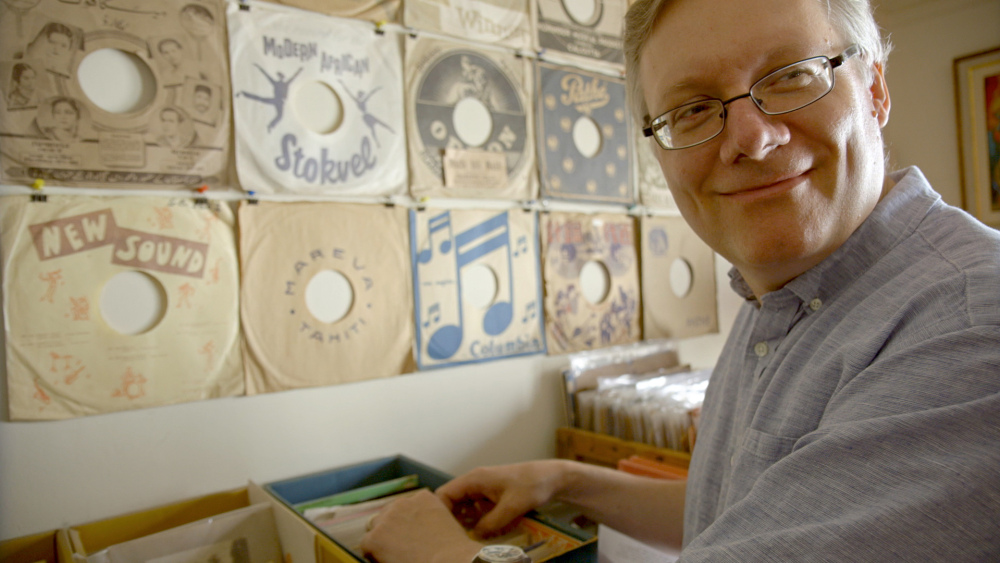
Steve Young was a comedy writer for the David Letterman Show. One of Young’s extra duties was finding oddball records that Dave could make fun of on the show. Because of this Young discovered an extremely rare kind of LP – musicals produced for corporate sales conventions. At first, these songs were the butt of jokes on the Letterman show but soon Young fell in love with the songs, lyrics, performances, and eventually the performers. Young began to passionately collect these records for himself. The history of his collecting, and how it led him to discover the history of the industrial musical is told in the award-winning documentary, Bathtubs Over Broadway, currently playing on Netflix and for rent at Amazon. It has a 100% Fresh rating at Rotten Tomatoes.

Last night I had friends over to watch a movie. I tried to get them to see Bathtubs Over Broadway. I’ve tried for weeks to get any of my movie watching buddies to see it with me. My friend Linda saw it at a film festival in Denver and told me it was wonderful. We ended up watching The Bookshop instead, hoping it would be one of those feel-good indy English flicks, but it wasn’t. So after Mike and Betsy left, I stayed up late watching Bathtubs Over Broadway by myself.

I do admit the title sounds awful, but to all my friends who wouldn’t watch this movie with me – HA! You don’t know what you missed.

Of course, maybe it’s just me. I thought Bathtubs Over Broadway was a heartwarming documentary about becoming a pop culture collector. But then I have a slight collecting habit myself. I love tracking down old science fiction anthologies, so I know the excitement of finding a rare item.

Steve Young said before he started collecting the industrial musicals he had no friends in his life other than family at home at coworkers at work. Once he started sleuthing these LPs he befriended other collectors – weird guys like himself. I also know the importance of finding someone else who shares an obscure interest in a microscope aspect of reality.

What’s most inspiring about Bathtubs Over Broadway was the length Steve would go to find these rare LPs. The heyday of industrial musicals was in the 1950s, 1960s, 1970s, and Young discovered some of the composers and performers were still alive. At first, he contacted them hoping they’d have more records he could collect, but ended up making wonderful friends and learning a unique aspect of American history.

Bathtubs Over Broadway might sound kitschy and camp, and it is, but it’s also uplifting, moving, inspiring, educational, and enlightening.

Don’t let the title mislead you into missing it.

p.s.

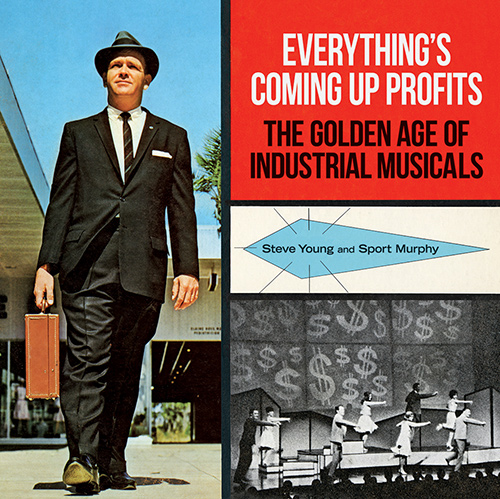
In case you want to know more, Steve Young and Sport Murphy wrote a whole book on industrial musicals – Everything Coming Up Profits: The Golden Age of Industrial Musicals. Follow this link to hear songs, see videos, and read more history after watching Bathtubs Over Broadway.

Everythings Coming Up Profits

JWH

Why Did You Stop Writing About Science Fiction?

by James Wallace Harris, Thursday, May 16, 2019

old-science-fiction-magazines

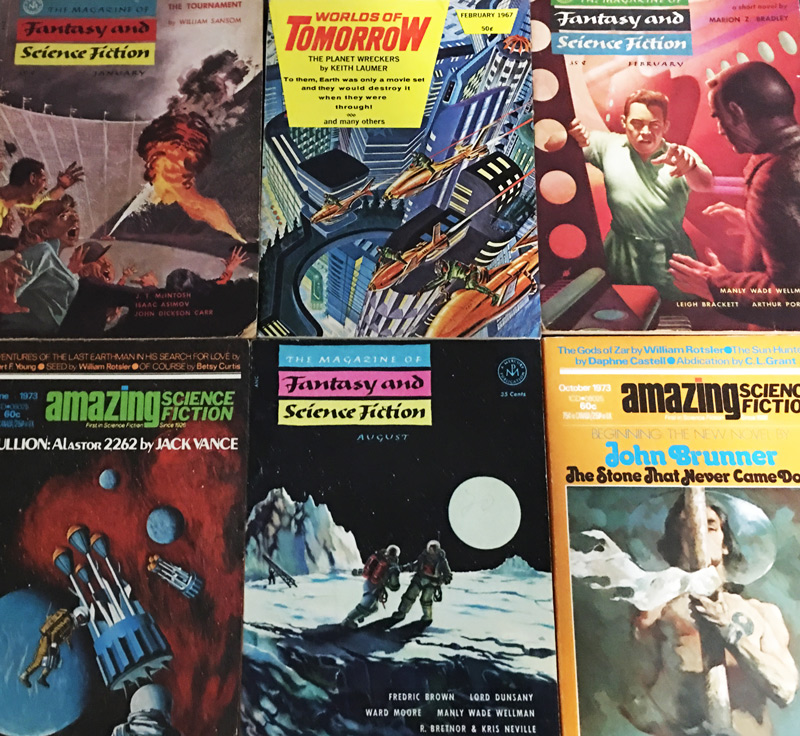
I haven’t stopped writing about science fiction. If anything, I’ve become more obsessed with science fiction history. However, I’m discovering only some of my Auxiliary Memory readers like reading about science fiction while many others have told me they tune out those posts. I don’t blame them, there are many subjects in this world I tune out too.

So for my fellow Sci-Fi fans, I’m posting my essays about science fiction to The Classics of Science Fiction website. Those of you who want to only read about science fiction can follow my blog over there. Information about subscribing and RSS feeds are at the bottom of individual blog post pages.

Auxiliary Memory will remain my blog about my personal life and opinions about everything that isn’t science fiction.

It’s been interesting to see how my friends and family relate to my blog posts. I write about a variety of topics. Every relationship is a Venn diagram of common interests. Out of all the people I know personally, only two like to talk about science fiction. However, I have many online acquaintances that I share an interest in science fiction. In many ways, I feel more connected to those people because we’ve zeroed in on a subject we love.

People use the term “blood relation” to mean a special bond. I’ve always felt that a “shared interest” is more significant than shared DNA. I have many interests, so I have many kinds of friends. The internet is especially useful because it lets us connect with people who share our most unique fascinations. I’m currently focused on old science fiction magazines and anthologies. Most of my conversations about this topic are with five people scattered across the world. I figured all told, there are probably less than a thousand people interested in old science fiction magazines and only a few dozen in old science fiction anthologies. What percentage of 7 billion would that be? Extremely tiny.

I write about a variety of subjects but I’m finding only some attract the general reader. Most people who read blogs like to read memoir-like narratives rather than essays on abstract subjects. Blogging is an extremely insightful hobby. Most people enjoy chatting with other people, but if they are going to take in 1,500-word chunks prefer reading books. Reading a blog is more like listening to a friend talk a blue streak than reading an article in The Atlantic.

In the old days, I’d be writing what I write for a diary or journal, and I’d assume no one else would be reading it. Blogging is like keeping a diary that you leave around for anyone to read. It’s a weird art form, but it’s also my chosen retirement hobby. So I shall continue to experiment with what it can do. One experiment is to separate out all my ideas on one topic into a blog just for that topic. It’s fun to distill a subculture.

JWH


I’m a Slow Learner of the Big Picture

by James Wallace Harris, Sunday, May 12, 2019

It took me over ten years to graduate college, changing majors several times. I realize now that my problem was seeing the bigger picture of every topic. I never understood why I needed to learn what was required in each course. For example, The Modern Novel, a course I took for the English major I finally completed. Back in the 1970s, I couldn’t fathom why they called novels from the 1920s modern. Well, now in the 2010s, I do. I just read The World Broke in Two by Bill Goldstein. Goldstein chronicles how Virginia Woolf, E. M. Forster, D. H. Lawrence, and T. S. Elliot struggled in their personal lives to finish their most famous works in 1922. Each floundered in their efforts before finding new narrative techniques.

I now see the “modern novel” in a larger context, and I’m sure if I keep reading the history of everything from 1875-1930 I’ll expand that mental map even larger. Since I was an English major in the 1970s I’ve learned about the revolutions in art, music, philosophy, and other subjects in the early 20th century that add to that bigger picture. If I had taken courses in history, science, art, music, literature, engineering, medicine, etc. concurrently that covered the 18th-century one semester, then the 19th the next, and then 20th century, I would have understood how everything came together in the 1920s to be labeled modern. And that would have helped me comprehend the “post-modern.”

Concurrent to reading The World Broke in Two I’m also reading and studying the history of science fiction short stories. I’ve been reading these since the 1960s, and their evolution is finally coming together in multiple related ways. I realize now that I’m quite a slow learner when it comes to constructing the big picture in my head.

I remember back in high school and college feeling jealous how some of my fellow students always knew the answers. I assumed they studied harder than I did because I knew I didn’t study much. But that’s only part of the reason why they did better in school. I’m just now realizing they were also better at connecting the dots.

One of the big regrets in my life is not finding a passion while young to pursue with great effort and concentration. I knew success requires hard work, but the willingness to work hard requires drive and focus, and I never had that. I now understand that seeing the big picture is part of creating that drive and focus.

I’ve always been somewhat smarter than average, but never very smart. I had enough innate skills to get through school without studying much, but not enough cognitive insight to understand why I should study. I always saw school like the smaller image in the larger image above – a fragment of the whole that didn’t make sense.

Evidently, some people have a knack for seeing the synergy of details when they are young. We know this from the early works of successful people. It must be a cognitive skill like a sense of direction, spatial awareness, or conceptualizing in three-dimensions, but with data and ideas.

I know what I’m saying is vague, but then I’m trying to describe something I’m challenged at understanding. I only have a hint of its existence. I wonder if its a skill they can teach young kids? However, I also wonder if the way they teach subjects in school actually works against gaining this skill. Because schools divide up learning into thousands of lessons we’re trained to memorize individual facts, and not how those facts make patterns. Of course, pedagogy might have changed since I went to school a half-century ago.

I’ve often wondered if in each school year they should teach students the history of reality from the Big Bang to now so they see how all areas of knowledge evolved together. Of course, in pre-K years teachers would have to be very vague by telling kids the biggest generalizations, but with each successive year refine those details. I wonder if kids learned to see how knowledge arose from previous knowledge it wouldn’t help reveal bigger pictures of how things work.

JWH


If I Was A Robot Would I Still Love to Read?

by James Wallace Harris, Wednesday, May 8, 2019

One of the trendy themes of science fiction is the idea of mind uploading. Many people believe it will one day be possible to record the contents of our brain and put our self into a computer, artificial reality, robot, clone, or artificial being. Supposedly, that solves the pesky problem of dying and gives humans a shot at immortality. The odds of this working is about the same as dying and going to heaven, but it’s still a fun science fictional concept to contemplate.

I can think of many pluses to being a robot, especially now that I’m 67 and my body is wearing out into wimpiness. It would be wonderful to not worry about eating. Eating used to be a pleasure, now it’s a fickle roulette wheel of not know if I’m going to win or lose with each meal. And not having to pee or shit would be a top-selling advantage point to being a silicon being. And what a blessed relief it would be to never be tormented by horniness again.

Life would be simple, just make sure I always had electricity to charge up and spare parts for the components that break down. No worries about coronaries, cancers, viruses, fungus, bacteria, or degenerative diseases. Or flatulence.

I’d also expect to have superlative sight, hearing, taste, touch, and smell, along with a host of new senses. And I assume those senior moments would be gone forever.

But would I still love to do the things I love to do now – read books, watch television, and listen to music? What would reading be like if I was a robot? If I sucked down a book as fast as I can copy a file on my computer, I doubt reading would be much fun. For reading to be enchanting, I’d have to contemplate the words slowly. How would a robot perceive fiction? Are we even sure how humans experience the process of taking words from a book and putting them into our head?

Let’s say it takes me one minute to read a page of fiction. Somehow my mind is building a story while my eyes track the words. A novel would take hours to unfold. A robot could read a digital book in less than a second. Even for a robot brain is that enough time to enjoy the story?

Will robots have a sense of time different from ours? Dennis E. Taylor wrote a trilogy about the Bobiverse where Bob’s mind is downloaded into a computer. Taylor deals with the problem of robots perceiving time in it. He had some interesting ideas, but not conclusive ones.

In the WWW Trilogy, Robert J. Sawyer theorizes that consciousness needs a single focus for sentience. No multitasking self-awareness. I think that makes sense. If this is true, robot minds should have a sense of now. They say hummingbirds move so fast that humans appear like statues to them. Would humans appear like the slowest of sloths to robots? Does slow perception of reality allow us to turn fiction into virtual reality in our heads?

Could robots watch movies and listen to music in real time? Or would images of reality shown at 24fps feel like a series of photos spaced out over eons of robot time? Would the beat of a Bonnie Raitt’s “Give It Up or Let it Go” create a sense of music in a robot’s circuitry or just a series of periodic thuds?

It’s my guess that who we are, our personality, our sentient sense of reality, our soul, comes from our entire body, and not just data in our head. Just remember all the recent articles about how bacteria in our gut affects our state of being. Just remember how positive you feel about life when you have a hangover and are about to throw up.

I’ll never get to be a reading robot. That’s a shame. Wouldn’t it be great to read a thousand books a day? Maybe I could have finally read everything.

JWH