Coronavirus v. Flu

by James Wallace Harris, Tuesday, February 18, 2020

Warning: The calculation of percentages was done by me and could be wrong. The other figures come from the CDC and WHO.

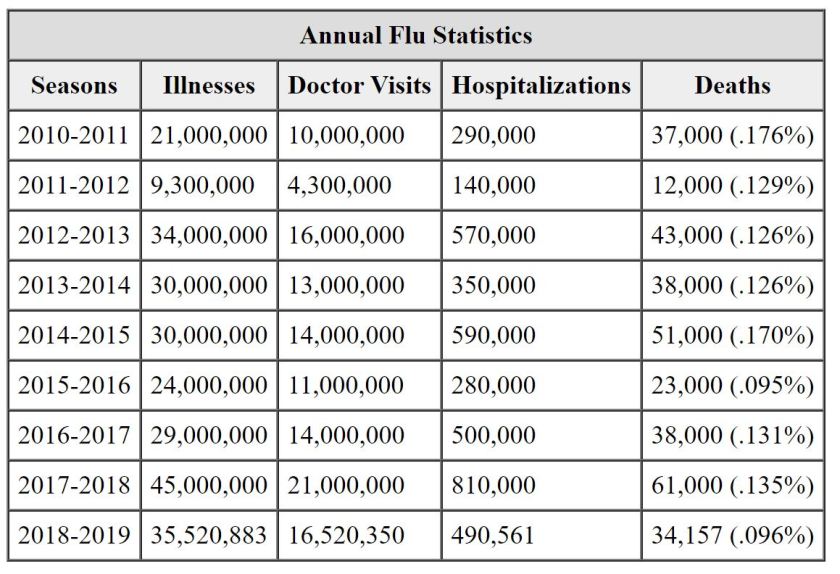
My friend Anne asked me to give her some statistics on the coronavirus that would help her understand it in relation to the flu. I have taken my numbers from the CDC but did my own percentage calculations. Please let me know if my math is wrong. Here is my simplified table of their statistics for the annual flu seasons in the United States. The percentage of people dying is in relation to those getting sick.

Annual flu statistics

I found the statistics for the coronavirus from the World Health Organization. As of February 17, 2020, there have been 71,429 confirmed cases with 1,772 deaths, which is the death rate of 2.48%. (Someone, check my calculations, that seems very high.) It would mean if the 2017-2018 flu season that infected 45,000,000 people had been the coronavirus, 1,116,000 people would have died, as compared to the 61,000 from regular influenza.

However, people don’t have any natural immunity to the coronavirus, and as of yet, there have been no vaccines created. If it hit America a good deal more than 45,000,000 might become infected. Supposedly 675,000 Americans died in the 1918 Spanish flu pandemic that killed 20-50 million people worldwide. But then the global population was only 1.8 billion as opposed to our 7, which suggests the coronavirus could be much less deadly than the Spanish flu. On the other hand, medical science wasn’t as advanced in 1918.

Let’s hope the Chinese can control the coronavirus. This could be very bad.

JWH

Should I Forget Dorothy?

by James Wallace Harris, Monday, February 17, 2020

Being part of history is the gold standard for being long remembered. Pop culture fame can also get you remembered, but not as long. Geneology is probably the common way we ordinary folks will be remembered, especially if we’re neither historical or famous. Writers and artists often like to believe they will achieve immortality through their works, and that was certainly true for Homer, Shakespeare, Austen, and Dickens. Sadly, being published today usually proves a poor bet at avoiding literary obscurity.

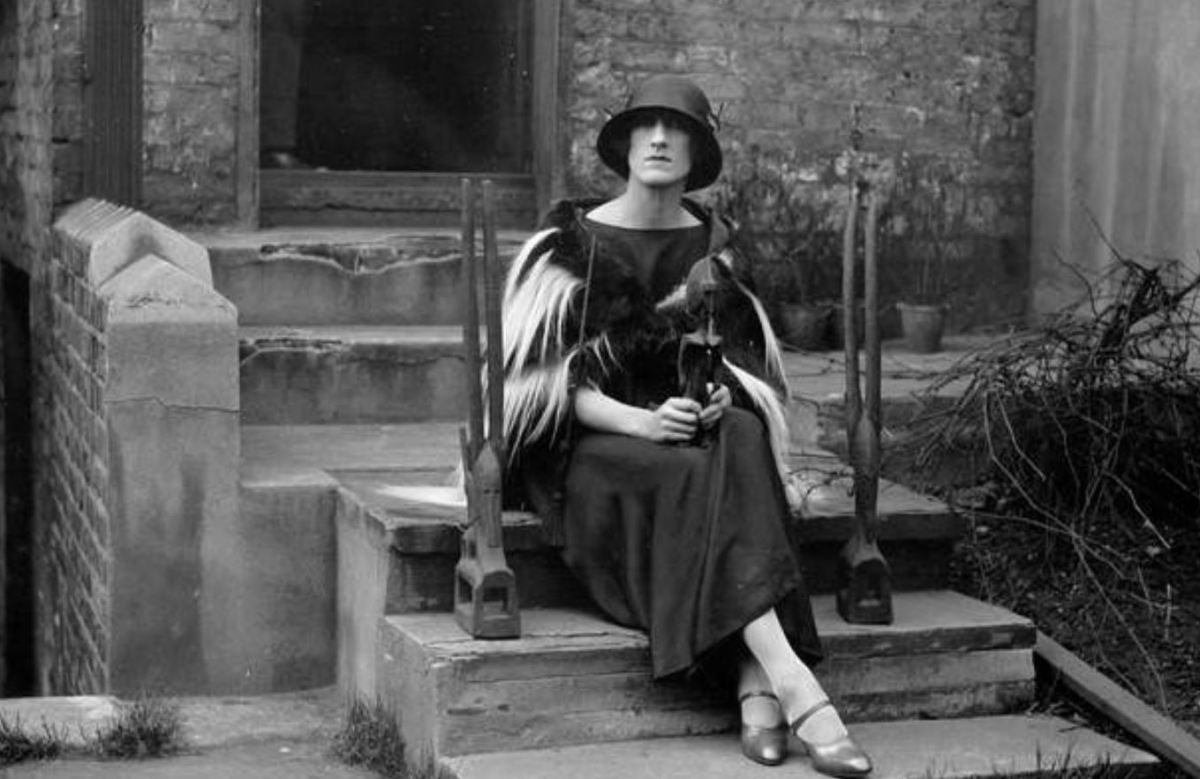
Through some weird accident of circumstances, I have become the repository for the memory for Dorothy Rachel Melissa Walpole who wrote under the name Lady Dorothy Mills. I maintain the website ladydorothymills.com. Last year it got a total of 175 visitors, but most of them leave almost immediately. It’s a very static site because I seldom find new information about her. I used to get a query about her every year or two, but it’s been years now since I’ve heard from anyone asking about Lady Mills.

Lady Dorothy Mills wrote fifteen books from 1916-1931, nine novels, and six nonfiction books, all long out of print. I own all of them except her first novel Card Houses and the last Jungle!. She is most famous for writing five travel books capitalizing on the idea of an aristocratic European woman traveling alone in Africa, South America, and the Middle East in the 1920s. She achieved a minor amount of fame. As far as I can tell only 26 used copies of her books are for sale right now, and most of those are the nonfiction titles. Of the 5 copies of her novels, two are the German versions of The Dark Gods. Most of these volumes have been on the market for years. There is little interest in her work.

I’m trying to decide if it’s worth my effort to convert her books into digital texts so I can submit them to Project Gutenberg. It would be a terrific amount of work and its doubtful anyone would read them. But I’d hate to see Lady Mills become completely forgotten. I’ve been trying to come up with reasons to convince people to try her books. Right now it’s almost impossible to get ahold of any kind of edition to read. I’ve wondered if there were free ebook editions available would a few readers give her a chance?

I’m currently reading The Laughter of Fools from 1920. It’s about a young woman living with her aunt and uncle after her father dies. I’m not sure of the time period yet, but you have to imagine a Downton Abbey type of setting. Lady Mills was the daughter of an Earl and grew up in a manor house on a country estate. I assume her life was somewhat like Crawley girls, as Lady Mills was about their age. She would have been 23 in 1912, the year the story began. Lady Mills’ mother was also a rich American woman. However, Lady Mills married a poor American man, and from what I can infer, her father wasn’t as forgiving as Lord Grantham. Lady Mills went out into the world to make it own her own.

The girl in The Laughter of Fools is named Louise, and Lady Mills’ mother was named Louise. I have to wonder how much of herself she put in this character. Louise finds life with her aunt and uncle boring and eventually gets permission to go on a vacation for her health. Her guardians believe she is being supervised by a proper English lady, but Louise gets to run around with an arty bohemian crowd. This opens up a whole new world for her. I imagine the same thing happened to Lady Mills.

I wish I had a copy of Lady Mills’ first novel, Card Houses published in 1916. That was the year she married Capt. Arthur Mills. It might reveal more about her early life and personality. I get the feeling her first few novels were about the life she knew and that social set, and her later novels were fantasy or science fiction. Her travel books were about becoming an independent woman.

I can’t say that The Laughter of Fools is good literature. I only find it interesting for four reasons. First and primary, I’m looking for clues about Lady Mills. Second, I enjoy the Downton Abbey resonating vibes. Third, it tells about life in England during a very literary period — the book adds a few details that I don’t find in Woolf, Huxley, Forster, and others of that era. Finally, it’s about a woman breaking free in a time when few did. But mostly the novel’s appeal is trying to figure out what Lady Dorothy Mills was like and why she became a writer.

I still don’t know what kind of person she was. Would I have liked her? Or was she a weirdo, or even a Lady Asshole? Does she deserve to be remembered or is there a reason why everyone is forgetting her? I feel like I’ve fed a stray cat and now I’m responsible for its care.

Small items about her come up for sale every once in a while but they can be expensive. And if I really wanted to pursue this project properly I’d need to travel to England and do some real research. That is almost not going to happen. Still, I might try converting one book, The Laughter of Fools and see if anyone reads it. It would be nice to see if anyone else gets anything out of her. Sooner or later, I’d like to find a younger person to inherit the caretaking of this strange cat.

JWH


Can Humanity Move to an Eco-Paradigm?

by James Wallace Harris, Sunday, February 9, 2020

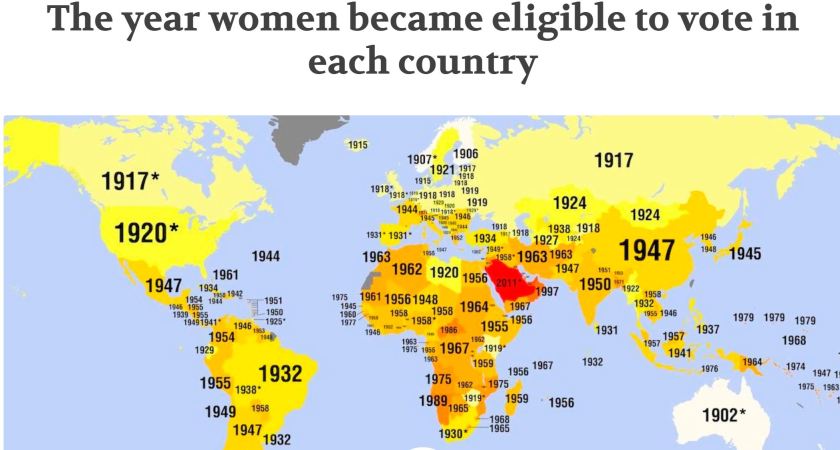
Humanity has gone through a number of major paradigm shifts. Probably the most famous is the Copernican revolution when we realized Earth wasn’t the center of the universe. I’m guessing the biggest recent shift was in the 20th century when we realized women were not inferior to men. But as you can see from this map of when women became eligible to vote that a paradigm shift is slow and doesn’t hit all at once. (Source.)

When women could vote

We need to shift to a new economic paradigm where capitalism protects the environment. Many environmentalists feel we need to jettison capitalism to save the Earth, but I don’t believe that’s possible. Capitalism is how humans survive, how they feed, clothe, and shelter themselves. Current capitalism is killing the Earth, and will eventually make the planet uninhabitable for ourselves and other species.

The present paradigm assumes the Earth is a storehouse of consumable resources for the taking. Our basic drive, which comes from our reptilian and mammalian portions of our brain pushes us to take and not give. We struggle for resources, mates, and raising our offspring. It’s quite natural. The greed we’re seeing in conservative political movements around the world is a natural survival mechanism. Everyone is programmed to grab all they can before its gone.

It really is survival of the fittest on a vast scale. Under the existing paradigm, the strong will survive with abundance while they take everything from the weak who won’t. Like I said, it’s the way of nature, it is natural — if you consider humans are animals. But can we transcend our animal nature? Can we use our neo-cortex to become something different? Moving to an Eco-paradigm means transcending our animal nature.

For our species to survive will require moving to this new paradigm. Some have called it Lifeboat Earth. That’s an apt metaphor, but most people don’t like its grim connotations. Probably a better term to promote would be Eco-Capitalism. That’s why we’re hearing so much about the Green New Deal.

My liberal friends and I are becoming philosophically depressed over current trends in American politics. Conservative American politics means many things, but to me, it represents a rejection of the new paradigm. Conservative philosophy has always been backward-facing, stay-the-course, return to the good old days thinking. To protect its beliefs, conservative philosophy has become anti-science, and anti-environmentalism.

I see the U.S. 2020 presidential election as a referendum, with two choices on the ballot. Keep the old paradigm, or move to the new paradigm. I’m sure most voters will see it in terms of their own special interests.

The reason why I wrote my last essay about cognitive tools we used to work with reality is to understand how people think about this referendum. The Republicans have clearly defined what they want, but the Democrats haven’t. Most liberals just want to replace Trump, but obviously, Republicans will do anything to get what they want, including following such a repugnant leader. Democrats are arguing over who should be their leader, and not what they want. They are under the illusion they are fighting Trump, but what they are fighting is what the Republicans want. And what the Republicans want is not to change.

The world seemed to be moving to the new Eco-paradigm but then conservative movements around the globe emerged. My philosophical question of the day: Can humanity move to the new Eco-paradigm? I’m not asking will we, but can we.

When we look at the map of women’s suffrage and see that it took a hundred years to change (and it’s far from finished), that I have to wonder if it will take any less time to move to the new eco-paradigm. (And do we have the time?)

The Atlantic is running “Why Men Vote for Republicans, and Women Vote for Democrats” that provides some additional data for my conundrum. It appears that women are a driving force in liberal politics. We are changing, but are we changing fast enough? And like the backlash against the Equal Rights Amendment by conservative women, many women have chosen to maintain a conservative path.

I’ve been reading more and more articles about political burn-out. That old adage about not letting the bastards wear you down has new relevance. I know that I and some of my liberal friends are being worn down. This makes me feel we won’t make it to the new paradigm.

The 2020 election will give me exact numbers on how my fellow citizens feel. We still have ten months of political turmoil. Who knows, lots could happen. Liberals want it to be a vote about Trump, but I’m starting to see that’s an illusion. The Republicans have clearly defined what they want. The majority of the conservatives want a world where they can grab all the can, keep all they can, have no regulations on the grabbing, and spend the least on fixing up the nation or helping the needy. A minority of conservatives want to fight for certain religious beliefs that challenge liberal values.

The Democrats don’t have a clear goal. To the Republicans all the Democrats want is to give way their money. The Democrats haven’t made a Green New Deal their primary goal. They spend a lot of time talking about the environment and immigration, but they appear to make expensive social programs their deciding issues, and some of those issues don’t even have universal appeal to liberals. Republicans know their key desires and vote in lockstep.

I believe the young are more concerned with the new eco-paradigm, but I’m afraid too many of them have completely given up on political action.

Right now, I don’t believe we’ll make it to the new paradigm shift. I suppose if we suffered some truly catastrophic natural disasters, way larger in scope than the present disasters, we might start pulling together. But that might only cause more fighting in the lifeboat.

Readers might think I’m psychologically depressed because of this essay. I’m not. I might be philosophically down, but not personally down. I have a stoic existential psyche. What happens is what happens. We all want reality to be what we want, but our reality is what is. I’m just trying to guess where humankind is going. I want to imagine what the future might be after I die. But guessing the future is next to impossible. Yet, it amuses me to try.

JWH


Our Cognitive Toolbox for Working with Reality

by James Wallace Harris,

All too often we think we know but we don’t. Why do so many people argue with 100% certainty against others who feel equally convinced? Often wisdom tells us the more we know the more we don’t know. Does that mean the person who claims to know nothing knows the most? Why is this reality so hard to understand? Even eyewitnesses are often fooled. And why is it so important to know thyself?

Reality is complex, but is it unknowable? Humans believe they are the crown of creation because all animals are ignorant of their own existence. Is our sentience really a quantum leap over all other life forms on this planet? If we compared ourselves to an amoeba, ant, or cat, we can see that awareness of reality has slowly gotten more complex and each of those animals perceives a larger portion of reality. Does that mean we see everything in reality, or are we just as blind to a much larger reality?

I believe we’ve evolved a number of cognitive tools to analyze reality, but it’s important to know the effectiveness of each.

First-Hand Experience. Common thought claims we have five senses for perceiving reality, but we actually have many more. People often believe seeing and hearing things for themselves is a primary source of knowledge. However, our senses can deceive us. For example, the lady cop who shot a man in Texas because she thought he was a burglar in her apartment when she was in his apartment. Just pay attention to how often eye witness accounts fail. Or better yet, recall all the times your senses have fooled you.

Instinct and Intuition. Our genes and unconscious mind direct us to act without thinking. Many people prefer to go by gut reaction than thinking it through. But how often does gut reaction tell us to kill or take what we want?

Language. By breaking reality down into pieces and giving each part a name goes a long way into gaining useful insight. But language is imprecise and the parts of reality are many. People who know the different names for trees have a greater understanding than the person who only knows the word tree. Language has evolved tremendously giving us one of our best tools. Pay attention to how words help you to perceive how reality works, and observe how people with lesser or better language skills fare compared to you.

Word of Mouth. We learn from other people’s observations. When we were hunters and gatherers hearing from scouts describe where animals could be hunted was vital. On the other hand, if a seafarer told you about mermaids you ended up believing in an unreal being. Word of mouth is very unreliable. Remember the Kindergarten game of Telephone? Word of Mouth evolved into journalism, and we know how reliable that can be. Word of Mouth has always had a fake news problem. Gossip, innuendo, slander are also descendants of word of mouth.

Counting and Measuring. Simple arithmetic became a tool that lets us invent, build, grow crops, trade, and develop an economy. Counting and measuring evolved into mathematics.

Mysticism. Mystics are people who claim to acquire knowledge from a higher source. They became shamans and seers who influenced other people. They also speculated about how reality worked, inventing higher beings. Even today many people still give credence to mystical insight. However, mystical insight has produced an infinite variety of conflicting information. We have to assume its all suspect. Mysticism tries to be the first-person experience of the divine.

Religion. Religion is codified mystical insight that is retaught as the truth. Religion allowed us to create very complex social structures. However, its truth is suspect. If there are a thousand gods, most followers are atheists to 999 of them. Religion succeeds in creating artificial realities that may or may not interface well with actual reality. Religion spreads best through word of mouth.

Laws. Laws are an external tool to encourage consistent thinking. Religious laws attempt to force mystical insights onto a population. Secular laws attempt to get people to work together.

History. If you study the Old Testament you’ll see it’s more about a history of a people than spiritual instruction. We have always tried to remember the past to explain how we got here. Early histories were no better than word of mouth stories that could be highly inaccurate. And each succeeding generation of historians alters the histories. A good example is the New Testament. Whoever Jesus was, and whatever he taught, has been constantly changed by each new writer of the New Testament. It appears the historical Jesus advocated communal living and sharing that today would be called communistic. The historical Jesus was concerned about creating heaven on Earth. It was later writers that gave him superpowers and turned him into God. Studying the history of Christianity is an excellent way to understand how history constantly mutates. History is a worthy way of understanding reality but it has to be tempered by comparing multiple histories.

Philosophy. Where religion taught that knowledge came from God or other spiritual authorities, philosophy teaches us we can figure things out for ourselves. Using rhetoric, logic, and mathematics men and women observe reality and deduce what’s going on. This was a great paradigm shift away from religion. However, like the game Mastermind, it leads to a lot of false assumptions. Elaborate castles of logic can build imposing concepts but that often turns out to be illusions of great knowledge. Philosophy is a major tool for understanding reality but it also has major faults.

Ethics. Ethics, like laws, attempt to come to a consensus on what’s right and wrong. Ethics is based on philosophy. Although in recent years, some ethicists have tried to look for a scientific foundation.

Science. Science combines mathematics, statistics, observation, testing, and philosophy into a systematic way to evaluate reality. Science assumes if tested observations and measurements prove consistent by scientists from any nation or culture then they might be true. Science never assumes it finds the absolute truth, but just the current best guess based on all the existing data. Science is statistical. Some science is so refined that it works incredibly well with reality. Space probes visiting distant worlds validate hundreds of years of scientific endeavors.

Scholarship. We have made education into a major portion of our life. We spend our entire lives trying to figure things out. We study, we think, we make assumptions. Like philosophy, scholarship often builds vast models of speculation. Scholarship tends to endorse results from competing trends. However, scholarly theories can be deceptive and even dangerous.

The problem is we use all these tools to explain our version of reality. Unfortunately, most are unreliable or clash with other people’s version of reality. Science has proven to be the most consistent at explaining reality, but science doesn’t cover everything. For example, right and wrong. These two concepts are ancient, probably coming out of mysticism or an instinctive desire for justice. Both religion and philosophy have tried to perfect them, but our reality is completely indifferent to morality or ethics. We have invented many concepts that just don’t exist in reality.

This causes problems. Several million people might believe with absolute certainty in a particular concept and then try to impose that view on millions of others who are just as certain such a concept is invalid.

We live in a polarize society because we all embrace different ancient beliefs, most of which we can’t explain how they came about. We just accept them as true. Most people believe in God because it was something they learned as a little kid. They won’t let the idea of God go no matter how much other cognitive tools disprove God’s existence.

Donald Trump seems to base most of his knowledge from first-hand experience and word of mouth information. Twitter is the perfect tool for word of mouth. Trump is neither religious, philosophical, or scientific. But this isn’t an uncommon way of dealing with reality. Few people are philosophical or scientific. Too many people only want to trust first-hand experience and instinct, but we know how unreliable those cognitive tools are. People who rely heavily on first-person experience and word of mouth tend to disbelieve science.

There have been various disciplines that try to teach self-programming that jettisons cognitive bullshit. Zen Buddhism is one. Meditation can be used to seek mystical insight or to observe the working of our own being.

The reason I wrote this essay was to help me think clearer. I’ve been reading books on Greek philosophy, and early Christian history. They are teaching me what people 2,000-2,500 years ago thought. I can see those ancient people struggled to make sense of reality without science. I can also see the same struggles today in people. We just don’t think clearly. We’re too influenced by low-level cognitive tools that deceive us. We base our existence on illusions created by those most primal cognitive tools.

I keep hoping the human race will get its act together and create a sane society that coexists with reality, and not on insane illusions and delusions. I realize until everyone becomes a master of their various cognitive tools, and learn the limits and limitations of each, we can’t start working on that sane society. We can’t start learning what’s real until we learn how to perceive what’s not real.

JWH


All The Things We Forget

by James Wallace Harris, Wednesday, February 5, 2020

The last time I went to a barber was in the 1970s. I got married in 1978 and my wife cut my hair after that until I went mostly bald, at which point I’d just mow my own head. But in the 1950s and 1960s, I probably went to the barber every 2-3 weeks. I’m sure, several hundred times. I have a few vague impressions being at a barbershop, but for the most part, all those memories are gone. I can remember having butch cuts, crew cuts, flattops and haircuts I had to comb. Those were in the years before the Beatles. After that, I tried very hard to avoid the barber. Maybe that suppressed the memories of haircuts.

There are 3,650 days in a decade if we don’t worry about leap years. And at age 68 I’ve lived around 25,000 days. Other than what I ate today, and maybe yesterday, I’ve forgotten roughly 75,000 meals. I know I had a lot of dinners with my family growing up, but except for a few fleeting images of Thanksgivings, I can’t remember them.

I have more memories of sitting with my parents and sister watching TV. I’m better at remembering people, but it’s an accumulation of countless vague encounters. The more vivid memories generally involved great joy or great pain. Average got forgotten, and I imagine 99.999% of my life was quite mundane.

I know I hated going to Sunday School and church when I was growing up. We even went on Wednesday night sometimes. But I can only remember a handful of specific events at church. So, did we go all the time, or did I only think we went all the time?

If I work hard I believe I can remember all the pets we had, but I’m not sure of all their names. I spend a lot of time with my cats now. They are always nearby or sleeping on me. I can’t remember how much time I spent with my pets growing up. I remember fleeting moments of playing with them, but not the day-to-day living. Now that I think about it, I believe my mother expected dogs and cats to live outdoors. I can remember our dogs walking us to school and meeting us afterward, but I don’t remember them sleeping with me or hanging out in my room.

One area of memory I really regret losing is memories of my classmates and teachers. I’d spend about 200 days a year with them, and at the time knew all their names and could tell you stories about each of them. I did pay attention — then. But it’s all gone now.

Because my family moved around so much I attended many different schools. There were schools I’d ride my bike miles rather than take the school bus. I tried to always walk or ride my bike, although when we lived in South Carolina the second time, out in the country, the school bus ride was 35 miles. The thing is, I can’t remember how I got from home to school in all those schools. Oh, there were a few places where we lived just a couple blocks from school and I can remember, but I’ve looked at Google’s Streetview trying to find my way around old neighborhoods and I can’t.

Am I alone in forgetting all these kinds of things? Am I alone in wish I had a photograph of all my bikes?

I had a very happy childhood. I’m very nostalgic for those years, but they were chaotic and stressful because of my parents’ alcoholism and our constant moving. I watched a lot of television and read a lot of science fiction to keep sane. And that’s what I remember most. In the last couple of decades, I’ve been rewatching those old shows and rereading those old books. That has only reinforced their memories. I now have better memories of TV and books than of my parents.

If I only focused on the present would I even think about the past at all? However, getting old seems to inspire looking backward. I noticed that many young people photograph everything they do and put it on Facebook, including their meals. I wonder what that will mean to them when they get old, having so much documentation?

There are so many things I wish I had photographs of now. And videos would be better yet. I wish I had pictures of every friend I made, of every teacher, classmate, and every classroom, every pet, house, car. I wish I had multiple photographs of every room of every house I ever lived in. I wish I had photographs of all the TV sets, record players, and radios I used. I even wish I had a few photographs of going to the barber and Sunday School.

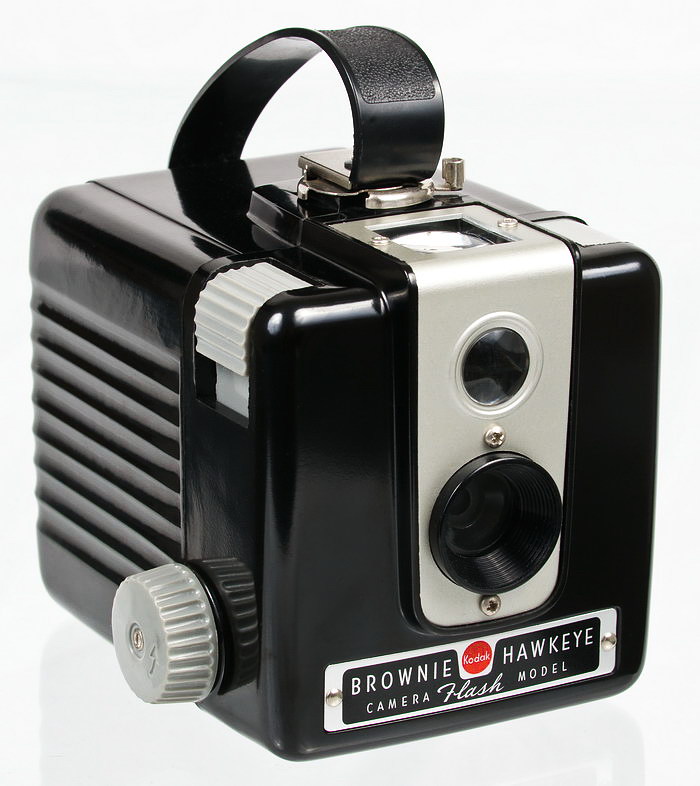
I’d love the documentation of my past because it might trigger memories. I don’t think I’d need snaps of 75,000 meals, but a few hundred would solidify my sense of who I was. My parents had an old Brownie Hawkie camera, but I think they only shot two rolls of film of me and my sister. I figured they also shot two rolls of themselves before we were born.

That’s just 48 photos to document my youth. I really envy kids growing up with smartphones today. (But why aren’t I snapping pictures with mine now?)

JWH