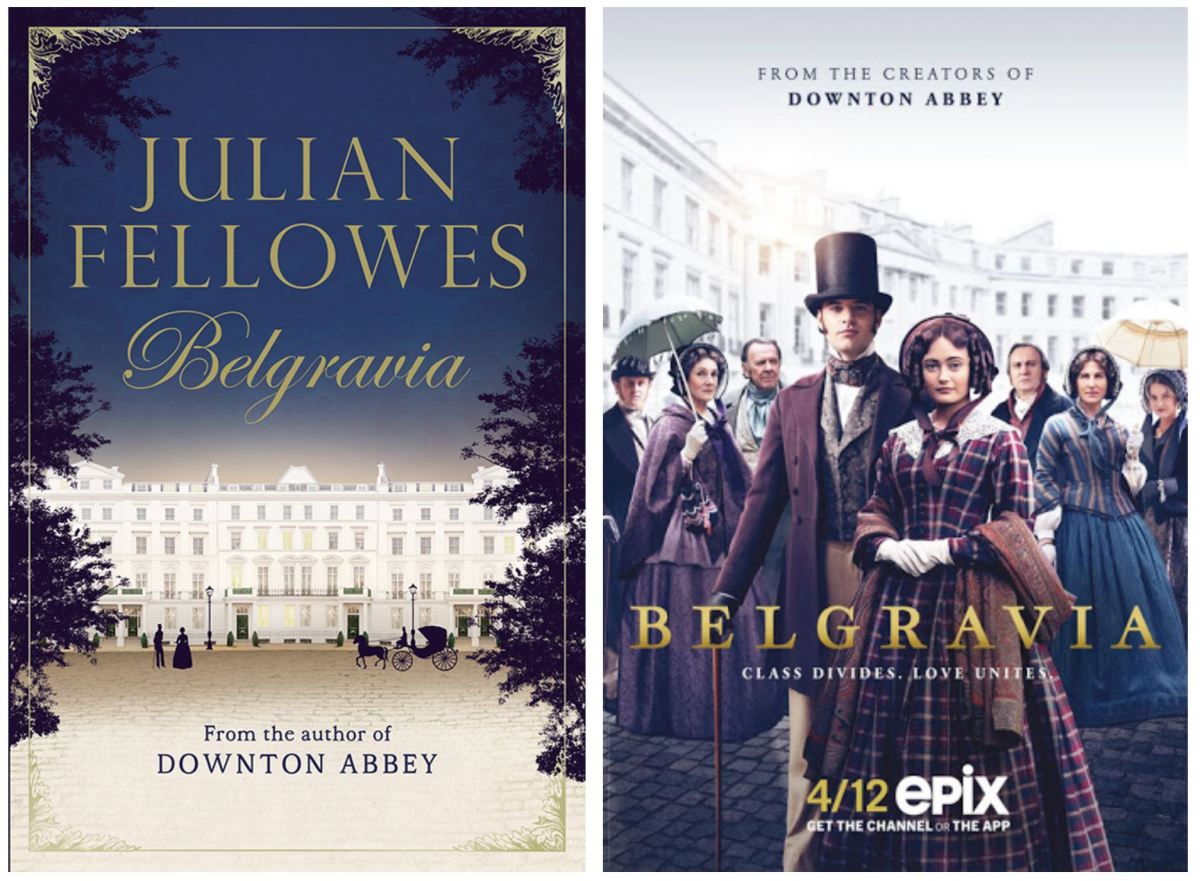
Belgravia by Julian Fellowes

by James Wallace Harris, Thursday, April 30, 2020

Anyone who loved Downton Abbey should also love the new miniseries Belgravia. Episodes are now appearing weekly on Epix. In the U.S. only three of the six episodes have been shown. However, after the second episode I was so anxious to know more I bought the audiobook of the novel Belgravia by Julian Fellowes and listened to it. I’m glad I did. The novel is beautifully written, feeling equal to reading Austen or Dickens. The first TV episodes follow the novel so closely that I imagine the rest will follow just as closely. I feel like I’ve watched the entire series with my ears, and now I will see it with my eyes.

The plot is deliciously tangled by those Victorian manners and customs I’ve previously encountered by reading 19th-century novels, but with a bit more grit, a good deal more sex, and from a darker perspective. The story follows two families sharing one tragedy, revealing class conflicts between those with aristocratic old wealth and social-climbing tradesmen with new money. Both primogeniture and men and women in service play an integral role in Belgravia. I’ve seldom encountered such a well-crafted plot — addictively complicated but not overly too much.

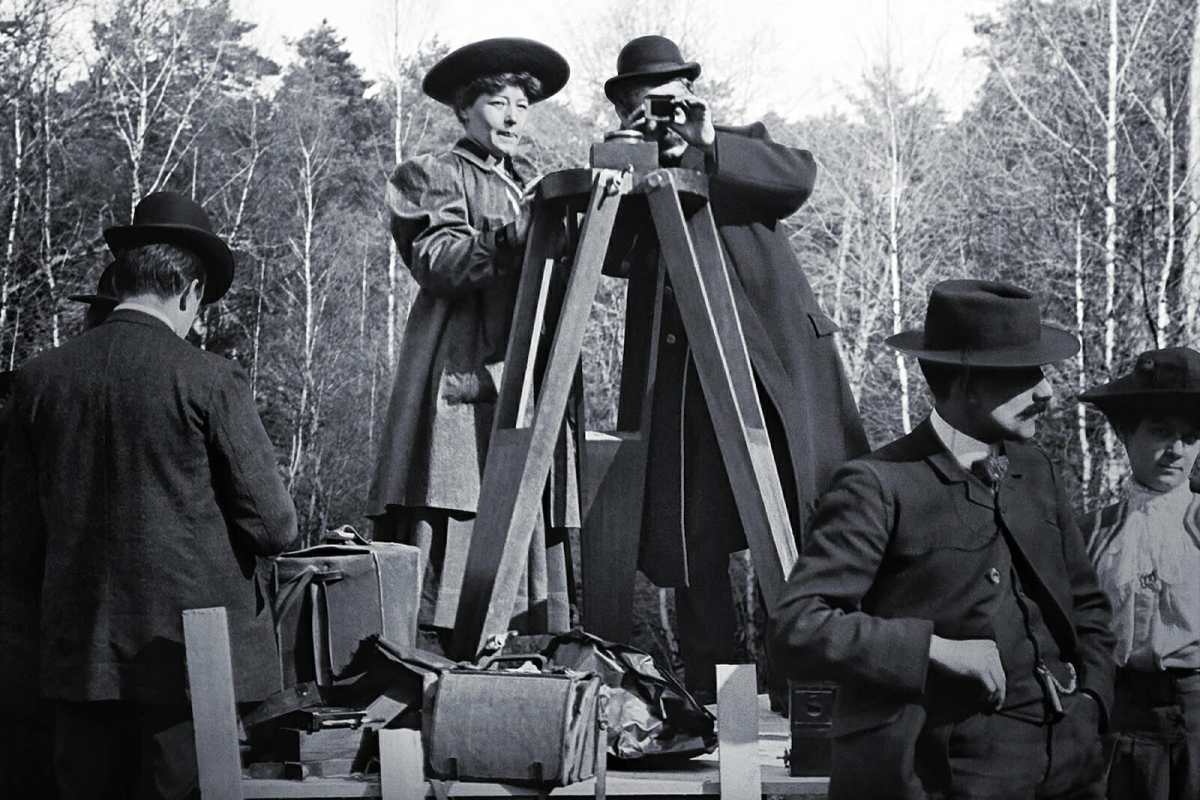
tamsin-greig-anne-trenchard

There’s one mystery that still intrigues me. Why does the original novel follow the miniseries so closely? It was published in 2016, years before the show. Did Julian Fellowes write the novel with a screenwriter’s skill? Did he work out the screenplay first and then wrote the novel?

I often get the feeling when reading some modern novels that their authors visualized them as movies in their heads. I don’t know if this is a good trend. I expect novels to offer content that could never be filmed. Novels are their own art form, not screenplays. And there are a few novelistic features in Belgravia the book. Even though the story moves as fast as a blockbuster movie, the third-person narrator does offer some backstory tidbits that’s not in the series. It also reveals some of the inner thoughts going on in the characters’ heads. I watched the first two episodes before reading the book, and I felt Tamsin Greig had already expressed those thoughts in her performance of Anne Trenchard, my favorite character.

I’m surprised Belgravia the miniseries didn’t appear on PBS Masterpiece, but then, it did get me to subscribe to Epix. I figure at $5.99 a month it will cost me at most $11.98 to watch the entire series — unless I get hooked on another Epix series. I already binge-watched a previous series, The War of the Worlds during a free 30-day free trial. If Epix can keep them coming I’ll keep letting them have $5.99 each month.

Epix

JWH


War and Peace – Book v. TV

by James Wallace Harris, Wednesday, April 15, 2020

Last night I binged watch the first four episodes of the 8-part mini-series War & Peace put out by the BBC in 2016. This is notable, at least for me. In the past year, I’ve been having a terrible time focusing on TV. Every evening I try out several TV series and movies hoping to find something to hook me. I rarely succeed. I quit most shows after just a few minutes, even the ones I feel are high-quality and interesting. I don’t know if my mind is deteriorating, or I’ve just become jaded with TV. I wrote about it here.

Now, and then, I do find a show my mind will latch onto, and War & Peace was one. Strangely, the other two that I can remember at the moment were Sanditon and Black Sails. This makes me wonder if my mind has a thing for literary-historical stories. But don’t think my taste is all high-brow, I also got hooked by Abbott and Costello Meet Frankenstein not long ago, and it’s quite low-brow. I never can predict what my mind will settle on.

It’s funny, but while watching War & Peace last night I thought Tolstoy might be the Jane Austen of Russia, even though he was a contemporary of Dickens. Austen’s stories often referred to the Napoleanic Wars, and since watching War & Peace involves a lot of scenes with fancy dress balls, whispered marriage intrigue, socializing by candlelight in manor houses, servants in elaborate outfits, and riding around in elegant coaches during those war years with Napolean, watching War and Peace feels very much like watching Jane Austen.

I’ve always wanted to read War and Peace by Leo Tolstoy. I’ve read Anna Karenina and The Death of Ivan Ilyich but have been intimidated by its size and reputation. I’ve probably read less than twenty foreign-language translated novels in my life, sticking primarily to books from the English speaking world. For the last couple of decades, I’ve tried to read one 19th literary classic each year, and every once in a while throw in a European classic. Mostly, these reads have been from England. Seeing War & Peace offered on Hulu last night tempted me. I figured it might get me interested in reading the novel, and it did, but for a strange reason.

As I watched, I kept thinking to myself, “How can a six-hour TV production do justice to a novel that runs 55-74 hours on various audiobook editions?” After finishing the second episode, I was so curious to know that got up and bought an ebook and audiobook edition of War and Peace to compare. Luckily, Amazon offered a deal I couldn’t resist, buy the 99 cent ebook edition, and they would sell me an audiobook edition for $1.99.

I didn’t immediately jump on the offer. I’m very picky about audiobook narrators and book translators. I went to Audible and tried the samples from four different versions of the novel, and the Amazons Classic edition on sale did indeed have the narrator I liked best. I then found and read “What’s the best translation of War and Peace by Leo Tolstoy?” The translation for the Amazons Classic edition was by Aylmer and Louise Maude, and it came in number two on their list. Their number one choice was by Anthony Briggs but it didn’t seem to be available at Audible. So I bought the deal. I figure if I fall in love with the book I’ll eventually buy the Briggs translation.

Before I started episode three, I listened to the chapters of the novel that covered the first episode, especially Anna Pavlovna’s party. The show had tried to cover much of what was in the novel, at least in introducing the characters, setting, action, plot, and relationships. Sure it conveyed the essence of the story, but was it really Tolstoy’s story? It left out all the background information, and the actors sometimes didn’t match the descriptions of the characters they played. Is it important for actors to look like their literary descriptions?

Tolstoy’s omniscient point-of-view gives us so much about the characters’ motivations, but the television show just ignores that content. On the other hand, the show gave me gorgeous visuals, ones my mind’s eye would never imagine. And that brings up other things to ponder. Did all the clothing, uniforms, hairstyles, furniture, table settings, houses, etc. all actually look like their early 19th-century Russian counterparts? But then book readers, what do book readers imagine in their heads? Is it anything like Tolstoy imagined when writing his story?

Wikipedia has several helpful guides, including: “War and Peace characters order by appearance” — an invaluable cheat-sheet of who’s who as they show up in the story, with links to entries for the historical characters, often with photos or paintings. There is also an entry listing characters alphabetically. And, this Google search by image provides many valuable links. I wish this War and Peace family tree was in English.

War and Peace family tree

Watching War & Peace has convinced me to read War and Peace. It’s also making me want to look at other movie and television versions, as well as try reading different translations into English. I consider visual presentations to be another kind of literary translation. I also thought this when I read Anna Karenina and Journey to the Center of the Earth by Jules Verne, researching both their novel translations and their various visual presentations.

It looks like War and Peace will be my classic novel for 2020. Well, what the heck, the pandemic is giving us all plenty of time to try those big novels we’ve always meant to read.

JWH


When Will This Be Over?

by James Wallace Harris

All my friends bring up the same topic: When will this be over? It’s also a popular topic on social media, for newspaper columnists, and talking heads on television. Of course, no one knows the future, but we all want too.

Since the pandemic began I’ve become a news junky, compulsive reading dozens of Flipboard articles each day, The New York Times, even adding new TV sources like local news which I’ve avoided for decades, and on some occasions even checking to see what’s being reported from the Bizarro World of Fox News.

Everyone is betting all their hope on a vaccine, and the consensus seems to be it won’t be available for 12-18 months. However, I have read reports that throw doubt on that. First, we might not be able to develop a vaccine for coronaviruses like we do for influenza viruses — remember, we don’t have vaccines for colds (rhinovirus). That’s pretty scary, but dozens of research sites around the world are working on a vaccine, some even claiming they will have a vaccine ready by this September. However, I have also read that a vaccine for SARS turned out to have harmful side-effects. I’m quite anxious to get vaccinated. I get the flu shot every year and let my doctor load me up with any other vaccine she thinks I should have. But in this case, I might keep sheltering in place and following social distancing until I read they have done extensive testing on a coronavirus vaccine.

To further cloud the vaccine hope, I read the fastest they ever developed a new vaccine was four years, and usually takes 10-20 years. However, we might be seeing a Battle of Dunkirk miracle because over 70 research sites are working on a vaccine to rescue us, and that might produce extremely fast results.

I’m not a scientist so it’s hard to completely understand all the news stories I’m reading. But I have read that SARS-Cov-2/Covid-19 is already mutating into different strains. And I keep reading about people who have experienced the disease, recovered, and then tested positive for a second time. WTF! But remember we sometimes get multiple strains of flu each year, and flu shots are sometimes aimed at multiple strains. It’s a real crapshoot. What if they develop a Covid-19 vaccine, everyone feels safe, starts socializing, return to work and school, and then catches a new strain? That’s going to be depressing. Then there’s all that talk about a Second Wave.

Now that coronaviruses are in the human population, will we have to worry about new strains every year like the flu and colds? If only China could have eradicated Covid-19 like they did SARS. Now it’s probably permanently in the human population. Like the flu, every strain of coronavirus will be different. SARS was deadlier but didn’t spread as easily as Covid-19. What if the new normal is always having to worry about the latest strain of a coronavirus? The cold/flu/coronavirus season might become the norm.

Scientists don’t know if coronaviruses will be seasonal, or even if it is affected by hot weather. It was spreading to countries in the southern hemisphere this winter. There are plenty of diseases that always exist in the human population that aren’t seasonal.

I read another article, which I fear to mention because it might inspire reckless action. There are people who have gotten and recovered from Covid-19 who are already back to work and are socializing. Some have even said they feel guilty because they can go out, but they also said they feel invincible. As more people get the disease and go back to work and socializing, I worry many people will be tempted to just catch the disease hoping to gain natural immunity. But that’s playing Russian Roulette. Too many young healthy people are dying.

Until we know how long immunity lasts and how often new strains will pop up, depending on natural immunity is not yet practical. It could take years for humans and coronaviruses to adapt to each other and we have an understandable relationship with the coronavirus like we do colds and flues.

My worry is this won’t ever be over. Not in the sense we can go back to the way things were. My guess is we’ll develop a new normal. We’ll start getting tested all the time, we’ll develop high-tech infection tracking after hashing out privacy issues, and hopefully, we’ll have a variety of vaccines to take each year. But wearing masks might become standard, and people at risk will become extremely wary of socializing. We might completely revamp society to avoid all kinds of diseases. We should not forget that global warming is causing tropical diseases to move north. And many drugs are becoming impotent at curing old diseases we once controlled.

We may find massive travel and massive social events to be impractical. We might have to move away from the trend of massive urbanization. Human societies are becoming the perfect culture for diseases. We need to solve the problems of global warming, pollution, and overpopulation. They all interact with each other to create a lethal environment for humans. What if the next outbreak of SARS or Ebola isn’t contained and spreads like SARS-Cov-2? What if HIV/AIDS had been airborne infectious? What if Zika spreads worldwide? We might want universal healthcare to maximize the health security of everyone. Ultimately, there won’t be any place the .1 percent can fly or sail to avoid the contagious.

We need to consider if this current pandemic might be a wake-up call that normal is no longer practical.

JWH


Emotional Reactions to Pandemic Times

by James Wallace Harris, Friday, March 27, 2020

Psychically, our nation, our world, has made an abrupt U-turn. The stock market was soaring, unemployment was at an all-time low, and everyone was running around the planet doing everything they dreamed. We thought we had a handle on the future. Then BAM! Now we’re all huddled in our homes fearing the grim reaper and hoarding ass-wipes. (Of course, this ignores all the other forms of endless suffering so many humans were already combatting.)

We all want to get back to those tomorrows we were planning just a few weeks ago. I imagine the emotional reactions to the pandemic vary greatly, especially by age. I am 68, going to turn 69 this year, and I was already feeling oddly emotional about getting close to my seventies. The growing aches and pains of aging, as well as the deterioration of my various organs and digestive system, was already leading me into gloomy thoughts about the future. Running out of time has become more and more inspirational, but when the plague hit, that emotion went into hyperdrive.

We are experiencing something very new and different. It’s not that humans haven’t been on the brink before, or that we don’t think about it often, but we’re getting to feel it for ourselves in a very intimate way. Last night I watched the first episode of The War of the Worlds on Epix, where billions of humans are wiped out by invading aliens. I’ve read books and seen shows about apocalyptic events countless times in my life, but watching this one last night felt more realistic than ever before. The worse this pandemic gets the harder it will be to vicariously enjoy fictional apocalypses in years to come. The Great Depression and WWII inspired a lot of fluffy fun films in the 1930s and 1940s.

We still don’t know what this plague will bring. It could be over in weeks, months, or years. We don’t know how many lives it will terminate, how it will change the economy, or how it will alter our future daily outlooks. Essentially, it’s fucking with our sense of the future. What I love, and I imagine most of my fellow humans do too, is normalcy. We want orderly lives that we can control and predict. Remember, “May you live in interesting times” is a curse. Sure, there is a percentage of the population that are thrill-seekers, but most of us are not.

I was already stressed out for political reasons. The plague has both trumped Trump and swept away the 2020 election. I realize if I had the psychic energy I would ignore both and get on with my plans. I can pursue all my old ambitions at home while sheltering in place. But the dark clouds of rapidly shifting futures disrupt my thoughts. I assume they do you too.

If I was Yoda I suppose I could separate thinking from my emotions, but I’m not. The fear of being put on a ventilator keeps me from mentally seeing straight. And the fear of Donald Trump being elected a second term still eats away at my sense of wellbeing. If I had Zen Master mind-control I’d phase out these psychic ripples caused Covid-19 and Trump and get on with business. Unlike Trump, I don’t think we should all plan to go out by Easter. On the other hand, until the virus grabs me, I don’t think I should sit around and wait for it either.

The reality is I’ve already got other age-related health problems. Worries about the pandemic just exacerbate them. My health is easily disturbed by disruptions in my diet, exercise, sleep, and thinking. That wasn’t true, or not apparently so when I was younger. All of this leads to the realization that controlling my emotional reactions to the daily news is vital to my health. At 68, staying positive is critical. Fearing the future is just as dangerous as actual viruses. What we want is to act on the now to bring about desired futures, rather than wait in the now for scary futures.

When I was young I used to tell people I never worried about getting old because I didn’t fear wrinkles and going bald. I thought being old was all on the outside. I never imagined the psychic components of aging. What getting old is teaching me is the breakdown of consciousness is scarier than the breakdown of the body. Of course, they go hand-in-hand, but ultimately we need to fight for mind over matter.

What the plague is teaching me is how positive emotions are tied to our planning. And experiencing a plague later in life combines two very similar storms of emotions. I used to think I was like Mr. Spock, all intellect and no emotion. That delusion was possible when I was young, healthy, and society was stable. But looking back, I realize society was seldom stable.

I have a hard time imagining how the young are reacting to the pandemic mentally and emotionally. Do their youth overpower their fears, or do their fears undermine their youth? I am too distant from them psychically to empathize. I assume it’s quite a trip being laid on them.

I live in the American South and all the reports tell us we’re next in line for major pandemic growth. Ignoring that is hard. The older I get the more I envy robots. Being a conscious mind on top of a soup of chemical and biological reactions is a razor’s edge of a tightrope to walk. The idea of just having discrete circuits and powerful fast emotion-free thinking is so damn appealing.

The reality is I’m not a robot, nor am I Yoda, and I’m definitely not a Zen Master, and all the wishing in the world won’t make it so. I also feel sorry for all the people who have faith in prayer or Donald Trump’s reality avoidance systems. Our emotions have a hard time when hard reality canes us viciously about the head and shoulders.

JWH
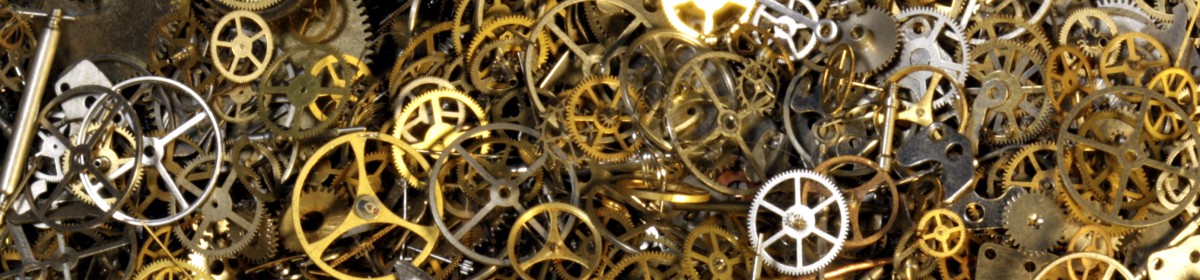


Be Natural: The Untold Story of Alice Guy-Blaché

by James Wallace Harris, Wednesday, March 25, 2020

Last night I watched Be Natural: The Untold Story of Alice Guy-Blaché on TCM — it is one of the most creative documentaries I’ve ever seen. I’ve been having trouble focusing on television lately, and this show not only grabbed my attention but energized my brain. The film is available to rent or buy at Amazon and other outlets. I bought a copy because I want to study how the documentary was made and to be sure I have a copy for the future.

Now I know most people won’t be interested in silent movies, or even a history of silent movies, but if you are interested in the history of film, storytelling, creativity, women’s rights, memory, unearthing history, or how to make a powerful documentary, then you will be interested in Alice Guy-Blaché.

Not only is Alice Guy-Blaché as important to the early cinema as better known filmmakers like D. W. Griffith but her career began right after the Lumière brothers gave their first presentation in 1895. Most of the creative people from the silent film era are forgotten, as are the films they produced. Be Natural is about how history forgets and remembers. Be Natural is also about how we tragically ignore women. Be Natural inspires viewers by reconstructing Alice Guy-Blaché’s reputation. On another level, I also enjoyed seeing how such historical sleuthing is persued. (It’s important we save everything.)

One of my hobbies is scanning old magazines, and the value of old magazines turned up in this film. Alice Guy-Blaché’s work was often written about while she was making her movies, so old magazines offer proof of what she accomplished. Even the early historians of the cinema overlooked these sources when they were writing the first books about the silent era. They interviewed men, and many, if not most of those men conveniently forgot the contributions of women. Those early histories of the silent film often attributed male directors to Alice’s films. Just imagine how pained Alice would have been when her own husband started grabbing her credit after they divorced.

Even if you don’t care about feminism, history, or movies, you should still consider watching this documentary. Modern documentaries have become very sophisticated in recent years, especially after Ken Burns. Quality documentaries often seem to follow the same techniques with emerging filmmakers trying to add a few new creative touches.

I felt Be Natural extended documentary techniques in several ways, and I think that’s partly due to the growing success of documentaries and even YouTube. Within the documentary, they pointed out that in the early days of cinema everyone was amateurs trying to figure out how to use the new invention, the movie camera, and today, YouTube is full of amateurs trying to figure out that new medium. This causes people to experiment, inspire, and even steal from each other, so we’re seeing a perfect storm of creativity.

Cheap technology allows bold individuals to compete with industry professionals. There’s all kinds of innovations going on in documentaries today. Be Natural has Hollywood support and is a slick production, yet it tells a very personal story on two levels. Upfront is the mystery of Alice Guy-Blaché, but behind the scenes is the story of how Pamela B. Green and Joan Simon track down her story. Their historical detective work is compelling and inspirational, and they include some of the details of how it was done, which I loved. Watching this film made me wish I had a subject I loved so much as they did.

I highly recommend Be Natural. “Be Natural” is a sign that Alice Guy-Blaché posted in her studio to inspire her actors. If you know anything about silent films then you’ll know that was one way she set herself apart.

Jim