Albums You Can’t Play on Spotify

by James Wallace Harris, Friday, October 2, 2020

Update 9/10/22: the Gypsy, Cock Robin, and Ricky Nelson albums are now on Spotify.

Most streaming music services have tens of millions of songs or millions of albums. That should be plenty enough music for anyone, especially at the bargain price of $10 a month. It’s actually a better deal than Netflix because usually, only one music service is all you need. I subscribe to two at the moment. Spotify because it’s the best, easiest to use, and works on most devices with its Spotify Connect system. And I’m subscribing to Amazon Music HD because I’m testing out high-definition music to see if it is worth a few extra dollars a month, plus I have three Amazon Echo devices. (Spotify plays through Echos too, so don’t think owning Echos means having to get Amazon Music.)

If music services offered every album ever produced I’d give up both CDs and LPs. Streaming music is just too damn convenient. The Rolling Stone new list of “The 500 Greatest Albums of All Time” just came out and I bet most of them are on Spotify. There’s already a playlist created for it with 7,557 songs requiring over 471 hours to hear. (Although, I prefer to play albums one at a time.)

I keep trying to give up LPs, but some aren’t even on CD, much less streaming music. I’m neither enamored with LP’s sound nor am I nostalgic for the format. I’ve given all my LPs away more than once, but once again I got a hankering to hear some favorite albums and I bought four of them as used LPs. Also, my Friends of the Library Bookstore sells LPs for 50 cents a disc, so it’s kind of fun to buy them based on the covers.

But, I really would give up my LPs and CDs, and my turntable and CD drive if I could get everything on Spotify. The future is almost here. The only downside to streaming music is they don’t pay the artists fairly. I hope that will change too.

I assume some albums aren’t available on Spotify for legal reasons, otherwise, why would all of Nanci Griffith’s albums be available but not Once in a Very Blue Moon – my favorite. There’s always a possibility that Spotify just wants to annoy the crap out of me personally. I’m hoping it will show up one day.

I just notice another album I’ve been waiting for years has appeared on Spotify, Willis Alan Ramsey’s self-titled debut album, and as far as I know his only album.

Sometimes early albums are left off of Spotify while later albums from the same group are available. I assume they are from different publishers or because of legal squabbles between band members. For example the group Cock Robin. Their early albums aren’t on Spotify, but Spotify offers to link you to places where you can buy them CDs. I recently bought a used LP to hear After Here Through Midland (1987).

Another old favorite album I can’t get on CD or Spotify is Never Goin’ Back to Georgia (1969) by The Blues Magoos. Again, some of their albums are available on Spotify, the early ones, but not the later albums.

An LP I’ve bought three times over the last forty years is Which Way to Main Street (1982) by Wendy Waldman. Some of her albums are on Spotify, but not all, and not this one. Some of her other albums are on Amazon Music, but not this one. This album is her only album from Epic Records, so that might explain why it’s not on streaming music services. Which Way to Main Street is available on Waldman’s website on CD, but I’m trying very hard not to buy any more CDs. I’ve started a tiny collection of used records that aren’t on Spotify. I hope that collection never grows very big because I’m over physical media.

There are groups that have no albums on Spotify. It’s like time just swallowed them up, or maybe they were bands I heard in my dreams. For example, the debut double album by Gypsy is called Gypsy. They have produced several albums but you wouldn’t know it from streaming music.

Interestingly, they do survive on YouTube. In fact, many of these ghost albums haunt that service. I don’t know if it’s legal or not, but it’s how they live on in our pop culture hivemind. By the way, listen to this album. I think it’s great.

I do like looking through the record bin at the Friends of the Library Bookstore. For fifty cents it’s kind of fun to try something that just looks interesting, for example, this Peter Nero album, Tender is the Night. It’s not on Spotify. Most of the albums available on Spotify for Nero are compilations. For a lot of old artists, especially ones that were never big sellers, their individual albums aren’t available.

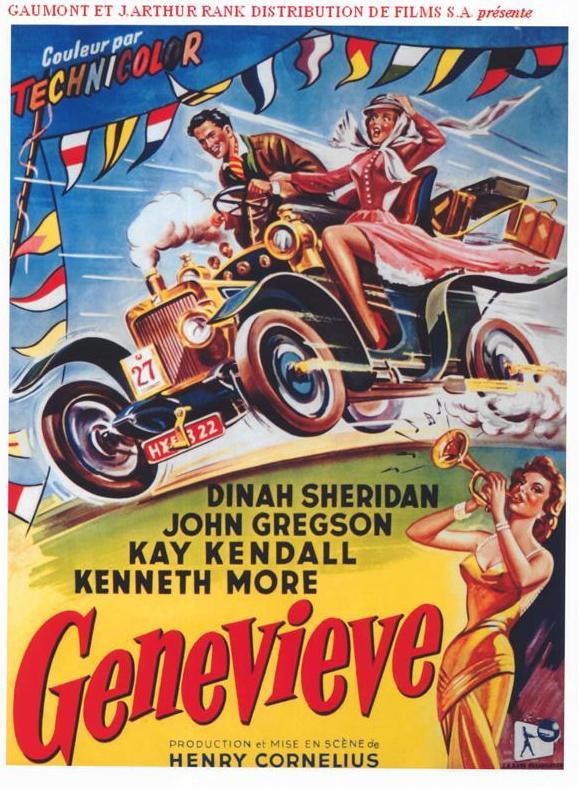
There is one whole class of albums that are often missing from Spotify and other streaming music services, and that’s soundtracks. I can listen to zillions of Ricky Nelson albums, but not this one:

But even this is changing. I’ve waited years for the GATTACA soundtrack to show up, and I see that it has. (Update – I was wrong, only a playlist that tries to recreate the soundtrack from other Michael Nyman albums.)

I’m still waiting for The Ipcress File. I have a copy on an imported CD, but I want it on Spotify. In the early days of Spotify, I hope to hear the early James Bond movie soundtracks but they weren’t available. Eventually, they showed up. I’m hoping the same thing happens with The Ipcress File. Over the years more and more John Barry albums have shown up.

You might have noticed something by now. There’s a good chance you’ve never heard of any of these albums. There’s a good chance you could subscribe to Spotify and never search for an album you can’t find.

If you’re a music nut like me, there will be albums you hanker to hear but can’t. And patience pays off. My small list of albums not on Spotify seems to be shrinking. Please Mr. Spotify, if you are reading this, put these albums on your service, especially Nanci Griffith and Wendy Waldman.

JWH

Collecting v. Accumulating v. Hoarding

by James Wallace Harris, Sunday, September 27, 2020

Last night I had an epiphany while watching this YouTube video (starting at 6:18):

Seeing how well that CD/LP collection was organized I realized there was nothing wrong with collecting huge quantities of anything if you maintained an organization. I realized there was a difference between collecting and hoarding. And with a quick bit of naval gazing, I realized I was neither a collector nor a hoarder. I was something in between.

I believe I’m a clutterer or accumulator. I haven’t decided which is the better term. I acquire a lot of stuff I like, but I don’t maintain it in a tidy organized fashion, so I’m not really a collector. But then, I’m not traumatized by giving away stuff, I can shed possessions quite easily, so I’m not a hoarder either. This is a nice bit of self-realization.

A real collector will never consider Marie Kondo’s philosophy if their collection is beautifully organized. Hoarders will never give her a second thought either. It’s us clutterers and accumulators that feel Kondo is talking to us.

My problem is I collect stuff half-ass, that I’m a crappy collector. For example, I intentionally collect best-of-the-year science fiction anthologies, and I’m probably approaching 85% of what’s been published. But I don’t shelve my collection properly, I don’t index them, I don’t maintain them in Goodreads, I don’t make them look impressive in nice bookcases. I just acquired them. Some anthologies are in the designated anthology bookcases in a haphazard order, other anthologies are lying around, or stuck in convenient empty places in other bookshelves away from their brethren.

I’ve watched several of those Channel 33RPM videos that showcase people’s LP collections and listening rooms and it’s made me feel guilty about how badly I maintain my collections. I have other smaller collections that I also half-ass maintain. My man cave has no decor appeal at all, it’s just a comfy hovel. When things pile up too uncomfortable levels, I tidy it up, swearing I’ll never let it get untidy again, but weeks later, everything is in piles again.

I’m definitely not a hoarder. Sometimes when I tidy I do it by giving away stuff. It’s easier than making a place for everything and putting everything in its place. And it’s quicker than asking each object if it sparks joy.

I’ve been thinking if I really want to keep all the books I buy, I should have some bookcases built into some rooms. My friends Mike and Betsy did that and it looks great. Susan says we’ll probably stay in this house until we die, so it won’t matter if I ruin its sales appeal by having wall-to-wall bookshelves built.

On the other hand, if I had beautiful bookshelves I’d also feel the need to create an organized library of books, and that would be work. I realize that I’m an accumulator because I’m too lazy to collect properly. A good collector knows their collection, curates it properly, and showcases it in a beautiful presentation.

On Facebook I often see people post photos of their libraries. Some people are like me – they have a bunch of books. Others have made beautiful displays of their book, and I can see they are carefully organized. I can also see they spend more for their books because they get beautiful editions. I do love artistic dust jackets, and I’m willing to spend a little more, but I buy the best quality I can get for the least money, so my shelves mix pedigrees side-by-side with mutts.

Susan and I are well matched when it comes to house decorating — we both prefer being lazy. I’m a bit different because I feel guilty that I don’t make more of an effort. We have friends who make their houses look like creative representations of their personality. And you see that in the video above.

At 68, it’s probably too late to organize my spots. On one paw, I crave to be a minimalist. I’d love to decorate my den with just a large screen TV, great speakers, a network streamer, and two La-Z-Boys. I’d have no videos or albums, just stream everything. For my man cave/library/office I’d have a desk, chair, couch, reading chair, tablet, and computer. My library of books, audiobooks, and magazines would all be digital. On the other paw, I fantasize about creating rooms like the people in the videos, fill them with the physical objects I love, and decorate the walls to reflect what I collected.

The real me learns about a book, album, movie, TV show I want to consume and I order it. I spend my time enjoying creative works – I’m just not creative about collecting them. When I’m finished with one, I get another. And their physical containers just pile up. I accumulate. That causes clutter and I think about Marie Kondo just enough to feel guilty every once in a while. When I write these posts.

JWH

Hoarding Creative Works

by James Wallace Harris, Saturday, September 26, 2020

A hoarder of creative work is called a collector, and a collection of creative works is called a library. That’s if we’re using polite terminology. I have stacks and shelves of books, music, TV shows, and movies that I hoard. I don’t know if I’m a librarian of my collections, or a hoarder of my crap.

It’s a strange kind of possessiveness. My problem is I don’t have enough shelves for all my libraries, so me and my piles of stuff is looking a lot more like your garden variety hoarder of junk.

The other day I decided to reduce the number of DVD/BD discs that Susan and I own down to what would fit into the bookcase we designated as our TV/Movie Library. It was either that or buy another bookcase, and getting another bookcase would mean taking wallspace from something else in our junked up house, and that would only cause anguish over giving something else away.

I figure it’s time to be practical about my hoard of creative works. I’ve got too many books, magazines, LPs, CDs, DVDs, and Blu-ray discs. And that’s not even considering the thousands of digital items I own. I know that. I’ve always known that – but why can’t I remember that? Especially like this Tuesday when I was at the used bookstore buying seven large hardbacks I felt for sure I must read but know I never will. Jesus, I’m crazy, or what?

What psychological programming makes me want to possess (collect) so much? Many of my friends when they got a Kindle gave their books to the Friends of the Library. And when they embraced iTunes or Spotify gave away their albums to their kids. And when Netflix came along donated their VHS tapes and DVDs to Goodwill. I didn’t. I went to the Friends of Library book sales and Goodwill and bought all their crap.

We often blame our present hangups on our upbringing, and I guess there might be a case for that here too. When I grew up you got two chances at seeing a TV show. When it premiered in the main season and then again as a rerun in the summer. Evidently the trauma of believing I’d never again see a favorite episode again burned something deep inside of me. That childhood trauma caused me to mass consume VHS tapes and DVDs when they were invented.

Movies used come to town, and if you missed them you’d have to wait years to catch it on TV. Music was on the radio and you had to wait a couple hours for that catchy tune come around again. It’s probably why they only had 40 songs in rotation. It was agony on Golden Oldie Weekends hoping to hear an ancient rock ‘n’ roll hit from the 1950s. Books were something you got at the library that you took back in seven days, and magazines were something you threw away on cleaning day. Creative works were fleeting back then.

When I started earning money I bought my favorite books and albums. At first it wasn’t many. When the VCR came on the market it became possible to save TV shows or buy movies. Susan and I spent $800 on our first video recorder at a time when that was way more money than we could afford. Then came DVDs, and even better, Blu-ray discs. For years Blockbuster Video filled that need to watch what we wanted when we wanted – unless it was checked out. Then we realized we had to own our favorite flicks in case the pressure to see a movie immediately took ahold of us. (Actually, I can’t ever remember that happening.)

Over the decades it became possible to own all the creative works I loved. However, it’s taken me decades to realize that the desire to consume creative works immediately is an unhealthy trait I should try to control.

And even owning some creative works would have been fine if I had been selective about what I acquired. A carefully curated collection of all-time best loved works of art that I was most identified with would have been manageable. It wouldn’t be hoarding, just defining my identity. But something inside me wants to keep every creative work I ever had a momentary infatuation. (I think that might be related to my obsession with memory too. It bugs the crap out of me that I forget anything, and owning a creative work is like a physical memory.)

I guess I feel a need to own everything I love in case I want to relive that initial encounter – but is that true? Because of the internet, there’s been a new paradigm of instant access to creative works online. When I was cleaning out my DVDs yesterday I realized that many of the movies I owned are always available, either from a streaming service like Netflix, or by renting them for far less than the cost of buying (even if I rented them 2-4 times). And since I mostly watched old movies on TCM because I actually prefer the randomness of it’s offering, many of my most loved old movies do appear one or more times during the year, giving me plenty of times to re-watch a film. For those movies I don’t have instant access through checking Just Watch, with a little patience they would show up again on TCM.

I was able to cull over a hundred discs I could part with without too much anguish. However, I still had hundreds that I felt the need to own. Where does that psychological drive come from? What kind of anxiety do I have if I’m afraid I won’t be able to see a TV show or movie when get the urge?

Years ago I calculated I’d save tons of money if I bought books at full price on Amazon whenever I actually was ready to read them over the cost of collecting books at bargain prices thinking I’d read them someday. I’ve bought thousands of books I’ve never read simply because I believed I’d read them someday. Some of those books have been waiting forty years to get the attention of my eyes.

I’ve written essays like this one before trying to talk myself out of hoarding creative works. I shouldn’t need a psychiatrist to figure out I have a hoarding gene that I need to manage. At least my bedroom doesn’t look like this:

Luckily I have another gene that battles with my hoarding gene, a Marie Kondo gene. I also like to declutter and give away junk. If I still owned every creative work I once bought everyone room of my house would look like the photo above. I’m not exaggerating.

I have a Dr. Jekyll/Mr. Hyde personality but it’s a battle between my KonMari/Hoarders natural tendencies. I never can come to terms that my need to read books has no relationship to my need to buy books. I write these essays time and time again hoping they will reprogram my brain. They are my way of psychoanalyzing myself but I never get to a behavioral breakthrough. I’m a crappy at self-shrinking, or would that be an auto-analyst?

JWH

Spielberg Should Make a Movie About Them

by James Wallace Harris, Sunday, September 20, 2020

Most of our fiction when it’s not about romance or comedy is about heroes. Whether in books, television shows, movies, or video games we usually identify with a hero. Quite often the hero must confront conflict with violence, but generally the violence is over-the-top and the heroes’ abilities are unbelievable. Far too often fiction promotes the cult of the gun. But what about real heroes? Heroes are individuals who will sacrifice themselves for others. Why don’t we see more real life heroes in our fiction?

I just finished reading chapter 17 of Caste: The Origins of Our Discontents by Isabel Wilkerson about Allison and Elizabeth Stubbs Davis, two black anthropologists who were training in Germany when the Nazis came into power. This was 1933, and they decided to flee the fascists and go to Natchez, Mississippi to study class, caste, and race. Talk about jumping out of the frying pan into the fire. This was the heart of the Jim Crow south well become the civil rights era and Freedom Riders. According to Wilkerson a black person was being lynched every four days. She also reported that Nazis had studied Jim Crow laws for inspiration on how to fashion their laws to oppress the Jews, and in some instances the Nazis thought the Americans went too far. By the way, I highly recommend Caste.

Allison and Elizabeth were part of a team, with white anthropologists Burleigh and Mary Gardner, but interestingly for the time, Allison was the team leader. Wilkerson’s book up till chapter 17 showed her readers just how dangerous it was for the two couples, especially for Allison and Elizabeth to work in the 1930s deep south. Their scientific undercover work meant taking potentially lethal risks day after day for years.

These scientists were real life heroes putting their lives on the line to make a better world for us. We need to see more movies about this kind of heroism. Are you brave enough to attempt anything like their quest? I certainly am not. In modern fiction the hero usually get to load up on weapons before confronting the enemy. Would you volunteer to spy on a hostile society with only Gandhi’s armament?

Their story would make a great movie. After reading this chapter I really wanted to know more about these four scientists, especially Allison and Elizabeth. However, I can’t find out much about them and their time in Mississippi. Allison went on to become the first black professor to get tenured at a predominantly white university (The University of Chicago, 1947). but with complications. David A. Varel wrote a whole book devoted to Allison Davis, The Lost Black Scholar: Resurrecting Allison Davis in American Social Thought (2018).

According to Wilkerson the Davis and Gardner couples started their research earlier and stayed longer, but other anthropologists came after them, spent less time embedded in the culture, and published sooner. Davis and the Gardners published Deep South: A Study of Social Class and Color Caste in a Southern City (1941), but it was upstaged by Caste and Class in a Southern Town (1937) by John Dollard and After Freedom: A Cultural Study in the Deep South (1939) by Hortense Powdermaker. Dollard and Powdermaker gained the academic fame, and it’s why Wilkerson said in a New York Times interview that Deep South was the book she admired most that no one reads.

I’d love to read Deep South but finding a copy is turning out to be hard. It’s not in print at Amazon, and used copies run hundreds of dollars. I hope Wilkerson’s book inspires a reprinting, at least a Kindle edition. According to WorldCat it is available in some of my local university libraries, so I will try them. Still, I’d like to see their story on the big screen.

I know Hollywood distorts history badly, but while reading Wilkerson I could vaguely imagine the intense drama of their story, I’d like it visualized for me with all the vivid details movie makers can muster. I’m burned out on modern movies. I’m no longer hooked on their fantasy violence. I crave quiet realism. I understand our world and its history is full of violence, but surely it can’t be as much as our fiction implies. I’m tired of heroes with big guns. I’m tired of cartoon combat. I read the other day that the Wild West was never as violent as westerns, not even close. We need more movies about people who save the world without shooting it up because obviously too many people are thinking that’s what the world needs now the most.

JWH

Music – Hear More With Less Equipment

by James Wallace Harris,

Weeks ago I got annoyed with my 5.1 surround sound system connected to my television, so I gave it away. Whenever I had a problem I had to fight the complicated configuration menus in the Denon AV receiver and Sony TV, and I was tired of screwing around with them. Plus, my old body has gotten too wimpy for wrestling big and heavy equipment.

For a couple weeks I researched soundbars. They promised to be the ultimate easy-to-use replacement. However, I kept worry about playing music through them. Would they sound good with Spotify? Then I watched “Escape the ‘world of crazy’ with the Bluesound Powernode 2i” on John Darko’s YouTube channel.

The view behind Darko’s stereo rack was just like mine used to be behind my entertainment center. I was sold on the Powernode 2i but spent a week watching more review videos and reading online reviews. I already had simplified my home office/library with a Yamaha WXA-50 and Bose 301 series V speakers and was very happy with its ease of use and sound. The Powernode 2i seemed to offer even more but at twice the price. I took a chance and bought it.

For the past year I’ve been watching speaker reviews on YouTube and have been hankering to try a pair of Klipsch RP-600Ms. I went back and rewatched the reviews and when I saw Steve Guttenberg’s video where he said if you want the RP-600Ms but want a bit more bass get the RP-5000F, and so I did.

Pairing the Powernode 2i with the Klipsch RP-5000F sounded great. I’m very happy. I now understand what all those reviews talked about when they said Klipsch has their own unique sound with their horn tweeters. I was afraid they might be too bright for me, but weren’t. They sound especially wonderful for vocals and orchestra music. The only problem I had with this setup was the HDMI ARC connection to my Sony TV wouldn’t work. I don’t know if I needed a better cable or not, but the HDMI ARC configuration was the source of my configuration problem with the old AV receiver. It had worked for years, and then started acting weird.

I quickly solved the problem with the Powernode 2i by using an optical cable instead and it worked great. However, sound level has to be controlled by the BluOS app, rather than my Sony TV remote which is a feature of HDMI ARC. I might order a HDMI 2.1 cable to see if that fixes the problem, but I’m in no hurry. I’m good to go.

I can call up Spotify or Amazon Music HD on my iPhone and can play whatever I want. Streaming music servers connected to 2.0 speaker setup is all I need. I miss the feel of surround sound some, but both the Klipsch and Bose fill their rooms nicely. By the way, I’m becoming less tempted to chase after audiophile quality gear and High Res music – I’m just not sure my old ears can tell the difference.

That left the bedroom. I have an Audio-Technica AT-LP60 turntable connected to Creative Reference CR-4 active speakers. It’s a nice low-end setup. I really don’t like records much anymore, but all those audiophile guys make me feel nostalgic and guilty for not playing them. Changing records is a pain in the ass, but the act of playing records does bring back wonderful memories. So I’m torn.

Then I watched John Darko’s video about using a Raspberry Pi as a network streamer. Since I had an old Raspberry Pi 3B I got it out and installed the raspotify on it. Darko was right, the Pi by itself doesn’t sound so good. I had unplugged my turntable from the speakers and plugged the Pi instead. Playing music from my iPhone was so much easier. I could imagine laying in my bed at night picking out different albums. With the turntable I’d have to get up twice for each LP.

So I looked at his video about using an ALLO hat for the Pi to get better sound. I just wanted to use RCA connectors out, so I could get by with the ALLO Boss and a case, still a bit less than $100. Not bad.

I was thinking of ordering one when I decided to Google low cost streamers. Several very interesting options came up, including the Amazon Echo Dot. I already had a second generation Echo Dot in my bedroom, so I unplugged the speakers from the Raspberry Pi and plugged them into the Echo Dot.

BAM! The music sounded tremendously better than Raspberry Pi. I tried both Spotify and Amazon Music HD. The good thing about using Amazon Music HD was I could control the volume with the Amazon Music app, but couldn’t with Spotify app. Wow, this was ease-of-use to the max.

Could anything be simpler? What if powered speakers came with Amazon Alexa or Spotify Connect built in? What if they they didn’t need a wire running between the right and left speaker. It would be one cord, two speakers. That’s as minimalistic as I can imagine. Should I give up my turntable and go three for three with streamers?

I suppose I could get some new active speakers with multiple inputs and keep both. I do keep an CD/SACD player hooked up to my Yamaha WXA-50 for playing discs in my man cave. I could designate the bedroom as an LP playing site.

I’ve been doing my testing with Sara Watkins album young in all the wrong ways. I have it on LP. To me it sounds equally great on LP, Spotify, and Amazon HD. It’s a wonderful album I play over and over again.

I feel I hear more with less equipment. Playing music is not about technology, but listening to albums. Now that I have selected my minimalistic equipment I can spend even more time listening to music. I’m tired of messing with technology. I’m tired of worrying if I’m hearing the best audiophile sound quality. I’m almost over messing with CDs and LPs, but not quite. But I’m moving in that direction.

For younger people thinking about trying LPs, don’t get too hung up on the equipment. Most audiophile turntables are manual. I hate them. I spent $300 on one and ended up giving it away. If you want to get into records, get an automatic turntable and powered (active) speakers. They are a very simple to set up. Research getting a turntable that’s mostly configured and adjusted at the factory. That is, unless you’ve been infected with the audiophile virus.

JWH