The Personal Insights Found in Watching the YouTube Meme Videos: 10 Albums I’ve Played the Most

by James Wallace Harris

There’s a meme challenge going on YouTube over the past couple of weeks for YouTubers who have channels devoted to collecting albums — What are the ten albums you’ve played the most? Some YouTubers take that to mean over their entire lifetime while others choose to interpret it in various other ways. No one seems to be able to answer the question asked, and I won’t be able to either. I’m going to give ten albums I played the most in the 20th century, and four I’ve played the most in this century. But in all honesty, the ten from the past century were played far more than any this century.

This is an almost impossible task. It challenges those who take up the task to push their memories to their limits. It also reveals delusions we have about what we think we know about ourselves. And it shows how we change over time, even when we think we haven’t. And to be completely honest, we fudge on the selection in favor of what we want to be remembered remembering. Even if you aren’t a record collector, try to adapt the task to something you love, and then give an honest answer.

One thing I found startling about watching these videos is how unique and different the lists are. Humans are truly diverse creatures. When I was growing up in the 1960s there were only three TV channels and AM Top 40 radio. It was easy to find other people who like the same TV shows and songs that you did. That’s almost impossible now. Any Top 10 list you make will be as unique as your fingerprints.

I’ve watched several of the videos and so far, I don’t think there’s been any overlap of albums. Isn’t that wild? And several YouTubers listed ten albums I’ve never played, and some listed albums I’ve never even heard of before.

Visit YouTube to watch some of these videos.

I believe it’s delusional to think we know which albums we’ve played the most if we only go by what feels true. I’m sure people might think “I’ve played that album a million times” it’s obvious that such a statement is hyperbole. I’m not even sure its within reason to say, “I’ve played that song a thousand times,” even though I’ve thought it true about “Like A Rolling Stone” by Bob Dylan.

I doubt anyone has kept a diary of when they played an album and have trusted statistics. But that’s what’s fun about this challenge, trying to analyze a pattern that spans a lifetime. Google tells me there’s been 21,183 days since I started buying records in 1966. I was given a few between 1962 and 1965, but I don’t really remember them. Google also says there were 3,026 weeks, and 58 years in that period. There is no album I’ve played every week, but I’m confident there are albums I played at least once a year. Knowing those numbers will help me verify my memory.

I’ve been buying albums since 1966 and I have owned between 3,000 and 4,000. But making even that guess is psychologically revealing. I do know years ago when I ripped my CDs to MP3s that I ended up with over 1,900 of them. I’ve bought many since. I think I’ve bought around the same number of LPs but that’s only a guess. LP buying was dominant for about twenty years, as compared to thirty-eight years of buying CDs. Until the advent of streaming, I often bought 2-4 new albums a week, and during my LP buying years, I often bought used LPs, so that number was higher.

My record playing habit has always been to search for albums I love, play them over and over for days or weeks, and then burn out on them. However, I’d say less than 1 in 10 albums I bought excited me enough to play them over and over like that. Looking at the numbers, I’m guessing I’ve only loved about three hundred albums out of all those I bought, and of that three hundred, only about 30-50 are ones I like to play all the way through when I play them. That means I need to figure out which ten out of fifty I played the most.

The odds are some of the ten from the 20th century are the actual albums I played the most.

Playing around with numbers, I’m going to set my rule of thumb to thinking any pre-2000 album I played more than fifty times is a possibility, and any post-2000 album I’ve played more than thirty times.

20th Century

I know I’ve told people I’ve played “Like a Rolling Stone” by Bob Dylan at least 1,000 times. That’s only playing it once a day for three years, out of the possible 58 years since I first heard it in July 1965. But if I press my memory hard, I know I never played it daily for three years. And I know I haven’t played it even weekly. But I’ve bought Highway 61 Revisited and Blonde on Blonde twice on vinyl, once on CD, and once on SACD. I’m confident I’ve played those two albums once a year, and more than likely two or more times each year. That means I’ve easily played them more than one hundred times since they came out.

Now it’s easy to pick the next two albums I played the most, since they are both from the 1960s, and I’ve been playing them ever since. In the late 1960s and throughout the 1970s I played Everybody Knows This is Nowhere by Neil Young whenever I needed an emotional boost. It was like cocaine. Playing it just pumped me up, and I played the hell out of it. But I don’t play it much anymore. “Cowgirl in the Sand” is on my standard playlist, so I listen to it regularly.

The Secret Life of J. Eddy Fink by Janis Ian made me a life-long Janis Ian fan. I still play it regularly, and I love hearing the whole album. I even bought it again on vinyl several years ago when I got back into vinyl. (I’ve sold my entire vinyl collection more than once.)
Here’s where the YouTube meme becomes more challenging. My main clue is I’ve had this habit of buying an album and playing it repeatedly until I was tired of it. For many albums that was once. But for some that would be a week or two. In rare exceptions it might be a month. It was always until I found another album, one I had to hear in repeat mode too. I know I used to drive anyone living with me crazy because this habit. All ten of the albums I picked were ones I couldn’t stop listening to for weeks.

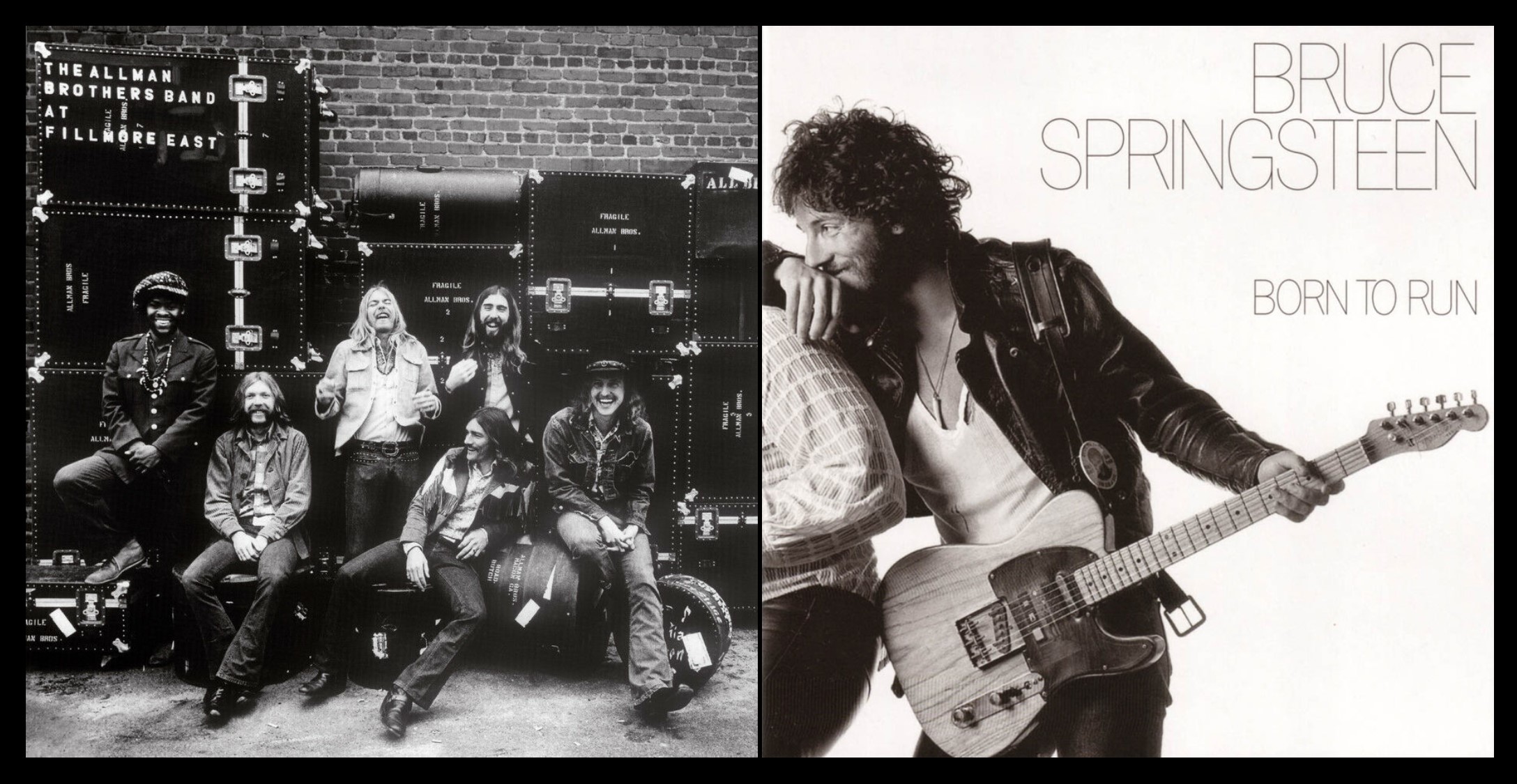
In the 1970s, The Allman Brothers Band at Fillmore East and Born to Run by Bruce Springsteen were those albums I played the most. And I got to see the Allman Brothers live in 1971 before Duane died, and Springsteen live in 1975, during the Born to Run tour. I’m still playing both albums after all these years.
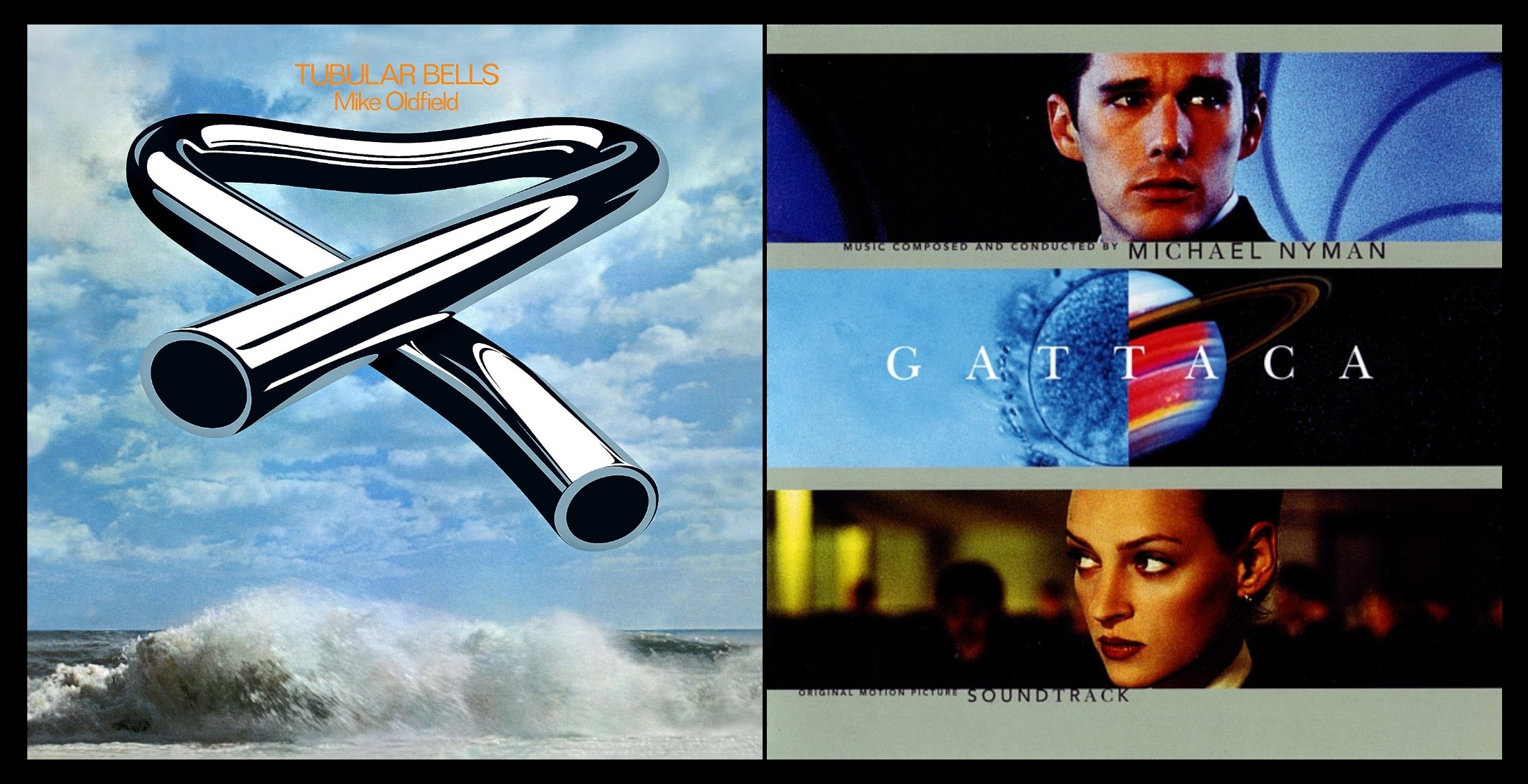
After I burn out on an album I could go weeks, months, or years before I played it again. The best albums would be gotten out again and put on repeat play for a while again. I’m sure I’ve had at least fifty albums I’ve played repeated for weeks. I love soundtrack albums, and Tubular Bells and Gattaca are the ones I’ve played the most, so I’m going to represent all my jazz and soundtrack albums with these two albums.
For most albums I never played them whole but repeated played one or two songs. Boy did I love CDs and having a remote. And streaming made this even easier. I have one Spotify playlist of just songs I love that I put on random play because I love hearing them over and over.

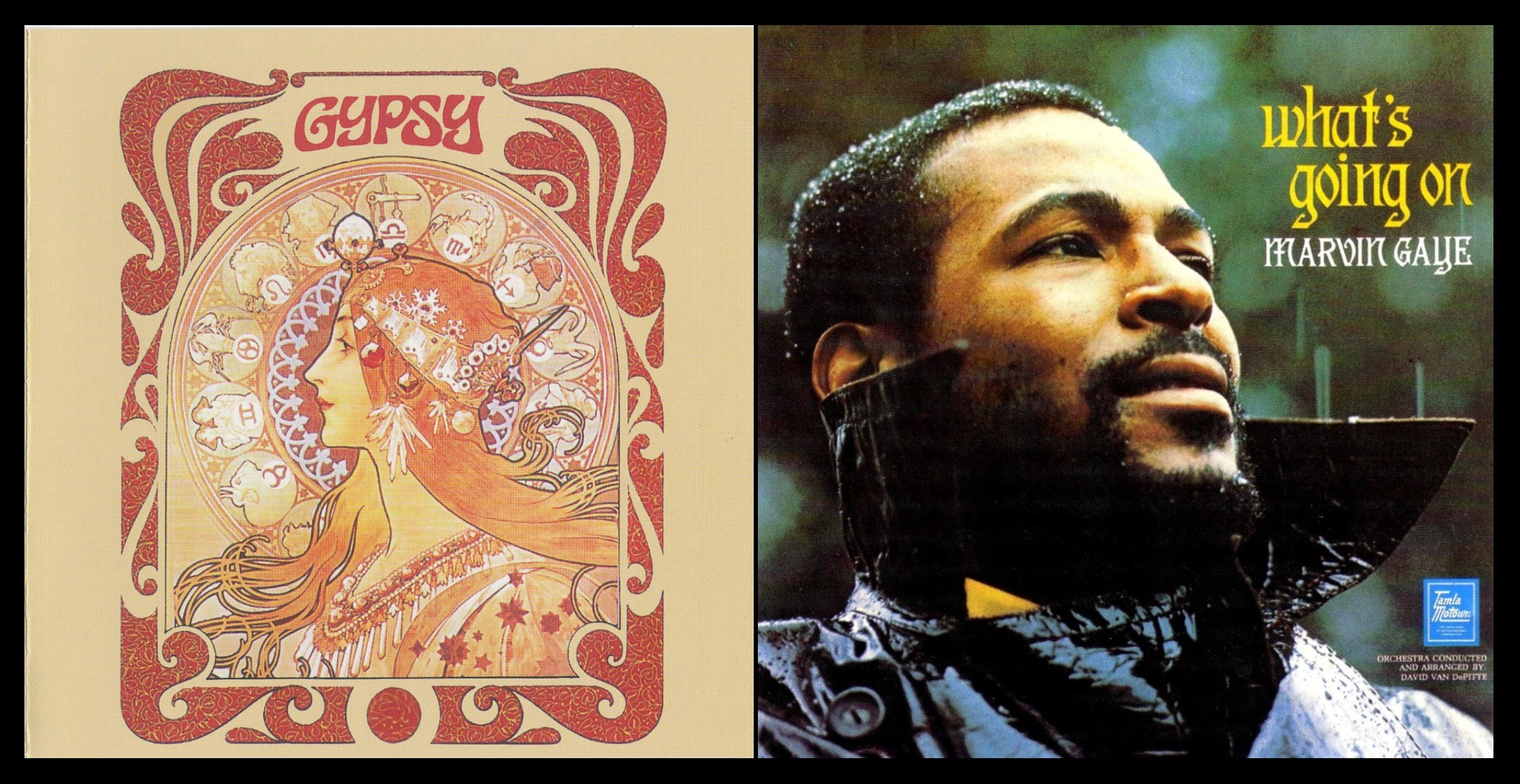
But for the 10 Albums I’ve Played the Most meme I’m pushing my brain to remember only those albums I love playing whole. Gypsy by Gypsy was a double album, but I would play it all the way through almost every time I played it, especially after I got the CD. But to be honest, I only play the first side of What’s Going On by Marvin Gaye — however, that one side is the most perfect side of any album I know.

21st Century

I think many YouTubers didn’t want to tax their memories, so they only pick ten albums they play the most currently or in recent years. I think that’s a cheat. The ten albums I picked for the 20th century are for the fulfillment of the meme. I just can’t let people think I don’t listen to contemporary music. The next four albums are ones I play whole, and over and over since I got them.

I bought young in all the wrong ways by Sara Watkins on LP a couple of years ago when I was giving vinyl another chance. (I’ve abandoned it yet again.) I loved playing young in all the wrong ways every night when I went to bed. I did this for weeks. I have several albums by Sarah Jaffe, but The Body Knows is the one I play most. I still play both albums regularly.

My new obsession is Kings of Leon, and When You See Yourself is the one, I play the most. I have several of their albums. I just love Adele, but 30 was special. I love to play it loud. Well, I love to play everything very loud. Loud for me is eighty-five decibels.

And most YouTubers were emphatic that they were not picking the Top Ten Best Albums. The meme really is about the albums we play the most. But it’s hard to pick a single album you played the most from artists or groups where you love many of their albums. For this meme, the ten selected don’t necessarily mean they are from my favorite artists or groups either.

I know back in the 1960s I played Bob Dylan, The Byrds, and The Beatles the most. But I stopped playing The Beatles as much since. I’ve had two or three Beatles playing jags in the last 50 years, but I never stopped playing Dylan or The Byrds. However, I don’t think I’ve ever played any Byrds album more than fifty times, but it’s close.

To appease my memory and maybe lie to myself mathematically I’m going to pick albums I’m the most emotionally addicted to, the ones I know I return to the most because they sooth my soul. They are the true album forms of heroin. And this might be the solution many YouTubers chose.

There are individual songs I’ve played more than any album by far. Two, “Fresh Air” and “What About Me” by Quicksilver Messenger Service were on two different albums. And they were the only songs on the albums I liked. So, I hate to use those albums for this meme. I could use a best of compilation, but I would consider that cheating on the game too.

There are albums I’m sure that I’ve played more than fifty times that I don’t want to list in my ten. The first album I bought with my own money mowing lawns was the soundtrack to Our Man Flint with music composed by Jerry Goldsmith. I just don’t listen to it anymore but back when I first bought it, I wore it out.

It’s hard to be honest answering questions like “What are the ten albums you played the most?” Like I said, I guess there are at least forty other albums that I might have played as much. I hate that I shouldn’t mention them, but I’ve already cheated by giving four albums for this century that I played the most.

If you’re curious, here’s my Spotify playlist of songs I play the most.

JWH
Replacing Classic Novels

by James Wallace Harris, 8/12/13

Most bookworms just want to be entertained. They know their tastes are so individualistic that no friend or authority can predict what they will like. However, teachers and literary scholars like to think that certain books should be read, and a tiny fraction of readers are willing to read books because they have a great reputation. We feel reading the classics makes us a better person.

There is no FDA like agency that officially rates books as choice or prime. So, what makes a classic novel? The common assumption is novels that survive the test of time are the real classics. However, you can go on Amazon and order a lot of books from the 19th century that no one considers classics. Some people consider books that are taught in school or college to be the classics. And there is some merit to that, but literary works that get taught are also subject to the whims of pop culture, and English departments.

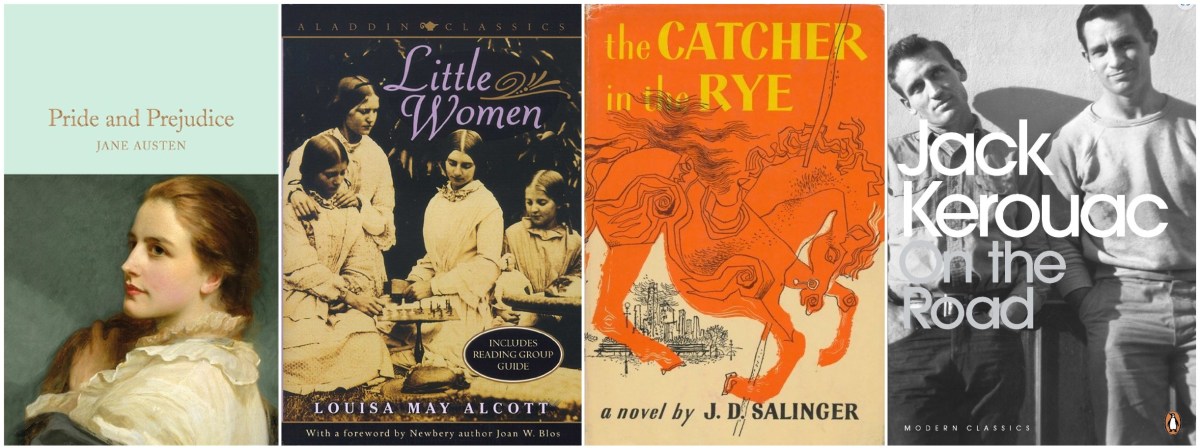
I mention all this, because I read “8 Overrated Literary Classics and 8 Books to Read Instead” by Jeffrey Davies, especially since it throws four of my favorites under the bus: On the Road by Jack Kerouac, Pride and Prejudice by Jane Austen, The Catcher in the Rye by J. D. Salinger, and Little Women by Louisa May Alcott.

Of course, this is clickbait, but I’ve seen this kind of essay before. A couple other examples are “13 Overrated Literary Classics, and What to Read Instead” by J. W. McCormack and “9 Overrated Classics — And What to Read Instead” by Zoraida Córdova.

I understand why young people rebel and want to overthrow the reading lists of the past, especially a past dominated by white male writers. And sure, sometimes these articles are just giving suggestions as to something different to read. But other times, I do feel the writers just hate the classics they are demoting. I often see On the Road and The Catcher in the Rye listed in these literary rebellions. (A hilarious generational attack on The Catcher in the Rye is the novel King Dork by Frank Portman)

What I would like to propose are rules for this game. If you want to oust a literary classic, you need to provide a proper substitute. All too often, these writers offer alternatives that are just their personal favorites, and usually something from recent decades. Classics have specific qualities that any substitute should have too. They include:

  • A snapshot of history – time, place, and subculture
  • Innovation in writing style and techniques
  • A philosophical or psychological insight

In other words, classic novels offer a view of everyday life in the past, even if it’s inaccurate, slanted, or distorted. That’s why I’m against publishers cleaning up aspects of older novels to make them politically correct for modern woke minds. We need to know both the good and bad about how we were. No censoring or whitewashing the past by substituting novels that agree with your moral and ethical sensibilities.

Classic novels supplement history books to build mental models of the past in our heads. Removing any one of them takes pieces of the puzzle away from the collective images we’re building of our cultural heritage and history.

If you’re serious about offering replacements because you feel an existing classic work doesn’t do the job well enough, then suggest a novel that offers a better view of the same time and setting. One that is more insightful.

The trouble is, doing just this is extremely hard. Readers have spent decades and centuries winnowing out the best novels. You might dislike novels for the views they show, but finding good replacements takes a lot of work and reading.

I would suggest, instead of trying to replace specific classic novels, you offer supplements instead that expand or enhance the classics. For example, The Catcher in the Rye (1951) and On the Road (1957) are about alienated youth in America before the youth rebellion of the 1960s. We need more novels about kids growing up in America in the 1940s and 1950s to expand on the views those two famous classics give. I would suggest Horseman, Pass By and The Last Picture Show by Larry McMurtry and The Bell Jar by Sylvia Plath, among others.

The challenge would be to find novels written near the time and setting covered, ones that have been forgotten but are worth resurrecting and remembering. There is something more authentic about novels written by people who lived in the time of the novels as opposed to later novels that are historical fiction.

Few novels are truly contemporary. On the Road was set in the 1940s, but was written in the early 1950s, and published in 1957. It takes a certain number of years to get the perspective and write things down. Breakfast at Tiffany’s was published in 1958, but about 1943. And it’s not the early sixties we see in the film, and neither is the plot or characters. Holly Golightly is a lot closer to Neal Cassidy than most people realize. She is another alienated youth from the 1940s, and another supplement for The Catcher in the Rye.

I understand why young readers dislike older novels. I can understand why they want to promote their favorite stories as classics. But I don’t think it’s an ethical idea to suggest they should replace the older classics, especially with newer novels.

They need to decide which novels from the eras in which they lived paint a worthwhile picture of those times and places, and then promote them as the classics that represent those settings and characters.

If these essay writers need a hook to promote the books they love, please don’t throw the books under the bus that other people love. I’d suggest being straight forward and creating titles like: “The Best Books about Miami in the 1980s.” Or “Novels About People Who Lived Down the Street from Jane Austen.” Or “Characters Who Lived While Jack and Neal Were On the Road.” Or “Novels That Louise May Alcott Read That We Should Read Too.”

JWH

Living With an Aging Infrastructure

by James Wallace Harris, 8/6/23

I’m writing this on my iPhone by typing with just my right index finger because our internet is still out. It’s been over a week now. We feel like we’re living in the 1980s. We know this is a first-world problem and nothing compared to all the natural catastrophes happening around the world. Still, it’s quite educational.

When AT&T came out to fix our internet, we discovered the wire from the pole to the house was on the ground hidden in some bushes. It had been pulled off the pole and the connection at the house by a falling tree limb. The repair guy said it would be no problem stringing a new wire, but I, unfortunately, knew better.

“You can’t climb that pole,” I said to the repairman as he started walking to the back of my lot.

“What,” he said.

“That pole is so rotten and broken that MLG&W guys won’t climb it. The linemen won’t work on it without a bucket truck.”

The AT&T guy tried to use a distant pole but there were no free circuits. So now we’re waiting for AT&T to return with a bucket truck.

We’ve been waiting years for that telephone pole to be replaced. Our block is bisected by power lines on incredibly old poles. They are hollow, with big cracks, and holes. The power company tagged them years ago to be replaced but they spend all their time fixing lines and circuits that are broken. This summer Memphis has had several storms causing several big outages, including over 100,000 customers.

It’s a matter of aging infrastructure. Memphis is built under a sea of trees, and those trees are always falling. It’s an endless battle between the arboreal world and power lines. In the winter, ice storms make a siege on the trees and water pipes and sewers. During the rest of the year, frequent storms rattle millions of limbs. And the extremes of hot and cold wear on everything all the time.

That line of old telephone poles that divides the block is shrouded by trees in backyards segregated by fences of all types. Those poles won’t be easy to replace. And they won’t be replaced until they fall. Which means days of power outages for about seventy homes in this area. I live with the fear of one old dead tree in particular, falling across the powerlines and bringing the whole line of telephone poles down in my backyard.

Last year we had a freeze that damaged many water lines, and the city was under a boil water alert. Many people in Germantown can’t drink their water right now because gasoline got into a leaky old pipe.

I expect from now on as the weather gets more violent and as our infrastructure ages, we’ll all live with increased outages. If you are paying attention to the news, cities all over the world are living with scheduled blackouts and water shortages. The recent floods in China are a terrifying portent of things to come.

Living without the internet is a lesson about the future. Things are going to break down more. We all need to become preppers. As we build new infrastructure and repair the old, we need to design new structures that can withstand far greater abuse from Mother Nature.

I wish 5G internet was available in our neighborhood. Then we wouldn’t need wires. Unfortunately, we only get one bar of broadband in this neighborhood. And I wonder if they could route the power lines under the streets. I know they bring fiber optic cables to old neighborhoods that way.

I believe there will be plenty of solutions to these aging infrastructure problems, but we might have to go through decades of bumpy readjustments.

JWH

How Addicted Are You To The Internet?

by James Wallace Harris, 7/31/23

Our internet went down Saturday, and a technician won’t come to fix it until Thursday. Living without the internet shows me just how addicted I am to the online world. And we haven’t gone completely cold turkey either, since Susan and I have little lifeboats to the internet with our iPhones. We’re like teenagers, with our faces glued to our phones. While streaming is down, we watch the two nightly shows we watch together, but with our separate iPhones. We both love that routine of watching Call the Midwife and A Place to Call Home every night.

Since we’re both retired, we spend a lot of time watching TV during the day – each with our own TV no less. And since we cut the cord a decade ago, we depend on the internet for streaming TV. I think that’s our biggest withdrawal symptom. So, we’re really addicted to television. But that’s been true since the mid-1950s.

Since the router has died, I realize we have two other addictions that are entirely internet dependent. First, is social media. Second, is information.

We have some friends that we spend time together with physically, but we also have more friends we mostly spend time with on the phone or online. I spend hours every week keeping up with my friends who live out of town, or just don’t get out of the house much. But I also have a new class of friends that I hang out with online. My hobby is science fiction, and I have several friends from around the world that I connect with daily or weekly via the internet. I would miss that connection if it were gone.

I was thinking about these internet friends the other day and comparing them with my science fiction fandom friends back in the 1960s and 1970s. Back then, I corresponded with other science fiction fans by letter, fanzine, and apazine. And I would meet them physically once a year at conventions. That network of friendship was like my current network of science fiction friends on the internet. But the snail mail network was far slower. I was in two quarterly apazines. Replying to people and reading replies would happen every three months. Now, it’s a matter of minutes.

The internet is also my external brain. I’m forgetting more and more words, people, and dates, but my iPhone or computer lets me look things up almost instantly. I’ve become very dependent on referring to Wikipedia, IMDB, ISFDB, Just Watch and other sites to recall words, facts, and events.

Over the past couple of days, I’ve tried to imagine life without the internet. Part of my addiction is habit. I suppose I could learn new habits to replace internet use. But it would mean living in a much smaller world.

Every day I spend an hour or more looking at YouTube videos. What they do is allow me to spy on what other people and animals are doing around the world. And I see amazing things. I have a far greater sense of what’s going on all over this planet than when I just read the newspaper and watched the CBS Evening News.

The internet is like a sixth sense. That’s a third addiction.

I could go back to living without the internet. I could even live without television and the phone. I might even live without books. But, subtracting each from my life would make reality smaller.

I think about the times in the past, where people never ventured further than a few miles from their homes, and they lived without any kind of distant communication at all. That could be a good life, even a better life. But it’s not the one I’ve evolved an adaptation to live in.

If you’re wondering how I created this blog entry, it’s because we went to the AT&T store and up our cellphone plans to include a hotspot feature and unlimited data. This will also make our phones more valuable during power outages too.

JWH

Thinking Outside of Our Heads

by James Wallace Harris

I believe recent developments in artificial intelligence prove that many of the creative processes we thought came from conscious actions come from unconscious mechanisms in our minds. What we are learning is computer techniques used to generate prose or images are like unconscious processes in the human brain.

The older I get, the more I believe that most of my thinking comes from my subconscious. The more I pay attention to both dreams and my waking thoughts, the more I realize that I’m very rarely making conscious decisions.

I might think “I am going to walk across the street and visit Paul,” but I have no idea how to make my body walk anywhere. But then, I’ve always assumed muscle actions were automatic. It was mental actions I believed were conscious actions. I used to believe “I am writing this essay,” but I no longer believe that. This has led me to ask:

Just what activities do we perform with our conscious minds?

Before the advent of writing, we did all our thinking inside our heads. Homer had to memorize the Iliad to recite it. Prehistory was oral. How much of thought then was conscious or unconscious? Have you ever read The Origins of Consciousness in the Breakdown of the Bicameral Mind by Julian Jaynes? I know his theories have lots of problems, but they do imagine what I’m thinking about.

How often have you worried over a problem, say a math problem, or a programming problem, and gave up, but then later, usually after a nap or sleep, the solution came to you? That’s the classic view of unconscious thinking. But even when we’re thinking we’re solving a calculus problem is it really being done at a conscious level? Are you consciously recalling all your math lessons over a lifetime to solve the problem?

How often when working on a Wordle or Crossword does the word magically come to you? But sometimes, we are aware of the steps involved.

In recent years I’ve developed a theory that when we work with pen and paper, or word processor or spreadsheet, or any tool outside our body, we’re closer to thinking consciously. Sure, our unconscious minds are helping us, but making a list is more willful than just trying to remember what we need at the store.

Writing an essay is more willful than woolgathering in the La-Z-Boy. Authoring a book is far more willful still. Engineering a submarine by a vast team of people is an even more conscious effort. Sure, it involves a collective of unconscious activity too, but a vast amount documentation must be worked out consciously.

I’ve written before about this idea. See “Thinking Outside Your Head.” That’s where I reviewed different techniques and applications we use to think outside of our heads.

Many people want to deny the recent successes with AI because they want to believe machines can’t do what we do. That humans are special. If you scroll through the images at Midjourney Showcase, it’s almost impossible to deny that some of the images are stunningly beautiful. Some people will claim they are just stolen from human creativity. I don’t think that’s true.

I think AI developers have found ways to train computer programs to act like the human mind. That these programs have stumbled upon the same tricks that the brain evolved. Many great writers and artists often talk about their Muse. I think that’s just a recognition of their unconscious minds at work. What those creative people have learned is how to work consciously with the unconscious.

What some creative people are doing now is consciously working with two unconscious minds – their own and an AI. There is still a conscious component, the act of working with tools outside of our head. Where the action is, is that vague territory between the unconscious mind and the conscious one.

JWH