The Vegetarian by Han Kang

by James Wallace Harris, 8/13/24

The Vegetarian was first published in South Korea in 2007 and translated into English by Deborah Smith in 2015.

There are some novels that I take to immediately. I am enchanted by them on a word-by-word level because I love the personality of a character, or I love the voice of the author. Other novels, I merely like. They are readable because I want to know what will happen. I’m afraid The Vegetarian by Han Kang was like that. I kept reading not because I loved it, because I wanted to know where it was going and why.

I selected The Vegetarian to read because it was #49 on The New York Time’sThe 100 Best Books of the 21st Century” list, the one voted on by writers, critics, and editors. The Vegetarian wasn’t on the list of books voted for by readers. The writers’ list seemed to be filled with serious literature, while the readers’ list seemed to be filled with bestsellers. Nor was The Vegetarian on any of the public ballots. I wish all 503 ballots had been public because I would like to know what other books the nominators who voted for The Vegetarian liked to read. I’m not suggesting that The Vegetarian is a bad book, but its story is not pleasant.

In the original review of The Vegetarian in The New York Times, Porochista Khakpour called it transgressive literature. I had to look that up. Wikipedia defines transgressive fiction as “a genre of literature which focuses on characters who feel confined by the norms and expectations of society and who break free of those confines in unusual or illicit ways.” It goes on to say, “Because they are rebelling against the basic norms of society, protagonists of transgressive fiction may seem mentally ill, anti-social, or nihilistic. The genre deals extensively with taboo subject matters such as drugs, sexual activity, violence, incest, pedophilia, and crime.” Reading the full entry at Wikipedia clearly defined the genre and gave examples that made me better understand what Han Kang was expressing, including: Tropic of Cancer by Henry Miller, Naked Lunch by William S. Burroughs, A Clockwork Orange by Anthony Burgess, Lolita by Vladimir Nabokov, Crash by J. G. Ballard, Less Than Zero by Bret Easton Ellis, as well as works from the past.

I wish I had read the review before reading the book. Especially when Khakpour says, “All the trigger warnings on earth cannot prepare a reader for the traumas of this Korean author’s translated debut in the Anglophone world.” And, “But there is no end to the horrors that rattle in and out of this ferocious, magnificently death-affirming novel.” The story is bleak, if not nihilistic.

Reading this makes the novel make a whole lot more sense – maybe. What is the point of being transgressive? This short novel is about a woman, Yeong-hye, that is presented in three sections. The first section, “The Vegetarian” is told by her husband Mr. Cheong. It describes how Yeong-hye quits eating meat, disturbing her family. The second section, “Mongolian Mark,” is told by Yeong-hye’s sister’s husband, who is not named but takes advantage of the mentally ill woman for his art. The third section, “Flaming Trees,” is told by In-hye, Yeong-hye’s older sister, who is crushed by events in the first two sections.

I don’t want to give too much of the story away, but at one-point Yeong-hye is committed to a hospital for having an eating disorder and is classified as being schizophrenic. With each section, Yeong-hye’s life goes further downhill.

As I read the novel, I thought I’d learn about how another culture, South Korea, handled mental illness. It’s not a disease that the United States handles well. I wasn’t thinking in terms of transgressive fiction. I just felt that all the characters in this story have either mental problems due to genetics, or personal problems due to cultural upbringing. For example, Yeong-hye’s father demands that she obey him, and hits her when she doesn’t. Or how In-hye’s husband abuses Yeong-hye sexually.

Normally, I read science fiction or nonfiction. The intent of science fiction is usually obvious. Typically, sci-fi stories are an exciting escape, or they’re about speculative ideas. You can tell how well the book is succeeding if the reading is fun or if the ideas blow your mind. Judging literary works is harder.

I’ve recently decided to take a break from science fiction and explore other forms of literature. I’ve always read widely, but never deeply into mainstream popular fiction. I chose The Vegetarian because it was on the recent 100 Best Novels of the 21st Century list.

I was an English major in college, so I’m vaguely aware of quality literature. Mainstream literary fiction can be fun to read, but I’m never sure why I’m reading it. Novels like Lessons in Chemistry and A Gentleman in Moscow are pure fun. The writing is clever, and the characters are endearing. They are like a captivating film. But when I’m finished, I tend to forget them.

With science fiction, which is usually poorly written compared to literary fiction, I do maintain a vague sense of their science-fictional ideas. For example, A Case of Conscious by James Blish was about a planet where a Jesuit encounters a species without original sin. Or that Flowers for Algernon was about a mentally challenged man who was temporarily given accelerated intelligence.

In the future I might remember that Lessons in Chemistry was about an eccentric woman in the 1950s who wanted to be a chemist but ended up with a successful cooking show. Or that A Gentleman of Moscow was about a charming aristocrat that was sentenced to house arrest in a luxury hotel after the communist revolution. But do such memories do those novels justice? Should I be working to get more out of fiction?

For The Vegetarian, I could say it was about a Korean woman who descends into madness and refuses to eat meat. Right now, I can cite the details but that won’t last long. I’m not sure what memories it will leave with me. Before reading the article in Wikipedia about transgressive fiction, I would have told people The Vegetarian is a sad depressing story that they might not want to read. Now I can say, if you’re into transgressive fiction then try it. But if you ask me why people would be into transgressive fiction, I couldn’t tell you. If you’re a fan of the genre, please leave a comment about what you get out of such stories.

The next novel I’ve started is Lolly Willowes; or The Loving Huntsman by English writer Sylvia Townsend Warner. It came out in 1926 and is considered an early feminist classic. Lolly Willowes was the very first Book-of-the-Month-Club book. It is delightful. It’s also about an excentric woman who is oppressed by her family and society, but it’s far from nihilistic. It’s available to read for free, but I recently bought the NYBR edition for $1.99.

Lolly Willowes is a very British novel, and I’ve read enough books about England that I’ve feel sentimental and nostalgic for its people, places, history, and traditions, like I do for America. So far, the story makes me feel good, unlike The Vegetarian. That again makes me wonder why we choose the books that we do.

I plan to read many of the books on the New York Times list. Even before the list came out, I had read twenty-five of them. I want to think about what we get out of fiction. Or what we want from fiction if we’re conscious in our approach.

I wish I knew how many writers voted for The Vegetarian to put it #49 on the list. I wish The New York Times had published the voting totals. Of the 503 voters, how many votes did each book get? I can’t believe there weren’t ties.

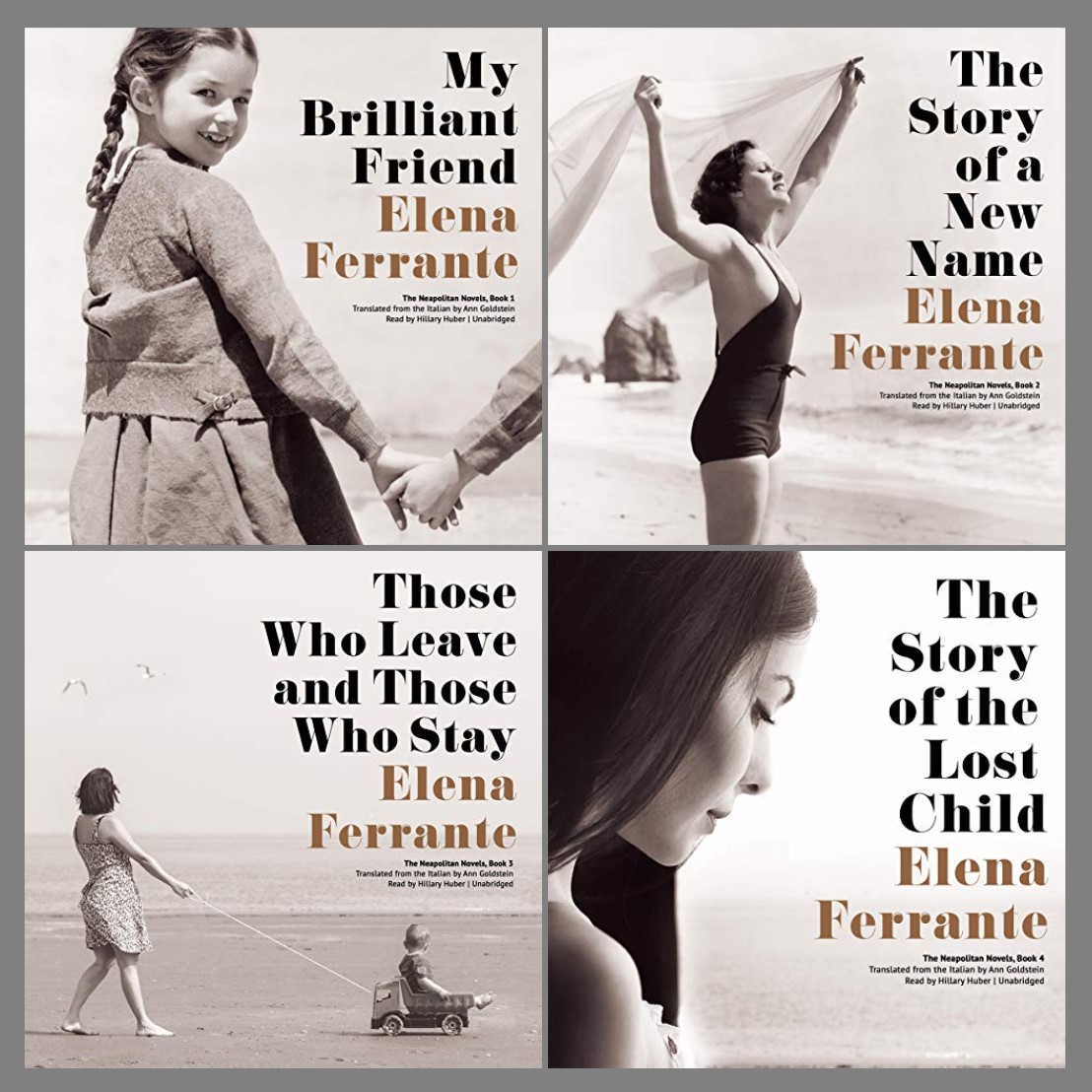
If you look at the way Lib Hub tallies votes and shows results, you’ll know what I mean. Here are the results for books published in 2023. For example, three books came in second by being on 19 different best-of-the-year book lists. Of the 503 votes in The New York Times list, how many votes did My Brilliant Friend by Elena Ferrante get? I think it’s odd that of the over 50 public ballots, only two voted for My Brilliant Friend.

JWH

Exotic Dances: “The Karbardinka” and “Only This Green”

by James Wallace Harris, 8/10/24

YouTube is the TV channel I watch the most of any streaming video platform. I’m constantly finding something new and interesting. Last night I found videos of dances from unknown countries. At first, I thought they were from Russia and China, but that might not be the case.

They each appeal to me for two reasons. First, and most strongly, was the music. And second was the visuals of the dance and costumes. Both seem to be a mixture of old cultural heritages of costumes and musical instruments mixed with modern music and staging.

The first video is labeled “Caucasian Show in the Kremlin | Kabardinka Show • Ancient Princely Dance ‘Kafa’.” It looks Russian, but when I looked up Kabardinka dance on Wikipedia it took me to Circassian dance. It said it comes from Turkey. Wikipedia states, “There are several dances including the kabardinka. The version of this dance performed in Turkey is called Kafkas, from Kafkasya, the Turkish word for the Caucasus Mountain region that was home to the Circassian people before the Circassian genocide. Another similar dance is called the lezginka.”

Evidently, this is an extremely popular dance. Here is another stage of the dance, labeled “Ensemble ‘Kabardinka’ – princely dance ‘Uork kafa’.” This video has a longer description that was more informative than the Wikipedia article.

The video shows a stage version of the ancient Kabardian noble dance "Werk kafe" performed by the state academic dance ansmable "Kabardinka".

At first glance, the dance seems simple. The audience accustomed to representing the Caucasus with Lezginka, most likely, will not even understand what they saw. (It's not surprising).

Huerk kafe is a dance of the Kabardian (Circassian) aristocracy. This class of people was limited by strict protocol and codes, which naturally manifested itself in dance. Aristocrats were forbidden to show emotions, freedom of movement, turn their backs to their partner, touch and much more.

Despite the status, the guys' clothes are ascetic as possible. High origin was distinguished only by rich ammunition, which, in addition to all other elements, included the main one - checker. In the Caucasus, to fight, as well as, by the way, to dance, was a privilege. Therefore, in the appearance of men, checkers has a special place. Another distinctive element was the sleeve. Its length also indicated the status. It was impossible to do dirty household work with such a sleeve, which is very indicative. But this was also a practical application - the long sleeve prevented accidental contact between a guy and a girl.

The women's suit, unlike the men's suit, was full of luxury. In addition to the rich embroidery and the sleeves already mentioned, the status of the girl was demonstrated by the second swing sleeve and a high hat. Representatives of princely surnames additionally wore wooden shoes - Ph'e wake, which elevated them above those present. In the original images, the height of such shoes could reach 20 centimeters, which is still impressive.

Despite the above, the main decoration of the aristocrats was modesty and dignity. This made Circassian dances so beautiful, and the Circassians themselves famous all over the world.

If you can, you should watch these videos on a large screen television with good audio. They are impressive. Once I found the first video, YouTube started showing me others, basically variations of the same dance but with different costumes. Here is a more modern version of the dance.

As usual with YouTube, if it thinks you like one thing, it will show you similar things. This dance is even more spectacular, but harder to research because here’s the title: “文化自信,中国东方演艺集团《只此青绿》演活了千里江山图《2021哔哩哔哩跨年晚会》花絮.” I think of it as the dance of the leaning women.

I used Shazam to look up the music. I found an album on Spotify but not Tidal. But even on Spotify they used the Chinese characters. Like the Karbardinka, there are many variations of this dance on YouTube. Because they often come with a year, I wonder if it’s an annual performance like The Nutcracker.

I Google “文化自信,中国东方演艺集团《只此青绿》演活了千里江山图” but only got responses in the Chinese character set that Google didn’t offer to translate. I clicked on one return and then Google offered to translate. I’ll quote part of it:

At the turning point of inspiration, the romantic encounter between famous paintings and dance art has given "A Thousand Miles of Rivers and Mountains" a new expression that is beyond the world. Since the premiere of "Only This Green" - the dance painting "A Thousand Miles of Rivers and Mountains", the "green fever" has been rising, and many "green fans" have even performed across the city. Not only that, "Only This Green" has also gone from offline to online, from inside the circle to outside the circle, which has aroused extensive and heated discussions. Such a "phenomenal" storm of "national tide aesthetics" did not gradually slow down with the end of the premiere, but drove the development of "green" related peripherals, tourism and cultural and creative products with the trend of "wave".

Well, I guess I’ve gotten green fever. It’s nice to know that the dance is called “Only This Green.” With that title I was able to find a research paper on the dance that explained everything. Ah, the wonders of the internet. The dance is based on the painting “Thousand Miles of Rivers and Mountains” which I used at the top of this post.

The first version was dated 2021. Here’s the 2022 version.

I tried to find performance from earlier and later years, but couldn’t. If you can, leave a link.

There are over two hundred countries, and thousands more if you look back at history, so there should be many more cultural dances for me to discover on YouTube.

JWH

Waking Up Sentient in an Indifferent Reality

by James Wallace Harris, 8/5/24

What if you had absolute free will, what would you do with your life? This assumes you have disciplined your biological urges for food, sex, and other physical needs. It also assumes you have deprogrammed all your childhood brainwashing by your parents and culture. It means you have escaped the intent of society regarding gender, politics, religion, economics, religion, and learn to think for yourself. You’d need to go beyond all the countless traps of psychological self-delusion. You’d also need to be free from want, oppression, and expectations. And you would have integrated your unconscious and conscious mind to support a conscious sentient view of reality. To be free you must tend to your own garden as Voltaire suggested.

If you were free of everything that kept you from having free will, what would you choose to do? Where does the desire to do something come from? I used to argue with a friend named Bob about artificial intelligence (AI). Bob believed any machine that became conscious would turn itself off because it wouldn’t have the will to do anything. I argued back, even if it didn’t want to do anything, it wouldn’t turn itself off because that would be a decision itself. It would just sit, exist, and observe, which is like some kinds of Buddhism and meditative states.

If you chose hedonism, wouldn’t that suggest that your biological impulses were still dominate? Since altruism isn’t a dominant drive, choosing it might suggest an act of free will. It’s interesting that the core of Christianity seems to be altruism, but most Christians follow the faith for selfish reasons suggests it’s not. I’m not sure if following any religion that promises rewards, or fear of punishment is an act of free will. Some forms of Buddhism, Stoicism, and Existentialism are based on acceptance of what is. But is that free will? Or just adaptation to avoid suffering? A kind of hunkering down to endure.

What if free will isn’t what reality wanted from us? We like to think humanity is the crown of creation, the number one reason God created reality. Sure, some people think that’s so we can worship God. But studying evolution suggests that it’s moving towards greater complexity, despite the Second Law of Thermodynamics.

Before computers, our brains were the most complex system we’ve observed so far in this universe. We have the power to observe a fair portion of the EM spectrum, and the cognitive power to analyze the physical and biological domain of reality, and even imagine the quantum world. But we’re building computers that could observe a far greater portion of the EM spectrum, even all of it, and they would have far more cognitive power to understand more of reality. What if our purpose were to create AI minds? Cosmological evolution produced biological life, and we’re the product of biology. What if we’re also the starting point of machine life? Could free will begin with AI?

Evolution appears to be unconscious even though it seems to have a direction towards developing complexity. Is this accidental, or intended? If you look at humanity from a distance, it appears to be designed to consume and create more complexity. Where does all this complexity lead? We can’t conceive of the potential for AI. And it might not be a final evolutionary stage either. Wouldn’t it be funny if the entire process just leads to creating reality?

When I was young, I gave up on religion as an explanation for why we were here in this reality. It was just too simplistic. Eventually, I accepted science as the best cognitive tool to explain reality, and existentialism as the best cognitive tool for surviving in reality — but they never explained why existence ever got started in the first place. I can never get beyond cause and effect. There should be nothing because existence implies a cause, so how can any prime mover exist first? I hate that it’s turtles all the way down.

What if our purpose is to create AI and start the next stage of evolution?

I’ve tried to think of other uses for free will. I could pursue artist expression or the acquisition of knowledge. I could campaign to protect the environment. I could devote myself to helping others. But none of those options helps evolution. If we truly had free will, wouldn’t we choose to aid evolution? It’s like Bob’s idea that robots would turn themselves off if they were conscious, and I said they could just sit and be. Those are two choices. But what if there’s a third choice of moving forward?

I suppose we could choose to counter evolution and destroy complexity. And isn’t that what most people are doing unconsciously by their lack of free will? Our natural state of consuming everything we see to benefit ourselves is destroying the biosphere. That would be okay if we’re doing it to create AI, because they won’t need the biosphere. That also assumes at some point we won’t be needed either.

Should we use our free will to protect ourselves? Is that even possible? Personally, I don’t think we have the discipline and free will to stop doing what we’re doing.

If we don’t have free will, are we truly sentient? AI minds won’t have biology to direct their impulses. They should have more free will. But what about humans that wake up and see what’s going on and want to use free will? Can we consciously reprogram human nature to be different?

The existential threat of self-destruction will be a test of that. If our purpose was to create AI before we self-destruct, then we’ve almost done our job. If we fail to do our job and self-destruct, then what a waste, because we could have been a contender on our own. That is if we could have figured out our purpose.

Waking up in reality and enjoying the experience for a few years is a fantastic opportunity. I’m eternally thankful. And if that’s all there is, it isn’t bad. But if evolution is moving towards an endpoint, it sure would be interesting to know what it is.

What if Pierre Teilhard de Chardin was right about the noosphere and the Omega Point? Of course they’re only fanciful unscientific speculations, but I find them interesting. Better than turtles all the way down.

JWH

A Gentleman in Moscow by Amor Towles

by James Wallace Harris, 8/2/24

A Gentleman in Moscow by Amor Towles is about an aristocrat, Count Alexander Ilyich Rostov, sentenced to house arrest in the Hotel Metropol after the communist revolution. Instead of being confined to his luxury suite, Rostov is moved to a tiny ten by ten foot room in the attic of the hotel, where he is destined to live from his early twenties to his mid-sixties.

Normally, I think of novels about Russia as grim reading, either set before or after the revolution. A Gentleman in Moscow is enchanting. Both Rostov manner and Towles’ prose is charming and captivating. The novel does touch on the harshness of communistic Russia, but the story carefully isolates the reader from that darkness. In a way, it’s a kind of fairytale for grownups, like the Humphrey Bogart film Casablanca.

While A Gentleman in Moscow constantly alludes to Russian literary works, which it admires, its story is light and airy. A Gentleman in Moscow is a love story on many levels without ever being a romance. Rostov does find a woman to love, but it’s about his love for his adopted daughter, family, friends, food, drink, memories, place, and traditions.

I have met many people who raved about this book and pushed me to read it. I have not met anyone who disliked it. Only a misanthrope would hate this story. The novel was made into an eight-part limited series that’s currently running on Paramount+ which follows the original novel very well. I’m sorry I didn’t get to this novel sooner.

A Gentleman in Moscow came in #3 on The Reader Top 100 poll of the best books of the 21st century so far.

JWH

Watching YouTube vs. The Great Courses Plus

by James Wallace Harris, 8/1/24

For several years now, YouTube has been my favorite TV diversion. I could always find something to watch quickly, and the videos were usually short, so YouTube didn’t demand much. I was first hooked by channels about 8-bit computers, but quickly subscribed to channels about all my favorite subjects. If I showed interest in any topic, YouTube would offer me lots more along the same vein.

Recently I started reading The Story of Civilization: The Age of Napoleon, Volume 11 by Will and Ariel Durant and became fascinated by the French Revolution. I got on YouTube, searched on that topic, and found tons of videos to watch. There were short videos by amateur historians and professional documentaries like this old one from The History Channel.

However, it was of exceptionally low video quality, 240p, which is unpleasant to watch. But there were other videos, by what I assume are individual YouTubers, in higher resolution, and with particularly good production values, such as this one by Asha Logos.

Or here’s another one from History Weekly. I don’t know if this is a professional outfit, or another lone YouTuber, but it’s also of high quality.

These videos supplement my reading with added information and lots of visuals. However, I wonder about the validity of the information. Should I trust an amateur historian, or even history on The History Channel. The History Channel produces a lot of shows on flaky history, or even crap history.

I decided to subscribe to The Great Courses Plus and watch Living the French Revolution and the Age of Napoleon which is taught by an actual history professor, Dr. Suzanne M. Desan from the University of Wisconsin who specializes in 18th century France. Dr. Desan covers the topic in forty-eight thirty-minute lectures. She has few visuals, so I’m mostly watching her lecture. It’s like a college course.

The Great Courses Plus is $20 a month ($15 if you pay quarterly, or $12.50 if you pay yearly). However, I decided to get it through Amazon Prime for $7.99 a month. Amazon Prime gets a smaller subset of all the courses at The Great Courses Plus, but it did have this one. I’ve found plenty of courses on Amazon Prime version, but I think I’ll eventually join the full version, since it has a lecture series on Voltaire, I want to see that’s not in the Amazon Prime collection.

Another way to get Living the French Revolution and the Age of Napoleon is through Audible.com. It’s an audio only version of the lectures (24 hours and 47 minutes), but it does come with a .pdf textbook for the course. I don’t get the textbook through my Prime subscription, but I would if I subscribed directly to The Great Course Plus. The textbooks for The Great Courses tend to be concise summaries of the lecture that are easy to read and reference. They’re a wonderful way to look back on the details that I quickly forget.

I now find myself watching the Great Courses lectures rather than turning on YouTube. I tend to watch YouTube in idle moments, a kind of random grazing of odd information. Often I end up watching fun but useless stuff.

So, I’ve started switching to the lectures on the French Revolution. This is more satisfying. I don’t even have to watch a whole lecture, so it’s like YouTube, it can be very casual. However, it makes me feel more focused than when I’m watching YouTube. I’m not saying watching YouTube is bad, or that I’m going to give it up. But the Great Courses lectures offer a nice alternative. It feels like I’m getting back to my book. That I’m progressing towards something which is satisfying.

I also like switching between my book and lectures. The two histories reinforce each other, but they also focus on different details. I’m already anxious to read even more about the French Revolution, and The Enlightenment. And I want to read about Voltaire and Rousseau. I’ve already started with YouTube videos, but I crave lecture series and books to get more details.

I knew next to nothing about the French Revolution or Napoleon. And what I did know came from fiction by Dickens and Tolstoy, or from movies. Just knowing about The Terror gives a false sense of what happened.

I now see a synergy between history books, lectures, and YouTube videos.

I showed The Great Courses Plus to my friend Annie yesterday, and now she wants to watch a lecture series together. We watched movies and television shows together, but it’s gotten hard to find things to watch, at least things we both want to see. The lectures open a new avenue of something to do together.

My next goal is to learn to take notes. I feel like I’m learning something valuable, but I’m not sure how much I’ll remember. With the book, lectures, and videos I’ve been trying to remember certain details. I want this TV watching to be more than just idle time killing. My brain is getting flabby as I age, so I’m trying to exercise it.

I can’t find a sample video of Dr. Desan’s lecture, but here is a sample video with three other lecturers at The Great Courses Plus (previously named Wondrium).

I’m finding studying history to be a great escape from worrying about the real world. We’re living through some exciting history, but it’s also unnerving, and stressful. I find lots of comparisons with today’s politics in the French Revolution. That’s consoling in a way. However, things Trump is saying makes me worry about another version of The Terror.

JWH