What Are The Most Useful Concepts You’ve Learned From Science Fiction?

By James Wallace Harris, Monday, June 1, 2015

Science fiction has always thrilled me with far out ideas, giving me a life-long sense of wonder. Science fiction constantly reminds me that reality is immense and my everyday life is just one limited view. For the most part, science fiction has been entertainment, yet, I often find myself solving problems in everyday life by applying a concept acquired from my reading.

I’ve been reading SF for over fifty years, and it has programmed my thinking just as much as any Bible thumper has been influenced by their good book. Science fiction has tinted my view of reality, even though I know most of its ideas are far from scientific. When I was young science fiction fueled my hopes for the future, but now that I’m old, I’m curious what useful knowledge I actually acquired from this genre I love so much. For example, when I look back on high school, I see that a six-weeks typing course helped me get more jobs than anything else I studied. Now, I wonder if I found anything in science fiction that has been equally useful.

My favorite science fiction growing up was Heinlein’s twelve juvenile novels he wrote for Charles Scribner’s Sons.  Heinlein worked to teach his youthful readers to prepare for the future by studying math and science. Yet, when I look deeper, I got my best lessons about reality from two stories from Samuel R. Delany, the short novel Empire Star and the novella, “The Star Pit.”
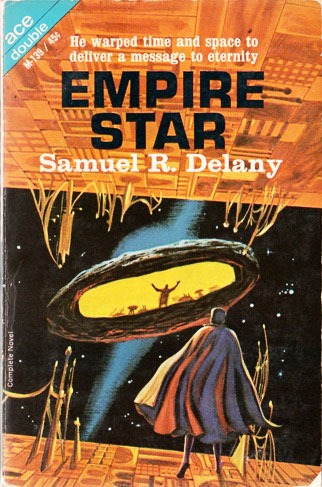
Empire-Star---Samuel-Delany

Delany taught me three useful concepts in these two stories. I’ve expanded them with my own interpretation, as all readers do. But I credit Delany with presenting me with these three philosophical observations:

  • People think in three modes: simplex, complex and multiplex
  • No matter how original you feel you will always meet people who have already discovered everything you did
  • We all live within barriers we can’t escape, like fish in an aquarium, and we’ll always meet other people who can go beyond our barriers

In Empire Star, a boy, Comet Jo, from a backwater moon is thrust into a galaxy spanning adventure. Before he leaves home, he is warned that he has a simplex mind, and once he goes into space he will encounter complex and multiplex thinking. I was a young teen when I first read this story, so I was in a transition phase between what my parents taught me and learning to think for myself. This was the 1960s, and so it was a very complex time. We like to assume we’re all working from the same page, have equal thinking ability, and the standards by which we judge reality are the same standards by which other people see the same reality.

Simplex thinkers believe everyone should convert to their way of seeing things. Complex thinkers understand reality is very complicated, and there’s a certain amount of negotiating and compromise involved with coexisting in reality. Multiplex thinkers often let simplex and complex thinkers be themselves, and work around them. Take for instance religion. Fundamentalists are simplex, ecumenical believers are complex, and our Founding Fathers were multiplex.

Ever since reading Empire Star I always ask myself if the person I’m trying to communicate with is coming from a simplex, complex or multiplex thought process. It does no good to use complex or multiplex logic on a simplex thinker. And it’s all relative. If we ever encounter an alien civilization, no matter how much commonality we can find, our parochial humanness will make our initial approach to them simplex. We’ll have to progress through stages that involve complex and multiplex thinking.

When dealing with individuals or cultures, using this concept will help understand various social realities. People can be simplex, complex and multiplex simultaneously on different beliefs. Just watch the news. People who refuse to negotiate are coming from a simplex take on reality. Willingness to bend reflects an understanding of others. Multiplex thinkers will come up with King Solomon like solutions that can satisfy both simplex and complex thinkers.

Comet Jo begins his travels feeling everything he discovers is unique to him. He feels special. Then he meets Ni Ty Lee who has done everything Comet Jo has, and even has the ability to predict what he will experience. This shatters Comet Jo’s ego. I’ve always wondered if Delany was a child prodigy who wrote this after meeting older child prodigies.

Finally, in “The Star Pit” we meet Vyme, a man with a long tragic past who owns a starship garage out on the edge of the galaxy. In this story, humans have discovered that travel between the galaxies is impossible except for a very few people who have a special psychological makeup. They get labeled The Golden. Vyme takes in a street kid named Ratlit who hates he’s not Golden. Between the two characters we learn how each discover the limits of their aquarium, and how they learn to deal with the barriers in their life. I’ve written about his before – “The Limits of Limitations.”

The older I get, the more I realize that humanity is probably confined to living on Earth. And for the most part, we each evolve through the same stages as those who came before us, and like King Solomon observed, there’s nothing new under the sun. Finally, nearly all our conflicts are due to the failure of simplex, complex and multiplex thinkers not being able to communicate. I’ve often wondered if simplex and complex beings are two different species, and Homo Sapiens have already forked, and we’re already seeing signs of Humans 3.0.

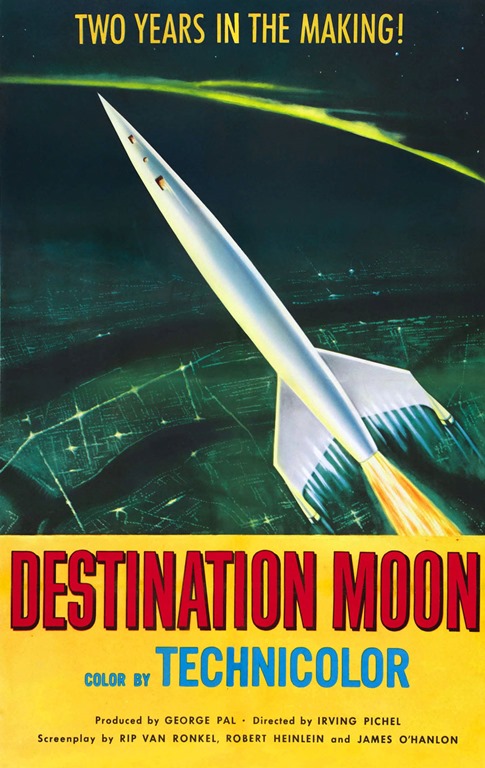
Yet, I still have hope because of one concept I got from a science fiction movie written by Robert A. Heinlein.
Destination-Moon-Poster

When the astronauts in Destination Moon discover they don’t have enough fuel to return to Earth after making the first Moon landing, their solution is to throw out enough mass to make their rocket light enough to match their fuel. Throughout life I’ve had moments where I couldn’t take off, and I realized that I needed to jettison the extra weight. Now that I’ve gotten older, and my body isn’t as energetic as it was, I’m learning to get further in my social security years, I need to throw out the past, all that extra mass is holding me down.

If humanity is ever to take off it will have to jettison a lot of mass from its past. To reach the next stage, whether Humanity 2.0 or 3.0, we need to give up religion and most of philosophy. Their mass keeps us from launching. Even on an individual level, I realize I have my own mental baggage that weighs me down. Much of it comes from reading science fiction.

Learning that I have limited mental fuel offers all kinds of philosophical parallels to rocket travel and Newton’s famous laws. And it’s not just energy, but cognitive ability. We all love the idea we have unlimited potential, but we don’t. Science fiction taught me that too.

Stand on Zanzibar - John Brunner

Stand on Zanzibar came out in 1968, and was about the world of 2010. I read it in 1968, and I’ve lived through 2010. We can never know the future, but some science fiction writers can make us seriously think about the possibilities. I remember being a kid reading this book and horrified at the terrorism that takes place in the story. I wasn’t savvy enough then to know that terrorism is common in all times, or that in 1970 there would be over 450 terrorist attacks in the U.S. Since 2000, there’s been less than 50 a year. What science fiction teaches us is to understand our fears, even when it’s wrong.

To value science fiction I also need to know its limitations.

Stand on Zanzibar and Harry Harrison’s Make Room! Make Room! scared me into thinking the future would be an overpopulated nightmare. What’s funny, our world is suffering horribly from overpopulation, but not how science fiction imagined. Science fiction failed to see climate change and the Internet. It also failed to see we’d never leave low Earth Orbit for 43 years. Nor did it imagine The Hubble Telescope and renaissance in astronomy.

It’s strange to credit science fiction being a success for failing to predict, but that’s also a valuable lesson.
The Long Tomorrow - Leigh BrackettOn the Beach - Nevil ShuteAlas Babylong - Pat Frank

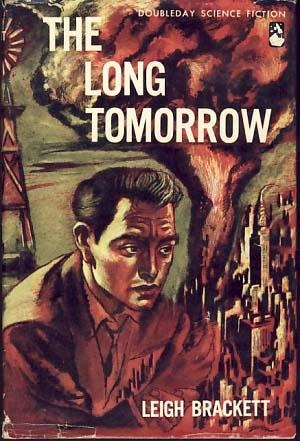
The real question we should ask: Does science fiction warn us away from following paths into bad futures? Did all those 1950s books about nuclear war keep us from blowing ourselves up? Or is it just another case of science fiction being bad at predicting the future? I’d like to think science fiction made us wiser in this case. I can’t help but believe Nineteen Eighty-Four is a great lesson in how not to govern. Yet, if you study how Republicans use rhetorical trickery to dispute science, you can’t help but wonder if Orwell’s story isn’t coming true. Dystopias are handbooks on how to avoid certain futures.

Using multiplex thinking science fiction can predict and fail to predict the future and still be a success. It’s much too simplex to assume a specific future will come to pass. It’s complex to think we should look at all the possibilities. It’s multiplex thinking to perceive how science fiction is both wrong and right at the same time.

— If you have the time, post a reply about how science fiction has been useful to you. —

JWH
Is Science Fiction Wrong About Space Travel?

By James Wallace Harris, Sunday, May 24, 2015

A good case could be made that science fiction inspired space travel. Few people contemplate space travel without exposure to science fiction. Science fiction is so embedded in our culture that it would be very rare to find a young child that doesn’t know about science fictional ideas. Traveling to other worlds is science fiction’s most successful concept, and believing humanity’s future involves exploring the final frontier is practically wired in our genes.

What if science fiction is wrong about space travel? What if manned space travel to the planets and other star systems is just impractical? What if the final frontier is just a big fantasy? After one big leap we’ve chosen not to go anywhere for over forty years. What does that say? The more we learn about how dangerous it is for humans living off Earth, and how long they’d have to travel to get anywhere, it seems more and more practical to stay home and send machines.

When I was growing up in the 1950s and 1960s science fiction was all about space travel. Kids today embrace dystopian stories set on Earth. Has there already been a psychic shift by the young? Do the kids growing up today no longer see space travel in their future? Have young people decided that space travel is only appealing to geologists and robots?

I saw Interstellar for the second time last night, and although I really loved the film, it was all too obvious that it’s a fantasy on the same order as those offered by religion and children’s stories. This made me wonder if science fiction can envision humans living millions of years on Earth without going anywhere. I think it’s possible to send people into space, even to the stars, but will we?

Humans aren’t very farsighted, otherwise we wouldn’t be destroying the Earth. We’re big on fantasies, and small on reality. Is The Game of Thrones a better oracle about future humanity than Star Trek? Is science fiction wrong about space travel?

What if we don’t go to Heaven or Alpha Centauri? What if Earth is our final destination? The faithful give meaning to their lives by believing in Heaven, and many humanists found meaning in the final frontier. If we never leave Earth, can we find meaning staying home?

JWH

Should I Buy An iMac?

By James Wallace Harris, Saturday, May 23, 2015

I regularly use the following computer applications: Chrome, Outlook, Windows Live Writer, Word, Spotify, Photoshop, Xmind and Excel – pretty much in that order. The application I spend most of my writing time in is Windows Live Writer, a tool for writing blogs. Microsoft has not updated Live Writer since 2012, and it looks like it will be abandoned when Windows 10 rolls out.

I’ve been using a personal computer since 1979. My life since then has been one long history of learning new programs, getting attached to them, and then having them ripped away from me. This pisses me off. Windows Live Writer is considered by most reviewers as the best blog editor by far. I now need to decide if I want to cling to Windows 7, or upgrade to Windows 10. Windows 10 will be a free upgrade for its first year, that’s a huge enticement to switch.

iMac

The obvious solution is to start using the web based editor built into the WordPress. I’ve spent years using Live Writer, so that’s going to be a painful. I’ve been looking at reviews of other standalone applications for blog editing, and nothing comes close to the web application WordPress offers.

Is the lesson here to give up on local applications altogether and switch to web applications? I just bought a Chromebook and that’s also forcing me to work in the cloud. But if I do switch to all web apps, then it won’t matter what computing platform I use – Windows, Mac, Linux or Chrome. Does that also tell us something about the future? These changes could portend big changes down the road.

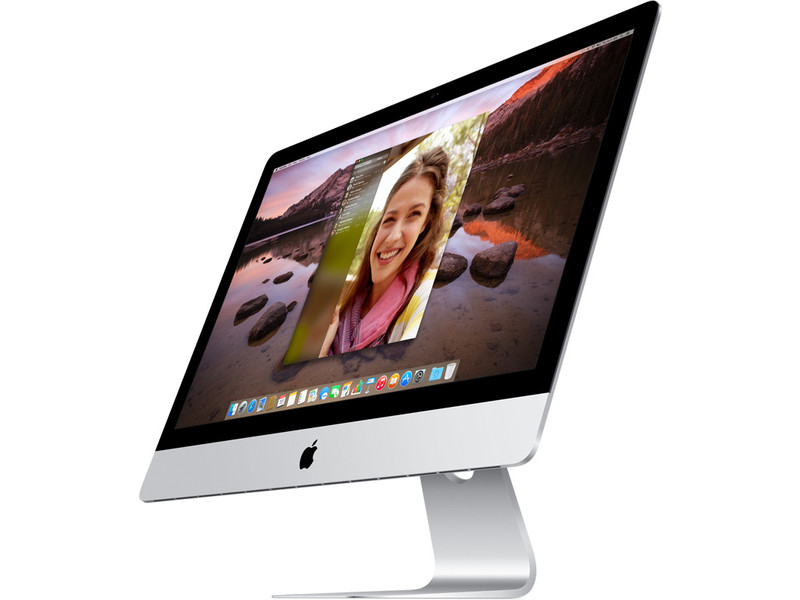
I decided to stick with Windows because of Windows Live Writer. For years I’ve thought about buying an iMac. That urge became a craving when that beautiful 27″ 5k iMac came out. But I’d always think, “What about Windows Live Writer?” Nothing is stopping me now.

Yet, I have to wonder, “Why buy a Mac?” If I do everything inside Chrome, why care about an OS? Won’t it be overkill? Does the OS x or Windows 10 even matter? If I buy an iMac, won’t it just become a very expensive Chromebook?

Will we stop buying computer programs like we’ve stopped by music CDs? I already subscribe to Office 365. I mainly do it for Word and Outlook, both of which are free if you use the web versions. The free version also includes Excel. Google Docs has me covered too, for those programs. And I’m sure I could find web applications for the other programs I use.

The two programs I’d miss the most are Live Writer and Outlook. I’m writing this post in the WordPress web app, and it’s not bad. I could adjust to it if I had to. Is this the future of personal computing? Are computers just going to become different sized screens with the operating system becoming invisible? I understand why Microsoft is pushing so hard to get market share with its phone and tablet. Since I have an iPhone and iPad, why shouldn’t my next computer be an iMac? Microsoft really should have kept supporting Windows Live Writer.

Hold on though. If the need for Windows and OS X is disappearing, why do we need iOS and Android? Is it possible to have a future where we buy phones, tablets and desktops without reference to the operating system? When we buy a television we don’t think about how it does its magic.

JWH

The Future of Books

By James Wallace Harris, Tuesday, May 19, 2015

Here’s my conundrum, do I keep The Byrds: Timeless Flight Revisited The Sequel by Johnny Rogan, or give it away. This 1988 book revised in 2008 has 735 pages about the The Byrds, my favorite music group from the 1960s. Rogan has since updated this book in 2011 to a 1216 page monster, that’s just the first volume of a trilogy. I read the 2008 edition with much delight, spending several evenings in an orgy of nostalgia, playing my old Byrds albums as I read about how each was created. I kept the book thinking I’d reread it. Was that a mistake? Is the knowledge in books changing so fast that there’s little reason to save them?

The-Byrds---Johnny-Rogan

The edition I have is quite exhaustive in its scope. But if I wanted to read about The Byrds again, shouldn’t I read the latest definitive work? Why have I saved this book for seven years? It’s still a great read, and maybe it’s all I need to know about The Byrds.

Books have become a physical burden. I had a friend who claimed to own every book he ever read. Can you imagine the Sisyphean task of dragging a library behind you everywhere you went? That would be a snap if they were ebooks. Or if I lived in one house my whole life. Or if knowledge wasn’t changing so fast.

This book represents another kind of burden, a psychological burden. We experience life one moment at a time, yet most of us cling to all those past moments. Not only do I want to save my memories of The Bryds, but retain a book that collects all the group member memories. That’s kind of weird when you think about it.

We exist in a transitional time. We’re very close to having all our external memories online. What if The Byrds: Timeless Flight Revisited The Sequel  was a website that grew as Rogan wrote and researched? The multimedia aspects of the web could greatly expand its potential. Personal and public libraries wouldn’t be burdened with lending and storing the book. And it would be available to all instantly.

I can also see the content this book incorporated into Wikipedia. What if all knowledge was hyperlinked into one book? What if the history of The Byrds was written by anyone who cared about their history? What if all memoirs, interviews, photos, bootlegs, videos, etc. were at one location, and hyperlinked by a carefully crafted narrative of dedicated editors?

We now serialize history with the latest definitive book. What if history lived on the web as an ongoing collective project? Is moving towards such a hive mind existence scary? How much time do you spend reading the web versus reading books? How often do we get facts from iPhones?

Can you imagine books in the future? Are they changing so fast that it’s not worth collecting them?

I’ve always been a lover of books. I hoard and collect them. But I’m starting to wonder if I only need to own one book, the one I’m reading.

JWH

Tidying Up My Music Collection Using the KonMari Method

Marie Kondo, the guru of tidy, preaches, “Discard anything that doesn’t spark joy.” I’ve been buying music CDs for over thirty years and my collection is a huge mess. I definitely don’t love all the albums I own. There’s always the conflict between collecting and playing. Like all hoarders, I tell myself that one day I will want to play this album. Well, I have albums I haven’t played for a quarter century. I bought Marie Kondo’s the life-changing magic of tidying up because she talks about sorting through books. I figured the same approach applied to albums. This issue is further complicated by the fact that nine-five percent of the time when I play music, it’s via Spotify.

Six key issues to consider:

  • Does owning compact discs spark great joy?
  • Do I find great joy in the high fidelity of compact discs?
  • Do I find great joy in the album or the song?
  • What sparks the deepest joy in collecting albums?
  • How does digital libraries affect the philosophy of tidying up?
  • How many albums is too many?


Exif JPEG


Does owning compact discs spark great joy?

Streaming music services like Spotify offer gigantic music libraries for a low monthly subscription. Why bother keeping my thousand albums when I have instant access to millions? Kondo says we should only own things that bring us joy. Is the physical container of music something that brings us joy? Even though I’ve put the price of a SUV into my music collection, is it still worth keeping? Does the whole collection have sentimental value, or just parts of it?

Kondo tells us “The criterion is, of course, whether or not it gives you a thrill of pleasure when you touch it.” Does a CD have some kind of emotional physical value? Is a favorite song less meaningful to my life if it streams through my Roku rather than plays on my CD player? To be honest, I don’t have any physical attraction to my CDs. I was quite sentimental over my LPs when I bought them back in the 1960s and 1970s, but when I started buying CDs in the 1980s, they never acquired that aura of emotional objects.

If I knew I could always have access to the same music I own through renting I’d get rid of all my CDs. Because I don’t have that assurance, I want to keep all my albums that I treasure. Yet, what do I treasure when its not the physical object? Is it all the songs on an album, or just special ones?

Some albums bring me great joy. Some albums are keys to memories. I need to save those keys.

Compact discs were always too small to enjoy visually, and their booklets were always too hard to read. They succeeded because of convenience and sound quality. Streaming music is even more convenient, but the sound quality isn’t quite the same.


The Allman Brothers Band At Filmore East


Do I Find Great Joy in the High Fidelity of Compact Discs?

One of the main reasons to keep compact discs is their high fidelity. This only matters when I’m sitting in my den and I’m listening to music in the same way I concentrate on a movie at the theater. Otherwise, 320kbps streaming files are fine. However, there are times when I want as much sonic detail as I can get. The other day I read One Way Out,  a history of the Allman Brothers. It inspired me to get out my Allman Brothers albums that I haven’t played in a decade. Once again I was back to listening so intently just to distinguish Duane from Dicky.  Listening with intense concentration to  every instrument begs to have the fidelity to create a large soundstage that showcases every musician’s performance.

Until Tidal, all subscription services used highly compressed files that have less fidelity than compact discs. And there are other digital formats that offer great fidelity than CDs. Unfortunately they involve buying digital files I’d have to maintain, and that’s a kind of clutter that’s more difficult to manage than physical clutter.

When it comes right down to it, the essential reason to own a compact disc is because I want to have it forever. I don’t want to ever lose access to some songs. Second in importance is to have the highest fidelity possible. I’m going to assume that future streaming will involve higher fidelity. But I can’t assume Spotify or its competitors will always have a license to stream my most cherished memories.


Blonde on Blonde - Bob Dylan


Do I Find Great Joy in the Album or the Song?

Most of the albums I bought in my life were because of one song. Few albums spark joy in their entirety. Blonde on Blonde, even though it’s a double album, in one I embrace in its wholeness. It’s a complete work of art. As I study what Kondo is trying to teach me, a philosophy of how to live with objects and always keep them in their place, I push myself to understand why I love certain things. When dealing with albums and books, I’m really judging them as containers of art. The art is priceless, but the containers are just that.

Compact discs are storage bins for music. Spotify is another kind of storage bin. Contemplating this tidying-up issue, I realize there are two kinds of music containers – one which I never want to lose no matter what. That involves keeping the album. Songs, on the other hand, which appear in various other kinds of containers – best of albums, anthologies, singles, soundtracks, etc, are much easier to rent through Spotify.

I’ve always loved the 1965 hit single “Eve of Destruction” by Barry McGuire. Yet, I’ve never been without a copy. I’ve had it on 45, LP and CD in various collections. Now I stream it. And I believe it will always be on streaming. I recently owned the original LP album it appeared on, but it was an old beat up copy I got for 50 cents. When I cleaned out all my LPs I gave it to the library because it was the only song on the album I liked. There was no sentimental reason to be attached to the LP.

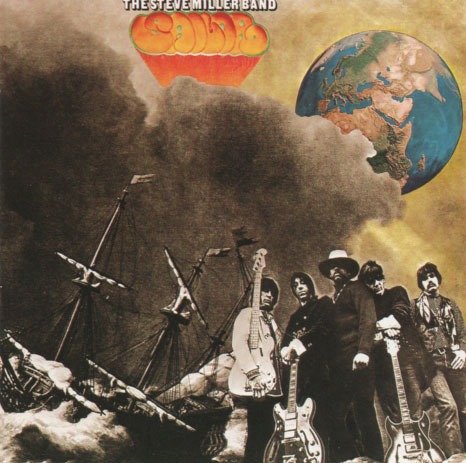
When I ask myself if a CD/LP sparks joy, it can’t be just for one song – unless that song is nowhere else. “Song for Our Ancestors” by the Steve Miller Band, off their Sailor album, is the only song that sparks Kondo joy. Actually, it’s the only Steve Miller Band song that unlocks a memory. It’s not available on streaming. I have to save that CD if I want to always have access to “Song for Our Ancestors.” If that song had been on a Best of Steve Miller Band album, I wouldn’t save Sailor.

This also makes me ask: Should I save Best Of albums? Hits are the one type of song I can depend on Spotify to always have. Hit songs are constantly repackaged, anthologized and put on soundtracks. Hits are frequently heard on radio and Pandora.


Sailor---Steve-Miller-Band


What Is The Deepest Joy In Collecting Albums?

I love to visit someone’s home and look through their shelves of books, music and movies. When we collect, we create the fingerprint of our pop culture soul. The albums I want to save are the ones that define me. Not because I want my friends to see them, even thought I dig when they do, but because I want to define myself to me. My shelves of books, movies and albums should be a mirror for self-examination. Growing up, I tried to define myself by the size of my library, but now the only thing that matters is what each work of art reveals about myself. When I play an album I love it’s an act of meditation.


After Bathing at Baxters - Jefferson Airplane


How Does Digital Libraries Affect Tidying Up?

It’s quite easy to part with albums that I know are on Spotify. Do I learn the same lesson from giving them away if I knew I couldn’t listen to them again online? Because of Spotify, Netflix, Amazon Prime, Audible, Kindle and Scribd I now buy fewer books, albums and movies. My pile of digital clutter grows and grows, but it’s out of sight. Can I still derive the psychological rewards of being tidy that Kondo promises if I have an invisible pile of possession in the cloud?

If every book, movie and album was on Scribd, Netflix and Spotify, I could just own nothing, and just think of all those works in someone else’s library. Then it would be Scribd, Netflix and Spotify’s problem for keeping things tidy. I could reduce my home library to a chair and iPad for Zen like simplicity. I could paint the walls white, wear white clothes, and sit in my room reading and listening to music in my tidy personal Shangri-La.


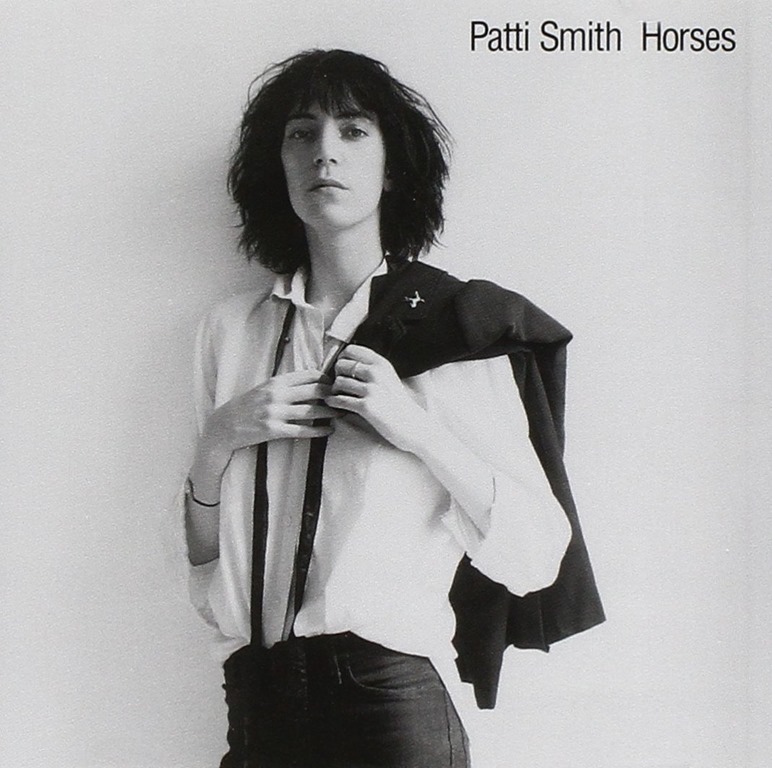
Horses - Patti Smith


How Many Albums Is Too Many?

After a lifetime of buying thousands of albums, I realized I no longer listen to most of them. When I retired I had about 1,600 CDs and hundreds of LPs. Two years of culling and I’m down to about 900 CDs and 50 LPs. Soon, I’ll be down to less than 500 CDs and no LPs. Yet, I expect my collection to keep shrinking. 500 is still too many. Kondo tells her clients to have a goal in mind. My goal is to have a library of albums I absolutely adore. I can’t even remember what I own. That’s not special. It’s like having more children than you can remember their names.

When I first retired, I realized I could have become a record collector because I was buying used LPs and CDs five or ten at a time. However, the convenience of Spotify has spoiled me. I only get out a CD when I’m in the mood to thoroughly focus on the music. And that tends to be for albums I really love – the ones I want to play straight through. What I’ve learned from fifty years of buying music is most of what I bought hasn’t been memorable.

I had a friend, John Williamson, who died back in the 1990s. John was crazy about music. Before he died, he told me he had gotten down to listening to just Benny Goodman and Duane Allman. My sphere of music is shrinking too. To maintain a vitality for life you have to maintain as many interests as you can. Yet, getting old means learning to live with less, and as we age, the amount we can handle dwindles. Two years from now I might still love 300 albums. If I live to 80, I might just cherish a 100. I believe John died young because he got down to only two musicians. I wonder who he was hearing when he left this world? Benny or Duane.

I’ve been playing Blonde on Blonde for half a century. Will it be playing when I fade out of existence?

Some of my younger friends fear this trend. They see losing interest in things once loved as a bad sign, but I see a positive angle in my declining years. As my record collection shrinks I get to know what’s left better. It’s a musical tontine.

Music is like a drug that energizes me. If I’m feeling down, music can lift me up. Music hyperlinks me to people and events. Music anchors my memories. It’s terribly sad when I play an album I bought long ago and can’t remember why, when or where I bought it, nor remember any of the songs. That’s an area of my garden I neglected and now it’s patchy with dirt and weeds. What’s best is to let another album expand into that space. I think shrinking my collection as pruning.


The Body Wins - Sarah Jaffe

Using Spotify has taken away the incentive to buy new CDs, but I do on rare occasions. I still discover new artists on Spotify, and when I find one I want to keep forever, I buy their CD. For instance I’ve bought the last three CDs of Sarah Jaffe. I don’t think I will ever get so old that I’ll stop adding albums to the library of music that defines me.

Nor, have I found all the replacement CDs from the past LPs I loved. The last LP replacement I bought was Shady Grove by Quicksilver Messenger Service – an album I’ve been waiting for a decade to come to subscription music. I finally gave up and bought it. I bought it the first time in 1970 as an LP. It had just one song I loved, “Edward, (The Mad Shirt Grinder)” I couldn’t get on Spotify.

Another positive purpose in culling albums is it gives me purposeful activity. Being retired, and having all my time free, requires a knack for keeping busy. I should be outside tending to a real garden, but I’m not that kind of guy. I’d rather tend a sound garden, or make up metaphors about one.

Shady Grove - Quicksilver Messenger Service

Since 1965 I figured I’ve bought between 2,500 and 3000 albums in my life. That’s about 2,600 weeks ago, so call it an album a week on average. Although for many years, I averaged four albums a week. I started out with LPs and 45s, but eventually bought mostly CDs. The way music is delivered has changed a lot in my lifetime. I mainly skipped the cassette and 8-track phase, but I did dip into SACDs and iTunes singles. I pretty much went from CDs to streaming music, which is where I’m at now. I could go to Spotify for all my listening, but I still want to own a album collection. I’ve had one since I was thirteen, so I can’t stop now.

In the heart of Marie Kondo’s book is the lesson to save what you cherish. I’m on a journey to discovery those albums I truly love most – and defining that library sparks joy.

JWH