Writing Goals at Age 66

by James Wallace Harris, Wednesday, February 21, 2018

Writing is focusing thoughts. Herding your thoughts into an essay reveals the chaos of thinking. When I was young I wanted to be a science fiction writer but that was not meant to be. Now that I’m retired writing is the hobby that keeps me sane. It’s vitally important to have at least one hobby when retired because the purposelessness of waiting to die can get existentially challenging.

fountain pen

Having goals in the last third of life can be tricky. The primary goal when aging is staying healthy. Working at maintaining health can be both time-consuming and energy draining. Any other ambitions depend on mental and physical vitality. Some days my batteries are so low all I can do is daydream and listen to music. But when I do have extra energy I want to make the most of it, and that means writing.

When I first retired in 2013 I had a long list of hobbies I wanted to pursue. I’ve since learned I can only get better at one skill. I can piddle around with many interests, but if I want to see actual progress requires focusing on what I know best. Because I’ve stuck with it, that’s writing. However, at 66 my writing ambitions are tiny compared to what huge dreams I had in my twenties. Anyone young reading this essay should heed this advice: Do it now.

I’ve written over 1,500 essays in the last ten years, and most of that was piano practice. I’ve improved but my progress has been slow. Theoretically, there are magnitudes of possible improvements left to achieve, but it all depends on my health. Realistically, I know I’m not going to start pounding out bestselling novels. I have to match my goals to my vitality.

For years, I’ve been content with blogging and writing for a few other websites. I’ve recently started a new series, “Reading the Pulps” at Worlds Without End that’s got me excited. On the other hand, my efforts for Book Riot have declined as I’ve realized my perspectives might not be suited for a site where the readers are so young and mostly female. For the last few months, I’ve struggled to find something to say that would appeal to that audience. That struggle has led me once again to think about my writing goals.

Writing for this blog is easy, maybe too easy, and not challenging enough. Writing for another site requires thinking about the audience. This blog allows me to write anything I want. I write to please myself. I’m happy if others want to read it, and I try hard to make it read-worthy, but its primary purpose is to let me think out loud while practicing my writing skills. My goal has always been to write at least two essays a week for this site.

When I write for another site I realize I have to write content that helps that site achieve its goals. Other websites build audiences to make money. Their readers want reading satisfaction or they won’t return. My job as a content provider is to be so useful that readers will remember and keep coming back.

Book Riot makes money by showing ads or getting readers to buy books from an Amazon affiliate link. It takes a lot of page hits to make money from ad views. It’s faster to make money from link sales. Thus, my essays need to be either very positive about books or about something that inspires many page views. I know how well I’m doing because I’m paid a portion of what the page makes. I’m not making that much, so Book Riot isn’t making that much off of me. One writing goal I’m considering is to write something more appealing to their audience. This has become hard, but I haven’t given up completely. I love the challenge. I contracted to write two essays a month for Book Riot but I’m not sure I can keep that up for a third year. It would help if I could find an ongoing gimmick or angle.

Worlds Without End is slightly different. Right now it’s mostly a database system for readers of science fiction, fantasy, and horror to find new books to read. WWEnd’s appeal is seeing how many books you’ve read on over fifty notable lists. It’s quite fun to use but users tend to come use the database for a while and not come back. The creators of WWEnd want to attract a community of fans that routinely participate in a growing list of new features. They want content contributors like me to help attract science fiction fans to that community. Like Book Riot, WWEnd’s audience is hardcore bookworms, but the age and gender demographics are wider. They do narrow reader interest to the science fiction, fantasy, and horror genres, and science fiction is my main interest.

Most people who write about books write about new books. I’m more interested in old books. That limits the appeal of my essays. Currently, I’m having a lot of fun writing about stories that came out of the pulp magazines in the 1930s and 1940s. I have no idea how many readers are interested in that topic. (It’s pretty damn narrow, don’t you think?) However, one of my sub-goals is to get better at writing about the details of history, even if its a very tiny slice of history. That involves a lot more research. Lucky for me, that research coincides with what I love reading at the moment. I’m actually quite anxious to write two essays a week for this project.

If you’ve mentally kept a tally, you know I’m committing myself to 4.5 essays a week. I can actually do that if my health holds up. On bad weeks I’ll be behind 4.5 essays. However, I have two more goals. I want to try writing fiction again. Just short stories, but even that is probably way too ambitious. I have thousands of hours of momentum behind essay writing, but except for thirty unpublished short stories and two novel attempts from about twenty years ago, I have little experience writing fiction.

Writing fiction might always be a pipedream for me. However, I’m mostly reading short stories these days and that’s making me want to try writing one too. I think this goal goes beyond the limits of health. I’m finding it extremely difficult to start a new discipline as I get older. I feel like a fish in an aquarium. I’m reminded of my all-time favorite short work of science fiction, “The Star Pit” by Samuel R. Delany. It’s a story about limitations. Delany was a young black man becoming a writer in the 1960s, so he knew all about overcoming limitations. You can read it here.

My last goal, and probably the least obtainable of all is to write a book about science fiction. There are countless books about science fiction and few people read them. I believe I have a unique slant on the subject. Mentally, I can’t imagine working on a project as large as a book, but I can imagine writing fifty blog essays. Each essay could be a chapter in a book. If I added one more essay to my weekly goal I could finish a book size project in one year.

There is a reality to making plans in the last third of life. We’re on a downward slope, and it’s hard to plan for erratic ever-shrinking vitality. In the first third of life, it feels like we have unlimited potential. Even in our middle work years we still feel we could do more if we could only find the free time. But now that I have all my time free I’ve discovered it’s not all useful time. Sixteen hours a day does not equal sixteen hours I can apply myself.

There’s one last factor. I think it’s age-related. The desire to make an effort. That desire fades more and more as I get older. Often now I tell myself I should be doing something and I mentally reply that I don’t want to. It’s so pleasant to just sit and daydream, or hang with friends, or read a book, or watch television, or listen to music.

The sirens of small pleasures are more alluring than ever.

JWH


Poor Man’s Time Machine

by James Wallace Harris, Monday, February 12, 2018

Some days you just want to live in another era. Statistically, we live in the best of times. If you’ve read The Better Angels of Our Nature: Why Violence Has Declined by Steven Pinker, you should feel safer about war, crime, and violence. Pinker’s new book, Enlightenment Now: The Case for Reason, Science, Humanism, and Progress promises to make us feel better about everything. Bill Gates is calling it his all-time favorite book. Yet, 2017 was a very depressing year for me because of Donald Trump. 2018 should be even more depressing because there’s no sign that Trump will be impeached or quit.

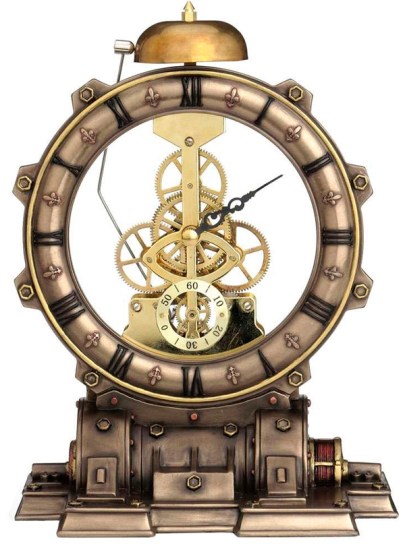
time-machine-steampunk-clock

Whenever I watch the NBC Nightly News it makes me wish I had a time machine. Sadly, I can’t afford one. When I read Global Citizen I feel like I should be doing something to help the world because that site shows how people can make a big difference. But to be honest, I’m old, set in my ways, and don’t want to get out in the world anymore. When I look at Congress I see a rabid pack of old white guys snarling and snapping at each other to shape America with their narrowminded beliefs. It’s time for women, youth, and diversity to take the reins.

I don’t think the world needs input from another old white dude, so I’m retreating from the rat race by reading books. What’s hilarious, those books are mostly by old dead white guys. Maybe it’s like the old Tarzan movies, and we’re like a dying elephant knowing where to go to our secret graveyard.

I’ve been time traveling back to the late 16th-century by listening to The Complete Essays of Montaigne translated by Donald M. Frame. When Montaigne was still in his thirties he retired by retreating to a tower in his castle, bringing a desk, chair, and a thousand books. There Montaigne contemplated reality by comparing his personal experiences to what he read. Along the way, he invented the personal essay, which is why I consider Montaigne the Patron Saint of Bloggers.

Montaigne remains essential reading for jaded bookworms because he explains the usefulness of all those dead white writers of history, the ones remembered in The Western Canon by Harold Bloom. Listening to Montaigne makes me understand why 19th-century intellectuals were so big on classical studies. By the way, if you have a detailed scholarly bent, love annotations, and notes on textual variations, you might prefer the M. A. Screech translation. Listening to the Frame translation makes me feel like Montaigne is talking at me. It’s very smooth.

And I highly recommend you listen to Montaigne on audio because he’s a rambler, and rambles on for over a thousand pages. But, if you prefer to hold a book in your hands, I recommend the Everyman’s Library edition of The Complete Works, also translated by Frame. It’s easier to hold and has a nifty ribbon bookmark. However, you’re still holding a 1,336-page book. Because there’s no ebook edition with a Frame translation, I’d recommending getting older Cotton/Hazlitt translation from the public domain for your carry around everywhere on your phone edition. Amazon has many 99 cent Kindle editions, but I picked this edition because the text reformats nicely on my phone.

(By the way, I got turned onto Montaigne from reading How to Live: Or A Life of Montaigne in One Question and Twenty Attempts at an Answer by Sarah Bakewell.)

When I’m not back in the 16th-century I spend a lot of time in the 1920s, 1930s, 1940s, 1950s, and 1960s, either by watching old television shows and movies, or reading old books, or listening to old music. Recently I’ve been listening to a playlist of music from the 1920s and 1930s created from ten volumes in a series called The Big Broadcast.

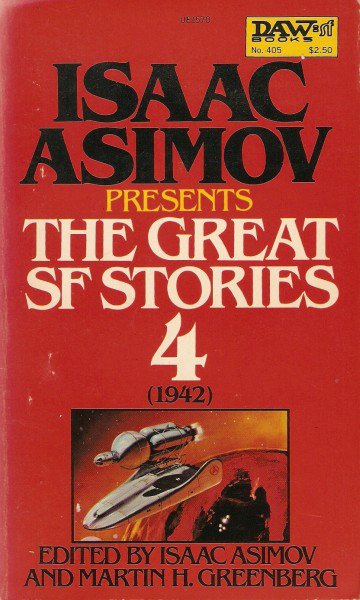
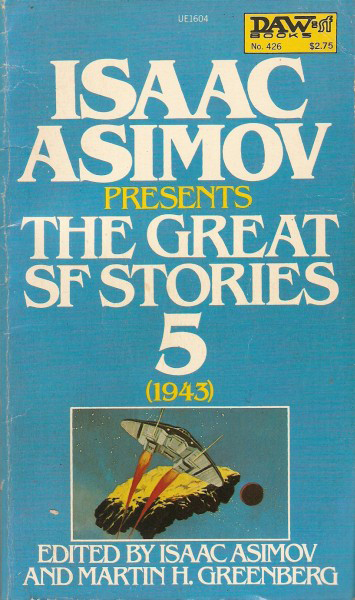
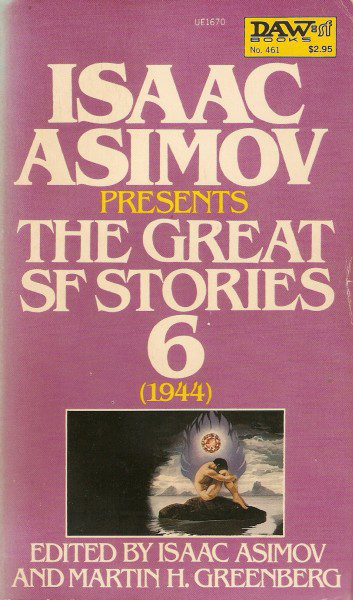
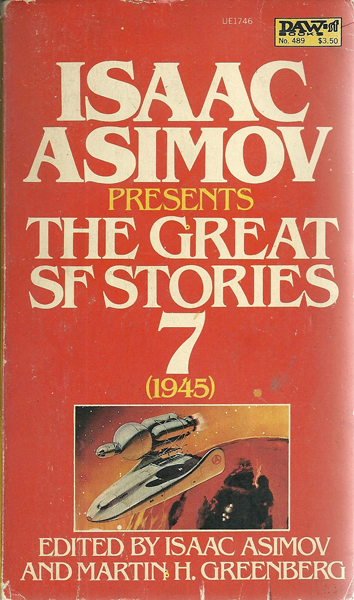
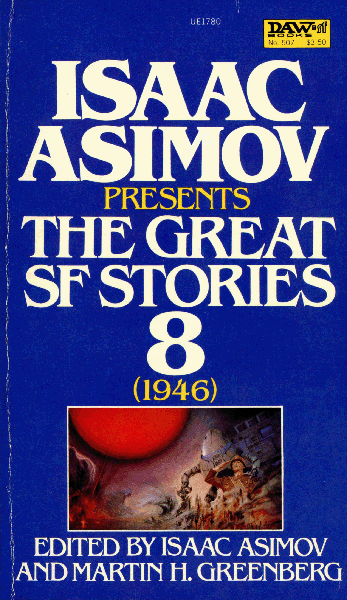
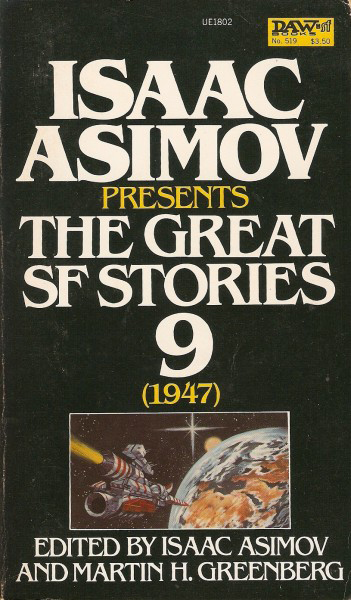
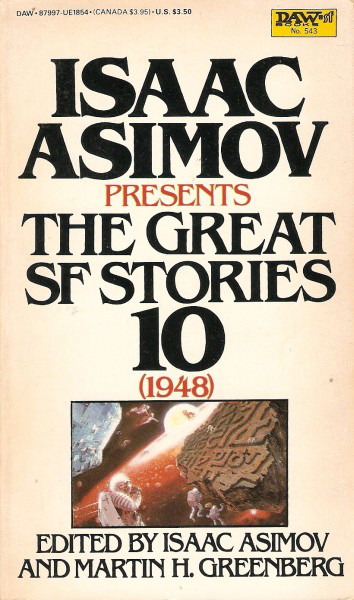
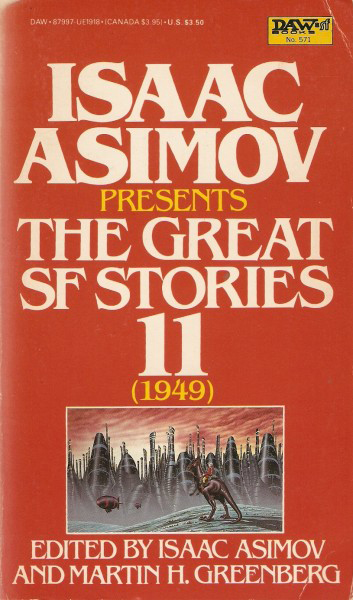
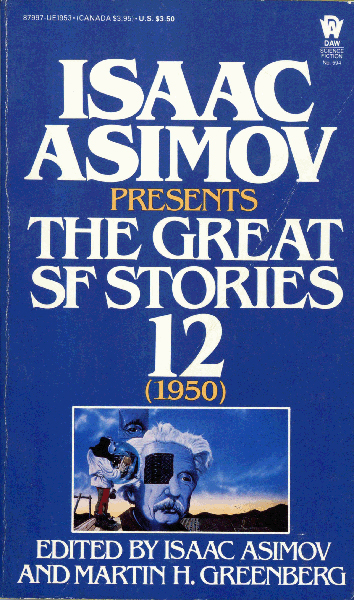
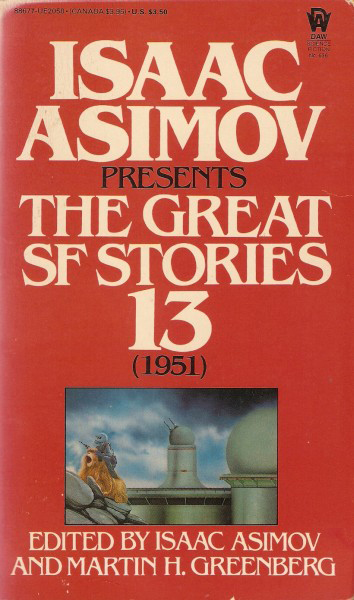
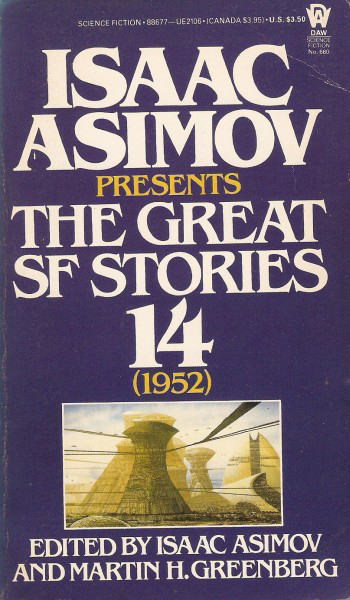
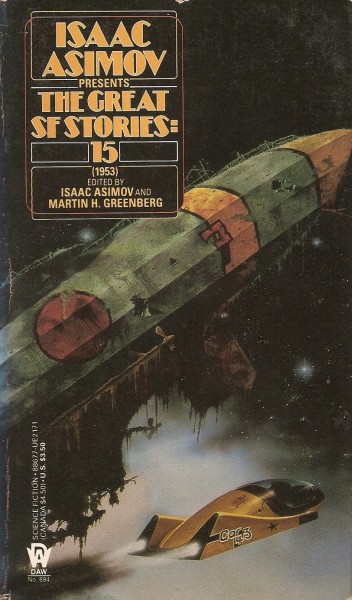
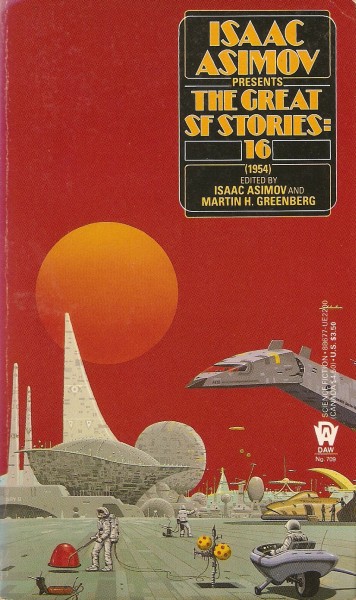
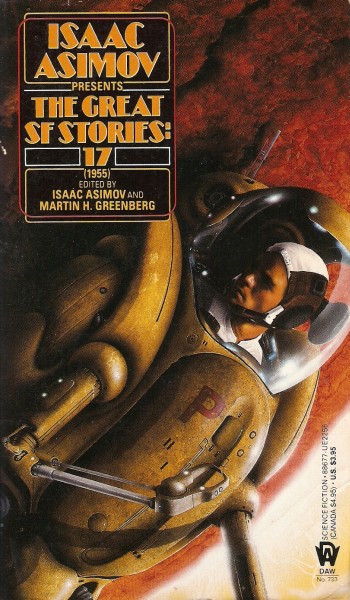
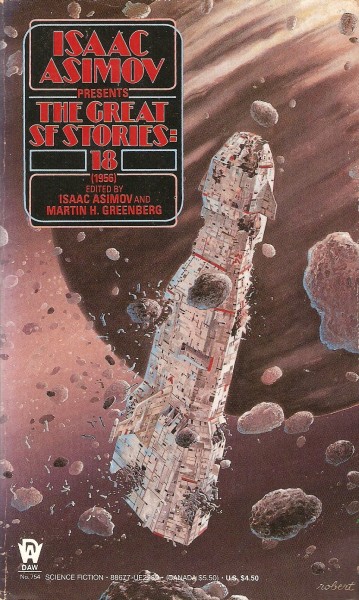
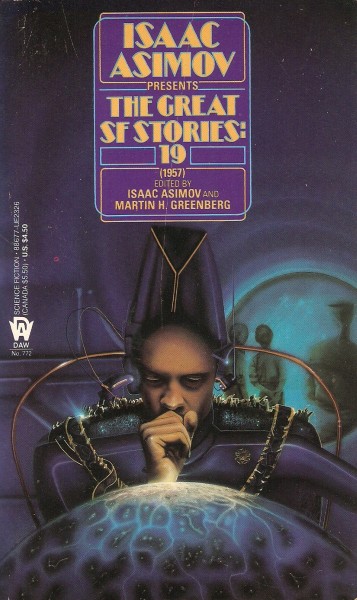
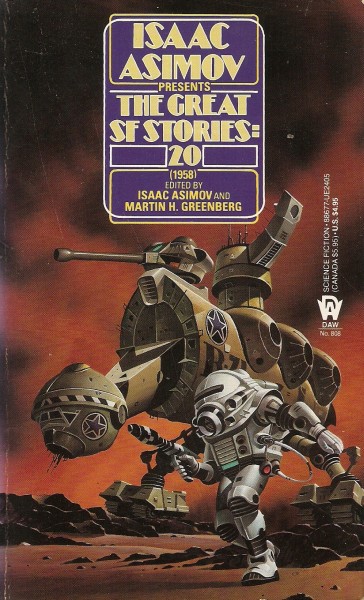
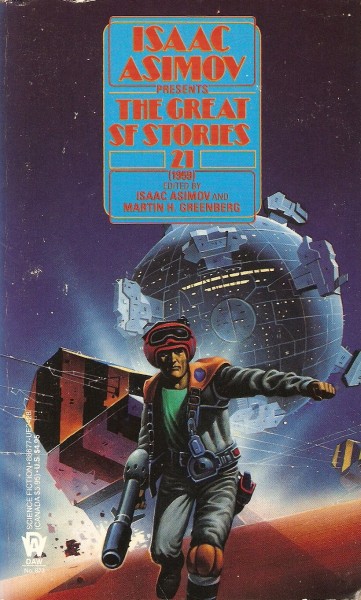
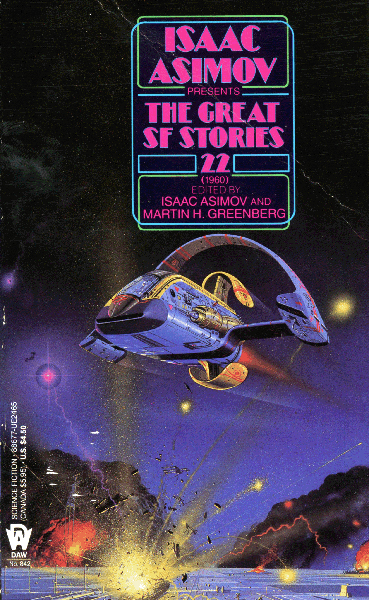
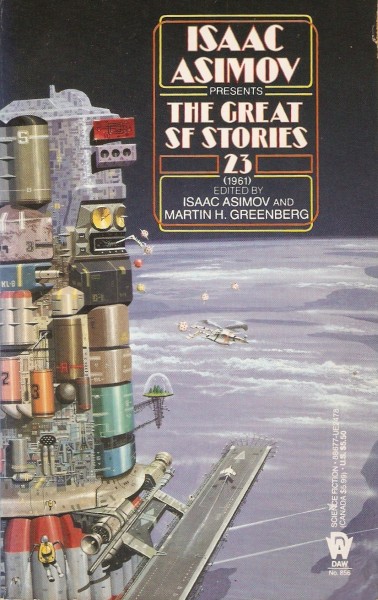
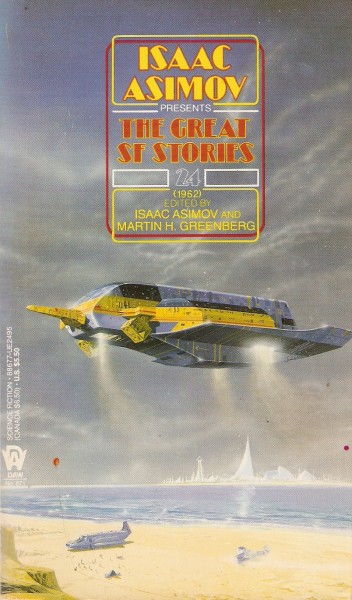
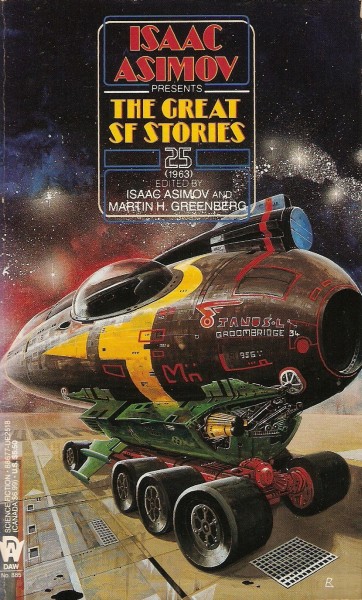
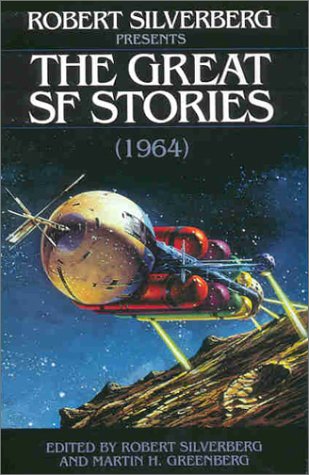
I’m still having big fun reading through The Great SF Stories #1-25 (1939-1963) edited by Isaac Asimov and Martin H. Greenberg. These stories were from the great science fiction pulp magazines. It almost feels like I’m living in 1940 when I read the stories and play music from that year, especially when I get so deep into a tale that I forget it’s 2018, and a maniac runs the country.

I’ve fantasized about redecorating my living room so it only contains furniture and objects that could have existed before WWII. We bought the house my wife grew up in after her parents died, and left the living room unchanged with the old furniture, lamps, and pictures on the wall. I imagine smoking a pipe wearing a smoking jacket while sitting in one of the blue chairs reading a July 1939 issue of Astounding Stories.

Susan did add an antique floor standing radio she bought at an estate sale. We gutted the old equipment from it that didn’t work, but left the knobs and the frequency scale. I could build a computer to hide inside it that played pre-war radio shows and music. I could put mint copies of old books, slick and pulp magazines on the coffee table. Then play Billie Holiday and Louis Armstrong while reading and imagine I’m back in the past.

I’d have to concentrate hard not to remember Donald Trump. Actually living in the 1930s would be horrible compared to today. I’m just nostalgic for its pop culture, well some of it. For example, I’d have to make sure I played “All of Me” instead of “Strange Fruit” when listening to Billie Holiday.

Sadly, there is no utopia to escape to. Steven Pinker is right, now is the best of time for humanity. The future is unknown. I hope trends continue and things continue to get better. But as long as Donald Trump is in the news I just can’t imagine it.

JWH

The Great SF Stories #1-25 (1939-1963)

by James Wallace Harris, Wednesday, February 7, 2018

I’m not the only one having BIG fun reading The Great SF Stories #1-25 (1939-1963), so I’ve created an online discussion group for us. So far seven of us have joined. If you’re interested go here. You’ll have to join Groups.io first, but it’s free and easy to do so.

I’m constantly using Internet Science Fiction Database (ISFDB) to look up these stories to see where they have been anthologized and first appeared in magazines. So I thought I’d copy their table of content links to one page. If you click on a story title it will take you to ISFDB’s page showing it’s publication history. If you click on an author it will take you to the author’s bibliography. ISFDB is a wonderful site!

I’ve annotated this list with some links to other annual best-SF-of-the-year anthologies. The easiest way to compare two Table of Contents is to right-click on the other anthology link and select “Open in New Window.”

This will be our reading list.

1

2

The Retro Hugo Awards 1941 (for 1940 stories)

The voting statistics and nominations for the 1941 Retro Hugo

3

4

5

6

Retro Hugo Awards 1946 (for 1945 stories)

7

8

9

10

Compare to: The Best Science Fiction Stories 1949 edited by Everett F. Bleiler and T. E. Dikty

11

Compare to: The Best Science Fiction Stories 1950 edited by Everett F. Bleiler and T. E. Dikty

12

Compare to: The Best Science Fiction Stories 1951 edited by Everett F. Bleiler and T. E. Dikty

1951 Retro Hugo Award (for 1950 stories)

13

Compare to: The Best Science Fiction Stories 1952 edited by Everett F. Bleiler and T. E. Dikty

14

Compare to: The Best Science Fiction Stories 1953 edited by Everett F. Bleiler and T. E. Dikty

15

Compare to: The Best Science Fiction Stories 1954 edited by Everett F. Bleiler and T. E. Dikty

1954 Retro Hugo Awards (for 1953 stories)

16

Compare to: The Best Science Fiction Stories and Novels edited by T. E. Dikty

17

Compare to: The Best Science Fiction Stories and Novels 1956 edited by T. E. Dikty and S-F: The Year’s Greatest Science-Fiction and Fantasy edited by Judith Merril

1956 Hugo Awards (for 1955 stories)

18

Compare to: SF: The Year’s Greatest Science-Fiction and Fantasy Second Annual Volume edited by Judith Merril

19

Compare to: The Best Science Fiction Stories and Novels Ninth Series edited by T. E. Dikty and SF:58: The Year’s Greatest Science Fiction and Fantasy edited by Judith Merril

20

Compare to: SF:59: The Year’s Greatest Science Fiction and Fantasy edited by Judith Merril

1959 Hugo Awards (for 1958 stories)

21

Compare to: Fifth Annual of The Year’s Best SF edited by Judith Merril

1960 Hugo Awards (for 1959 stories)

22

Compare to: The Sixth Annual of The Year’s Best SF edited by Judith Merril

1961 Hugo Awards (for 1960 stories)

23

Compare to: The 7th Annual of The Year’s Best SF edited by Judith Merril

1962 Hugo Awards (for 1961 stories)

24

Compare to: The 8th Annual of the Year’s Best SF edited by Judith Merril

1963 Hugo Awards (for 1962 stories)

25

Compare to: The 9th Annual Year’s Best SF edited by Judith Merril

1964 Hugo Awards (for 1963 stories)

26

Compare to: 10th Annual Edition: The Year’s Best SF edited by Judith Merril

1965 Hugo Awards (for 1964 stories)

Statistics on Popular Stories in Anthologies

JWH


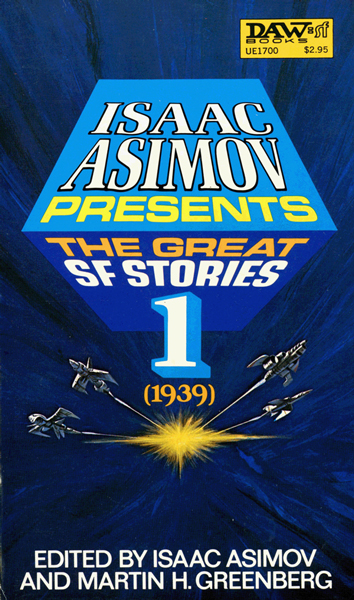
The Great SF Stories 1 (1939)

by James Wallace Harris, Monday, February 5, 2018

I’m having BIG fun reading old science fiction short stories. However, are there valid justifications for spending so much time reading old science fiction when I could be reading shiny new stories instead?  Or even spend that time reading high-quality literary works or vastly more informative nonfiction? I have to confess a sense of guilt. I worry I’m wasting my time slumming in a pulp fiction past.

The-Great-SF-Stories-1-1939


For some reason, I’m being drawn into a self-imposed project of sequentially reading annual anthologies of the best science fiction short stories starting with 1939. I picked that year because The Great SF Stories #1 (1939) is the earliest annual anthology series I could find. I’ve been soul-searching trying to understand why I want to do this, but so far my psyche hasn’t provided any conclusive insight. I have made these rationalizations:

  • I’ve been reading science fiction for over a half-century and want to make sense of that obsession.
  • I’m fascinated by the evolution of science fiction and its themes.
  • I think I actually get more science fictional bang for my buck out of short stories.
  • I’m trying to decide what’s unique about science fiction literature.
  • I’m trying to decide if science fiction has any value other than entertainment.
  • I’m wondering which stories are truly worth preserving.
  • As I progress through the years I want to see how cultural change is reflected in science fiction.
  • I wonder if old science fiction is worth preserving.
  • Finally, I wonder if this is a form of exorcism, where I’m trying to wrap up my relationship with science fiction. I assume if I study it thoroughly enough I’ll learn how all the magic tricks are accomplished.

Because the web now provides access to old pulp magazines I wish I had the time and patience to just read everything from each year — but I can’t. Most of those old stories are just crap. And even the best stories aren’t really that good by modern literary standards. I figure I have the time and patience to read one or two annual anthologies per month, covering 12-24 years a year. This means that I might have a pretty good knowledge of short science fiction by the time I’m 70.

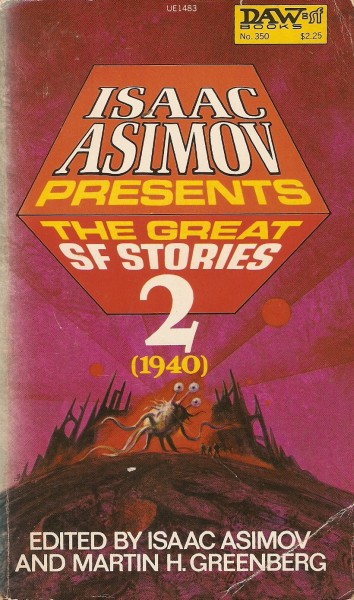
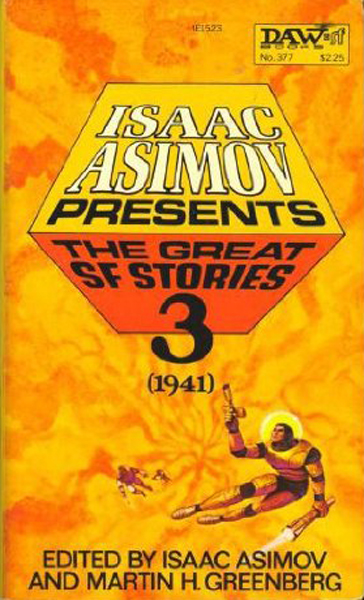
The Great SF Stories series were edited by Isaac Asimov and Martin H. Greenberg. They began in 1979 with #1 (1939) and ended in 1992 with #25 (1963). I assumed Greenberg did all the work and Asimov added a bit of pithy memory under Greenberg’s short introduction to each story. These old DAW paperbacks generally run $10-60 on eBay. I got volumes 1-12 in a reprint hardback edition that collected two years for each volume. Those 6 volumes were renamed the Golden Years of SF. I think I was able to get all six for less than $40 including shipping. I’m working on buying #13-25. There is a certain symmetry of using this series because they cover science fiction 12 years before the year I was born and continue for 12 years after. They end just about the time I started reading the then current annuals edited by Judith Merril.

Here is the table of contents of #1 from ISFDB. The story link will take you back to ISFDB where you can see where the story has been anthologized over the years. That’s a good indication of its lasting value. Many were well anthologized in the 1950s and 1960s, and have since disappeared from cultural memory.

Were these the best science fiction short stories of 1939? Did Asimov and Greenberg leave out any better SF because they couldn’t obtain the reprint rights or weren’t to their tastes? I’m mostly going to talk about the stories I liked most, and if I can find some other stories from 1939 that I liked that Asimov/Greenberg didn’t collect.

My current favorite science fiction short stories for 1939 are:

  1. “Living Fossil” by L. Sprague de Camp (not in GreatSF#1)
  2. “The Day is Done” by Lester del Rey
  3. “Rust” by Joseph E. Kelleam
  4. “Black Destroyer” by A. E. van Vogt
  5. “The Gnarly Man” by L. Sprague de Camp
  6. “I, Robot” by Eando Binder
  7. “Misfit” by Robert A. Heinlein
  8. “The Four-Side Triangle” by William F. Temple
  9. “Greater Than Gods” by C. L. Moore
  10. “Life-Line” by Robert A. Heinlein
  11. “Pilgrimage” by Nelson S. Bond
  12. “Heavy Planet” by Milton A. Rothman

Jamie Todd Rubin discovered a letter in an April 1940 issue of Astounding by Isaac Asimov where 20-year-old Asimov listed his Top 10 stories of 1939. (Be sure to read Rubin’s “Vacation in the Golden Age of Science Fiction” if you love old SF short stories. I guess I’m not vacationing in the golden age of SF.)

Notice the overlap and difference between what was decided by Asimov/Greenberg in 1979 and the 1940 letter to the editor.

  1. One Against the Legion by Jack Williamson (serial novel)
  2. Lifeline by Robert Heinlein (in GreatSF#1)
  3. Gray Lensman by E. E. Smith (serial novel)
  4. Cosmic Engineers by Clifford D. Simak (serial novel)
  5. The Day Is Done by Lester del Rey (in GreatSF#1)
  6. Rope Trick by Eando Binder
  7. Nothing Happens on the Moon by Paul Ernst
  8. General Swamp, C.I.C. by Frederick Engelhardt
  9. Rust by Joseph E. Kelleam (in GreatSF#1)
  10. Smallest God by Lester del Rey

Back to The Great Short SF Stories 1, I wished Greenberg had not included the obvious fantasy stories. They could have included three more SF stories for 1939. “The Trouble with Water,” “The Misguided Halo,” and “Star Bright” just don’t belong in a collection called Great SF Stories.

Greenberg also included a second story by L. Sprague de Camp, “The Blue Giraffe” that had a nice science-fictional idea, but it paled in comparison to his standout story, “The Gnarly Man.” I would have used de Camp’s “Living Fossil” instead of “The Blue Giraffe” because it’s another standout story. “Living Fossil” had a much bigger SF idea — essentially prefiguring Planet of the Apes (1963). The idea was expanded by de Camp and P. Schuyler Miller in the novel Genus Homo that came out in 1941 in magazine form and 1950 in book form.

What if The Great SF Stories #1 (1939) could have included all the better SF stories from 1939 worth preserving? How many would that be? Asimov and Greenberg mainly focused on Astounding.

How is preserving worthiness decided? That’s hard to say. There are stories like “The Cloak of Aesir” by John W. Campbell that just didn’t turn me on at all. Should the personal tastes of the anthologist be the deciding factor? If we go by literary quality I’m not sure any of these stories are worth remembering.

Even though these stories entertained me I’m not sure I would recommend them to my friends my age, or younger readers. Science fiction from 1939 represents such a unique perspective on reality that I’m not sure they will be meaningful to many readers. I expect only old hardcore SF fans like myself who grew up reading these stories in the 1950s and 1960s will actually enjoy reading The Great SF Stories #1.

The only reason I can find for reading these stories is for understanding their influence on science fiction’s evolution. In terms of entertainment value, they can’t compete with modern science fiction found on Netflix or Amazon Prime. To a young person watching TV science fiction, 2018 science fiction is like shooting fentanyl and 1939 stories are like a watery Coors.

Ultimately, I decided the value of reading old science fiction comes from the pleasure of being an archeologist of science fictional ideas and themes. Think about it this way. There was a time in your life before you knew the concept of time travel. Can you remember when you first encountered it? The first time you conceive of traveling in time is mind-blowing. Of course, science fiction is so pervasive in our society that most children encounter all the classic ideas of science fiction before they go to school. They probably can’t remember the first time.

When I read these old stories I pay attention to the idea put across, and the historical context in which it was first created. I’m hoping by reading all these years of science fiction short stories will help me compile a list of themes and cite the progression of ideas through the years in the stories.

Here are briefly some of the themes I noticed from 1939. Over time I wish to expand them into full essays. I’ll try to avoid story specifics in case there are people who actually want to still read these stories. Even if you can’t find a copy of The Great SF Stories #1, most of the original magazines are available online for free. I read them with my iPad Mini by loading them in Dropbox.

Robots

There are two robot stories in this collection. The subject of “I, Robot” by Eando Binder is the first intelligent machine. “Rust” by Joseph E. Kelleam is about the last three robots on Earth. Both stories use robots for their POV, with Adam Link in “I, Robot” even using the first-person. I previously wrote, “I, Robot” by Eando Binder” to explain why I thought it a standout story in the history of fictional robots. In 1939 few people knew about computers. In fact, the term computer was a job classification for humans. I also like that Adam Link tells us his limitations.

“Rust” combines several SF themes, including the extinction of humanity, the extinction of robots, the creation of artificial intelligence, and programmed behavior. The robots in the story wonder why humans couldn’t overcome their instincts and they regret that their programming makes them kill. This is an early story of fearing the consequences of military robots.

“Rust” is a wistful story about the last three intelligent robots after man has become extinct, reminding me of Clifford Simak’s stories about robots telling each other tales of mythical mankind. I assume Simak read Astounding Science Fiction since his serial novel Cosmic Engineers ran in the magazine during 1939, so he probably read “Rust.”

“I, Robot” and “Rust” make bookend robot stories to include in this anthology of 1939. “I, Robot” is about the first intelligent robot, and “Rust” is about the last. Men want to kill Adam Link, but X-120 regrets exterminating humanity but blames humans for designing him to be a weapon. At one point X-120 obliterates a poor rabbit only to feel terrible remorse.  Unlike Asimov’s robots, the robot X-120 was programmed to kill.

Neanderthals

There are two stories in The Great SF Stories #1 about Neanderthals: “The Gnarly Man” by L. Sprague de Camp and “The Day is Done” by Lester del Rey. Both are about the last Neanderthal, however “The Gnarly Man” develops another science fiction theme, immortality. So in one story, the last Neanderthal was in the distant past, and the second he’s still living with us today. This idea has been bouncing around ever SF ever since, including “The Alley Man” by Philip Jose Farmer in a 1959 issue of F&SF, and recently in the 2007 film, The Man from Earth.

“The Day is Done” by Lester del Rey really grabbed me emotionally and is about the passing of a Neanderthal man who was living on Cro-Magnon charity. “The Day is Done” suggests Neanderthals interbred with modern man, which wasn’t a common belief back in 1939, but is considered fact today. It’s a lovely story that’s been often reprinted. You’d think stories Neanderthal life would be filed under historical fiction, but for some reason, science fiction has claimed them. See “5 SF/F Novels About Neanderthals That Aren’t The Clan of the Cave Bear” that barely mentions a few of them. I think the first story I remember reading on this theme was Mists of Dawn by Chad Oliver from the old Winston Science Fiction series. Asimov and Greenberg even did a whole anthology of such stories called Neanderthals.

Dangerous Aliens

This is one of the wonderful benefits of reading old science fiction is discovering the origin of popular modern SF stories. Ideas in new stories we read today are often old ideas being recycled. Anyone who knows “Black Destroyer” by A. E. van Vogt assumes the film Alien (1979) is its descendant — and Van Vogt shows us Coeurl’s POV, which is missing from H. R. Giger’s horrifying being.

“Black Destroyer” is a wonderful story on many levels. It feels like an episode of Star Trek, and this 1939 novelette includes many ideas that the 1960s TV show would explore in multiple episodes. The crew doesn’t include women, but it did have an important Japanese member.

“Cloak of Aesir” by John W. Campbell is another kind of alien invasion story, where superior beings take over the Earth and enslave humans.  It also involves the SF themes of Far Futures, Super Science, Psychic Powers, and Matriarchial Societies.

Prejudice Against Science

Both “Life-Line” by Robert A. Heinlein and “Trends” by Isaac Asimov are about anti-science prejudice. Of course, Heinlein’s idea was nutty, but he gave a decent enough explanation. I wondered if Heinlein and Asimov were reflecting anti-SF bias they felt from 1939 society. Science fiction and pulp magazines were considered trashy. Good parents didn’t let their kids reach such crap. SF fans often had to hide what they read, even though they thought of themselves as Slans (superior beings).

Both of these stories were about something else, predicting death and rocket travel, but I felt ultimately they were about prejudice to new ideas. When I was young I didn’t like “Life-Line” even though Heinlein was my favorite writer. But over the years, each time I reread “Life-Line” it gets better. For a first story, Heinlein was fairly savvy about storytelling, especially for writing for the pulps.

Mankind’s Extinction

Both “Rust” and “Living Fossil” a favorite story from 1939 not in this collection were about a time after humans went extinct. H. G. Wells started that idea I think in The Time Machine when he imagined the Eloi and Morlocks replacing us. Science fiction has often contemplated the end of humans, and well as our replacements.

“Living Fossil” did quite a lot for such a short story. De Camp nicely imagines monkeys from South America evolving our level of development millions of years after humans have disappeared. Even the interior illustration makes me wonder if Pierre Boulle ripped this story off for his novel Planet of the Apes. Evidently, L. Sprague de Camp isn’t as litigious as Harlan Ellison.
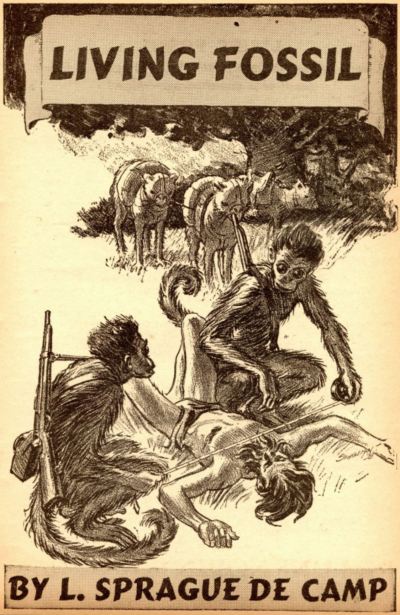
Living Fossil by L. Sprague de Camp - Astounding 1939 Feb

Matriarchial Societies

In “Pilgrimage” by Nelson Bond, we visit a far distant future after our society has long disappeared from the scene. Women rule. All the myths are about women gods. In “Cloak of Aesir” the alien invaders are ruled by the female of the species. I first encountered this idea in Herland by Charlotte Perkins Gilman from 1915. Goodreads lists 115 such books. Wikipedia has an article on “Single Gender Worlds.”

Psychic Powers

I thought psychic powers was an obsession of 1950s Astounding Science Fiction, but evidently, John W. Campbell had been thinking about it at least as early as “Cloak of Aesir” in 1939. “Star Bright” by Jack Williamson is a fantasy story about a man getting magical abilities from a meteorite piercing his skull and lodging in his brain.

“Greater Than Gods” by C. L. Moore is a powerful story about people in the far future projecting their thoughts to a man in our near future. Moore’s story is really about two roads the people of Earth could take in 1939. She just used psychic powers to show us two possible far-future outcomes–one a world united by power driven men (think Hitler), and the other a decadent world of peace and pleasure. Moore doesn’t want either, but she shows how both entice us.

Hard Science

There were two hard science stories in The Great SF Stories #1. The first was “Heavy Planet” by Milton A. Rothman that anticipates Hal Clement’s Mission of Gravity. The second is Heinlein’s “Misfit” about a spaced based future CCC unit moving a small asteroid out of the asteroid belt into an orbit closer to Mars, making it into a long-term space station. Heinlein promotes the use of mathematics, discipline, and hard work. This could be his first juvenile SF story.

Conclusion

I really enjoyed these old stories, but I’m not sure younger people will. The storytelling is often crude. Modern science fiction on Netflix is far more sophisticated, colorful, exciting, and dynamic. I am constantly pleased while reading these old stories to unearth ideas we still use today. I feel like a science fiction archeologist piecing together the evolution of science fictional ideas. That’s very rewarding to me. Throughout this collection of 1939 stories, I found ideas that first amazed me in the 1960s when reading 1950s and 1960s science fiction. I thought those ideas were original back then. Evidently not. But were they original in 1939?

I assume if you live long enough you start thinking like the person who wrote the Book of Ecclesiastes. I also assume if I could time travel back to 450 BCE I’d find people telling stories that contained the seeds of all the stories in The Great SF Stories #1 (1939).

Jim
Marie Kondoizing a 240GB SSD

by James Wallace Harris, Thursday, February 2, 2018

This is one of my essays where I think out loud trying to solve a problem. Sometimes this helps other people with the same problem, and sometimes I get comments with insights I didn’t imagine. It’s surprising how beneficial thinking by writing can be.

A few years ago I decided I wanted a minimal computer system, so I swapped out my big tower rig for an Intel NUC with a 240gb M.2 SSD (solid-state drive). This little computer is smaller than a Mac Mini, drives a 27″ 4k monitor, takes up very little desk space, and is very quiet. I’ve been happy as a cosplayer at ComicCon until yesterday when I noticed the red warning that my disk was almost full. I don’t even have a full 240GB because after formatting the drive is only 232GB. That’s my whole digital world.

Intel NUC


I could add an external drive, but that would ruin the elegance of having a small computer. I don’t have 232GB of user-generated data but I do use Dropbox for my main file system which I replicate with Second Copy to OneDrive. Both my Dropbox and OneDrive offer 1TB of space in the cloud, but my files are stored locally and backed up to the cloud. This means I have quicker access and automatic backups to two different cloud locations. I store around 50GB of data files on Dropbox, which when copied to OneDrive, makes up a total of 100GB on my SSD. With the OS, data I don’t back up, and programs on my C: drive brings the total to around 210GB.

Lately, I’ve been collecting scans of old pulp magazines from the web. Yesterday I got in 25GB of pulp-scans in CBZ format from a collection I bought on eBay. I wanted to add them to Dropbox, which means with replication to OneDrive, would add 50GBs to my system.

Astounding Stories020


My digital life just got bigger than my digital universe. So last night I spent the evening Marie Kondoizing my SSD. I uninstalled programs, cleaned out files, ran cleanup programs, and got my SSD down to 23GB free. I had hoped to build a folder on Dropbox called Pulps and eventually collect entire runs of all my favorite magazines.

I figured my ultimate pulp collection might run 200-300GB, which means after replicating to OneDrive I’d need 600GB. I could fork out $350 and upgrade my SSD to 1TB.

I then put on my Marie Kondo thinking cap and wondered:

  1. Do I need complete runs of all these old magazines?
  2. Do I need to back up all my digital content in quadruplicate?
  3. Could I upload the magazines to Dropbox and OneDrive without using my local SSD?
  4. If the magazines are readily available on the web, do I need to own and manage copies of my own?
  5. Since I have Dropbox on my Linux machine, and it replicates my Dropbox cloud to its local drive, do I really need OneDrive as a secondary backup?
  6. Will my digital universe legitimately grow enough over time to make it worthwhile to expand my digital universe to 1TB?
  7. Should I rely more on free cloud services like Flickr and Google?
  8. Should I upgrade my M.2 SSD to 1TB? (About $350)
  9. Should I go ahead an upgrade my whole computer? Maybe even make things simpler by getting an All-in-One computer with a 1TB drive. (Either Dell or iMac will approach $3,000)

To answer #1, it’s very cool to have the entire history of science fiction pulp fiction on Dropbox, where I can call up any issue I want on my iPad to read. But to be honest, it’s not that much trouble to find the issue online and just copy it to Dropbox as needed. Hell, it might even be possible to use my iPad to find the issue and read it directly without even saving it to Dropbox.

Number #2 is intriguing. If I simplified my backups I could reduce the amount of space needed on my SSD. I could even stop running the background copy program, freeing up other resources. This might be a way to have my cake and eat it too.

Number #3 offers some very interesting possibilities. I’d need to study how Dropbox and OneDrive work in greater detail. Can I store stuff on OneDrive that isn’t replicated to my SSD? I could unmap my OneDrive and only upload stuff to it via the web. But it would be nice to have part of it mapped locally so I could automatically back up essential files from Dropbox in real time.

Number #4 is the heart of the matter. A true Marie Kondo insight. I’m spending a lot of time and effort to collect something I might only use for 1% of its content or less. On the other hand, if collecting brings me true happiness, it’s not an issue. If The Pulp Magazine Archive became the perfect repository for old pulp magazines I wouldn’t need to collect. Why recreate a library when someone else is already doing all the work?

Number #5 is interesting but also complicates things. If I only relied on Dropbox for my backing up I’d have a copy of my files on my SSD, in the cloud, and another local copy on my Linux SSD. That’s pretty safe. But if my house burned down there would only be one copy, on Dropbox. Having all my files on Dropbox and OneDrive means if my house burns down and one of those companies has a catastrophic failure, I’d still have access to my files. Also, Dropbox on Linux doesn’t keep up that well with changes to Dropbox on Windows. Finally, I have a bad habit of reinstalling Linux whenever I want to play with a new distribution.

Number #6 brings up questions about my future and longevity.  If I excluded data I didn’t create like pulp scans, music, videos, audiobooks, etc., my digital universe would shrink dramatically. I could exist on the free space I earned from Dropbox and not even pay their $99/year fee.

Years ago I ripped my 1,700 CD collection. I kept multiple copies of 130GB of around 30,000 songs. I was always worried about losing it. Then Rhapsody, Rdio, Spotify came around and I got less and less worried. Awhile back I uploaded it all to Amazon and let all my local copies disappear one by one as drives died. I hardly ever go to Amazon to play that music. If there was a Spotify for old pulp magazines I wouldn’t even think about collecting them. I got rid of hundreds of CDs, but I’ve kept about 500. I sometimes wonder why I even keep them, or why I still buy CDs on rare occasions. I tell myself it’s because of the better fidelity, but I’m not sure if I can tell the difference anymore.

The odds are my digital universe will shrink over time, rather than expand.

#7 is something I should also consider. Why keep all my photographs on my SSD? And replicate them to my two paid cloud services when there are several free cloud services for photographs? Again, I couldn’t rely on just one company. If I’m going to trust cloud storage I need to always use two companies — especially if I’m going to abandon all local storage.

If I managed things correctly I don’t need to go to #8 or #9. Hell, I saw the other day where users can rent high-end graphics cards in the cloud for playing extreme video games so they don’t even need a powerful gaming computer locally. If that’s true, the future of computers will be moderate machines that just view data processed and stored in the cloud. It means we’d need less powerful CPUs, basic GPUs, less RAM, and less SSD space.

Still, should we rely on the cloud completely? If the internet goes down I can still work with all my files on Dropbox because they are replicated locally. Of course, I freak out when the internet goes down just like I do when the power goes out. I don’t want to live without either.

Have we moved to a wired world we can’t live without? Is there any need to own any work of art that could be digitized? Do we even need any local storage? I believe I have this urge to collect copies of old pulp magazines because back in the 1970s I actually collected the real issues and hated I could never afford all I wanted. I sold my collection because pulp magazines are all disintegrating. Pulp scans on the web are preserving these old magazines for the future. But do we really need more than one copy if everyone can access it on the web?

I think I’ve answered my questions. No to a bigger SSD drive. No to a new computer. I don’t need to collect pulps but I can without hardware upgrades, but I should assume my collection efforts will be invalidated by the web in the future. If I was a photographer or videographer, I’d need massive amounts of local storage, but writing fiction and nonfiction takes little hard drive space. I’ll keep this computer until it dies. My next computer will be an All-in-One because that’s even more minimalistic. I’m not sure I can break my pulp collecting habit, but it’s rather minor compared to collecting stuff in the real world.

JWH