How to Save The World by Reading Science Fiction

by James Wallace Harris, 1/26/21

Many people have the inner confidence that the world will always muddle through. That we’ll solve our problems naturally through the unfolding of uncontrolled events. Other people believe as the population of humans grow, we’ll eventually reach a breaking point and things will fall apart. If you read Jared Diamond’s Collapse, you know the history of the world is a history of failed civilizations. Whatever goes up must come down, and if you’re the kind of person that uses numbers and graphs to anticipate the future, it doesn’t look good.

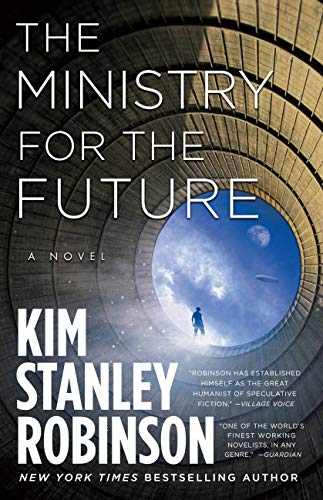
Kim Stanley Robinson has written a science fiction “novel” where he imagines humanity intentionally solving our big problems. The book is called The Ministry for the Future. It’s hard to recommend this book because people who expect a novel to work in a certain way could have difficulty reading it. I’ve already written about how The Ministry for the Future isn’t structured like a typical novel so you might want to read that essay before buying it.

The Ministry for the Future imagines how humanity could save itself. It’s just one possible scenario, but it does offer more hope than I’ve seen elsewhere. Now, it’s not entirely Pollyannaish, because it also assumes a massive economic depression and worldwide acts of terrorism will force us to change at times too, warning us there are no easy solutions, and to expect a bumpy ride.

The chief task to saving our planet is reducing CO2 in the atmosphere. Robinson suggests this can mainly be done by inventing a new worldwide currency he calls the carbon coin. Like the gold standard, this currency will be based on carbon kept out of the atmosphere. Once worldwide financial institutions back the carbon coin, and people and corporations realize future wealth depends on it, there will be an incentive to keep CO2 out of the atmosphere. At one point, Robinson says we’ll pay Saudi Arabia to keep its oil in the ground and that will create more worldwide wealth. That’s hard to believe, especially if you watch this film. (Really, watch this film.)

Robinson also imagines many giant geoengineering projects, including pumping water out from under glaciers to slow their pace into the oceans. He also assumes we’ll pursue different kinds of carbon sequestering combined with switching to renewable energy sources. These are all technical solutions that we’re considering today, but Robinson also has several chapters about why many of our current big ideas will fail.

The whole goal is to get CO2 back down to 350 ppm. Near the end of the novel, which spans many decades, CO2 peaks at 475 ppm. Robinson promotes the success of the real 350.org movement in the book. Last month we were averaging 413.95 ppm of CO2, so we’re currently about half-way to Robinson’s future in real life. To get back to 350 ppm we’ll have to stop using all fossil fuels and retrieve a lot of CO2 already in the atmosphere and put it away somewhere safe. Generally, that’s into trees, or sequestered. So, Robinson imagines the world reforesting on a vast level. But can you really imagine that we’ll stop taking oil, gas, and coal out of the ground? That’s trillions of dollars in wealth that people have invested trillions of dollars to own.

Concurrent with the CO2 problem is the extinction problem. Robinson also embraces Half-Earth Project to give half the Earth back to wildlife based on E. O. Wilson’s book Half-Earth: Our Planet’s Fight for Life. Within Robinson’s novel, huge tracts land are purchased to create wildlife corridors to connect the larger national parks around the world. This is a beautiful vision that I hope comes true. But to achieve it would require buying up small towns and destroying roads on a vast scale. That adds another giant expenditure for saving the world. Robinson claims this will add jobs and eventually grow the economy, but will people see saving animals as an investment?

Robinson foresees two horrible sources of good for the earth that are evils for people. A giant worldwide depression will slow the release of CO2, and he imagines vast networks of ecoterrorists that will stop air and sea travel by any machines that run on fossil fuel. Robinson pictures us returning to clipper ships and dirigibles, as well as new kinds of electric planes and ships that use renewable resources.

In this book Robinson doesn’t dwell on rising seas and other natural disasters like he has in her earlier novels, but he does focus on the refugee problems. He imagines we’ll eventually develop a global citizenship status that will allow us to fairly resettle the millions of refugees. Will we be that wise and kind?

All of this is just a tip of the iceberg among Robinson’s speculations. Overall, The Ministry for the Future is a very hopeful story, but you must read between the lines to account for all the horrors. However, his first chapter is an extremely dramatic scene of one terrifying ecocatastrophe, and I can’t recommend reading it highly enough. It’s available online to read.

After finishing The Ministry for the Future, I keep asking myself: Will we really save ourselves? Robinson believes we’ll more than muddle through, and even find triumph in our achievements. Robinson is almost gung-ho for the future. Americans can’t even pull together in a crisis like the Covid-19 pandemic, so why expect us to pull together at far greater challenges? Will we muddle through despite ourselves? I don’t think so. Humans have always muddled through in the past because there were always been an abundance of options and resources. Solving climate change is where the Ponzi scheme of Capitalism finally comes due. Saving ourselves will require moving to a new paradigm for the politicaleconomy. I’m not sure that will happen. In fact, I seriously doubt it. Why? Because it will require humans to work together at a level of cooperation that we’ve never shown in the past.

Kim Stanley Robinson is an optimist. I’m a pessimist looking for hope. I believe it’s important to read science fiction novels like The Ministry for the Future because we need to all ask ourselves if such dreams are possible. Are we capable of making these kinds of changes in our lives? My hope says its theoretically possible. My pessimism says no.

If you haven’t really thought about how we’ll save ourselves in the future, then you might want to read The Ministry for the Future. It’s not a fun page turner, but I believe it covers most of what you’ll need to consider.

JWH

The Future Is About Jobs

by James Wallace Harris, Saturday, 1/16/21

Most people assume the best possible society will be one where everyone has a good job and can be self reliant along with the freedom to make what they want out of their life. That was the direction America was taking until a revolution in the 1970s, when a few people had a new vision of the future. Since then the best possible society was decided in favor of the wellbeing of corporations over a the last five decades. Unfortunately, corporate success depends on having fewer employees. They have chosen profits and automation over people. The citizens of America want jobs, but the citizens of corporations want profits. Whose future will win out?

If you put your faith in politicians and think they will bring happiness to Americans with more jobs then you are deluded. The past four years were Trump feeding his massive ego which distracted us from the real issues. But electing Biden is not going to save us either. Arguing over partisan politics is like brawling in the ballroom of the Titanic an hour before hitting the iceberg.

If we stay on our present course America will collapse economically before climate change can do us in. If we want to avoid both hells then we must decide on a better final destination. It will require cooperation. It will also require knowledge, but not the kind of knowledge you can get off the internet or cable news. The amount of knowledge needed will require studying books, lots of books, and not books written by egomaniacs trying to become rich.

The problems we’re facing and will face are so enormous that it will take a significant percentage of the population working together to solve them. If we want that future where everyone has a good job it will require a new kind of education. We used to believe higher education guaranteed a successful future. But the kind of education I’m talking about is not technical job training or academic enrichment. What we need is to educate ourselves about a holistic understanding of our present reality. However, most citizens of this society have chosen to deny reality, or accept it and just enjoy themselves as much as possible before the apocalypse.

Remember in The Matrix when Neo was told he’d need a lot of guns to overthrow the machines, and rows and rows or armaments sped past him? Yeah, well we need to read lots of books, rows and rows of bookcases. At a guess, a good portion of the voting population needs to start reading one important nonfiction book a month to alter our path and avoid the twin icebergs of climate change and wealth inequality. Will that happen? I doubt it.

We’re now more polarized politically than anytime in my lifetime. The country is almost perfectly divided into two opposing philosophies. The conservatives want free market capitalism with winners take all. The liberals want capitalism supplemented with socialism to protect the losers. Strangely, I see it as the Darwinians v. Christians, even though the conservatives see themselves as Christian, I see them as advocates of survival of the fittest, while liberals want to follow the teachings from the Sermon on the Mount, yet expect the Darwinians to pay for the sick, lame, and homeless.

If we continue on the current path blazed by libertarian free-market true believers, all the wealth will be sucked out of the middle and lower classes, and probably even from the lower upper classes. The future promises a small wealthy class with their robots and corporations, and a vast lower class, struggling to survive off a small basic income. If you believe in trickle down economics then why are the richest cities in America being overrun by homeless encampments and decay? If you don’t believe me watch these videos about L.A., San Francisco, and Miami.

These are just a few images that show the result of our present economic policies. They are like the early signs of climate change that everyone wants to ignore. I’m old enough to look back over 50-60 years of history and change. Most people believe things stay the same. They don’t. The societal erosion you see in these films will spread like kudzu unless we change course. But how?

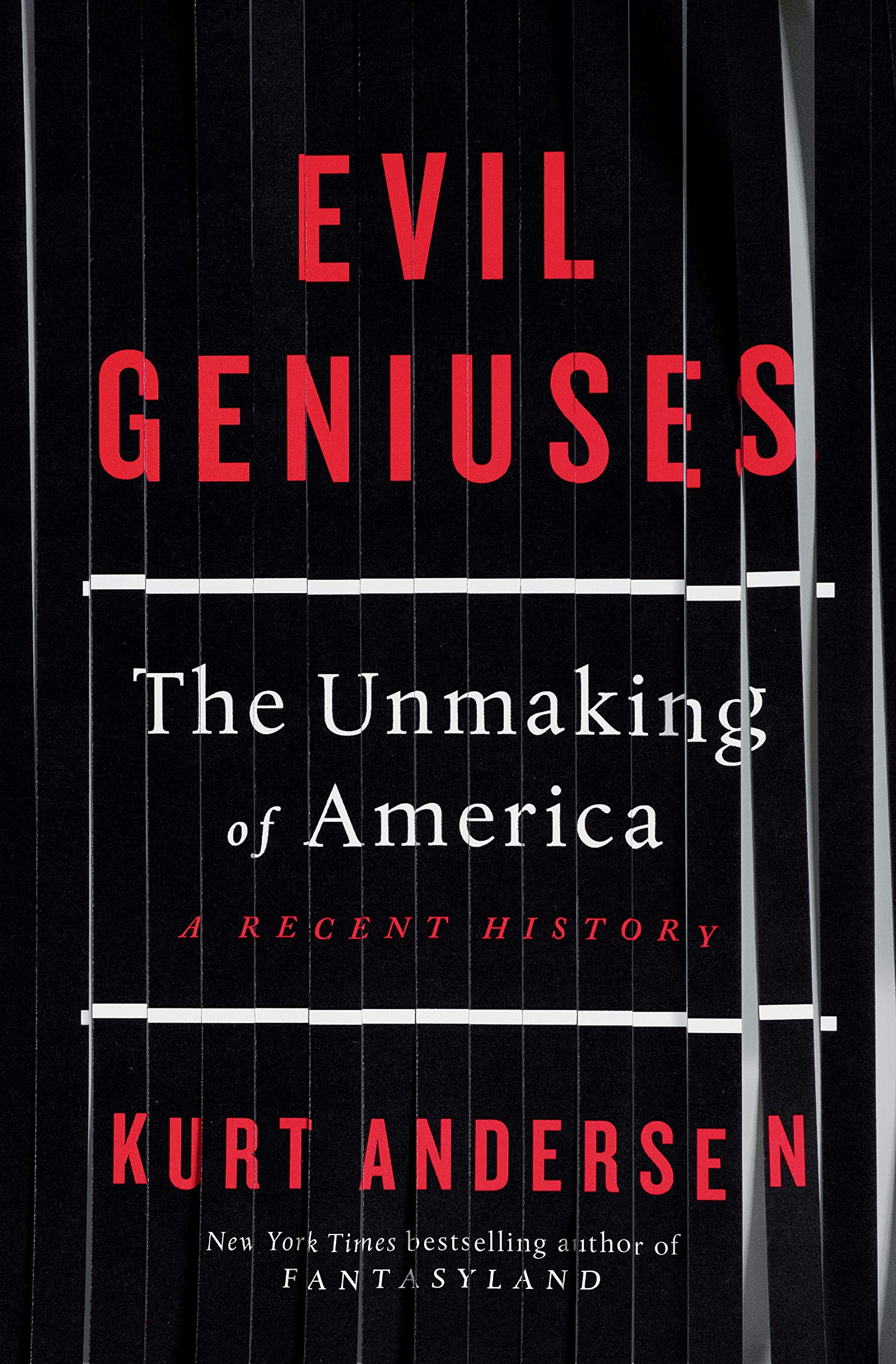
In physics we’ve learned that space and time are really one thing and we should refer to it as spacetime. And we’ve also learned that the mind and body are not separate and should refer to it as the mindbody. Well, the same is true for politics and economy, it’s really the politicaleconomy. When new concepts emerge they go through a phase first as two words, then as two-words, and finally as oneword. We’re still thinking in the political economy phase, but after reading Evil Geniuses by Kurt Andersen I’m going to think of it as the politicaleconomy, and even bypass the hyphen phase.

If you only see politics in terms of liberal and conservative, or Democrats and Republicans then you’re only seeing the tip of the iceberg. If you only look at the economy in terms of gains and losses then you’re not even seeing the tip. Evil Geniuses will not give you a complete holistic view of current politicaleconomic reality, but it will hint at it. Andersen is a synthesizer who has written a history of the politicaleconomy beginning in the late 1950s to show how our present state of the politicaleconomy evolved. It’s very complicated, and like Einstein working to develop a Grand Unified Theory Andersen does not succeed.

It comes down to simplex, complex, and multiplex. Most humans want simplex answers to explain reality. The more we study reality, the more complex reality appears. Focusing on single systems causing complexity in our minds. It’s only until we try to see how multiple systems work together that we develop multiplexity of thinking.

Personally, I’m smart enough to see complexity and intuit a bit of multiplexity. I believe Andersen is able to mentally juggle several complexities and visualize a certain level of multiplexity to be able to write about it. I envy him that ability. I envy that because simplex thinking is very satisfying. Complex thinking is stressful, even painful and discordant. It’s only until we get into the multiplexity stage do things become calm again, and we hear the harmony of relationships between system interactions.

Reading Evil Geniuses and exploring the individual observations Andersen makes has reduced some of the political anxiety I acquired from 2016-2020. Donald Trump wasn’t the real issue even though we’ve agonized over his impact for years. He was just a rash and not the underlying disease. Most Americans are riled up politically but are looking for answers in all the wrong places. We keep trying to cure symptoms and not the disease. Until we think of the politicaleconomy as one holistic system that includes all life on Earth we’re going to stay the course towards extinction. We need to be working towards a new word, the politicaleconomybiosphere.

I cannot properly review this book without restating almost everything that’s in it, and Kurt Andersen has already done that, so just read it. Don’t expect to accept everything he says. I haven’t yet. But if you’re like me, do expect to want to read his sources, or at least other books about the issues covered. For example, I bought a Milton Friedman book to understand the other side of things. One book ain’t going to cut it. If you’ve ever gotten fascinated by a subject and had to read everything you can about it, that’s how I feel now about the politicaleconomy.

Reading Evil Geniuses made me realize I wasn’t paying proper attention to the history of the last fifty years. Andersen chronicles no secret cabal of conspirators, all those evil geniuses were working completely out in the open. Another realization I take away from the book is don’t assume the nightly news will tell us what we need to know. Following the sensational stories on TV and the internet is watching the delusional argue over how many angels fit on the head of a pin.

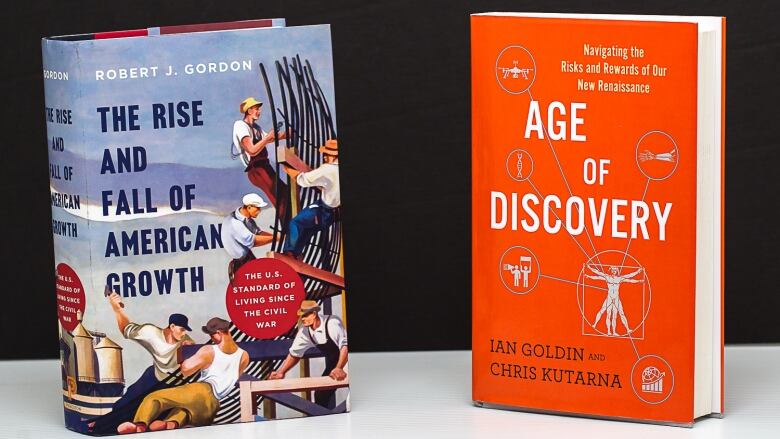
Understanding comes from longer essays, like those in The Atlantic or The Economist, or from good solidly researched books. And that reading never ends, because there’s always need for deeper insights. For example, I think I need to read The Rise and Fall of American Growth by Robert J. Gordon to understand the history before the history outlined in Evil Geniuses and Dark Money by Jane Mayer. But it’s also important to read opposing views, like Age of Discovery by Ian Goldin and Chris Kutarna.

That’s a lot of relentless reading. Is it practical to imagine that a significant portion of the voting public will do this kind of reading? No, not really. That’s why the movers and shakers of the economic right were able to achieve their goals. They used their knowledge to change just a few institutions and people to alter the course of history. Can liberals make such surgical decisions to reflate the wealth of the middle and lower classes? I won’t know until I read a lot more. If you know of any books that offer such insights, let me know.

JWH

Finding Laughter in Interesting Times

by James Wallace Harris, Thursday, 1/14/21

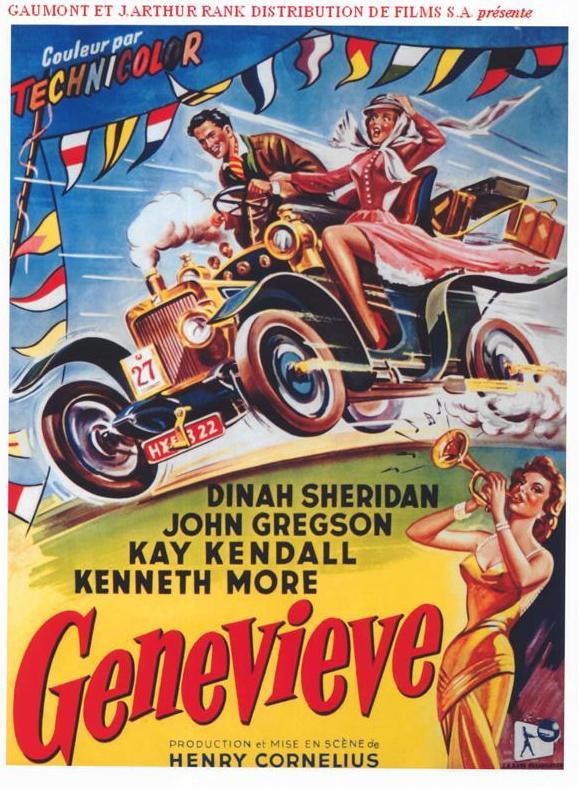
Last night I laughed out loud several times while watching a little British film from 1953 called Genevieve. My friends Mike and Betsy had discovered it on Amazon Prime. They have a knack for mining old movie gold there. It also appears to be on YouTube.

The older I get the less I laugh out loud, so I have to appreciate it when I do. The famous Chinese curse is to wish your enemies lived in interesting times. I don’t know who cursed who, but we definitely need comedies in these times.

I had never even heard of Genevieve before, and neither had Mike and Betsy. Wikipedia has quite a write-up about it. Evidently, this comedy found a bit of success back in 1953, winning awards in England, and even garnered couple Oscar nominations over here. Rather sad how good pop culture fades – don’t you think? Genevieve even has a slight connection to It’s a Mad, Mad, Mad, Mad World, another film I had found funny this summer that made me laugh out loud countless times. Quite a few people still remember that one and still watch it.

It’s hard to laugh when thousands are dying every day and we have a president that’s shitting all over our democracy. On the other hand, spending all my time worrying about the decline of America isn’t good for my health. I’m reminded of the film Sullivan’s Travels, about a Hollywood director wanting to make a serious film about the depression during the depression. Through a series of misadventures, Sullivan, the director, ends up on a chain gang in the deep south and discovers what people in the depression really wanted – laughter.

During 2020 the sophistication of what tickles my funny bone has taken a hard hit. I can’t handle Saturday Night Live, or other contemporary satire, but linger on scenes from The Three Stooges, Bob Hope, and Jerry Lewis movies while clicking around the streaming services. My favorite comedy during 2020 was Bachelor in Paradise.

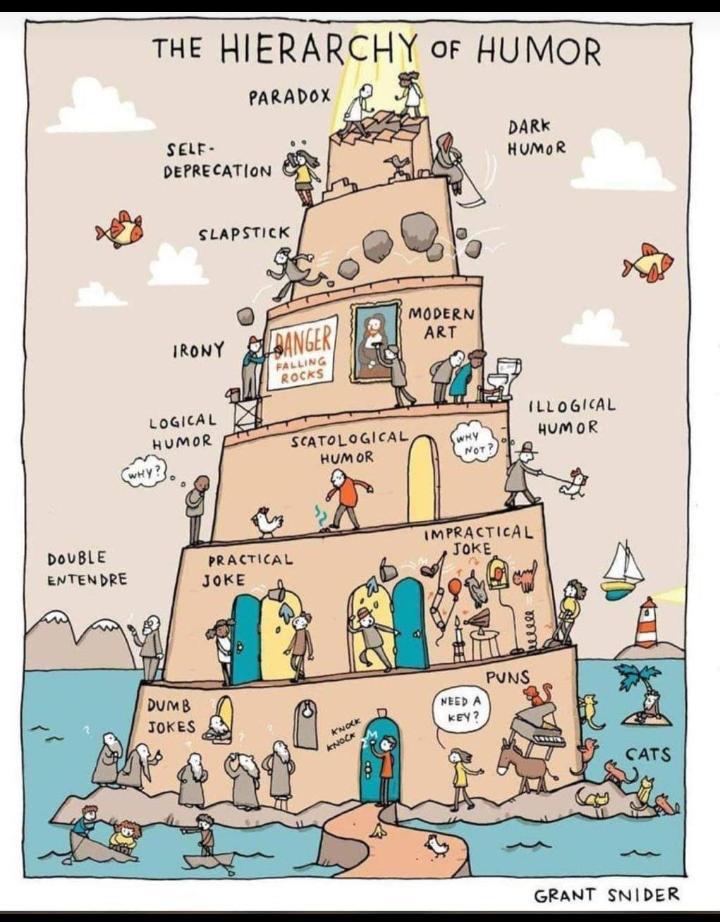
I used to hate slapstick and other lower forms of comedy because I saw myself more sophisticated than that. I once took a graduate course in humor and know what I should be watching, but high level humor doesn’t always soothe the soul in stressful times. I’m younger than that now.

Actually, Genevieve had most of the levels above, but It’s a Mad, Mad, Mad, Mad World stayed pretty close to the bottom of the pyramid. I loved it. And I loved Genevieve, staying up way past my bedtime to finish it.

I was surprised that this 1953 British film seemed a good deal more sophisticated about sex than American films during the 1950s. The story is about two guys who take their wife and girlfriend on an annual antique car rally from London to Brighton. At one point actor Kenneth More laments that every year he brings a new girlfriend on this trip hoping to have an emotional experience but something always gets in the way. Not quite how they express things today, but funnier I think.

Tonight after my dose of the nightly news, I’m going to step out of reality and watch The Nutty Professor. I used to wince at comedy routines of Jerry Lewis. Now I marvel at tiny bits of cleverness. For example, Jerry sits in a chair where he sinks deep down into the cushions about a foot. He gets up and takes a small pamphlet off the desk and lays it across the chair seat cushion, and then sits down again. It holds him up. That was enough to make me happy.

JWH

The Mystery of the Aching Leg

by James Wallace Harris, Monday, 1/11/21

After years of controlling pains in my back and leg with exercise and diet I’ve had a relapse. What have I done wrong? It took me years of learning about many good and bad habits to get that pain under control. What have I done to screw things up? It’s a mystery that I’m trying to solve but complicated by the many different factors involved.

Many years ago, I was diagnosed with spinal stenosis. I had gone to orthopedic doctors because I thought my hip was going out, but the pain went all the way down to my foot. After an MRI the showed my hip was okay, but I likely had stenosis I was sent to a pain management doctor. He told me to avoid surgery unless things got unbearable, set me up with a physical therapist, and prescribed anti-inflammatory drugs.

I quickly learned that sleeping flat on a bed aggravated my condition and switched to sleeping in a recliner. That dramatically reduced my pain. I also learned my 3 mile a day walks were annoying the hell out of my leg, so I stopped walking as much. That reduced the pain, numbness, aching, tingling, etc. a good deal more.

Also, during the time period, I had to have a stent put in my heart and I lost about thirty pounds trying to help that problem. I assume losing that weight might have helped my leg, but both my regular doctor and back doctor were doubtful.

Concurrent with those lessons I also learned my stomach couldn’t handle NSAIDS anti-inflammation drugs, but the physical therapy exercises paid off big time. Before I gave up on the drugs, I became aware of what it felt like to have lower inflammation. Because of that I became aware of which foods set off inflammation – mostly fun foods. So, I began avoiding them. That helped too.

Eventually I supplemented the PT exercises with exercises by Miranda Esmonde-White that I discovered on PBS TV. They helped a lot! Even better than the PT exercises.

Over the past couple of years, I’ve been doing intermittent fasting, and that seems to have helped with inflammation, but I’m not sure.

All these efforts got things mostly under control, and the pain and numbness almost went away. It became low level enough to ignore, and I was good for a few years.

However, things have gotten bad again. Not as bad as when I first started going to the back doctor, but it’s heading that way. Over the years I’ve had flareups and could fix them by being more diligent about my exercise and diet, but these quick tweaks aren’t working.

I assume my present flareup is because I’ve gotten lax about my exercising and intermittent fasting. Over the holidays I’ve indulged in some fun foods and gained five pounds and might have increased inflammation. But there’s one new factor that’s bothering me. At my annual checkup in November my doctor told me I my legs showed signs of poor circulation, and some of my aching legs symptoms could be that. She wants me to have tests done but not until after I get the Covid-19 vaccine. A stent in my leg might fix things, but I won’t know for a while.

Because my doctor scared me about the poor circulation in my legs I went back to walking regularly. I tried walking 1 mile twice a day. At first that seemed to help, but then my leg got bad again. I had been walking 1 mile several times a week. It makes my back and leg hurt for an hour or two, but that kind of exercise helps my heart, so I figured the short-term pain was worth it. But that extra walking is another clue to the leg flare up.

I also remembered that statins caused my legs to ache. Over the last twenty years my doctor has been having me take different statins and dosages trying to find the right combination that don’t produce side effects, which were pains in the legs. I was on 5mg every other day, but in November she had me go to every day, and even wanted to bump up the dosage to 10mg. So that might be another factor.

Now I have the mystery of the aching leg and wondering what’s causing it. My doctors have always told me things could get worse, but I’ve had so much success controlling pain with lifestyle changes that I don’t want to believe they’ve stopped working now.

I wish we had a little computer to plug into my brain and read body health like those car code readers decipher automobile problems. It sure would simplify things.

Did that extra walking caused this flare up? The gaining of weight? Enjoying a bit of cheese danish every day? Too many meals with cheese? Switching to statins daily? Skipping my exercises too often? Or is it hardening of the arteries in my legs? Do I need to go back to my 16:8 intermittent fasting? I just remembered I had to give up my protein drinks because they were driving my bladder crazy. That’s 30mg less of protein. I switched to eggs and yogurt, which may or may not affect my clogged arteries.

I know two types of people. Those that eat anything they want and don’t exercise and seem to do fine, and those with growing ailments that are constantly trying to find solutions that involve just the right combination exercise and diet.

Unfortunately, I’m in the group that always has a health mystery to solve. Sorry to bore you by complaining about my ailments, but writing these blogs are my way of thinking things through. This essay has helped me, but not to come up with a specific answer. I’m going to eat better, do more good exercising, walk less, take less statins, watch my posture, and try to lose weight. I hope that helps, but it won’t solve the mystery of what actually caused my leg to get worse.

JWH

The Psyche of Blind Faith

by James Wallace Harris, Saturday, January 9, 2021

This essay is not about Donald Trump or politics, but I’m going to use the January 6th riot at the Capitol as an example of blind faith. In the days following the riot several news reports have appeared where followers of Donald Trump have denied he was the instigator of the riot, and in some cases, that the rioters were not the real followers of Donald Trump.

The evidence for Trump instigating the riot is overwhelming, and growing, as law enforcement and the media assemble a timetable of events and clues. I can easily see January 6th becoming the subject of future congressional hearings like those covering the JFK assassination where we heard weeks and months of testimony. In the end, most people will believe that Trump was the inciter-in-chief in the same way the congressional investigations concluded that Lee Harvey Oswald was the lone gunman. But like lone gunman deniers, there will always be deniers to Trump’s guilt.

This kind of denial comes from a psychology of blind faith. I find that psychology fascinating. We see blind faith everywhere. What allows some people the ability to tune out aspects of reality to maintain their faith in a particular belief? One good example is the free-market capitalists whose faith keeps them from seeing pollution, climate change, wealth inequality or any other negatives to capitalism. They must deny all evidence to the contrary to maintain their faith in the purity of Milton Friedman’s teachings.

The ultimate example of blind faith came just after the crucifixion of Jesus. The followers of Jesus saw that he was dead. However, they couldn’t accept that death, so they invented a faith to prove he still lived. Their blind faith created a new view of reality that they see but others don’t.

The only way to maintain blind faith is through denial. I now see denialism everywhere, which implies blind faith is everywhere.

Donald Trump inspires blind faith in his followers. What causes that? How does it work? Why him? It’s obvious that no amount of evidence can penetrate such faith. It’s a survival mechanism. Believers obviously benefit from other positive mental states once they let go and accept a faith. Once a faith is accepted any threat to that faith is also a threat to the new sense of wellbeing.

This blind faith is why I’ve given up talking with my conservative friends about Trump. The wall between us is impenetrable. To talk with them feels just like being John Cleese trying to convince Michael Palin the parrot is dead.

The inspiration for this essay.

JWH