Playing All The Albums I Never Bought

by James Wallace Harris, Wednesday, August 27, 2020

A subscription to Spotify allows me to play all the albums I never purchased. For example, I called up “The 100 Best Albums of the 1970s” from Pitchfork and saw that back in the day I had bought 37 albums on their list — meaning I missed 63 great LPs.

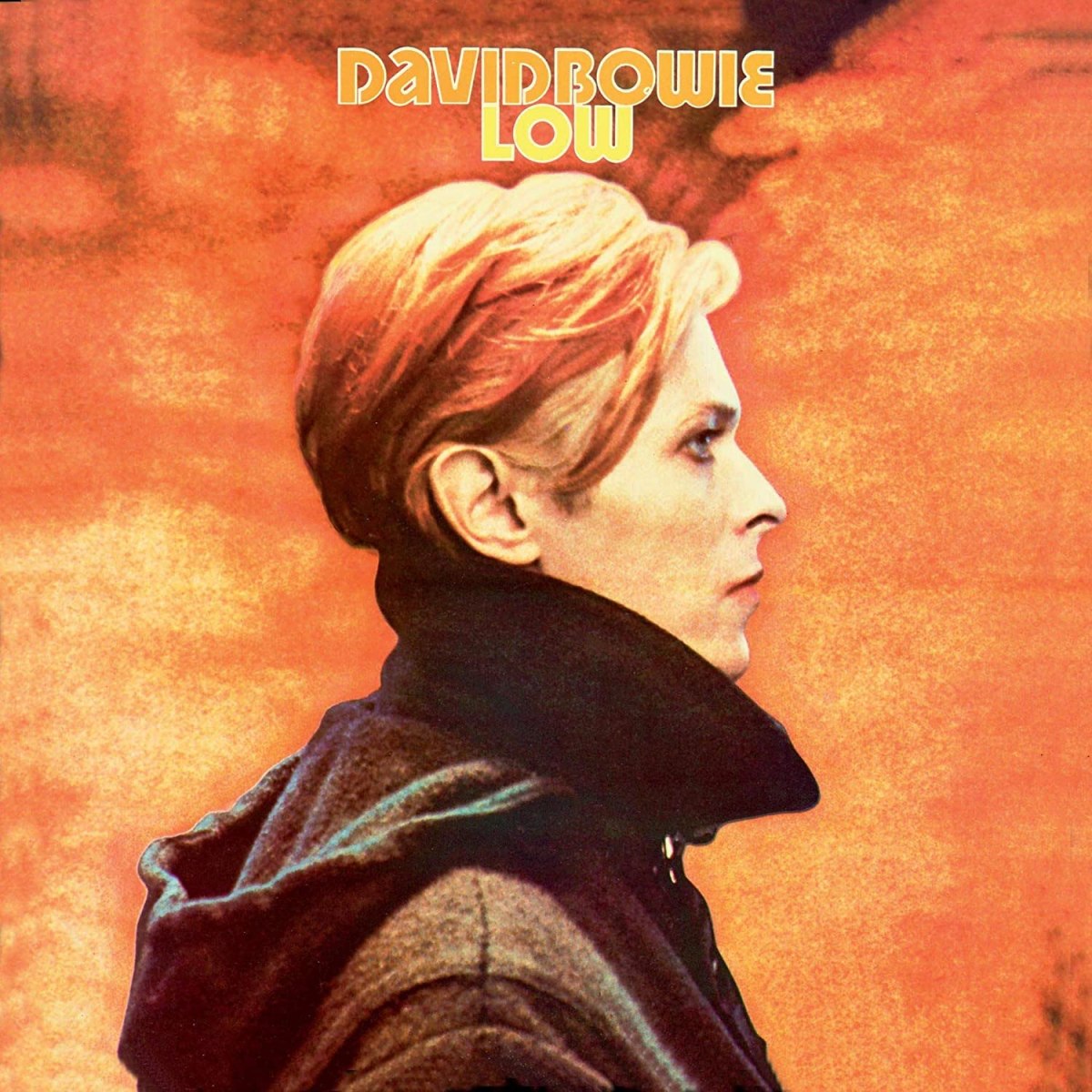
That includes their #1 pick, Low by David Bowie from 1977. Over the years I have bought several David Bowie albums but somehow I completely missed that one. Not only did Pitchfork think Low the best David Bowie album of the era, but the best album by anybody for the decade. So I played it this afternoon, and their #4 pick There’s A Riot Goin’ On by Sly and the Family Stone.

I liked both of those albums. I’ll probably play them again, but I bet I would have liked them more if I had bought them when they came out. Music is a product of the times, so my first listening of these old albums is more like time traveling than listening to new music, especially when I read about them now. It’s like studying art history.

Paste Magazine had a whole different take on “The 70 Best Albums of the 1970s.” Low by David Bowie came in at #34. Their #1 pick was Blood on the Tracks by Bob Dylan, which I did buy back then (and later on CD, and finally on SACD). Blood on the Tracks was and is a fantastic album for any decade.

I had owned 42 of the 70 albums on the Paste Magazine list. Probably, that’s due to buying popular albums. I’m sure hundreds of albums, if not thousands came out during the 1970s. I wonder how many I could play now that I’ve never heard and they would be as good or better than those I bought and loved back in the 1970s? In fact, could I have hated albums back then that I would love now?

If you look at the Best Ever Albums site for the 1970s, which appears to rank albums by sales and weeks on charts, you see a whole different view of the decade. The Dark Side of the Moon by Pink Floyd comes in at #1, and of course, it’s one of the best selling albums of all time. Like Blood on the Tracks I bought it on first on LP, then CD, and finally SACD. Now I just stream it when I think about hearing it.

Low came in at #16 on this list. Pitchfork and Paste Magazine lists have a lot of overlap, but each found favorites the other didn’t. I wonder if I took the time to listen to a few hundred albums from the 1970s, what would my Top 100 be?

My actual favorite albums of the 1970s was, and still is, What’s Going On by Marvin Gaye. It came in at #20 on the Best Ever Albums list.

Looking at all three lists shows many popular albums I missed discovering back then, and never stumbled upon in the following decades. Oh, there were many albums, such as those by Genesis or The Clash that I missed when they first came out but I eventually bought in later decades. Overall, I missed stacks and stacks of supposedly great albums.

We never absorb all of pop culture. Narrow tastes and limited opportunity keep us from experiencing the complete spectrum of art in its time. Streaming music lets us rectify those limitations if we want. I shunned Frank Sinatra and Billie Holiday as a teen for being too the 1960s, but now that I’m old, they are wonderfully timeless.

With Spotify I can now play almost everything from these three lists. Yet, I wonder if my current reaction would be anything like my 1970s response? Every week I’d spend hours in record stores flipping through bins of albums looking for just the right ones to buy. My financial situation limited me to one or two a week, although if I was without a girlfriend or dope I’d sometimes buy three or four. I frequently joined and quit record clubs to game their system and periodically acquire shipments of a dozen new albums. And I often bought or traded albums with friends. So for some peak months, I might hear 30-40 albums.

I used to have this fantasy about burglarizing a big record store and taking one of every albums. Try imagining the logistics of such a heist. With Spotify I don’t have to daydream about stealing albums, although it looks like the system of streaming music is now doing the thieving.

It’s a shame recording artists aren’t paid properly for us to legally listening to those millions of albums. I feel guilty I get so much pleasure for my $10 a month, and all the artists don’t get to become rich stars like they hope and dream. I’m not going to quit Spotify, but I do wish the system could be changed so music creators could their fair share.

Artists now get a tiny sliver of a penny for each time we play one of their songs. I can’t believe they don’t even get a whole goddamn cent. I believe the streaming services should charge us $2.99 a month for accessing their service, and then charge us a penny a song that would completely go to the artists, musicians, and publishers. I believe the split should be one-third to the composers, one-third to the performers, and one-third to the publishers. And the new deal should supercede any previous contracts. I hate that all those great session musicians of the past aren’t earning income from the music I play every day.

JWH
Dang! I Wore Myself Out

by James Wallace Harris, Tuesday, August 25, 2020

At 68, I can still grab a 52-pound speaker and hauled it all the way from the den to the back bedroom. I was impressed with myself. I even did it again with the left channel speaker. No big deal. Then I started noticing how my old body was beginning to whine. Was I wimping out? Hell, maybe I should have gotten the dolly. And I had the two rear channel Infinity Alpha-50 speakers to go. I plopped down in my old worn La-Z-Boy to rethink my plans.

Was I too old for my stereo system?

I was setting up my Denon system in the bedroom because yesterday I got totally frustrated with reconfiguring once again for my TV surround sound system. I was trying to get 4 HDMI devices inputted into to the AV receiver to automatically switch via the ARC HDMI to the TV and switch with just the TV’s remote. I had three HDMI inputs working for a year, but for some reason adding a fourth HDMI input annoyed the receiver. The video was switching fine, but the sound worked erratically. Modern electronics can be a pain in the posterior, and I knew it was time to get out the manual and study the labyrinth of settings carefully.

However, I’ve reached an age where I just don’t want to fuck with stuff anymore. (I know, I should have said tinker, but I’m getting crotchety too.) It’s like Dirty Harry said, “A dude must know just how much shit he can handle.”

As I approach 70 I feel like I’m riding a horse that’s too old to carry me. Sure I can I grab a big bulky 23.5kg speaker and lug it briskly across the den, up some stairs, through the kitchen, down the hall, to the back bedroom, while almost believing the lies I tell myself I’m still young enough to do it.

An emotional insight from deep inside me yelled, “Act your age — get a smaller stereo system you putz.” So I called my neighbor Paul who was looking for a stereo for his son and gave it to him. They came over and hauled it away in two car trips. (Hey, his son was young and strong, he can handle it.) But that’s 300 pounds of gear I don’t have to ever worry about again. Yet, two days ago I would have been horrified at giving my stereo system away — I love having a big sound system. I’m shocked and impressed I made such a quick decision. Usually, I’m insanely Hamlet for weeks.

Reality kicked hours later. This evening I couldn’t carry a 5-pound speaker to the bedroom. You should see me walking hunched over. I feel ninety-eight. I’m contemplating going to bed early with painkillers and heating pad. I wonder if I’ll ever stand up straight again?

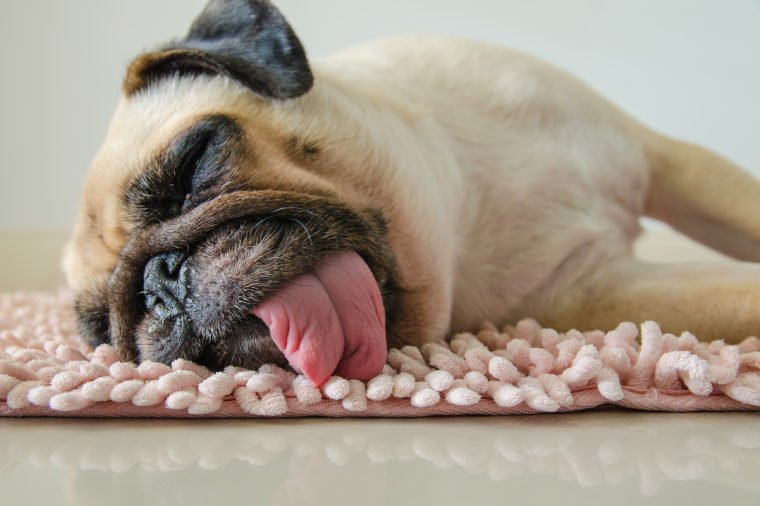
People often talk about downsizing in their retirement years, but I’m learning that means more than buying a smaller house. Today I realized my tiny Yamaha WXA-50 streaming amplifier and bookshelf speakers I use in my computer room is an age-appropriate size and weight for a 68-year guy who is a worn out pug dog. The big 5.1 sound system I gave away is going to be replaced by a single soundbar for my den TV. I don’t even want to mess with rear speakers or a subwoofer. I’ve been studying soundbars and the idea of hooking one up with a single HDMI cable thrills me almost as much as when I was a teen studying Playboy. As an extra bonus, the den will have 5 less speakers cluttering up the floor. No more goddamn speaker wire. And my TV stand will have a nice empty shelf.

Not only do I want smaller things, I want simpler things. Years ago I replaced my huge tower computer with a tiny Intel NUC. I’ve been thinking about going back to a big tower computer again, but my back just screamed, “Don’t do it you crazy old dog. Sit. Act your age!”

Marie Kondo tells us we should ask if our possessions spark joy. My back pain is now advising I ask my stuff if they’re too complicated or too heavy for my declining mind and body.

JWH

How Good a Reader Are You If You Compared Your Reading Skills to Playing a Piano?

James Wallace Harris, Wednesday, August 19, 2020

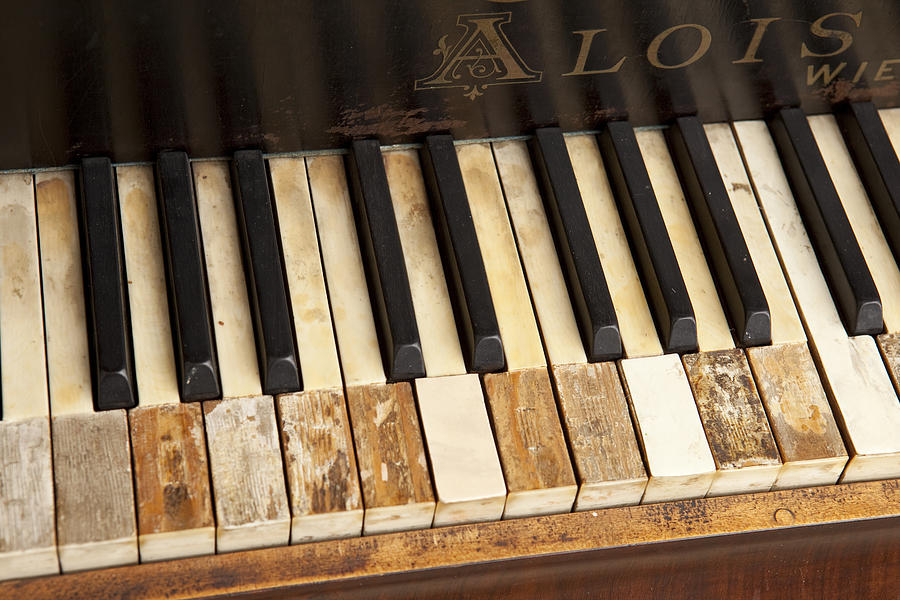
Most people assume if you can read you can read. But what if reading was a skill like playing the piano and most readers are no better at reading than an eleven-year old with a year of piano lessons. (I’m expecting you to hear a badly played tune in your head.)

What if you could read like Glenn Gould playing Bach? Can you even imagine what that could be like? It would be like having Broadway actors performing in your head. It would be like having the professors from The Great Courses whispering you the annotations. It would be like James Joyce reading Ulysses to himself.

Well, I don’t read anything like that. My inner reading voice is a tone deaf monotone, and my annotations come from a lifetime of half-ass autodidactism.

Growing up I read nearly a thousand books. Because I read so much, I assumed I was a great reader. Beginning in 2002 when I joined Audible.com I often selected audiobooks I had read and loved way back then — when every book I read was great, even those by E. E. “Doc” Smith. Hearing all my childhood favorite books read by skilled readers has shown me just how bad a reader I was when I was growing up and thought I was so great.

And it’s not just comparing my wimpy inner reading voice to professional narrators, or the fact that I was young and wasn’t mature enough to understand everything in what I was reading. I am including my college years in that youthful period, when my mind was at its peak performance, and being crammed with a variety of diverse knowledge.

Listening to audiobooks taught me that I read too fast growing up. That I paid attention to the action and dialog but skimmed over any long passages of dense narrative details. But I also missed the emotional cues, and I didn’t spend enough time picturing the scenes and settings. More than that, I didn’t dwell on the implications of what was being expressed fictionally.

Every so often a friend will say they love the sentences in the books they are reading. I don’t think I ever stopped to admire a sentence.

By the way, I don’t mean to imply that my reading skills have vastly improved over the years. They are a good deal better, but I am no concert pianist at reading. In fact, I have a hard time gauging my skills against others.

Growing up I assumed everyone saw the world in the same way, that our brains and senses were similar. I’ve since learned that our perceptions of reality vary so greatly that if two people standing next to each other watching the same event will interpret it in two distinctly different ways. Since discovering that I’ve paid attention to whenever people describe how they read, and I’ve learned that decoding words produces a wide range of cognitive results.

You can test this observation by asking your friends about what they experience when they read. I’ve been doing this for years and discovered some of my friends have amazing mental abilities that make me green with envy.

Have you ever loved a book and urged a best friend to read it and then been let down when they didn’t respond to it like you did? Have you ever read a classic novel or bestseller and wondered what all the fuss was about? Have you ever read a book about your favorite subject and found it boring?

Part of reading is decoding words in the way the author intended. Part of reading is being on the same wavelength as the writer. Learning to be a skill reader involves words, sentences, and paragraphs, but it’s also involves reassembling the vision the author constructed in their mind that they wanted you to see, and triggering the emotions and philosophical insights they felt.

What if readers could be ranked like chess players using their Elo ranking system? Would I be an 800 or 1200? I’m quite confident I’m nowhere near a master rating. I wish I could be a grand master of reading but I know that’s impossible. We all wish we could be rock stars at our chosen ambitions but we’re not. But just how much can we improve? Can advance reading skills be taught? Can advance reading skills be assessed? I wonder what I’m missing.

My SF anthology reading group on Facebook is reading two stories this week, “The Machine Stops” by E. M. Forster from 1909, and “The Fifth Head of Cerberus” by Gene Wolfe from 1972. I might have tried to read both when I was young because I had anthologies they were in, but I’m fairly sure I wouldn’t have liked either. I just don’t remember. The writing style of the Forster was too quaint, and Wolfe’s prose was much too dense.

Reading these two stories in 2020 is dazzling my reading mind, but I hunger to know just how much I’m comprehending, just how much of their totality I’m experiencing with my current reading skills.

I’m reading these stories with my eyes (Kindle) and my ears (Audible) concurrently. I’m doing everything I can to read them with all the possible reading skill I can muster, but I have no idea how skilled that effort is. Am I 50% efficient at getting what Forster and Wolfe intended? Or even 75%, or just 30%? It’s my third reading for Forster and my second reading of Wolfe in recent years. I’ve also read about both stories, and I’m constantly encountering insights into them I missed or didn’t draw the implications the reviewers did.

“The Fifth Head of Cerberus” is about an old man telling about his childhood, and the audiobook I have has an old man with a pompous or posh English voice reading it. You can listen here:

The setting feels like the French Quarter of a 19th-century New Orleans but it’s actually set on another planet in the far future. Wolfe writes in a baroque style about two boys growing up in a brothel during a decadent era, being educated by a robotic tutor, and slowly learning their bizarre origins. The story is dense, and I’m not sure if I read it ten times that I would find every treasure Wolfe buried away in “The Fifth Head of Cerberus.”

“The Machine Stops” is about an agoraphobic woman blogger who Zooms with all her friends in a country completely controlled by an AI machine. Well, not exactly since it was written in 1909. But when you read it, you’ll wonder if E. M. Forster ever hitched a ride on H. G. Wells’ time machine. Again, there is so much in this story that I can’t tell if I’m little Becky playing her first recital at church or Van Cliburn playing Rachmaninoff in Russia. My hope is I’m at least Becky as a sophomore majoring in music at college.

I just wished I had some kind of assessment tool to help me evaluate my abilities and progress. I suppose I could go back to college and take literature courses, but I’d prefer something more scientific, something more quantitative, something involving computers and brain scans.

Anyone who has read the works of Oliver Sacks knows how different humans minds can function. Reading isn’t just reading. Our ability to process words into mind movies varies so greatly that it’s impossible to comprehend. Every cognitive ability you can possibly envy in another person goes into the infinite ways in which we process books. Because we can’t see what other people experience when reading we assume it’s like our own reading experience. But it’s not.

In my last third of life I’m struggling to read with greater skill. With fiction, I’ve mostly shifted to reading short stories. Novels take up too much of my precious time, and they are also too indulgent. Short stories, novelettes, and novellas are compact, intense, and offer more variety of reading experiences. I’d like to think I’m an old dog that can still learn new tricks. I know I’ll never read like a pianist performing at Carnegie Hall, or even at a high school auditorium.

I intuit this from listening to the best audiobook narrators or from watching lectures on The Great Courses Plus. But I have acquired the awareness of my progress and that’s something. It’s a shame we haven’t emphasized the details of reading skills. Oh sure, schools constantly grade kids on reading ability, but we never get enough feedback as to what those abilities truly are.

All I can guess is what you experience in your head when reading is much different from what I experience. I just wonder if there is any way to compare experiences? I participate in a number of reading groups, but the best we seem capable of is expressing if we like or dislike what we read. We know how much a musician knows because they perform and their performances can be evaluated and compared.

I suppose the real GRE for evaluating reading is writing. By that measure, I also come up short. I struggle to write fiction like a drowning person flails in the ocean.

JWH

Browsing My Bookshelves When My Favorite Used Bookstore is Closed

by James Wallace Harris, Monday, August 17, 2020

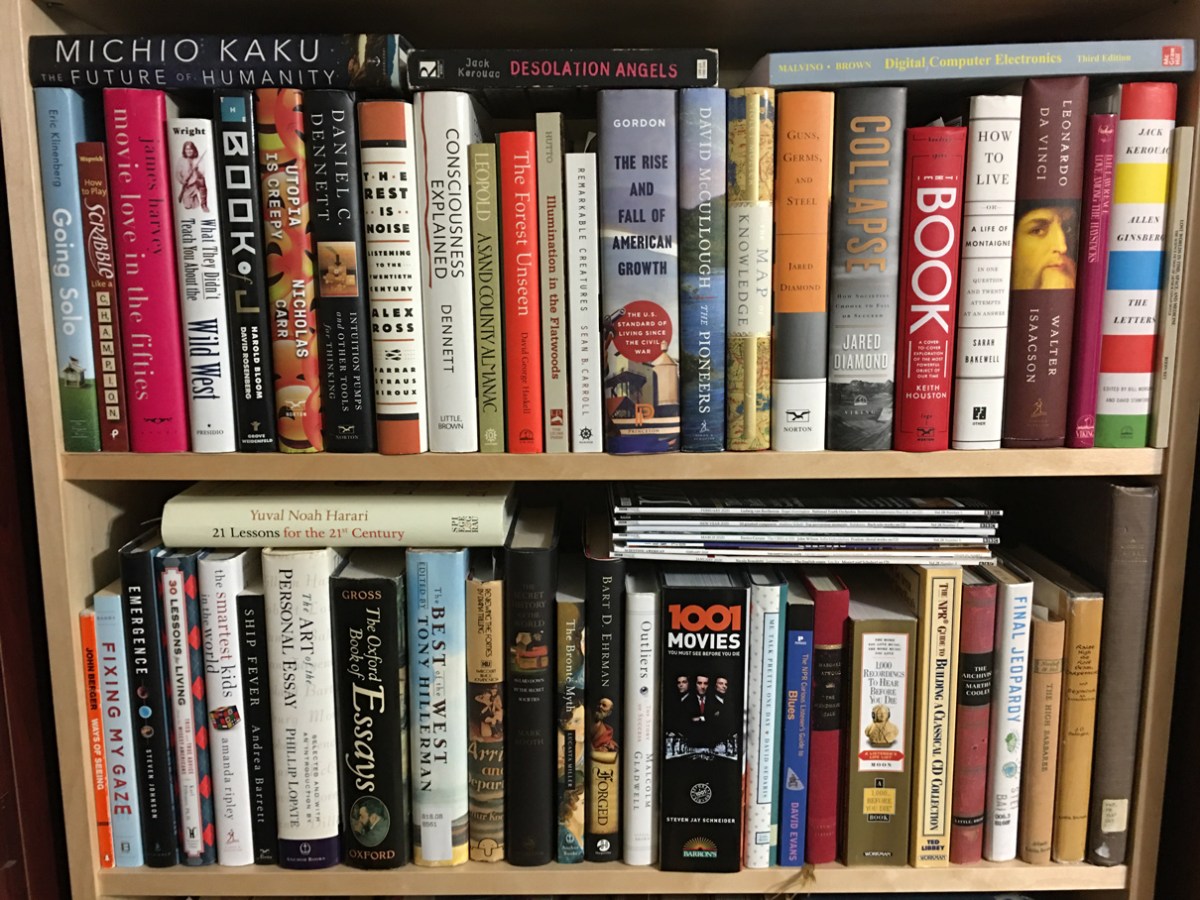
Since I can’t go book shopping, I’ve decided to browse my own bookshelves instead. I’m amazed by what interesting books I find there.

It’s been months since I’ve shopped at my favorite used bookstore, Second Editions. I use to visit it at least once a week. I certainly don’t need any more books, there are already thousands on my to be read pile. Over the years I’ve discovered that my reading habit is entirely separate from my book-buying habit. I love to read and I love to shop for books — I just don’t always read the books I buy.

The other day I browsed through my entire Audible.com library of 1426 audiobooks looking for all that contained short stories. Time and again I was amazed by what I owned that I hadn’t listened to yet (I can’t resist a good sale). Once again, I told myself I needed to stop buying new books and read or listen to what I already own. But I love going to Second Editions, the used bookstore run by our Friends of the Library.

I never know what I’ll find. Sometimes it’s an old book I’ve been hoping to find again, or it’s a book I never knew I wanted but had to buy, or it was a hardback copy of a book that just came out that I was thinking of paying full price — that’s how I got Leonardo da Vinci by Walter Isaacson for $5.

I’ve only got five six-shelf bookshelves to browse — but I’m overwhelmed by how many books I find that I want to read. Strangely, it’s 100%. Well, maybe not so strange. Because of my limited shelf space, I tend to donate books back to the Friends of the Library of those I’ve read or decided I’m not going to read. My self-imposed rule is I can’t own any more books than I have bookshelves. I’ve technically broken this rule because I’m currently allowing myself a legal loophole by shelving some books at the top of my clothes closet. Those three six-foot-wide shelves really do look like bookshelves. (But don’t tell my wife!)

Second Editions bookstore is closed for the duration of the pandemic. I know everyone is missing their favorite places to hang out, so I shouldn’t whine about missing mine. However, I do miss it. And browsing my own bookshelves looking through the books I often bought at Second Editions does help a little, but not much. It does help me empathize with young people who can’t resist gathering in public places during a pandemic.

I wonder if I pulled out a few books, and gave myself a twenty if the experience would feel more like visiting Second Editions? Maybe Susan could pretend to be the clerk at the cash register and we could chat a bit about books?

JWH

Do People Still Read Short Stories?

Yesterday I read, “43 of the Most Iconic Short Stories in the English Language” by Emily Temple over at Literary Hub. Her essay begins 

Last year, I put together this list of the most iconic poems in the English language; it’s high time to do the same for short stories. But before we go any further, you may be asking: What does “iconic” mean in this context? Can a short story really be iconic in the way of a poem, or a painting, or Elvis?

Well, who knows, but for our purposes, “iconic” means that the story has somehow wormed its way into the general cultural consciousness—a list of the best short stories in the English language would look quite different than the one below.

I was able to look up her 43 titles on the internet and found most of them available to read online. I assume that’s because those stories are taught in schools and colleges and teachers have put them online as pdf files so their students can read them for an assignment. I doubt that’s legal, but it’s convenient for me.

Are these stories iconic because a captive audience has been made to study them? Does forced cultural literary constitute a kind of fandom? I’m sure Emily Temple and I are the kind of book nerds that love these stories, but just how many other people do?

I went to Amazon looking for anthologies that might contain these stories. I assumed if they were iconic then they’d be readily available, but they weren’t. The only anthology I found that had more than a couple of these stories is an old one I already owned. It had 7 of the 43, which is pretty good. That volume, The Art of the Short Story edited by Dana Gioia and R. S. Gwynn is probably a textbook, but it seems to be out-of-print. I found a few other textbooks that had some of the 43 stories, but at most three. However, the same authors are anthologized over and over again, so there seems to be disagreement as to what their best stories might be.

This still leaves me thinking Emily Temple’s 43 iconic stories aren’t that iconic outside of hardcore bookworms. These stories definitely aren’t iconic like Classic Rock albums or the old TV shows that rerun on MeTV or TVLand which have tens of millions of fans across generations.

I added the 43 stories to a Google Sheet and put in links to where I found the stories online. I plan to read them all. I also plan to add other lists of “iconic” short stories to this spreadsheet, and read them too.

Last night I read “The Tell-Tale Heart” by Edgar Allan Poe. It was a bit of horror fluff that didn’t have much to say philosophically, nor did it reveal anything about life in 1843 America. I can’t believe we make children read it. There’s got to be better Poe to force onto younsters. 

On the other hand, rereading “The Ones Who Walk Away From Omeleas” by Ursula K. Le Guin is intensely philosophical and I imagine an excellent story to trick teens into thinking about deep concepts.

How many people still read short stories after they leave school? Probably damn few. That isn’t to say that Edgar Allan Poe or Eudora Welty don’t have their fans, but are their followers a large enough crowd to swing over the needle of a pop culture meter when mentioned on Jeopardy? Well, some Jeopardy contestants would be the kind of folks to read short stories.

More and more, I’m getting into short stories. I’m reading over three hunded of them a year. But it also feels like I’m withdrawing from reality. My friends want to talk about novels, or movies, or TV shows — and I can’t. And they aren’t interested in discussing short stories.

I imagine kids when assigned to read short stories today feel about the same way as we did when forced to do quardratic equations back in our school days. No, I don’t think the word iconic applies to Emily Temple’s list of old short stories. But what’s the right word?

I wonder if that word is in the Dictionary of Obscure Sorrows? I wish I knew Greek and Latin so I could make up a word for loving art forms going extinct. Or a word for cherishing fadding pop culture successes of the past. Anachronostalgia? 

It has been said that writers write to become immortal, but that immortality only lasts as long as people continue to read what they wrote. What’s a word for keeping old works of art alive? It’s kind of a good deed, don’t you think? Of course, not as good as helping a real person in need, but it’s still a kindly thing to do.

JWH