Consuming Inspiration

We eat food to fuel our bodies, but I read nonfiction essays and watch documentaries to feed my soul.  Every day I consume inspiration like a vampire consumes blood.  Inspiration keeps me alive.

A Powerful Punch in the Gut

The older I get the more aware I am of my inevitable fate of a long lingering death.  Few people like to dwell on this future.  Most hope they will go quickly, or quietly in their sleep, but it’s doubtful that modern medicine will allow that.  Last night I saw Life and Death in Assisted Living on PBS Frontline via my PBS Roku channel.  They reported that as much as 67% of assisted living residents have some kind of dementia, and although these facilities weren’t meant to be nursing homes, they’ve become essentially unregulated care for the dying.  The show attacks the big business practices of making fortunes off of end-of-lifers, but that’s not what inspired me about the show.  I watched its videos seeing the elders as explorers of territory I must one day travel myself.  To live with any kind of dignity while dying requires enough health to keep saying fuck you to fate.  Once you are condemned to a wheelchair to be cared for like an infant it’s very hard to find meaning in life.  Although I’m an atheist I’m praying like crazy for the acceptance of euthanasia by the time I get feeble.  At some point before I forget too much I’ll need to get a tattoo over my heart that says in big letters:  DNR.  But as long as we do live, we have to keep finding inspiration and ways to make ordinary daily living meaningful.


John Green, An Impressive Young Man Who Speaks to Millions

I’m very grateful to The New Yorker for publishing “The Teen Whisperer” about John Green, the author of The Fault in Our Stars, and for putting the full article on the web so I can link it to my friends.  I read The New Yorker via Next Issue on my tablets, and it’s always depressing to read an inspirational essay and not be able to share it with friends.  Next Issue is the Netflix of digital magazines offering 135 titles for $15 a month.  I wished Next Issue had a desktop web app, or Windows application like Spotify, that made sharing fantastic reads easier with fellow members.

But back to John Green.  Read the Margaret Talbot article linked above to see just how cool John Green is as young writer and internet entrepreneur.  Green’s web presence allowed The Fault in Our Stars to be a bestseller long before it was published and gave him the opportunity to autograph the entire first printing of 150,000 copies of his book before they went on sale, which cost Green ten weeks of time and a lot of physical therapy.  Green and his brother Hank also produce the Crash Course series on YouTube.  Between those educational courses and his Nerdfighter followers, Green has a fandom to make anything he writes an instant hit.

If you haven’t read The Fault in Our Stars then you’ve been staring at your iPhone way too much.  The book is magnitudes more powerful than it’s hype, so go get a copy if you haven’t.  By the way, be prepared to cry your guts out, and that even applies to macho moronic dickheads.  In Norway the book was titled Fuck Fate, so don’t think of it as just another YA teenager read.  I don’t know if Green has lasting literary talent, but he certain Babe Ruthed one out of the park with The Fault in Our Stars.


Worry Less About The Future

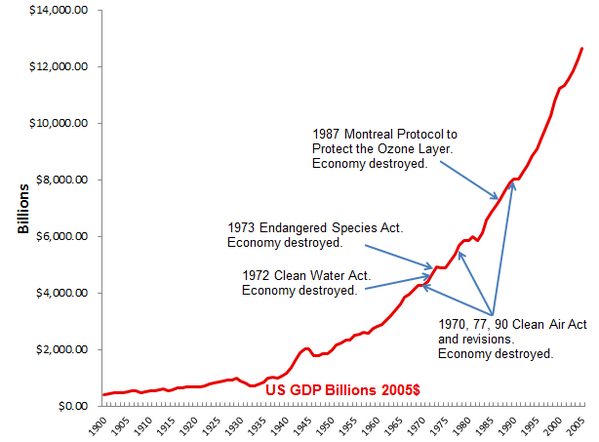
Right-wing conservative global warming deniers all cry in Chicken Little unison that doing the right thing about climate change will destroy our economy.  Well, Ramez Naam points out  in his essay “Reducing Carbon Emissions Will Be Cheaper Than Expected – It Always Is” that in the past after everyone ran around crying the economy would collapse, it didn’t. 
economy and environmental costs

We need to do something about CO2 pollution, and we need to do it fast.  Probably if we spent as much time and money on converting energy sources as trying to build the F-35 fighter we’d be mostly done by now.  We could fix the carbon pollution problem in a decade if we applied ourselves.  Much could be done with just conservation, and a tremendous lot could be accomplished by switching energy sources.  Anyone should be able to see that altering the environment is dangerous, and burning coal is stupid.  The goal should be something like converting carbon to coal and burying it, not burning it.  Coal was nature’s way of getting rid of CO2 in the first place.

Policy makers talk about making changes by 2050.  That’s bogus shirking the responsibility.  We should clean up our mess before we die, by 2025.  Besides converting to a new clean economy will stimulate the economy, not kill it.  Anyone who thinks otherwise lacks inspiration.


Makers and Robots

I find people who make things inspirational.  And the Maker movement is a nice antithesis to digital life.  Forbes covers “Maker Movement Fuels Apps, Robots, and Internet of Things.”  This is a movement that is growing so rapidly that I even hear non-Geeks are talking about it.  If I was a kid today I’d be totally into the FIRST Robotics Competition.

Building robots is becoming a mania.  Make Magazine even recommends “10 Ways to Make Your Robot More Humanlike.”  Building a robot teaches us about how bodies work.  Building an AI will teach us how the mind works.  If you aren’t paying attention, you might someday be shocked when humans are no longer the smartest beings on the planet.  Creating an AI mind should be possible but it’s going to be really hard.  O’Reilly.com says, ‘“It works like the brain.” So?’  Computers can already out-do us at many intelligent tasks now.

I expect someone to invent a cyber-cortex any day now that allows machines to learn and eventually become self-aware.  Maybe it will be a maker or one of those kids building robots.  Maybe they will be inspired by ODROID Magazine.


JWH – 6/4/14
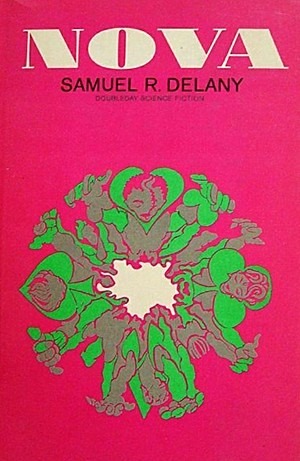
Nova by Samuel R. Delany–Reading Science Fiction in 1968 and 2014

Rereading a novel I loved reading almost a half-century ago is an interesting experience.  Nova by Samuel R. Delany was a novel that dazzled my teenage self in 1968, but has lost its sense of wonder for my older self in 2014.  I’d be awful curious to know how 17-year-olds today reading Nova feel about the book.  Is the magic being 17, or 1968?  Delany was only 25 when he completed Nova, so he was much closer to my age than than Robert A. Heinlein, my favorite science fiction writer at the time.   Heinlein was 44 years older than me, so Delany was an exciting young writer that spoke to my generation.  Delany was the same generation as The Beatles, the generation before the Baby Boomers, and the generation we grew up admiring, the one that made the 1960s.  Nova in 1968 was to science fiction what The Jefferson Airplane was to the Frank Sinatra and Judy Garland generation at the time.  It rocked.

Nova(1stEd)

It’s very hard to separate my memories of Nova from the times when I first read it, the 1960s.  Nova came out around the time of The White Album by The Beatles, Crown of Creation by the Jefferson Airplane, Wheels on Fire by Cream and Electric Ladyland by Jimi Hendrix.  So that music is what I listened to when I first read Nova.  This was also around the time I went to see Apollo 8 launch at Cape Kennedy in December of 1968.  I was in the 12th grade and I was very excited about the future, but worried about things like the Vietnam war, the generation gap, race relations and looming overpopulation.  Both Bobby Kennedy and Martin Luther King, Jr. had been assassinated in 1968.  To make matters worse, the Chicago Democratic Convention happened that summer and society seemed to be in chaos. 

To say the country was divided is a vast understatement.  Even the world of science fiction was split into the Old Guard and New Wave, with lots of flaming rhetoric spewing between the two.

Set in the year 3172, the galaxy is divided into the Earth controlled Draco Federation, and the younger rebellious Pleiades Federation.  Nova is about a mad power quest by Lorq Von Ray of the Pleiades to control the market in Illyrion, a heavy element of Delany’s invention that powers space travel and intergalactic commerce.  It’s extremely rare.  Von Ray learns that Illyrion is produced in abundance in the heart of a star and gathers a motley crew to fly through a nova as it happens.  Von Ray and his rich family is hated by Prince Red and his sister Ruby, the heirs of an opposing wealthy family who also want to control the supply of Illyrion.

This is 1940s Planet Stories space opera, but with 1960s counter-culture swagger. Nova is colorful, epic and full of super-science sense of wonder in a New Age Science Fiction novel.  When I read Nova in 1968 it was tremendously exciting.   I wanted it to be a map of the future.  Like most of Delany’s stories from the 1960s, it features a young wanderer, The Mouse, who plays an exotic musical instrument, a sensory syrynx, and an intellectual vagabond Katin Crawford who is writing a novel.  Back then Delany often had characters writing novels and poetry inside a novel so he could comment on the meta-fiction nature of things, as well as explain the psychohistory on such things as Tarot cards.

The story has a good deal of backstory before getting down to the real mission of flying into a nova to set up the rivalry between the Von Rays and Reds, and explain the backgrounds of Mouse and Katin.  The trouble is the story has more color than plot, and the older me wasn’t as dazzled by the adventure.  All the characters are cyborgs that fly the ship by jacking into sensors that sail the starship on fictional interstellar energy currents.  The 17 year-old-me hoped we’d eventually discover such magical properties of outer space that would allow people like me to travel between the stars like we fly between cities now.  My 62 year-old-self knows all this is make-believe Santa Clausing.  The story is still readable, but it’s gone from an exciting science fiction tale to a colorful fantasy fiction.  My younger self should have known better, but I was awful hopeful about the Final Frontier in 1968.  And I was bedazzled by hippie dreams.

Interstellar space is so much more real to me now, with it’s extremes of temperatures, varieties of lethal radiations, and most importantly, its brutally vast distances.  Science fiction sorely needs to rethink how we’re going to explore the galaxy.  Nova’s kind of scientific speculation is as practical as building giant canons to send people to the Moon.  I don’t blame Delany for how things have changed, because Nova makes an exemplary example of 1960s science fiction.  The science of Nova is quickly becoming as quaint as the science of The Skylark of Space, so such stories reflect how we used to dream of living in a very different universe.

JWH – 6/3/14

What’s The Visual Basic of 2014?

I’m an old retired programmer that would like to fart around writing an occasional computer program.  For almost twenty years before I retired I wrote ASP/VBScript/SQL Server code for IIS.  It’s not something I’d use just for fun.  Actually, my brain is old and I don’t want to stress out a bunch of brain cells studying something hard.  I just want to whip out small personal applications.  Years ago, Visual Basic was a very easy to use tool for creating programs to run on Windows.  Microsoft still supports Visual Basic, and even has a free edition with Visual Studio Express 2013 for Windows, but modern Visual Basic isn’t the fun and easy tool it once was.

visual-basic-2

Many sites on the internet promote Python as the current easy to learn, quick and dirty programming tool.  Python is free, works with Windows, OS X and Linux, and its well respected.  Python offers a lot of room to grow.  My worry about Python is it’s not a GUI programming language even though you can get all kinds of libraries to write graphical programs.

In the early days of microcomputers – does anyone call them that anymore – the interfaces were text based, and much easier to program by newbies and do-it-yourselfers.  Adding a graphical front end and a mouse made programming far more complicated for amateurs.  That’s why the old Visual Basic was such a wonder.  We now have a bunch of graphical user interfaces to deal with:  Windows, OS X, iOS, Android, Gnome, KDE, etc.  Python and Java have tools that let programmers write cross platform applications, but to be honest, I think they’re all ugly.  And the variety of possible tools is overwhelming, just look at the GUI programming offering for Python

If you want beautiful applications and apps you need to write native code that’s best for each GUI.  Goddamn Apple came out with Swift today.  It could become the Visual Basic of 2014 if you own a Mac, which I don’t.  How cruel of Apple to tempt me so.  Swift is meant to be easy, fun, beautiful, elegant, and fast.  Makes me want to stop writing this essay and go buy a Mac – but that’s not going to happen.

Back to my problem.  What’s a good programming language to write quick and easy programs for a GUI that can be shared across platforms?

Duh!  What about HTML.  HTML is for web apps, but why not use it for desktop applications too?  It provides a common programming system for writing a common graphical interface, especially when you think about HTML 5 and CSS 3.  And it’s even possible to work with a fun language like Python with a web framework.  This might be a great idea, but it’s not quite what I want.  Visual Basic was a single program that made it easy to write programs that ran under Windows, at first with a runtime, and later as a binary executable.  Many of the widgets were drag and drop requiring little or no code.

Code.org entices would be programmers with a simple drag and drop programming language to start, and then moves students to JavaScript.  They even have a language, LightBot for kids as young as 4, and they offer classes in Python, HTML and Objective C.  There’s all kinds of avenues to learn to program, but I’m not really asking about that. 

What I want is a programming language that’s equivalent to a hammer, saw, pair of pliers and couple of screwdrivers.  Just the basic toolkit to get handyman programming done.  I don’t want a whole workshop of tools to build fine furniture or rebuild a 1968 Porsche.   I just want to computerize some of my daily tasks, like managing my book collection or organizing my computer files.

I could take a step backwards and give up on having a GUI and mouse with my programs, in which case Python is probably the answer.  Whenever I play with R, the statistical programming language, it reminds me of the old days of mainframes, mini-computers and GW-BASIC.  Maybe a GUI requires power tools, and I should just give up on programming for a graphical interface.  COBOL and FORTAN used to do some amazing things with only green bar paper output.

However, is going old school really the answer?

I could do what I wanted with PHP and SQLite, but I’d have to run a web server on my machine.  If I ever wrote something worth sharing, it would require the user to also install a web server.  That is a burden, but is it a showstopper?   Combining a server side scripting language with a simple server, and a good WYSIWYG HTML editor might deliver something very equivalent to Visual Basic.  I could still use Python, but would PHP be better?  Wouldn’t HTML 5 and CSS 3 offer far more GUI power and standardization than any non-standard GUI library?  And adding a MVC library might make programming faster if their learning curve wasn’t too steep.

It’s a shame that someone doesn’t make an IDE with built-in web server so it would be the programming language and runtime in the same program.  Or does such a doohickey already exist?  I’ll need to research that.

JWH – 6/2/14

Read Like You’re Stranded On A Deserted Island

http://www.theguardian.com/commentisfree/2014/jun/01/only-read-2000-books

The Guardian ran an article that I have written several times on my blog. Multiple the average number of books you read in a year, times the number of years you think you’ve got left to live, and that gives you how many books you have left to read in your lifetime. I figure I have 500-1,000. I already own over a 1,000 unread books, and I buy new ones at the rate maybe 5 a week. So, I’m buying another 2,500-5,000 books before I die, even though I’ll only read 500-1,000 more books.

desert-island

This brings up all kinds of problems, beyond the obvious stupidity of buying books that I’ll never read. The math is simple! I read one book a week, and I buy five? Could I be any more stupid?

Each week I read a book—and that week might actually be my last week on Earth. Or it might be one of a 1,000 weeks I might have left. Either way, should I ever read a so-so book? Or even a merely very good book? I’m pretty sure there are way more than 1,000 excellent books out there that I haven’t read. So, each week, should I think to myself, “Hey, let’s pick a mediocre book and read it this week!”

Everyone loves to play that game – “What one book would you take to a deserted island?”  Isn’t that how we should be think every time we pick up a book to read?  Read every book as if it was our last?

I read one book a week.  I should always think to myself that this week could be my last.  Shouldn’t the book I pick to read be one that’s at least deserted island worthy?

It’s not like we’re short on great books.

I should do two things.  First, don’t buy books until I’m ready to read them.  Second, don’t read anything less than a great book.

JWH – 6/1/14