The Future 101: Science Fiction

I’ve been thinking about the future, but in a different way.  Can we understand the future in any meaningful way?  Now, I don’t mean the actual future that will unfold, but the concept of the future as a feature of reality.  Asking “What is the future?” is more like a Zen kōan than a scientific inquiry.  We think of time as the 4th dimension, as one long continuous stretching of three dimensional space.  And because of science fiction we picture traveling  to other points in time as if they were another spatial coordinate.  I think this is a false concept that corrupts our sense of the past and future.

Another problem we face, is we think of time personally.  Consciousness experiences the now, so it feels like the past is our life before now, and the future is what happens next.  But if the Earth is sterilized by a gamma ray burst in the next minute, reality would continue without us, and so would the future.  Although we experience time as self-aware beings, time exists outside ourselves.  We might exist in the future, and we might not.

Time exists without our consciousness being aware of it.  A tree has very limited awareness of its moment in existence, but its there in the now, and it has a past and future.  Our conscious mind observes the now, remembers the past, and anticipates the future.  Science fiction is the literature about anticipating the future.  We like to think that science fiction both prepares us for possible futures, and helps us build specific futures.  For example, science fiction warns us against the singularity, yet inspires us to build intelligent robots.

The trouble is we don’t take the future seriously.  If we did we would eat healthy and not alter the carbon dioxide ratio in the atmosphere.  We regularly interact with the future, like a squirrel burying nuts, or humans going to the grocery store to buy a week’s groceries, but reaching into the future has a limited range.  Instead of using science fiction to prepare us for the future, we’ve often turned it into Coca-Cola and cotton candy, empty calories to enjoy in the present moment of now.  Our immediate desires always overwhelm any knowledge we might have about the future.  Dealing with the future requires tremendous discipline that most of us lack, including myself.

One analogy that has occurred to me is to think of our brain as a CPU which is the now.  The past is everything written on the hard disk, and the future is the output we’re going to write to the hard disk.  Over time that contents of the hard disk changes.  The now is the main loop of our programming, just idling through the processing cycles.  If we want to interact with the future, we have to write something out to the hard drive, or delete an old file.

Most of us have great expectations about the future.  Some of us worry about the future.  Between dreamers and doomsayers, we find all hopes and fears.  Tomorrow is often pretty much like today, but ten years from now will be more surprising than how memories of ten years ago feels now.  Everything we want is in the future because everything we have is now.  When we throw the dice we want to win big and not come up snake eyes.  We’re all futurologists in that we hope to plan our future accomplishments and predict the obstacles.

SF-logo

We want to know the future even though we know we can’t.  We predict the future even though we know we’ll be wrong.  We just can’t help ourselves.  Some people believe in crystal balls, others in statistics, but some turn to science fiction.  Science fiction plays on the same dichotomy as most people feel about the future—some SF writers write about what they hope will happen, and others write about what they fear will happen.

For over a century before space travel writers wrote about humans traveling to the Moon, planets and to other star systems.  Did science fiction writers predict that humans would travel in space, or did they inspires people to build rockets and space capsules?  Would space travel ever been invented if we hadn’t dreamed about it first?  Some people believe the future already exists and its just a matter of waiting for it to play out.  Others believe the future does not exist, only the now exists, so whatever the future will be won’t be determined until we reach that now to be.

From my personal experience, and reading piles of science books, I don’t think the future exists yet.  Nor do I believe time travel is possible.  I’m a now person.  However, I do think we can interact with the future in limited ways.  On the other hand, I’m not sure our many fantasies about the future do anything at all.

Ever since I was a kid I’ve always said, “The future is everything I never imagined” even though I spent all my time trying to imagine the future.  Now that I’m living in the future, or a future now, it feels like any fantasy I had wiped out its possibility of coming true.  Sort of a weird corruption of the Uncertainty Principle.  I pictured myself going to Mars, so I never went to Mars.  I pictured humans going to Mars, so no one made it to Mars.  Sorry guys, to jinx things.   My mother had a variation on this theme.  She believed worrying about something bad will happen would keep it from happening.

Most of us will wake up tomorrow and find the future, and we’ll do that on average 30,000 times.  Each time a little surprise—until the day we don’t.  Now will cease to exist.  What divides us from the rest of the animals on this planet is we have hopes for the future.  We all want something from the future.  If we’re a child, we want Santa to bring us something exciting, if we’re a teen we want to fall in love and lose our virginity, if we’re in our twenties we want to graduate college and find a great job, and so on, until our only hope is to have a tomorrow, any tomorrow.  Some people want to be rock stars in the future, and others just want more to eat, and some just hope to keep existing.  To me happiness is having something to look forward to, even though it might not happen.

Science fiction books are fantasies about the future, some about things we want to happen, and some about things we hope won’t happen.

The common assumption is science fiction does not predict the future, but speculates on possible futures.  The truth is science fiction is a bunch of wild ideas that we find entertaining and has no relationship to the actual future even when it’s seriously speculative, extrapolating on current events, and is of little use for preparing us for the future.  Science fiction is fun escapism from the present for the most part, and occasionally insightful observations about the here and now.  Nineteen Eighty-Four by George Orwell is a brilliant use of science fiction, but does it help us with the future, or help us with how we live now?

Robert A. Heinlein took himself quite seriously as a writer of speculative fiction.  He thought three books expressed his ideas best:  Starship Troopers, Stranger in a Strange Land and The Moon is a Harsh Mistress.  I doubt he meant to be remembered for starting military SF, creating a hippie Bible, and not starting a popular catch phrase about free lunches.  I’ve read these books many times and I don’t think they say anything about the future at all, but a whole lot about Robert A. Heinlein.  He wanted them to be about freedom and responsibility, but I’m not sure even that comes through.   Stranger in a Strange Land was Heinlein’s idea of 1990 from 1960.  Many people think it’s about the 1960s.  After living through both times I don’t feel its about either, but it seems to say a whole lot about Heinlein’s pet ideas and peeves.

I’m starting to wonder if science fiction is about no time at all, like The Song of Ice and Fire series by George R. R. Martin.

I’m reading Capital in the 21st Century by Thomas Piketty.   I don’t think we can predict the future, but I also think the only way to talk about the future is through statistics based on knowing a whole lot data about the past.  I’ll write The Future 101:  Statistics in the future. (Is that a prediction or plan?)  But for now, I shall ask, “How many science fiction novels study the past to extrapolate the future” like Piketty?  I think the common quick answer will be:  Many.  However, I think that’s wrong.  If a science fiction writer writes a well thought out book about people living in the year 2114 and how global warming has changed the world, is that really doing the same thing that Piketty is doing with all his graphs and data sets?  It’s obvious that it’s what climate scientists are doing, but is it the same thing for novel writers?

I don’t think so.  Is there any past science fiction novel about our times that sounds anything close to what’s happening now?  Climate scientists have been graphing changes in average world temperature and CO2 concentrations for decades, and our current temperatures and concentrations fall nicely on their graphs.  Is this predicting the future?  Maybe that’s as close as we can come to predicting the future.  The thing about graphs is they do change, and sometimes surprisingly so, but there’s always a reason why the numbers do something different that changes the direction of the curve.  Being able to say what those things will be ahead of time is really predicting the future.  And we can’t do that.

We can predict rising CO2 concentrations, but we can’t predict what we will do about them

Scientists had hoped twenty years ago that humanity would have heard their warnings and changed their habits so their curves would have reversed direction.  They were hoping to change the future.  Science fiction writers writing about the future of humans colonizing the solar system and the galaxy were hoping they were influencing such a future to happen.  Has that happened?

Science fiction never wanted to predict the future, it never has.  Science fiction has always been about shaping the future.  And strangely, isn’t that what we do all the time.  When Apple rolled out the iPhone didn’t they shape the future?  Without Amazing Stories and Astounding, would we have the space programs we do have today?  Did “The Man Who Sold The Moon” shape the future to produce SpaceX?  I don’t know.  That’s why I writing this essay.

The future is relentless, it’s always coming.  Everything in the now makes the future.  A tree making a seed effects the future.  When we buy groceries how much is just putting food in a shopping cart and how much is reaching into the future to make Thursday’s night dinner?  If we knew that, we’d know how much science fiction influences the future.

JWH – 6/19/14

Falling in Love with the 19th Century

Most of us live in the present, although some of us think the grass will be greener in the future, but for a few, the past has an allure that draws us back to quainter times.  Or maybe the past is seductive because it represents an archeology of the mind, explaining how we came to be.  I grew up in the 1950s and 1960s always daydreaming about science fictional futures of the 21st century, but now that I live in the 21st century, I spend a surprising amount of time mentally retracing the steps in the 19th century of how I came to be in the 20th century.

The older I get, the more I tire of CGI science fiction fantasies and crave elegant Masterpiece Theater costume dramas about Victorian life.  I occasionally like mixing science fiction with history via steampunk stories, but for the most part I love reading actual history books about 19th century science, or reading fictional observations of the time via 19th century residents like Charles Dickens, George Elliot, Anthony Trollope, or Louisa May Alcott, or I like modern fiction that uses the 19th as a setting to understand modern times through contrast and comparison with the present.

Possession-A-S-Byatt

The allure of the 19th century is hard to explain, but lets start with Possession a 1990 novel by A. S. Byatt.  Byatt, like John Fowles before her, uses the trick of twin stories, with a couple in the present trying to decipher a couple in the past.  Byatt starts with two modern characters, Roland Michell and Dr. Maud Bailey coming together because Michell is researching poet Randolph Henry Ash, and Bailey is studying poet Christabel LaMotte, and they get on the academic trail that the two had an illicit affair previously unknown by all other scholars.  Ash and LaMotte are totally fictionalized, but Byatt creates them in such a way, quoting long poems, journals, diaries, letters that readers feel they are based on actual historical characters.  There’s even a label for such stories, historiographic metafiction.

Byatt is playing with us readers.  Because her story is entirely fiction she has 100% control over what we know and what her characters know.  At times, the readers knows more than Michell and Bailey because Byatt is the omnipotent narrator of her reality and writes third person narrative that lets us know what actually happen, while the poor academics all rush around to know the truth must piece it together with rare tidbits of surviving facts.  At other times, we follow behind the eyes of Michell, Bailey and Cropper, learning about Ash and LaMotte from the clues they unearth that generate endless speculation about the past.

There was a pitiful film adaptation of Possession in 2002 starring  Gwyneth Paltrow as Maud Bailey, Aaron Eckhart as Roland Michell, Jeremy Northam as Randolph Henry Ash, and Jennifer Ehle as Christabel LaMotte.  The movie is good for seeing the visual contrast between the 19th and 20th centuries, but not for much else.  All the power of the story is in Byatt’s writing, and the movie comes across as a slim summary of the story.  The trouble is, Byatt only barely hints at the richness of the 19th century in her 555 page novel.  How much you admire Possession really depends on how much you’ve read of and about the the 1850s and 1860s.  Byatt gives us a very rich taste, making her novel worthy of the Booker Prize it won, but it’s only a start if you’re going to fall down the rabbit hole of the 21st century speculation about the 19th century.

Other-Powers-Barbara-Goldsmith

A subplot of Possession is LaMotte’s interest in spiritualism.  Most 21st century folk will not understand what spiritualism is, at least not in 19th century terms.  Beginning with the Fox sisters in 1848 a wave of fascination swept the U.S. and Europe over the idea that living people could communicate with the dead.  Strangely still, 19th century Spiritualism is intertwined with 19th century feminism.  Byatt hints at this, but for a more detailed painting I recommend Other Powers by Barbara Goldsmith, subtitled “The Age of Suffrage, Spiritualism, and The Scandalous Victoria Woodhull.”  Byatt understood that the 19th century was an awakening for women and reflected this in Cristobel LaMotte.   LaMotte was a poet in her own right, independent, living with a woman lover, when she meets Randolph Henry Ash.  LaMotte risks everything to communicate with someone she considers her equal.  Ash and LaMotte’s poetry become their language of love.

Possession is about the many kinds of possession we fall into.  Ash and LaMotte are possessed by their love, but also by their art.  Michell and Baily are possessed by the need to know Ash and LaMotte.  We, the reader are possessed by the need to understand why we love fiction, and why the 19th century entices us.  One clue for the last thing is the recent science series Cosmos.  Many of the episodes were about 19th century science and scientists.  The 1800s was a tremendous age of discovery, especially by gentlemen scientists.  Charles Darwin exploded on the Victorians like an H-Bomb.  On The Origin of Species by Charles Darwin came out in 1859, the mysterious year of Possession.

Darwin made the Victorians doubt God. LaMotte was a believer, but Ash was not, or at least a serious doubter.  LaMotte was daring far more than Ash.  Byatt makes Ash more interesting because he’s an amateur scientist.  I think it’s the amateur scientist that is one of the great appeals of the 19th century to modern people.  It was an era where individuals could still figure out the mysteries of reality on their own.

The Invisible Woman by Claire Tomalin

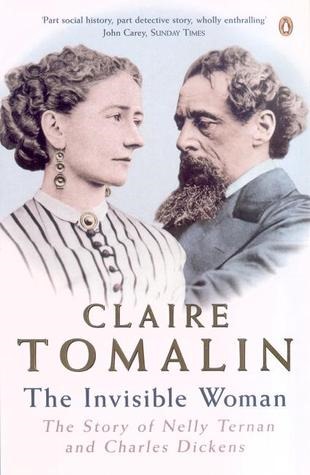
Right around this time too, Charles Dickens began his affair with Ellen Ternan, which was also during the time he wrote Great Expectations (1861).  This affair was chronicled by Claire Tomalin in her book The Invisible Woman (1990) and made into a movie last year.  It seems there’s a certain amount of demand for stories about Victorians having affairs.  The Victorian times are when women awoke to see themselves as equals to men, both in mind and body, but it was also a time when people in general began to question the religious view of reality.

edens-outcasts-bigLives_of_Margaret_Fuller

Which ties in two other books, both by John Matteson, Eden’s Outcasts and The Lives of Margaret Fuller, which are about Americans during this same time period, and two very important women, Louisa May Alcott and Margaret Fuller.  Once you start on the quest, it’s endless.  I could link book after book that I’ve read about the 19th century because they all amazingly fit together like puzzle pieces.  That’s the difference between reading science fiction about the future, and reading about the past.  Science fiction provides an infinity of possible futures that don’t fit together, whereas the appeal of reading history is every new book adds more pieces to the puzzle of what was, making my mental picture of the time more detailed and precise.

We can never know the future, but then, we can only know the past in fragmented clues—a hazy view.  We think we know the present, but do we?   But which is more enlightening?  Studying the past tells us how we got to the present.    Studying the present overwhelms us with details.  Studying the future only helps us know what we fear about the present and maybe hope to find in the future.  In terms of acquiring satisfying details that make us feel like we’re learning something real, studying the past seems to offer us the most philosophic bang for the buck.  Studying the past makes us feel wise.  Whether that wisdom is real or not, is hard to judge.

Reading Possession inspires me to read the English Romantic and Victorian poets, to study the Pre-Raphaelite painters and writers, to look at illustrations of Victorian decorative arts, read about the scientists, painters, architects, and study their drawings.  One of the cool thing about people from those times is they kept wonderful diaries and illustrated them with their own drawings.

Like I said, this is a rabbit hole.

JWH – 6/16/14 (Happy Birthday Susan)

When I Was A Martian

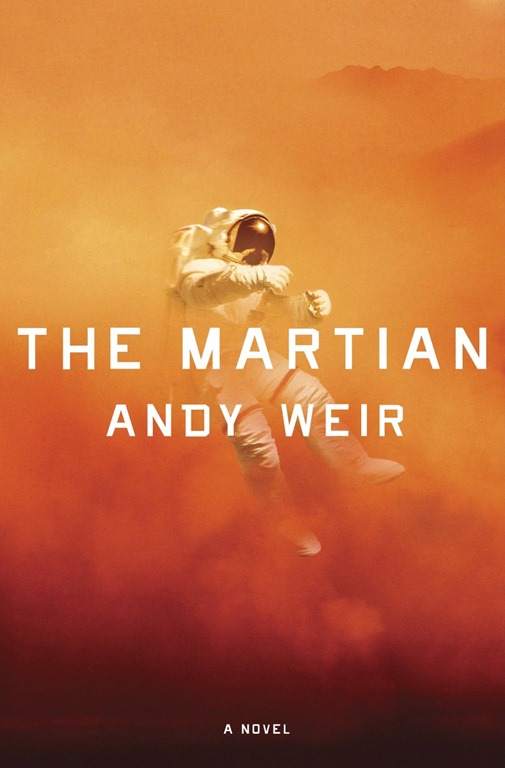
A popular new book out now is The Martian by Andy Weir, his first novel, about an astronaut Mark Watney stranded on Mars after his fellow crewmen think he’s dead and they have to leave quickly to save their own lives.  Watney is part of the Ares 3 mission, and his story is very much like last year’s film, Gravity, where a solo astronaut must use his scientific wits to stay alive for hundreds of days in an environment that relentlessly keeps trying to kill him.  Watney is like a modern day Robinson Crusoe.  The Martian is a bit of a publishing sensation because it started out as a free ebook at the author’s web site, later became a 99 cent Kindle ebook, then a New York Times bestseller published by Crown, and finally is being promised to be made into a major motion picture.  The story is as good as the book’s success.

I raced through The Martian because it was a riveting read despite the fact that it’s very technical.  If you’ve ever dreamed of being an astronaut on a mission to Mars, then this book is for you.

The Martian

Watney thinks of himself as a Martian, because he’s the only living being on Mars.  When I was a kid I used to pretend I was a Martian.  Back in the 1950s, flying saucers were a big thing with the nutty folk, and when I heard that some flying saucer conspiracy crazies thought the U.S. Air Force kept secrets about UFO’s at Wright-Patterson AFB, where I was born in 1951, I imagined that I was secretly a Martian raised by my human parents who didn’t know their real kid had been swapped by Air Force brass.  If was a fun fantasy to explain why I was so different from my mother, father and sister.

I don’t know when I first heard about Mars, but it seems like it’s always been something I knew about, like dinosaurs.  I’m sure Mars was programmed in my brain before I could even talk, by Saturday morning cartoons and Saturday afternoon science fiction movies.  By the late 1950s when I started reading books for fun, I immediately searched out books on Mars, both fiction and nonfiction.  Before the summer of 1965 I had read enough books on Mars to have endless fantasies about ancient dead cities and the exotic aliens that had built the canals.

Red-Planet

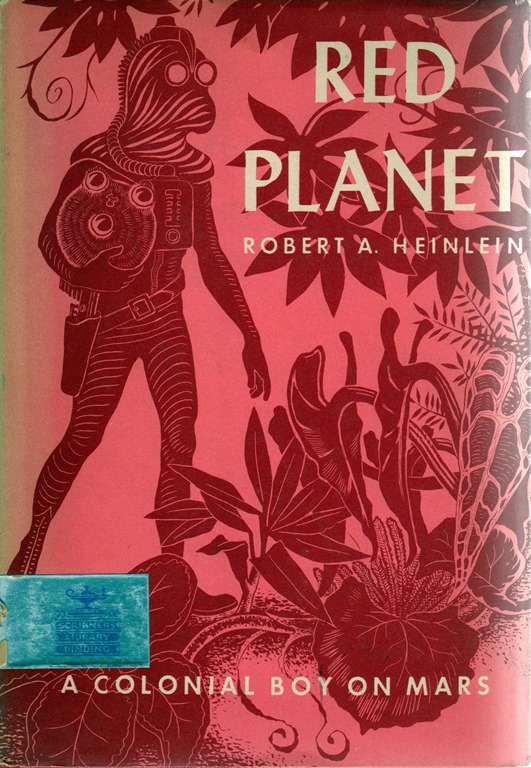
I had read many books about Mars, but the one that really hooked me on science fiction was Red Planet by Robert A. Heinlein, the first Heinlein book I ever read, back in 1964.  I was twelve when I read that book, the legendary Golden Age of Science Fiction.  By the time I turned 13 that same year, on November 25th, I had read every Heinlein book I could find.

mariner7-04_07b

It was a crushing blow by mid-July 1965 when the Mariner 4 spacecraft flew by Mars and took a handful of grainy black and white photos that invalidated all my science fictional dreams.  Mars was as dead as the Moon, and the beautiful canals were replaced by goddamn craters.  Heinlein’s speculative fiction about Mars was now just fantasy novels like the Oz books.  No more old ones, no more Willis, and no more Barsoom.

stranger-in-a-strange-land

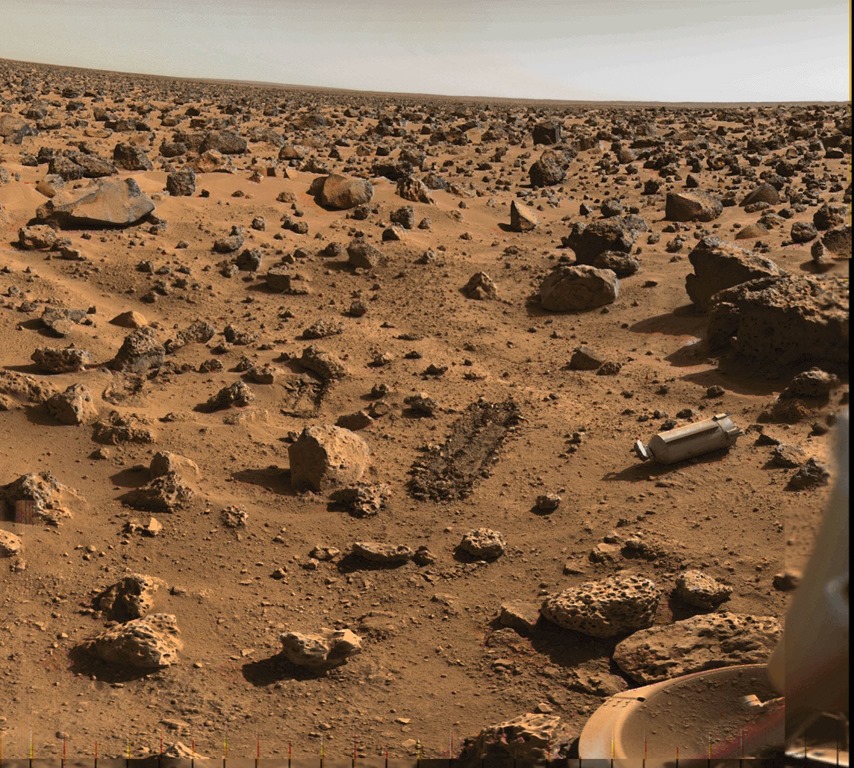
By high school, and the Moon landing in July of 1969, I knew Mars was cold and inhospitable, but for some strange reason I still wanted to go there.  I still wanted to be a Martian.  I was so excited by Viking 1 and 2 landing on Mars in 1976, that I continued to dream that I might get to Mars someway, even though I was much too old to believe such bullshit.  Over the years NASA landed many spacecraft on Mars, each filling out the real details of the planet that so mesmerized me as a child.   Mars is very well explored.  It’s not a very nice place for humans.  It’s very cold, with plenty of radiation, and no real air to breathe.

Caseformars

After the Apollo program in the 1970s I just assumed NASA would land men and women on Mars in my lifetime.  Boy was I wrong.  In 1996 Robert Zubrin came out with The Case for Mars that made a whole lot of sense about how to get to Mars.  His ideas are the basis of the Ares missions in The Martian.  I thought for sure such a brilliant, logical plan would lead to real missions.  But nothing has ever come of Zubrin’s dreams either.  The Mars Society is ever hopeful, but I don’t believe manned missions to Mars will happen before I die.

I no longer want to be a Martian.  That’s my main criticism of Andy Weir’s book—even though it’s a very realistic book, it never describes how harsh the Martian environment is, and how unpleasant it would be to try to live there.  Weir doesn’t convey the brutal cold or the relentless radiation, or the insidious regolith.  Only a mad geologist could love Mars.  The real Mars has no romance.  It’s definitely not an exotic destination of fictional adventure.  It’s a dead world, a world of rocks and more rocks.

I even wonder why astronauts would want to go there, or why thousands would sign up to be one-way colonists.

That’s the trouble with the romance of space travel, and the dreams of science fiction.  Every place were we could land that’s not Earth is just rocks.  Rocks and radiation, and freeze-in-an instant cold, or melt-the-flesh hot.  I guess I’ve just gotten old.  Old guys don’t like cold.

mars_surface_vik2_big

I used to be a Martian.  I used to be a Martian when we knew nothing about Mars.  The older I get the more I realized that Earth is the only place that humans can live.  And dang if we aren’t hell bent on turning Earth into Venus.

JWH – 6/10/14

New v. Old, and Old v. Young

We live in a society enamored with both the new and the young, so being old is hard, especially while we watch old things fading.  As you grow old you treasure the past and old things more and more, and your ability to keep up with new things and understand the young gets harder and harder.  One of the hardest thing about being old is trying to stay young, both in body and mind.  Menopause and erectile dysfunction are cruel reminders that staying young at heart can even feel foolish.  Sagging flesh, hair loss, wrinkles, age spots, varicose veins, gnarled fingers tells others we’re old even though on the inside we still feel nineteen.  But should we still try to act nineteen?

Getting old is both fascinating and cruel.  For most of our time on Earth we feel our life is in front of us, but then that changes, and slowly we realize that we have little to look forward to and much to look back on.  The tendency is to try to stay young in mind, and patch-up our our tired old bodies so we can keep going.  Staying young at heart requires the existential endurance of Sisyphus.  The trouble is acting young makes us look old and silly.  Sure, a few like Mick Jagger can pull off wearing hot fashions and acting twenty, but most of us would look like pug dog in a funny outfit.

pug-in-pink-coat

Today’s technology allows old pop culture and new pop culture to co-exist simultaneously.  When I was young that wasn’t true.  My parents had their old pop culture they mostly remembered, and we had our new music, movies, television shows and books that dominated the pop culture landscape.  Back then, we even had a name for it – the Generation Gap.  Today, old people can love new stuff, and young people can love old stuff.

Do I remain young if I’m watching the second season of Orange is the New Black and running Ubuntu 14.04 on a machine I built myself?   Would I be younger still if I watched stolen copies of HBO shows on a Mac Air?  I’m rather clueless about the latest trends in hipness.  But I have noticed something about my peers.  Some only listen to 1960s music and watch reruns of 1970s television shows, and they marvel that I listen to Katy Perry and Mumford and Sons.  I do try to go back to my old favorite shows of youth, like The Many Loves of Dobbie Gillis and Star Trek, but I can’t focus on them.  I don’t know if that’s because I’m too old, or the shows are too old.

Don’t get me wrong I do love some old stuff.  I’m listening to 1967 albums this morning as I write, and I’m reading Possession about 19th century fictional poets because I love the 19th century.  But I also read modern books like The Goldfinch and The Martian.  Is my ability to enjoy contemporary pop culture keeping me young, or was I born with the genes that make me like contemporary pop culture?

There are many popular trends I can’t comprehend.  I can’t get into video games.  I want to.  They look cool.  But I buy them and just don’t know what to do.  I’m also embarrassed by comic books and movies based on comic books – they seem too much for children.  I’m going to catch a lot of flack for this, but I can understand Ruth Graham’s POV in her essay “Against YA” even though I read and loved The Fault in Our Stars.  I’m one of those old people that read YA fiction – occasionally.   I also read Pulitzer and Booker prize winning novels too.  I’m not quite embarrassed to read YA, but I am for comics.  Is that my 1950s upbringing showing?  I wasn’t too old to enjoy music videos in the early 1980s on MTV, but I am way to old to watch MTV today without cringing.

At 62 I find it hard to relate to anyone under 40.  It’s strange, but I enjoy the company of people born closest to 1951, the year I was born.  Rarely, I’ll meet a young person that actively studies baby boomer pop culture, or parts of it, and I find that rather strange.  We’ll have a common interest, and I’m more than happy to talk about the old days with them, but I can’t fathom why they like my old stuff.  Was I any different in my twenties talking to old guys about Big Band music of the 1930s?

I think old and young people can share old stuff and new stuff, but I’m not sure we’re seeing it in the same way.  And if old people enjoy new stuff, does that make them youthful?  And if young people like old stuff, does that make them mature?  I don’t know, but it’s interesting to think about.

JWH – 6/9/14

Are Humans Smart Enough?

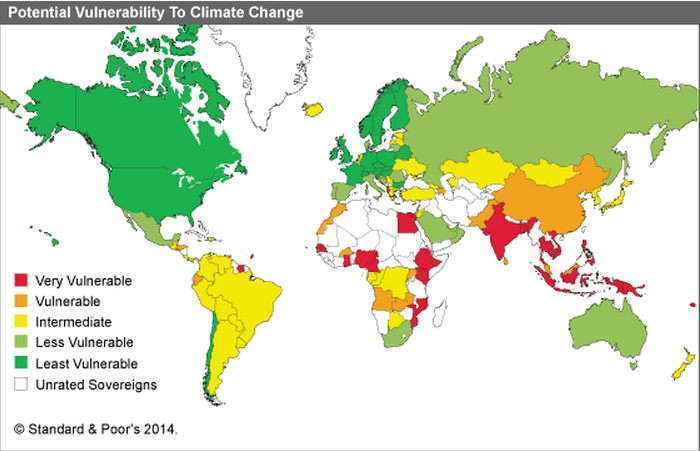
We humans are quite proud that we’re the smartest species on the planet, but are we smart enough to survive?  Evolution has been characterized as survival of the fittest, but what happens if one species succeeds so well that it kills off all other species and self-destructs?  That’s not very smart, that’s just being cancerous.  The trouble is we don’t think as a species, but as a collection of individuals, and our self-interests are now in conflict with our species best interests.  The Republican party, and many Americans have chosen to just ignore global warming in favor of self-interests.  Is that a realism that we must just accept?  This morning at Vox.com they presented “7 reasons America will fail  on climate change.”

Ezra Klein is totally pessimistic that Americans will change, and he makes quite a good case with his seven reasons why we will fail to do anything significant about climate change.  The trouble is as individuals we don’t change until we’re force to, and it looks like we won’t be force to until after we’ve reached a point of no return.

climate_change_inequality_map

One point that Klein didn’t make is  people who want to be politicians do it for reasons of self-interest and not altruism for the species.  Even if young people start out idealistic about saving the world, the political system corrupts them by forcing them into a game of political self-preservation which corrupts them into selling out.  But we don’t see many save-the-world young people going into politics anyway.  Instead, the newest politicians with the most passion are Tea Party types who want to do just the opposite.

The only counter trend to this pessimistic black hole is technology.  Cars were invented just as cities were about to drown in horseshit.  If clean energy alternatives become way cheaper than carbon producing non-renewable resources then things might change.  But what if there are other technological changes that might help?  What if technology changes politics?  Hasn’t the Internet already changed the political climate?

This will sound silly now, but what if we replaced our political representatives with AI machines?  This will sound facetious, but obviously we’re not smart enough to solve our own problems, so what if it was obvious to all that someone smarter was, a brilliant machine?  Would our individual self-interests vote for it?  Right now politics is more of a personality contest than electing the best person for the job.  What if a robot was an option, one that knew a thousand times more about the issues of your district than any human?

We will always be surprised by unexpected game changers.  Klein might be right, and we’re already defeated, but we never know when a black swan might show up.

JWH – 6/7/14