Avoiding Mirages in Reality Created By Words

by James Wallace Harris, 10/12/25

Humanity is plagued by delusions generated by words. We struggle to distinguish between words that point to aspects of reality and words that point to fictional mirages. In other words, we can’t differentiate between what is real and shit we make up.

I’m partial to an unverified quote attributed to James Michener, “The trick to life is to make it to 65 without being either a drunk or insane.” Sanity is notoriously hard to define. Many of us can stay sober until 65, but do any of us stay sane till then? Don’t we all end up seeing things that aren’t there? Don’t we all embrace cherished delusions to cope with life?

Of course, you will disagree with me. We all know what we believe is real.

Language allows us to be self-aware and manipulate reality, but don’t many of our words point to theoretical concepts that don’t actually exist in reality?

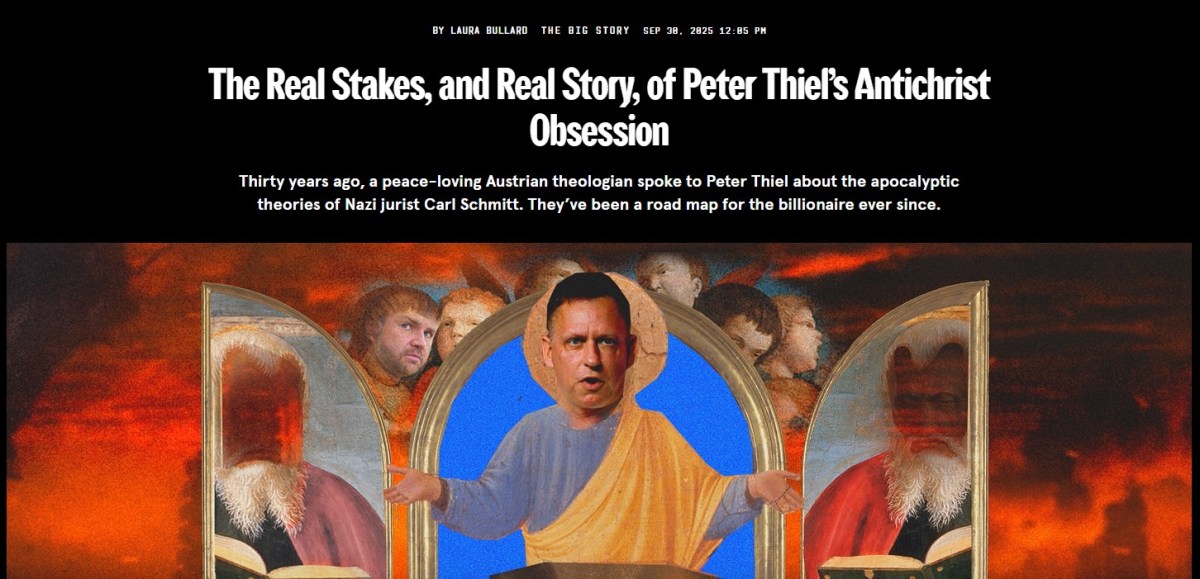
I recently read “The Real Stakes, and Real Story, of Peter Thiel’s Antichrist Obsession” in Wired Magazine. [Nearly everything I read is behind a paywall. I use Apple News+ to access hundreds of magazines and newspapers that exist behind a paywall. Wired shows the entire article for a few seconds. If you immediately right-click and select Print, a copy of this article can be read in your printer preview window. If you don’t catch it the first time, refresh the page. Or read other articles about this.]

Recently, Peter Thiel gave a four-part lecture on the Antichrist and the Apocalypse. In her Wired article, Laura Bullard attempts to decipher what Thiel is preaching.

By Thiel’s telling, the modern world is scared, way too scared, of its own technology. Our “listless” and “zombie” age, he said, is marked by a growing hostility to innovation, plummeting fertility rates, too much yoga, and a culture mired in the “endless Groundhog Day of the worldwide web.” But in its neurotic desperation to avoid technological Armageddon—the real threats of nuclear war, environmental catastrophe, runaway Al—modern civilization has become susceptible to something even more dangerous: the Antichrist.


According to some Christian traditions, the Antichrist is a figure that will unify humanity under one rule before delivering us to the apocalypse. For Thiel, its evil is pretty much synonymous with any attempt to unite the world. “How might such an Antichrist rise to power?” Thiel asked. “By playing on our fears of technology and seducing us into decadence with the Antichrist’s slogan: peace and safety.” In other words: It would yoke together a terrified species by promising to rescue it from the apocalypse.


By way of illustration, Thiel suggested that the Antichrist might appear in the form of someone like the philosopher Nick Bostrom—an Al doomer who wrote a paper in 2019 proposing to erect an emergency system of global governance, predictive policing, and restrictions on technology. But it wasn’t just Bostrom. Thiel saw potential Antichrists in a whole Zeitgeist of people and institutions “focused single- mindedly on saving us from progress, at any cost.”

So humanity is doubly screwed: It has to avoid both technological calamity and the reign of the Antichrist. But the latter was far more terrifying for the billionaire at the podium. For reasons grounded in Girardian theory, Thiel believed that such a regime could only—after decades of sickly, pent-up energy—set off an all-out explosion of vicious, civilization-ending violence. And he wasn’t sure whether any katechons could hold it off.

Thiel draws theology from the Bible, philosophy from studying with René Girard, and apparently combines them with ideas from Carl Schmitt, a political theorist from Nazi Germany, to create a rather bizarre warning about our future.

Because Thiel is a billionaire, he’s able to spread his beliefs widely. And because our society is overpopulated with people searching for meaning, we have a problem.

I’ve been collecting news stories and sorting them into two categories. The first deals with delusions that affect individuals. The second collects reports showing how we’re failing as a species. I could have filed this Wired article under both.

Whether as individuals or as a species, we act on false assumptions about reality. We often assume things to exist that don’t. Such as the Antichrist, or for that matter, The Christ. There may or may not have been a historical person we call Jesus. That may or may not have been his name. The concept of Christ was created over several generations of his followers. It has no real existence in reality. And neither does the Biblical Apocalypse or Antichrist. Those concepts have been redefined repeatedly over twenty centuries.

Among the thousands of Christian denominations that have existed over the past two millennia, there is no consensus on what Jesus preached or what is meant by the term Christ. In other words, there is no common denominator between Christians. This is because their beliefs are imaginary concepts that each individual redefines for their own use in words.

Religious beliefs are fine as long as they remain private to an individual, but when they are used to shape reality, they become dangerous. I often read about people who want to use their beliefs to make others conform to their illusions. That disturbs me.

But I’m only now realizing why. It represents a failure of language. Language is useful as long as words point to aspects of reality. The closer words stay to nouns and verbs that have a one-to-one relationship with things or actions within reality, the safer we are. It’s the words we fight over their definitions. That’s when things get dangerous.

Peter Thiel’s bizarre philosophy becomes dangerous when he can get others to accept his definitions. As I read news stories, I see this validated time and again. How many Russians and Ukrainians would be alive today who died because of Putin’s mirage of words? Look at any war, political conflict, or personal argument, and you can often trace it back to the ideas of one person.

Even my words here will incite some people.

As my last years fade away, I struggle to comprehend the years living in this reality. I’m starting to see that most of the confusion comes from interpreting words. The more I approach my experiences with the Zen-like acceptance of what is, the calmer things get. Eastern religions took a different approach to reality. In the West, we work to shape reality to our desires. Eastern philosophers teach that we should accept reality as it is. There are also dangers to that approach.

The reality is that humans create climate change. Many people can’t accept that reality. They use language that creates a mirage that many want to believe. That is one form of action. It’s a way of manipulating the perception of reality. That will actually work for those people, for a short while.

The weakness of our species is that we manipulate the perception of reality instead of actually making real changes in reality.

That’s how I now judge the news. A plane crash is a real event, not a mirage. But how often are men seeking power describing something real?

JWH

Paradise Lost – What if Our World is Heaven?

by James Wallace Harris, 6/15/25

If I ignore the depressing news on my screens, I can step out of my front door and view a beautiful world. Looking at the photo above, do you see heaven or hell? We seldom consider Earth a paradise, but we all experience moments of beauty and serenity, as well as moments of pain and suffering. We spend our lives avoiding the one and seeking the other.

For most of my life, I felt like I was climbing a hill towards my dreams, but now, in my seventies, it feels like I’m sliding down that hill. I wonder if I’ve been chasing fantasies while ignoring reality. There is a book of conversations with Philip K. Dick called What If Our World Is Their Heaven? I’ve often wondered if we were living in heaven and didn’t know it, or worse, what if we were living in heaven and were turning it into hell.

Over the last several years, theories have been proposed that our universe is an artificial reality. I’ve always objected to that idea, but it asks a fascinating philosophical question: If we’re living in a synthetic reality, did we choose to be in it? Why would we want to experience so much pain and suffering?

I’ve always believed our existence is a Darwinian reality where everything happens due to randomness. If I believed in God, I would have to ask: Why do you make us suffer?

Hinduism and the concept of reincarnation also suggest something interesting. That belief system claims we are souls coming to this reality to evolve, and suffering is a teaching tool.

Whether we are here by accident or choice, it still leaves the question: Why do we suffer? If our pains are due to the luck of the draw, how do we make the best of a bad situation? If we’re in some kind of cosmic classroom, what are we supposed to learn? And if we’re a participant in a monstrous computer game, how do we win?

Is it delusion to think our place in the universe is anything other than an accident?

Because an algorithm observed me read one story on coping with life in my seventies, they have sent me many more. I’ve seen list after list of the personality traits of those who survive well and those who don’t. I can’t help but wonder if there is a correlation between belief and how we survive.

Do people who believe life has no purpose succumb quicker than those who think we do? And even if we accept that we’re living a Darwinian existence, aren’t there two approaches to that, too? Isn’t existentialism a positive choice over naturalism or fatalism?

Even people of rock-solid faith die horrible deaths. Few people escape this world without suffering. If suffering is so integral to existence, what is its purpose?

JWH

How Christianity Was Created

by James Wallace Harris, 2/26/20

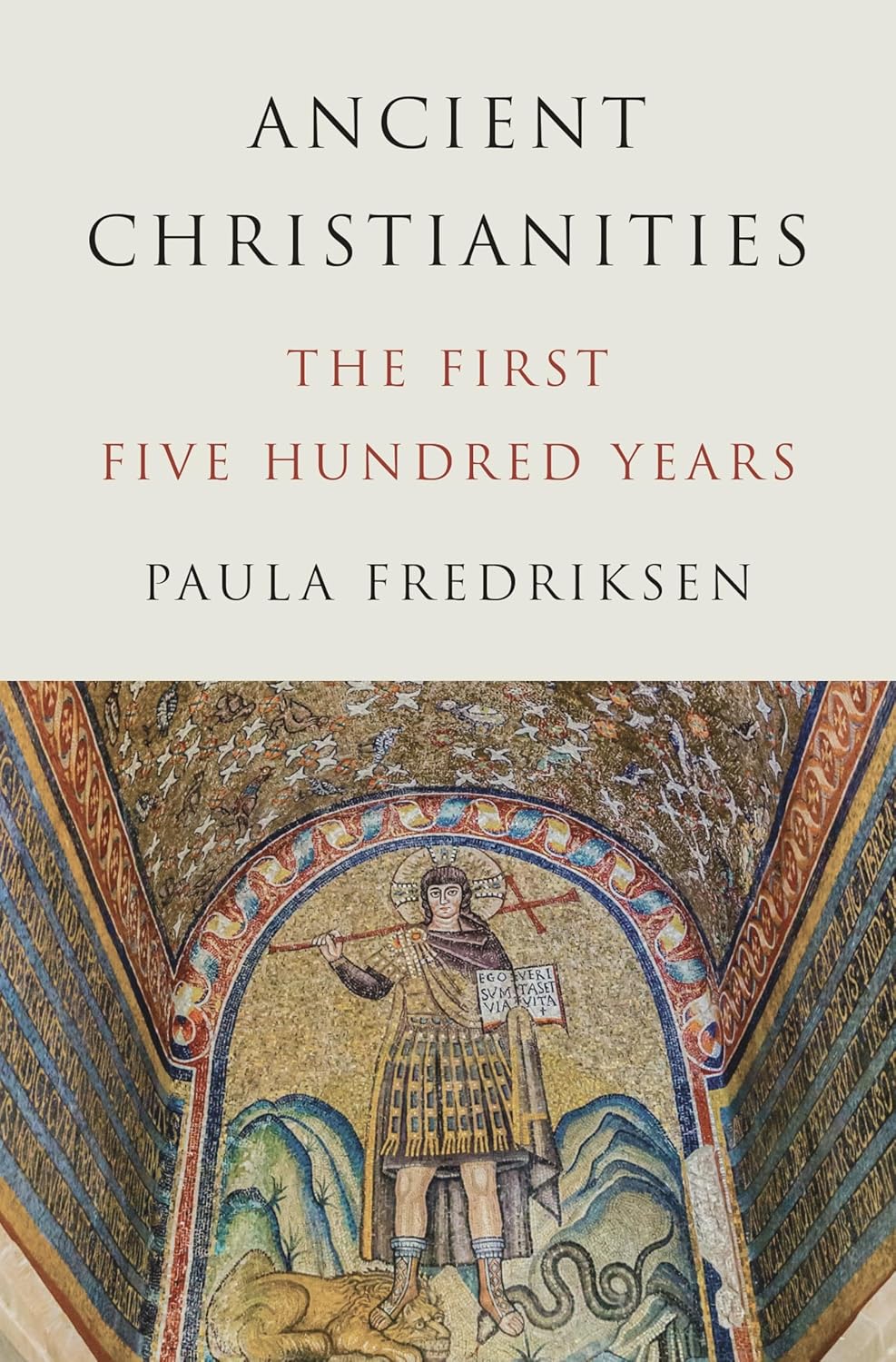
I am a lifelong atheist, but I’m not the kind of atheist who goes around trying to convince folks that God does not exist. Religion serves an important function for many people, giving them belief, community, morality, and solace. For some strange reason, I’m an atheist that enjoys reading about the history of Christianity, The Bible, and Jesus. Countless books have been written on these subjects, but most have been theological. I have no interest in those books. What I like to read are books by historians trying to figure out what actually happened two thousand years ago. It’s a magnificent cold case, a tremendous scholarly puzzle.

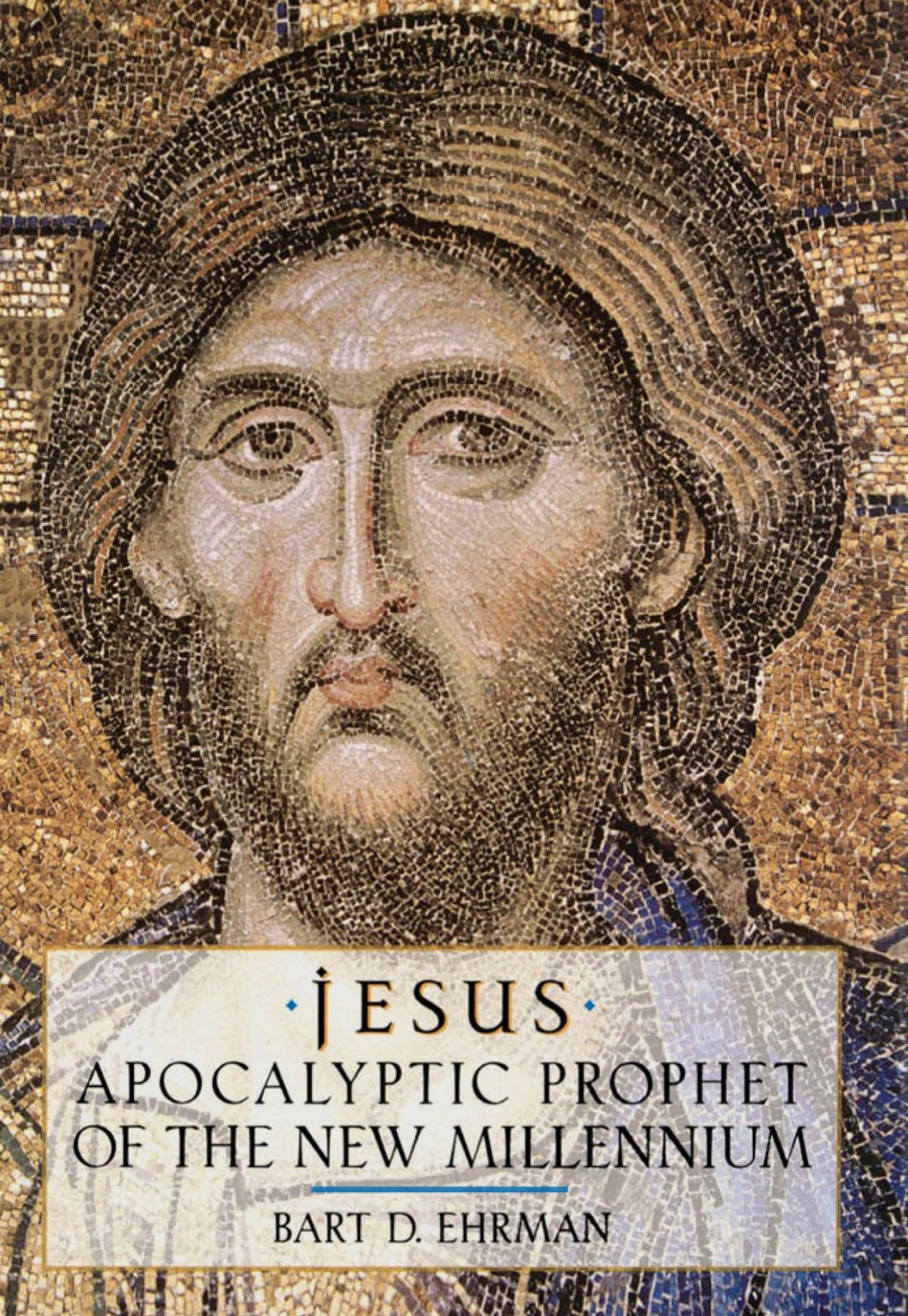
One of my favorite authors writing about this history is Bart D. Ehrman. I’m currently listening to Jesus: Apocalyptic Prophet of the New Millennium, one of his older books from 1999, but it recently came out on audio. Next month I’m looking forward to reading Ehrman’s new book Heaven and Hell: A History of the Afterlife when it comes out (3/31/20). But as of now, I’ve read:

For a historical figure that we know practically nothing about, Ehrman has found a great deal to write about. The fun of all this historical sleuthing is putting the clues together in various ways hoping for new insights. Most believers assume we know a whole lot about Jesus but from a scholar’s point of view, most of the common beliefs about Jesus are made up.

What Ehrman and other historical scholars are trying to do is figure out who Jesus was before he died. What we have are writings that began appearing decades after his death. The goal of all the research is to examine various written memories of Jesus to determine if anything remembered might be true of the actual person. People have been making up stuff about Jesus for two thousand years. The assumption is the oldest documents might have the best clues. That’s what Ehrman’s books are about, going over the old documents, again and again, comparing them against each other. Reading Ehrman also teaches us about the methodologies of historians and the limitations of memory and writing.

Ehrman mostly focuses on first-century documents, the writings of Paul, the Gospels, a few other documents, and their possible ur-texts we don’t have. For a period of about 20-30 years after Jesus died his followers collected his sayings. We assume they were only passed down orally at first. Eventually, they were written down, but we don’t have copies of those sayings. Later on, the gospel writers used those collections of sayings to create the four Gospels. However, the information in each varies. And the newest Gospel, John, reports a great deal of information not reported in Matthew, Mark, and Luke. I tend to agree with many historians that ideas about Jesus first appearing in the Gospel of John were made up.

In the second and third centuries, many more gospels were written and scholars tend to discredit them for various reasons, but they do offer interesting clues. The assemblers of the New Testament also favored the oldest gospels as authentic and considered the newer gospels as heretical. But if we examine all the gospels, there are reasons to doubt all of them because we see that various followers had different agendas in composing their gospels, and none of their reasons seem related to the historical Jesus. Every gospel was written claiming who Jesus was and what he taught. They are all interpretations with a purpose that fit the times in which they were written.

Thus historians are left trying to figure out what Jesus actually said from things he didn’t write down himself, but was written down by many different people decades later. This is why we have so many different conceptions about Jesus. It’s like saying there are 1,000 different biographies of Jesus and one of them could be right. But there’s also a good chance they might all be wrong.

Ehrman and other historians assume it’s possible to deduce the truth. I’m not sure it is.

The Jesus Seminar took a different approach. It asked theologians and scholars to vote on every saying by Jesus hoping some kind of consensus might reveal the truth. But after 2,000 years, can we really expect to find the truth? If you want to know more of their results read The Five Gospels.

What is revealed from all this study is how Christianity began. Jesus’ followers made him divine and determined the scope of his divinity. Ideas about the afterlife, God, and Heaven were all invented long after Jesus died. There is no evidence that Jesus believed any of it. Christ and Christianity are what his followers invented.

What I wish Ehrman (or some other historian) would write is a chronology of how various Christian dogmas emerged, when, and if possible who created the idea first.

I tend to accept Ehrman’s theories about who the historical Jesus was and what he preached, but I think there’s still room to doubt we can even know that much. And I don’t know if it matters. I think we might be giving Jesus too much credit. Both believers and atheists like me want Jesus to be someone wonderful. And believers want Jesus to be someone who validates the truths they want to prove true. I guess I just want to know what the guy really said and how it got distorted.

There’s a good chance that almost everything we call Christianity was invented between 50-350 CE. We don’t really know when Jesus actually died, probably 30-36 CE. Paul started preaching in the 50s. He got to meet some of the disciples that knew Jesus, but we’re not sure how much he learned from them. Paul’s writings actually say very little about Jesus the man. They are about forming Christian communities.

We know the followers from about 33 CE to 60 CE collected the sayings of Jesus. Paul probably saw some of these collection of says, but maybe not, because he rarely quoted them. We have to assume some of these sayings might have accurately recorded Jesus’ speeches, but we can’t be sure. Probably for many years, they were only passed around via word-of-mouth, and we know how poorly that works. And we know how people love to embellish a good story.

What we do have are the four Gospels that were probably written around 66 CD to 110 CE. Mark is assumed to be the oldest (66-70 CD). Matthew and Luke next (85-90 CE) and finally John (90-110 CE). We don’t really know who their writers were. Scholars assume they were not any of the disciples. Each of the four claims to tell the story of Jesus, but they each tell a somewhat different story, sometimes with conflicting details and beliefs. Think of how many books or movies you’ve encountered about famous modern people. Even the most serious biographies, with mountains of hard evidence, are always challenged on some facts. We can’t create perfect biographies even when we have voice recordings and videotape.

Paul essentially created Christianity in the 50s CE. What he preached was often disputed by Peter and the other disciples, but because Paul was so good at spreading his version of the word explains how he got the Christianity snowball rolling. Whoever wrote the Gospel of John created many now cherished beliefs for the emerging religion. Starting in the second and third centuries new theology was added by other writers who we know their names and have some of their writings.

I feel I have read enough on Jesus. I’ve given up on ever knowing who he was and what he taught. There’s just too much speculation. My rough idea after reading all these books is Jesus was probably a very interesting guy who taught something, probably something very unorthodox, probably utopian, and he got himself killed for it. His followers, who passionately believed in him were thrown into despair because they didn’t want to give up on his wonderful vision of how things could be. They came up with the resurrection as a way to keep the dream alive. All the stories about the post-crucifixion were invented to put a positive spin on the inconvenient truth that Jesus was wrong about the Kingdom of Heaven appearing on Earth in his lifetime. They used his memory to preach what they wanted. To sell their ideas they promised potential believers they would gain everlasting life. To gain converts, they made Jesus into a divine being. Then people who had never known Jesus, the gospel writers, started making up even better stories. The stories became so good, so convincing, that it converted most of the Roman world in a few hundred years.

I expect Ehrman’s new book, Heaven and Hell will cover that development. I also assume all the core beliefs of the various forms of Christianity in the last two thousand years are really driven about hopes of an afterlife. Donald Trump has clearly proved that Christianity is not about specific moral beliefs or spiritual discipline. What Christians believe today is too diverse to define them by a specific list of creeds. Basically, what ties modern Christians together is a vague belief in vague God and a hope of an existence after death.

The real Jesus apparently didn’t think of himself as the Son of God, but the Son of Man. He advocated that followers share their belongings, to even live together communally until God created the Kingdom of Heaven on Earth, which would happen in his lifetime. He apparently preached about compassion and how people should treat each other. It appears Jesus had very liberal views. Modern Christians are mostly conservative, so it’s hard to reconcile their beliefs with anything Jesus actually taught. Modern Christians are really disciples of Paul and the writer of The Gospel of John, and second-century theologians.

What I learned from reading all these books on Jesus is whatever he taught can only be discerned from those collections of sayings that existed before the gospels were written, unfortunately we don’t have copies. Some of those sayings are mixed in with the gospels, but we don’t know which. Even then, there are plenty of reasons to doubt anything attributed to Jesus after his death. Can you prove anything anyone said to you twenty years ago was verbatim and what they did was exactly how you say it happened?

JWH


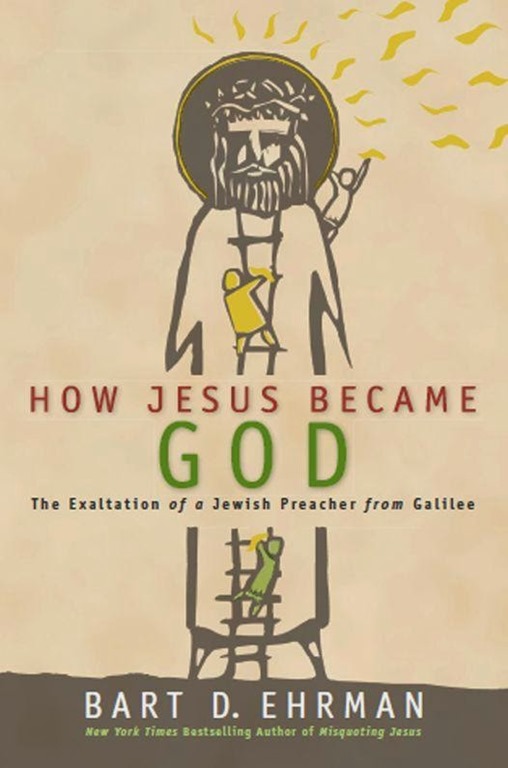
How Jesus Became God by Bart D. Ehrman

There once was a guy named Jesus.  He sounded like a pretty cool guy if you believed some of the savings he was supposed to have said.  Then his followers made him into God, and people became more interested in what was said about him, rather than what he said.  That’s too bad.  Bart D. Ehrman, has written a book that explains how Jesus became God after he died, and then became God while he was alive, and then became God before he was born, and then became God before any of us were born.  Ehrman’s book could have also been called When Jesus Became God, and to a very minor degree, it could have been called Why Jesus Became God.

I would have entitled it, Too Bad Jesus Became God.
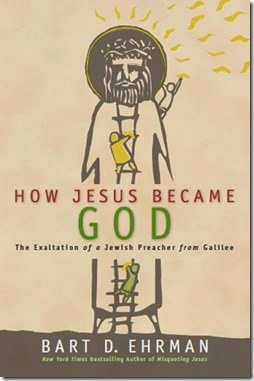
How Jesus Became God

How Jesus Became God is a history book.  It’s not about theology, but many readers will find it undermines their beliefs.  To be fair, Ehrman bends over backwards, constantly explaining how and why he’s writing history, wanting to avoiding any theological implications.  We’ll never know the theological truth in this life, but we can get ever closer to the historical truth.  By summarizing how the followers of Jesus changed their opinions about the man they worshipped in the decades and early centuries after his death, we don’t learn anything new about Jesus, but a whole lot about the history of Christianity.  Because Jesus left no primary sources about what he believed, we can never know anything about the man, all we can know is what other people thought about him long after he died.

I’m afraid when the faithful read this book they will bring their beliefs to the reading and that will distort what Ehrman has to say.  Ehrman  stands outside of Christian faith and ask the question:  How did Jesus become God?  He is a historian, so he makes no assumption whether Jesus is actually God or not, but analyzes what we know about early Christians to decide how they made Jesus into a God.  Ehrman uses textual analysis to date each idea about Jesus that emerged after his death, and to pick through the paltry facts like a CSI detective hoping to find additional clues.  Ehrman tries to answer two main questions.  First, did Jesus think of himself as God or divine?  Second, studying the writings of Paul, the four Gospels, and Acts, Ehrman asks, when did his believers think Jesus became God – at his resurrection, his Baptism, his conception, or from the beginning of all time?

Bart D. Ehrman introduces his book at Huffington Post.  It’s a good summary to read if you’re thinking about buying the book.  He opens with:

Jesus was a lower-class preacher from Galilee, who, in good apocalyptic fashion, proclaimed that the end of history as he knew it was going to come to a crashing end, within his own generation. God was soon to intervene in the course of worldly affairs to overthrow the forces of evil and set up a utopian kingdom on earth. And he would be the king.

It didn’t happen. Instead of being involved with the destruction of God’s enemies, Jesus was unceremoniously crushed by them: arrested, tried, humiliated, tortured, and publicly executed.  And yet, remarkably, soon afterwards his followers began to say that — despite all evidence to the contrary — Jesus really was the messiah sent from God. More than that, he was actually a divine being, not a mere human. And not just any divine being. He was the Creator of the universe. After long debates among themselves they decided that he was not secondary to the one God of Israel, the Lord God Almighty himself. On the contrary, he was fully equal with God; he had always existed for eternity with God; he was of the same essence as God; he was a member of the Trinity.

How did that happen? How did we get from a Jewish apocalyptic preacher — who ended up on the wrong side of the law and was crucified for his efforts — to the Creator of all things and All-powerful Lord? How did Jesus become God?

To Christians, Jesus is God, but to historians, Jesus is no different from any human in history.  Ehrman is studying the theologians and not the theology.  If you are willing to take How Jesus Became God as a purely history book it’s quite fascinating and illuminating about the early development of Western civilization.  If you are a believer, this book could be painful because it treats Christianity no different from pagan mythology that also existed in the first centuries of the common era.

I hope this won’t be insulting to Christians, but most of the ones I know aren’t very intellectual about their theology.  Most, just want to believe in God, an afterlife, heaven, and the promise they will meet their dead kin and friends again.  How that happens is inconsequential to them.  That’s why modern Christianity is based on faith and belief.  Reading How Jesus Became God will show there is a complex history of theology to how belief in believing evolved.  Ehrman makes an excellent case that while Jesus was alive, and even just after he died, Christians believed you had to do good deeds to get into heaven, and that Jesus did not think of himself as divine.  It took decades, centuries even, to evolve the theology that Jesus was Christ who existed since the beginning of time as God and believing in him will earn you eternal life in heaven.

This book is about how the followers of Jesus went from thinking of Jesus as a human being to thinking of him as the Trinity.  Ehrman documents this from what we know from history.  Unfortunately, most of what we know comes from The New Testament, Apocrypha writings, and Gnostic texts.  Ehrman’s history is really close textual readings because we have few outside sources about these events.  Christians might appreciate Ehrman’s careful delineations between the writings of Paul, the four Gospels, and Acts.  What it comes down to is Paul, and the writers of the four gospels had different ideas on when Jesus became God – resurrection, Baptism, conception or the beginning of time.  Then the early church fathers argued over these concepts for centuries.

That might seem like meaningless quibbling to most believers, but it does explain why the four Gospels differ.  The Gospel of Mark doesn’t include the story of the virgin birth, but that’s because it suggests that Jesus became divine at the resurrection.  The writers of Matthew and Luke seem to imply Jesus became divine at Baptism or conception.  To have Jesus become divine at conception you need the virgin birth tale.  The author of John recreates the ontology of Genesis to put Jesus as God back at the beginning of time.

Now I’m an atheist, but I find all of this fascinating.  And I might have a different take on Ehrman’s book, but since I’m not widely read in Christian history, I don’t know how common my questions are.  Jesus and his disciples were lower class folk, who were probably illiterate and spoke Aramaic and Hebrew.  The writers of the Gospels were educated, literate, and spoke and wrote Greek.  I’m wondering if they knew about Greek philosophy and if their theology is a mixture of Hebrew mythology, stories about Jesus, and Greek philosophy.  Is The New Testament a cold front of religion meeting the warm front of philosophy?

By the way, we’re leaving Ehrman and moving into my own ideas.  I’m into science, but science wasn’t invented yet.  At the time of evolution of The New Testament people had very few tools to understand reality.  The first, and oldest tool is religion.  Religion basically says “God did it” to any question about the mystery of reality.  Why is there thunder?  It’s a god.  How did the universe start?  God created it.  In terms of understanding the truth, religion offers no validity or real answers.  It’s all speculation and wild ideas.

Then came philosophy.  Philosophy assumes humans can figure out how things work.  Philosophy starts observing reality for clues, but all too often it comes up with bizarre theories for answers, and eventually these are contrived into elaborate beliefs.  Because philosophy uses logic and rhetoric, it gives the impression that it’s intellectually superior to religion, even though most of its answers about reality are hardly better than religion.  However, logic is sexy, so believers prefer philosophical answers over the dictates of religion, which is basically, “God did it.”  Paul is the Plato of Christianity, and Jesus is his Socrates.  And the guy who wrote The Gospel of John is out there, way out there, both mystical and philosophical, like one of the Pythagoreans.

From my perspective, Paul is the real creator of Christianity, but he lost control of his religion to the later writers of The New Testament.  What Ehrman’s book does is try to chronicle how these later writers change the scope of Christian theology.  Even more fascinating is the Gnostic gospels, which appear to try to take Christianity in even stranger directions.  What became Orthodox Christianity in the first four centuries of the common era is what worked best at selling a belief that took hold of the Western world for the next sixteen centuries.

Modern day believers of Christianity believe because they hear a few ideas in childhood that are so powerful it overwhelms all their thinking.  What Ehrman’s book attempts to do is explain how these memes got created.  Many other writers of Christian history attempt to do this too, but Ehrman seems to be particularly good at it, with clear writing, sensible logic and a humble attitude.  Ehrman has written a series of books that reflect a lifetime of careful research that explain how and why The New Testament was written.  He’s very knowledgeable about The Old Testament, but The New Testament is his specialty, his life’s work.

Most Christians aren’t interested in an intellectual history of their faith.  Their religion gives them a wonderful sense of community, beliefs that comfort them in life, and faith that assures them they won’t die, so they know they will meet their departed loved ones in the next life.  However, there are Christians, especially evangelicals and fundamentalists who are profoundly interested in the intellectually validity of their beliefs and will go to extremes to validate their faith.  Ehrman’s book will cause these people problems.  This gets back to my point about philosophy.  Philosophy appears to reveal the truth, but it doesn’t.  Science is the only system we’ve invented yet that reveals consistencies in reality that we can accept as being true.  What we’re experiencing now is the cold front of philosophy banging into the warm front of science.

What Ehrman brings to the table is history, a discipline that is far more consistent than philosophy, but still not science.  The fundamental faithful are strong adherents of philosophy, which includes rhetoric and logic.  They are confident these tools reveal the truth of reality.  But science is showing them that their philosophy is a very poor tool for understanding the truth of this reality.

What Ehrman has accidently taught me is fundamentalists love philosophy because The New Testament is a product of philosophy, and not religion.  The Old Testament was pure religion.  The New Testament is a hybrid of religion and philosophy, with the later writers of The New Testament being the most philosophical.

And it’s not that philosophy can’t be a useful tool, but it’s only useful if it incorporates the rigors of science.  Science depends on logic, and to a degree rhetoric, but is actually about consistency of observations.   Science, for the most part, can’t be used to verify theology, because most theology involves the metaphysical, which can’t be observed, tested, and is not falsifiable.

Christianity met up with Greek philosophy again when it kicked the Muslims out of Spain.  But that’s not part of Ehrman’s book.  I’ve always thought that was Christianity’s first encounter with Greek philosophy, but now I’m thinking different.  The New Testament writers were the first influence of Greek philosophers on Christianity, they just didn’t mention their educational background.

It would be fantastic to have a time machine and track down the real Jesus and give him a copy of The New Testament and How Jesus Became God.  I get the feeling he’d probably read them and say, “Hey, these stories are about a guy with my name,” and never notice they were about him.

I’m am reminded of stuff I’ve read by Karen Armstrong and Robert Wright, especially in A History of God and The Evolution of God.  The God of The Bible has gone though quite a lot of changes himself.  He’s a combination of several gods that slowly evolved over a very long period of time.  Each time one people would conquer another people, their gods would merge, or one would supplant the other.  To me, Jesus became God because Christianity supplanted older religions and had to incorporate or bury older deities, creeds, traditions, etc.  Jesus essentially becomes the new God that usurps the Jewish God of The Old Testament, in the same way Yahweh supplanted earlier gods like El, Asherah and Baal.

The early Christians had to do this to succeed and thrive, and boy did they thrive.  But it sure is sad that they lost Jesus along the way.  It would be interesting to compare the revisionists techniques in the Quran and The Book of Mormon to see how they try to supplant Christian theology.

I wish Jesus had written down his ideas like Plato.  To me, humans are interesting, gods are not.

JWH – 7/8/14

Forgotten Science Fiction: The Last Starship From Earth by John Boyd

Every year thousands of SF and fantasy books get published, but few are reviewed, not many more become popular, and damn few get remembered.  Ten years out, most books are out-of-print and forgotten.  How many books can you remember from 2002?  And if we’re talking fifty years down the timeline, well it’s almost a miracle for a book that old to still be read, much less remembered and loved.

I discovered science fiction in the 1960s, in my teens, and like most people reading their first hundred SF titles, they all seemed so damn far out!  Now decades later, I doubt my memories of those first impressions.  So, when I have a little extra reading time, I order a book from ABE Books based on those dying memories and reread it.  I’ve now reread many of my teenage classics and a majority of them don’t hold up.

Most memories are fleeting, and my memory of The Last Starship From Earth was next to nothing.  All I remembered was a favorable impact.  Just a lingering sense of it being a standout read for 1968 or 1969.  To test that memory I recently bought and reread The Last Starship From Earth.  Sad to say, it was a discard from the Columbus Public Library, a common practice for books that don’t get checked out.  Not a good sign.  The last English reprint of this novel was in 1978.  It’s last edition was in French, in 1995.

The-Last-Starship-From-Earth-by-John-Boyd

The Review

The Last Starship From Earth is a dystopian novel set in 1968 and 1969, but not the 1968 and 1969 that I remember, or lived through.  In the world of this story, Jesus did not die on the cross, but was killed leading an assault on Rome.  He was the Messiah that people expected.  The government of John Boyd’s world is a global government run by Christians along “scientific” lines, where psychologists and sociologists in conjunction with the Church and an AI Pope rule the world.  People marry and mate because of their genes, sort of like the film Gattaca, and the hero of our story is Haldane IV, M-5, 138270, 3/10/46, a math student of great promise, being the fourth in line of great mathematicians.  Unfortunately Haldane gets the hots for Helix, a mere poet.  By law and social custom Haldane is expected to have nothing to do with her, but as you’d expect he falls in love with her.

Haldane concocts a ruse to justify more meetings with Helix by studying Fairweather I, a 19th century mathematician who also wrote poetry.  Much of the first half of the book deals with pseudo-academic studies from this alternate history.  Boyd is creative in his steady flow of ideas and concepts, but there’s little emotion in the story.  It’s somewhat Heinlein-esque, in it’s attitude and world building, but lacks the charm of Heinlein’s best prose.

Now, this quick summary is enticing, and I would like to report that The Last Starship From Earth is a forgotten classic, unfortunately, that’s probably not true.  I enjoyed the book, but only as a quick read.

Surfing the web I’ve found few other reviews of this novel, and although I’ve found people who claim it’s their favorite book, I also found people that thought it ho-hum.  Now, I’ve got to admit it has a humdinger of an ending, almost as startling as the film The Sixth Sense, but I’m not sure this last minute thrill pays for the reading the whole book.

I found the love affair of Haldane and Helix no more believable than Romeo and Juliet and far less exciting.  John Boyd does write well, but the plot is mostly intellectual, about the dystopian society, and its complications.  The book is only 182 pages, and the whole tale feels rushed.  Boyd staked out a solid gold claim but never mined it.

Analysis with Spoilers

The trouble with many SF novels, especially those written back in the 1950s and 1960s, was they were written very fast, and they were about ideas and not characters.  John Boyd has actually written a very ambitious novel by creating an alternative history of Jesus, but he never fleshes it out, and most of the story is a setup for the surprised ending.  The scope of the book is epic, the line by line writing reasonably entertaining, but the overall feel of the book is thin.

Haldane and Helix are discovered, and the middle part of the book is a trial that allows Boyd to work out the politics and legal system of this alternative reality, however, like the rest of this book, it’s rushed.  It’s padding.  That’s its downfall.  He has a big ending but it’s way bigger than the story.  To pad the story even more Haldane is sentence to exile on Pluto, which is called Hell.  There he meets Fairweather I and is reunited with Helix, who happens to be Fairweather’s granddaughter.  Fairweather needed a mathematician for his time machine, and Helix was sent to Earth to engineer the exile of a mathematician to pilot an experimental time machine.  In a very short time Fairweather makes Haldane immortal, tells him his new name is Judas Iscariot, and his mission is to go back in time to kill Christ.

Now if Boyd had spent a couple hundred pages recreating the Biblical world and shown how Haldane tracks down Jesus, we would have had a much better story.  But all of this was summed up in a short epilogue.  We are told Haldane captures Jesus and puts him in the time machine and sends him back, and the rest of the epilogue is about how he has relived the two thousand years to return to his own time and meet a girl that’s an awful lot like Helix, living in a future that’s much more like ours.  But did Haldane let Jesus die on the cross, or does he just disappear him from history?  Unless Haldane at least engineers a dying on the cross scene for history, we should not expect this timeline to be ours.

How do you plot a riveting novel with great characters based on the idea that Jesus didn’t die on the cross and the world became very different?  How do you tell the story twice?  Boyd really grabs a tiger by the tail and yells, “Look at me!”  And I think, “Cool!  Far out man!  But what are you going to do with him?”  He’s got to do more than just swing it around.  I’ll give Boyd a solid C for his world building, but they are only tantalizing sketches.

I really like this ending, but is it good enough to make The Last Starship From Earth a classic SF novel worth reading today?  I’ve linked several references to this book on the net and even though I can find fans of the book, I can find more people who think it sucks.  You’d think  Boyd Bradfield Upchurch, John Boyd’s real name, if he’s still alive, would arrange for his books to be reprinted as ebooks.  That certainly would make it easier for more readers to decide if The Last Starship From Earth is worth reading.

I’m afraid Boyd falls far short of classic standing.  The Last Starship from Earth is a good novel for science fiction historians to read, but it needed to be four or five times longer, more the size of Dune, to get the job done that Boyd outlined.  However, I’m not sure how he could have pulled off this big ambitious idea.

And is Boyd saying our history is the better timeline?  Why is his first timeline all that evil?  Is the freedom to fuck whoever you want the perfect ideal worth rewriting all of history?  Isn’t the more interesting story about a world where the promise of salvation and eternal life never happened?  Isn’t Boyd’s surprise ending really a cheat?

Time travel machines often ruins more stories than they’ve ever help.

Boyd has a three part story.  Life on Earth in an alternate timeline, life on Pluto, life on Earth in another timeline.  The story really isn’t about genetic breeding of humans like we see in Gattaca, or in Heinlein’s Beyond This Horizon or Huxley’s Brave New World.  It’s about an oppressive government.  But does it deserve to be wiped out by time travel?

Here’s the thing, our 1968 was a horrible time for America, but should we send a man back in time to wipe it out?  Boyd wasn’t writing a protest novel like Nineteen Eighty-Four.  Nor did he write a novel that truly explored a timeline with a different Christ, which would have been ambitious enough.

Would The Last Starship From Earth been a better novel is it hadn’t used the time machine gimmick?  Not as it stands, but it potentially could have been.  I believe it’s a grave mistake for any alternate history novel is have a do-over.  Time travel is really a very dangerous concept to use in fiction.  Time travel is very hard to pull off.  The beauty of an alternative history novel is the alternative history.  Don’t add time travel.  This would take away Boyd’s surprise ending, but it would have meant he would have been forced to write a better novel.

I felt cheated when Helix shows up so easily on Pluto, in what at first appears to be a happy romantic ending, but then we’re thrown for another loop.  Haldane loses her again, only to find her again 2,000 years later.  Oh come on man, this horny-at-first-sight love isn’t believable.  Weren’t there no math babes for Haldane?  This really is a case of what you can’t have makes the heart grow fonder.  And neither Haldane nor Helix are all that interesting – if you want a great love story you have to have great lovers.

The powerful driving motive in Gattaca is that Vincent wants to go into space.  He wants to prove that he’s as good any genetically selected human.  The driving force of The Last Starship from Earth is Haldane wants to screw Helix.  Boyd doesn’t make it believable why his world outlaws sex, nor does he make it believable that Haldane and Helix are in big time love.  Hell, even the prosecutors of the story wink at him, and say why didn’t you use a condom and just screw her, implying this world does overlooks recreational sex, just not casual genetic mixing.  But then Boyd never explains why his world requires genetic  fidelity to specialties like mathematics and poetry.   In Gattaca we have the justification that their world doesn’t want naturals to pass on bad traits, but in Boyd’s world there is no reason to breed pure bred mathematicians.  Also, how many math geniuses does one world need?

John Boyd wrote just enough alternate history world-building to set up his surprise ending.  In essence The Last Starship From Earth is a O’Henry type story, and we now use those type stories as examples as how not to write a story.  However, The Last Starship From Earth suggests two possible storylines I’d love to read.  First, I’d love to read an alternate history where Christ was the Messiah that everyone was expecting.  Second, I’d love to read a time travel story about people having to learn what it takes to live in ancient Israel and track down Jesus.  Both would require a tremendous knowledge of real history.

JWH –5/28/12