James Wallace Harris, Wednesday, August 19, 2020
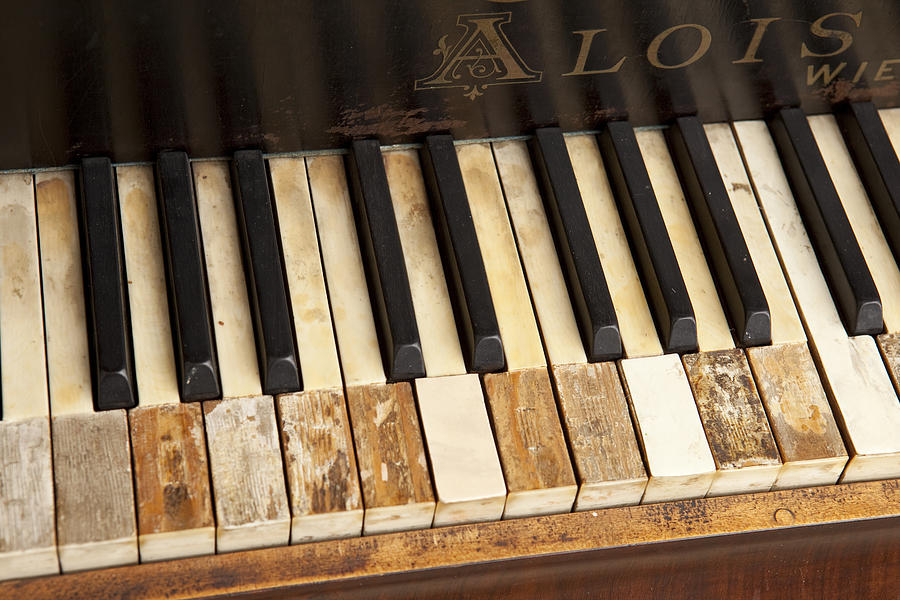
Most people assume if you can read you can read. But what if reading was a skill like playing the piano and most readers are no better at reading than an eleven-year old with a year of piano lessons. (I’m expecting you to hear a badly played tune in your head.)
What if you could read like Glenn Gould playing Bach? Can you even imagine what that could be like? It would be like having Broadway actors performing in your head. It would be like having the professors from The Great Courses whispering you the annotations. It would be like James Joyce reading Ulysses to himself.
Well, I don’t read anything like that. My inner reading voice is a tone deaf monotone, and my annotations come from a lifetime of half-ass autodidactism.
Growing up I read nearly a thousand books. Because I read so much, I assumed I was a great reader. Beginning in 2002 when I joined Audible.com I often selected audiobooks I had read and loved way back then — when every book I read was great, even those by E. E. “Doc” Smith. Hearing all my childhood favorite books read by skilled readers has shown me just how bad a reader I was when I was growing up and thought I was so great.
And it’s not just comparing my wimpy inner reading voice to professional narrators, or the fact that I was young and wasn’t mature enough to understand everything in what I was reading. I am including my college years in that youthful period, when my mind was at its peak performance, and being crammed with a variety of diverse knowledge.
Listening to audiobooks taught me that I read too fast growing up. That I paid attention to the action and dialog but skimmed over any long passages of dense narrative details. But I also missed the emotional cues, and I didn’t spend enough time picturing the scenes and settings. More than that, I didn’t dwell on the implications of what was being expressed fictionally.
Every so often a friend will say they love the sentences in the books they are reading. I don’t think I ever stopped to admire a sentence.
By the way, I don’t mean to imply that my reading skills have vastly improved over the years. They are a good deal better, but I am no concert pianist at reading. In fact, I have a hard time gauging my skills against others.
Growing up I assumed everyone saw the world in the same way, that our brains and senses were similar. I’ve since learned that our perceptions of reality vary so greatly that if two people standing next to each other watching the same event will interpret it in two distinctly different ways. Since discovering that I’ve paid attention to whenever people describe how they read, and I’ve learned that decoding words produces a wide range of cognitive results.
You can test this observation by asking your friends about what they experience when they read. I’ve been doing this for years and discovered some of my friends have amazing mental abilities that make me green with envy.
Have you ever loved a book and urged a best friend to read it and then been let down when they didn’t respond to it like you did? Have you ever read a classic novel or bestseller and wondered what all the fuss was about? Have you ever read a book about your favorite subject and found it boring?
Part of reading is decoding words in the way the author intended. Part of reading is being on the same wavelength as the writer. Learning to be a skill reader involves words, sentences, and paragraphs, but it’s also involves reassembling the vision the author constructed in their mind that they wanted you to see, and triggering the emotions and philosophical insights they felt.
What if readers could be ranked like chess players using their Elo ranking system? Would I be an 800 or 1200? I’m quite confident I’m nowhere near a master rating. I wish I could be a grand master of reading but I know that’s impossible. We all wish we could be rock stars at our chosen ambitions but we’re not. But just how much can we improve? Can advance reading skills be taught? Can advance reading skills be assessed? I wonder what I’m missing.
My SF anthology reading group on Facebook is reading two stories this week, “The Machine Stops” by E. M. Forster from 1909, and “The Fifth Head of Cerberus” by Gene Wolfe from 1972. I might have tried to read both when I was young because I had anthologies they were in, but I’m fairly sure I wouldn’t have liked either. I just don’t remember. The writing style of the Forster was too quaint, and Wolfe’s prose was much too dense.
Reading these two stories in 2020 is dazzling my reading mind, but I hunger to know just how much I’m comprehending, just how much of their totality I’m experiencing with my current reading skills.
I’m reading these stories with my eyes (Kindle) and my ears (Audible) concurrently. I’m doing everything I can to read them with all the possible reading skill I can muster, but I have no idea how skilled that effort is. Am I 50% efficient at getting what Forster and Wolfe intended? Or even 75%, or just 30%? It’s my third reading for Forster and my second reading of Wolfe in recent years. I’ve also read about both stories, and I’m constantly encountering insights into them I missed or didn’t draw the implications the reviewers did.
“The Fifth Head of Cerberus” is about an old man telling about his childhood, and the audiobook I have has an old man with a pompous or posh English voice reading it. You can listen here:
The setting feels like the French Quarter of a 19th-century New Orleans but it’s actually set on another planet in the far future. Wolfe writes in a baroque style about two boys growing up in a brothel during a decadent era, being educated by a robotic tutor, and slowly learning their bizarre origins. The story is dense, and I’m not sure if I read it ten times that I would find every treasure Wolfe buried away in “The Fifth Head of Cerberus.”
“The Machine Stops” is about an agoraphobic woman blogger who Zooms with all her friends in a country completely controlled by an AI machine. Well, not exactly since it was written in 1909. But when you read it, you’ll wonder if E. M. Forster ever hitched a ride on H. G. Wells’ time machine. Again, there is so much in this story that I can’t tell if I’m little Becky playing her first recital at church or Van Cliburn playing Rachmaninoff in Russia. My hope is I’m at least Becky as a sophomore majoring in music at college.
I just wished I had some kind of assessment tool to help me evaluate my abilities and progress. I suppose I could go back to college and take literature courses, but I’d prefer something more scientific, something more quantitative, something involving computers and brain scans.
Anyone who has read the works of Oliver Sacks knows how different humans minds can function. Reading isn’t just reading. Our ability to process words into mind movies varies so greatly that it’s impossible to comprehend. Every cognitive ability you can possibly envy in another person goes into the infinite ways in which we process books. Because we can’t see what other people experience when reading we assume it’s like our own reading experience. But it’s not.
In my last third of life I’m struggling to read with greater skill. With fiction, I’ve mostly shifted to reading short stories. Novels take up too much of my precious time, and they are also too indulgent. Short stories, novelettes, and novellas are compact, intense, and offer more variety of reading experiences. I’d like to think I’m an old dog that can still learn new tricks. I know I’ll never read like a pianist performing at Carnegie Hall, or even at a high school auditorium.
I intuit this from listening to the best audiobook narrators or from watching lectures on The Great Courses Plus. But I have acquired the awareness of my progress and that’s something. It’s a shame we haven’t emphasized the details of reading skills. Oh sure, schools constantly grade kids on reading ability, but we never get enough feedback as to what those abilities truly are.
All I can guess is what you experience in your head when reading is much different from what I experience. I just wonder if there is any way to compare experiences? I participate in a number of reading groups, but the best we seem capable of is expressing if we like or dislike what we read. We know how much a musician knows because they perform and their performances can be evaluated and compared.
I suppose the real GRE for evaluating reading is writing. By that measure, I also come up short. I struggle to write fiction like a drowning person flails in the ocean.
JWH



 Auxiliary Memory