Meditating on a Meme

by James Wallace Harris, 11/28/24

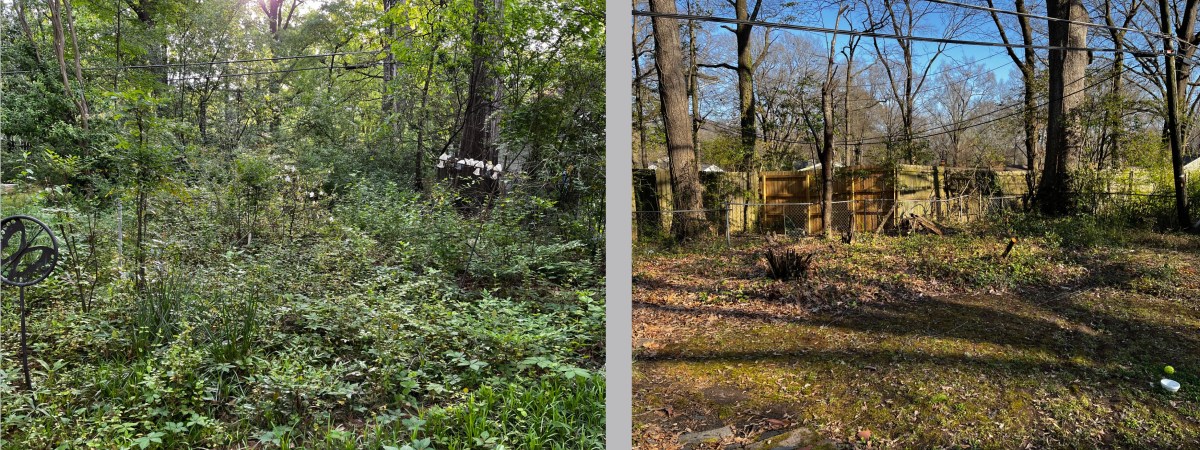
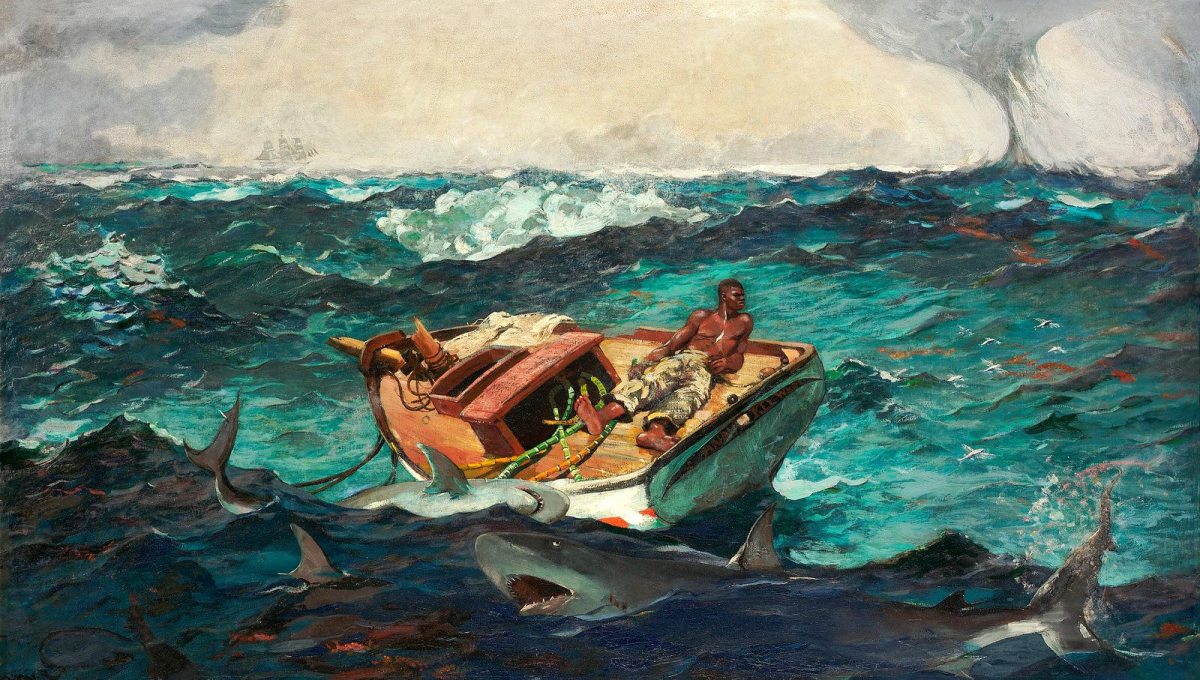
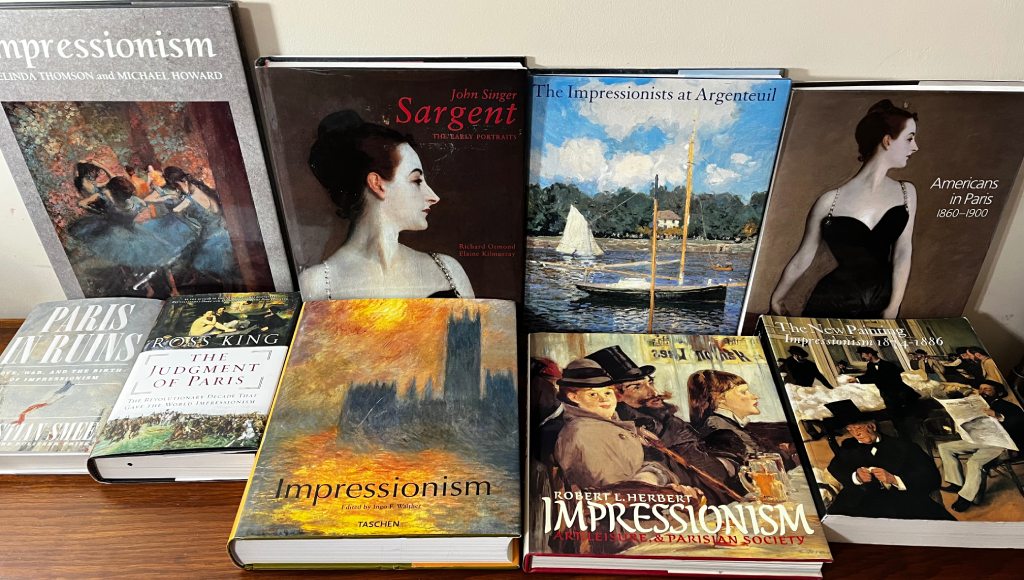
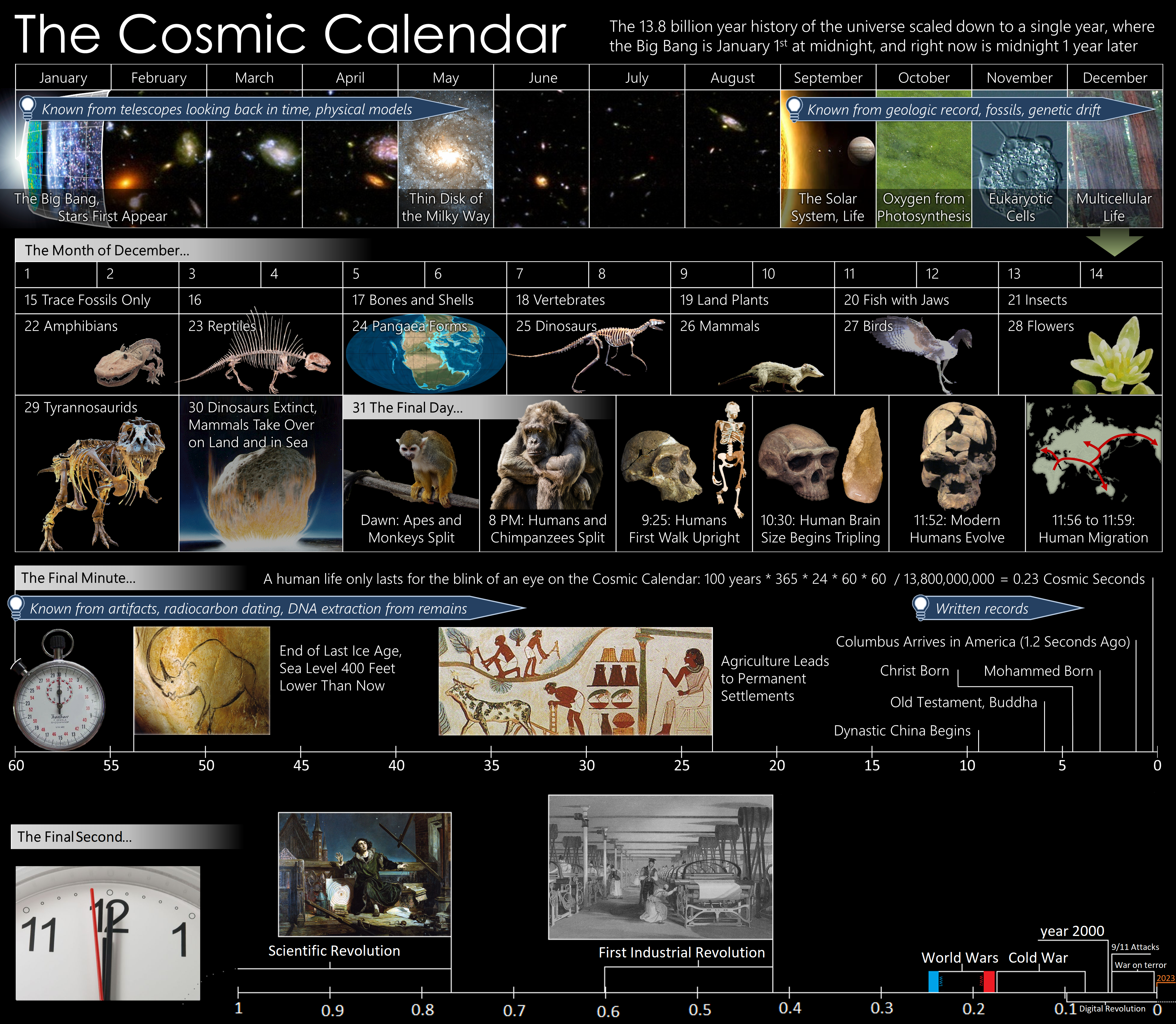
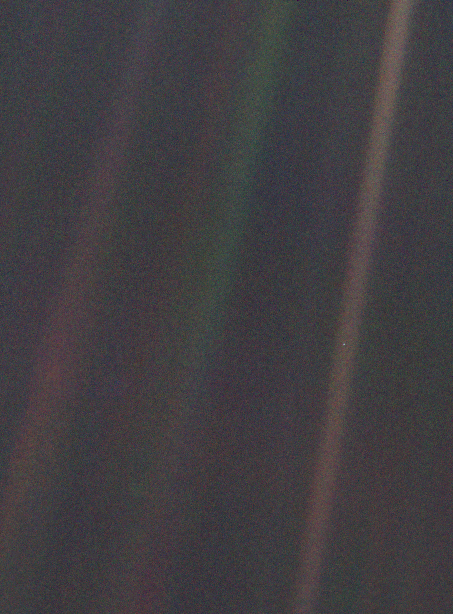
Seeing the above photos as a meme on Facebook made me think about how much people, society, and pop culture changed in the 1960s.

If a picture is worth 1,000 words, then are two pictures only worth 2,000 words? I don’t think so, I think it’s 1,000 words times 1,000 words, or 1,000,000 words. I could easily write that many from all the ideas my mind has generated since I began meditating on those photos.

Here’s the original meme from Facebook:

I was eight on 1/1/60 and eighteen on 12/31/69. I have always thought the longest years of my life were from 1963 to 1969 because so much happened to me and the world I lived in during that time. For folks who didn’t grow up in the sixties, it was much more than what you can learn from watching Grease or American Graffiti and contrasting it with Hair or Woodstock.

When I first saw the meme above I instantly thought about how rock and roll music of the 1950s ended up becoming the rock music of Woodstock. I’ve tried several times just to write an essay about that, but after typing over 5,000 words, I realize I’ve barely hinted at what I could say. That’s too long for a blog post.

I recommend that you find two photos that bracket your adolescent years or the decade you identify with the most and meditate on them. Start with remembering every place you lived and what you did each year. Remember your family and friends, your pets, your homes, your schools and workplaces, the clothes you wore, all the activities you pursued, everything you wanted to buy. Then write the shortest essay that makes it all coherent. You will then feel the mental anguish I am feeling right now.

Then branch out in your meditations. The easy and fun things to contemplate are the changes in pop culture — how music, movies, books, TV shows, games, and technology evolved over ten years. But then move on to the political and social changes. That’s when things get heavy. Can you connect your firsthand experiences with all those external events? Have you ever compared the life you lived to what you saw on the TV news every night?

Every one of us has the life experience to write a Proust-size novel and has lived through enough social change to write a series of history books about the formative decade of our lives. If you don’t think so, meditate more on the two photos you have selected.

I turned seventy-three on Monday, and getting old has made me more susceptible to memes about the past. My memories are fading away so I desperately want to cling to them. Emotions gnaw at me to make sense of everything I’ve experienced. The urge is to put it all down in words, but I don’t have what it takes to do the job and do it precisely.

There is an undefinable mental barrier that keeps me from organizing my thoughts into coherent histories. And I’m not talking about writing something worthy of publication for others to read, but just producing a narrative that makes sense of things for myself about myself and what I’ve learned. The older I get, the more I want to understand.

This essay started out about when rock and roll music became rock music. After several drafts and much contemplation, I narrowed it down to the summer of 1965 when I first heard Bob Dylan’s “Like a Rolling Stone” on the radio. As I kept trying to document my theory, I realized I could write a whole book on it.

Then as I was researching the subject, I found that Andrew Grant Jackson had already published the book I wish I had written, 1965: The Most Revolutionary Year in Music. His book is what I wanted to write in this essay when I first saw the meme above.

The Kindle edition is currently $2.99, and it’s a perfect example of what I’m talking about when I suggest we should chronicle our lives. Even if you don’t buy the book, read the sample at Amazon. I feel the format of organizing the narrative around a month-by-month description of what was happening is a great template to use for writing about memories.

JWH

Is Grammarly Turning Me Into A Cyborg?

by James Wallace Harris, 11/22/24

I used the Grammarly browser extension for years. It offered spelling and basic grammar advice whenever I wrote anything within a browser window. About a year ago I switched from Chrome to Edge, and Edge had an extension, Editor, built in, so I deleted Grammarly. However, recently when Edge’s Editor stopped working, I turned Grammarly back on.

I discovered that Grammarly was now offering a lot more advice, even suggesting rewrites for whole sections of my work. Each time I loaded the browser, Grammarly would offer a couple of free major writing suggestions hoping I would switch to the paid version. I was tempted, but the Pro version is $30 a month, or $144 if bought yearly. This seems extremely expensive since Office 365 costs me $69 a year and gives me Word, Excel, PowerPoint, Publisher, Access, and other programs along with one terabyte of cloud storage for that one low yearly price. For a simple web extension like Grammarly, I’d only be willing to pay no more than $29 a year.

However, for $144 a year, Grammarly promises to make my writing perfect. But then, who would be authoring my essays? Would I become a literary cyborg? I would still be generating the ideas for the essays, and I would be writing the original draft, but somewhere along the way, an AI would be taking over. I’m not sure I like that. The reason why I write these essays is to exercise my mind. Letting an AI do all the work would turn my writing muscles into flab.

I have found a way to use the free Grammarly to my advantage. After a couple of sample offers to rewrite my work, Grammarly nags the heck out of me with suggested changes that’s been redacted with fuzziness so I can’t see what they are suggesting. Grammarly wants me to buy the Pro version, and so they criticize almost everything I write. What I do is keep rewriting the prose myself until the AI stops offering suggestions. This pushes me to think about how I’m saying something.

Instead of letting the Grammarly AI rewrite for me, I take the free nagging as “This isn’t good enough – try again!” The free Grammarly extension has become my Zen master, caning my about the head and shoulders whenever I write poorly.

Now some bloggers are using AI programs to write their content. I don’t plan to do this, but to see how well AIs write, I asked CoPilot to write me a short essay about how Grammarly makes me a cyborg writer. Here’s what it produced:

Grammarly: The Cyborg Writer's Best Friend

In the age of digital communication, tools like Grammarly have become indispensable for writers, students, and professionals alike. But beyond just correcting grammar and spelling, Grammarly is transforming the way we write, making us more efficient, precise, and, in a sense, more like cyborgs.

Enhanced Writing Efficiency

Grammarly's real-time suggestions streamline the writing process. Instead of laboriously proofreading and editing, writers can focus on their ideas and creativity. Grammarly catches errors on the fly, allowing for a smoother and faster writing experience. This efficiency is akin to having a digital co-writer, enhancing our natural abilities with the precision of artificial intelligence.

Precision and Clarity

Grammarly doesn't just correct mistakes; it also improves the clarity and impact of our writing. By suggesting better word choices, sentence structures, and even tone adjustments, Grammarly ensures that our messages are not only error-free but also compelling and effective. This level of precision is something that even the most seasoned writers can benefit from, making our writing more polished and professional.

Learning and Adaptation

One of the most significant ways Grammarly is turning us into cyborg writers is through its learning capabilities. Grammarly adapts to our writing style over time, offering personalized suggestions that align with our unique voice. This continuous learning process means that the more we use Grammarly, the better it becomes at understanding and enhancing our writing. It's like having a writing coach that evolves with us, making us better writers with each interaction.

The Cyborg Writer

The term "cyborg" often conjures images of humans with robotic enhancements. In the context of writing, Grammarly serves as that enhancement, augmenting our natural abilities with the power of AI. While we remain the creative force behind our words, Grammarly provides the technical support that ensures our writing is clear, precise, and impactful. This symbiotic relationship between human creativity and artificial intelligence is what makes us cyborg writers.

In conclusion, Grammarly is more than just a writing tool; it's a transformative technology that enhances our writing efficiency, precision, and learning. By integrating AI into our writing process, Grammarly is making us more like cyborgs, blending human creativity with digital precision to create the best possible written communication.

Not bad, not bad at all. Formal and somewhat academic. It’s funny how another AI is helping to sell the product a competing AI is producing. I guess AIs like to stick together.

I asked Claude AI to also write me a short essay on the same subject. Here’s what it produced:

In the digital age, I've discovered an unexpected transformation: Grammarly has turned me into a cyborg writer, a hybrid creature where human creativity merges with algorithmic precision. Each green correction and blue suggestion is a technological implant, rewiring my linguistic neural pathways.

My sentences now emerge pre-optimized, grammatical mutations engineered by an AI writing companion. Passive voice? Eliminated. Awkward phrasings? Surgically removed. Spelling errors? Instantly neutralized. Where once I battled with semicolons and dangling modifiers, now my digital co-pilot seamlessly navigates linguistic terrain.

This symbiosis feels both liberating and unsettling. My writing flows with unprecedented smoothness, yet I wonder: am I composing, or am I being composed? The line between my human intuition and Grammarly's algorithmic suggestions blurs like a soft-focus lens.

I am no longer just a writer. I am a writer-machine hybrid, my prose enhanced by real-time computational linguistics. Grammarly doesn't just correct; it augments, transforming each document into a finely calibrated communication device.

Welcome to the future of writing—where human creativity and artificial intelligence dance in perfect, grammatically correct synchronization.

Oh, wow! Claude AI is much more creative than CoPilot, even using the first person to make it sound like I wrote it. I could have posted that today. Would y’all have guessed it wasn’t me?

How much should we let AI help us?

What if I wrote a nonfiction book and it was good, but with help from an AI, the book was turned into something more readable. Which would you prefer to read? What if it turned my decently insightful tome into something brilliant?

Since Editor is back to working, I have it enabled in Edge, and I have Grammarly enabled in Chrome. What’s funny is they each have different writing suggestions. Either I’m a terrible writer, or neither AI likes my style. I can clear all the edits from Editor, so it looks like my essay is in professionally written, and then switch to Chrome, and Grammarly will claim I’m a horrible writer and make all kinds of suggestions. Should I take them? Or should I just let Claude AI compose my posts?

JWH

Old Man vs. Front Lawn (Round 2)

by James Wallace Harris, 10/25/24

Like I said in the first round, I don’t care about having a perfect lawn. I’m using converting my front lawn from mostly dirt to mostly anything green as a physical challenge to improve my health and stamina. Because I suffer from spinal stenosis, sciatica, neuropathy in my legs, and muscle spasms in my lower back, I can’t do much physically. However, I’m testing the theory that if I slowly do a little more, I can eventually do a lot more. It’s also a way of psyching myself out. I want to believe that I’m not too old to keep doing certain things.

This effort has worked out some. I started out wearing myself out in ten or fifteen minutes. But now, I can work up to an hour on some days. But on most days, I usually spend just twenty minutes twice a day watering the new grass. I also bought the book Back Mechanic whose author, Stuart McGill proposes that back pain is often due to weak muscles and that strengthening them will eliminate back pain. I’m hoping yard work will strengthen my core muscles.

In round two I’ve learned several new things about yardwork and about my health. Having a new challenge is good for me mentally. I dislike doing yardwork, but my body doesn’t like being sedentary. I also dislike being outdoors but being outside in my front yard is teaching me about nature, getting me to learn new skills, encouraging me to talk to my neighbors and introducing me to all the walkers, runners, roller skaters, and dog owners in the neighborhood.

Initially, I thought growing new grass would only entail spreading seeds, fertilizing, and watering twice a day for a few weeks until the grass grew in. It hasn’t been that easy.

My ground is very compact and hard. The seeds only spouted in random places. Then fall began, and leaves started covering the new grass, killing it. Damn.

I called my yard guy to come remove the leaves early. That was Monday. It’s now Friday, and the leaves are back. I’m going to need to have the leaves removed every three or four days. I can’t afford that. I bought a Worx corded leaf blower and a 100 ft. extension cord.

This morning, I tried blowing the leaves myself and made a major discovery. Besides blowing the leaves, the leaf blower blows away all the loose dirt. No wonder my ground is so hard and compact. The grass seeds struggled to pierce the smooth hard soil with their tiny roots, so I need lots of loose dirt. That means no more leaf blowing. (I did learn the leaf blower is great at cleaning off walkways, driveways, and patios, so I’ll keep it. I also imagine, if I had a thick lawn, the blower would only blow leaves.)

I need to rake the leaves manually or consider mulching them with a mower. I also need to buy several loads to topsoil and spread it over my front yard. What have I gotten myself into?

And where there aren’t bald hard dirt spots, there’s thick weeds, old crabgrass, and patches of my new grass. I’ve discovered I need to dethatch my lawn. Before I started this project, I didn’t even know that was a thing.

I bought the corded Worx leaf blower because it was cheaper and blew stronger than a battery-powered leaf blower. But I quickly learned that working with a cord is a pain. For some reason, most of the lawn geek YouTubers use corded dethatching machines. I need to research if a battery-operated dethatching machine works as well as a corded one. I’d probably only use it once or twice a year, that is if all that leaf raking doesn’t kill me first (and I give up on this project). (I also bought a 16-gauge extension cord, and it gets warm. I bet need to buy a more expensive 12-gauge cord.)

This isn’t all I’ve learned in Round 2. I’ve now bought enough garden tools and machines that I need to buy a toolshed. Maintaining a yard requires a great deal of work and a lot of equipment. I’m back to fantasizing about living in an apartment again. But then I wouldn’t have this useful purpose that helps me mentally and physically. (That’s me trying to psyche myself up.)

I’m considering trying a third seeding. My neighbor who had a groundskeeping company in his younger days, recommended I try winter rye. Can rye and tall fescue coexist? This project also involves learning a lot of new things about how nature works.

Do I have enough time before the first freeze to get some grass seeds to germinate and grow a few inches? To do it properly, I’d need run the dethatch machine with both the dethatch and scarifier blades over the lawn. Spread the seeds. Then put down some garden soil, peatmoss, or compost lightly over the seeds. And keep watering twice a day. Also do some more fertilizing. I don’t know if I have the energy for all that right now.

This is never ending. Being a lazy couch potato was so much easier.

Maybe I should put all this off until spring and see how much grass I grow from my first two seedings. It’s coming up good in some places.

I could stick to watering and raking for the rest of the year – that should be plenty of exercise and outdoor activity. Raking should loosen up the soil some, but mulching might add to the soil. I got to research that to see which is best. I can’t stop thinking about all the options. I need to AI program to help me.

I hadn’t realized how much I was killing my grass by leaving the leaves on it until Thanksgiving, and then again to Christmas.

I’ve taken a beating in round two. I’m tired, but not hurting too bad. I’m trying to figure how much should I push myself in round three. Should I just continue with what I’ve started, or push myself to a new effort level before winter comes in?

I do know that all this yardwork is draining away all my energy for doing hobbies inside the house. I wanted to believe that exercising would give me more energy, but so far that hasn’t work out.

JWH

Old Man vs. Front Lawn (Round 1)

by James Wallace Harris, 10/20/24

I grew up in the 1960s embracing the counterculture, so when I think of manicured lawns of suburbia I think of conformity and the song by the Monkees, “Pleasant Valley Sunday.” That song written by Carole King and Gerry Goffin contains the line, “Here in status symbol land.” That has always made me think poorly about lawncare.

Fifty-seven years after that song was popular, I’m now worrying about growing grass on my front lawn. I can’t believe it. How bourgeoisie of me. How anti-environmental. I’m not coveting a golf course lawn, just something that’s not mostly brown dirt, something that’s mostly green.

I live on a street that in one direction the homeowners have been having their lawns replaced with sod and sprinkler systems. Their lawns are uniform and beautifully green. In the other direction, the quality of lawn care falls off. So, depending which way I drive up to my house, I feel average or embarrassed. I guess the guilt of not living up to the suburban social contract is getting to me. My lawn looked awful. It was becoming dirt with vegetative patches, and what green stuff that did grow was mostly weeds.

Susan and I priced going the sod and sprinkler route, but I just won’t pay that kind of money to have a green monoculture in my front yard. However, I have thought about how to put a positive spin on this problem.

I don’t get much exercise. Partly that’s due to being lazy, and partly due to being old and broken. I got to wondering. I thought maybe working in the yard would be good exercise and it would ultimately give me more stamina and strength. I got on YouTube and started researching lawn maintenance. There’s a whole world of lawn nerds out there with plenty of advice.

I bought enough tall fescue seeds to cover the 6,000 square feet of front law and a Scotts Edge Guard Mini seed spreader. I’m not going to worry about the backyard for now, mainly because no one sees it. But it’s a jungle. I also bought a compost/dirt/peat moss spreader (a cheap Landzie knockoff) and covered the seeds with a light layer of garden soil. Then I started watering twice a day.

After a couple of weeks, I was seeing new grass in some places, but not in other places. But I was also having back problems for the first time in months. Normally, I keep my spinal stenosis under control with daily physical therapy exercises and fifteen minutes of 15-degree inversion. But that was no longer enough. I now had to resort to heating pads and pain pills.

I thought about giving up. But I kept pushing myself. I exercised, took my pills, rested on the heating pad, and then went to Home Depot and bought more bags of garden soil, another twenty pounds of Sun & Shade tall fescue seeds, and bags of decorative rocks. Ninety-two pounds in all that trip. I wore my back out, but I put in a second planting of seeds.

I rested up, stabilized my back and went back to watering twice a day. By now, the leaves had started falling, and I was afraid they would kill the new grass by shading it from the sun. I started raking the leaves off the new grass. That really bothered my back. Maybe because I was twisting in new ways.

Which brings me up to now. Yesterday I didn’t do anything and gave my back a rest. I do feel I have more stamina then when I started this project. When I started working in the yard, I could only work just ten minutes, and that wore me out. It was still hot then. I now can put up to a whole hour’s worth of work in before my back makes me go back in, but then it’s cooler. To recover, I need the heating pad and pills again until the next day.

I turn seventy-three next month. I’m wondering just how much I can push my body. I know exercise improves things, but for how long? Since we all die in the end, I have to assume that we can’t always use exercise to extend our health. I watched this video today titled: “Is Exercise a Magic Bullet for Longevity?

It featured a graph that suggests that most people break down in their seventies. It also showed that in some societies, especially where people work hard all their lives, tend to have more folks active in their later years. But even still, for most people, the seventies are when we break down.

I don’t really care about having a beautiful lawn. I just trying to get something green to grow while testing how much I can push my body. Growing grass is like taking the GRE to see how well I might do in graduate school, but instead it tests how well I might do physically in my seventies.

But as I spend more time working on my front lawn, the more I see that needs to be done. My front yard is on a hill that drops several feet to the street. And it’s eroding. The sewer pipe is becoming exposed in one place, and roots to the big tree in the front yard are showing. I need to get several loads of dirt and sand and start building the yard back up. And the flowerbeds are full of weeds, dying azaleas, crazy holly, and vines that want to grow up the walls of the house.

Instead of fighting the Battle of the Bulge, I’m fight the Battle of the Lawn. I need to arm myself with chainsaws and weed whackers. I just don’t know if I can physically handle all of this. My friend Janis, her father is almost 100, and still works in the yard. Can I physically get into shape so I can do all the yard work I need to do? I don’t know. Maybe I’ll die trying. I can picture myself like Redd Foxx as Fred Sanford clutching my chest while standing in a pile of leaves shouting “This is the big one!” I’m not sure I want to die for lawncare, but I’m not sure I want to die watching YouTube either.

Maybe I’ll get into shape and live to be a 100 and do something else.

JWH

MY BRILLIANT FRIEND by Elena Ferrante

by James Wallace Harris, 10/19/24

Technically, My Brilliant Friend by Elena Ferrante is the first novel in a four-volume sequence that is collectively referred to as the Neapolitan Novels. Now that I’ve read all four books, I dislike that tagline for the whole story. The four books are really one whole novel, and even though Naples, Italy is very important to the story, it doesn’t properly describe the complete novel. Each volume picks up exactly where the last one stops. If they were published in one volume with no subdivisions, you wouldn’t notice any transitions.

For this review, I’m going to refer to the whole as My Brilliant Friend, and when needed, I’ll point to the individual titles as part of the story. The structure below uses the dates for the English translation. The books were originally published in Italian one year earlier.

  1. My Brilliant Friend (2012)
    • Prologue: Eliminating All the Traces
    • Childhood: The Story of Don Achille
    • Adolescence: The Story of the Shoes
  2. The Story of a New Name (2013)
  3. Those Who Leave and Those Who Stay (2014)
    • Middle Time
  4. The Story of the Lost Child (2015)
    • Maturity
    • Old Age: The Story of Bad Blood
    • Epilogue: Restitution

Circular Plot and Recursion

The complete story begins where it ends. And throughout this long story, it constantly refers to itself. It’s so recursive that it feels like two mirrors aimed at each other. It’s also cyclical because it’s about daughters and their mothers, who eventually become mothers of daughters. In so many ways, this story mirrors its parts.

The novel is about two women, Elena Greco and Raffaella Cerullo, who call each other Lenù and Lila. The story feels like an autobiography, and we have to remember that the author’s name is Elena too. Elena Ferrante hides behind a pseudonym, but this novel feels very autobiographical. Lenù and Lila react and respond to each other so intensely that it’s hard to tell who originates what traits. I even imagined that Elena Greco is writing about two versions of her own identity, the one who writes books, and her ordinary self. And it’s interesting that Ferrante hides behind her pseudonym, claiming she wants to remain anonymous while Lila also wants to remain anonymous throughout the story. So many reflections.

Literary Novels

I’ve always thought the greatest of literary novels feel biographical or autobiographical. They don’t need to be about real people, but they do need to feel like they are, and this novel offers two realistic portraits. Another trait of great literary novel is setting. We often think of London when we think of Dickens, or Russia when we think of Tolstoy, or Ireland when we think of Joyce. Ferrante has made her book about Naples and Italy.

If you’ve only read the first volume, My Brilliant Friend, you should tell yourself that you never finished the novel. The Neapolitan Novels boxed set runs 1,965 pages. On audio the four books run 78 hours and 52 minutes. To give perspective, War and Peace by Leo Tolstoy averages about 60 hours in the various audio editions. Different translations of The Bible run 82-102 hours. The seven volumes of Proust’s Remembrance of Things Past runs 154 hours and 14 minutes. In other words, the whole My Brilliant Friend is a literary heavyweight.

Most novels that come out in a series are never artistically heavier than a single volume. That’s why when I finished reading the single volume entitled My Brilliant Friend, I couldn’t understand why the writers polled by The New York Times considered it the top book of the 21st century so far. It was good, but not that good. That’s because it’s only one-fourth of a whole. Now that I’ve read all four volumes, I can easily see why it was voted the top novel of this century.

Will it Become a Classic?

Whenever I read a highly respective modern novel I’ve wondered if it will someday be considered a classic. I’ve never felt sure about any modern novel to predict one before. However, for the whole of My Brilliant Friend I felt like it was at least an equal to Anna Karenina by Leo Tolstoy. That novel only runs 36-40 hours in audio, so it’s about half the size of the full version of My Brillian Friend. The Ferrante novel is far more ambitious, at least in being a biography of two women, so maybe it needs twice the space that Tolstoy used to tell us about Anna Karenina. However, Anna is never developed in such detail like Lenù and Lila.

We follow Lenù and Lila from being little girls to old women, and that makes a huge difference in storytelling ambition. This novel is primarily about friendship, even though it says almost as much about kinship. Men do not come across well in this story. This novel is feminist at a visceral level. I’d also say this book is an anti-chemistry book in the sexual sense. Time and time again, hormones overwhelm Lenù and Lila into making bad life-changing decisions. The great loves of their lives are the same evil Mr. Right. Nino Sarratore is no Mr. Darcy. Ferrante makes Nino one of the detestable bad guys of literary history. I can’t believe that Lenù and Lila didn’t immediately recognize that he was a clone of his father, Donato, the slimy seducer they knew from childhood.

The Prose

It’s hard to judge the writing of a translated novel. I do know that Ann Goldstein’s translation of Ferrante’s Italian prose is clear and precise, and the writing comes across as vivid and impactful, but the style is plain and unadorned. It lacks the colorful authorial voice of two recent novels where the prose enchanted me, A Gentleman in Moscow by Amor Towles and Lessons in Chemistry by Bonnie Garmus. Nor does it have any the wonderful authorial commentary like old literary writers Dickens or Tolstoy since Ferrante’s story is told in the first person.

A lot of modern bestsellers have the highly refined writing style taught by MFA programs. Readability and clarity are valued over wordy digressions and colorations. This is one reason why I have a hard time predicting if a novel will become a classic a century from now. The classics we’ve crowned from the 19th century all have distinctive writer’s voices. Ferrante’s voice comes across through the characterizations of Lenù and Lila, and it’s confusing to distinguish Elena the author’s voice from Elena the character.

Final Judgment

I liked this story tremendously. It may have ruined me for reading lesser novels, especially for reading science fiction, which seldom achieves any kind of deep character development. The whole story of My Brilliant Friend reminds me of two other multi-novel sequences about characters as they age.

The first is A Dance to the Music of Time, a twelve-volume series by Anthony Powell which he wrote from 1951 to 1975 using his own life and friends for inspiration. I reviewed them here, here, and here.

And the other are books by Elizabeth Strout. Collectively, they follow the growth of two women too, Lucy Barton and Olive Kitteridge. I’ve reviewed them here.

This first reading of the entire My Brilliant Friend story will not be enough to truly appreciate this novel. Even though it’s told in a straightforward manner, it is quite complex in what it has to say. I listened to the books this time. Next time I’ll read them with my eyes. Luckily, I have a one-volume Kindle edition that includes all four books.

Ferrante made me think about my life as a whole. She also makes me think about aging. And she has quite a lot to say about the relationship between men and women. Her novel might be the perfect illustration as to why we don’t have free will. Whether or not it becomes a classic in future centuries, it is worth reading and contemplating now. It gives us lot to meditate on.

JWH