To Be A Machine by Mark O’Connell [Annotated]

by James Wallace Harris, Saturday, September 22, 2017

Are you a transhumanist? I am not. I reject transhumanism for the same reason I reject religion – both unrealistically crave immortality. The faithful feel their soul will leave their body upon death and move into another dimension. Transhumanists believe technology will someday copy their soul to a machine or clone body. Science has never found any evidence for souls. I’m confident our conscious self-awareness can’t be separated from our bodies. In fact, I believe our body is essential in creating our consciousness.

That said, I find transhumanism to be a fascinating philosophical topic. Transhumanism is a very popular theme in 21st-century science fiction, and a goal embraced by many in our high-tech culture. Religion is the old way people hope to escape death. Transhumanism is the new way of fulfilling that old hope. I think both reject the reality of our finite lives. Transhumanism is just another belief system that lets its believers avoid who we really are.

To Be A Machine by Mark O'ConnellTo Be A Machine: Adventures Among Cyborgs, Utopians, Hackers, and the Futurists Solving the Modest Problem of Death by Mark O’Connell is a book about the future of humans I just finished. O’Connell, a journalist from Dublin traveled the world exploring transhumanistic endeavors by men and women whose goals feel more like science fiction than science. O’Connell is a skeptic of transhumanism, and so am I. However, wherever O’Connell went, he found brilliant, often eccentric people working hard on exciting projects. I thought it would be fun to find links to each of those endeavors and people he describes in the book.

I envy journalists who get to see in person the exciting events and people they write about. That’s why I love a good documentary. Seeing is believing, and O’Connell got to meet many far-out prophets of transhumanism. O’Connell’s book is well worth reading because he applies contextual history and philosophy to a growing belief system emerging our of technological culture. The men and women O’Connell interviews are the John the Baptists of Transhumanism.

Anyone who is interested in the future should enjoy this book, but especially science fiction readers and writers. I’m going to go chapter-by-chapter providing links to what O’Connell writes about. I envy him for being about to wander the globe to check out cutting-edge research.

System Crash

This first chapter deals with death and transhumanism. Transhumanists are people who seek everlasting life with the help of technology and not waiting on any promises from theoretical entities.

An Encounter

A Visitation

This was my least favorite chapter, about people who freeze themselves in hopes future medicine might give them life again, or transfer the contents of their brain to a new body or machine. We might eventually invent some kind of suspended animation, but I flat out disbelieve we can copy our conscious minds to another body.

Once Out of Nature

A Short Note on the Singularity

Talkin’ AI Existential Risk Blues

A Short Note on the First Robots

Mere Machines

Science and Invention 1924 May interior art

Biology and Its Discontents

Faith

Please Solve Death

The Wanderlodge of Eternal Life

JWH

Books To Read To Save The World

by James Wallace Harris, Saturday, July 15, 2015

  • We will destroy civilization before the end of the century.
  • Denying science is denying reality.
  • Denying evidence for personal gain is treason to our species
  • Greed is destroying all the species on this planet including our own.
  • Self-interest is leading to species suicide.
  • We have the knowledge and technology to solve our problems.
  • We must change the way we live to save the planet.
  • Human nature is too stupid to survive free market capitalism.
  • We will not save the world just by buying LED light bulbs and driving electric cars.
  • Reading books will not save the Earth, but it will help understand the complexity of the problems we face.
  • Reading these books can be depressing.
  • Not reading these books only makes our problems worse.
  • Read and recommend books that help us understand the reality of your actions.
  • We can only divert the collapse of civilization if we find a new sustainable way to live.
  • Read ten books before deciding if I’m wrong.
  • Read another ten to begin to find hope.

If you know of other good books, recommend them in the comment section.

The Sixth Extinction by Elizabeth Kolbert

This Changes Everything by Naomi Klein

Sapiens: A Brief History of Humankind by Yuval Noah Harari

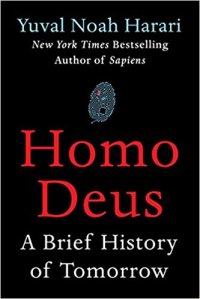
Homo Deus by Yuval Noah Harari

Countdown: Our Last, Best Hope for a Future on Earth? by Alan Weisman

Learning to Die in the Anthropocene by Roy Scranton

Half the Sky: Turning Oppression into Opportunity for Women Worldwide by Nicholas D. Kristof and Sheryl WuDunn

A Path Appears: Transforming Lives, Creating Opportunity by Nicholas D. Kristof and Sheryl WuDunn

Capital in the Twenty-First Century by Thomas Piketty

The Rise and Fall of American Growth by Robert J. Gordon

Energy and Civilization: A History by Vaclav Smil

How Will Capitalism End? by Wolfgang Streeck

EarthEd: Rethinking Education on a Changing Planet by The Worldwatch Institute

Climate of Hope by Michael Bloomberg and Carl Pope

The Gulf: The Making of an American Sea by Jack E. Davis

The Death and Life of the Great Lakes by Dan Egan

Strangers in Their Own Land by Arlie Russell Hochschild

White Trash: The 400-Year Untol History of Class in America by Nancy Isenberg

The New Jim Crow by Michelle Alexander

Between the World and Me by Ta-Nehisis Coaste

Girls & Sex by Peggy Orenstein

Sex Object by Jessica Valenti

Saving Capitalism: For the Many, Not the Few by Robert B. Reich

Dark Money by Jane Mayer

Getting to Green: Saving Nature – A Bipartisan Solution by Frederic C. Rich

The Great Disruption: Why the Climate Crisis Will Bring On the End of Shopping and the Birth of a New World by Paul Gilding

Merchants of Doubt by Naomi Oreskes & Erik M. Conway

Democracy in Chains: The Deep History of the Radical Right’s Stealth Plan for America by Nancy MacLean

Growing a Revolution: Bringing Our Soil Back to Life by David R. Montgomery

The Carbon Farming Solution by Eric Toensmeier

Are We Smart Enough To Know How Smart Animals Are? by Frans De Waal

Half-Earth: Our Planet’s Fight for Life by Edward O. Wilson

On Tyranny: Twenty Lessons from the Twentieth Century by Timothy Snyder

No Is Not Enough by Naomi Klein

The Ocean of Life: The Fate of Man and the Sea by Callum Roberts

Water: The Epic Struggle for Wealth, Power, and Civilization by Steven Solomon

Climate Change and the Health of Nations by Anthony J. McMichael

Collapse: How Societies Choose to Fail or Succeed by by Jared Diamond

JWH

Is it Science Fiction Yet?

by James Wallace Harris, Thursday, June 29, 2017

I’ve been a science fiction fan my whole life. For sixty years I’ve waited for various science fictional concepts to come true. One of my favorites is intelligent robots. Around the time I discovered science fiction watching old movies on my family’s black and white TV scientists were inventing the concept of artificial intelligence. Back then, the 1950s, they had great hopes and made bold predictions. Over the years some of their predictions have come true, but not the technological singularity when machines become smarter than us. They could still become self-aware, but what if they don’t have to, what if they become much smarter than us even without sentience?

Homo Deus by Yuval Noah HarariYesterday I was reading about David Cope and his computer program Experiments in Musical Intelligence (EMI) in Homo Deus by Yuval Noah Harari. Harari described a challenge to Cope from Steve Larson, a professor of music. He proposed playing before an audience a real Johan Sebastian Bach piece, a piece composed by EMI imitating Bach, and a piece composed by himself. After the performance, they’d ask the audience to identify the composer of each. The audience thought the EMI piece was Bach, the Bach piece by Larson, and the Larson’s piece by EMI. You can read Harari’s “The Mozart in the Machine” for more of what he has to say, but I think it’s far more illustrative to listen to EMI.

This is rather beautiful – but is it art or creative? EMI is just a computer program that analyzes music styles and then imitates those styles. On one hand, it says our creative works have set patterns. Was Bach aware of those patterns, or was his composition a work of his unconscious? Obviously, EMI is an unconscious machine that composes.

In the 1950s when AI was new, scientists claimed if a computer could play chess it must have the special qualities of being human because playing chess is such a complex human activity. When Deep Blue beat Garry Kasparov in 1997 humans decided that chess playing wasn’t that special.

Here is a piece by EMI in the style of Vivaldi. Doesn’t it feel like EMI has captured something special?

I imagine, but I am not sure, that brilliant human composers could imitate other composers in the same way. Harari’s point is EMI composes music that moves human listeners emotionally. That somehow the computer program can capture the sublime. Of course, we like to assume our sublime experiences are the most complex and deepest of our lives. Isn’t EMI, maybe with the aid of deep learning, just figuring out how to push our buttons? How simple was it?

Homo Deus is an impressive book, but also disturbing. On one hand, it could be a handbook for a masterclass in science fiction writing. On the other hand, some could feel it’s like Biblical prophecy predicting the end of humanism. We live in a time after the Enlightenment where a large part of the world still accepts Old Testament thinking. So when Harari says liberal philosophy and humanism will be supplanted by techno-humanism it’s hard to believe. Won’t the world be 70% Old Testament thinkers, 20% humanists, and 10% techno-humanists?

What happens when we have true AI? What will the world be like with 90% unconscious machines, and 10% conscious? As Harari points out, humanism is based on the idea that all people are equal and they all deserve equal rights. But will biologically/genetically enhanced people feel that way? Will Human 1.0 accept Human 2.0? Will both of them accept AI 1.0? What will AI 1.0 think of Humans 1.0 and 2.0?

Corporations are backing robots over people. Capital is shifting to very few humans, and they want to eliminate all labor. Futurists talk of guaranteed minimum incomes, but capital doesn’t even want to pay for universal healthcare, so why would it support tax money going to completely support humans who can’t find work in a cyber economy?

Although I loved reading science fiction all my life, I’m not sure I’ll like actually living it. I thought my science fictional future would involve me traveling to Mars. Or owning a robot that did housework. But it looks like robots will colonize space, and take over all our jobs on Earth.

What are we suppose to do? Go to live in a virtual reality? Meditate and find our inner selves? Become artists? As Harari points out with EMI, robots will outdo us as artists too.

It will be fascinating to read science fiction stories read by writers studying Harari. If you belong to a species third down from the top how do you redefine existentialism or religion?

JWH

Waiting for Heinlein

by James Wallace Harris, Sunday, May 14, 2017

Are you disappointed your life hasn’t turned out like the stories you love? Would I feel this way now if I had loved literary fiction instead of science fiction? In the last third of my life, I’m cherishing nineteenth-century English novels and early twentieth-century American novels, realizing they would have been better preparation for my life – the life I got instead of the one I wanted. Science fiction is as wondrous as any religion but as frustrating as a Samuel Beckett play. Of course, doesn’t religion and science fiction promise futures that will never arrive?

Robert Heinlein

I’ve been waiting a long time for the future to get here – sixty years by one reckoning. And I must admit, sometimes I feel the fringes of Tomorrowland when I use my smartphone, but for the most part, I’m still waiting for Heinlein to show up. Other writers have complained about not getting their jetpack, but they had such foolish gadgets back in the sixties.

I’m waiting for interplanetary rocketships with long sleek hulls, that land on four fins with thrusters, or interstellar spaceships like the U.S.S. Enterprise. Reading about extrasolar planets is encouraging, but it ain’t what Heinlein/Asimov/Clarke promised with tales of visiting them.

I’m also waiting for robots like Asimov and Simak promised. I do talk to Alexa, but she has no soul. And I enjoy seeing the little robots DIY people make with a Raspberry Pi board, but I think we should have robots well beyond the ones we saw in Forbidden Planet and Lost in Space.

Do we screw up kids by letting them read science fiction and fantasy? Even before I discovered Robert A. Heinlein at age 12 in 1964, I had absorbed a great deal of science fiction via an old black and white television my family bought in 1955. Should we judge reality by our dreams? Would we have invented everything that makes us human by accepting reality as it is?

Maybe fantasies are fine except we should be more discerning when creating them.

I don’t know if this is too sick to admit, but as a kid, I was disappointed that WWIII didn’t happen. All those 1950s movies about mutants and last people on Earth had its allure. Living like Harry Belafonte in The World, The Flesh and the Devil seemed great, especially after Inger Stevens arrives. (Like Harry’s character, I could have done without the Mel Ferrer’s character.)

And even though the robots in Target Earth were scary, I liked them, although I didn’t love them like I loved Gort in The Day the Earth Stood Still. It was a shame learning in the 1960s that our 1950s flying saucers dreams were flaky and fake. It was somewhat redeeming when we got to see Closer Encounters of the Third Kind in the 1970s, but it really was too late, at least for believing in Have Space Suit-Will Travel adventures.

It was crushing in 1972 when we stopped going to the Moon. From reading Heinlein I was positive humans would reach the red planet by the end of that decade and build colonies there in the 1980s. I thought before I died (which I imagined being around the mid-21st century), I’d leave life knowing that interstellar travel was in the preparation phase.

I’ve written this essay before. I’ll probably write it again many times before I die. The feelings that inspire these thoughts come out again and again. I wanted more science fictional dreams to come true in my lifetime. Of course, I also expected more of my liberal dreams to unfold before I died too, but Donald Trump has crushed them. Books, especially those we read when we’re young give us a kind of hope that never goes away. I know the hopes I got from science fiction are no more practical than the hopes the faithful get from reading The Bible. Does needing the impossible mean we’re stupid? Or do those desires shape our souls?

The thing that distinguishes science fiction from religion is the belief that humans can build rockets that will take us to the stars. The faithful believe God will take them to heaven. Maybe my frustration with the future is it takes longer than a lifetime to get where I dream of going.

I still embrace three science fictional hopes that could come true before I die. The first is SETI. I’m not sure humans will ever travel to other star systems, but we might get messages from beings living light years away. Second, even if we don’t get a message from ET, I hope astronomy will eventually detect atmospheres with spectrographic evidence of advanced life on extrasolar planets. Finally, I hope AI minds arrive. Many people fear artificial intelligence will wipe out humans, but I hope they will help us evolve. Our species is smart, but I don’t think we’re smart enough to survive self-extinction. AI minds could save us from our own stupidity.

I’ve been waiting my whole life to live my favorite stories of Robert A. Heinlein. That’s quite childish of me. On the other hand, I could have followed in my father’s footsteps. He died an alcoholic at age 49. I always assumed he drank because he couldn’t achieve his childhood aspirations. I’ve often wondered if science fiction was my alcohol. At least science fiction has kept me alive longer.

Like Vladimir and Estragon, my old friend Connell and I have been arguing about the future since 1967, waiting for Heinlein, Clarke, and Asimov to arrive.

JWH

Aging, Changing, Technology, and Music

by James Wallace Harris, Wednesday, May 3, 2017

For someone whose childhood began in 1951, the year 2017 is the far fucking future. Sorry about the inappropriate word, but hey, that’s part of the relentless pace of change. We’re now allowed to use “bad words” in print.

I don’t think young people today can even imagine what a horrendous social offense it was to say fuck in the 1950s, much less write it down. If you could understand you might know what this essay is all about.

It Happened One Night

Last night I watch It Happened One Night with my friend Annie. I told her this 1934 picture was considered very risqué when it came out in 1934. After watching a while she asked why? By modern standards its so squeaky-clean it’s hard to spot the naughty bits. Even as a kid seeing it for the first time in the early 1960s, that old film still had its titillating parts. That changed after Midnight Cowboy.

I started listening to music in the 1950s on my father’s car radio when me and my sister could still stand in the front seat. This was before seat belts. It was his car and his music, but that’s how the times were back then.

For Christmas 1962 I got a AM clock radio. I played my music on that radio from 1962-1968. I turned it on when I got home from school and turned it off each morning when I left for school. I listened rock and roll while I slept, burning songs like “Rhythm of the Rain” into my unconscious mind. I grew up in Miami and loved WQAM and WFUN – the two competing AM Top 40 stations that played rock and roll.

My father had a second job bartending and would bring me and my sister 45rpm records that were pulled from the jukeboxes. In 1962 when I got the clock radio my sister had gotten a portable record player. I envied her that. (I might have stolen it.)

In 1963 an airman left his console stereo and LPs with my father was he was stationed overseas. That was my first introduction to LP albums. The airman left mostly folk music.

Our Man Flint soundtrack 

Eventually I got a little transistor radio to carry around. Then I got my own portable stereo record player when I started buying LPs in 1966. My first LP was the soundtrack to Our Man Flint. I would join the Columbia and Capital music clubs to mass collect albums. Joining, completing my fulfillments, quitting, and rejoining to keep getting those intro bundles.

When I started driving in 1967 I had a car radio. In 1968 I bought a console stereo system. It was my first use of credit, and I was only 16. The console introduced me to FM radio.

Just in the 1960s I went from AM to FM, and from mono to stereo. From tubes to solid state. In the 1970s I got a much larger console, started seriously collecting records, stopped listening to commercial radio, and eventually got into component stereo systems.

In the 1980s I switched to compact discs. I also tried different tape systems. As the decades past I used MP3 players and iPods, and even got into SACD audio for a while. For the last decade I’ve mostly been listening to subscription streaming music. I never got into Napster thievery. I guess I was too old fashioned to steal.

So in the course of half a century I went from listening to music on various physical media to listening to invisible streams of ones and zeros. In 1970 we were warned about Future Shock. Reading about what the future will do to us and living into the future are two different things. The future is both dazzling and tiring.

My point is the technology keeps changing. So does the music. So do the genres of music. I’ve bought some of my favorite albums many times, on LP, CD, cassette, SACD, and digital file (I was briefly into 24bit lossless).

The long playing (LP) record album came out in 1948, but it took a while to catch on. Because of streaming music, the concept of an album is fading. Not only have I outlived many technological changes, I’ve outlived an artistic concept.

And you know what? I’m tired. I’m fucking tired of change. I’m weary of the constant barrage of new technology. And I was a computer geek starting in 1971. Just read all those changes in computer tools I’ve used.

I’m happy with streaming music. Can’t we stick with it for a while? At least a quarter century, I hope. Give me 25 years and I’ll die on you, and the world can change as much and as fast as it wants after that.

ItsAMadPoster

JWH