Why Were The Two Most Famous Science Fiction Novels of the 20th Century Not Written By Science Fiction Authors?

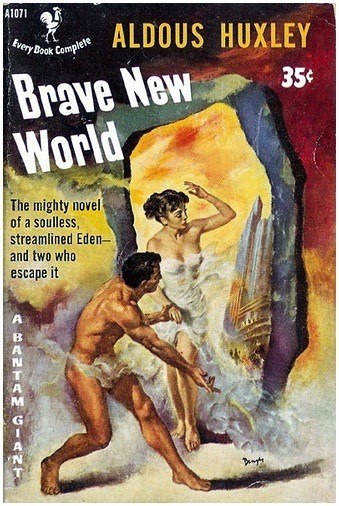
The two most famous science fiction novels of last century were Brave New World by Aldous Huxley and Nineteen Eighty-Four by George Orwell.  Now I didn’t write that to generate a flame war among science fiction fans, or as a slight to genre writers, but because I believe it’s true, especially if you ask people who don’t normally read science fiction.  I’m actually wondering why the two biggest successes using science fiction as a writing technique weren’t penned by writers who specialized in writing science fiction?  Huxley and Orwell were straight ahead literary guys – total amateurs at speculative fiction.  They probably never heard of Hugo Gernsback or John W. Campbell.

And, the two most famous science fiction novels of the 19th century, The Time Machine and The War of the Worlds, were not written by a genre writer either.  H. G. Wells existed before the science fiction genre was established.  Nor were his books written for the genre reader of his day, which did have a lot of science fiction, even though it lacked the label.  In the 21st century, when science fiction is a well established, and a well loved genre, it bizarrely seems that the people who aren’t science fiction writers have the biggest successes with the technique.  Cormac McCarthy and Margaret Atwood are two good recent examples.

What are these non-SF writers doing that SF genre writers aren’t?  I just got through rereading Nineteen Eighty-Four and I thought about this the whole time I was thoroughly enjoying the book.  Nineteen Eighty-Four is so different from the genre science fiction books I normally read that I’m tempted to say it’s not science fiction.  Many literary writers and English profs claim just that, but they would be wrong.  Insanely wrong.  George Orwell might not have written for Campbell’s Astounding, and probably never even read the famous pulp, but Nineteen Eighty-Four would have fit comfortably in that magazine as a serial.  No Astounding reader would have made one objection as to it not being science fiction.  And I’m quite sure readers would have voted it the best story of the issue, even if Heinlein had had a story in that issue too. 

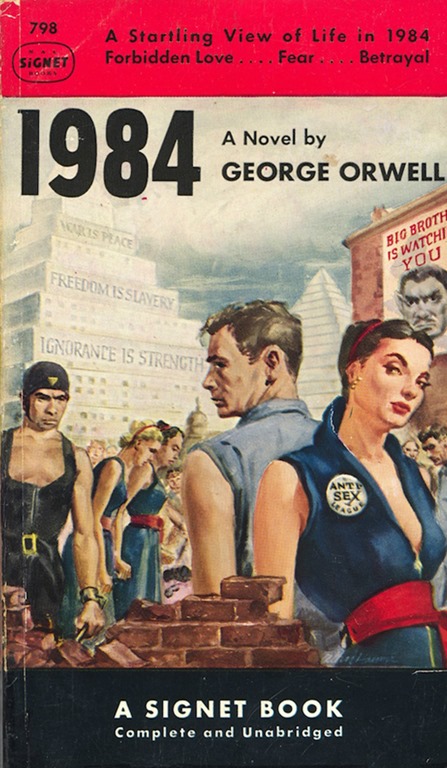
Not long ago I reread Beyond This Horizon by Heinlein and I felt pretty sure that Heinlein wrote it hoping it would be another Brave New World.  Heinlein was savvy enough to know that Huxley’s book sold far more than pulp fiction, and at the time, very little science fiction was even being published in hardback, or that new format, the paperback.  Here’s an early paperback cover for Nineteen Eighty-Four – looks just like a science fiction novel, doesn’t it?
1984_pulp3

While reading Nineteen Eighty-Four this time I was blown-away by Orwell’s world building genius.  World building is an essential feature of SF/F, which books like Dune and The Lord of the Ring illustrate.  J. K. Rowling is a billionaire for her world building, and deservedly so.  Does that mean Cormac McCarthy’s post-apocalyptic world is just better painted than all the other genre stories working with the same idea?  Does The Handmaid’s Tale just out dystopian run of the mill SF writers?  Maybe so, but why?

It’s pretty obvious that more people on Earth can understand what the implications of Big Brother are over philosophical implications of Arrakis.  Too many hundreds of millions of people in the 20th century encountered a totalitarian state first hand, or fought against them in wars, or spent years hearing about them in the news, not to understand the brilliant portrayal of Big Brother and the savage criticism of them with the creation of Newspeak.

The reason why Nineteen Eighty-Four and Brave New World are so well known in the 20th century is they describe so clearly the quintessential fears of the 20th century.  All stories set in the future are about the present, and I guess the better they are about exploring the present, the more copies they will sell, and the better chance they will be part of the curricula in high schools and colleges.

The entire time I spent reading Nineteen Eighty-Four off my Kindle I was amazed by how relevant this book written in 1948 was to 2013.  To write that Orwell was brilliant is an undeserving understatement.  We live in a society that worships freedom, yet we live with constant NSA surveillance, continuous war, Homeland Security, and the sun never sets on our drone airspace.  Our paranoia knows knows no bounds.  In terms of political psychology and insight into the human heart, Orwell runs away with the prize for applying science fiction techniques for writing about the future to say so much about now.  Nor has any science fiction writer ever attempted to explore the linguistic territory of Newspeak, which is the real science that makes Nineteen Eighty-Four great science fiction.
brave-new-world1

I haven’t reread Brave New World recently, but I plan to.  Brave New World was written in 1931 and I just finished a book,  One Summer: American 1927 by Bill Bryson that is the perfect companion to the Huxley book, because it explained the world Huxley was living in when he wrote his classic.  It’s a time when many U.S. governors and mayors belonged to the Ku Klux Klan, where many prominent Americans publically espoused beliefs in eugenics and extreme racism, where many states had passed eugenic laws, and racism was the law of the land.  The twenties was the decade that mass production and mass communication really got massive.  It was a decade where America began the Americanization of the world.  That scared Huxley.  Huxley was afraid of America in 1930, and Orwell was afraid of Russia in 1948.

Brave New World and Nineteen Eighty-Four are true dystopian novels – they are anti utopian, written in response to intellectuals promoting utopian solutions to world problems.  Huxley and Orwell understood the world in which they lived, and wrote books that showed off that knowledge in deeply insightful ways.  They both used science fiction as a literary device to philosophize about ideas if written as nonfiction would have been entertaining to few, and boring to many, but because of those techniques, wowed millions.  Readers still study and reference their work.  And those novels would not have had the impact they did without the science fiction. 

Huxley and Orwell, and other literary writers, use science fiction to bring political, ethical and scientific ideas to the masses.  Why don’t more genre writers attempt this?  Heinlein tried, especially with Stranger in a Strange Land, his most ambitious novel.  So, why did he fail?  I think for two reasons.  First, it included ESP, or PSI powers, that aren’t scientific or believable, and second, it promoted his personal ideas about freedom, especially sexual freedom, nudity, and group sex, which few people beside the hippies of the 1960s shared.

Ray Bradbury hit one out of the park with Fahrenheit 451, but it’s never achieved the popular acclaim that Brave New World or Nineteen Eighty-Four has.  Maybe because it wasn’t nearly as ambitious as those two.  And dare I say it, maybe the target, those people who would give up reading for mindless television, were insulted rather than inspired to canonize literacy?

John Brunner also tried several novels of this type, using science fiction to make political statements, especially Stand on Zanzibar.  Zanzibar was an experimental tour de force that was hard to comprehend or read by the general reader, but dazzled the exceptional reader.  It should have been a contender.  It should be better remembered.  Both Fahrenheit 451  and Stand on Zanzibar are shining examples of what pulp writers can do when they aim high.

I think the genre writer that comes closest in writing ambitious science fiction for the non science fiction reading masses was Orson Scott Card and his book Ender’s Game.  It was obvious targeted at genre readers, but it was widely read outside of the genre.  It was never as sophisticated as Huxley and Orwell’s books, and didn’t deal with broad contemporary issues, but it dealt with xenocide in a way that made it relevant to the average reader who could translate it into commentary on genocide, or commentary on science fiction.  Unfortunately, the recent movie version of the story targets Ender’s Game at the lowest common denominator video game player, whose kill anything that moves instinct means they have deaf ears for the ethical insights.

The 2014 Earth is just as fucked up as the 1948 Earth, even more so, so why aren’t we reading novels that targets our political, social and ethical failures like modern science fictional smart bombs that are literary descendants of Huxley and Orwell?  Is it because serious thinkers no longer believe that science fiction is the proper tool?  Has decades of fun science fiction dulled the edge of sharp science fiction?  Or maybe we don’t have political and social thinkers like Orwell or Huxley anymore, because those writers work for the New York Times or Fox News.  Let’s hope it’s not that times aren’t bad enough yet to be muses for such writers.

JWH – 12/31/13

A Bacterium, Ant, Cockroach, Mouse, Cat, Extraterrestrial and Robot Walked into My Kitchen

Infinity is a very large number.  Larger than you can ever imagine.  But let’s try.

Until recently we lived in a universe – billions of galaxies, with billions of stars each.  Big numbers, but nothing compared to infinity.  Then scientists began to speculate about a multiverse – an infinity of universes.  How many is that?  Enough that your life could be randomly recreated over and over again, for an infinity of times somewhere out there in an infinity of universes.  Some of your lives, an infinity, will only be roughly like yours, but some of them, another infinity, will be exactly like your life now, and another infinity of them will be only slightly different, by just one little thing.  And so on.  For infinity.

The number of monkeys and the amount of time it takes to randomly recreate all the works of Shakespeare by banging on old typewriters are very small numbers compared to infinity, but still much larger than what we can imagine.

Get the idea how big infinity is?  No, I don’t think so, not yet, it’s still bigger than you can imagine.

This morning after my routine breakfast of scrambled eggs and potatoes, I was sitting on the porcelain throne in the smallest room of my house, reading a copy of Civilization by Niall Ferguson, when an alien from Gliese 687 broke into my house and examined my kitchen without me noticing.  So how could I know this?  Well, this morning I was reading The Hidden Reality by Brian Green while sitting on the porcelain throne in the smallest room of my house, just after my breakfast of eggs and potatoes and I had this thought:  What if while I was taking my morning dump, an alien from Gliese lands in my backyard, jimmies open my back door with with a dazzling alien lock pick, lets itself in, along with a yellow cat hanging out by the back door, to poke around my kitchen, for a bit, only to leave before I finish my reading to return to the kitchen to do the dishes?

If we live in a reality of infinity that has happened.  Maybe it happened to me today.  Let’s make infinity even bigger.  Let’s imagine that alien is also being followed around by a robot from another universe that is billions of years old, and it is collecting information on the life forms of this universe.  Hey, it could happen, we have infinity to work with.

My kitchen is a rather small place, at least compared to all of reality.  To me it appears to be empty of life except when I fixing myself something to eat.  My wife works out of town Monday through Friday, so I live mostly alone.  On the weekends my kitchen is very busy with Susan and my coming and goings, but for the most part, from my frame of reference, my kitchen only exists when I’m in it.

My awareness of reality is equal to my ability to comprehend the physical reality outside of my body.  I have five senses that collects data that my brain processes into a view of reality.  It’s not a direct view.  I also am able to analyze this data and theorize about aspects of reality I can’t perceive directly – like time, space and infinity.  We might only have five senses but we have many more cognitive tools to perceive reality, like mathematics, logic, imagination, science, etc.

This is a tale of perspective.  A lesson in how we explore reality.  How big is reality.  How much can we perceive?

Like the famous fable about the blind men examining an elephant and all reporting something different, this story is about different creatures exploring my kitchen and reporting what they saw.

kitchen

I use the world reality instead of universe because scientists are now hypothesizing that our universe is one of but many, probably an infinity of them.  So I use the word reality to point to the whole shebang of everything.  My kitchen is but one infinitely small aspect of one infinitely large reality.  Any creature standing in my kitchen will feel they are in the century of reality.  If we expand outward from my kitchen by powers of ten, we’ll eventually surpass the size of the known universe at ten to the 26.  More than likely, reality extends upwards well beyond that, probably for infinity.  If we explore downward by decreasing powers of ten, at 10 to the minus 18 we’d reach the smallest particles we know about today, but again, there’s probably plenty more small to explore, maybe an infinite amount.

My kitchen is so small compared to the rest of reality as to be non-existent.  But then, compare to the smallest of things, my kitchen is as large as the universe is to us today.

The Tale of the Bacterium

bacteria

Okay, the bacterium didn’t walk in, it floated in with a few billion friends.  They wafted in unnoted by all.  Bacteria don’t have sense organs, so their concept of my kitchen was rather limited.  Maybe as much as you or I would know about the Moon if a bit of moonlight flickered on us through a window one night when we weren’t paying attention. 

Bacteria are tiny, but common, and essential to life on Earth, and for most places in our universe, the common form of life.  Some scientists have even pessimistically suggested that our kind of self-aware life might be so uncommon that we might be the only example in this universe.  Others theorize our kind of intelligent life might be common enough to have many concurrent examples per galaxy.  A bacteria might have as much as a terabyte of information stored chemically in it’s structure.  How many universes have to evolve before we have one universe where bacteria were randomly produced out of simpler non-living elements?  If it takes that many to make the smallest of life forms, how many universes have to form to create the scenario I’m giving here?

Bacteria have chemical receptors.  There was a wet spot on the extraterrestrial’s respirator exit value and they landed on it.  They died when she/he returned to their ship in my back yard moments after leaving my kitchen.  They never knew anything about my kitchen or the ET, but then bacteria have never known much about anything, let alone conceived that we all live in the same reality.

The Ant’s Story

Ant

The ant came into the kitchen from under the house, via a loose space between the flooring and the water pipes.  The ant is a giant compared to the bacterium, a magnificent creature, with useful sense organs and a little teeny tiny brain.  To the ant, a creature who perceives the world mostly in two dimensions, my kitchen is a vast affair, but not impossibly large, probably no bigger than you and I walking through a large neighborhood.  The ant was prowling through the cabinet under my sink while the alien was examining the island counter of my kitchen, while I was in the bathroom sitting on the pot reading Civilization by Niall Ferguson, and the robot was discreetly observing the alien.

The alien never noticed the ant.  The robot recorded the ants activities with it’s powerful sensors.  The ant felt the vibrations of the alien moving around the room, but never sensed the robot.  The ant never even met the dying cockroach.

Imagine if life on Earth had never evolved past the ant.  What if the perception of this Earth, our Earth, had never been perceived by nothing greater than an ant’s brain?  We humans think reality is all about us, but it’s not.  We humans come and go, even in all of infinity.  And compared to everything else in infinity, in all of reality, humans would make up such a small percentage of each universe, that our total impact would be near zero.  Compared to all of reality, we are as close to be nothing as nothing.  Isn’t it hilarious that we each think we’re everything?

I often wonder what the world will be like when mankind becomes extinct and the most advanced being on the planet will be the dolphin or chimpanzee.  Will they remember us?

What the Roach Saw

dying-roach

Unfortunately, the roach had entered my kitchen yesterday and had already partaken of the poison I had set out for roachkind.  It wasn’t quite dead.  It’s hairy legs occasionally stretched and retracted.  The roach didn’t know it was dying.  Nor did it notice when the alien reached down and carefully picked it up and put it in a small specimen container.  The roach would finally die in orbit around the Earth.  The roach had liked my kitchen in it’s own little way.  It was warm and not perfectly clean.  It had possibilities for a future colony.  Lucky for me, but sad for the roach, it never got to lay its eggs.  Those eggs were an interesting surprise to the ET from Gleise 687.  To the roach, my kitchen was a much smaller place than what the ant found, but to a roach, reality isn’t very big at all.  There is no infinite numbers in a roach’s brain.

The roach had perceived my presence several times during its short visit.  It had no understanding that I was a fellow creature living in a large reality, it only sensed me by vibration and changes in light patterns on its primitive receptors.  Evolution had programmed it to always run.  However, the roach had no program to warn it of the chemical appeal of the bait I had left for it.  Sorry little guy.

Mouse in the House

mouse

Last night, unnoticed by me, a little mouse crawled into the pantry from a passageway of tunnels in the wall.  My kitchen was a far richer place to little Mickey than what the ant and cockroach found.  My kitchen had wonderful possibilities, a very rich environment it.   It was aware of my every movement in the house and knew when to hide and when to scamper.  The kitchen was a three dimension maze of sights and smells, and when I left for the bathroom, the cute little mouse had come out of hiding and ran across the kitchen floor hoping to find something good to eat.  It froze when the alien picked the lock of my back door, momentary letting in a  chill breeze.  The mouse sensed the cat immediately and was below the house before the cat reached the kitchen.

The little mouse could not count.  It never knew that billions upon billions of bacteria lived inside it’s little body.  It was no Carl Sagan of mice.

The Kitty Kat

OrangeTabby

The scruffy old cat was looking for a warm spot when it ran into the house.  The being that let it in did not scare it like the human that lived there.  The cat was leery of all humans and lived out of doors on its own.  It was always drawn to the warmth that leaked out of houses, but never liked people, and especially hated dogs.  It always kept other animals at a distance, except the ones it wanted to eat.  As soon as the yellow cat walked into the kitchen it could smell the mouse.

In terms of certain kinds of numbers, cats and humans are very close.  We know of each other’s existence.  The difference is we can conceptually know much further than our senses can show us, whereas a cat is a creature that lives very well within it’s perceptual reach.  This makes some humans sad, and others happy.

Alien from Gliese 687 (cloaked)

kitchen 

The alien was hundreds of years old because of enhancements to her/his biology.  Aliens from Gliese 687 traveled between stars at one third of the speed of life.  They have been observing Earth for millions of years.  That’s the thing about intelligence, about the only thing to do in this universe is to observe how it works.  Observers seldom let themselves be observed because of ethical reasons.  It’s not much fun for a species to discover it’s not the crown of creation.  If humans suddenly realized it was the mouse or cockroach of this reality, or even the bacterium, it would be hard on our collective ego.

She/he had let in a yellow cat that was hanging around the back door.  The alien was completely silent, but then she/he was unaware of being followed by a robot from another universe.

The Robot from Another Universe (cloaked)

kitchen

The carefully cloaked robot had been following the alien for over two hundred of our years.   The robot found the alien the most interesting creature it has discovered in the last 787,623 years.  When you can live for billions of years across multiple universes finding something interesting to do with your time is a challenge.

The robot was like a machine, but calling it a machine would be insulting.  Eons ago it had been created by intelligent machines closer in shape to what we call machines.  There are limits to intelligence, consciousness, awareness and lifespan, and this robot was at the outer limit, at least for all the universes it was aware of, but then there was much it wasn’t aware of.  There’s always more.  Infinity is like that.

Me, James Wallace Harris

me

This version of me is a lot like most of the others like me.  I mostly know about this house, and what exists around it for a few miles.  Conceptually I know about a lot more, but most of my awareness is focused on a tiny piece of reality, in a tiny fragment of time.  Reality has existed for an infinite time before me, and will exist for an infinite time after me.  Reality is infinitely bigger than I can imagine.  I miss a lot, like the visit from the bacterium, ant, cockroach, mouse, cat, alien and robot.  That’s how it always is, we miss a lot.  We miss most of everything.  We miss an infinity of everything.  But that’s okay, because we have a finite mind that enjoys a finite time and place.  Small numbers do have their charm.

None of my visitors stayed long, and by the time I finished my after breakfast read and returned to clean up the kitchen they had gone.  I went off to my computer room to write this until lunch time.  Which is now.

JWH 12/11/13

Gravity–Riveting Story Set In Space

[Don’t read this review if you haven’t seen Gravity.  But when you have, because you should, come back here and let’s talk.]

Television watchers are experiencing a renaissance in storytelling.  Shows like Breaking Bad, Downton Abbey, Shameless, Friday Night Lights, Dexter, The Newsroom, have taken the art of storytelling to new heights.  By carefully focusing on character, writers have developed new techniques to create highly addictive forms of fiction.  This has revolutionized television.  Character driven storytelling has always been preeminent in novels, and prominent in movies, but television was always seen as a vast wasteland of lowbrow entertainment.  Now I like television better than movies, or even books.

So what is television doing that movies aren’t?  Movies often seem like a vast wasteland of teenage schlock.  CGI unreality, over the top action, Three Stooges type violence, and silly premises that should insult grade school kids.   But most of all, the characters are unbelievable.  Movies aren’t about things I could actually experience.  I don’t relate to their stories.  Maybe kids can love superhero characters because they haven’t yet learned there aren’t any superheroes.

A week ago when watching the final episode of Breaking Bad I wondered what I would have to watch next Sunday.  I remember mentally wishing I could find something that surpassed Breaking Bad in storytelling intensity.  Well, I got my wish, because on Sunday night I saw Gravity, the new film starring Sandra Bullock and George Clooney, and directed by Alfonso Cuarón.   The previews brought me to the theater with great expectations, but I wasn’t prepared by how blown away I would be by the film.  While the credits were rolling I thought how Gravity set a new standard for science fiction movies.

This space story seem real.  The characters felt like they could be real people.  The special effects were wonderful, but not the story.  This movie had the attributes of what make the current great television so much better than the movies.  But what are those attributes? For one thing, there’s not a superhero in sight.  Nobody is saving the world.  Even though the characters are involved with extraordinary situations, they are ordinary people.  Maybe we aren’t rooting for the little guy, but we are resonating with characters that are closer to ourselves.

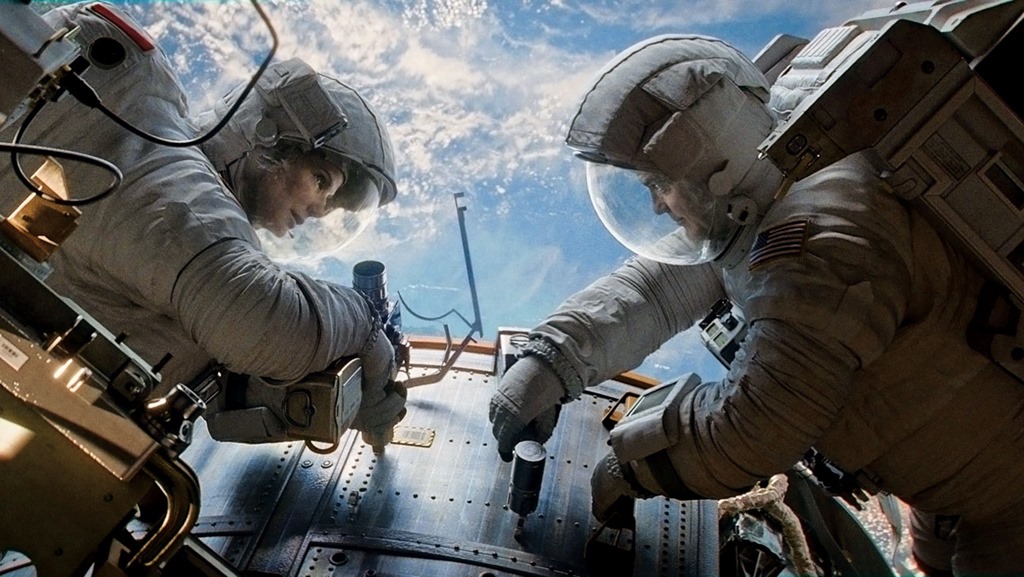
GRAVITY

Don’t get me wrong, Gravity isn’t literary or deep.  And although Bullock and Clooney give amazing performances, their characters were almost clichés.  How Gravity amazes is through simply gripping storytelling.  It is a story of survival, beating tremendous odds in a harsh environment.  And although Gravity wasn’t very scientific, Gravity felt very realistic.  Gravity was brilliantly science fiction in the same way Gattaca had been years ago, it was about a individual overcoming tremendous adversity in a science related setting.

Although in the last couple of decades we have had more and more female action heroes, I felt while watching Sandra Bullock that Gravity represented a paradigm shift, transforming story hero from male to female.  It didn’t feel like a gimmick that Ryan was a woman.

For the first hundred years of of filmmaking Ryan Stone would have been played by a male actor.  Ripley set the precedent, but when Ryan pulls herself out of the muck and stands, with the camera angle from the ground looking up at her towering figure, it felt that women had finally surpassed men at their own game.    It was much like Vincent beating the genetically enhanced humans when he took off into space at the end of Gattaca.

George Clooney plays the ultra-cocky space jock to a tee.  Matt Kowalski is perfectly at home in a vacuum.  Kowalski has the science down cold.  But more than that, he is mature way beyond his boyish antics.  He is an alpha male passing the baton to a female saying with total confidence, you can do this.  I know most viewers won’t see this film as a feminist statement.  Most girls won’t think twice about Sandra Bullock being the lead character.  But in real life and in movie life, things have changed a lot in my lifetime, but not nearly enough.

The message is clear, women can fly the fighters, drive the tanks, pilot the spacecraft, command the ships, shoot the M-16s, control the telescopes, construct the skyscrapers, etc., but it’s sad that so many women have MTV ambitions, like Miley Cyrus, to wear skimpy outfits and twerk.  Movies and television, the most heavy-duty of pop cultural social programming, sends the message that women can now do anything.  But will they?  And will we accept it?

If you think I’m making a pointless issue, then think about this.  What if our two actors were cast against type.  Would you have liked Sandra Bullock as the veteran space jock, and George Clooney as the mission specialist rookie?  We’re still brainwashed to think George Clooney should have played Matt.

Yes, we have made women into action heroes that can shoot and kill, but action heroes aren’t believable characters, they are cartoon characters.  How often are complex male roles given to female actors?  Would you have believed Sandra Bullock as Matt Kowalski?

Let’s put it another way.  I work at a university and the majority of the engineering and computer science students are male, and the majority of the teacher education and nursing students are female.

The role of Ryan Stone calls for a rookie, and most rookie astronauts are still male.  Picking a female to play Ryan is an intentional decision to make the character to appear more helpless because we’re still conditioned to think of women as helpless, or of needing help.  Gravity shows us we’re wrong. But being helpless is good in this movie, because good storytelling is about getting the audience to identify with the main character, and we’d all be essentially helpless in space.

Picking the name Ryan is an intentional choice too – Sandra Bullock is to stand in for a man.  I think that was a perfect choice by the writers of Gravity.  We’re cheering the stand-in for everyman who also happens to be everywoman.  Not only that, we’re all identifying with her, guys and gals.  While watching the movie I totally identified with Ryan Stone and not Matt Kowalski.  I never had the Right Stuff, but I might could have been Ryan Stone.

Maybe next time when they make a film like Gravity, the veteran space jock will be a woman, and it will be as natural as our need for air, but for now Sandra Bullock was perfect in this role.  Whatever is the magic formula for modern storytelling, Breaking Bad and Gravity have it down as well as Walter White cooks meth.

– – –

By the way, many people are nitpicking Gravity for scientific issues.  That’s cool.  But don’t let it keep you from seeing and enjoying an amazing film.  I was really disappointed with Neil DeGrasse Tyson because his complaints were rather lame compared to the problem of orbital mechanics.  Here are some things to read, but don’t get too hung up about them.  Gravity is a triumph of storytelling.  Like preconceived gender roles, we still want fiction with far more excitement than actual reality.  It’s hard to embrace perfect realism.

I expect gender roles to continue to evolve, and I expect incorporating realism into popular fiction to evolve too.  Breaking Bad was far more realistic than such a show would have been ten years ago, but in ten years, writers who will surpass the talents of the Breaking Bad team, will create a series about cooking meth that is far more realistic.  Gravity could have been just as exciting if it had been 100% scientifically accurate.  And I’m not dinging it for its scientific faults.  I’m just pointing out that we’re moving towards a kind of absolute realism in fiction, and that includes gender roles too.

Fact Checking Gravity

JWH  – 10/11/13

What Are The Best Sites For Reading Science Book Reviews?

Generally, when I discover a great science book, it’s through accident, rather than intent, and usually it’s a couple years after it originally appeared.  Popular science books seldom become beach reads that everyone talks about.  Maybe I should say never, because I can’t name one.  Even though our culture is massively tech driven, science isn’t popular like football or superhero movies.  It’s a darn shame that science books don’t get the press that Kim Kardashian does!  What I’d like is a handful of science book review sites to read weekly, and when a book gets praised on many of them, I’d know what to read right away.

Quite often I’ll visit one of my two favorite bookstores and check out the science book section and see many new science books that look appealing, but I’m afraid to buy them without knowing more.  Over the years I’ve bought several science or science history books that I later discovered were not very well received.  What I need to do is read reviews before I go shopping, so I’ll know something about the new science books.

Since Google is our best friend, I started with a search on: science book reviews.

At the top of the search results is book reviews at Science Magazine.  Ah, an obvious choice!  But before I could get too excited, I was quickly reminded that Science is rather parsimonious with its words.  You have to be a subscriber to read the full text reviews.  However, they do give yearly listings of book reviews with links to Amazon, where I can read the customer reviews.  Here’s the list for 2013.  Overall, I’d stay it’s not worth the visit though, especially since many of the book are expensive academic books I’d never buy, like The World in the Model by Mary S. Morgan, which does sounds great though.  Although I did spot a couple books I’m going to keep my eye out to find.

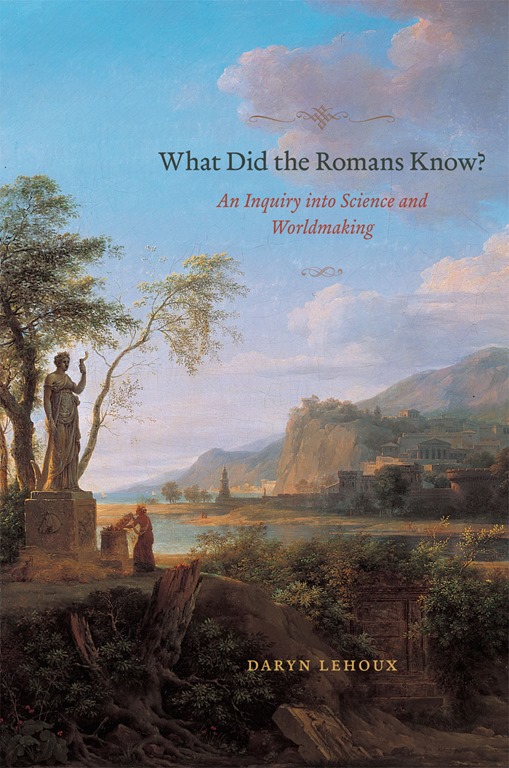
what-did-the-romans-know

What Did The Romans Know? An Inquiry into Science and Worldmaking by Daryn Lehoux.

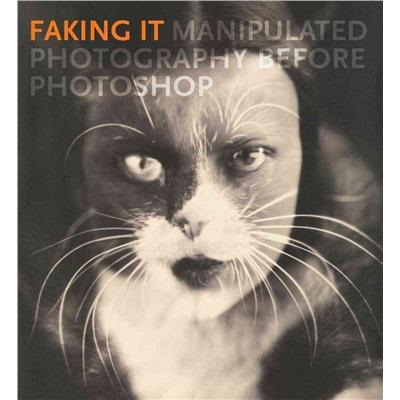
faking-it

Faking It – Manipulated Photography Before Photoshop by Mia Fineman

Second in the Google returns is The Guardian:  Science Book Reviews.  Now these popular science books are more my speed.  Right off the bat it reviews two books I want to read.  However, it’s not exactly what I’m looking for either.  The Guardian provides a rather hodgepodge look at science books.  What I’d really like is a site that covers each week’s new published science/math books, pretty much like Entertainment Weekly does for movies, television, music and books.  Here’s one book reviewed at The Guardian I’ll buy when it comes out in America 8/1/13.

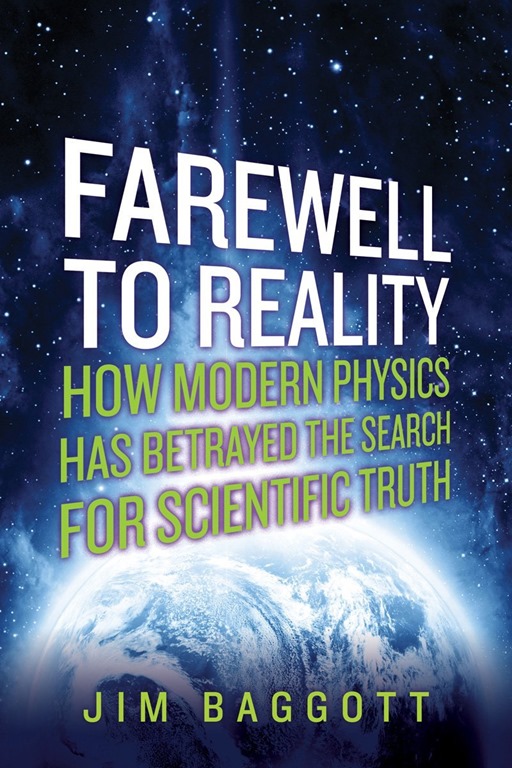
farewell-to-reality

Farewell To Reality: How Modern Physics Has Betrayed the Search for Scientific Truth by Jim Baggot.

Over at American Scientist, they have a Book Review Links page that attempts to do what I’m doing here, find science book review sites.  There I found Download The Universe: The Science Ebook Review.  This is a very cool site about science ebooks, both free and priced.  I liked this site so much that I subscribed to their RSS feed in Outlook.

Another great site is Edge.org, and their Library page.  It’s not really a book review site.  Title links go to Amazon, but author links go to pages about the writers, and since Edge.org focuses on interviews, this often leads to book discussions.

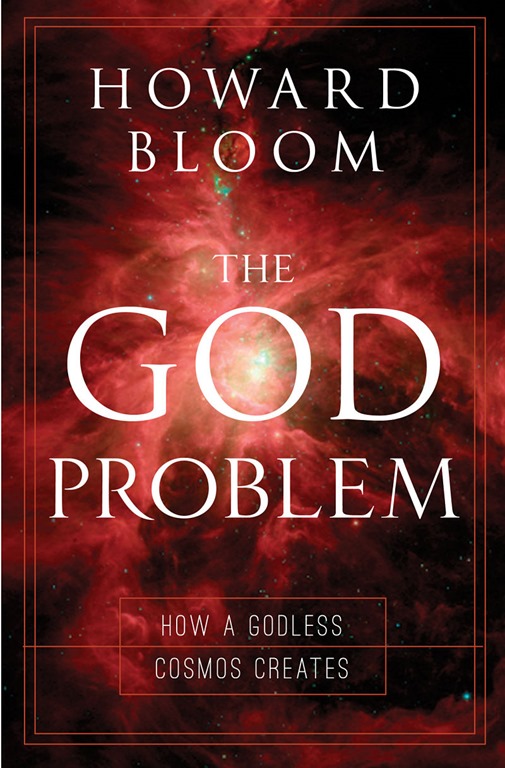
I did stumble upon ForeWord Reviews Science Section.  One book it reviewed that intrigued me was Software and Mind: The Mechanistic Myth and Its Consequences.  But it’s priced out of my reach, and is probably outside my intellectual grasp.  But it sure does sound fascinating.  I bought The God Problem: How A Godless Cosmos Creates by Howard Bloom because of their review.  I’ve always wondered why a universe ruled by the 2nd law of thermodynamics could create such complex systems.

the-god-problem

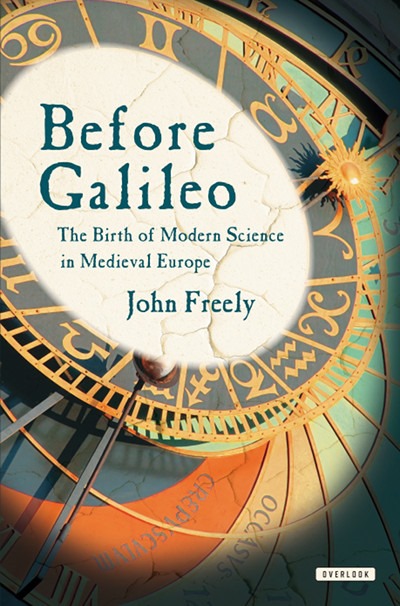
A book I spotted at my favorite bookstore, Before Galileo: The Birth of Modern Science In Medieval Europe by John Freely was very enticing, but I went home empty-handed to read the reviews first.  The reviews at Amazon were overall positive, but one made me worry.  It claimed the narrative was more like an annotated bibliography.  The review at Physics Today was a lot more encouraging.  However Nicole Archambeau, the reviewer, claimed she wouldn’t assign it as a textbook, but preferred The History of Science: From Augustine to Galileo.  But at Amazon, one of the two reviewers called that book mediocre.  But over at the the Wall Street Journal, Laura J. Synder didn’t fuss over Before Galileo much, but did mention a few subjects it covered that made it appealing again.  I always find books that make a case that the dark ages weren’t completely dark to be a reason to get on my To-Be-Read pile.  But if you follow my links and read the reviews, Before Galilio is a good example of why you don’t just grab an interesting title off the shelf and buy it.  I think I’ll wait to see how the Kindle edition will be priced.

before-galileo

Science News has a Bookshelf section on their web with reviews of many books I saw at the bookstore yesterday.  They are short reviews, and not good enough to effect a buying decision, but they do list a lot of books worthy of researching to see if they are worth buying.  You’d think just looking at Amazon’s New & Notable > Science and Math section would list all the good science and math books that are coming out, but often I see books at the bookstore that aren’t listed there.  And, Amazon annoyingly lists books I don’t think belong in the science and math section.  However, the Amazon list is one of the most inclusive of all the sources I’ve cited.  It makes me wish I could read and digest a science/math book a day, because they offer at least 365 of my-interest-worthy science and math books a year, out of the 1,031,471 that Amazon claim to have for sale.

On average I read about 52 books a year, or one a week.  At best, I read one science/math book a month.  So you see my problem?  If I’ve only got time for 12 books a year, I want to make sure they are the best ones to read.  Which brings me back to why I wrote this blog.  How do you find the best books on any topic published each year?  Normally, you have to wait until next year when all the reviewers pick their favorites.  But if you don’t want to wait, then you’ve got to find sites like I mentioned here to figure things out on your own.  I always get a kick out of picking books when they come out and then later discovered that many reviewers considered them the best of the year.

JWH – 7/3/13

Visual Inspiration

Usually I am excited by words and concepts.  I am a lifelong bookworm, so I’m obsessed with black marks on white backgrounds.  Living in my head is my constant way of life, thinking wordy thoughts, even to the point of neglecting the colorful details of the external world around me.  But during the day I’m often startled by something visual that inspires me.  I love looking at the trees outside my window, which sets just above my computer monitor that I am typing at now.  I have two windows, the one looking into the internet and the other out onto the world.  The world is full of color, but because of my neglect of noticing it, I’m all the more moved by art.  And maybe, I prefer seeing reality though art rather than viewing reality directly. 

I love catching something visually fascinating as I drive to work each day – the structure of a church steeple, the outline of tree branches against the sky, the way shadows and glare affect my sight.  I wish I could turn what I see into art. I wish I was the kind of guy that hiked in nature and captured it artistically.  Because I spend so much time indoors, most of my visual stimulation comes from the computer screen or the television.

Every once in a while I see art that blows my mind, and generates a flood of thoughts.  The other day I found this computer animation that set my neurons on fire.

Be sure and play this in full screen mode at the highest resolution your computer can handle.  I’ve watched it many times now and it just gets better and better.  This visuals makes me think of mathematics and musical harmony.  This video is like seeing music.  This video is like seeing mathematics as if math wasn’t an abstraction of nature.  “Oscillate” was created by Daniel Sierra for his MFA Computer Art thesis, and you can see more about this work here.

What I find so inspiring about “Oscillate” is that it’s a visual abstraction that makes me see science.  All paintings, no matter how realistic, are an abstraction, in the same way that words and concepts are an abstraction about reality.  Art mimics the world.  “Oscillate” mimics abstract thoughts.  Daniel Sierra imagined seeing animated sine waves much like how classical Greeks imagined mathematics, but instead of putting his thoughts into words, he created a computer animation.

On one hand this video is like abstract art, it doesn’t look like the real world.  But I see it as a realistic painting of an actual abstraction in the real world.

JWH – 6/26/13