What’s Your Lamborghini?

by James Wallace Harris, 8/24/21

Few of us are exempt from materialistic desires because I don’t know anyone who follows in the footsteps of Mahatma Gandhi. Today’s gurus are the influencers on the internet, those beautiful young people who convince other people to give them money to buy what they can’t have themselves. Most of us don’t feel incomplete without a Lamborghini but we do want something.

I realized what I want is weird. My Lamborghini is old books and magazines, things most people would throw away, or give to Goodwill.

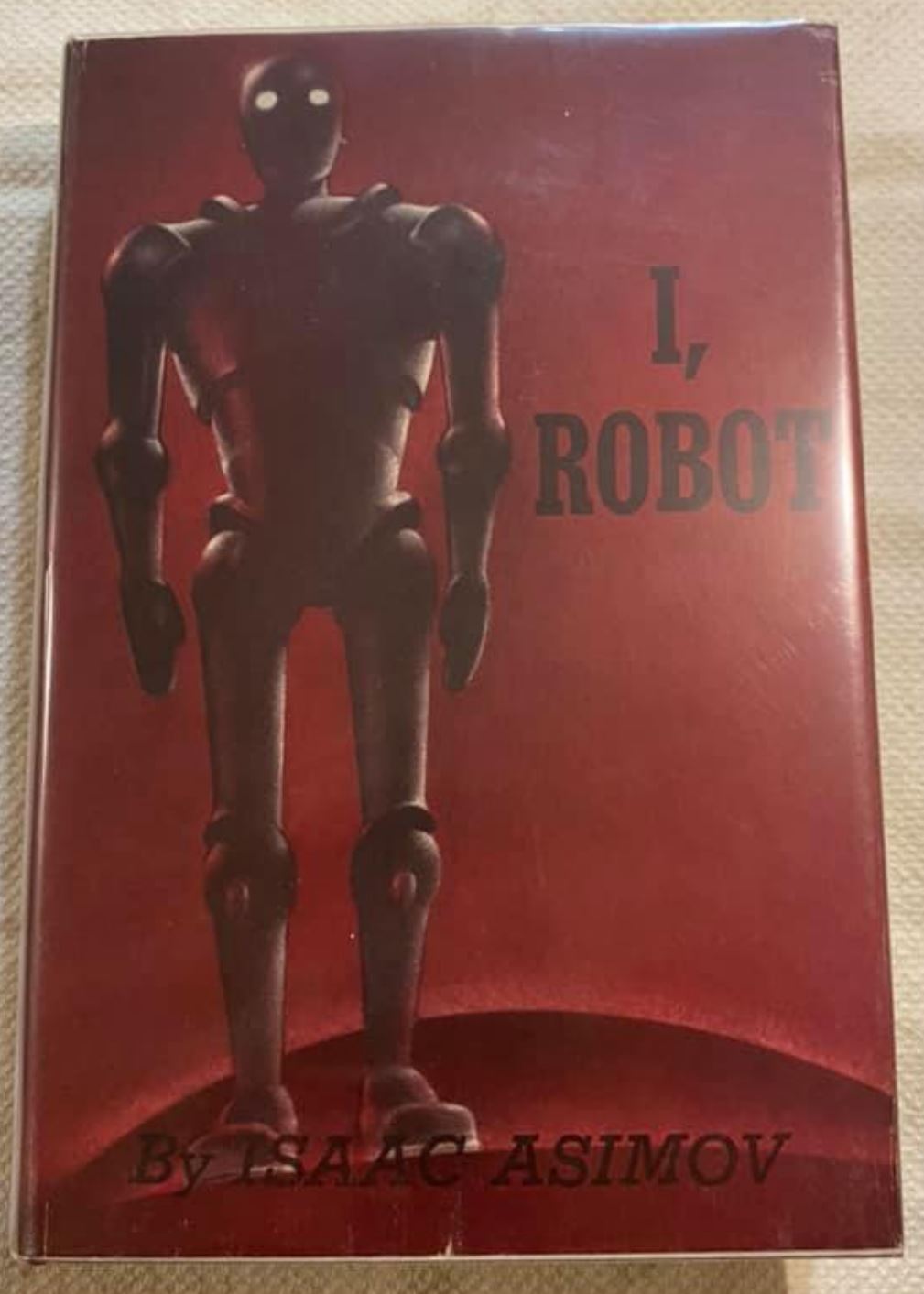
I’d rather have a first edition of I, Robot by Isaac Asimov than a new Ferrari. (Although, if given a Ferrari I could sell it and buy a collection of all Gnome Press first editions, including I, Robot.)

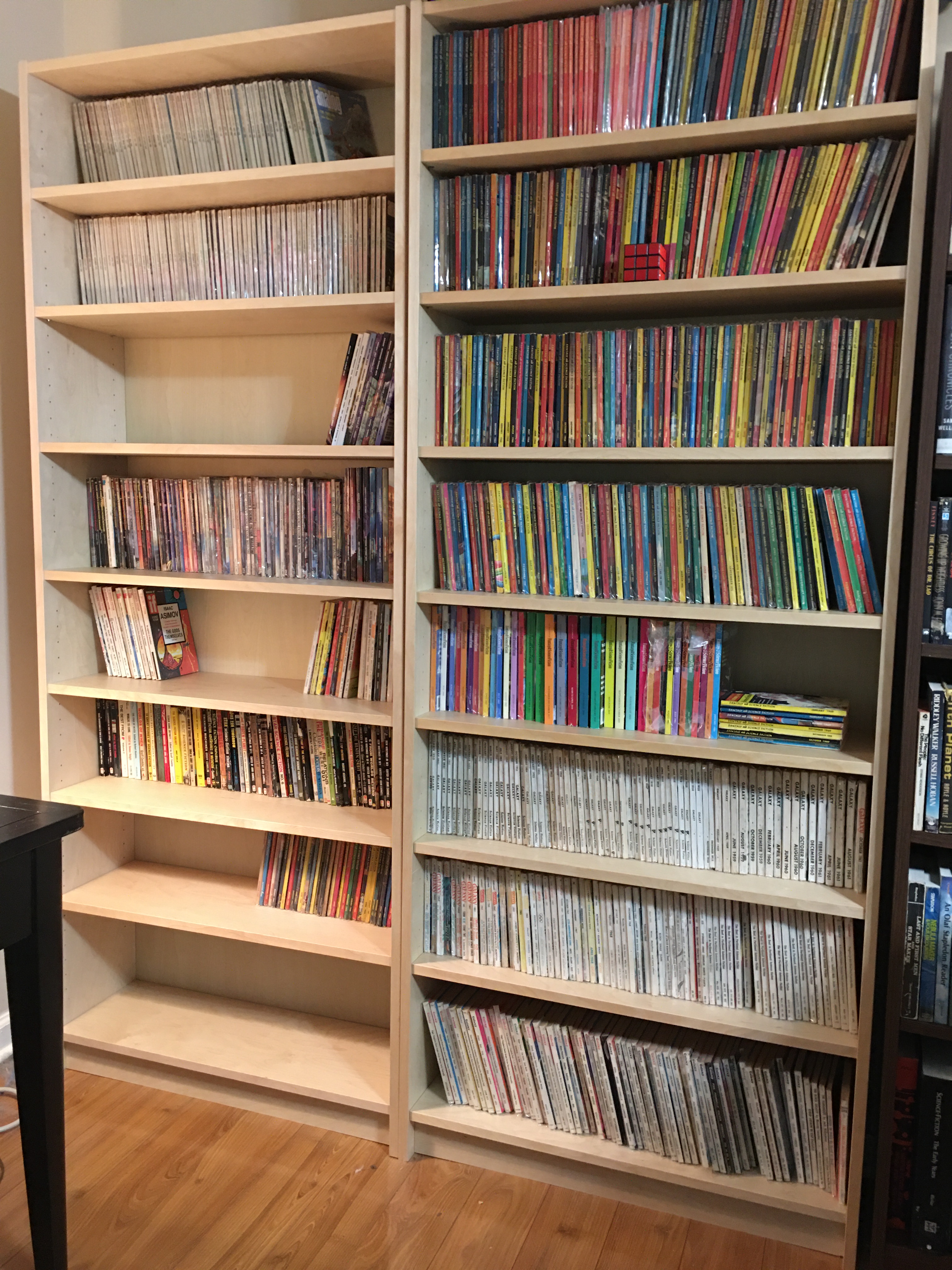
I saw both of these on a Facebook group devoted to collecting old SF/F books. I suppose I could spend my retirement savings to satisfy this book lust, but I won’t.

Just recognizing where my materialism lies an is enlightening self-realization. It doesn’t free me from those desires, but it lets me know just what species of wacky duck I belong to.

So, what’s your Lamborghini?

JWH

Beyond Ordinary Friendships

by James Wallace Harris, 8/14/21

Lately, I’ve been meditating on the concept of friendship. We all live alone in our heads, spending our entire lives struggling to make contact with others who live alone in their heads. It’s a shame we don’t have telepathy, because we all so badly want to express ourselves. What kind of friendship activities are there that let’s people communicate effectively?

As marvelous as language is, it still fails us most of the time. I’ve been looking back at how well I communicated with different friends at different stages in my life. What worked, and what didn’t, and why.

My first friends should have been my parents, but I was too immature, my father wasn’t around much, and my mother had a philosophy of kids should be seen and not heard. There was definitely a generation gap that didn’t communicate. I did much better with my sister Becky. That’s because we played together.

When we were still rugrats, during the years before school, Becky and I could be thrown in with any kids and we played happily together. But often this was parallel play, or group activities where we didn’t think about what the other kids were thinking. We focused on hitting or catching the ball, or throwing the dice to get the number we needed in Monopoly.

Because my family moved around so much, Becky and I had to make a new set of friends every year or two. Up to junior high, friends were always the kids who lived on our street, or the ones we played with at recess. The activity determined the friendship. Communication was minimal.

Starting with 7th grade, I got good at finding a best friend fast wherever we lived. The key was to seek someone who liked the same games, toys, books, TV shows, movies, and bands I liked and not be shy. This shared interest technique is really the lowest common denominator of friendships.

The dynamics of friendship changed when I started dating. Then it became more about how well I paid attention to her and her interests. Years of dating, over forty years of marriage, and decades of friendships with women has taught me a whole different kind of communication. Not to sound cliché, but this was often about feelings and emotions, a language I was never good at. However, I learned to listen. But relationships were about getting what we wanted by helping someone else get what they wanted, and isn’t that a higher form of communication?

Work brought about another kind of communication. Fitting in and working together towards a common goal is a whole other kind of interaction and relationship. You didn’t have to know or like a person to work well with them, but you did have to know how to cooperate, take orders, or sometimes give them. There is a dynamics to that type of communication that’s not found in personal friendships, or romantic relationships.

Now that I’m retired I think about new types of friendships. When I worked I felt like I had dozens of friends, but nearly all of them disappeared when I quit. Susan and I spend a lot of time at home, especially since the pandemic. I mostly keep up with friends via the telephone. And most of my friends are people I’ve known for more than twenty years. This is back to the level of shared interests.

I have made one new kind of friend in recent years, and that’s internet friends. For example, I work with a guy from South Africa and a guy from Great Britain to run a short story reading group on Facebook. We are building a long distant friendship based on our love of old magazines and anthologies. It keeps us busy, and our group has grown to over five hundred members.

This has got me to wondering. What activities in the last third of life would make for interesting friendships? Of the retired people I know, many of them talk about maintaining old friends because they aren’t making new friends anymore. But don’t we have to make new friends? That’s one reason why I thought moving to The Villages in Florida would be fun. There are thousands of organized activities for retired people.

My friend Linda and I have accidently hit upon a new activity. We call it a two-person book club. We pick a book, then divide it into sections that we can read in a week. Then once a week discuss the section on the phone for an hour or two. This makes me feel much closer to Linda because we’re working on a specific wavelength. We don’t read ahead because we focus only on the ideas in the defined section. This forces us to think about the same things at roughly the same time.

When Mike, Piet, and I were working on a new version of a database about science fiction, I thought having that project put us on a shared wavelength for several weeks. That made for an interesting kind of friendship. I miss having that kind of project now.

This has gotten me to think about other projects or activities that bring me together with the people. For the four years while Trump was president, it created a bond of shared hatred with some friends. That was different. From the 1990s until 2020, I had a several friends I went to the movies with at least once or twice a week. Also before Covid-19 Susan and I were developing a group of friends with game night. Those two bonding activities haven’t been reestablished yet. Susan and I have developed a new connection when we got the cats. Because we don’t have kids, we’re missing out on a lot of social dynamics that some of our friends have.

Lately, I’ve been wondering if there are activities that bring about closer forms of friendship than just shared interests. Ones that promote higher levels of communication. I’m reading The Code Breakers by Walter Isaacson about the scientists competing to make CRISPR into biotech companies. These scientists don’t all like each other, but their work and competition has forced them to communicate at an exceptionally complex levels.

This leads me to see two kinds of friendships. Consumers and creators. Most of the time we communicate with our friends about the things we consume. We’re looking for common interests and loves. But if you’re in a partnership or on a team that’s building something, you don’t have to like the other people, you can even hate them, but you cooperate and communicate at a much higher level of complexity to achieve a common goal. I keep thinking about Steve Wozniak and Steve Jobs creating Apple Computers, and John, Paul, George, and Ringo creating The Beatles. I’d say those were two examples that required communication just short of telepathy. I also say that Walter Isaacson achieved an extremely high level of communicating when interviewing people to write The Code Breakers.

I doubt I’ll start a business in my seventies, but I wonder if there’s a project I’d like to start with other people. That could be volunteer work, but I’m thinking along the lines of building something. Maybe something with computers.

JWH
Cat v Man @ 3:55 a.m.

by James Wallace Harris, May 10, 2021

Ozzy has developed a very annoying habit. We used to feed Ozzy and Lily their wet food at 6:30 a.m. and 6.30 p.m. Then after the time change, Ozzy started wanting his morning meal at 5:30 a.m. I kept telling him to learn to tell time and pointed to the digital clock with the large readout. He just ignored that. Instead, he started scratching at the covers pulling them down urging me to get out of bed. He also paws at my head and sniffs my mouth just like the cat in this video. (I couldn’t convince Susan to get up in the middle of the night to actually film Ozzy, so this video will have to do.)

Now I have to get up frequently at night because of prostrate troubles, often 7-8 times to pee, so Ozzy knows getting up is no big deal for me. I had the Urolift surgery in April but so far it hasn’t been a miracle. My doctor tells me it might take months for my bladder to break out of its bad habits. I am slowly peeing less often but I still get up at least once an hour, and Ozzy is convinced they are good times to be fed.

He’s demanding food earlier and earlier. At first I acquiesced to 5:30 a.m., but then the little fuzzy bastard got pushy, pestering me at 4:30 a.m. I realized he wouldn’t stop until I got up and gave him what he wanted.

Ozzy and Lilly like sleeping with me. Usually they come to bed after 2 a.m. when they’ve finished their routine late night rowdy romping, in that dark house time after Susan has gone to bed. Ozzy used to sleep soundly until morning, but evidently my frequent rising has altered his sleep patterns.

I tried tossing both of them outside the bedroom and closing the door, but they’ll make a terrible racket to get back in. When I saw this video about how a cat reacts when their human leave home it made me more considerate towards how a cat feels. I stopped closing them out before I went to sleep.

But Ozzy kept pestering me to feed him, earlier and earlier. This morning it was 3:55 a.m. I’ve learned that I can close the door to the bedroom after I feed them and they don’t complain. I find them sleeping soundly in the den after I get up for real.

It really annoys me when Ozzy wakes me up. I’ve tried scolding him, and pushing him off the nightstand, but he just returns and wakes me up again. I wish I could reason with Ozzy. I keep seeing these videos of dogs talking to their humans with buttons. I wonder if cats could do that too?

If I could talk to Ozzy I wonder if I could reason with him? We didn’t know dogs could talk until we gave them buttons, so maybe cats can too, and if they can communicate, maybe they can be reasoned with.

As of now, I’ve lost the war. But we’ve reached a détente. I refuse to feed them before 3:30 a.m. I did this by just laying there no matter what even though it will set off a night of insomnia. And when it is past 3:30 a.m. I’ve learned to quickly get up, find my way to the kitchen in the dark, only turn on the small light in the washer room next to the kitchen, open a can of Fancy Feast, give them exactly one half of the can, chop it up fine, put their plate down, stick the rest of the can in a plastic container, turn off the light, and put it in the fridge, and go back to bed.

I can usually get back to sleep instantly if I stay calm and don’t get annoyed at Ozzy.

JWH

Mind Over Aging

by James Wallace Harris, Saturday, October 31, 2020

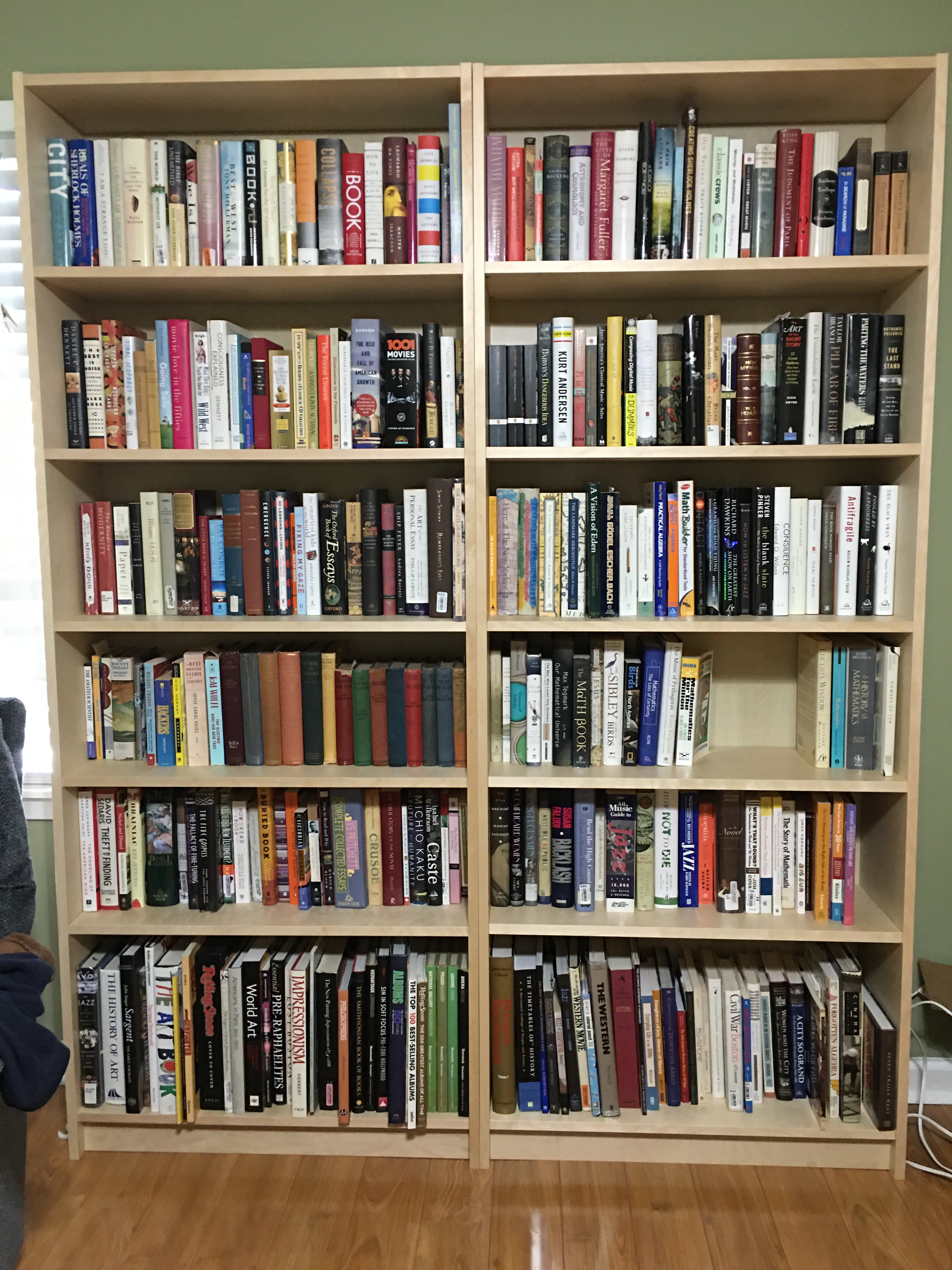
We all lie to ourselves that we’re not getting old. Unfortunately, we sometimes encounter situations that remind us of our self deceptions. Yesterday I went to IKEA to buy some Billy bookcases. After marching endlessly through their giant showroom maze I came to the warehouse section. I went over to a young woman with a vest assembling an order and asked her if it was quicker to pull my own order or let the IDEA staff do it.

“About the same,” she replied looking like she was anxious to get back to her task.

“Where can I find a cart?” I said figuring I could be faster.

She immediately changed her mind, “Oh, let me do it for you.”

“I don’t want to take you away from someone else’s order.”

“That’s okay,” she insisted, turning more friendly.

“Well, then let me help you.” I said. I wasn’t used to letting girls lift heavy things for me. I knew the boxes would weigh 72 pounds each.

“That’s okay,” and she called to another young women and they immediately started looking for my items. I thought this was great customer service. But I felt bad watching two young females do all the manual labor. (I know, I shouldn’t be sexist.)

After I paid for my stuff I rolled my cart out to my truck. Another young woman, a customer this time, driving out of the parking lot stopped and asked, “Do you need help getting that in your truck?”

I thought that was rather nice of her. I’m about a year from turning 70 and I remembered a George Carlin routine. He said when he turned 70 he never had to lift anything big again. He could try but people would rush over to do it for him. I realized the young girl thought I was old. I guess I am. George Carlin had observed some kind of social dynamic that’s not just a comedy routine.

“I think I can manage,” I said, “but that’s awful nice of your to stop and offer.”

The boxes were heavier than I wanted to lift. After hurting my back carry 53 pound speakers a few weeks ago I knew I shouldn’t lift 72 pound boxes. But I hadn’t planned to pick them all the way up. I lifted one end of the first box onto the tailgate, and then lifted the other end sliding it on the truck bed. I had visualized doing that before I left home.

I then happened to look up and saw the young woman had pulled over and was watching me from her car. I quickly put the other boxes in the truck and waved to her that I was okay.

For most of my life women expected me to pick heavy stuff up for them and kill their bugs. I guess I’m old now when they rush over to do the heavy lifting. I wonder if they still want me to kill their bugs?

When I got home I knew I couldn’t carry the boxes into the house. So I opened each box one at a time and Susan and I carried the pieces inside individually. I had visualized that before I went shopping too. Where there’s a will, there’s a way. Mind over aging. It took me two days to put the bookcases together and load them up with books. I wore myself out several times. But I got the job done. Mind over aging.

But I kept chuckling to myself that those young women saw me as a helpless old guy. I realized the store clerk probably thought I was too old to too, which was why she quickly offered to help. Someday I will be too old. Or maybe I’m getting there. I feel it’s important to have the right attitude about aging.

I’ve been studying aging for many years from Ronni Bennett and her website about aging Time Goes By.

Yesterday Ronnie died. She was just ten years older than me, and I always felt she was exploring the path of getting older just ahead of me. I felt it was important to pay attention to her because she was having the real experiences I would someday go though too. I’ve learned many things from Ronni’s wonderful posts, but I think the most important was: Don’t pretend we’re not getting older. My friends tell me I’m too accepting of aging. They want to believe if you don’t think about it, aging and death won’t happen.

All us fans of her blog knew Ronni was dying. She was in Hospice care these last several months. She blogged right up to the end. Here’s her last regular post called “Old Lady Fancy Pants” about getting her first pair of adult diapers. Ronni’s last two paragraphs:

It was my first chance to try this out on Monday with my first evening incontinence pill at bedtime. I yanked a pair out of the tightly wrapped package, shook the panties open and to my utmost surprise, found they they are trimmed in – wait for it – frilly lace. Yes, you read that right: frilly lace.

Is there anything else to do but giggle? So I pulled them on, pranced around in front the full-length mirror and had a big hearty guffaw at myself – old lady fancy pants.

That is truly mind over aging. Of sure, I’m scared of getting old and feeble. I’m terrified of dementia. But reading Ronni’s communiques taught me I’ll have to take whatever comes. Laughing at wearing adult diapers is certainly better than crying. I hope I can laugh when the time comes.

I thought Ronni was the Zen Master of mind over aging. Anyone over sixty should maintain a keen awareness of growing old. Oh sure, don’t give in easily. Being aware isn’t giving up. I’m reminded of something I heard Stevie Nicks say on CBS Sunday Morning last week. She said being forced to stay home from touring was aging her. I thought that was a keen insight. No one wants to age, but I think it’s important to notice when and how it’s happening. Those two girls taught me that I’m starting to look old.

Thinking about aging is a kind of conscious practice, a developing awareness, that allows us to surf the waves of declining powers rather than letting them drown us. We will all die. Getting old will be unpleasant. We will have to deal with an endless procession of experiences we don’t want to experience. The real goal is to figure out how to keep doing all the things we want to do – and chuckle along the way.

By the way, fans of Ronni will keep her website going, and maintain what she wrote. Visit Time Goes By.

JWH

Can I Discipline Myself to Be More Disciplined?

by James Wallace Harris, Monday, August 3, 2020

The older I get the more undisciplined I get, but it’s an age when I need to be the most disciplined in life. As anyone who is getting older knows, the body begins to fall apart and the mind unravels. One way to counter this natural tendency is to get disciplined. But there’s a Catch-22. There’s also a growing impulse with aging to not give a fuck.

It’s taken me years to give up junk food — well, mostly. But I’m not sure if it’s being disciplined. If I indulge my body finds various ways to beat me up. So I’ve learned to mostly not do the things that cause immediate suffering. However, I can’t seem to learn to do the things that will improve my health or allow me to do more. I feel like I’m in a never ending trench war — I can’t take any new territory, and for the moment, I’m barely holding what territory I’ve have. Aging means losing territory. Discipline determines how fast.

I know defeat is the ultimate outcome. Death will eventually be the light at the end of the damn tunnel. But until then I have a finite number of days and I’m positive if I was more disciplined I could get greater use out of those days. The trouble is, when you’re old you just want to relax and take it easy, to float downstream. To get more out of life has always required paddling upstream against the current. That requires discipline.

For example I want to lose weight. I’ve been fighting the Battles of the Bulge for decades. I should just give up. I know plenty of people who have. But I have health problems and I know if I can lose weight it will counteract those health issues to a degree, or help delay them getting worse. For the past two years I’ve been doing the 16:8 intermittent fasting. Years ago I lost 30 pounds by going vegan, but I just couldn’t maintain that diet. When I went back to just being vegetarian I started gaining my weight back. When I saw that happening I switched to the 16:8 intermittent fasting, and stopped gaining weight. But I had already gained back 25 pounds. 16:8 means I eat 8 hours during the day and fast 16. If I do it without eating junk food I’ll even lose about 1 pound a month. However, I usually can’t avoid completely junk food, so I don’t lose that pound.

I’ve recently started throwing in a whole fasting day, and I’ve fought my way back down the scales by 7-8 pounds in a couple months. That’s very encouraging. If I can maintain that discipline I might be able to fight my way back down to my previous low, and even lose more weight. That could help a lot. But to go that day (actually 40 hours) without eating takes so much effort. I’m writing this today to help me get through not eating until tomorrow. (By the way, fasting actually makes me feel better in many ways — except for the not eating part.)

I’m fighting several other battles that require greater discipline. I’ve had a dream of getting a science fiction story published almost my whole life. The odds of succeeding at my age are extremely tiny, but I haven’t let the dream die yet. I know what’s required to do the work. It’s the discipline to stick to writing. Writing fiction is hard. I can write blog essays all day long with no trouble, but then I’ve put in my ten thousand hours. I’ve only logged several hundred hours writing fiction, and I need to put in several thousand more to take off. That will require developing a routine like I have with intermittent fasting.

The last thing I’ll mention, because I don’t want this essay to go on forever, is the idea of disciplined learning. I’ve written before how I’m a news junky, but I realize that’s not getting me where I want to go. A steady diet of constantly changing news items is a wasteful way of using my time. I do learn stuff, and I’m better informed than when not reading the news, but it’s like eating potato chips, not very nutritious.

I’ve been developing a new theory about news and learning. Instead of trying to cover any topic that comes along, I should pick just the topics I want to get know better. For example, I’m reading So You Want to Talk About Race by Ijeoma Oluo, a well-written, carefully thought out book about a specific subject. What’s impressive about Oluo’s book is she set out to write something useful and worked to clearly define the problem of race. Her book made me realize I should focus on specific topics, such as Black Lives Matter, but go deeper than reading daily news reports.

I need to pick the newsworthy subjects I want to embrace and focus on them, while ignoring the firehose of all the rest. Logically, I know I neither have the time or energy to study many subjects. Since I realized that I’ve been paying attention to the news items I read each day. Most are quickly forgotten. Most are not worth my time on in the first place — they are like the evil calories of junk food. But disciplining my news intake is a lot like dieting — I need to give up junk news. That’s going to be hard. I have no practice at that, and I know from dieting that it takes a lot of failures before I can develop any discipline momentum.

It would be so much easier to kick back in my La-Z-Boy, eat oatmeal chocolate chip cookies from the deli at Sprouts, and watch old episodes of Gunsmoke. It’s pleasant, it’s enjoyable, it’s fun. But what does it get me beyond that? There are still things I want out of life, and to get them I must start paddling upstream against the current again.

[This is for my wife Susan, who I think needs to get back to paddling too.]

JWH