Echo in the Canyon – Nostalgia Denied

by James Wallace Harris, Saturday, July 6, 2019

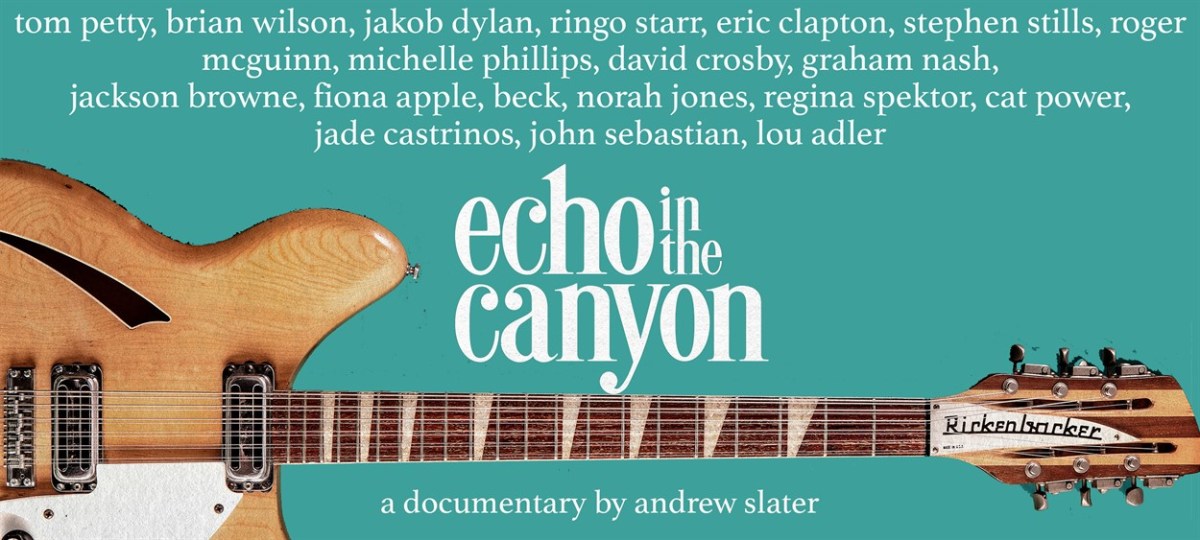
I went to Echo in the Canyon expecting it to be a documentary about 1960s musicians who lived in Laurel Canyon. Instead, I got Jakob Dylan Sings the Oldies. Now there is nothing wrong with that, except I never got that impression when I saw the trailer at the theater last week.

Evidently, Jakob Dylan and friends Beck, Fiona Apple, Cat Powers, Norah Jones, and Regina Spektor decided to put on a concert singing old songs that came from the artists living in Laurel Canyon back when and then turned it into a film project. We see them discussing the songs over a coffee table of old albums, rehearsing the songs in the studio and then playing them live. In between this, we see Jakob Dylan driving around L.A. talking to all the old musicians that are still living and giving us some clips from the past. And for some strange reason, they kept showing clips from a 1969 film called Model Shop. Echo in the Canyon is a bit about the past, but mostly it’s about the present looking back.

Now, this is cool. Younger generations of musicians often love to pay tribute to the past by creating albums of oldies. Bob Dylan recently produced Shadows in the Night where he sings Frank Sinatra songs. Or when Natalie Cole did Unforgettable… with Love, singing her dad’s songs. Or when John Lennon did Rock ‘n’ Roll singing his favorites hits from the 1950s. I actually like covers. I loved when Bruce Springsteen would sing covers at the end of his concerts in the 1970s. And I really enjoy picking a favorite song and listening to all the covers of it on Spotify. I’ve heard about a hundred versions of “All Along the Watchtower” that way.

The trouble is, the covers for Echo in the Canyon are bland and over-produced. The whole time while watching this film I ached to hear the originals. Now that might just be me, the film is highly rated on Rotten Tomatoes and two of my younger friends have seen it and loved it.

I admire cover tunes that take an old song and redo it in a very original way, such as when Jimi Hendrix sang “All Along the Watchtower” or when Lili Haydn redid “Maggot Brains.” Jakob Dyan and friends did fairly straight covers. These are very talented artists but they don’t shine on these old songs. Part of the problem is the original songs were more delicately produced with fewer instruments, and these modern versions have too many musicians playing on them. They have a modern Americana big group sound, which I think distracts from the lyrics.

For the most part, Echo in the Canyon doesn’t cover the biggest hits but picks album cuts instead. I thought that was an excellent approach but it means they also picked songs fewer people liked. I loved all of these songs back in the day. However, many of these songs were originally idiosyncratically produced, giving them highly distinctive performances. Jakob Dylan and friends reproduce them all in the same kind of jangling-guitar stereotype of folk-rock.

I’m not sure how much these younger musicians really liked these old songs. Watching them discuss the tunes while flipping through old LPs didn’t reveal much passion. Their body language didn’t quite show enthusiasm. What I read was, “OMG, school report” as if this project was something they had to endure. They give a respectful history report on our generation but I never believed they play these albums at home.

Echo in the Canyon is worth seeing, but if you’re a Baby Boomer, don’t expect a lot of reliving the past. It’s fun to see a younger generation examine our times, but it’s also kind of disappointing. I often see young people with T-shirts celebrating musicians from the 1960s, but 95% of the time it’s The Beatles. I loved that The Byrds got a lot of recognition in this film. They were my favorite group in the 1960s, and Buffalo Springfield was second. The Beatles only came in third with me.

Echo in the Canyon has even made an official Spotify playlist with songs from the movie and soundtrack mixed in with the originals. It’s a great way to compare the two. I hope you have Spotify and can play it. By the way, everyone should have Spotify, at least the free version. It’s becoming the Adobe Acrobat of playing music on the web.

Actually, I prefer all these artists doing their own original work. That’s where they are exceptional, and one day even younger artists will be covering their tunes. And probably fans growing up with their generation will grumble about those covers too.

JWH
Freak Out! – 51 Years Ahead of Its Time

Is there a word that means the opposite of nostalgia? Here’s a case of remembering something I didn’t like from the past. To further compound the problem, it’s a work of art that satirized what I did love back then.

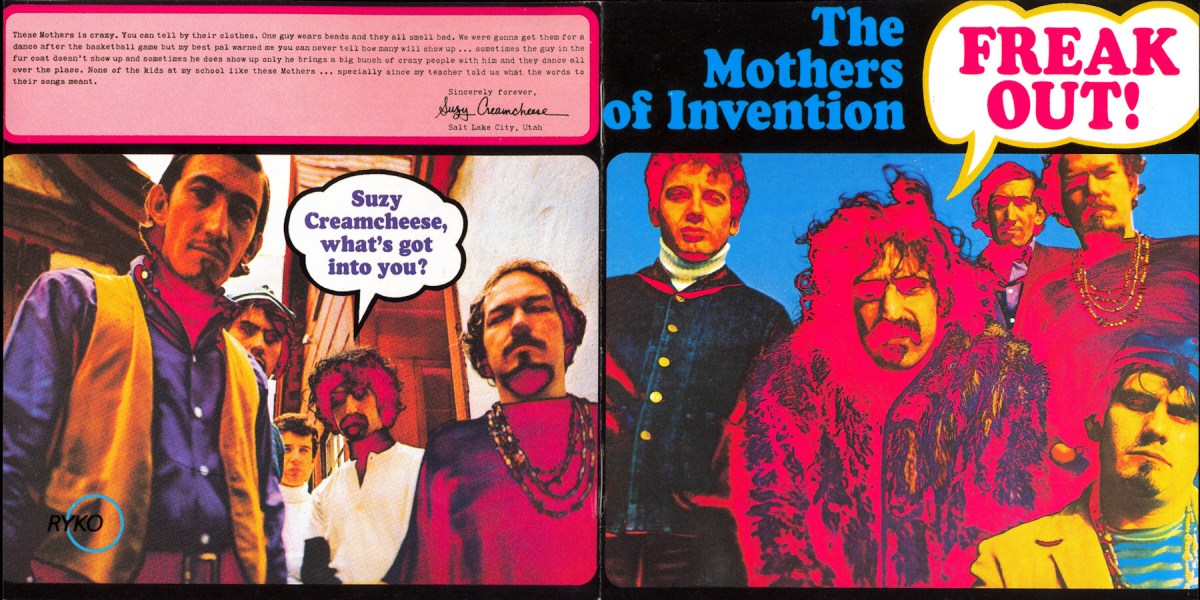
I wish I could boast that I first discovered Freak Out! from The Mothers of Invention in June of 1966 when it was first released, but I didn’t buy it until 1968. And even then when I played it on my console stereo in my 11th-grade bedroom I kept saying to myself, “WTF?” Of course, back then we didn’t talk in acronyms. I didn’t hate it, but it was too weird-as-shit to like. I eventually got rid of that LP when I sold my record collection to pay for a travel adventure after my dad died in May 1970.

In 1973 and 1974 I went to see Frank Zappa perform live, I believe for the Over-Nite Sensation and Apostrophe(‘) tours. By then I liked his music because of all the jazz influences but still thought the songs were uncomfortably weird. To be honest, I mostly went to these two concerts because my friend John Williamson was a big Zappa fan.

Over the years I’ve bought a Zappa album here and there but seldom got into them. I do love “Watermelon in Easter Hay” which is on my Spotify all-time-favorite-songs playlist.

For some strange reason, I started playing Freak Out! a couple weeks ago and haven’t stopped. I guess the album was 51 years ahead of its time — at least for me. I mentioned this to a connoisseur of 1955-1975 music I know and he reacted rather badly. I replied, at least you have to admit this music is very creative. Randy said Zappa had no talent whatsoever. That shocked me. Sure in 1968 I might have accepted that criticism, but not in 2019.

This afternoon when I played Freak Out! while eating lunch my wife pleaded with her eyes for me to stop. (She tries very hard to let me have so sonic freedom around the house, but I stopped after I realized how much I was torturing her.)

In the summer of 1966, I was transitioning from the 9th grade to the 10th, and moving from Miami to Charleston, Mississippi. There’s a good reason for not discovering Frank Zappa in the rural deep south. But by 1968 I had returned to Miami and read about this legendary album. But like I said it was too weird for me. I didn’t understand then it was making fun of everything that made me happy. I was wanting to be a hippy when Frank was skewering the whole counter-culture movement along with the clean-cut youth culture. Somehow Frank Zappa and the Mothers of Invention saw through all the crap that I admired.

I didn’t know enough to dig their combination of creative music and absurdist lyrics. I didn’t know what the avant-garde was back then. And to be confessional again, I still don’t.  I just don’t care much for satire or humor in music. However, something has changed, and the gestalt of most of the songs have begun to work on me. I actually crave to hear them.

Why at 67 has this silly nonsense become something deeply real?

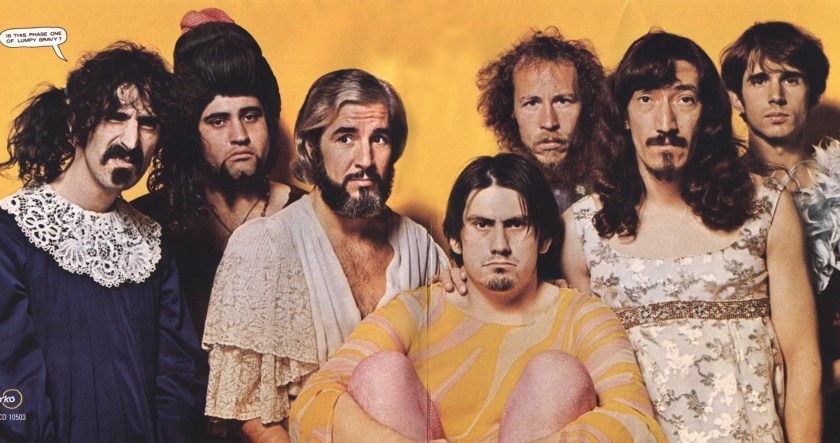
Freak Out - Inside

Like I said, it would be cool to brag that I’ve been into The Mothers of Invention since they premiered, but even though I only bought the album two years late, I’m over a half-a-century getting to like this album. The group did have an auspicious beginning, being the first group to have a double LP for their first album and to produce one of the first concept albums. Supposedly, even The Beatles paid musical tribute to it on their Sgt. Peppers album.

It’s very hard to understand how strange an album like Freak Out! was compared to the other albums of 1966. Playing it along with Revolver, Blonde on Blonde, Pet Sounds, Sounds of Silence, Fresh Cream, If You Can Believe Your Eyes and Ears, Fifth Dimension, Buffalo Springfield, Blues Breakers, Sunshine Superman, or even The Monkees,  you can feel its both a part of a larger musical transformation and a reaction to it.

Everyone remembers “For What’s It’s Worth” by the Buffalo Springfield about the Sunset Strip curfew riots, just look at how often it’s been used on a soundtrack. It was recorded on December 5, 1966. But why don’t people remember Frank Zappa’s song “Trouble Every Day” written in 1965 about the Watts riots?

“Trouble Every Day” is far angrier but also captures the soundtrack of the mid-60s like “For What It’s Worth” but it’s never been used to accent a movie that I can tell. I love “For What It’s Worth” but it was a protest song about young hippies not getting to party while “Trouble Every Day” was about a major race riot. “Trouble Every Day” criticizes far more and with more exciting music. In comparison, the new folk-rock sound of “For What It’s Worth” feels kind of wimpy today.

“Freak Out!” had all types of songs that anticipated future trends. Just listen to “Go Cry On Somebody Else’s Shoulder.” Doesn’t that sound like Sha Na Na, a group that didn’t form until 1969? Zappa was making fun of a nostalgic movement that hadn’t even begun. Listening to “Go Cry On Somebody Else’s Shoulder” in 2019 seems even more relevant. On Facebook so many people my age post photos and music clips of Do-Wop nostalgia. One of my friends even said her retirement life was recreating her high school days.

I love “How Could I Be Such A Fool?” but it makes me wonder just how honest we all were about our teenage loves. The music of this tune presses some button in me and I often put it on repeat play. Why was Frank Zappa so cynical when so young?

And isn’t “I’m Not Satisfied” a great teenage angst anthem at least as good as “I Am A Rock” by Simon and Garfunkle?

Why wasn’t it a hit single in 1966? It certainly reminds me of my 15-year-old emotional life in Charleston, Mississippi in 1966.

Zappa rerecorded several of the Freak Out! songs in 1968 as Cruising With Ruben & The Jets, to parody in even more creative musicality the 1950s rock era. I get the feeling that Zappa both loved this music, but also realized it came from a shallow culture.

So what is the word that describes anti-nostalgia? Maybe the word needs to convey both wistful fondness while recognizing what we love so much was essentially childish and unenlightened. And maybe the word should also mean demystifying nostalgia.

The 1960s was a weird time. It was both exciting and frightening. It was creative and brutal. Online I find so much nostalgia for that era, but few people remember the viciousness only the unthinking carelessness that was so fun.

JWH

If You Love Collecting Anything, You’ll Love Bathtubs Over Broadway

by James Wallace Harris, Sunday, May 19, 2019

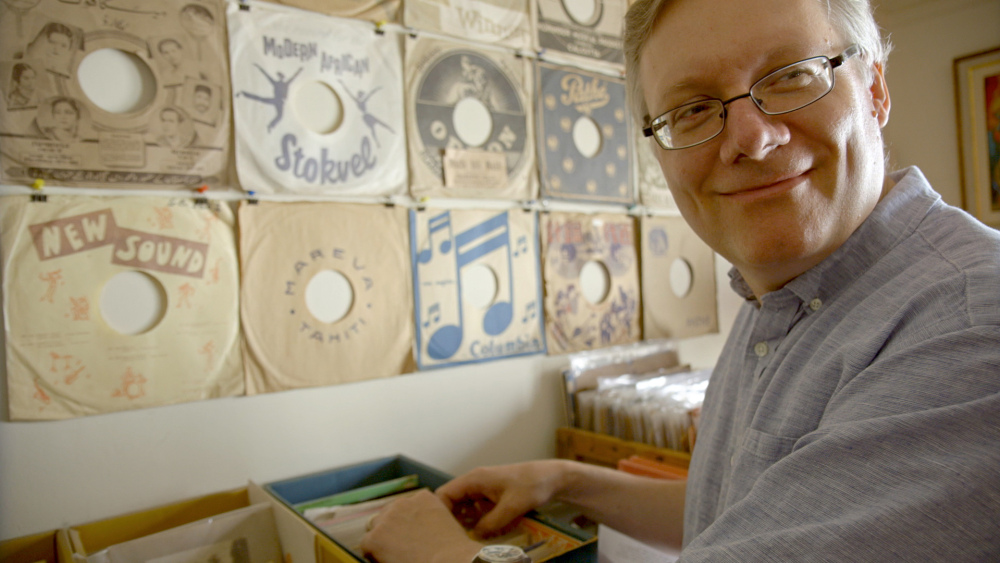
Steve Young was a comedy writer for the David Letterman Show. One of Young’s extra duties was finding oddball records that Dave could make fun of on the show. Because of this Young discovered an extremely rare kind of LP – musicals produced for corporate sales conventions. At first, these songs were the butt of jokes on the Letterman show but soon Young fell in love with the songs, lyrics, performances, and eventually the performers. Young began to passionately collect these records for himself. The history of his collecting, and how it led him to discover the history of the industrial musical is told in the award-winning documentary, Bathtubs Over Broadway, currently playing on Netflix and for rent at Amazon. It has a 100% Fresh rating at Rotten Tomatoes.

Last night I had friends over to watch a movie. I tried to get them to see Bathtubs Over Broadway. I’ve tried for weeks to get any of my movie watching buddies to see it with me. My friend Linda saw it at a film festival in Denver and told me it was wonderful. We ended up watching The Bookshop instead, hoping it would be one of those feel-good indy English flicks, but it wasn’t. So after Mike and Betsy left, I stayed up late watching Bathtubs Over Broadway by myself.

I do admit the title sounds awful, but to all my friends who wouldn’t watch this movie with me – HA! You don’t know what you missed.

Of course, maybe it’s just me. I thought Bathtubs Over Broadway was a heartwarming documentary about becoming a pop culture collector. But then I have a slight collecting habit myself. I love tracking down old science fiction anthologies, so I know the excitement of finding a rare item.

Steve Young said before he started collecting the industrial musicals he had no friends in his life other than family at home at coworkers at work. Once he started sleuthing these LPs he befriended other collectors – weird guys like himself. I also know the importance of finding someone else who shares an obscure interest in a microscope aspect of reality.

What’s most inspiring about Bathtubs Over Broadway was the length Steve would go to find these rare LPs. The heyday of industrial musicals was in the 1950s, 1960s, 1970s, and Young discovered some of the composers and performers were still alive. At first, he contacted them hoping they’d have more records he could collect, but ended up making wonderful friends and learning a unique aspect of American history.

Bathtubs Over Broadway might sound kitschy and camp, and it is, but it’s also uplifting, moving, inspiring, educational, and enlightening.

Don’t let the title mislead you into missing it.

p.s.

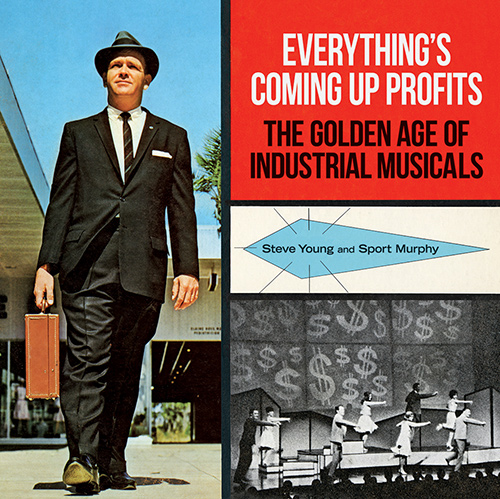
In case you want to know more, Steve Young and Sport Murphy wrote a whole book on industrial musicals – Everything Coming Up Profits: The Golden Age of Industrial Musicals. Follow this link to hear songs, see videos, and read more history after watching Bathtubs Over Broadway.

Everythings Coming Up Profits

JWH

Why Can’t I Let Go of Technology I Don’t Need?

by James Wallace Harris, Sunday, April 7, 2019

If you live long enough you realize that things have a lifespan too. When I was growing up there were payphones everywhere. I don’t see them anymore. They still exist, but they are dying off. I do miss them. I can imagine situations when I’d even want to use one so I think AT&T should maintain payphones. Of course, we should let AT&T just pull the plug on this outdated technology.

In my lifetime I’ve bought over 2,000 LPs and 2,000 CDs. I have no LPs anymore, and I’m down to about 700 CDs. I hardly ever play them. I’d like to get rid of my CDs because I’d like to use their space to store more books I won’t read but want to buy.  However, I struggle to let the last CDs go.

It’s not being able to let go that intrigues me. Why am I so attached to something that’s not being used? I know people that own everything they’ve ever bought, including their childhood toys. I’m not like that. If I kept every computer I’d ever owned, I’d need another bedroom just to store them. I actually like letting go of clutter. But not these CDs. Maybe I fear streaming music will fail.

I had no trouble giving up my LPs — I’ve done it several times in my life. That’s one of my problems. I get nostalgic for things I once owned and buy them again. I’ve built up at least four record collections. However, I think (I’m pretty sure this time) that I’m over LPs for good, and I’m almost sure I’m over CDs too. But not quite.

This week I was tempted to get back into the world of CDs again when I read about the Brennan B2. Its 2GB model can hold 5,000 CDs. I could put all my CDs on it, and then pack them away, or donate them to the library. The Brennan B2 connects to computers, stereos, phones, tablets, and just about anything that plays music. I could use my iPhone to call up any song from my collection and play it on the phone, or through my stereo system or on my HDTV.

The Brenna B2 is the perfect way to access a CD collection. Of course, (I chid myself) that I ripped my CD collection over a decade ago before I gave most of them away, and they are all on Amazon for me to play on my iPhone, iPad, computer, stereo or TV. But I don’t. Well, hardly ever. I just checked, and Amazon is still holding 1,792 of my albums for me. I was able to instantly play 45th Parallel by Oregon, an album I’d completely forgotten I bought. I probably should rip all those CDs I bought since that ripping project, but it would be a pain in the ass. And by the way, the reason I forgot I owned the Oregon CD is that I don’t like it. The reason why I only have 700 CDs now is I got rid of all the CDs I didn’t care about anymore.

So why am I thinking about CDs again? It’s that damn Brennan B2! It’s the coolest piece of technology I’ve seen in years. And when I read it’s built on top of a Raspberry Pi computer I believed it even cooler. But that inspired, “Hey, I could build my own CD server and save $679!”

Last night I was playing Spotify after I went to bed. I love dreaming while listening to music. And in my half-awake state, I told myself that the Brennan B2 could never match the convenience of Spotify or the size of its music library. So why am I agonizing over buying a Brennan B2 still? It’s become I’m still addicted to getting tech toys even though I have a lifetime of experience knowing I won’t use them for long.

I know in my heart of hearts I’d buy the Brennan B2, spend a couple of weeks ripping CDs to FLAC, build playlists, and then play with it for an afternoon. After that, I’d forget all about it. I see now that what I’m really thinking about doing, is spending $679 to have a couple weeks of tech toy playtime. By the way, that’s why I write these blogs sometimes, to think things through. But even this psychoanalysis through writing isn’t curing me of the urge to buy the Brennan B2.

I’m trying to talk myself now into getting out my Raspberry Pi that’s been sitting around doing nothing and building my own CD server. I even have a 1TB USB drive doing nothing to store those CDs that aren’t being played. I wonder if I could create a system that’s even half as nice as the Brennan B2? Did they write their software from scratch, or is it open source? I like the idea of accessing the music database through an IP address in a browser.

Of course, the Brennan B2 would be an amazing out-of-the-box experience.

No, no, no. This is crazy. Spotify lets me access millions of albums and I want to build a system that lets me access 700? Why don’t I realize this an idiotic urge? Well, the library sells old CDs for cheap. I could beef up my library considerably without spending too much. (Am I conveying my insanity well enough?)

There’s a joke in an old Woody Allen movie that he tells about a kid being told that masturbation will make him go blind. The kid replies, “Can I do it until I need glasses?”

That about sums up my ability to let go of technology I don’t need. I’m never ready to completely give it up.

JWH

Why Is This Restaurant Playing The Big Bopper?

by James Wallace Harris, Sunday, March 31, 2019

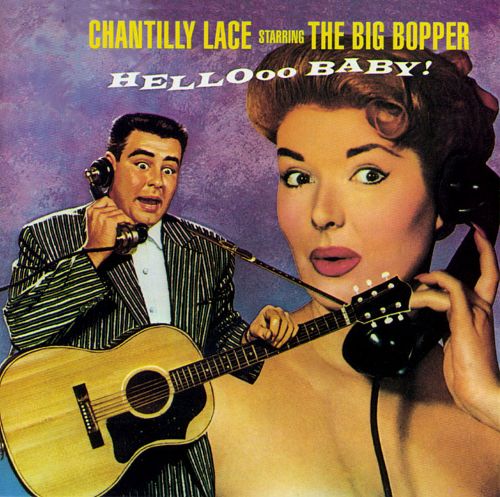
Susan and I went out to breakfast this morning. She wanted to try this new place called Staks. One of those storefront restaurants where you order at the counter and sit down and wait for your food. (A trend I don’t like.) What surprised me was the music they played at 7:30am, oldies like “Rock Around the Clock,” “The Wanderer,” “Chantilly Lace,” “He’s So Fine,” and “Dawn” – all songs from when we were growing up.

We sat at a booth with high backs covered with green plastic. In the middle of the room were sterile white metal tables and chairs occupied by younger people, including three late twenty-something couples with babies in highchairs. I wanted to ask them what they thought about the music. I was grooving to oldies, but were they? Was it just Muzak to their ears? The staff was all teens and young twenty-somethings. Why were they being forced to listen to old people’s music all day? I assume some industrial designer imagined both the decor and music together believing old fashioned breakfasts went with old-fashioned music. There were no vegetarian or gluten-free options on the menu – that would remind people of now and break the illusion.

Just to check if I wasn’t the only one noticing this trend I found this at the Chicago Tribune, “Nostalgia has taken over food and pop culture because we can’t help but fall for it.” Google also gave me “4 Ways to Use Nostalgia to Grab Your Customers’ or Members’ Attention.” Of course, marketers have been selling us American Graffiti and Happy Days leftovers for decades.

I can understand a fondness for life between WWII and the Vietnam war because that’s when I grew up. Susan and I were the only music-age-appropriate customers in Staks. Susan still knows all the words to those songs. Why should our nostalgia be piped into younger generations? My parents hated rock ‘n’ roll. I have to work mighty hard to find songs from the 21st-century that I love. And the song I do find to love, tend to sound like songs from my past. My parents like music built around vocalists, horns, and woodwinds. I grew up with vocalists, guitars, bass, and drums. Modern music fans love processed vocals mixed with computer-generated tones and sampled clips.

My theory is every generation has a sound they are pop culturally programmed to resonate with during their teenage years. I assume in half-a-century the young people that were sitting in the middle of the room will be in booths listening to music from their generation wondering why another industrial designer brought it back.

By the way, here’s a 21st-century song I love. I’ve probably played it two dozens times today. It shows I shouldn’t think every generation is stuck in their own musical hole. It still doesn’t explain why I see young people wearing t-shirts with The Beatles, Jimi, or The Grateful Dead pictured on them. I never wore a shirt with Benny Goodman’s face and doubt I’ll wear a Rilo Kiley advertisement.

Finally, why is it easier for younger generations to embrace older generations of music than it is for older generations to keep up with the music coming from younger generations? There are plenty of places to eat and drink that feature contemporary music. I just don’t go in them anymore. Why? I’ve heard many in my generation say they feel invisible around younger people, and that made them feel old. I’ve got to admit I stopped paying attention to newer trends, so they are invisible to me. Maybe it’s mutual.

My guess is those under 30 kids in Staks never even noticed the music.

JWH