A Matter of Life and Death (1946)

by James Wallace Harris, 6/16/24

It’s a rare movie I can watch by myself now that I’m old. I’ve developed an affliction where I can’t focus on a movie unless someone is watching it with me. But sometimes I do find a film I can mentally latch onto by myself and stay with until the end. A Matter of Life and Death was one yesterday. And when I do find such a movie, I feel I should write about it.

You can watch A Matter of Life and Death on YouTube. It’s also on Tubi and TCM.

Even though I’m an atheist and assume there will only be existential darkness after death, I’m a sucker for old metaphysical movies about angels, heaven, the personification of death, and fantasies about possible afterlives. Somehow, I’ve never seen A Matter of Life and Death before, a 1946 British film with David Niven and Kim Hunter. This is kind of surprising since A Matter of Life and Death places #20 on BFI’s Best 100 British Films. It’s also #78 on Sight and Sound’s list of The Greatest Films of All Time. This is probably due to spending most of my life watching American movies. In recent years, I have been getting into English films, and this one makes me want to watch even more.

I wouldn’t rate A Matter of Life and Death as high as #20 or even #78 on my list of favorite films, but who knows what I will discover if I give it another spin or two. The movie did make an impressive first impression. I was enchanted by its novel approach to portraying the afterlife, with some very imaginative sets and philosophical twists. I assume A Matter of Life and Death is a reaction to all the deaths in WWII, but not in the same way that American films about angels did in the 1940s.

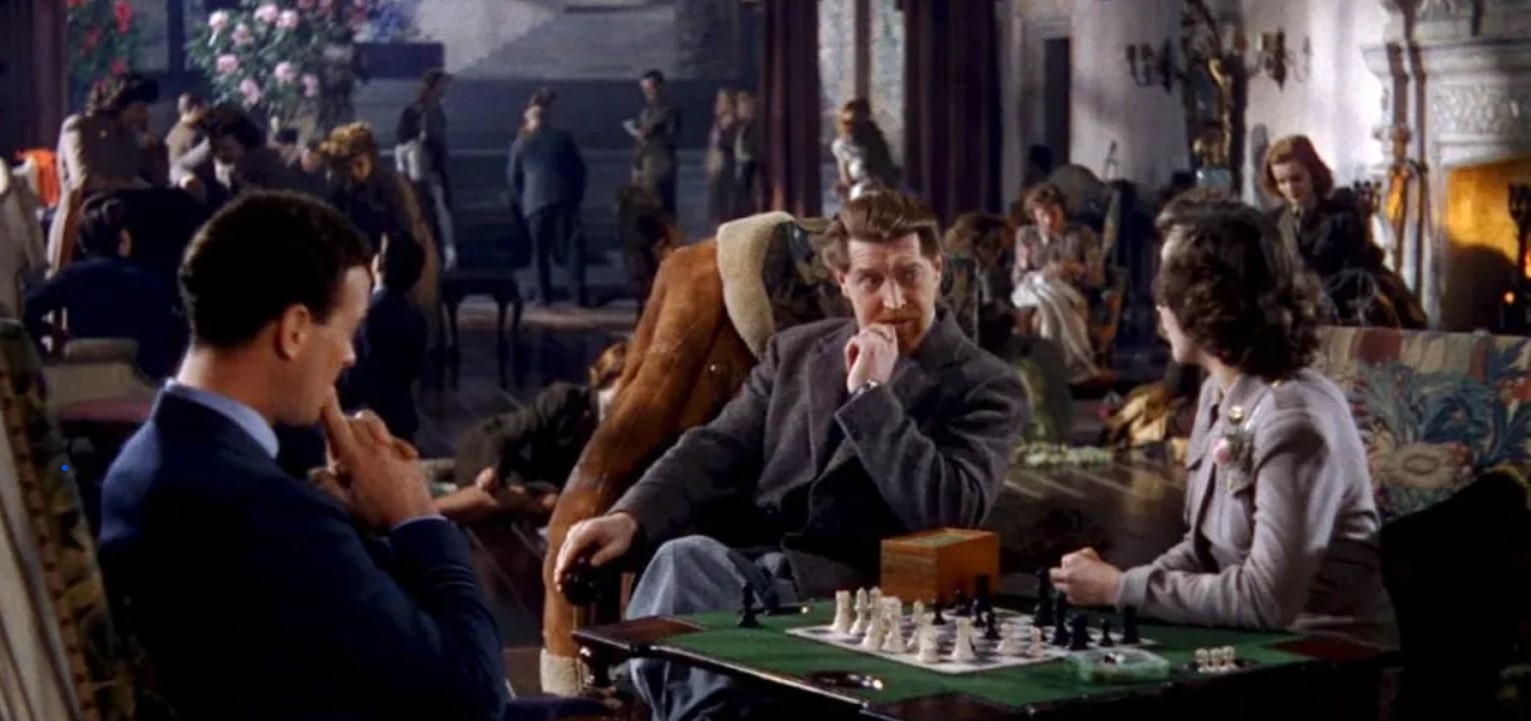
Michael Powell and Emeric Pressburger wrote, produced, and directed A Matter of Life and Death and were careful not to use the words heaven and angels. They picture the afterlife run with military precision guided by Enlightenment ideals, rather egalitarian, favoring no national or ethnic group. This British version of the afterlife is more intellectual and less sentimental than how Americans present it. They don’t use the word angel, but new arrivals in this afterlife are issued a set of large white wings in clear plastic bags.

However, this heavenly bureaucracy does make a mistake by not promptly escorting Peter Carter (David Niven) to the afterworld when his Avro Lancaster is shot up over Germany. Instead, he survives an impossible to survive death and falls in love with June, an American radio operator in the U.S. Army Air Force.

When Conductor 71 (Marius Goring), this film’s designation for a guiding angel, informs Peter of the mistake and demands he come along to the other side, Peter refuses. The rest of the film is about Peter’s legal battle in an otherworldly court, pleading to continue living on Earth with June. Peter makes a case that it’s heaven’s fault he wasn’t retrieved, and because he got to fall in love before the mistake was corrected, his death should be postponed.

There are four major male parts in this film. Niven is the British pilot and is considered the star. Marius Goring, the angel Conductor 71, is an effeminate Frenchman who had been beheaded during the French Revolution. He’s the go between the other world and Earth, functioning like Clarence, Dudley, and Mr. Jordan from those famous American angel flicks. Then there is Raymond Massey as Abraham Farlan, the prosecutor who believes Peter can’t stay on Earth beyond his allotted time. Finally, there’s Roger Livesey as Dr. Frank Reeves, a brilliant neurologist, who believes Peter is suffering from an earlier concussion and all his talk of the afterlife a delusion.

Roger Livesey, I know from The Life and Death of Colonel Blimp. I felt his character Dr. Frank Reeves was far more charming and dashing than David Niven’s, and I wished Livesey had played Peter Carter, Niven’s character. I think I’m hard on old David Niven because I’ve always wanted to see Niven play Dudley in The Bishop’s Wife to see if he could have acted the romantic part. It was just too easy for Cary Grant to play that part, and I’ve been curious if Niven had the acting chops to have pulled it off. (And I would have loved to see if Grant could have pulled off the stuffy bishop’s part.) Now I get to see Niven in a similar metaphysical romantic role, and I was disappointed. Reeves and June reveal far more chemistry than June and Peter. I just didn’t believe June would fall instantly in love with Niven’s Peter. That’s one weakness of this picture, they rushed the falling in love part.

I don’t want to give away too much so I’ll stop talking about the details. I will say A Matter of Life and Death is a cross between Here Comes Mr. Jordan (1941) and A Guy Name Joe (1943), a couple of my favorite angel films. A Matter of Life and Death is filmed in beautiful technicolor except for the other world scenes, which are in a pearly black and white, the reverse of The Wizard of Oz (1939).

A Matter of Life and Death isn’t as moving as It’s a Wonderful Life (1946) or as charming as The Bishop’s Wife. However, it offers several unique takes on the afterlife that’s not in other films. I really enjoyed the cinematography, and some of the sets and arrangement of extras in heaven remind me of Busby Berkeley productions.

TCM recently had David Byrne as a guest programmer, and he presented A Matter of Life and Death and Wings of Desire as a double feature. I thought that an excellent pairing. Wings of Desire is another of my favorite movies about heaven, metaphysical beings, and angels. Just for grins, here’s a list of all the metaphysical movies that made me feel good about death or the afterlife. It’s a shame that in modern times, angels aren’t always that angelic. Although Michael (1996) and Dogma (1999) were fun.

JWH

Reading Vonnegut’s Slaughterhouse-Five at Ages 18, 55, and 72

by James Wallace Harris, 2/8/24

When I first read Slaughterhouse-Five by Kurt Vonnegut back in 1970 I thought of it as an antiwar novel. The Vietnam War overshadowed everything back then, and I was old enough to be drafted. 1970 was the year M.A.S.H. and Catch-22 came out in the movie theaters. I went to see Catch-22 and was so blown away that I bought the book, read it in a day, and then went to see the movie version again. I didn’t read the book version of M.A.S.H. for another year but saw the film in 1970 too. Ever since I’ve thought of Slaughterhouse-Five, Catch-22, and M.A.S.H. as the trilogy of anti-war novels of my generation. The books were all about hating war.

When I read Slaughterhouse-Five again, in 2006 when I was 55, I listened it on audio. That time it was a completely different novel. That time it was hilarious. It was over-the-top silly, slapstick, and viciously satirical. At that time I focused on the Tralfamadorians and Kilgore Trout, and Vonnegut’s commentary on science fiction. In 2006 I noticed the antiwar parts, but they didn’t seem to be the primary point of the novel. They were still horrifying, but I found it hard to take Slaughterhouse-Five as a serious novel about WWII. That happened to me last year when I tried to reread Catch-22.

Now in 2024, when I’m 72, I listened to the book again. This time the story was bittersweet, heavy on the bitter, gentle on the sweet, and deeply philosophical. This time Slaughterhouse-Five was a condemnation of humanity. It was dark, very dark, but strangely not depressing. Both Billy Pilgrim, the protagonist, and Vonnegut were accepting that humans do horrible things and there is nothing we could do about it. This time it was obvious that Vonnegut believes we have no free will, and the best we can do in life is enjoy those moments when life is pleasant. This time around Slaughterhouse-Five was incredibly stoic.

When I read Slaughterhouse-Five the first time I thought the main goal of the novel was to horrify readers that we bombed Dresden in 1945 and make them outraged. I thought Vonnegut was testifying to an Allied war crime. This time around I realized Vonnegut wasn’t doing that at all. He was completely accepting that we had to bomb Dresden.

I think both times before, I thought Billy Pilgrim was a stand-in for Vonnegut. However, this time it was quite explicit that Billy Pilgrim and Vonnegut were distinctly two different characters in the book. At the end of the audiobook, there was a ten-minute conversation between Vonnegut and another unnamed WWII vet. In that conversation Vonnegut even tells us the name of the man he based Billy Pilgrim on.

The vet Vonnegut was talking to kept trying to praise Vonnegut, and Vonnegut kept deflecting the compliments. But one thing the other guy said stood out. He said that all of Vonnegut’s books were in print because they have multigenerational appeal. Since I have read the book when I was young, middle aged, and old, I can attest to that.

When I read Slaughterhouse-Five back in 1970, I thought the book was a protest. It was Vonnegut telling his readers that we need to change. And back then I thought humans could change. When I read it in 2006, I still had hope that humanity could evolve into something better. But in 2024, I didn’t find Vonnegut protesting at all. Vonnegut advised acceptance. Why didn’t I see that at 18?

Slaughterhouse-Five is neither an antiwar novel, nor even a misanthropic novel. In 2024 it seems obvious that Vonnegut was saying we have no choice but to accept the life we’re given, both as an individual and as a species.

Vonnegut was around 42 when Slaughterhouse-Five was published in 1969. How is it he now seems like a wise old man when I read it at 72 in 2024? Every time I read Slaughterhouse-Five I thought of Kurt Vonnegut as a modern-day Mark Twain. I was very into Twain when I was young, but I pictured him as a bitter old man from his later fiction and autobiography.

I wonder now if Vonnegut eventually turned bitter like Twain. Even though for the 2024 reading many scenes felt bitter, now that I write this, I’m not even sure that’s what Vonnegut intended. Could he have intended a total beatific point of view? I need to rewatch the 2021 documentary about Vonnegut called Unstuck in Time. And I need to read And So It Goes: Kurt Vonnegut: A Life by Charles J. Shields.

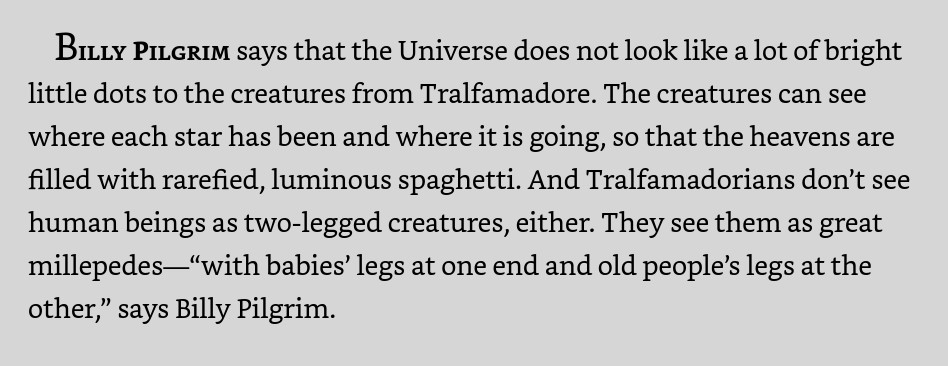
This time around I’ve been thinking more about the Tralfamadorians, the alien race who kidnaps Billy Pilgrim in a flying saucer and takes him to their home world where they exhibit him in a zoo. The Tralfamadorians don’t see time like we do. Existence is all of one piece.

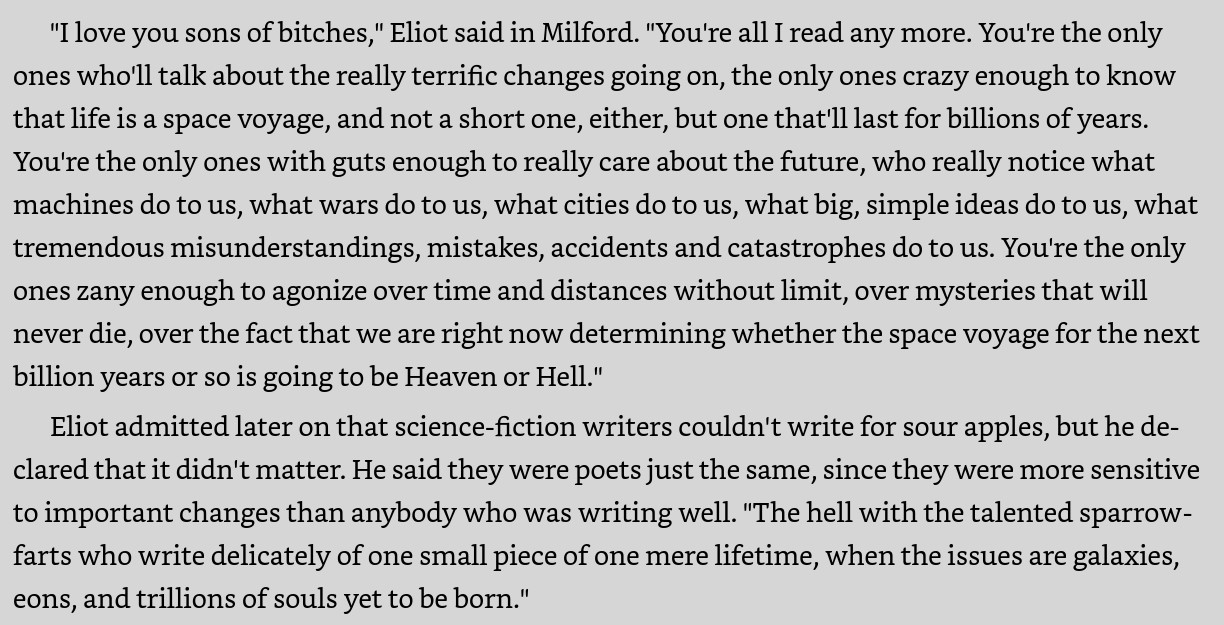
These aliens are like Zen Masters. Vonnegut uses them as enlightened teachers. But then, he gives a rather pitiful assessment of science fiction with his portrayal of Kilgore Trout. However, in a later novel, God Bless You, Mr. Rosewater, where Kilgore Trout is again featured, its hero, Elliot Rosewater attends a science fiction convention and gives this speech.

Science fiction didn’t come across so positively in Slaughterhouse-Five. Kilgore Trout wrote dozens of books that never sell. He’s a surly old man who makes his living by managing paperboys. Billy Pilgrim finds Kilgore Trout’s books only by accident. One time he finds four of them in a porn bookstore used as window dressing.

Wikipedia has an illuminating entry on Kilgore Trout. It says Vonnegut based Kilgore on Theodore Sturgeon. I’ve always wanted to know more about Theodore Sturgeon. Sturgeon’s fiction suggests he’s both eccentric and beat.

There are certain writers that haunt me. I think Vonnegut is becoming one of the ghosts that I need to get to know a whole lot better. And I might need to give Catch-22 and M.A.S.H. another read too.

JWH

Is Remembering Just Not Forgetting?

by James Wallace Harris, 1/17/24

I am fascinated by how works of pop culture become popular and then how they are forgotten.

I read this article, “The Percentage of Music on Streaming Services That Was Never Played in 2023 is Staggering” that got me thinking. Most music streaming services now claim to have catalogs of over one hundred million songs. This report is based on 158.6 million songs, with the following breakdown of plays:

79.5 million had 0 to 10 plays

42.7 million had 11 to 100 plays
30.0 million had 101 to 1,000 plays
6.4 million had more than 1,000 plays

The report said 45.6 million of that first group got no plays at all, but ten songs in 2023 got one billion plays. This says a lot about pop culture. 86.2% of all those songs got less than one thousand plays. I guess that’s the background radiation of pop culture interest, showing how quickly society forgets.

I wonder if I played any of those songs with less than a one thousand plays during 2023. I wonder if I play a song that no one else played at all in 2023. I wonder how many people also play the same songs I play all the time from my favorite playlist.

When I was young, I wanted to hear the current hit songs and albums, read the latest books, go to the movies that just came out, and talk with my friends about the TV shows which broadcasted last night. Now, in old age, I’m years behind, and make no effort to keep up with current pop culture. I desperately cling to the past, hoping not to forget. I feel like I’m one of the characters at the end of Fahrenheit 451 trying to preserve a book.

My focus in old age is to find the best music, movies, books, and TV shows from all time. The trouble is digging through the mountain of old pop culture artifacts and finding the archeological gems. I work to remember what I love, but also find new loves before they are completely forgotten. I find those new loves by finding people who still remember them.

Of the roughly sixteen million albums that’s been recorded, how many are worth remembering and playing? Even if I played an album a day, and I lived another thirty years, I doubt I could listen to more than ten thousand of those sixteen million albums. There’s too much to remember.

It’s great that streaming services offer us access to all those songs, but they will be forgotten. That’s an immense amount of creative effort that’s disappearing from our collective consciousness. It’s also true for books, movies, and television shows.

How much can a culture remember of its best creative efforts? I once speculated that less than one hundred novels from the 19th century are remembered by the average bookworm. Literary scholars could name more, but I doubt even many English professors could list two hundred novels from the 19th century off the top of their heads.

Lately, I’ve been watching old movies from the 1950s. IMDB says there were 4906 movies made between 1950-1959 in their database, of which 165 were released in theaters. Here’s their list of the 165 in order of popularity. I would guess I’ve seen about 140 of them. But then, I was born in 1951. How many of these movies have been seen by people born after the year 2000? I have a tough time getting friends of my own age to watch old movies from the 1950s with me. However, I’m often surprised by young people on YouTube that have channels devoted to old movies. But what percentage of their age group are they? 0.001?

There’s always a percentage of the population that loves to explore old pop culture. I maintain a database system that identifies the most remembered old science fiction books. I follow people online who specialize in remembering old movies, old music, and old books. Only one of my friends is like me and searches out old books and movies. Is there a word for people like us, who cherish remembering old pop culture? It’s different from plain old nostalgia.

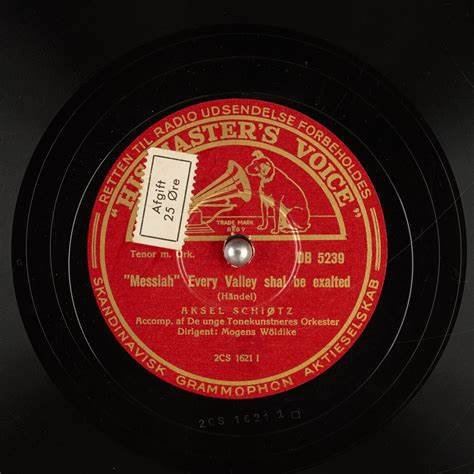
I’m currently reading The Game-Players of Titan by Philip K. Dick that was written in 1963 and published in early 1964. In it, characters from the 22nd century collect old records from the 20th century. I wonder if that will come true. Or will the music from the 20th century just sit on some computer, rarely played even by scholars? In the novel, Dick has his characters agree that a song, “Every Valley” by Aksel Schitz (book spelling) is their favorite vocal recording. I could find this (slightly different spelling):

Is this what Philip K. Dick couldn’t forget.

JWH

Could Different Actors Make a Mediocre Film Great?

by James Wallace Harris, 11/28/23

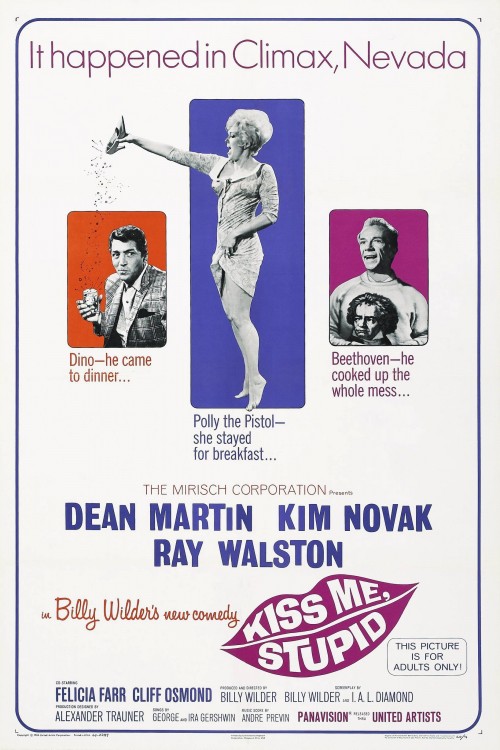
Billy Wilder has made many great movies, including seven films on the National Film Registry. So last night, when Susan and I started watching Kiss Me, Stupid (1964) we expected another hit. The show wasn’t a total dud, but it was one of the weirdest major motion pictures I’ve ever seen. It’s a sex comedy, and Wilder has a great reputation from two previous classic sex comedies, The Seven Year Itch (1955) and Some Like it Hot (1959). And if you think about it, Some Like It Hot is a very weird picture, but it worked despite its weirdness, and it gets more famous every year. Why hasn’t Kiss Me, Stupid? (Although, it might work with younger people for reasons I can’t fathom.)

There are many parallels between the careers of Billy Wilder and Alfred Hitchcock. One is young people are getting into the films of both directors today. And two, both directors fizzled out in the 1960s after a long career. There are other parallels, but for now I feel disappointed for Kiss Me, Stupid in a similar way I felt let down by Hitchcock’s Marnie, another 1964 film. Both films had many elements I liked, but they weren’t easy to watch. Both were too long.

To me, Wilder was obviously trying to have another sex comedy hit like Some Like It Hot because he originally hoped it would star Jack Lemmon and Marilyn Monroe. Both starred in that movie. Instead, he got Ray Walston and Kim Novak.

The story is about a piano teacher named Orville Spooner (Ray Walton) and gas station attendant Barney Millsap (Cliff Osmond) who dream of selling hit songs. They’ve composed 62 so far. So when Dino (Dean Martin) shows up at Barney’s gas station Barney quickly concocts a wild idea to get Dino to hear their songs. Barney sabotages Dino’s car and tells him he’ll have to stay over night. Dino asks where some action could be had, meaning where he could get laid. He tells both Barney and Orville that he gets terrible headaches if he doesn’t get sex once a day. Barney tells him to go to a dive called The Belly Button.

Dino then asks where’s a good place to stay and Barney says there isn’t any, but he should stay with Orville and his wife. When Barney gets the chance he tells Orville his plan. He wants Orville to get his wife out of the house, and they’d get a prostitute from The Belly Button to play Orville’s wife and seduce Dino. He’ll be so grateful for all their efforts he will sing one of their songs on his TV show.

Orville’s wife, Zelda, is played by Felicia Farr, who was Jack Lemmon’s wife at the time. The prostitute, Polly the Pistol is played by Kim Novak. And here’s one of the major problems of Kiss Me, Stupid. Even though Ray Walston does a good job playing Orville, the loser piano teacher, who is easily sent into rages of jealousy over his pretty wife, there’s no chemistry between him and Farr, or him and Novak. And Walston plays the role just how I imagined Jack Lemmon would have played it, he just doesn’t have the physical presence of Lemmon. Lemmon really would have been the perfect choice for the role or Orville.

Farr plays Zelda okay, but she doesn’t really charm us. I wondered if Zelda had been played by Shirley MacLaine, who had tremendous screen charm back then, could Kiss Me, Stupid have been another Billy Wilder classic. It makes you think about just how important the actor is in a hit, especially two actors in a romantic comedy. Lemmon and MacLaine had proven themselves in two other Wilder pictures, The Apartment (1960) and Irma la Douce (1963), although the second picture is no where near as good as the first. That shows that story counts for a lot too.

And since Kiss Me, Stupid becomes a three-way love story, the role of Polly the Pistol is also important. If Marilyn Monroe had lived, I don’t think she would have been right for the part. I thought Novak did a great job, and I think if she had the right onscreen chemistry with Jack Lemmon, it would have been perfect. Poor Ray Walston just wasn’t a romantic comedy lead. And even though he’s the main character, he only got third billing.

Dean Martin was fine playing himself, and his public persona that he uses in his acts fits the part, however, I always thought Martin was nicer than than the boozie character he created. And Martin never comes across as a horndog that the role needs. I wonder if Frank Sinatra or Bobby Darin wouldn’t have been better at acting the sex maniac. The part needed a big name singer who could act sleazy.

And last, I thought Barney should have been played by Jonathan Winters.

How much does on screen chemistry play in creating a hit movie? Watching Kiss Me, Stupid, it proves that it’s a great deal.

Kiss Me, Stupid was both stupid and boring in many places, but also oddly touching sometimes, and even funny in other places. We have to listen to a bunch of bad songs that are parodies of famous songs. They were funny sometimes, and painful at other times. The songs were written by Ira Gershwin pattern on George Gershwin’s melodies. They almost sound good, even the words, but it’s obvious they’re suppose to be bad too, even though they almost sound good.

Kiss Me, Stupid is available to watch for free on YouTube.

JWH

My Problem with the Terms “Evil” and “Free Will”

by James Wallace Harris, 11/8/23

Yesterday my friend Mike and I were talking about evil women characters in old movies. We both immediately thought of the character Ellen Berent Harland (Gene Tierney) in the 1945 film, Leave Her to Heaven. I told Mike that I had just read a review of Detour, also from 1945, that featured one mean woman, Vera, played by Ann Savage. The reviewer said she was the evilest woman in all of film noir.

This got me Googling the phase “evil women in the movies” and finding several lists: 25 Of The Best Female Villains You’ll Love To Hate, The Greatest Female Villians, 10 Awesomely Sinister Women in Movie History, Most Memorable Female Villians. Not to surprising, most of the films listed were recent. What was surprising, was most modern female villians are from fantasy, horror, or animated films. Mike and I were thinking about ordinary realistic women in films.

Mike texted me:

I make a distinction between evil and insane. For example, Kathy Bates in Misery, Jessica Walter in Play Misty for Me, and Glenn Close in Fatal Attraction play characters that I consider insane, not evil. The Barbara Stanwyck character in Double Indemnity is not insane, just evil. The same goes for Gene Tierney in Leave Her to Heaven.

I texted back:

Evil is a slippery word for me. In the original religious term God was the source of all good and the Devil was the source of all evil. Being evil meant you were doing the work of the devil. It connotes that the person is a puppet of the devil. Or worshipping of the devil by doing the kind of things he wanted done. Being evil meant being devilish.

By the way, in the old days being insane meant being possessed by the devil. So judging someone evil or insane was close to the same thing.

In the modern sense of how we use those words it all relates to free will. An insane person has lost control of their free will. An evil person chooses to do evil.

But we have a problem. Recent research suggests no one has any free will. 

Now, our fun conversation has turned serious, but I think valid. If we don’t have free will, how do we judge people we think are doing wrong? I just bought the book Determined: A Science of Life Without Free Will by Robert M. Sapolsky but haven’t read it yet. However, I have been reading reviews and watching interviews with Sapolsky. What he’s saying is based on brain research that I’ve been reading about for years. We don’t have free will. The trouble is our moral and ethical structures depend on people either being sane and deciding on their own actions, or insane and out of control. What if we have no control over our actions at all?

The nightly news is full of people I’d call evil. What if we took a different approach to the problem. What if we say killing innocent children is evil no matter if you have free will or not. Does it matter if the evil person is consider sane or insane? Or has free will or not? What we’re horrified by is bad things happening to good people.

Modern films have made evil rather cartoonish by portraying the bad guy as over the top in their evilness. The films Mike and I were talking about, Leave Her to Heaven and Detour, are mundane portrayals of evil. I think the gigantic evils we see in the news, and the unrealistic portrayals of evil in modern movies, have made us forget the everyday type of evils. We no longer expect everyone to be honest and civil, and bad behavior is often claimed to be free expression and a personal right.

I don’t like what I see on the news, or in modern movies and television shows. And the behaviors I’m seeing on the freeways and while shopping is disturbing too. Maybe we don’t have free will, but we could at least act like we do. Maybe pretending to be good is all we can hope for.

I’m reminded of a science experiment I read about back in the 1960s where they put many rats in small confined cages to simulate overpopulation. The rats became violent, tearing at each other. I think that’s what’s happening to us today. Overpopulation is causing us to go mad. But that also supports the argument that there’s no free will.

Even though neuroscience is revealing there’s no free will, I wonder if free will isn’t something we could develop? Can we overcome genetics and conditioning? Is there some way we can consciously reprogram our unconscius minds. The reason why scientists say we have no free will is because they can measure brain activity happening before we’re consciousnessly aware of our choices and actions. Is there no way to condition our unconscious minds to act in the ways we consider ethical?

It’s obvious that any adult who follows the same beliefs they were taught as a child is not acting on free will. Most people believe what they are taught early in life. But if they radically change what they believe, is that a case of free will? If someone raised a Baptist grows up and spends many years trying out different religions, and ends up choosing to become a Zen Buddhist, is that free will?

When you watch movies think about whether or not the antagonist is acting on their own, or from genetics and conditioning. Do the same when you are watching the news. Does Putin have free will? The current war in the middle East is just like all the wars of history. Maybe we don’t change because we can’t.

Still, the idea of being able to change ourselves intrigues me. Science might prove we don’t have free will, but does that mean we should stop trying to change ourselves?

I’ve been paying attention to my dreams lately, so I’m getting to know my unconscious mind. I’m also working on developing good habits and breaking bad habits. And I think there are ways to reprogram how our unconscious minds function. If we could, wouldn’t that be an act of free will?

JWH