Why Do We Fall In Love With The Past?

By James Wallace Harris, Thursday, January 28, 2016

We explore the past through infinite paths. The past no longer exists, yet we recreate “what was” with artifacts that continue to exist in the now. We use our neurons as virtual reality machines to remember. Most of us have a rough map of our own life, and hazier maps of our own culture. Beyond those maps lie the unknown territory of the collective past, which we are all deeply rooted. We have all shook hands with someone who shook hands with a 19th century person, who had shaken hands with someone from the 18th century. I am old enough to have shaken hands with many people born in the 19th century. Every history book we read weaves thousands of threads that link us to a past.

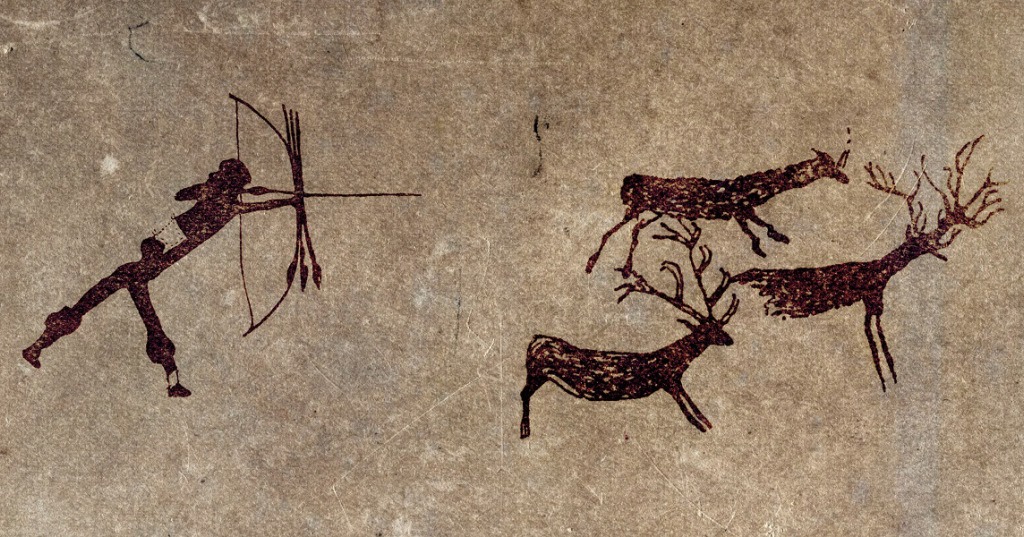
Have you ever contemplated how we build the past in our minds? As individuals we use memories. We talk to other people and use their memories. Novels, movies, songs, television shows, paintings – are fundamental ways of recalling the past. Art is recorded memories. Think of cave paintings, probably among our oldest memories. Slowly, education and scholarship evolved to organize the details of the past. Whether you’re studying math or The New Testament, you’re recreating the past. The discipline of history isn’t that old in the big scheme of things. In recent times we have journalism and the internet to extend our sense of the past.

Whenever we play an old piece of music or see a work if art in a museum, it connects us to people, places and things who lived and died long ago. For example, I’m currently reading I Am Alive and You Are Dead by Emmanuel Carrère (19281982, San Francisco, Berkeley, Point Reyes, Santa Ana) a biography of Philip K. Dick. Or I recently saw The Revenant (1823, Montana, South Dakota) about Hugh Glass. I could link to dozen more movies and books I’ve recently seen that connect me to the past. Just follow those few links to understand how we network with the past, and how far and quickly that web of memory will carry you away. Trying to grasp the fullness of past is like falling into a black hole.
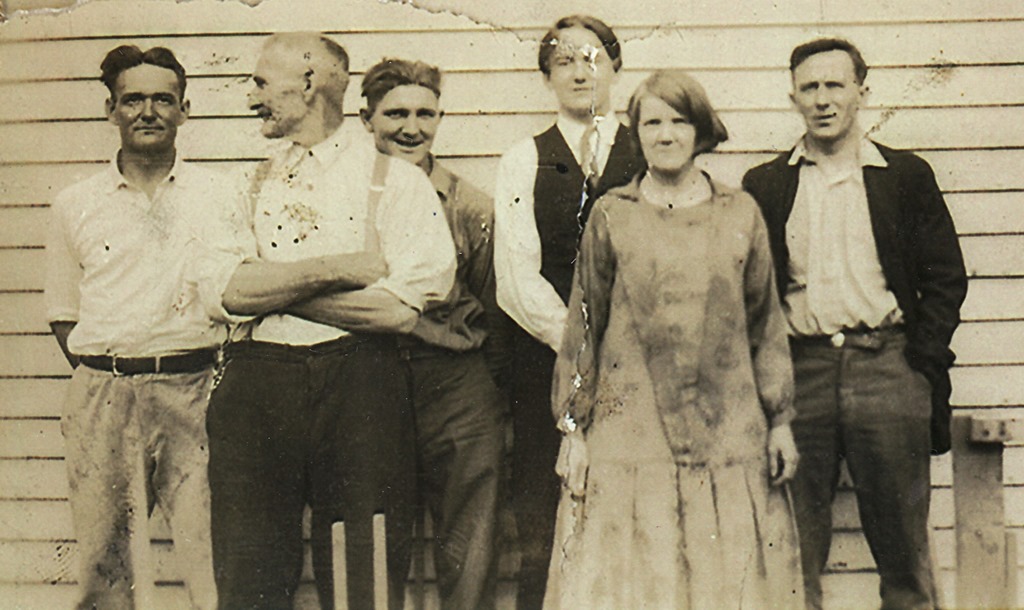
1920s - Dad's father on right - with parents and brothers - cropped

Here’s a photo of my father’s father, his brothers and their parents (my great grand parents). I know next to nothing about these people, and can only remember a couple of anecdotes. What would it take to learn about them?

The answer comes in a book I just finished, The Hare with the Amber Eyes by Edmund de Waal, who took a couple years out of his life to learn about his ancestors on his father’s side. This wondrous book will delight lovers of history, art and culture. There’s enough material here for six fascinating historical movies, and seeds for many more. The challenge here is for me to describe it in a way that will make you want to read it. It’s not a book for everyone, but it is a book for everyone that loves the past.

The Hare with the Amber Eyes by Edmund de Waal

When I was young, I’d often hear or read that America had no old culture, not like the Europeans. It’s taken me a lifetime to understand what they meant. Except for a few mementos, like your granny’s quilt, or collecting antiques, we seldom dwell on our own heritage. We’re always thinking about the next new gadget to buy (as we throw away the old ones), or the next new show to binge-watch. Some Americans are into genealogy, but not that many. We generally embrace the pop culture of our teenage years, which we cherish our whole life, but few people branch from from there.

Edmund de Waal has written a book that succeeds in capturing a panoramic snapshot of his cultural heritage that spans three centuries. The Hare with the Amber Eyes starts off as a quiet unassuming memoir that slowly builds into an atomic explosion of multicultural history of art collecting. The story is anchored by a collection of 264 Japanese netsukes that came into his family in 19th century, and de Waal inherited in 21st. The book is set in Paris, Vienna, Odessa, Tokyo and London.

I have read this book for three book clubs now. It’s a challenge to explain its appeal. If you love art history, especially French Impressionism, or how Japanese art came to 19th century Europe and 20th century America, this book will appeal to you. If you like to read about Jewish history, especially about Jews living in Odessa, Vienna and Paris in the 19th and 20th century before WWII, this book will grab your attention. If you are fascinated by the American occupation of Japan after the war, the book has insights for you too. If you’re fascinated by Nazi art theft like The Monuments Men (the book, not the movie) and The Woman in Gold (the movie), then this book has stories for you. If you’ve ever tried to write your own families history and wondered what kind of effort it takes, then this book is for you. If you love the PBS shows Antiques Roadshow and Finding Your Roots, then this book is for you.

Most of all, if you’ve ever seen old photographs of your great grandparents and your great great grandparents and wonder what their daily lives were like, this book is for you.

I would be hard press to make a list of all the subjects de Waal touches upon in his small book. The frame of his story is to take his 21st readers back to the 19th century Paris to explain how his family first acquired the netsuke. His story begins in France as Impressionism is coming into vogue, which is concurrent with Europeans becoming obsessed with Japanese culture and art. The story then travels to turn of the century Vienna, past WWI, through the years between the wars, WWII in Europe, to the Japanese occupation by Americans, and then into the home stretch of this century. Along the way, The Hare With Amber Eyes encounters many famous people and events in 20th century history. If de Waal played six-degrees of separation, he’s only a few degrees from some very historical folk. Yet, de Waal current life is very unassuming. He’s an artist, a maker of porcelain. When heading into the past, you never know what you’ll find. Besides, we have four grandparents, eight great grandparents and sixteen great great grandparents. It gets pretty easy to make some marvelous connections.

My goal is to try and explain why I liked the particular details in The Hare With Amber Eyes, and that’s rather difficult. I’m not that into Japanese netsuke, although they are impressive little sculptures. There’s no reason for me to identify with de Waal’s genealogy, my family was nothing like his. What enchanted my reading is their love of art and culture. The book’s connections to 19th century Paris and early 20th century Vienna provides vivid details of what it’s like to be great patrons of art. The book gives me another side of the history of Impressionism – the buyers side. Charles Ephrussi, who originally bought the netsuke, was even painted into Renoir’s “Luncheon of the Boating Party.” Charles is the guy in the top hat. What a way to be remembered!

But why should I care about Charles? Reading The Hare with the Amber Eyes makes me wonder why I care about anyone in the past. But I do. We all do. Most of us are obsessed with the past. I keep looking at that painting above and wonder what it was like to have been at that party. In the book, the netsuke are touchstones to the past. De Waal owns them now, and the netsuke put him one degree from Charles and many of his relatives between the 1870s and now. They tie a family history together. De Waal focuses on three of his ancestors, and the cities that shaped their souls, Paris, Vienna and Tokyo.

I can’t think of anything I own that ties me to the past like that, other than photographs. I wonder how many hands have held that photograph of my great grand parents? My mother’s mother, Lou Dare Little, was born in 1881. She held my mother’s side of the family together for decades. She bore five daughters, which held the family together for several more decades. But now that only my Aunt Louise is still alive, the family seems to be coming undone. What de Waal shows with The Hare with Amber Eyes, is how history and art can sew a family back together. However, it took two years out of his regular life to accomplish that effort. My cousin Jane wrote a book many years ago that tied the descendants of Lou Dare Little together – at least for a while. How many of my cousins and their descendants will keep reading Jane’s book in the future? Will anyone from newer generations write another book? We don’t have anything like the netsuke to travel into the future, to get later generations to remember us. Or do we?

I’m not sure I’m accomplishing my goal here. All I can really say is read The Hare with the Amber Eyes, and let it convey what I want to say. It is a cornucopia of memory triggers. But also, every time you turn on your TV, or go to a movie, think about what you’re seeing is saying about the past. Whenever you read a book, have a family reunion, or go to an antiques dealer, think about how the past won’t let us go, or we won’t let it go.

JWH

Photographs I Wished I Had Taken

By James Wallace Harris, Tuesday, January 5, 2016

With smartphones, we always have a camera ready to snap a pic. Growing up my parents would only splurge for a roll of film on special occasions, like a cross-country vacation, or a big Christmas. Even after I moved out on my own, I seldom bought film. So I don’t have many photos from my first fifty years of life. Now that I’m getting older and my memory is going, I wish that I had pictures of people, places and pets that I never took.

For example, the other day I struggled to remember what the old Periodicals Department looked like back in the early 1980s, when I worked at the Memphis State University Library (now University of Memphis). I don’t know why I started thinking about this large room where I lived 8:00-4:30 with fourteen other people for six years. We had 15 desks crammed together. It was during my early thirties. We each had to work one night during the week and about every fifth weekend. I volunteered for Fridays since I was married. There was always a regular crowd of lonely folks hanging out at the library on Friday nights. Like the English professor who would visit for an hour ever Friday and tell me about his rare Bible collection or the rug factory his Lebanese immigrant family owned, or the hipster dude who came in like clockwork to read the Playboys, and called the Commercial Appeal the “commercial appall” – a joke I heard hundreds of times.

My memory has no images for their faces. Nor can I really see that workroom I spent so many years toiling away, typing up missing serial orders on a manual typewriter. I’ve search Google images in vain to find a photo of that Periodicals Department. One of the few times Google has let me down. I have fleeting mental fragments that I can’t put together into a whole scene. Like the rickety wood cart we kept the Commercial Appeal and Wall Street Journal on until we got them on microfilmed. They were the two most requested items at the desk, so we’d roll that cart up close to our stools. I also remember the two blond wooden tables that were shoved together to make one long work area for sorting the mail. We checked in hundreds of magazines and newspapers every day. I try to imagine, Rita, Jane, Mike, Barbara, Kitty, Pam, Floyd, Jack, Delores, Robert, Margaret, Carol, Susan and Mary at their desks.

I don’t know why I’ve been thinking about that room and those people. I left it thirty years ago and seldom thought about it since. But my mind wanders and memory fragments stab me, and the black holes trouble me. I guess that’s part of getting older.

I fantasize about a different life, an alternate history, of living with digital cameras since I was born back in 1951. I wish I had taken a photograph of every house I lived in, from all angles, and showing each room. I wish I had taken a photograph of every vacant lot and patch of woods I played in. I wish I had a photograph of every pet I own, and every friend I had, and every pet they owned. I wish I had photographs of every school I attended, with all my teachers, classmates and classrooms. I wish I had a photograph of every library, bookstore and record store I’ve visited. I wish I had pictures of every place I worked and everyone I worked with.

My father was in the Air Force and we moved around even more often than normal servicemen. My dad was a restless guy who volunteered to be relocated. We’d move to a new city, rent a house, start at a school, then buy a house, and switch to another school. I’ve lived in dozens of houses, and attended at least 15 schools before I got out of high school. I worked at a lot of different jobs starting as a paperboy at 12, and until I got married. But once I got married, I stayed at the same job for almost forty years, although I worked at a bunch of different departments, offices and buildings. Because I was the web photographer for our college in later years, I collected those pictures into a folder before I left. When I look into that folder so many memories are unleashed. I wish I had folders for every place I lived, studied and worked. I wonder what memories are buried in my head that would be released with the right photo to trigger them?

I’ve written about the ache for photos to help remember before, see “Homestead AFB Library 1962-1963.”

Generally, when we take pictures, we usually take pictures of people, or our pets. I have a fair number of those to comfort me. What I miss, are pictures of buildings, rooms, computers, radios, baseball gloves, stereos, cars, television sets, bicycles—all missing objects that now haunt me in their absence. I miss things. I miss places. I miss roads and paths. I miss trees and shrubs. I miss bookcases, books, record cases and records. My mind longs to see how things were shaped and laid out. I miss seeing down long tree lined streets or sandy paths through woods, that I walked and hiked.

I wonder how many visual vistas my brain has recorded. They pop up in dreams and sometimes when I’m awake. Could I learn to recall them? Our brains seem to have a compression algorithm that is very lossy. Or is that just a faulty recall mechanism. My dreams often seem of much higher resolution than my recalled memories during conscious moments.

If I had the photographs I wanted, would looking at them burn their limited views over my natural memories? This makes me wonder if I did have photographs of all these things, how would I organize them? How often would I look at them. Would they boost my ability to remember or make my memory processor weaker?

Young people growing up today with smartphones that can take pictures, videos and sound recordings. Will having huge libraries of external memories alter their souls? What will their nostalgia be like in 50 years? Will having so much external evidence make them into different people than we are now? Aren’t we different people from those who lived before photography?

1958 Jimmy-Patty-Becky-Jody-Christmas-1958

I can remember the Christmas above. It was one of the big ones. I don’t remember being so small though, nor my sister and her friends being so tiny either. We were giants back then. We were the King and Queen of our street. I led the Eagle Club, and my sister had her Please and Thank You Club. My sister Becky is the redhead, and that’s Patty Paquette flashing her underwear, and Jody playing with a flower pot. I wish Michael Kevin Ralph was in this photo. You can’t see the details in the grass, but that yard is full of stickers. This was Hollywood, Florida, 1959, and stickers were a big problem for us kids who loved to go barefoot. I had just turned eight. This was a new subdivision called Lake Forest, and only half the block was built. The sidewalk actually ended halfway round the block. We’d roller skate to one end of the sidewalk, and then skate back to the other end. It was wonderful when the built the other half and we could skate the whole block. Down the street was an empty lot, where Mike and I built a fort. It was a pit covered over with old branches, brown Christmas trees and abandoned boards. Later the Catholic Church conquered our fort. We should have fought harder.

If I kept looking at this photo I could write a hundred thousand words. A thousand is too few.

JWH – Essay #994

Why We Draw, Paint and Photograph

By James Wallace Harris, Monday, October 26, 2015

I’m taking a community education course in beginning drawing and it’s making me think about why we draw, paint and photograph. I took the course to do something with a friend and learn a few drawing skills, but the class is making me contemplate the nature of art. Most people now carry a camera with them at all times because of smartphones. Why learn to sketch, when a click of the camera can capture any image far easier? Yet, before cameras, why did we want to draw what we saw? The urge goes back to our earliest days as cave dwellers. Did drawing skills precede language skills? Often, whenever we want to explain something complicated to another person, we draw a picture. The hot new trend in journalism is infographics. And, there’s that old saying, “A picture is worth a thousand words.”

cave art

My efforts to draw what I see has been extremely frustrating so far. I can draw a table that allows someone else to say, “Hey, that’s a table.” What frustrates me is I can’t accurately draw the table I see. I know I can’t become a human camera, but I do want to sketch with a level of accuracy that teaches me to see the abundance of details I’m currently ignoring. When I think about art, I wonder if I’m missing the point. Until we had cameras, artists strove to accurately record reality. Paintings were physical memories of what they saw. Artists also did more. They tell stories and create beauty. And, of course, they wanted to make a living, and maybe even become famous. Since I don’t need to earn money from drawing, nor do I care about fame, that leaves me with beauty, story and memory.

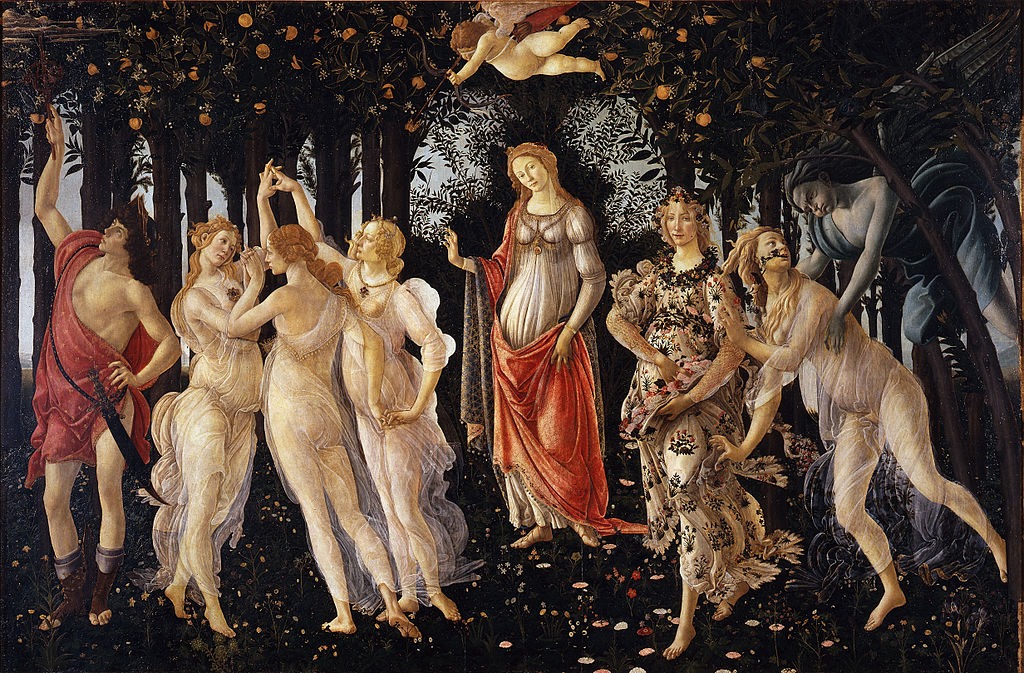
1024px-Botticelli-primavera

Right now I’m struggling to make smudges on paper that capture what I see. I’m picking objects that look easy to draw. But eventually I’ll want to record something I really want to remember, and something that I’m seeing in a more powerful way than how I look at things now. Ultimately though, I want to create something that’s beautiful. That’s the special quality of art. Art creates something that doesn’t exist in nature but competes with nature for beauty.

Right now I have absolutely no idea of how to create something new and beautiful, but I get the feeling that’s where this path leads. My teacher seems to know that’s where we need to go, but also knows we’re going to quickly get lost, and give up. Most people are artists when they are kids, but they lose their way. Maybe when we get old, we try to return to that way of looking at the world, like when we were young.

Gustave_Caillebotte_-_Paris_Street;_Rainy_Day_-_Google_Art_Project

I doubt I’ll ever become an artist, or even create something beautiful, but that doesn’t matter. Trying teaches me about the nature of art more than just admiring works in a gallery or studying art history courses. It’s like programming computers, there’s lots of procedures, subroutines and techniques to learn. There are tools to master, and coding languages to memorize. I’m surprised by how many technical tricks are involved in drawing. Talent might be involved, and it might not either. My guess is it’s mostly practice and work, and picking up skills and tricks from other artists.

Anyone can draw a picture or snap a photograph. It’s the why that matters. What do we want to remember, what story do we have to tell, can we capture beauty we discover in reality, or can we add something beauty to reality? I hope I can develop a daily habit of drawing, and it become a routine like exercising. It’s really hard to start doing something totally new late in life, but I think it will be good for me. Just the little effort I’ve put out for this class hurts my brain in a way that lets me know how artistically out of shape I am, and how artistically fit some of my friends are in comparison.

modern_art_by_dorianoart-d483eet

I use John’s Background Switcher to display random photography as wallpaper on my desktop. Every ten minutes I get a new scene capturing a beautiful instant from somewhere in the world. These photos are memories, stories and beauty. I’m astounded by the artistic visions that photographers find, often in locations other people would call ugly. Other times I have John’s Background Switcher randomly go through famous paintings. Every ten minutes I’m reminded of the amazing diversity of what’s possible to imagine that’s not in reality. These paintings and photos transcend time and space, and they tell a relentless story.

Table of Contents

Learning To Love Classical Music

By James Wallace Harris, Sunday, September 27, 2015

I’ve been a big music love all my life, but I’ve never really liked classical music. I keep trying, thinking classical music must be an acquired taste, or I need to be educated to its ways. In recent months I’ve been trying harder, attending a few concerts. Last night I went to hear The Ceruti String Quartet perform Opus 76, No. 4 (“Sunrise”) – Franz Joseph Haydn, Opus 11 – Samuel Barber, and Opus 59, No. 3 – Ludwig van Beethoven. I was emotional moved sometimes by the Barber, mostly because some melodies seemed somewhat familiar, like I might have heard the second movement in a movie soundtrack. I liked the Haydn least, and the Beethoven kind of impressed me, but still didn’t quite work as something I’d want to regularly hear.

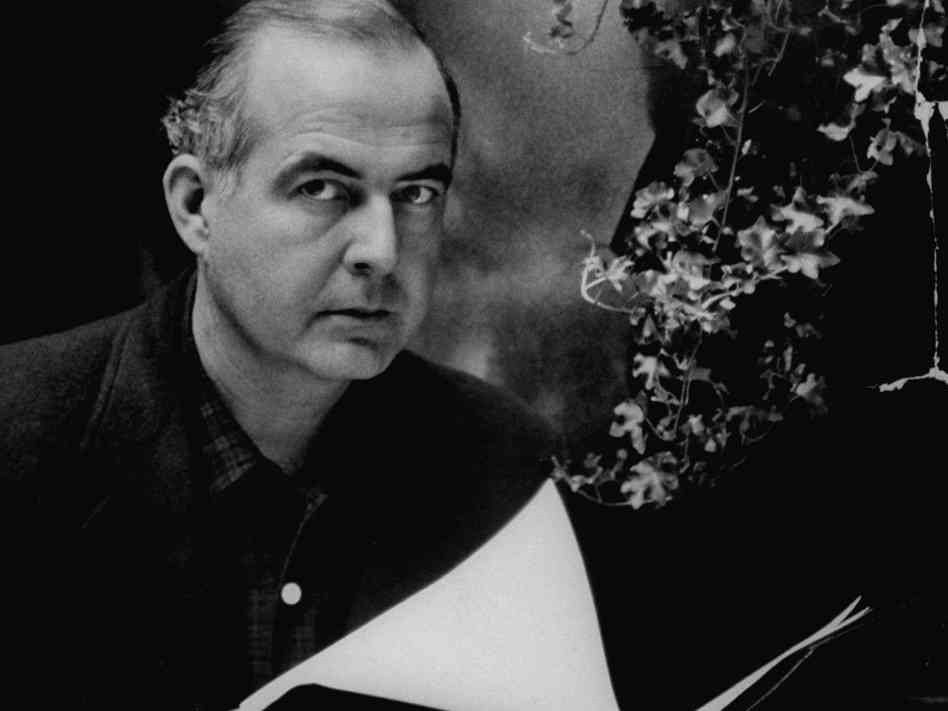
Samuel Barber
Samuel Barber

I’m fascinated by why some people find classical music so moving and powerful and others find it annoying. I’ve learned to like classical music enough, from brief measures here and there within symphonies, that I want to learn to like it more. I believe I have a conceptual barrier to understanding classical music. By understanding I mean being able to listen to it and appreciate its artistic beauty.

One hypothesis I’m working with, is I don’t have the working memory to appreciate classical music. I can’t remember the melody to any song, even popular songs I’ve heard a thousand times. I can’t hum a tune, or remember lyrics. Popular music, which I love, is based on short songs built around a relentless rhythm. Rock, folk, country and to a degree jazz songs are composed around a steady beat, usually provided by drums and bass. Other instruments weave simply melodies within the beat, but they are seldom complex, at least compared to classical music. Pop music is close to a short chant, while classical music is often much longer, far more complex, and might be compared to several long poems all read at the same time, but which still create a coherent whole. To my mind, classical music is a jumble of words and phrases I can’t comprehend, often jarring, usually without resonating with my feelings, but occasionally twinging a sense of beauty.

I came up with my working memory theory because of three recent incidents. First, my friend Janis has listened to two symphonies with me that she remembered from her high school band days. She can still hum/sing them, and remember their ever changing movements. She’d conduct with her hands as she listened, which shows she remember their overall structure.

Then I saw a video of a 3-year-old kid “conducting” the 4th movement of Beethoven’s 5th.

If you watch young Jonathan you can see that he anticipates what’s coming up. He has memorized the piece. Janis has done the same thing with the two pieces we listened to. I don’t know any classical music well enough to anticipate any part of it, even the symphonies I’ve played four or five times. I have no memory for structure. Popular music is so repetitive that you don’t have to remember. Has popular music made me lazy, or do I just have a very poor working memory?

I did play the three pieces I heard last night before the performance on Spotify–so I wasn’t absolutely new to them. I wonder how many times I would have to play them before I would learn to anticipate all the changes?

I remember taking tests where I was asked to remember a series of numbers. I’m miserable at it. Which probably explains why I can’t remember lyrics, poems and melodies. I don’t know if this is a birth defect, laziness, or lack of training. But it also relates to a third clue I discovered when I read “What Makes a Prodigy?” Scientists have discovered that most prodigies have fantastic working memories, either in the 99th percentile, or even in the 99.9th percentile. Most childhood prodigies are good at math, music and chess—all things I’m terrible at.

This probably explains why all my life I’ve wished I could play chess, music and do math—I hunger to do what I can’t. It might also explain why I can’t sing or dance. Don’t worry, I’m not feeling pity for myself, I’m good at other things. We often want what we can’t have. I’m guessing it might take a certain level of working memory ability to appreciate classical music, say 70th percentile or above, and I must be way below that.

Last night as I sat alone in the hall, (none of the three friends I asked to go with me would go). I struggled to make sense of what I was hearing. I was impressed by the performers, and by the creativity of the compositions, but except for some of the Barber, what I heard didn’t feel like what I feel when I listen to music I love. And I have a theory about that too.

If you are born into a family of Baptists it’s most likely you’ll grow up to be Baptist. If a Muslim family adopted a Baptist baby, it would grow up to be Muslim. Or maybe Hindu if it was taken to India. I was never raised with classical music, so it’s a foreign religion, a foreign culture. Because some people can move to a distant land and embrace a new culture, religion and ethics, I assume it’s possible for me to learn to like classical music. I just don’t know how hard that might be, or if my short term memory problem will be a limiting factor.

I tend to think it’s a matter of long term exposure. I used to really hate opera, but in the last year I’ve added a few arias to my Spotify playlist of favorites that I play everyday on random. This playlist are songs I can always hear and always enjoy, no matter when they come up. I’ve learned to love a few opera pieces enough to add them into the group.

Yet, I continue to struggle to conceptualize classical music. It’s funny what a newbie I am. I want to clap at the end of movements, whereas the obvious tradition is to sit quietly until the end of a piece. There’s no whistling, shouting, or stomping when a performer plays a particularly good riff. I was in a mostly empty hall with about sixty people in the audience. I think most of them were music majors, or older folk who love classical music. They all knew when each piece ended and clapped right on clue. I expected most of them were familiar enough with each of the three pieces they could have conducted. Which means they see classical music as a whole, something I can’t fathom yet.

Popular songs are played so often, and last so little time, that most people can grasp their basic structure quickly. A very long time ago I tried learning how to play the guitar and my teacher taught me the chord structure to “Like a Rolling Stone,” a song I’ve heard thousands of times since 1965. For a few weeks, decades ago, I could bang out that song, and had a feeling for its structure. I can’t even hum it now.

I listen to music in a extremely weird way, that might not be typical for most people. I don’t comprehend it’s parts. I can’t comprehend or visualize it’s structure. But holistically music pushes a button in my brain that turns on emotions. Music is a drug to me. Because pop songs are so concisely repetitious, they usually create just one emotion. Because classical music is so complexly varied, so diverse in it’s effects, that most of the time I feel nothing, but every once in a while, a measure, or even half measure of its music will find an emotion button to press. I wonder if I keep trying, I’ll learn how to like classical music so more of it’s riffs hit buttons within me that produce a response? One thing significant about classical music, and why I often compare it to movie soundtracks, is it creates a series of different emotions, sometimes even a rollercoaster ride of feelings.

Finally, I have one other hypothesis. I think I responded better to Barber than Beethoven or Haydn because he’s a 20th century composer. And that I liked Haydn least because he’s the oldest. I’m guessing the music of the 18th and 19th century was different because people’s minds were different, and I can’t tune into those periods—yet. With popular music I’ve learned to enjoy music all the way back to the 1920s, and I’ve even heard songs from the 1910s that are becoming catchy to me. For me to learn to love classical music will require learning to love music from other centuries. What’s fascinating is I started listening to chants from the Middle Ages, and I dug them. And I have a theory about why. Medieval music is more like today’s popular music, very simple. The early melodies were monophonic. Which makes me wonder if the minds of people in the 18th and 19th century were more capable of comprehending complexity than our 21st century minds?

JWH

The Zen of Hanging On

By James Wallace Harris, Thursday, September 24, 2015

This essay will be one of those that my friends think I’m going a little squirrelly.  But anytime I point to something that can’t be touched, I do seem a little crazy. I’m actually trying to capture a fleeting feeling—a single emotion I felt when hearing an old song.

The conventional Zen wisdom is one of letting go. We are taught to be one with the moment and learn to quiet our chattering mind. The lesson being that we miss the Now because we’re not there. Our thoughts churn out virtual never-never-lands instead of focusing on the beauty of existence. We live in our heads instead of reality. Our souls are like a drop of water floating down a stream that passes through an ever changing landscape. We hang onto memories of past sceneries or imagine future sights, ignoring the current vista.

Becoming one with Now is a lovely way to exist in reality, but I’m going to be contrary here, and explore the virtues of hanging on. All animals live in the moment. For some reason reality decided to evolve Homo sapiens who are capable of stepping out of the Eternal Now. It’s impossible to paint the Sistine Chapel or the build the Curiosity Mars rover without being able to ignore the moment. It is true we throw most of lives away in mental delusions, but it’s also true that some of those air castles we build in our heads get erected in reality. But I’m not talking about that kind of hanging on.

This morning while I was doing my morning exercises “Be My Baby” by The Ronettes came on the stereo, a song that first imprinted on me fifty-two years ago. By conventional Zen wisdom I should just listen to Ronnie Spector and enjoy the song for what it is in the moment. The powerful feelings I experienced when I was eleven years old and “Be My Baby” was chemically etched in my neural pathways don’t exist anymore. Or do they? Is it possible to exist now and then?

Living in the moment is being a one-dimensional point traveling through a four dimensional reality. The Zen of hanging on is constructing a four dimensional being. Our awareness of reality lives in the moment. Time is an illusion. The past and future don’t exist. We build the past with memories and the future with speculations. One meditation technique is to watch our thoughts, usually with the goal of quieting them. Our thoughts appear to be constant chatter that dribbles out of our brain. But if your soul can step back far enough, that chatter reveals patterns. Our diarrhea of mental babble has it’s own hard reality.

The Zen of hanging on becomes one of seeing ourselves from the fourth dimension. Living in the moment is eternal. We can’t know birth or death. But we are a finite creature with a beginning and end. We can only see that by hanging on to the residue of past moments and the most rational extrapolations of what we might become.

I don’t know if any of this will make any sense, but I felt compelled to write it before I allowed myself breakfast. It’s merely an explanation of why I believe “Be My Baby” keeps something from the past existing in this moment. To hear the song now flicks on a chemical sequence in my head that shapes my sense of the moment. From that view, the past still doesn’t exist, and the song long ago hardwired something that my present self can always experience. On the other hand, does my fourth dimensional sense of self, using all those memories I’ve hung onto, sculpts a bigger view of myself that includes the past?

Another way to ask that: Is our past a complete illusion, or something we continually reconstruct in the moment with artifacts we’ve hung onto?  Yes, one kind of past no longer exists, but don’t we create another kind, that does have a reality in the moment? Aren’t the things we hang onto the colors in which we paint our personality?

JWH