How Much Information Can I Process?

Like that old phrase, “Your eyes are bigger than your stomach,” I tend to put too many words on my plate to read each day.  The saying, “My eyes are bigger than my brain” doesn’t seem to say what I mean, so I’m looking for a pithy saying to express various flavors of information overload.  Obviously we’re all taking in more megabytes of data than our brains were designed to handle.

If I went on an information diet, how much is a reasonable amount of data to take in each day?

Like most people in 2012, I suffer from information overload, but unlike many people I know, I’m trying to do something about it.  Cancelling cable TV really helped.  Reducing my channel choices from over 200 down to 5 feels great.  My wife works out of town and when she comes home on the weekend she gets pissed off that I hate to add a 6th channel to the clicker – her favorite.  She doesn’t understand how much it pains me to flip through 6 channels.  To show my wife how much I love her, I added her channel to the clicker, but I don’t think she appreciates the sacrifice I’m making.  She just thinks I’m a TV wimp. 

(“You watch more than you can see” – not bad phrase, almost mystical, and philosophical, but too Chauncey Gardner.)

I’ve cancelled the newspaper and all my print magazines years ago.  I bought a Kindle and iPad to help manage information, but I haven’t gotten them under control yet.  Because of the novelty of the gadgets, and Amazon’s low monthly pricing, I quickly subscribed to several magazines.  I’ve been cutting back on those too.  I still hope to regularly read The New Yorker, National Geographic, The Rolling Stone, Discover and The Magazine of Fantasy and Science Fiction, although I fail miserably to keep up with all these magazines.  I never did in the decades of subscribing to the paper editions, so I don’t know why I think it will be different on the iPad.  At least I don’t see the mags grow in large piles around the room.

(“Your data intake exceeds its processing time” – not very catchy.  “I take in more data than I can shit out” – rather gross, but does imply I’m bloated with data.  I’m factulent!)

Just now I was trying to catch up on The Magazines of Fantasy and Science Fiction, and discovered they are filled with novellas.  I don’t have time for novellas, or even novelettes.  So I switched to the book review sections, and quickly found two great sounding books I want to read, The Future of Us by Jay Asher & Carolyn Mackler, about two friends in 1996 discovering their Facebook pages from 15 years in the future, and A Bridge of Years by Robert Charles Wilson, about a guy who gets to time travel back to 1962 Greenwich Village.  I had to add both to my Audible.com Wish List. 

(“You’ll need nine lifetimes to read all those books” – not too bad, but not accurate either.  I’d need ninety lifetimes.  “If you can’t handle 200 channels of TV, how can you handle 200 unread books?”)

It sure would be pleasant if I only had 5 books laying around waiting to be read.  You have any idea what it feels like having a to-be-read pile 700 books high?  Why do I keep buying books?  I’m insane.  And the highlight of this week is the annual library book sale. 

(“I’m a glutton for words.”  “I’m a bookaholic.”  “I need to go on a data diet.”  “I’m obese from eating too many words.”)

I feel I’ve gotten TV under control, now I need to get my books and magazine reading roped in and tied down.  I think part of the problem is we all feel we must keep up with what’s going on around the world, whether it’s news, pop culture, music, literature or even TV celebrities.  We don’t like other people to think we’re living under a rock.  But is it vital that I keep up with European politics and economics, with South American mining, with Chinese manufacturing, with Russian crime, and so on?

Do I help the world in any way by watching all the sparrows?  Aren’t we using the internet, smart phones, and cable  TV news in an attempt to be omnipresent?  Of course, I’m assuming my addiction to information is common, and that may not be true.  Most people might eat a healthy diet of data and never feel full with information overload.

I feel if I quit trying to read everything I’m going to miss something, something important.  Like I’ll be a work and people will laugh at me because I didn’t know about Africa sinking below the ocean or when the aliens from space landed in Tibet.

Sometimes I think I shouldn’t worry about news at all.  I’ve had a fantasy about writing a novel, and just forgetting what goes on in the real work, and only concentrate on creating my fictional world.  But it’s so weird to think about shrinking my world to the size of house and office, and what I see from my truck and bicycle. 

That would be like living in some 19th century novel.  That would be bad, right?

JWH – 5/6/12

Living in the Cloud: A File Structure for Life

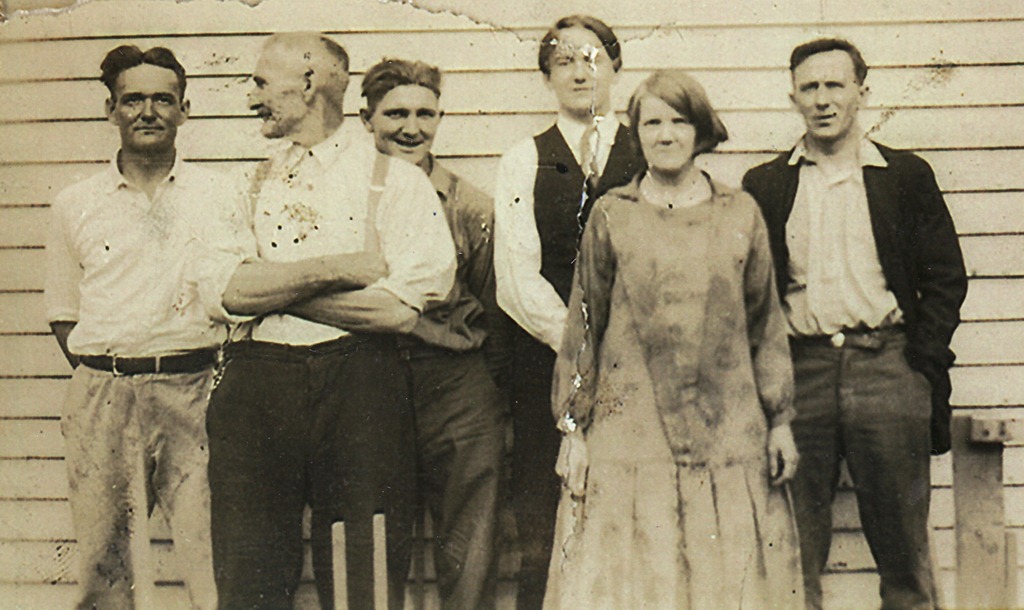
I’ve been messing with microcomputers since 1979, but it wasn’t until the mid-90s that I realized I was creating data I didn’t ever want to lose.  By the mid-00s with digital music, video and photography it’s obvious to everyone that we had invisible possessions we’d want to keep for life.  This presents a number of problems.  How long can I preserve photos like this of my great grandparents?

1920s - Dad's father on right - with parents and brothers - cropped

File Formats

My first efforts of writing fiction was on a Commodore 64 – and even if I had any of its floppies, I couldn’t read the discs, nor would I have a word processing program to read the files.  When I got a PC I bought Word Perfect, but that was many PCs ago, and I’ve since converted those files to Word.  If I live to be 100 (1951) will I still be able to read those files?  If by a miracle I do live a century I’m pretty sure I’ll be a sentimental old slob who cries over his ancient snapshots.  Will I be able to find the ones I want and still view them?  Is it .jpg forever?  I’ve been buying audiobooks from Audible.com since 2002, will I still have my audiobook library to play in 2051?  Or all the Kindle books I’m buying now?

Standard file formats are critical to long-term preservation of data.  How long will Amazon maintain the DRM copy protection on my Kindle books and Audible audiobooks?

Data Migration

I’ve lost count how many computers I’ve own after eleven.  Every time I get a new computer I need to move all my files over and that’s a pain.  I’m always making a new folder and throwing stuff in it, so the number of files I’m saving constantly grows, and every few years I try to clean things out and it’s a big job.  Usually when I get a new computer I just copy everything in My Documents to the new My Documents folder.  But what if I got a Mac?  Or what if in 2022 they come out with some far out new computer system?

File Organization

If you start with one folder, and organize your digital life into sub-folders, what is the best structure?  I sure wished that iTunes hadn’t put ripped audio books into My Music years ago, because that’s causing problems moving my music to the cloud.   Is there a way to plan for future snafus?

Is there an optimal structure that will stand the test of time.  By structure, I mean folder organization.

\Jim Harris

\Audio Books

\Data

\Ebooks

\Mind Maps

\Music

\Numbers

\PDF

\Photos

\Words

\Essays

\Fiction

\Videos

Let’s imagine a future where we have federally regulated data banks like we have money banks and we can trust them implicitly.  In this future, data bank replicates our data in layers of backups, that for anything short of Armageddon, will be completely secure.  Should we put all our data in one place?  In the above chart I could remove \Music because I have my music stored at Google, Amazon and Apple.  I could also remove \Photos because of Picasaweb.  I could also remove \Audio Books and \Ebooks because of Amazon.

Because we don’t have data banks and because my cloud storage is limited at Dropbox and SkyDrive, I will let those other companies maintain my media files.  But if we did have trustworthy data banks, I’d probably want all my content in one location, which means precise organization is important if I’m collecting files for life.

Data Inheritance

There is another thing to consider – what happens when we die?  When our parents die we inherit their papers, books, records, photos and so on.  Won’t we do the same things with digital files?  When I die I want my file structure copied over to my wife’s data bank, and if I wanted, I’d like to give copies to all interested relatives and friends too.  Having a well organize file structure would make it easier for people to go through my digital processions.

Cloud of the Future

Someday we will have data banks.  We might even have laws that require our data to be saved for historians.  Can you imagine scholars from 2782 AD trying to research our times?  I saw a wonderful show on Nova last night, “Mysteries of a Masterpiece” about art historians working to validate a work of art as Leonardo da Vinci.  The scientists had lots of physical artifacts to examine.  If our world goes digital, what will future researchers have to figure out how we lived?

Moving to the cloud is the first step towards this future where we have data banks and preserving digital data for all time.

JWH – 1/26/12

Living the in Cloud: Dropbox and Evernote

If you access the internet from only one device this article won’t mean much to you, so I won’t mind if you go read something more interesting.

However, if you own a computer and a tablet, or a computer, smartphone and tablet, then reading about Evernote and Dropbox might be worth a few minutes of your time.  If you’re like me and juggle a lot of devices then learning to squirrel your digital crap all over the cloud becomes more vital.  At home I have both a Windows and Linux desktop, at work I have Windows, Linux and Mac desktops, and between the two locations I have an iPod touch and iPad 2.

What a pain it is to think of something you want and realize you left it in your other computer.  Moving to the cloud is in its early stages, so 100% tried and true solutions are in the future.  As society evolves towards the day when internet access has five nines of uptime, 99.999%, then we can develop a new paradigm of trusting our files to the cloud, and that will be the difference between life before personal computers and life after them.

dropboxevernote

Although I’d like to be a cyborg and meld my brain with silicon I’m not quite there yet, but I do think of the Internet as my auxiliary brain and that presents some problems.  Before the Internet going to work meant leaving my main auxiliary brain at home – how inconvenient.   Sure, someone invented the laptop and it was a good idea at the time, but it was only a stopgap solution.  After we got smartphones and tablets it became pretty obvious trying to sync all our crap between every device we owned was a losing battle.  The solution was to put all digital kipple in one location and then let all the machines, big and small, fetch what we needed from that primary storage.

What this means is the cloud is our new auxiliary memory and the machine we use is less important.  The old fanboy battle between PC versus Mac becomes silly.  If I can read my docs, listen to my music and look at my photos from any device, does it matter how big or small it is, or who made it, or even who owns it?  Instant access is what counts.  Memories are best served fast.

When the cloud becomes our digital memory deciding how to organize memories becomes significant.  I’m playing with two tools, Dropbox and Evernote.  Both are free to use with an introductory amount of cloud space, but fill up your cloud attic, and you’ll have to pay for more space for your white elephants.  That’s cool, but I haven’t committed to either one yet because I’m still evaluating how they store my memories.  I’ll probably buy into both, but I haven’t decided.

Dropbox is like having a hard drive in the cloud.  You create folders and store whatever kind of files you want.  It’s very computer centric.   When you join you get 2gb of free space.  If you convince a friend to join they give you another 250mb of space.  If you get enough friends to join you can get up to 8gb of free space, but after that you rent larger blocks of space.  By the way, if you join from this link I’ll earn some extra space.

Evernote is different, it’s database centric.  Evernote is a free-form database where you leave notes, either ones you type, or ones you email via a smartphone, or clip from the web, or cut and paste from your own computer documents.  You can even embed PDF files.  If you spend $45 a year, upgrading to the Premium version, gets you more memory processing features and more storage space.

The neat thing about Evernote is being able to search your collection of notes.  Since I’m getting old and the access speed on my biological memory has become erratic, untrustworthy and slow, having cloud base memory with search is nifty indeed.  Because Evernote is a free-form database, throw your data in any old way, it doesn’t matter, and let search find it for you.  You can be as sloppy or neat as your personality.

Both programs install as programs on your computers, work from web apps, or install as apps on iOS and Android smartphones and tablets.

I can access Evernote and Dropbox from my PC, Mac, Linux, iPad, and iPod touch.  If I think of something I want to remember, or read something I want to remember, I can choose to remember it the old way, or I can memorize it in my auxiliary memory.

JWH – 1/24/12

Google+ versus Facebook

Having two competing social networks is a problem.  Logically, you’d like everyone to be at one location for convenience.  Until recently, it looked liked Facebook was going to be the universal social network.  I’m not much of a Facebook user, but I can’t quit it either.  Too many friends, old acquaintances and relatives are on Facebook, so it’s easy to keep an eye on everybody.  Facebook is actually much better than snail-mail letters, postcards and Christmas cards at keeping track of people.  In fact I often wish all my relatives would use Facebook.  Facebook actually makes me feel closer to people.  Then came Google+.

google-plus-logo

Google+ has a few nifty new features, some a touch better than Facebook, but to make Google+ practical I’d need all my Facebook friends to move over to Google+ and that would be rude to ask.  Many people I know on Facebook are computer phobic, and it took them a long time to learn Facebook.  Getting them to switch would be cruel.

What to do?  What if Google+ is a superior tool?  What if we all move over to Google+ and Apple or Microsoft came out with an even better product?  Do hundreds of millions of people then move again to another new system?  Given time wouldn’t Facebook add the features we all want anyway?

Mike Elgan is fanatically campaigning for Google+  and currently 374,958 people have him in one of their circles.  Google+ definitely has more geek cred than Facebook, which makes me think I should use Facebook for people I know in real life and use Google+ as a geeky hangout for people I met over the Ethernet.

There are many things to consider.  Is social networking a fad?  Many pundits and friends have already abandon Facebook.  On the other hand, I can only imagine Facebook becoming better and more valuable over time.  Does that mean we should all stick with Facebook because of its initial momentum?  Are we already stuck with Facebook forever?

Mike Elgan claims Google+ can replace our email systems too and that Google+ can become a central hub for all kinds of communications Facebook doesn’t do and the average user doesn’t understand yet.  At least I don’t.

Which is more secure?  Which is more natural at organizing levels of relationships?  Which offers the most features I’d actually use?  Which is easier to use?  Which can be customized more?  And most important, which has fewer ads?  I hate ads.  I don’t have the answers, but I’m trying to find out.

And one last interesting tidbit.  Facebook isn’t indexed on search engines, whereas Google+ is indexed on Google, Bing and others.  Facebook is a closed system, and that’s appealing, I think.  Then again, should you ever put anything private and personal on any computer system?

JWH – 1/10/12

Nonfiction, Fiction, History, Myth and States of Consciousness

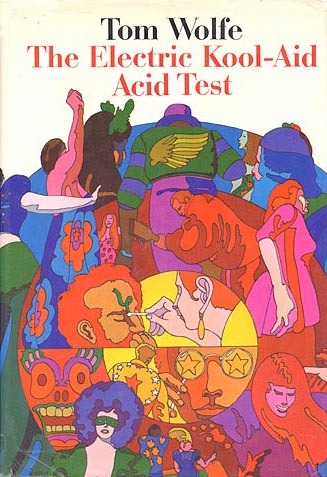
Have you ever read a book about a real life event and then watched a documentary about the same subject?  The contrast of what we can learn from words and what we can learn from film is often jarring and sometimes shocking.  One of my favorite books from youth is The Electric Kool-Aid Acid Test by Tom Wolfe.  Wolfe made literary fame by pioneering “new journalism” which is now called creative nonfictionThe Electric Kool-Aid Acid Test was considered the book that defined the hippies and their philosophy.  I read this book back in 1969, and now 42 years later I got to watch Magic Trip, a documentary that used actual film footage of Ken Kesey and the Merry Pranksters.   Wolfe interviewed all the principal people right after the events, and he also must have seen the original 30 hours of film, and I was blown away by the difference between the two ways of telling the same story.
KoolAid_1stUSEd_front

Truth is the actual events.  How close can we ever come to reconstructing the truth?  What is the best evidence for the truth?  When Farmer Ted bets his geeky friends he’ll hook up with Samantha in Sixteen Candles and his friends demand proof, he asks them what kind, and they say in unison, “Video!”   As far as I can imagine, video comes closest to the truth as any evidence we can find – but even then it’s far from perfect.  For centuries, before the advent of video, our knowledge of past events was based on writing.

How much can we know from reading?  Before writing was invented our worldview was limited to the here and now.  We had oral storytellers that conveyed news from distant lands and remembered events and people from the past, but it was very limited.  Most of the time people’s consciousness was focused on the present and the immediate world around them.  Then reading and writing was invented and information about endless places and countless past moments could be recorded so people could conjure up in their minds things that weren’t here and now.  But how effective is reading at reproducing the past?  How accurate can reading describe distant places and events?

All my life I’ve been a bookworm, spending hours a day with my head in a book.  When young I most read fiction, and felt that time away from reality was just escapist entertainment, but over the decades I’ve shifted to reading more nonfiction, and felt I was learning stuff about other places, people and the past.  But am I?

Lately I’ve been reading nonfiction books and then seeking out documentaries and photographs to supplement my reading, and in every case I’m shocked by how different my mental image from reading is from the photograph or film.  Words are black marks on white paper, but they attempt to encode information that comes through our five senses.  How well does any word for a color convey the actual color? Does the word blue suggest any particular shade of blue?  Picture the wall of paint sample colors at your local Home Depot.  Which of the thousands of blues are the one we call blue?  Now think about the other four senses and words for sounds, textures, tastes and smells.  How close do words come to the infinite varieties of sensual details?

Last night I watched a documentary Magic Trip about Ken Kesey and his band of Merry Pranksters taking a bus from the west coast to visit New York City for the 1964 Worlds Fair.  In 1969 when I read “The Electric Kool-Aid Acid Test” by Tom Wolfe it blew me away by how exciting his non-fiction writing was at vividly conveying the story of these freaks on acid traveling across the country.  Over the years I’ve read more books and articles about this event, and the people involved.  To me this cross country trip was the legendary beginning of the hippies.  Of course I was wrong.   Kesey and his Merry Pranksters met the real hippies, like the Grateful Dead, when they got back from the trip and started promoting their acid test events.  Hippies already existed in 1964.

The documentary Magic Trip was created around the actual film the Pranksters took while on the trip and it blew my mind again.  It was absolutely nothing like I pictured from the Tom Wolfe book.  First off, Kesey and the Pranksters didn’t look like hippies – only the women had long hair.  And they all looked ordinary – I wouldn’t have named them the Merry Pranksters – that moniker seems way to grand for them.  The people in the film looked like college kids from the late 1950s or early 1960s acting really silly.  They looked more like early Beach Boys wearing stripe shirts.  Their antics looked as sophisticated as old episodes of The Monkees.

In some of the film clips Kesey and the Pranksters are on heavy doses of acid but you couldn’t tell that from what you see.  Now I know what they were feeling, I can remember that from those days.  Acid is like having a hurricane in your head, but you don’t see that from the outside.  What you see is kids being goofy and stupid.  Now in the book, Tom Wolfe tries to convey the epic psychological discoveries they were making – things going on in their heads, and the Magic Trip film tries to suggest that too, but the physical evidence of visuals from the film and sound recordings from tape just don’t back it up.  Wolfe wrote about what was going on in their heads and we can’t see that in the film.

As evidence of what actually happened I credit the film over Wolfe.  But is that fair or even accurate?  How much can we judge the truth of an event from what we can see and hear?  As counter evidence, how much do people know you from seeing you and hearing you talk?  See what I mean?  Reality and truth is deceptive.

It’s impossible to convey a psychedelic trip in words – and the clips of the trip festivals at the end of the movie don’t even come close.  What you see is kids dancing and acting weird and idiotic – no wonder the silent-majority Americans were freaked out by the freaks.  Back then the claim was drugs took you to a state of higher consciousness, but I always felt like they took me to a state of animal consciousness – a lowering.  Don’t get me wrong, it’s quite revealing, and you can learn a lot about how the mind functions, but all that talk about higher states was bullshit.  But then I value the verbal mind over the nonverbal mind.

In one part of the film, the west coast Merry Pranksters, along with their legendary bus driver Neal Cassidy, famed beat character Dean Moriarty from On the Road, meet up with his fellow real life On the Road beat characters Jack Kerouac and Allen Ginsberg.  Hippies meet their beatnik idols.  But things don’t go off well.  Jack is morose and turned off by the silly pranksters.  Then the west coast psychedelic legends go and meet the east coast prophets of LSD, Timothy Leary and Richard Alpert.  Leary is so turned off by them that he runs away and hides and leaves the future Ram Das to deal with them.  Leary and Alpert were trying to make LSD a serious tool for studying consciousness and these proto-hippies were abusing acid like teenagers breaking into their parents liquor cabinet.  In 1964 most people did not know what to make of these crazy kids.

Seeing Magic Trip was shocking to me.  Imagine how disturbing it would be to discover films of Jesus and his merry band of disciples.  Christianity has created thousands of different interpretations of the history of Jesus – so imagine if we got to see what Jesus really said and did?   Video can be so shocking to see after studying words.  We have no idea what Jesus was like or what he said.  Everything he supposedly said was recreated decades after the fact.  In The Electric Kool-Aid Acid Test, Tom Wolfe is deifying Kesey and his disciples just three years after the real event, and it’s impossible to know how much of the legend is Wolfe and how much is Kesey?

Tom Wolfe had used words to make this trip into an epic adventure, a transcendental experience of the first order.  He totally mythologized the people involved – of course the Pranksters were trying to do that themselves even while they were on the trip.  They gave each other funny names making themselves into characters on an epic adventure traveling in their legendary bus Further.

Now I don’t mean to suggest that these folks weren’t experiencing eye opening philosophical experiences.  They were exploring a new consciousness, breaking out of the rigid 1950s stereotypes, and exploring new experiences that would come to be known as the psychedelic sixties – but it wasn’t new consciousness.   Throughout history groups of people have rediscovered the Dionysian joys of intoxication and ecstasy – and wanting to escape from the rigid confines of society.  Even in the film Kesey says they were too young to be beatniks and too old to be hippies.

I remember my psychedelic days from over forty years ago, and it pretty much followed the Pranksters.  Me and my friends did a lot of silly and stupid things while exploring the doors of perception.  I had been inspired by Timothy Leary and Aldous Huxley and wanted my trips to be scientific experiments into the mind, but they weren’t.  It was just me and my friends doing many of the same exact things the Pranksters did in Magic Trip – going group swimming, driving around in funny vehicles that got a lot of attention, trying to play musical instruments when we had no ability, getting zonked out by nature, admiring the beats, upsetting the older people.  Oh, I learned a lot, but I can safely say to kids today, don’t bother, there are much better ways to explore the mind.  Read Steven Pinker, Edge.org and learn how to achieve Zen mindfulness.

But does any of this answer the question about how much truth we can attain from words?  In terms of acquiring knowledge, words can get you far higher than any amount of acid.  Truth and experience are wordless – ineffable.  I’ve experienced wordless states of consciousness through drugs and a mini-stroke, and that’s not a normal human state of consciousness.  As humans, like it or not, our consciousness minds are based on words and language – and language and words do not mirror reality perfectly.  Or even closely.  I know there are non-verbal conscious states of mind but the past and future don’t exist in those states.  The mere act of trying to recreate the past is a verbal state of consciousness.

The real question is:  How close does the nonverbal reality match our verbal reality?  I don’t think very much at all.  My proof is the fact that we all live in different verbal realities, and even when several people experience the same event they seldom recreate the shared reality with the same words.

A good lesson in understanding this is to study writing creative nonfiction.  I took two MFA writing courses with Kristen Iversen dealing with Creative Nonfiction and I learned quite a lot about “telling the truth” with words.  It’s actually very hard, if not impossible.  One of the first writing lessons she gave our class was to take a memory from when we were young and put it into words.   Even here I’m being misleading.  I can’t remember the exact assignment.  I think she might have told us to pick a memory from when we were twelve, but I’m not sure.  What immediately occurred to me to write about was a memory of me staying with my grandmother who maintained an old apartment building on Biscayne Bay in Miami, and the night she gave me an old fishing tackle box left in one of the apartments, and how I went out alone to fish off the concrete wall by the bay.  The more I thought about the memory the more details I could dredge up, but eventually I realized I couldn’t be sure of any of the exact details.  Memory is so faulty, but they’re also tricky.  It’s easy to create false memories. But my final essay was praised in class for its vivid details.

Was the essay absolutely true?  No, it wasn’t.  But I didn’t feel I was lying either.  I had recreated in words what were vague impressions and memories in my mind.  Mining those memories took work.  There’s a quality of effort in recreating memories that is very enlightening.  But still this brings us no closer to explaining the difference between nonfiction, fiction, history and myth.

I have read many nonfiction books on Wyatt Earp.  I have seen many documentaries on Wyatt Earp.  I have read many fictional stories about Wyatt Earp.  I have seen many fictional movies about Wyatt Earp.  I have heard many people discuss Wyatt Earp as a legendary mythic character of the old west.  Which of these various modes of learning about Wyatt Earp are the best for knowing who the real Wyatt Earp was like?  Is Tombstone the movie better than The Last Gunfight the nonfiction book, or Doc, a fictional novel where Wyatt is a prominent character?  Or the  PBS American Experience episode about Wyatt Earp?

Here’s what I can tell you.  It’s only based on personal feelings.  Wyatt Earp the man who lived in the nonverbal reality of the 19th century is long gone and unknowable.  That kind of reality is unknowable.  That’s why it’s called ineffable.  I can say some fictional versions of Wyatt Earp vary far from the actual reality of the nonfictional evidence, but can we say the Wyatt we create with historical evidence is actually close the to real flesh and blood Wyatt?  Yes, I think we can, even though there are many nonfictional Wyatt Earps to consider.  Every account, whether fiction or nonfiction creates a new edition of Wyatt Earp.  But I actually doubt we really get that close to the real man – some accounts are just more factual than others.

Scientists like to entertain the idea of multiple universes because there should be an infinity of these other universes allowing endless versions of our own world, many just slightly different.  That’s how verbally reconstructed Wyatt Earps exists.  There’s an infinity of them.  Some of them are close to the real world that did exist, but it’s very hard to judge which are the closest.  We can spot the absurd examples easy enough like all the Wyatt Earps in science fiction stories, but we can’t say which historical Wyatt is actually the best.

I think we’re getting closer to understand nonfiction, fiction, history and myth, but we’re not there yet.  I am reminded of a book called The Origins of Consciousness in the Breakdown of the Bicameral Mind by Julian Jaynes.  What Jaynes suggested was for early humanity they had a different state of mind than we do now, which he called the bicameral mind.  I don’t want to go into the details of his theory other than to say that in the past we shifted from one kind of consciousness to another.  I just want to suggest that as our verbal consciousness evolved, we’re now shifting into a third state of consciousness.  This new consciousness is based on sharing facts and building a consensus model of reality based on science.

We’re not that good at it yet – the proof can be seen by how Democrats and Republicans model our political reality.  And even conservatives and liberals seldom share the same ideas.  But in theory we believe through science and other forms of knowledge, that we can model our complex social reality in political and economic laws, as well as nonfiction, history and even fiction.

In other words, many of us believe given enough facts we could prove to each other the validity of a model of reality.  Science has gone the furthest by explaining the physical world.  The consensus is very strong with that – there’s very little fiction or myth in science.  All other areas of knowledge, like politics, ethics, law, economics are a long way from matching reality with any kind of common agreement.  In other words, they are mostly built on fiction and myths.

What I’m saying finally is, we all like to believe that we can separate nonfiction and history from fiction and myths.  Whether that’s true or even possible, is still open for scientific evaluation.  In other words, if you hold any beliefs other than those covered by a narrow range of scientific study, you can’t be sure if there is any difference between nonfiction, fiction, history and myth.

There is no way to know who Ken Kesey or Wyatt Earp was scientifically, but is there any emerging discipline that could use consensus like science, to measure the accuracy between nonfiction and fiction?  Is the scholarship of History rigorous enough to make that claim?  Or will all areas of knowledge outside of science always by undermined by subjectivity?

JWH – 12/30/11