Why Can’t I Lose Weight?

By James Wallace Harris, April 13, 2016

I know how to lose weight. I lost 29 pounds last year by following a plant based diet. I could eat all I wanted from an approved list of foods, didn’t go hungry, and my doctor was ecstatic. My blood work numbers hadn’t looked so good in decades. Then I started cheating on my diet. I didn’t gain weight, but I stopped losing weight. My blood work numbers ratted on me, and my doctor started nagging again. I cut back on my cheating. Three months later my numbers convinced her to do a happy dance. (For some reason I really love making her happy.) She even told me I could go six month without another blood test. In the moment of feeling successful, I foolishly promised I’d lose another 25 pounds.

Ha-ha, like some crazed sweet-seeking mammal I’ve since gained 8 pounds. I just can’t resist food. Why can’t I control my eating? Why can’t I lose weight? Why can’t I keep weight off once I work so hard to lose it?

Of course millions of people are asking these same questions. Why can’t we lose weight? Why can’t I be like Mr. Spock and do the logical thing? Evidently, I’m suffering from multiple personalities. One being inside me, the one writing this essay, wants to eat healthy, lose weight and be a different person. There’s another person in me that’s illogical and hungry. That person insists I go out for Ben & Jerry’s ice cream, but eat pizza on the way. And I’ve got to tell you, when Mr. Junk Food gets his way, we both feel pretty damn satisfied.

Mr. Spock advises me to write up a mission statement about what to eat, print it up on a nice card, and meditate on that message before every meal. But then my wife and I get hungry for dinner, don’t feel like cooking, or even going to a good restaurant, and end up pigging out on Taco Bell. I weighed two pounds more the next morning. Where did Mr. Spock go? Mr. Junk Food can shanghai my self-control in an instant. I need to kill Mr. Junk Food. Is that even possible? Self-exorcism? But what would life be like without that cute little devil on my shoulder?

Mr. Spock has already settled on a diet.  He assures me if I just followed it, I’d be healthy, happy and fat no more. He did get us to read a number of books, and took control long enough to prove that his solution works. I keep telling myself to read those books every day until Mr. Junk Food disappears—but it’s not working. I’m beginning to think Mr. Junk Food stunned Mr. Spock and transported him to another planet. He obviously overheard we were planning on dieting again.

Why can’t I be sensible? Why are my urges as polarized as liberals and conservatives? Why do I have friends who eat everything they can stuff down their gullet – and still stay skinny? Why isn’t feeling better incentive enough to eat healthy? My heart and back loved when I lost the 29 pounds. I think one reason I cheat is because I feel better, but I won’t let myself gain too much because I fear the return of pain. I remember what I felt like before I got my stent, and that helps fight off Mr. Junk Food. But only to a degree. Most of the spinal stenosis pain and numbness in my legs have gone away because of losing weight. The plant-based diet is also an anti-inflammation diet. When I follow that diet I don’t need pills, and I don’t feel the inflammation. Mr. Spock informs me of this logic every day. Why can’t I listen all day long?

Yet, eating two bags of M&M’s and drinking a Dr. Pepper would feel like winning a million bucks right now. Hell, I just realized just how bad off I am. I’d rather be a skinny person who could eat all the junk food they wanted than be rich. That’s how bad I want some Mint Oreos at the moment. (Who’s writing this essay now?)

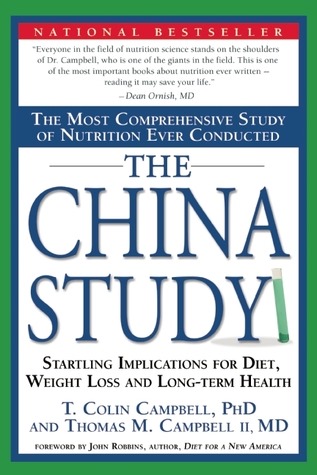
 Prevent and Reverse Heart Disease - Caldwell B Esselstyn MDThe China Study - T Colin Campbell PHD

Eat To Live - Joel Fuhrman MDThe Forks Over Knives Plan

JWH

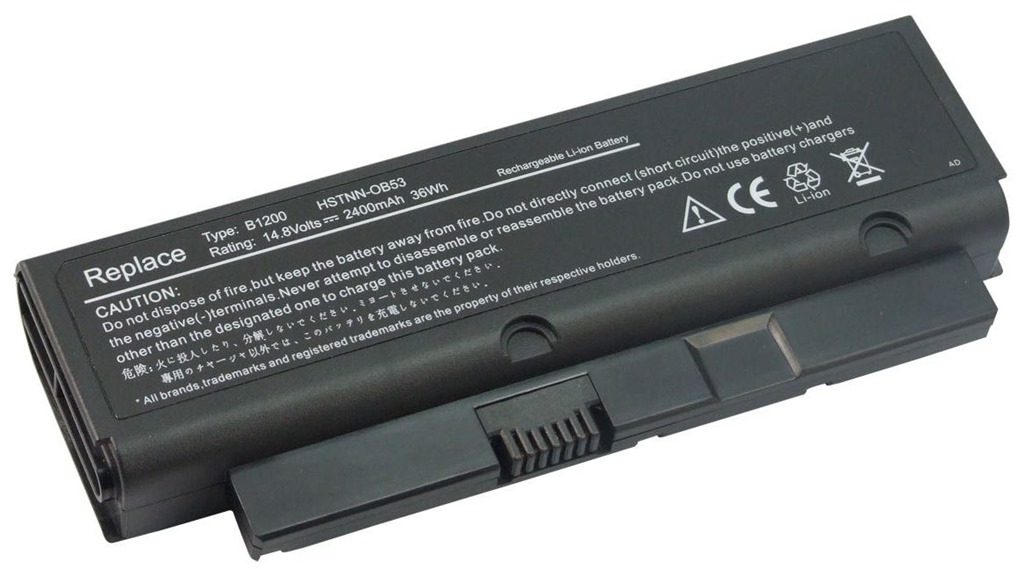
Health is Like a Laptop Battery

By James Wallace Harris, Monday, November 30, 2015

Health has to be more than the absence of disease. I sometimes hear the phrase “optimal health” or “maximum health” as if health is a fuel tank and we can fill her up. We often think of health as giving us vitality, but what then, is vitality? Our bodies and brains are the most complex “mechanism” we know of, but we can’t actually fathom how they work. Not without analogies. Our body is dead when we come to the end of health, and run out of vitality.

The ancient Greeks used the concept of the soul to explain how the body was animated. They claimed the soul made our limbs move, but that was long before science knew about different forms of energy. Getting old feels like we’re running down, running out of energy, or our mainspring needs rewinding. I shall make my philosophical analogy for health be the laptop battery. Before batteries, philosophers used the mechanical clock as a model. In the future, some future blogger will have a new technology to use in her essay.

laptop battery

I went to my annual physical today, and told my doctor she made me nervous every time I visited her because it felt like I was up for an important examination. I worried I’d flunk. At the end of our visit, she laughed and told me I passed. But even though I passed, I don’t feel very healthy, or more precisely said, I don’t feel very energetic, not like when I was younger. At 64, I am not old, but I am not young either. I know my body and mind are in decline, and I wished I could recharge my battery to its maximum capacity again.

On my birthday, I went for a long walk in the botanic gardens with my friend Anne, and then she helped me change out a pole for my outdoor TV antenna. While I had the ladder out, I raked some leaves and limbs off the roof (I’m too old to be climbing on the roof). I probably spent two hours walking and climbing, and that exhausted me. It felt like all the cells in my body were screaming for glucose. When I was younger I could work ten hours at manual labor before I felt that way. Why does my battery run out of juice sooner now that I’m older? Health appears related to stamina, and stamina feels like energy. Does our battery for health shrink as we age? Does it become more inefficient?

If health is a full charge, then shouldn’t eating recharge our battery? Eating too much can make me lethargic. Eating the wrong foods can make me feel unhealthy. But it does feel if I eat the right foods, in the right amount, that I feel healthier. That I have more energy. When I was exhausted after my birthday efforts, I ate lunch, took a nap, and I felt better. But I didn’t feel back to normal until the next day, after two more meals and a good night’s sleep. Food and sleep can recharge my health battery, but only slowly, like how old laptops need longer hours plugged in to recharge.

Getting old feel exactly like an old computer battery that won’t hold a charge as long as it did when it was new. I think one reason why I don’t exert myself like I did when I was young is because I need to conserve my battery. Unfortunately, we can’t buy a new battery like we can for a laptop. Human bodies don’t have user replaceable batteries. Image if they did. I’d buy a high capacity one that recharges quickly.

Is it possible to recondition our built-in battery? When I was a kid, I could eat junk food all day long, and my battery didn’t wear down until the end of the day, often late into the night. Now I can burn up a full charge in a couple of hours. That sucks.

Getting old means learning how to nurse my battery to last out the day. I eat better to make my health recharging more efficient. I exercise to regain a bit of a charge, and keep my contacts from corroding. And sleep cleans out all the bad chemicals that using up a healthy charge creates in byproducts. We often euphemize sexual attraction as chemistry, but it seems everything about our body can be explained in terms of chemistry. Batteries are a chemical process.

Getting old means learning to be efficient. Getting old means learning to conserve energy wherever I can. It’s like being a hybrid car that does everything not to drain the battery, or even recharge on the go. Maybe I should use an electric car as my model of health. Then I could describe exercise as  regenerative charging.

No model is perfect. What I really want to know is exactly what to eat and when, that would optimize the functionality of my aging battery. How much exercise will recharge the system, and when does exercise deplete the daily charge I get from sleep? Sometimes naps are better for recharging than walks. Why? The new health mantra is “Sitting is the new smoking” but getting old seems to require more sitting. Hell, I could claim, “Napping is the new jogging.”

I just wished I knew how I worked. Reading about health, diet and exercise is very confusing. There’s no simple model to understand. I know my health is not an old laptop battery, but it certainly feels like one.

Essay #983 – Table of Contents

Treating Back Pain Without Drugs 2.0

By James Wallace Harris, Tuesday, November 10, 2015

Three years ago I wrote Treating Back Pain Without Drugs. Since that essay keeps getting hits and I’ve learned a few more things about dealing with pain without using drugs, I thought I’d write an update. I’ve had chronic back problems for years, but I’ve been mostly pain free without using drugs. I have spinal stenosis, which keeps me from laying flat or standing for long periods. If I aggravate the spinal stenosis it tends to spread to the muscles that causes back pain.

I have three kinds of symptoms which I control without drugs:

  • inflammation – tends to magnify other symptoms
  • neuropathy – feet, legs, mostly on right side
  • muscle pain – lower back, hips, sometimes legs

fountain

I went through years of trying to deal with back pain using drugs. They’d cover up symptoms, but I never could escape the pains entirely. I kept trying other ways to fight pain. I’d tried different sleep positions, a better bed, and using pillows between my legs or under my knees to align myself symmetrically while I slept. Nothing helped for long. I’d always wake up feeling worse. I finally concluded it was lying in bed that was causing the problem, so I started sleeping in a recliner. That made a huge difference! I still took pain pills and anti-inflammatory drugs, but sleeping in the chair seemed to fix most of my problem. It was around this time I began going to a back specialist. I thought I was having hip problems, because most of my pain was in my hips, with numbness down my legs. They did a MRI and said my hip was fine, but I had spinal stenosis due to arthritis and some bad discs. I was sent to a pain management specialist; he prescribed physical therapy. That was the second major remedy I found!

I’ve since learned that if I do my physical therapy exercises daily I can keep the pain down to almost nothing without drugs. Mostly I’d have numbness in my feet. If I skipped a day of exercising I could feel the muscles tightening up in my lower back. If I skipped another day or two, I start having a fair amount of lower back pain, spreading into my right hip. If I allow the pain to gain a foothold,  I’m back on drugs, and I’ll have a hard time moving around, especially getting up and down from a chair.

One of the annoying things about the spinal stenosis is I could no longer walk for exercise. I eventually found Z-Coil shoes, which have big ugly springs in the heel that act like a shock-absorber for my spine. Without the Z-Coil shoes, I’d frequently feel like I was stepping in a hole or slipping on ice, which I think was caused by pinching my nerve stepping too hard. With the Z-Coil shoes I could walk about a mile without causing too much numbness. But, the more I walked, the fatter my feet felt. If I keep pushing it, the numbness would work up my right leg. If things got really bad, I’d have numbness in my left leg.

Between sleeping in a chair, doing physical therapy exercises and wearing the Z-Coil shoes, I felt pretty good most of the time as long as I didn’t stand or walk too long. My feet remained somewhat numb all the time.

Unfortunately, the anti-inflammatory pills I was prescribed started bothering my stomach, so I stopped taking them. It was then I started reading about anti-inflammatory diets. This really helped with the numbness. Last summer, I started on a plant based diet to lower my cholesterol. I lost 25 pounds. I don’t know if it was losing the weight or the anti-inflammatory properties of the diet, but I was able to increase my walking to 2 miles at a stretch, and the numbness in my feet practically disappeared. This made me very happy. Later on, I was feeling so good that I started cheating on my diet, having some fun foods again, and on some days skipped my physical therapy. I didn’t gain weight, but I started having trouble walking again. The numbness returned. I had to stop walking for exercise for a couple weeks. I then went back to faithfully doing my physical therapy and sticking to the plant based diet,  and I’m now able to walk two miles in the morning again, and the numbness is almost gone.

I’m amazed by how much the plant based diet helps. It drastically lowered my bad cholesterol, let me lose 25 pounds in three months, and significantly reduced inflammation. It’s hard to believe some food can be so inflammatory, but going on and off the plant based diet has let me feel the inflammation come and go. I think the anti-inflammatory aspects of the diet were more important than losing the weight in helping with my back.

Along the way, I’ve discovered the B12 helps neuropathy. I take either sublingual tablets or get shots.

I’ve also had a few incidents of my upper back going out, giving me neck pain, with the pain running down my left arm. I’ve also discovered upper-body exercises will solve this problem too.

In all cases I’d recommend anyone wanting to exercise instead of using drugs see their doctor about which exercises are appropriate and safe for their condition. My spinal stenosis isn’t cured. I’ve just figured out how not to aggravate it. I feel like I’ve learned to walk a razor’s edge, and if I’m careful, I can avoid pain and drugs.

I’ve been catching episodes of Classical Stretch on PBS with Miranda Esmonde-White. I believe her philosophy and exercises might be an appropriate tool too. Miranda’s stretches are like my physical therapy exercises, but she has vastly more kinds of stretches, which would systematically work the entire body.

Essay 981 – Table of Contents

Gimme That Old Time Meditation

By James Wallace Harris, Thursday, October 29, 2015

Meditation is gaining secular and even scientific acceptance. I first heard about meditation in the mid-sixties when The Beatles ran off with that guru. I even took up meditation in the 1970s during the New Age movement. For most of the last half-century, meditation was something aging hippies in sandals pursued. Then in the last decade, meditation has been embraced by therapists, human resource departments, Christian churches and even the military. All of this is well chronicled in 10% Happier: How I Tamed The Voice In My Head, Reduced Stress Without Losing My Edge, And Found Self-Help That Actually Works – A True Story by Dan Harris. Dan Harris is a reporter and anchor for various ABC television shows. His high-stress career and obsessive personality started causing on-air panic attacks and he began searching for solutions. Harris slowly embraced Buddhism and meditation because of covering stories about them while assigned the religion beat. His book is about his struggle to discover if there is any validity to meditation and Buddhism, and how to separate provable results from spiritual woo-woo. Essentially, he demystifies Buddhism and meditation. This is a great book for anyone skeptical about ancient self-help practices.

10-percent-happier

What I really liked about this book was Harris’ skepticism. As a reporter he knew how to ask hard questions, and whenever he met a new guru he didn’t hold back. Over the course of this story, Harris meets star gurus of the self-help circuit who promises the masses various forms of enlightening and happiness. Harris eventually concludes, on average, meditation has helped him to become 10% happier. He also believes if he works at it, he might even get an even higher return, but that meditation is no magic pill for transforming anxiety and depression into bliss. In other words, there is no free lunch.

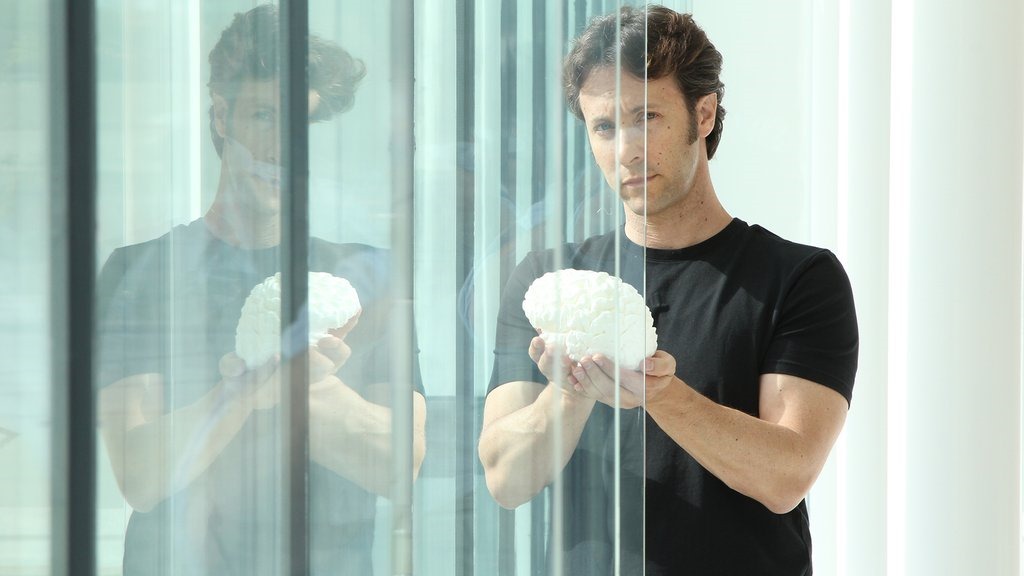
Brain_DavidEagleman

What’s really involved is learning how our brains work. Meditation was discovered long before science, but it’s essentially a systematic way of observing our own brain. We can supplement meditative experiences with modern scientific research on the brain. I highly recommend The Brain with David Eagleman, a 6-part documentary currently running on PBS that’s based on his book. Last night’s episode was about the unconscious mind and how little our conscious mind knows. We all need to become amateur brain researchers to study our own minds, and meditation is a good observing technique.

Harris first encountered Eckhart Tolle after his panic attacks and was very receptive to his message. However, Tolle troubled him with a lot of mumbo-jumbo spiritual talk. Eventually Harris met Deepak Chopra and even the Dali Lama. With each guru he kept pushing them for exactness, and felt each man had some real understanding, but was often confused or turned off by weird unscientific terminology. Harris then he found psychiatrist, Mark Epstein, who was also exploring Buddhism, meditation and mindfulness. Epstein introduced Harris to Joseph Goldstein, a master meditation teacher. Harris, who is Jewish, found practical kinship with these two Jewish meditators, and they connected him to scientists doing actual research on meditation.

This path took Harris years, and he carefully explains all his ups and downs trying to stay sane and happy while pursuing a high pressured job. Harris always felt Eastern wisdom seemed to conflict with Western ambition. At one point he even felt meditation had made him happier and kinder, but mellowness had deflated his drive to get ahead. By the end of the book, Harris is working on increased ambition combined with increased work towards Enlightenment, which is a goal I’d think most Americans would embrace. We all want success and happiness.

10% Happier shows a real difference between Eastern and Western religions. Western theologies just ask their followers to believe, whereas Buddhism asks their follows to work hard and observe. The Buddhists even have a saying, “If you meet the Buddha on the road kill him.” That’s to remind their followers that it’s very easy to get caught up in bullshit.

Table of Contents

What Would Happen To The Economy If Everyone Ate Healthy?

By James Wallace Harris, Wednesday, September 30, 2015

I’ve been eating healthy for my heart, and hopefully unclog my arteries that have been giving me trouble after a lifetime of bad food choices. Eating healthy is a vast readjustment. When I shop for food, 80% of what I buy comes from the produce section. And if I followed the recommendations exactly, it would be 95%. If everyone ate like this, most of what’s sold in grocery stores would stay on the shelves, and all the processed food corporations would go bust.

ways-to-eat-healthier

Eating out while following these healthy diets is extra hard. Most restaurants would go out of business unless they drastically changed their menus. All fast-food and convenience stores would go belly up too. So too, for vending machine owners. Any beverage company selling liquids other than water and wine would be filing for bankruptcy. And very few people in the meat, poultry and fish business would have any business.

Then, there’s the medical establishment. What if it’s true that healthy eating greatly reduces heart disease, diabetes, cancer, and a host of other chronic ailments our society spends billions to heal? Won’t a lot of doctors and hospitals lose all their trade? And all those people who process insurance claims will be out of work too! And what about all the quack doctors, miracle cure salesmen, and vitamin peddlers?

If everyone ate healthy and actually got healthy, tens of millions, maybe even hundreds of millions, would be out of work. Just think of how many people have jobs because we have long lingering deaths from chronic illnesses. What would happen to all the long-term care facilities and their workers?

I’m not sure we’ve thought this healthy eating thing through. Now I understand why so many conservatives don’t want to fix global warming.

JWH