Have the Climate Deniers Won the War–Or Just Built the 21st Century Maginot Line?

How often do you see a big documentary on Global Warming on TV now-a-days?  Sure, the nightly news often mentions global warming when it runs stories on hurricanes, tornadoes, floods, fires and other extreme weather events, or when it does stories on habitat changes for animals, plants and insects, but you seldom see big documentaries about climate warming anymore.  Nor is climate change a hot political issue for the presidential elections.  Obama hasn’t made it an issue, and when climate change does come up in Congress or State Capitols it’s often by politicians suppressing climate change data or bills, or even writing laws against collecting climate data.

Read these articles to see what I mean:

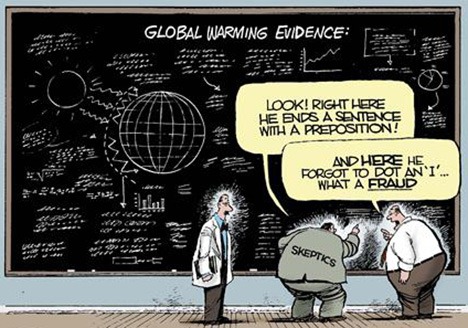
Are the climate change deniers and skeptical scientists right?  Do we have nothing to fear from global warming?  Or are they complete deniers of reality and have built a political Maginot Line to convince the American public we’re all safe from the global warming threat?

Many of the reports above are from writers attacking the idea of global warming and climate change.  They consider themselves fighting fear mongers.

gwcritics

Now you can read for yourself the reports about the climate from NOAA – State of the Climate.  This ain’t light reading and you have to concentrate on the data, charts and graphs.  If you search the web you can find reports from other agencies and countries.  On one hand you have the scientists studying the data, and on the other hand people, including some scientists, but mostly right-wing activists who say the data is all wrong, deceptive or incomplete.

Who do you believe?  The folks you want to believe?  Doesn’t that make us all reality deniers?

We spend untold billions on defense because we fear attacks on the United States.  If global warming is the threat scientists say it is, it’s more of a security threat than we’ve ever faced by any war.  We have a long history of going all paranoia over reds, but why greens?  Some people even believe the greens are the new reds.  But the greens are trying to protect America, but the public doesn’t want to believe that.

There is something deeply psychological going on here and I don’t know what it is.

If everyone is sticking their heads in the sand, what do you do?  If the collective says, “Let’s pretend nothing is happening, and it will all go away,” what do you do?

If you look at the climate history charts, the scientists appear to be right, so how long do we keep looking at the data and seeing it relate to reality before everyone with their heads in the sand and their butts in the air start thinking, “Hey, my ass is on fire!”

To tell the truth, I’m starting to wonder if there’s a huge scientific reality to denying.  That’s it’s part of human nature.  That no matter how bad things get, the deniers will keep denying global warming, and finding reasons to think things are okay.  That denying reality is MUCH bigger than science.  That if I read enough history I’d find that the deniers have always won the war on denying.

Or is it simply, to conservatives liberals always have to be wrong, no matter what, and on every subject.

JWH – 7/11/12

Global Warming On Trial–A New Type of Reality Show

Although global warming is well accepted in the scientific world, the concept has been strongly rejected by much of the American public.  Since CSI type television shows are very popular, as well as court and crime dramas, I’ve wondered if this conflict on global warming doesn’t present us with a potentially new type of reality TV show.

Put global warming on public trial.  Let both sides of the argument present witnesses and testimony.  Let the TV viewers be the jury.  It will be hard to develop the show without bias, but if it’s designed right, we might get close to impartiality in the structure of the trial.  The prosecution will be the scientists with the crime being that humanity is causing global warming.  The defense will be all the people who believe humanity is innocent.

To make the show more interesting, it would be appealing to have real trial lawyers working each side of the case, and maybe even a real judge, or judges to preside over procedures.  This would be an expensive show to produce, and it could take months to play out.  To make it more appealing, we should allow the public to vote on the progress in each episode, and to vote on aspects of how the trail is being conducted.

I know the public will vote the way they feel now about the subject – how impartial is Dancing with the Stars?  It will be interesting to see if the numbers change though.  Can people be persuaded by facts?

This could be the trial of the century, and people love those.  Certainly, global warming could be the crime of the century.

If such a show was developed, it could be very popular.  I’m tired of the old reality shows.  Having a more realistic reality show is appealing.  And once this case is over, pick another.

JWH – 7/7/12

Are You Naïve, Delusional, A Rube, A Chump?–The War On Science

Do you believe everything you read?

Can you verify everything you know?

How much of what you know is wrong?

People believe what they want to believe, and they always think they’ve right.  Would you even know when you’re wrong?  Does it matter, or would you really like to know the truth?

The reason I ask these question is because we’re in the middle of a war on science.  Like the rulers in Nineteen Eighty-Four, there are people who want you to believe what they want to believe and they know what they believe isn’t scientific, so their battle plan is to confuse people by attacking science and making it very hard to know what’s true and what’s not true.  Like those rulers in that famous dystopian novel, they’re willing to rewrite history and invent newspeak to fool people into believing their version of the truth.

Why trust what I have to say is the truth?  Well, you shouldn’t.  Never trust anyone.  The important thing is to learn how to verify facts for yourself.  It’s also important to learn how information is presented to you.  It’s very easy to be persuaded.  People are quick to believe anything.  It’s surprisingly easy to convince people to believe false information.  It’s devilishly hard to be logical.  People aren’t rational, even though we believe we are.  We’re geniuses at self-delusion.  Don’t trust yourself either.

Absolute truth is elusive in this reality.  We don’t live in a black and white world, but one with infinite shades of gray.  One of the biggest misconceptions about science is its knowledge is one hundred percent certain.  We know with absolute certainty that the Earth orbits the Sun.  Our knowledge of celestial mechanics is good enough that we can launch a satellite to Saturn and years later and billions of miles traveled, we’ll hit our target perfectly.  This is while the Earth, the satellite and Saturn all move independently tens of thousands of miles an hour in different directions, and the gravity of all the bodies in the solar system come into play.  This is fantastic knowledge that correlates to many decimal places.

Science is far less sure about the causes of breast cancer or global warming, but scientists know far more about those topics than you think.  The trick is, if you are worried about getting cancer or impending global warming, is to understand just how much they do know.  Evolution is closer to the fact of the Earth orbiting the Sun than the causes of global warming, and what we know about global warming is massive, but millions of people are fooled otherwise.

Now I can’t prove that in this essay.  It would take more words than I have time to write.  What you need to learn is how to examine news about science, and to do that I highly recommend reading Merchants of Doubt by Naomi Oreskes and Erik M. Conway.  Oreskes and Conway examine several public scientific debates that have occurred since the 1940s and they show how science works and doesn’t work, as well as how anti-science forces are corrupting science in the United States.

merchantsofdoubt

After World War II scientists began to tell people that smoking cigarettes was not safe.  Now the tobacco industry didn’t want people believing that, even though their own scientists told them it was true.  When the tobacco industry realized they couldn’t refute the actual science, they discovered they could confuse the public by attacking science in general and sowing doubt.  Oreskes and Convey show a history of how big businesses have refined these techniques to fight one scientific discovery after another that threatened livelihood.  And they use the public as their dupes.

Oreskes and Conway examine these battles like a court case carefully weighing all evidence presented by science and the anti-scientists.  One thing big business learned quickly was to hire scientists to attack other scientists, and Merchants of Doubt presents several men  and women who have made careers of being anti-scientists.  Oreskes and Conway try hard not to vilify these individuals, but I can’t help seeing them as evil.

But who is to say I’m right?  The point of Merchants of Doubt is to learn how scientific issues are studied and decide for yourself.

We all get email with a political agenda.  These emails have carefully crafted stories designed to convince us to believe something specific about reality.  It might be that global warming is a myth, or Obama isn’t a natural born American.  Why believe what you read?  Why be skeptical?  Because there’s a war going on and each side is recruiting.  One side wants you to be their chump.  It’s like computer viruses that convert your computer into zombies used for organized crime – someone wants to use your mind, and they want you to act for them.

Don’t get brainwashed.  Learn how to think for yourself.  Learn how to think scientifically.  Be skeptical.  Seek good evidence.

Real science works through peer reviewed journals.  A scientist will develop a hypothesis to test.  They will set up an experiment.  They will report their results in a paper and send it to a peer reviewed journal.   Fellow scientists in the same discipline will review the article and judge it for proper methodology.  If the article is accepted and published it doesn’t mean the results are facts.  Other scientists will read the article and devise new tests and go through the process again.  Topics under examination will be thoroughly researched over and over again until a statistical consensus emerges.  It takes a long time.  All too often one test result will be reported in the national news and causes a big brouhaha.  This is one reason why many people find science confusing.  They think one test result is suppose to tell the absolute truth and it doesn’t.

To further complicate scientific inquiry, people with a vested interest in a particular topic will make that topic newsworthy.  They will do everything they can to try their case in the court of popular journalism.  In peer reviewed journals only people who are specialists in the topic deal with the subject, but in regular journalism anybody can say anything.  You might get a food processing chemist proclaiming facts about climatology.  Or you might get high school dropout that just wants to get their opinion heard.

Don’t believe what you read about scientific concepts unless you thoroughly research them.  Few people are going to read peer reviewed science journals.  So what can you do?  Learn to read popular science books.  At least research Wikipedia.  Wikipedia can be untrustworthy, but many of its articles are a battleground between many points of view and a consensus often gets hammered out.

Another good realty check is Snopes.com.   Snopes often reviews silly topics, but all too often people believe silly crap.  When you hear about something new check Snopes.  A large percentage of internet gossip is fabricated.

Like I said, I highly recommend reading Merchants of Doubt.  Instead of saying anything more about the book please read Global Warming Deniers and Their Proven Strategy of Doubt to get a bit of the flavor of the book.

This isn’t the only book on this subject.  Journalists, writers and historians are beginning to see a pattern.

JWH – 6/21/12

How to Debate a Conservative?

My neighbor has a son I discuss politics with from time to time.  He’s conservative and I’m liberal.  He’s anxious for Obama to leave, I’m anxious for him to stay.  My friend, who is my age, is good guy and he doesn’t push his agenda and I try not to push mine.  Conservatives are mighty arguers, and debating them can be difficult because conservatives are often as passionate about their politics as they are about their faith.  One problem with debating conservatives is they often feel the solution to the issue at hand is all too obvious and the facts are all on their side.  And that’s the first quandary with debating conservatives – liberals have to argue against the status quo.  We’re fighting an uphill assault against a well entrenched position.

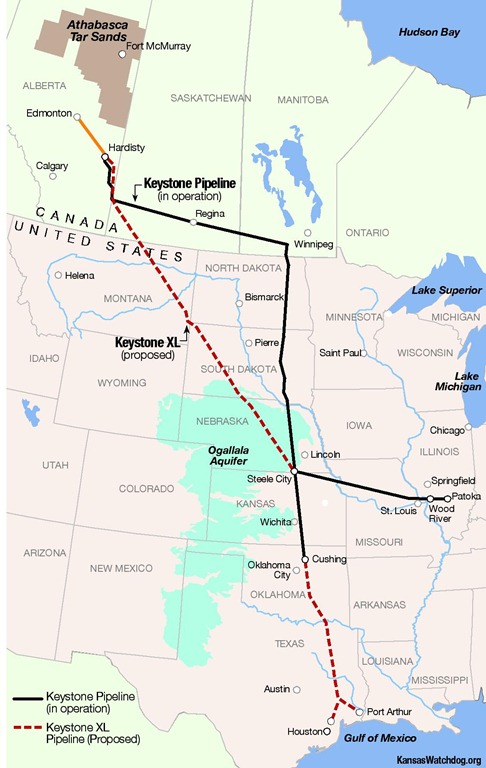
Today my friend claimed Obama was making a huge political mistake by not siding with the proposed Keystone XL Pipeline.  To ordinary folk, the pipeline sounds like a no-brainer.  It promises jobs for Americans and more oil for America’s long term security, and during an election year where gasoline prices are climbing daily and politicians want to get every vote they can get, it would appear insane for Obama to reject the pipeline.  Why wouldn’t liberals want more jobs?  Why wouldn’t liberals want cheaper gasoline and securer oil supplies?

Obama recent decision to reject the current claim puts the decision off, probably until after the election.  Obama claims he wants a better environmental impact report.

If you aren’t familiar with the Keystone pipeline controversy you’ll need to do some background reading because I don’t want to summarize what is already so well-written elsewhere.

Keystone-pipeline-map-KWD2

I think it’s pretty easy to restate the conservative position.  The pipeline means jobs during times of high unemployment.  The pipeline will be another source of oil that doesn’t come from the Middle East, promising more security against future oil shortages.  It offers hope for lower gasoline prices.  It could be a great economic stimulus, especially for the state of Texas.  Finally, it’s a way to help our friends the Canadians.

How can liberals argue against all of those benefits?  We already have zillions of pipelines crisscrossing the country, why not another one?

If you read the articles you’ll see there are many people fighting the pipeline.  Why?  I don’t mean their specific reasons, but why are some people for something and other people against?  Any project benefits some people and hurts others.  It’s always that way.  A hot issue like the Keystone XL Pipeline is political.  The prime motivation for any big scheme is to make some people wealthy.  There’s nothing wrong with that.  The Canadian company and its American allies are trying to put over a big project and they are doing everything they can to convince America its in their best interests to let them go ahead.  So why stop them?

Like every wish from an Aladdin’s Lamp, something unexpected comes with our wishes.  To some, Obama’s delay is merely one for letting us think harder about what we’re wishing for – to try to foresee the possible unexpected consequences.

There’s been a boom in natural gas production in America and many landowners and towns rushed to embrace drilling and pipelines in their communities only to regret it later.  That’s the first layer of protests against the proposed pipeline.  There are individuals that don’t want it in their backyards.  Eminent domain has always been controversial in our country – it’s always the little guys versus the big guys and the benefits of the many against the sacrifice of the few.  But this is not the major consideration in the Keystone Pipeline now, but it’s growing.

The next level up is the local environmental impact of the project.  President Obama and the EPA and other agencies want to take a longer look at the problem.  What’s the worst thing that could happen?  Could Keystone shell out the billions like BP if there was a major spill?  What if there was an accident that impacted millions of citizens?  I tend to think the current delay by Obama is really about this level of opposition, and sooner or later the pipeline will be built.

But there’s two more layers, that I think are the real issues.  These two issues are at the heart of liberal opposition to the Keystone Project.  The first is oil addiction and the second is global warming.  They are related, and even interconnected, but they are still two separate issues.

Oil is a finite resource that the human race is using up at an exponential rate of consumption.  Americans are oil junkies and the Canadian tar sands offer billions of barrels we greedily want to consume.  We don’t want to give up our SUV and wasteful lifestyles, and the Keystone Pipeline is another drug dealer to rely on for our addiction.  Among our citizens are people that are saying, “Hey, this is enough, we’ve got to get off this drug.”  These people know that through conservation and energy efficiency we could easily live with much less oil.  They know oil is vital to our whole economy and wasting it is huge danger to our long-term survival.  Instead of using all the oil up in the next 50 years, maybe we should make it last 300 years or longer.

To these people, some of who are environmentalists, and others just economists, they know we don’t need more sources of oil, but a lifestyle to live with less.  And they believe we need to change now.  This would be true even if global warming didn’t exist.

Of course global warming does exist, and the Canadian tar sands are a particularly nasty way to get oil.  Conservatives refuse to believe that global warming is happening, or they refuse to believe it’s man-made.  Throughout the history of mankind people have refuse to accept anything that threatened their personal wealth and wellbeing.  Accepting that the pipeline is a bad idea means accepting that our way of life is wrong, and most people can’t go there.  But what if it’s true?

Now this brings me to the title of the essay, “How to Debate a Conservative?”  How do you convince people their way of thinking is wrong?  I’m not sure we can.  That’s why conservatives don’t like liberals.  We’re asking them to make radical changes in their lives.  What gives us the right to ask so many to give up so much?  Of course we know we can substitute an energy efficient lifestyle that would give them everything they have now and more, but it would be disruptive and costly in the transformation.

We can also tell them their children and grandchildren will suffer the consequences of their wastefulness, but that’s never worked in the past.  How effective is that Bible verse about the sins of the father visiting the later generations?  If God couldn’t change the Israelites, why think the liberals can change the conservatives?

We could try and convince them to read hundreds of history and science books, but we spend billions on education and get few to read.

How long has it taken to convince white people that people of color are equal?  How long has it taken to convince men that women are also equal?  Right, the liberals are still hard at work on those issues.  Change comes slowly.  We can take some satisfaction that even the most conservative people today are flaming liberals compared to people of the past.  But is that any consolation?

And how many liberals are driving SUVs and living in 6,000 square foot houses?  I’m afraid all too many.  As long as liberals consume as much oil and live equally energy inefficient lives, we can’t argue well.

Does it come down to which side has the most lawyers, super-PACs and Congressmen in their pockets?  It certainly would help if Obama had the balls to take an environmental stand and marshal the Democrats into action.  I like Obama, and I think he’s a very eloquent guy, but he’s not a visionary leader.  We live in times that needs another Lincoln but all we got was another Kennedy, a charming man with style, beautiful wife and kids, but who is only better than average politically.

Liberals need to organize and become more successful politically.  They need to fight as hard as the conservatives do, but hopefully without the dirty tricks.  Lucky for us, the best the conservatives can find to lead them are greedy buffoons that only think about one thing:  eliminating taxes.  If liberals were as aggressive as conservatives at seeking tax breaks we’d have one healthy environment, but sadly Democrats seem to be just as corrupted by money and power, but they feel just enough guilt to help the poor.

I’m not sure how to debate a conservative.

I tend to think our addiction to oil will not be broken and the Keystone XL Pipeline will be built.

I tend to think the concerns of the little landowners, farmers and ranchers will be pushed aside when the pipeline is built.

I tend to think there will be small and large oil spills and we’ll live with the consequences.

I tend to think we will consume all the oil before we learn to live without it.

And I’m quite confident global warming will destroy our current way of life, and our generation will be cursed for centuries.

JWH – 2/26/12
Who Are the Abolitionists of Our Times?

What peculiar institutions do we embrace today that modern abolitionists see as evil?

Humans are an evolving social species and in every era some people see further than others.  They understand that common assumptions are wrong.  19th century abolitionists could see that slavery was a vile institution where most were blind to its cruelty.  They wanted to abolish a long held practice that other people embraced dearly.  This brought about the war of America against itself that was so violent that no other enemy has ever come close to hurting us so much.  And even though the war came to an end in 1865 some people are still fighting it today.  It’s very hard for people to change.

What I ask:  What evil do we embrace that is invisible to the society at large that a few people rightly want to abolish today?

The list could be quite long and it might take a century or two before the issues become obvious to everyone.  Evil is not invisible.  Evil doesn’t take a century of social evolution to see.  Evil is ignored.  Everyone in the 19th century should have seen that slavery was evil.  Southern states embraced slavery because it benefitted them economically.  They had to rationalize the practice.  The framers of the Constitution had to carefully dance around the issue in words.  Our forefathers accepted a level of cruelty in life that we can’t rationalize, but instead of feeling enlighten, we have to ask:  What cruelty do we rationalize so easily?  What vile practices do we embrace because we don’t want to see its evil because it profits us?

The first thing that comes to mind are animals.  Factory farms are nightmares of animal cruelty that slaughter billions of beings each year.  We’re also destroying animal habitats worldwide and causing extinctions only slightly slower than mass extinction events.  Given our trends, we’ll start surpassing some of those events soon.

The second thing that comes to mind is how we’re destroying the environment for future generations.  A century from now the the people of the world will hate us far worse than we ever hated slavers, colonialists, Nazis, Communists, terrorists, serial killers or child molesters.  Our excesses will make us the worst of the worst.

Most people today if confronted will go, “Huh, not me, I’m not doing anything wrong.”

And you can’t claim ignorance because we do have our own abolitionists.  They are out there.  They are telling us what’s wrong.  We’re just not listening.

JWH – 2/5/12