
by James Wallace Harris, Monday, December 3, 2018
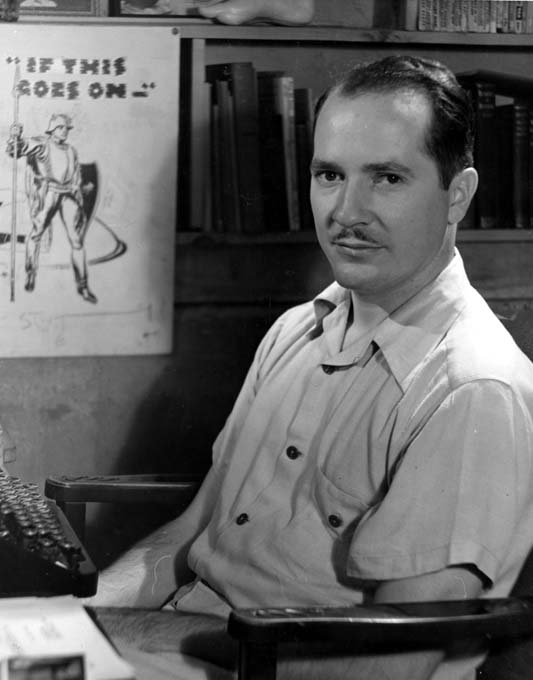
This month, I’m forcing myself to read a book I hate for a book club I moderate. The book is Friday by Robert A. Heinlein. I first discovered Robert A. Heinlein in 1964 when I was still twelve and in the 8th grade. By 1966, I believe I had read all his then published novels and most of his published short stories. He was my favorite writer by far, and I was a voracious bookworm. By the end of the 1960s, I was regularly rereading his books.
Then in 1970, Heinlein came out with I Will Fear No Evil. It was the first hardback I bought as a new release. I remembered how excited I was to delve into that book and just how disappointed I was when I read it. I was surprised and disturbed that I could dislike a Heinlein book. Heinlein never wrote another book I liked. His last seven novels, published from 1970-1987 were horrible reading experiences for me. My reactions ranged from bored to being revolted. I’ve never been able to even finish Friday or The Number of the Beast, and never even tried To Sail Beyond the Sunset.
What is strange, is I often encounter Heinlein fans who prefer his later books. When I was younger I assumed the Heinlein I hated was bad Heinlein, but can that be possible when there are plenty of readers who love the works I consider bad? When I was younger I also assumed Heinlein changed. In more recent years I wondered if I had changed. I pretty much loved Heinlein in the 1960s when I was a teenager. Heinlein was a substitute father figure for me because my own father wasn’t around much. Ultimately, in the late 1960s when the generation gap was at its widest, I think I rejected both of my fathers because of political differences. Heinlein and my dad both supported the Vietnam War, and I didn’t.
In the last few years, I’ve thought about giving Heinlein a second chance. Maybe there are good qualities to his “bad” books that I missed. Maybe I am wrong in thinking books can be judged good or bad. Maybe I should also reread the “good” books to see if what I disliked about Heinlein was there all along and I just skimmed over those aspects.
I’ve also thought that Heinlein devolved as a writer as he aged. He did have medical problems that affected his thinking in later years, but supposedly surgery fixed that. Heinlein claimed until to the end of his life that Starship Troopers (1959), Stranger in a Strange Land (1961), and The Moon is a Harsh Mistress (1966) were his best books, the ones that defined his personal philosophy, and the ones he wanted to be remembered and judged by. As I’ve aged, I’ve turned against all his 1960s novels. I now consider his novels published from 1952-1959 as his best, from The Rolling Stones to Starship Troopers. I tend to like many, but not all, of his shorter work published from 1939-1959.
I’m not alone. Many science fiction fans my age prefer the earlier Heinlein. Heinlein was proud of the young-adult novels he wrote in the 1950s, but I don’t think he felt they represented his insight and art. When he went to G. P. Putnam’s Sons in 1959, Heinlein felt he had been freed to write what he wanted. I think that’s when he saw himself as a mature artist and wanted to be respected as a philosophical novelist. I believe he wanted to be another Ayn Rand. I’ve only read The Fountainhead, and I’m not an admirer of Rand, so I can’t really compare them. But I know they both wanted to be influential. From Alec Nevala-Lee new book, Astounding, it seems obvious Heinlein was anxious to make an impact and disappointed that his success didn’t go beyond writing science fiction.
This month I’m making a concerted effort to understand Heinlein from one of his later works, Friday. It was first published in 1982, just six years before Heinlein died. Friday was nominated for a Hugo, Nebula, Prometheus, and Locus award, but did not win any of them. Jo Walton at Tor.com calls Friday “The Worst Book I Love.” She fell in love with the story at 17, but always knew it lacked a plot. Walton says in the end, “Even as it is, I love it for its moments of clarity and beauty. I wouldn’t be without it. I taught myself almost all I know about how to plot by lying awake trying to fix the end of Friday in my head.” That’s far more generous than I could ever be, but then she’s much younger than I am.
I can’t forgive Heinlein for creating a woman character who could rationalize being gang-raped as part of her secret agent job but wanted to slowly kill one of her rapists because he didn’t brush his teeth and use mouthwash first. The story itself is high-minded about accepting different people but spends an inordinate amount of time on when to kill folks for their bad manners. Friday Jones is an artificial person (clone) and rejected because of it, so you’d think she’d be a little more forgiving about all the capital killing snubs she feels.
The conflict in the novel is as contrived as religion. The good guys feel like bad guys to me, willing to kill people for what I think are trivial reasons, but ones they judge as highly offensive. Heinlein never defines his bad guys. They don’t have a philosophy. They don’t have an agenda. They are just a supposedly evil existential threat, ruthlessly killing and committing bad manners. But I wonder if Heinlein’s nebulous bad guys are really us, good guys from a rational world.
The “Boss” character who seems reprocessed from Heinlein’s 1949 story “Gulf” and a secret agent version of Jubal Harshaw from Stranger in a Strange Land is one self-righteous sanctimonious know-it-all. I worry that Heinlein’s great philosophical message is this character’s beliefs? If that is true, then Heinlein’s art is only the conceited gospel of his opinions.
But I have my own faults as a reader to confess. I should have set higher standards for my favorite author long ago. I can’t separate my boyish love of science fiction from any discernment of great writing. It’s taken too long to realize that great writing should be those stories that enlighten me about reality and not the fiction I most want to escape into.
The reason I loved Heinlein in adolescence is that Heinlein shared my fantasy for colonizing the solar system. That was my psychological substitute for religion when I became an atheist at age 13. Heinlein after 1959 gave up on space exploration. His fiction became all about rationalizing his personal philosophies. He gave up his ability to tell a story and create characters. Tragically, he took many of his old characters I cherished and turned them into puppet mouthpieces for this Heinlein philosophy. I never could forgive what he did with the Stone family from The Rolling Stones when turned them into sleazy swingers in The Cat Who Walk Through Walls. Even worse, they all lost their unique voice and became zombies speaking in Jubal-tongue.
But am I being too harsh on my literary hero? That’s why I’m rereading his later books. Maybe I just don’t get it. I’m giving Heinlein one last try. One of my other favorite genres is literary biographies. Most writers are tragic figures. Maybe I need to be more forgiving of Heinlein the man, and not judge him by his bad books. The literary heroes I replaced Heinlein with in the 1970s were Mark Twain, Jack Kerouac, and Philip K. Dick, none were angels, and certainly wrote their share of sinkers. Maybe I need to approach Robert A. Heinlein like I do Jack Kerouac, as a deeply flawed human who tried to justify his existence with his writing. In some ways, Heinlein is my Bronson Alcott father figure, and if Louisa May could come to terms with her crazy father, maybe I should with mine.
JWH




 Auxiliary Memory