Confessions of a Crap Artist by Philip K. Dick

Philip K. Dick is probably one of the most famous science fiction writers to ever live, but few people remember his name.  At least ten of his stories have been made into motion pictures, but few people who have seen those films took the time to read the stories the films were based on.  Philip K. Dick was the first science fiction author to be published by Library of America, which seeks to issue the best American writers in uniform, durable and authoritative editions.  But when I bring up the name Philip K. Dick among my bookworm friends, most ask, who?

Why isn’t PKD more famous?  The easy answer is writers seldom become famous, even though most writers hope for literary immortality.

Movie stars, music stars, sports stars become household names with the citizens of our pop culture, but few writers do, and especially not science fiction writers. Philip K. Dick knew this back in the 1950s when he began writing.  He wanted to be more than just a science fiction writer selling stories to pulp magazines for a half cent a word.

How do writers become famous?  Write an unforgettable novel!  What’s the formula for doing that?  Did Jane Austen, Charles Dickens, Louisa May Alcott know that formula when they wrote Pride and Prejudice, A Christmas Carol and Little Women, stories so famous they get a new film adaptation every decade or two?  Philip K. Dick’s success with getting filmed should have made him more famous, but it hasn’t.

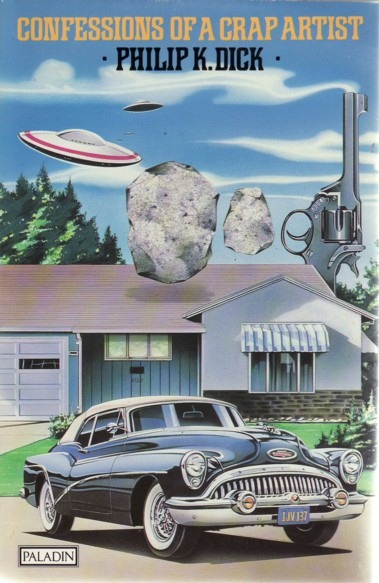
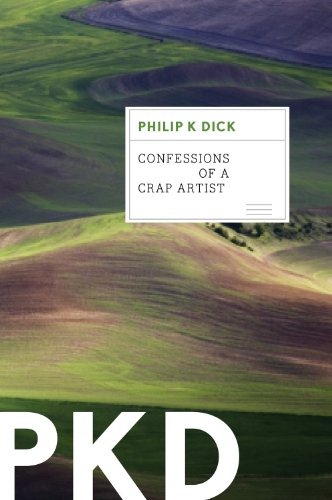
Fame is of little value itself, other than to draw attention to artistic work that might be worthy of our attention.  That’s what all artists really want, to create something worthy of fame.  Philip K. Dick didn’t figure his pulp writing was worthy of literary fame, so he wrote a series of mainstream novels in the 1950s hoping to prove his writing ability at observing real life in Marin County, California.  Only one of those novels was even published during his lifetime, Confessions of a Crap Artist.  Phil’s fame rest entirely on his science fiction, and among science fiction fans, PKD had the reputation for being weird even among the denizens of the geeky, nerdy world of science fiction fandom.  I think that’s a shame because Confessions of a Crap Artist is probably his best and most sane book.
confessions-of-a-crap-artist-1

Here I am claiming that one of a minor writer’s least famous books is his best.  How can that be?  I’m claiming that Confessions of a Crap Artist is as least as good as Jonathan Franzen’s Freedom, another book about marital conflict I’ve recently read.  And although I admired Freedom a good bit, I think Dick reveals better writing techniques for getting inside his characters’ heads than Franzen.  Freedom is more contemporary, sophisticated, and larger in scope, and thus more suited to modern readers, but my life resonates with Confessions of a Crap Artist, so I loved it more.

To me, the goal of literary novels, as oppose to genre novels, is to observe a place and time, and get into the heads of people to chronicle their emotion conflicts and growth.  Most bookworms prefer made up fictional worlds that have complicated plots and exciting characters that offer a thrill ride for their readers.  Often genre fans find literary novels to be about nothing in particular, and fans of genre novels, even fans of Philip K. Dick’s science fiction novels, may find Confessions of a Crap Artist boring.

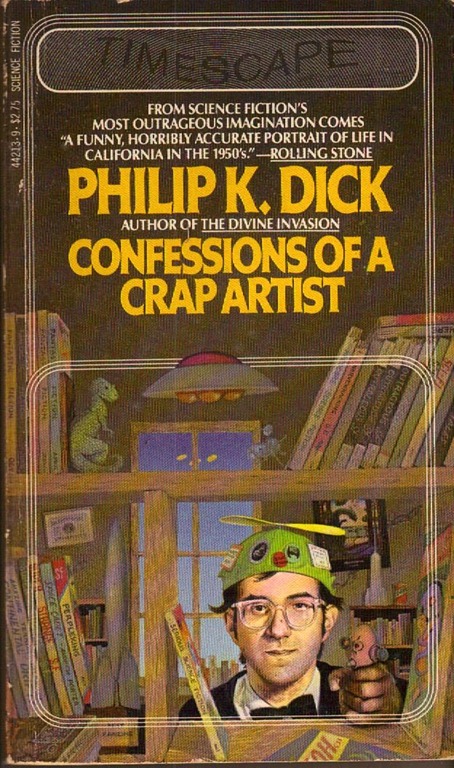
Confessions of a Crap Artist is about Fay and Charley Hume’s marriage falling apart and how it’s observed by Fay’s brother. Jack Isidore, a rather oddball child man in his thirties who sees the world in a peculiar fashion.   Jack is a science fiction fan, flying saucer nut, believer in crackpot ideas, thinks the world is hollow,  that Mu and Atlantis existed, that people can receive telegraphic messages.  He think fiction offers just as much scientific evidence about reality as nonfiction.  Charley Hume calls Jack a crap artist for all his weird ideas.  Jack Isidore’s extremely literal view of reality, and his poor social skills, makes me wonder if Dick had known someone with Asperger’s.  That should appeal to modern readers.  There are end of the world cults and mad shooters in this story too, that might also appeal to modern readers.  There’s a lot to 1959 that’s very much like 2013, and that might be a selling point too.
confessions-of-a-crap-artist-4

So why should you read this book?  If publishers didn’t want to publish Confessions of a Crap Artist when Dick wrote it back in 1959, why should you want to read it now?  Internet Science Fiction Database shows it’s had a dozen editions from 1975-2012.  Now that’s interesting.  And that’s not even counting the audiobook edition I just listened to or foreign editions with alternate titles.  What’s going on here?  I’ve heard that 99% of all books never have a second printing, much less a second edition.  Could Confessions of a Crap Artist be a minor underground classic?

I first read Confessions of a Crap Artist when it came out back in the mid-seventies, and was very impressed then.  I read a couple more of PKD’s mainstream novels and thought they captured the 1950s wonderfully, but then I forgot about them.  Recently many of PKD’s novels have been getting new uniform editions in book, ebook and audiobook formats and I bought several on sale from Audible.com.  I started listening to Confessions of a Crap Artist just before New Year and was mesmerized by the writing.  Peter Berkrot narration for the audiobook perfectly captured the first person inner thoughts of the four main characters, Jack Isidore, his sister Fay, her husband Charley, and Fay’s lover Nat Anteil.

The book also captured many wonderful details that I remember about the 1950s.

Why remember the year 1959?   You could read 1959: The Year Everything Changed by Fred Kaplan, a book I’ve read twice because it’s so fascinating.  You could read some of the books that came out in 1959 to try and capture the feel of that year, but if you look at the list I linked to at Wikipedia, many of the books that came out that year weren’t about 1959, they were science fiction books about the future, like Starship Troopers or The Sirens of Titan, or they were best sellers like Psycho and Goldfinger, which I hope aren’t the real 1959, or books like The Tin Drum or Hawaii, which are histories of earlier times.

I remember 1959, but just barely.  I was 7 until November 25th, when I turned 8.  I was living in New Jersey at the time.  But over in California, Philip K. Dick was living in Marin County, and he wrote a book about life in his place and time that captures 1959 better than anything I’ve ever read before.  So why would a science fiction writer back in 1959 want to write about suburban life?  Well, Philip K. Dick told his publisher that he was quitting science fiction to write mainstream novels.  He wrote several novels before giving up, and returned to writing science fiction.  When he did, he wrote is science fiction masterpiece, The Man in the High Castle, which won a Hugo Award.  I’m thinking 1959-1960 was a peak creative period for PKD.

So you might be wondering by now, why I would be trying to convince you to read a book that no publisher wanted when it was written, and was only published by a small press just seven years before the writer died in 1982, and is over 50 years old.  Shouldn’t it be lame and dated?  For some reason Confessions of a Crap Artist amazed me.  It has a 3.63 average rating over that GoodReads, so not everyone is impressed.

Why am I so impressed and others aren’t?  I hate to encourage you to go buy a book and that you read and think, “What is that Harris talking about?  This book stinks!”

I’ve been reading and rereading books by Philip K. Dick most of my life.  I’ve read biographies about him, read countless articles and interviews about and with him, listened to tapes of his conversations and I even visited his gravesite.   I now think Confessions of a Crap Artist is Philip K. Dick’s best book.  First published in 1975, but written in 1959, and in late 2012 appeared on audio from Brilliance Audio, running 8 hours and 13 minutes.
confessions-of-a-crap-artist-3

This still doesn’t answer:  Why remember the year 1959?  I’m not talking about nostalgia.  When we read Pride and Prejudice, are we learning about 1813?  When we read The Great Gatsby are we exploring 1925?  When we read The New Testament, are we time traveling back to 70 AD?  Yes and no.  A photograph or film of 1925 or 1959 is more revealing of what reality was like than a novel or even a nonfiction book.  Books give us words and ideas from a writer long ago.  So Confessions of a Crap Artist is really a tour of the mind of Philip K. Dick in 1959.  PKD was a certain kind of reporter about a very specific place and time.

Now I’ve mentioned before Dick was a weird guy.  He has a reputation for being weird, but Confessions of a Crap Artist is vivid, exact and very sane.  It’s a sane book about how everyone is crazy to one degree or another.  At first you think Jack Isidore is the only Joker in the deck, but as you read on, and get into the heads of the characters, you realize there are no normal people in this story.  By the time you finish the book you might be thinking there are no normal people in this world.

This is the second time I’ve “read” Confessions of a Crap Artist, or more precisely, I listened to it this time, and the narrator Peter Berkrot made it come alive in a vivid dramatic reading that caught the four principal characters perfectly.  Confessions of a Crap Artist is told through four first person accounts in a round robin order, so the reader feels like they’re inside the heads of Jack Isidore, his sister Fay Hume, her husband Charley, and Fay’s lover Nat Anteil.  This works much better on audio I think, especially with Peter Berkrot’s reading, because you actually feel the different personalities.  PKD did a fantastic job of thinking in different POVs.

Philip K. Dick is famous for writing science fiction, but Confessions of a Crap Artist isn’t science fiction.  To the public outside of the science fiction community, Philip K. Dick is known for several movies based on his novels:  Blade Runner, Total Recall, Screamers, Minority Report, Impostor, Paycheck, A Scanner Darkly, Radio Free Albemuth and The Adjustment BureauConfessions of a Crap Artist was filmed in France in 1992 as Confessions d’un Barjo.  It’s not available on Netflix and is out of print at Amazon, but some used VHS copies are available.

Charlie Hume calls his brother-in-law a crap artist because Jack Isidore collects facts about the world that most people consider nutty, stupid or insane.  Jack looks to his science fiction magazines for scientific validation of reality.  He’s involved with flying saucer cults, and hangs out with people who channel past lives and believes higher beings are preparing the end of the world for Earth.

I remember my uncles talking about Bridey Murphy, George Adamski, Edgar Cayce, and other writers who used to pray on crap artists of the 1950s.  I thought my uncles were nuts.  Most people think the 1960s was when times got wild, but the real 1950s wasn’t Leave It To Beaver or Father Knows Best, it was much closer to The Twilight Zone.

Of course, I was a science fiction fan back then, and that was considered pretty nutty too.  Another thing I remember from the late 1950s and early 1960s, was how everyone wanted to go to a psychiatrist.  Fay Hume goes to her analyst three times a week and brags about it.  Fay does not work, takes care of two little girls, but uses her charm, good looks, and manipulative ways, to get ahead.  On the outside Fay is a model wife, community organizer, and charming.  Charley, her husband thinks she’s a psychopath.  Nat, her lover thinks of her as childish and willful, but totally alluring.  Jack, her brother sees Fay in a particular strange analytical way.

Charley Hume was like a lot of men I remember from back then, he was obsessed about getting ahead, owning a big car and house, and having a beautiful wife and kids to show off.   Think Don Draper from Mad Men.  Finally, Nat Anteil, is the young college kid who could have been a beatnik.  He worked part time, him and his wife rode bikes, wore jeans, and wanted to be intellectuals.  In a few years they would become hippies probably.  Confessions of a Crap Artist reveals itself as an embryo of the 1960s.  The 1960s wasn’t that radically different from the 1950s if you knew where to look for the seeds of the sixties.

On the Road, which came out in 1957 has a reputation for being the bible of the Beats, and people remember it as one of the defining books about the 1950s.  But it was really about the 1940s.  Ditto for A Catcher in the Rye, another 1950s classics.  I think Confessions of a Crap Artist is a detail painting of 1959.

Maybe given enough time Philip K. Dick will be remembered for his literary efforts in the 1950s, not because he wrote about the future, but because he wrote about the moment, his life in 1959.  I’d love to know more about his life then and who the models were for Jack, Fay, Charley and Nat.

confessions-of-a-crap-artist-2

JWH – 1/7/13

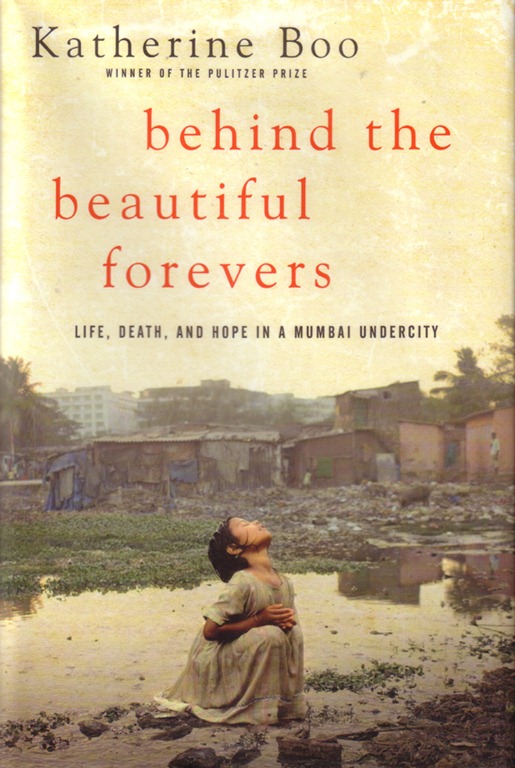
Behind the Beautiful Forevers by Katherine Boo

Are you one of those people who believe too much of our taxes go to entitlement programs and the poor are underserving of a helping hand?  Well, if you want to see what America would be like without Medicare, Social Security, Food Stamps, Unemployment Insurance, Aid to Dependent Families, etc, then you need to read Behind the Beautiful Forevers by Katherine Boo.  In this novel-like nonfiction book, Boo spent over three years getting to know the people of Annawadi, a shanty town that’s grown up next to the Mumbai Airport, where three thousand people struggle to survive at the bottom of the economic ladder by any means possible.  She focuses on a poor Muslim family living among even poorer Hindu families.  Katherine Boo beautifully weaves a web of stories around the connected lives of Abdul, a teenage garbage recycler, his mother Zehrunisa, their neighbor Fatima, a one legged prostitute, Asha, a middle age woman, corrupt wheeler dealer, slumlord, and low level politician, Manju, Asha’s daughter who is college educated and tutors slum kids, and a dozen more people who are friends and relatives to these main characters.

Behind-the-Beautiful-Forevers

Behind the Beautiful Forevers: Life, Death and Hope in a Mumbai Undercity won the National Book Award for Nonfiction this year and is on so many Best Books of 2012 lists that I’ve lost count.  That’s why I bought it from Audible to listen to over the Christmas holidays.  Strangely, it makes a wonderful holiday book for contemplating good will and compassion for our fellow humans.  Katherine Boo is my Ghost of Christmas Present.

Not only does reading about some of the poorest of the poor on Earth make me grateful for my comfortable life, but it makes me ask:  What is self-reliance, charity and basic human rights?  How can we help people like those living in Annawadi?  Should we let human beings live like this?  The folks in this story are all hustling to get ahead.  They all have dreams of a better life, although most of them have tiny dreams compared to our huge ambitions.  I’m a life long liberal that grew up with LBJ’s Great Society, so is food stamps a welfare the answer?  I don’t know.  And even in Behind the Beautiful Forevers, these people aren’t failures, as described by Slate Magazine,

Abdul and Zehrunisa are two of a handful of Annawadians whose fortunes Boo follows closely in the book. Behind the Beautiful Forevers is the product of Boo’s three and a half years of reporting (with the help of translators) in Annawadi.  The slum is home to 3,000 people (crammed into 335 huts) and unknown numbers of goats, feral pigs, and water buffalo. Lest you get the wrong idea: “Almost no one in this slum was considered poor by official Indian benchmarks.” In spite of the fact that a few residents have to trap frogs and rats to fill out their meals, the slum is officially reckoned a success story, full of people on their way out of poverty, and the frog-eaters give other, non-frog-eating Annawadians “a felt sense of their own upward mobility.” Annawadi was built illegally on land next to the Mumbai International Airport and is under constant threat of slum clearance. It is surrounded by new luxury hotels, which make it “magnificently positioned for a trafficker in rich people’s garbage.”

The strange thing about this story is the biggest problems these people face are caused by their own making.  Abdul and his family were getting ahead with their garbage recycling business until they angered their neighbor Fatima and she caused a feud that brought the two families down tragically. 

In a way, I wished I had heard the last chapter first, where Katherine Boo explains how she wrote the story.  In fact, I wished she had chronicled her writing methods within the story throughout the book.  How she became accepted by these people is just as fascinating as their lives.  Katherine Boo does not look like she belongs in a Mumbai slum, so it’s incredibly hard to imagine her fitting in with these people.  One telling piece in the last chapter is where she admits her Annawadi friends got annoyed with her pestering them about the negative aspects of their lives.  They wanted to forget the bad and get on with the good.  So is our fascinating with their misery really a fair picture of their world?

Katherine-Boo

I highly recommend reading her web site for the book before reading he book, because having the images of Annawadi and it’s people in my mind would have enhanced my reading pleasure.  Here’s the video from her site on YouTube.  My mental illustrations for the story was nothing like the real pictures.

In this interview Boo talks about her ambition to write a book about poverty without being sensational or sentimental, and I think she succeeds wonderfully.  When you read Behind the Beautiful Forevers it doesn’t make you want to look away in horror at their poverty.  I wish Boo would make a documentary out of her research, notes and videos she took.  One thing we see in the videos and photos is the people sometimes having fun.  That’s not in the book, and I wonder why?

Katherine Boo wrote a piece about Mumbai before, for the New Yorker about Slumdog Millionaire, “Opening Night” that gives another view of Mumbai’s slums.  Poverty is a more complex issue than just a lack of money.  We really are a global economy.  We really are all interconnected with a web of economics and culture.  We really are becoming a world society.

Other Reviews to Read

JWH – 12/28/12

Life of Pi–Is God the Better Story?

Director Ang Lee and screenwriter David Magee have done an excellent job of adapting Yann Martel’s 2001 novel Life of Pi to film.  When I read the book back in 2004 I thought at the time it would never be made into a film because the novel was too cerebral, too narrative heavy, plus, how could anyone get a tiger to do all that acting?

bengal-tiger

Life of Pi the film covered a surprising amount of the content of Life of Pi the book.  So far I can think of just three scenes I missed.  First, story of Pi’s family running into Pi’s three religious leaders.  Second, showing how Pi used turtles to survive, and finally, the scene where Pi is blind and hears people in another life raft.

Still, Lee and Magee beautifully succeeded with capturing the philosophical heart of the novel.  If you loved the book, go see the film, you’ll be surprised by how well it was filmed.

Is God the Better Story?

If you haven’t read the book or seen the movie, don’t read beyond this point if you plan do either, because I’m going to analyze the philosophical statement of the book and it will spoil the story.

In the main story, a boy from India, Piscine Molitor Patel,  who wants to be called Pi, is shipwreck in a lifeboat with a zebra, orangutan, hyena and a tiger named Richard Parker.  Martel tells us this story very realistically and we are expected to believe it happened. But along the way, Martel takes us through scenes that are very hard to believe, like the carnivorous island with the meerkats.

Yann Martel has crafted a Zen kōan into a novel.  Most kōans are short, “What is the sound of one hand clapping.”   Yann Martel essentially asks, “Is God the better story?”

At the beginning of the novel and movie, in a pseudo introduction, the author is told by an older Pi, that he can tell the author a story that will make him believe in God.  Yann Martel creates two stories, one very long, elaborate, fantastic, awe inspiring – and brutal, and a second that is short and brutal.  We are asked which one we prefer.  Martel is right, everyone, including realists like me, will pick the story with Richard Parker, the Bengal tiger.

So where does God come in?  How can this story make us believe in God?  Analyzing fiction for symbolism is tricky, but for me, Richard Parker represents God though analogy.  At the end of the film and novel, when Pi has told his long fabulist story to two Japanese insurance investigators they refuse to believe him.  So Pi tells a shorter, ugly version that we know is true, but hate to believe.  Then Pi asks the investigators which story they prefer.

We all want to believe in the story where Richard Parker existed because it’s a better story than the one of madness, murder and cannibalism.

So what about the prediction at the beginning, that the story will make us believe in God?  I believe Yann Martel uses the desire to believe in Richard Parker as a stand in for God, creating an analogy, that the readers and audience must make on their own.  Pi desperately wants to believe in God.  Pi asks us to believe in Richard Parker because the story of surviving in a lifeboat with a tiger is a better story than going mad and surviving alone.

The whole point of the novel is to trick the reader into the question:  Which story do you prefer.  Of course everyone prefers Richard Parker to be real.  By transference, we’re ask to accept that belief in God is the better story, just like how we want to believe that Richard Parker existed.  We’re never explicitly told that wanting to believe in Richard Parker is the same as wanting to believe in God, but I feel it’s obvious.

Yann Martel tells us people prefer religion over reality because the story of God is a better story than reality.  And I ask:  “Is this why people refuse to accept the fact of evolution because they prefer the story with Richard Parker – oh, I mean God?”

The novel is an elaborate metaphor to explain why people believe in God.  It doesn’t say that God exists.  Nor do we know what Yann Martel believes.  It just says people prefers belief in God because it’s a better story than how we see reality directly.

What the novel is tricking us into confessing is that the belief in God, no matter how unbelievable that story might be, that it’s a better story than reality.  That when we’re pushed to the ends of our physical and mental limits, we want God even if he’s cruel, vicious and indifferent.  That the belief in God is what gets us through this life.

Has Yann Martel stacked the deck?  Is God the better story?  Yes, reality does sometime involve madness, murder and cannibalism.  And even in the God story, people die, animals are cruelly killed and eaten, people suffer.  If the audience was given the Richard Parker story, and a documentary about the evolution of the universe with cosmology and the evolution of life on Earth with evolutionary biology, is God still the better story.  I don’t think so.  Richard Parker is like a magician’s diversion.  If you could watch this movie and blot out the tiger, the reality of Earth is magnificent!  Richard Parker and God divert our attention to our fantastic reality.

God is only the better story when you don’t understand reality.  Richard Parker is ferocious, terrifying, cruel, indifferent and doesn’t answer prayers.  No matter how much Pi loves Richard Parker and wants his recognition, Richard Parker ultimately refuses to acknowledge Pi’s existence.

So why is God the better story if Richard Parker just walks away from us?  I know many people who have long given up religion but haven’t given up on God.  They say that God must have created us but walked away from the universe and is no longer involved.  Personally, I’m confident there is no God and the size, age and origin of reality is beyond our understanding.  I find it far more comforting to know the rules of our local universe and not feel the need to blame a superior being for bad things or beg for good things.  If a bacteria, shark, drunk driver hurts me badly, I just accept it was the luck of the draw and not a judgmental deity deciding I had done something wrong.

Where the metaphor of Richard Parker breaks down is Pi can see Richard Parker, and we never see God.  It’s actually easier to believe in Richard Parker than it is to believe on God.  Life of Pi is a wonderful novel.  I’ve read I twice now.  And each time I want to believe the Richard Parker story, even though I know the truth is the story about cannibalism.  How many times will I have to read this book before the realistic story is the better story?

What if the novel and movie had been about a boy that survived 227 days on the ocean and had endured the incident with cannibalism and madness and survived.  No tiger, no zebra, no hyena, no orangutan, just Pi, his mom, the Frenchman and the Buddhist sailor?  It would have been brutal, but the success of Pi surviving the ordeal would have been just as magnificent.

Why do we want a better story?  Santa Claus is a better story than parents buying kids Christmas gifts from Target.  The tooth fairy is a better story than throwing milk teeth in the garbage.  Heaven is a better story than dying.  But why is God a better story than reality?  Is God a better story than evolution?  If you understood evolution and cosmology, God isn’t the better story.  God is a simpler story, and God’s story is endlessly confusing and contradictory.  It’s just God is fantastically powerful like Richard Parker.

Even though I disagree with Yann Martel’s assertion, I love his fiction.  See, that’s the real revelation in this.  Fiction is the better story, and Life of Pi is very good fiction.  Humans embraces fiction with an intense passion.  Richard Parker is a better character than a cannibalistic Frenchman.  And for many people, all the stories about God, are a better story than the brutal aspects of reality.  However, there is nothing in fiction that comes within light years of evolution.  All stories about God are just crude children stories compared to the complexity and beauty of evolution.  Evolution is just as brutal as the Old Testament God – it’s just not personal.

Here’s the final kōan:  Did Yann Martel write this story to make us atheists or make us believers in fiction?

JWH – 11/28/12

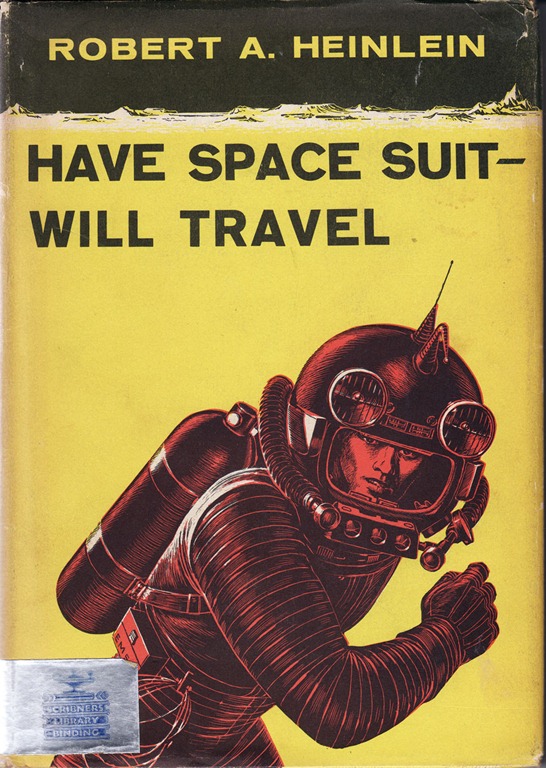
Is Heinlein’s Have Space Suit-Will Travel Satire?

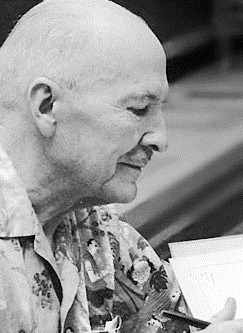
Over at Locus Online, Gary Westfahl has proposed a new theory about Robert A. Heinlein in his essay “The Joke Is on Us:  The Two Careers of Robert A. Heinlein.”  Westfahl proposes:

Thus, I wish to argue instead that there were, in fact, only two periods in Heinlein’s career: from 1939 to 1957, Heinlein wrote science fiction, and from 1958 until his death in 1988, Heinlein wrote satires of science fiction. Or, if that language seems too strong, say that from 1939 to 1957, Heinlein took his science fiction very seriously, and after that, he no longer took his science fiction seriously.

Now Westfahl didn’t say Heinlien wrote satires, but satires on science fiction, and even makes a case that Heinlein is parodying his own earlier work.  Westfal starts his essay by claiming Heinlein is a golden age science fiction writer that still has impact:

Still, there is at least one classic writer that every science fiction reader must come to terms with; for when you visit a bookstore today, the science fiction section may have only a few books by Jules Verne and H. G. Wells, or even Isaac Asimov and Arthur C. Clarke, and there may be few signs of their influence on other writers. But the works of Robert A. Heinlein are still occupying a considerable amount of shelf space, and the evidence of his broad impact on the genre is undeniable.

I don’t agree.  Heinlein has always been my favorite SF writer, but I’ve watched his reputation’s slow decline in recent decades.  I am totally open to reevaluating Heinlein’s work like Gary Westfahl has done, but not to explain Heinlein’s continued success, but to rescue Heinlein’s work for contemporary readers.  I think we need to find and recognize Heinlein’s best work that will appeal to new readers.  In our Classics of Science Fiction Book Club we have many Heinlein fans but far from most, and his popularity is on the wane, especially with younger readers.

I don’t think repackaging Heinlein as a satirist will sell or fly.

Heinleinface

Claiming Heinlein’s later work is satire is not new, William H. Patterson Jr. was the first one I remember proposing this idea in his book The Martian Named Smith back in 2001.  But I’m sorry, I just don’t buy the satire theory of Heinlein.  To me Heinlein was always as serious as a rattlesnake, and even when he was being light hearted, as he was in Have Space Suit-Will Travel, a book for children, he was dealing with kidnapping, murder, torture, genocide and destroying planets.  Heinlein worked awful hard to make that book realistic, even though it had a silly title.

Westfahl believes Citizen of the Galaxy, the 11th juvenile was the culmination of Heinlein’s expansion of stories moving away from Earth starting with Rocket Ship Galileo.  However,  Have Space Suit-Will Travel went further than Citizen of the Galaxy, by leaving the Milky Way.  Have Space Suit-Will Travel is the logical conclusion of the series.  Starship Troopers is the first retreat.   Starship Troopers is the first of the preachy Heinlein novels.  Starship Troopers it the first of Heinlein’s books where Heinlein is flat out on his soap box arguing his philosophy and politics to the reader.  Starship Troopers is Heinlein’s first Putnam novel.

And that preaching has always been in Heinlein’s work, but I believe editors always reined Heinlein in until he went to Putnam.  Once Heinlein moved to G. P. Putnam, we finally get to see the naked Heinlein.  I don’t think he wanted to wear court jester attire, he was a nudist.  When Heinlein’s characters propose killing people for being rude I don’t think Heinlein was trying to be funny or satirical.  I think he really meant we should shoot rude people.  And this horrifies me.

Even at the end of Have Space Suit-Will Travel, when Kip is before the galactic tribunal and Earth is being judged, Kip gets mad and tells them, “All right, take away our star–  You will if you can and I guess you can.  Go ahead!  We’ll make a star!  Then, someday, we’ll come back and hunt you down—all of you!”

That wasn’t satire.  Heinlein meant it.  Heinlein has always believed that homo sapiens are the most dangerous creature in the galaxy.

The Daily Show is satire.  Saturday Night Live is satire.  Satire is something liberals do.  I don’t think deadly serious conservatives do satire.  When Heinlein was younger he had some liberal in him, but I’m pretty sure most of it was gone by 1958.

If you read Heinlein from beginning to end, over and over again, you’ll see he had certain pet ideas that were always present in his stories.  I believe Heinlein changed his writing style to fit his publisher.  In the early days those were pulp magazine editors.  Then he started writing for the slicks after the war, and finally snagged a lucrative deal at Charles Scribner’s Sons in 1947 and wrote twelve amazing juvenile novels.  Heinlein’s writing was confined by Alice Dalgliesh, his editor while at Charles Scribner’s Sons.  In the 1950s he also wrote a handful of adult books for Doubleday, and they were different from the Scribner titles.  Finally he went to Putnam, and his writing changed again.  I think Putnam let Heinlein be Heinlein.

Heinlein always claimed his number one reason for writing was money.  But after he got money, I think he wanted to express his own ideas.  As he got older, I believe Heinlein started expressing his personal fantasies.  I think all his later books are his own personal power and sex daydreams.  I don’t think Jubal Harshaw was Heinlein, but I believe Heinlein wanted to be Jubal Harshaw.

I believe Heinlein changed after Sputnik too, like Gary Westfahl suggests, but for different reasons.  Heinlein was savvy enough to realize that NASA was going to invalidate much of science fiction before the 1960s.  Heinlein knew space science was going to change science fiction and he wanted to be ahead of the curve, so he started writing social science fiction, political science fiction, sexual science fiction, fantasy science fiction, and got away from writing space travel science fiction.

Personally, I believe Heinlein’s writing got sloppy as he got old, and lost his ability to write structured novels.  He never was great at the structure of fiction, but the editors at Putnam let him run wild.  I don’t think Heinlein ever wanted to be Jonathan Swift but Patrick Henry.  Later in life Heinlein claimed his essential books were Starship Troopers, Stranger in a Strange Land and A Moon is a Harsh Mistress.  Oh, I agree some of Stranger does seem satirical, like the scenes with the angels, but I believe that was Heinlein being sentimental, more like A Wonderful Life for grownups.  Most of Heinlein’s political drama is simplistic, like out of a 1930s Frank Capra flick.

I believe all the scenes with Harshaw are Heinlein talking straight.  I believe the scenes with Mike are Heinlein’s power and sex fantasies.  The Fosterite Church scenes could be labeled satire on 1950s television preachers, but what is he satirizing?  One of Heinlein’s pet ideas was proving that the soul existed after death.  Do people attack beliefs they want to be true?  Mike, Foster and Digby become archangels in the end.  Is this satire or sentimentality?

Is Heinlein attacking “Thou art God” philosophy or proposing it?

Satirical writers have a target in mind for their writing.  They want to destroy people and ideas with humor.  Heinlein was cynical and angry, and didn’t think much of the average man, but I don’t think he was trying to kill people with humor, if Heinlein wanted to kill people he’d use a gun.  Heinlein was as funny as William F. Buckley, Jr.  Heinlein never struck me as a George Carlin, Jon Stewart, Stephen Colbert, or even a Mark Twain.

Although Heinlein is my favorite writer, I’ve always felt he went downhill after he went to Putnam.  None of the Putnam books strike me as funny or satirical.  Heinlein is attacking people, ideas, customs and society, but I don’t believe its with humor.  Humor is a funny thing in that what I might not laugh at someone else will.  Maybe I’m just missing the satire.  Heinlein always seemed to be about getting what he wanted.  He was bad about developing conflict, and generally created faceless straw men to knock over.  Satire is all about the details of the enemy, and Heinlein was always about the details of people who got ahead and took what they wanted.

have-space-suit---will-travel

Have Space Suit-Will Travel has always been my favorite book because its about the overwhelming desire to go into space.  It’s about a boy wanting to go to the Moon, and I grew up wanting to go into space myself.  I took this novel seriously, even though it had a funny title.  Have Gun-Will Travel was a favorite show as a kid, and it wasn’t funny either.  Much of Have Space Suit-Will Travel is about space suits.  I loved those details.  Have Space Suit-Will Travel was a power fantasy for me at 13.  It was a story I wanted to live.

It never occurred to me to think Have Space Suit-Will Travel is satire.  What I worry about now is modern minds looking back on those old books and thinking them silly, and concluding the author must have written them for laughs.   And I can even see why Gary Westfahl claims Have Space Suit-Will Travel is poking fun at science fiction because in modern eyes the story might seem quaint, goofy and naïve, but back in 1964 it was my Bible, my dream, my fantasy for the future.  I would have exchanged places with Kip in a heartbeat.

I don’t consider Have Space Suit-Will Travel poking fun at science fiction, I consider it the ideal expression of science fiction.

JWH – 11/30/12

Rethinking the Great Books of History

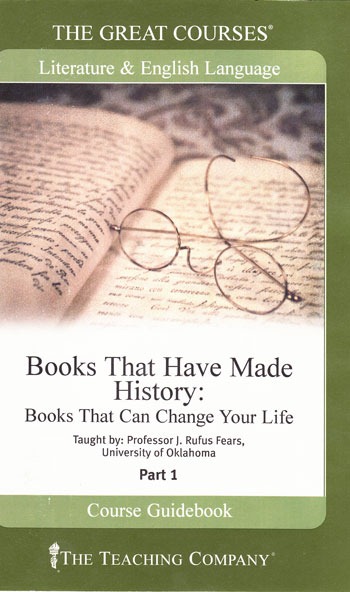
I am listening to “Books That Have Made History:  Books That Can Change Your Life” from The Teaching Company, taught by Professor J. Rufus Fears and I’m wondering if the “classic” books of history are being oversold.

great-courses

I’m a life-long bookworm.  I got my degree in English Literature.  I study books about books, such as those by Harold Bloom, and I even study the Bible as literature although I’m an atheist.  I wish I had the time to master the great books.  And I started listening to these lectures expecting to expand on my knowledge of the great books of history.  However, Dr. Fears is making me think otherwise.

Books That Have Made History is a popular course for The Great Courses, but I think it has a fatal flaw.  And I’m not the only one to criticize this series, just read the customer reviews at the site.

Dr. Fears approaches these 36 lessons with the assumption the greatest books of history have great moral lessons to teach.  He expects great books to explore and answer four questions:

  • Does God or do gods exist?
  • What is fate?
  • What do we mean by good and evil?
  • How should we live?

Dr. Fears teaches these books with a firm belief in the answers.  He teaches each title by fitting them into his own theological beliefs.  In his opening lecture he discusses Dietrich Bonhoeffer and how he was imprisoned by the Nazi’s and hanged on April 9, 1945.  Dr. Fears said Bonhoeffer and the judge that sentenced him to die both read and studied the same classic books of history, and asks:  How did they come to such morally different conclusions?

Dr. Fears assumes the great books of history have answers to the great questions of history.  I think he’s wrong. 

Dr. Fears assumes there is a God, there is good and evil, that we’re expected to live by definite rules, and we have a fate or destiny in our lives.  I think he’s wrong.

Dr. Fears refuses to believe that the universe is accidental, that there is no good or evil, that there are no moral laws embedded in the universe, and the universe expects nothing from us.   I think he’s wrong.

Dr. Fears advocates The Iliad was the Bible for the ancient Greeks like the Christian Bible is for the western world, and that Homer was a singular real person.  I disagree.

Dr. Fears believe Moses was a real historical figure and there’s amble historical and anthropological evidence to support his story.  I disagree and even think many Jewish scholars disagree.

Now my point is not to say I dislike this lecture series because I disagree with the professor.  I’m asking why we should read the great books of history?  If they exist for the reasons Dr. Fears suggests, then I say, let’s forget them.  I’m dead tired of trying to puzzle out truth about reality from ancient thinkers.  I’m willing to read their books to understand the evolution of mankind and its history, but I have no interest in acquiring their beliefs.

Dr. Fears believes studying these books are valuable and relevant to teaching modern people how to think and act.  I think that’s wrong.  I think that’s why our world is confused and full of conflicting belief systems.

Great books make you think about life and reality, but they should give no answers.  Explicit answers are dangerous.  We live in the 21st century and we need to study the moment.  Now it’s actually impossible to study the current “now” in books, since books take years to write.  But for example, if you are studying cosmology, anthropology, or geology, or another other science, you really need to be reading books written in the last five years, and no more than 10 year old.

History and biographies can have a trailing edge of maybe 25 years, but that’s because some topics don’t get written about all that often.

If you’re studying the great books of history, I believe they should be read as primary sources to supplement current historical research.  Your research efforts should go into studying how and why they were written in context of their times, and not use them for acquiring personal beliefs.

This represents a schism in approaching reality.  If you believe that science has been the only consistent human endeavor to answer questions about reality, ancient knowledge will only be superstitious beliefs and endless philosophizing.  If you believe in God, then ancient writings are a goldmine of potentially revealed secrets.  Books That Have Made History falls in the later category.  My thinking falls in the former, so these lectures have little value to me.

However, they do make me ask:  Should or can we write current books that summarize good and ethical behavior for people to study?  If people are wanting to read books about how to live their lives in a “proper” manner, can’t we come up with something a little more current and based on contemporary knowledge?

JWH – 9/12/12