How To Review Science Fiction?

by James Wallace Harris, Saturday, March 12, 2016

I’ve been reading science fiction for over fifty years—mainly for fun and entertainment—but also to speculate about reality in a way that science and philosophy do not. Now that I’ve written a book review for SF Signal, and working on another one, I’m wondering about how to approach book reviewing. I’m not interested in describing new books and then judging them by a rating scale. Any book I take the time to write about will be one I’m recommending. What fascinates me is why a book grabs me in the first place. After reading a couple thousand science fiction novels, I would think science fiction has nothing new to say to me, but it does.

No matter how many times an old idea is used in a new novel, some writers find new angles to examine. To be perfectly honest though, most writers don’t. Most new novels bought by publishers (as oppose to self-published novels) are pretty good at telling their story, and should find readers to admire them if they get the right promotion. What I look for is a book where the writer uses their story to express a philosophy about literature or science, or both.

How you tell a story conveys your philosophy about storytelling. If you bring attention to how the story is told, you’re making a statement, if you write solid prose that enchants the reader without drawing attention, you aren’t. The approach to science fiction takes two paths also. The first is to take a tried and true science fictional concept that readers love and work it into an appealing new story. The second, which is much harder, is to invent a new concept, or find a novel way to look at an old concept.
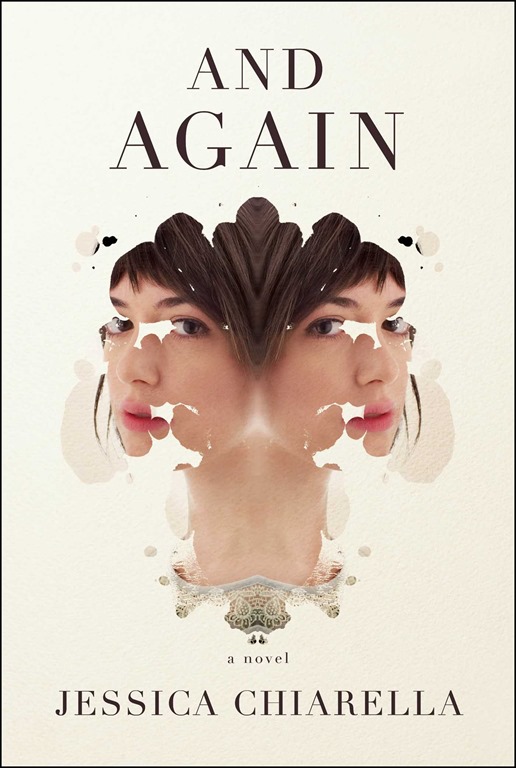
And Again by Jessica Chiarella

The novel I just finished, And Again by Jessica Chiarella, takes a standard literary device of telling four 1st person accounts in a round robin fashion. These people have new cloned bodies, which is her science fictional idea. Cloning is not a new concept. What Chiarella does new is make their stories very personal. There’s no plot. No heroes. The world doesn’t need saving. There’s no war between the normal folk and the clone folk. All Chiarella does is to ask: If you had a new body because you wore out your old one, how would it feel to start life over again. I found her four characters engaging, realistic and revealing. A novel worthy of recommending. But how do I review And Again to prove that it is interesting to would-be book buyers? Is my word good enough? I wouldn’t think so. What details could I offer as evidence? And would giving those details spoil the story?

I wrote a piece for SF Signal called “The Cutting Edge of Science Fiction” that was about how ideas are the cutting edge of science fiction. I believe there’s a period after science makes a discovery when science fiction writers can speculate about the possibilities of that discovery before further scientific research kills off or validates those ideas. I called that the cutting edge of science fiction. Unfortunately, the readers thought I meant the cutting edge of science fiction were specific books, and missed my idea. (By the way, the lesson I learned from this is don’t list books if they aren’t meant to be a best-of list. Because people ignore the narrative and see only the list, and think it’s a list of great books. My list had some stinker novels, but I was only listing them for their ideas though.)

Where I believe Chiarella was being an innovative science fiction writer (and I’m not sure her publisher is promoting her as such) is by her take on the clone story. Generally cloning is used in science fiction to explore the big ideas of serial immortality, brain downloading, new forms of humanity and rejuvenation. Clone stories often make for complicated SF murder mysteries or intricate mysteries of lost identities. Chiarella takes a rather mundane approach. It appears her characters had portions of their brain transplanted in a accelerated grown clone body. That side-stepped a bunch of philosophical issues. (Did the person die in the transfer, how can we download a mind, etc.)

This puts Chiarella in that zone I call the cutting edge—after the science of cloning, but before we know the limits of brain transplants. Until science proves that brains can’t be transplanted, it’s a viable science fictional concept. However, her setting is contemporary Chicago. Her characters’ stories are ordinary as New Yorker short stories. Other than how they got their new bodies, there’s no science fiction. So is the story science fiction? I think it is. How do I prove that in a review?

What I’d like to prove is my theory about science fiction. I think a story should be labeled science fiction if the storytelling is in the style of science fiction, or if it explores a science fictional idea. I don’t think And Again uses science fictional storytelling techniques, but I’m not sure how to prove that. It’s completely literary. However, her story is based on a science fictional concept.

I’m not sure if readers of SF Signal want to hear all of this in a book review. I often write long-winded pieces, that fairly often toss off comments that annoy people, like “Can Science Fiction Save Us?” Such extended wool-gathering bores the average site visitor hoping to discover a new book they want to read. Most review readers want something short, to the point, and convincing. Which makes me think I need to learn how to say what I have to say in many fewer words. But I’ve got to write more than, “Hey this book is great, read it.”

For my blog I can write anything I feel like. But now that I’m teaching myself how to review science fiction books I’ve been studying various websites and magazines, and have noticed that they each present a certain style in their reviews. Print magazines are confined by space. Web pages are scanned by hyper-readers in 20-second visits. I wish I had both the writing ability, and the scholarly knowledge to write book reviews like I read in The New York Review of Books. Their reviews are so educational that just reading a couple of columns overwhelms my brain with new knowledge.

I’m playing a game at SF Signal. For decades I’ve concentrated on classic science fiction. This year I’m trying to discover new novels that are published in 2016 that I think will be on reviewers “Best SF of 2016” lists in December. I think And Again has a chance, if SF reviewers consider it science fiction.

[This took 11 paragraphs. Could I have said it in 4?]

JWH
Why Doesn’t Google Fix Its Obvious Flaw?

By James Wallace Harris, Friday, February 5, 2016

Yesterday I searched Google for a book review of All the Birds in the Sky  by Charlie Jane Anders. I carefully created a search request that would give me exactly what I wanted.

           “all the birds in the sky” review anders

Yesterday it returned 37,500 links. Today it returns 38,900. If I take out the quotes around the book’s title it returns 461,000. If I add “book” to the search request and keep the quotes it returns 41,100. This is absolutely ridiculous.

Google_-G-_Logo.svg

If Google was as smart as it should be, the returns should be something like 78 or 123, or if there’s really a lot of book reviewers in this world, maybe 478. I can’t imagine that a book released two weeks ago should have garnered that many significant reviews, even counting bloggers, and I was wanting good blog reviews.

I’m reading All the Birds in the Sky and wanted to know what other people thought of it. I wanted significant reviews where readers pondered the implications of the story. Some of the returns on the first pages gave me what I wanted, but even those pages were cluttered with links to sites that weren’t book reviews. And I discovered that some review sites only give a minimum description of the book, as if the book hadn’t been read, but merely summarized by an overworked journalist, or composed by one of those new AI content creators that can crank out narrative that looks like it was written by a human.

Many of the returns were like this one “Babe of the Day – Penelope Cruz…” that had no information about the book. But there is a mention of the book in this guy’s blog links column.

Google’s AI should have been smart enough to know this site wasn’t a book review. Google’s AI should be smart enough to know that most of those 38,900 links aren’t book reviews either. Hell, I gave it a helpful hint by putting in the world “review” in the search query. Any half-ass AI should know that the words in the quotes is a book title, and the last word is the author’s last name.

I have to assume that offering me 38,850 links I don’t need helps Google make money. Google, the reason I gave up cable TV is because it made me pay for hundreds of channels I never watched. I don’t think I can cut the cord with Google. Bing gave me 5,600,000 results on the same query. Duck Duck Go doesn’t tell me how many returns it finds, but it does check mark some of its returns, as if “hint hint” these are the ones you really want. Their results come in a continuous scroll, so there’s no telling how many results there are.

Here is the search query I’d like to use with Google:

       “all the birds in the sky” review anders words>600 –notbuying

Google would know I wanted book reviews containing more than 600 words. Also, it would know I didn’t want to see any sites selling the book, so don’t bother sending me sites trying to sell the book. Of course if their AI was really sharp, I should be able to ask for:

       Give me significant reviews of All the Birds in the Sky by Charlie Jane Anders.

And it would.

JWH

Autistic Characters in Fiction

By James Wallace Harris, Wednesday, February 3, 2016

I started reading The Rosie Project by Graeme Simsion yesterday, and realized I was enjoying yet another book with an autistic first person character. This got me to thinking, just how many books have I read with an autistic character, and then wondered, just how often autistic characters show up in fiction. So far my list includes:

GoodReads lists 65 books on their Autism in Fiction list, some of which I find quite surprising, like To Kill a Mockingbird. And it turns out I have another book on my to-be-read pile, The Speed of Dark by Elizabeth Moon that features an autistic character. It appears listing autistics in fiction is quite popular, and Wikipedia even has a list of fictional characters in books, movies, television and comics that are on the autistic spectrum. If you search Google for “autism in fiction” you’ll find a lot to read.

the-rosie-project-graeme-simsion

Most of the books have been from the last twenty-five years. Didn’t autistic people exist in the time of The Bible, Shakespeare or Charles Dickens? I do know that Confessions of a Crap Artist, written by Philip K. Dick in 1959 has a very autistic-ish narrator. And strangely, isn’t Mr. Spock from Star Trek very autistic like? There is a danger to retroactively diagnosing characters from the past with autism, just read “Sherlock does not have Asperger’s or Autism, Thanks – From 4 Psychiatrists” or “We Shouldn’t View Sherlock as an Autistic Savant.”

Many people do not consider Oskar Schell in Extremely Loud and Incredibly Close to be autistic, but I do, because he has some autistic like traits. And I think that’s what’s interesting about these books, they don’t all define their characters as autistic or having Asperger’s syndrome, a diagnosis that’s been replaced with the term autism spectrum disorder. That’s because it’s very difficult to pigeonhole people into precise mental categories. I’ve written about this before, “Don’t We All Have Personality Traits in the Autism Spectrum?” and “Reading Novels To View Reality From a Diversity of Mental Spectrums.”

I think is extremely fascinating we all want to clearly define people into categories, but our own unique traits are usually invisible to ourselves. Just like Don Tillman in The Rosie Project, who is unaware of his Asperger’s symptoms, we can’t see our own quirkiness. Think how often you have heard your voice on a recorder and found it shocking. Or how disturbing it can be to see photographs or videos of ourselves. Our inner self-image seldom matches outer evidence. So it’s easy to understand that other people see you far different from how you see yourself.

In the The Rosie Project, Don decides it’s time to get married and goes about finding a wife in a very systematic way. The whole time I was reading this story I couldn’t stop picturing Sheldon from The Big Bang Theory. But doesn’t everyone fumble around trying to find their soul mate? And if we’re honest, aren’t we all clueless about finding compatibility?

People wonder why there’s been an explosion of autism in the general population. Some wonder if we always had autistic people and are just getting around the labeling them. Can you remember an old relative with autism spectrum traits? Others think the increase is from an environmental cause, and a few people have suggested the increase in autism comes from more super-intelligent people mating with each other. I have no idea, but I do find that characters in fiction with moderate amounts of traits from the autism spectrum appealing. (Although severe amounts are horrifying and tragic.) And I think that’s so because we can identify with their problems and admire their eccentric skills. Don’t we all have some kind of communication problem, or compulsive behavior? My friends consider me very good at communication, yet I’ve always felt a slight sense of agoraphobia when it comes to socializing. And I certainly wish I had the organizational skills of Sheldon and Don. I do know I pass all the tests for introversion with flying colors.

And how often do you feel that your friends are clueless to seeing the real you? Aren’t we all on a social awareness spectrum? If we fall into a certain range, does that put us on the autism spectrum? I have long ago given up on the idea of “normal” people. I assume we all exist on a hundred different spectrums – picture a mixing board in a sound recording studio. I doubt anyone has sliders position in the center all across the board. And I expect what we now call autism spectrum disorder will be broken up into several spectrums in the future.

Finally, I wonder if we were all characters in a book like Don Tillman, and readers got to see just how we think, wouldn’t our logic for doing things and making decisions seem peculiar to others? Aren’t we all strange little birds?

JWH

All the Time in the World is Still Not Enough

By James Wallace Harris, Thursday, January 7, 2016

All during my work years, while I toiled away at my 8:30-5:00 grind, I endlessly ached to be free. I just wanted time to write. Now that I’m retired, and have all the time in the world, it’s still not enough. I’m writing regularly, devoting hours a day to my task, but I’m not keeping up with all the ideas that beg me to give them birth. Recently I found Big Magic at the library, a lovely new book on creativity by Elizabeth Gilbert. I highly recommend this book to those who struggles to be creative, whether at writing, music, art, dance, acting, or even robot design, while holding down a fulltime job and believing they don’t have enough time. Gilbert provides 276 pages of inspiration and advice that’s backed by the wisdom of her success. I know many people who are prejudiced against Elizabeth Gilbert for that same success, but I’m not one of them. Her advice resonated easily with my experiences.

Big Magic by Elizabeth Gilbert

Gilbert carefully illustrates that we all have enough time to be creative, no matter how busy our life, or how much free time we can find. She goes on to prove it’s the kind of shit sandwich you’re willing to eat that determines creative productivity. Gilbert explains that creativity always comes at a cost. It’s not about finding time, but paying the price. Writing every day is one of the costs. Whatever shit you have to eat to make yourself write is the cost. People give up on their dreams because they won’t suffer the shit that it takes. Her metaphor is crude, but makes a lot of sense if this is your kind of struggle.

I have all the time in the world, and it’s still not enough. What I’ve been learning the hard way, it’s not about time, it’s about work. There will always be an endless list of ideas I can write about. There will always be a limited amount of time. What determines my creative output is effort, not time. Everything Gilbert writes about I’ve been learning since I’ve retired. Time and again as I read this book, her advice clarified what I’ve been learning on my own without conscious clarity.

It really comes down to sticking to a project until it’s finished. It doesn’t matter how important the art, or how ambitious the scope, or whether it will make money or not. All that matters is getting into the zone and working. You work at what you like, and you don’t worry if anyone else will like it, buy it or judge it. Time isn’t an issue. It’s not about what I’ve done, or hope to do, it’s only about the project I’m working on at the moment. And at this moment, I’m reviewing this book.

Essay #995

Adding Literary Realism to Science Fiction

By James Wallace Harris, Tuesday, August 25, 2015

My favorite reading genre is science fiction, but my favorite books are usually literary novels. I often think about what makes a literary novel great and wonder why those elements aren’t usually found in science fiction.

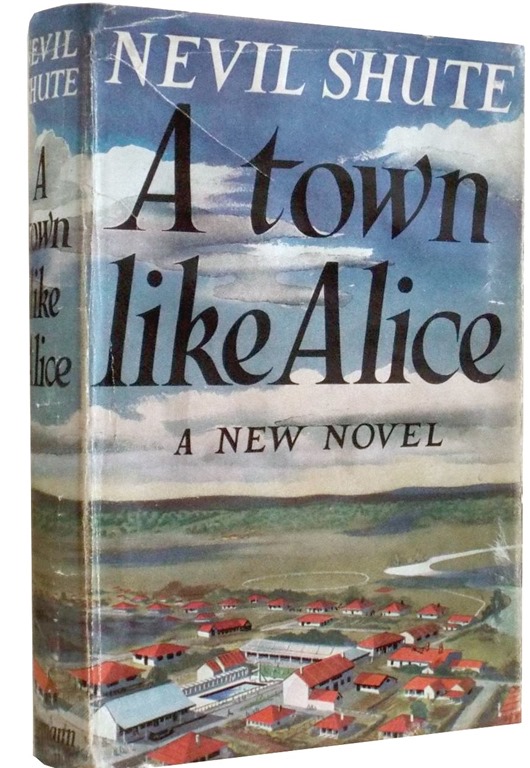
A Town Like Alice, a 1950 novel by Nevil Shute, has been made into a movie (1956), television mini-series (1981) and radio drama (1997). Shute’s story obviously has lasting appeal, perfect for would-be writers to study. I’m 65 years late discovering this novel, yet it was gripping as any current bestseller. Why? To answer that is a writing lesson and not a review. If you haven’t read this novel go away and come back when you’re done, because to dissect this book will give away spoilers. There’s a $2.99 Kindle version at Amazon. Make sure you get the full version, not one of the shorter editions. The audio edition narrated by Robin Bailey is wonderful.

a town like alice

A Town Without Alice is a love story related through a lawyer. Jean Paget, an Englishwoman, gets caught up in World War II while living in British Malaya, becoming a prisoner of war. She has a brief encounter with Joe Harman, an Australian, also a prisoner. Years after the war she inherits money that allows her to return to Malaya to track down Joe. The narrator of the story is Noel Strachen, a widowed lawyer in his seventies, in charge of Jean’s trust fund in England.

Noel can’t know everything that goes on in this story, but Nevil Shute has him tell the tale. Jean either relates her adventures in person, or via letters, but it’s still not enough for Noel to know everything. So why does Shute have this old solicitor be the storyteller? I think it’s key to why the novel succeeds.

We generally read novels that are in the first or third person. First person novels are very intimate, but have limitations. Third person POV allows writers the most latitude for giving reader information, but it adds an impersonal distance from the character. That’s why many modern writers often use a very close third person. It lets the author convey details the main character won’t know, yet stay close enough to let readers feel intimate with their protagonists.

Nevil Shute knew Jean and Joe could not be writers, and he wants the reader to think this is a true story. By having Jean’s solicitor tell the story in first person, it makes the story feel very true. An “as told by” kind of narrative. A Town Like Alice is based on two real events, but greatly changed for the novel. But it’s also part speculation, about how to revitalize a dying town in the Australian outback. Shute had immigrated to Australia after the war and he obviously loved the frontier life and people. Some of this story feels journalistic with vivid details that Shute must have experienced first hand. Science fiction writers must invent all their details, which puts a burden on realism.

Yet, it’s the accumulation of significant details that make great prose.

My reading experience has taught me stories that feel real often become classics, even if they are entirely made up. One reason why Jodi Picoult novels are so popular is because she starts with headline news and then creates a fictional tale that riffs on reality. Her stories feel real. Genre readers gorge on mysteries, fantasies, science fiction and romances, but genre fiction seldom feels like true stories. Most literary novels seem like thinly disguised real events, or excellent forgeries of reality. A Town Like Alice grips us like a memoir or travelogue rather than a novel.

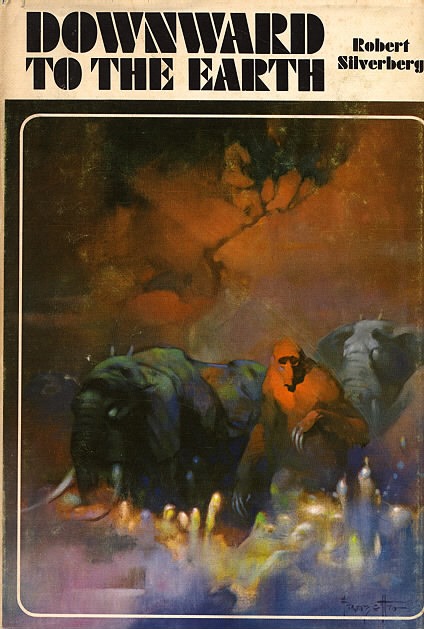
Downward_to_the_Earth

I recently read Downward to the Earth by Robert Silverberg, a 1970 science fiction novel that was obviously inspired by The Heart of Darkness by Joseph Conrad. The reason why I felt Silverberg’s novel is better than the average science fiction novel is because he created that sense of literary realism, even in a fantastic setting. I wonder why more science fiction writers don’t use this technique? Too often I feel genre writers imitate movies and television shows which seldom seem lifelike. We’re given thrills to replace believability.

I’ve written several drafts of science fiction novels over the years and have never liked what I’ve written. I think my failure is because I’ve modeled my stories on science fiction novels. The lesson I learned from reading A Town Like Alice and Downward to the Earth is I should model my science fiction on literary novels. I’m surprised more science fiction writers haven’t created stories inspired by literary classics like Silverberg did with Downward to the Earth.

Look how successful Andy Weir did with The Martian, which descends from Robinson Crusoe. And isn’t it particularly strange that we never see epic love stories in science fiction? I can’t think of any SF story that comes close to Anna Karenina or Pride and Prejudice. I believe the huge success of The Windup Girl by Paolo Bacigalupi was due to it feeling like Graham Greene wrote a science fiction novel, and the reason why I like The Water Knife less is because it feels like a movie thriller.

Can science fiction writers set a story on the Moon, Mars or some distant planet in another star system and make readers feel like they’re reading a true life story? When Robinson Crusoe came out in 1719 readers thought it was a memoir from a real castaway. I’m tempted to write a science fiction novel inspired by Dickens’ Great Expectation, and model the characters on people I know. I lived many Pip like experiences I could use.

JWH