Retelling Space History in 1080i

by James Wallace Harris, Tuesday, July 9, 2019

50th anniversaries are big deals. This month is the 50th anniversary of Apollo 11’s trip to the Moon. I started following NASA’s space program on May 5, 1961, when my 4th-grade class listened to Alan Shepard’s suborbital flight broadcast over the classroom speaker. I was living Hollywood, Florida, just down the coast from Cape Canaveral. After that, I convinced my parents to let me stay home from school whenever there was a space launch so I could watch it on TV. I watched all the Project Mercury, Gemini, and Apollo launches with Walter Cronkite – except for Apollo 8. That I got to see live.

Over the years and decades, I have read countless books and watched countless documentaries about the space program, and the history of rocketry. Last night, PBS began a 3-part series commemorating the first moon landing called Chasing the Moon. I almost didn’t watch it because I figured I had seen and heard everything. But, boy am I glad I did tune in.

PBS has dug up films and facts I hadn’t seen or heard. And it was spectacular seeing these old film clips on my 65″ Sony high definition TV. I know the Apollo 11 event was filmed by dozens of news outlets, so why shouldn’t they have different films to show? But I could swear the take-off of Apollo 11 from the NASA’s cameras seemed new to me. I’m sure they had cameras from every angle possible, so why shouldn’t there be a unique one for the 50th anniversary? However, I wondered if the launch shot was from a later Saturn 5.
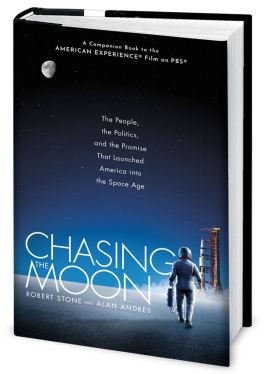
Chasing the Book - bookI also wonder if after 50 years I’ve just forgotten most of what I once saw? And maybe seeing the launch sequence in 1080i on a 65″ HDTV made it look different from all the small CRT screens I used over most of those years.

There were also some facts presented that I don’t remember ever knowing before either. For instance, NASA had trained a black astronaut, Ed Dwight Jr. at the request of the JFK White House, but for political reasons was left out of the second cohort of astronauts, the one that included Neil Armstrong. Dwight was sent to be trained by Chuck Yeager as a test pilot, but Yaeger told all the other pilots to give him the cold shoulder.

Another surprising story was the JFK tried twice to get Nikita Khrushchev to make the space race a joint expedition to the Moon. I knew that Kennedy wasn’t interested in space and only promoted the idea to compete with the Russians, but I don’t remember ever reading about him trying to reduce the cost of the mission by co-opting the Russians. Wouldn’t history have been amazingly different if Nikita had agreed?

Chasing the Moon covers all the history I remember, but with slightly different details and film clips. It starts with Werner von Braun and Sputnik. However, the book that goes with the documentary starts back in 1903 and covers earlier rocket pioneers and the influence of science fiction. I wished the documentary had started there too.

Be sure and tune in tonight for part two. Many stations will be repeating part one, so fire up your DVRs. And the PBS streaming app should have it too. Wednesday, NOVA will be about the future of Moon exploration and colonization.

There is another reason to watch these 50th-anniversary celebrations. I’m starting to see the shaping of history. Sure it was great to be a 17-year-old kid watching the first Moon landing, but it’s also been great to see its history unfold over fifty years. I realize so much has been left out of the story. We always get the gung-ho glamor version, but the PBS documentary hints at much more. Besides covering the lost story of a black astronaut, they show clips of African Americans at the launch protesting. They came there on a mule-drawn wagon. The documentary also hints at the dirty pork-barrelling politics behind the scenes or how hard we worked to cover up the fact that our space program originated with Nazis. I didn’t know this, but the Russians eventually sent all their captured Nazis back to Germany. Of course, I knew about von Braun, since I have read biographies about him, but even those I expect were cleaned up.

There are still two parts to go and I wonder if they will try to answer the really big question that we always avoid. If going to the Moon was so great, why didn’t we keep going, why didn’t we go to Mars? We went to the Moon in nine years, but we haven’t gone beyond low Earth’s orbit since 1972. That 50th anniversary is only three years away. Was the final frontier just a cold-war political stunt? Are the plans to return to the Moon just another political keeping up with the Jones?

JWH
Echo in the Canyon – Nostalgia Denied

by James Wallace Harris, Saturday, July 6, 2019

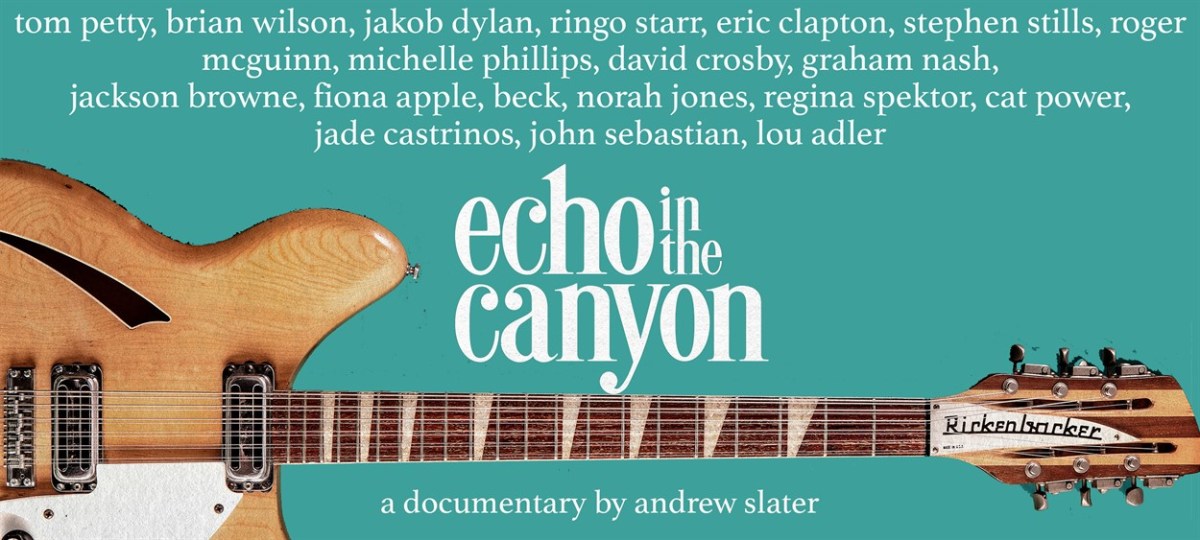
I went to Echo in the Canyon expecting it to be a documentary about 1960s musicians who lived in Laurel Canyon. Instead, I got Jakob Dylan Sings the Oldies. Now there is nothing wrong with that, except I never got that impression when I saw the trailer at the theater last week.

Evidently, Jakob Dylan and friends Beck, Fiona Apple, Cat Powers, Norah Jones, and Regina Spektor decided to put on a concert singing old songs that came from the artists living in Laurel Canyon back when and then turned it into a film project. We see them discussing the songs over a coffee table of old albums, rehearsing the songs in the studio and then playing them live. In between this, we see Jakob Dylan driving around L.A. talking to all the old musicians that are still living and giving us some clips from the past. And for some strange reason, they kept showing clips from a 1969 film called Model Shop. Echo in the Canyon is a bit about the past, but mostly it’s about the present looking back.

Now, this is cool. Younger generations of musicians often love to pay tribute to the past by creating albums of oldies. Bob Dylan recently produced Shadows in the Night where he sings Frank Sinatra songs. Or when Natalie Cole did Unforgettable… with Love, singing her dad’s songs. Or when John Lennon did Rock ‘n’ Roll singing his favorites hits from the 1950s. I actually like covers. I loved when Bruce Springsteen would sing covers at the end of his concerts in the 1970s. And I really enjoy picking a favorite song and listening to all the covers of it on Spotify. I’ve heard about a hundred versions of “All Along the Watchtower” that way.

The trouble is, the covers for Echo in the Canyon are bland and over-produced. The whole time while watching this film I ached to hear the originals. Now that might just be me, the film is highly rated on Rotten Tomatoes and two of my younger friends have seen it and loved it.

I admire cover tunes that take an old song and redo it in a very original way, such as when Jimi Hendrix sang “All Along the Watchtower” or when Lili Haydn redid “Maggot Brains.” Jakob Dyan and friends did fairly straight covers. These are very talented artists but they don’t shine on these old songs. Part of the problem is the original songs were more delicately produced with fewer instruments, and these modern versions have too many musicians playing on them. They have a modern Americana big group sound, which I think distracts from the lyrics.

For the most part, Echo in the Canyon doesn’t cover the biggest hits but picks album cuts instead. I thought that was an excellent approach but it means they also picked songs fewer people liked. I loved all of these songs back in the day. However, many of these songs were originally idiosyncratically produced, giving them highly distinctive performances. Jakob Dylan and friends reproduce them all in the same kind of jangling-guitar stereotype of folk-rock.

I’m not sure how much these younger musicians really liked these old songs. Watching them discuss the tunes while flipping through old LPs didn’t reveal much passion. Their body language didn’t quite show enthusiasm. What I read was, “OMG, school report” as if this project was something they had to endure. They give a respectful history report on our generation but I never believed they play these albums at home.

Echo in the Canyon is worth seeing, but if you’re a Baby Boomer, don’t expect a lot of reliving the past. It’s fun to see a younger generation examine our times, but it’s also kind of disappointing. I often see young people with T-shirts celebrating musicians from the 1960s, but 95% of the time it’s The Beatles. I loved that The Byrds got a lot of recognition in this film. They were my favorite group in the 1960s, and Buffalo Springfield was second. The Beatles only came in third with me.

Echo in the Canyon has even made an official Spotify playlist with songs from the movie and soundtrack mixed in with the originals. It’s a great way to compare the two. I hope you have Spotify and can play it. By the way, everyone should have Spotify, at least the free version. It’s becoming the Adobe Acrobat of playing music on the web.

Actually, I prefer all these artists doing their own original work. That’s where they are exceptional, and one day even younger artists will be covering their tunes. And probably fans growing up with their generation will grumble about those covers too.

JWH

The 2020 Election Will Be A Referendum

by James Wallace Harris, Monday, July 1, 2019

The 2020 election will be a referendum for a single issue, we just don’t know what that issue is yet. If Bernie Sanders or Elizebeth Warren get the nomination the referendum will be:

  • Vote Yes for Medicare-for-All
  • Vote No for Medicare-for-All

Right now, the Democrats think it will be:

  • Vote Yes for Trump
  • Vote No for Trump

Every Democrat in the debates offered a freebie as if they could buy voters. But that’s not going to work. Free education or forgiveness of college loans will only appeal to a fraction of the voters, so it won’t work as a clear decisive referendum. Medicare-for-All would affect every voter, that’s why it’s possible referendum question.

The Democrats could pick a vital issue and make a stand, for example:

  • Vote Yes to Stop Climate Change
  • Vote No to Keep Doing Nothing

Which would essentially be a referendum that says:

  • Save the future
  • Fuck the future

But I think the Democrats are afraid to commit to such an issue. To save the future would require sacrifice and we aren’t the Greatest Generation. We’re the Greed Generation.

Bernie Sanders wants Medicare-for-All. It’s logical. It would eventually save money. It’s pro-equality. And it’s egalitarian. But it’s not a critical issue to the future. The future doesn’t depend on equality of medical care. Only those issues that will destroy us in the future are universally applicable. Of course, the issue of climate change is global, so our greed affects a lot of people who can’t vote in the U.S. 2020 election.

Donald Trump and his flock have decided the referendum is:

  • It’s every person for themselves
  • The parable of the fishes and loaves

I expect the Republicans to find ways to spread their “Think Selfish” philosophy to all voters, even to voters who never voted Republican before. I find it rather ironic that Republicans live by a Darwinian philosophy. They say they’re Christian, but they live by survival-of-the-fittest — and let the weak die.

Politics is not logical. I keep thinking we should be logical, but it’s much easier to be selfish. Not that I’m a saint. I’m quite selfish. I just think we should be logical just enough to avoid self-destruction. You’d think that would be considered a healthy kind of selfishness. But it’s like that psychological experiment where they offered kids a choice between a cookie they could eat now or two cookies if they waited for fifteen minutes. Most kids took the immediate cookie.

JWH


60 Years – From Treasure Island to Black Sails

by James Wallace Harris, Saturday, June 22, 2019

Sixty years ago, back in 1959, I read my first book, Treasure Island. Actually, my mother read it with me. I was seven and in the third grade. It was around Halloween because I went to a costume party dressed as Long John Silver. I’m not sure, but my faulty memory tells me I picked Treasure Island to read because I had seen the 1934 movie version on television, the one with Wallace Beery as Long John Silver. I have reread the book and seen the old movie many times since. They are burned into my memory.

Sixty years later, in 2019 I’m watching a TV series called Black Sails (2014-2017) that features several characters that share names with characters in Treasure IslandLong John Silver, Captain Flint, Billy Bones, and Ben Gunn. The producers of the show consider it a prequel to the novel. If you haven’t read the book or seen one of the many filmed versions of Treasure Island it hardly matters, but if you have, knowing the character’s future adds to the fun of watching the show. To make the show even more delicious, many of the other characters are based on historical people from the Golden Age of Pirates.

Black Sails is not your typical pirate movie (well an extended TV series of 4 seasons with a total of 38 episodes). Black Sails spends most of its time developing characters and a complicated plot arc. Sure, it has sea battles, sword fights, treasure chests, and waving skull and crossbones, but it’s mostly about business. Pirate captains are elected. They keep their leadership only as long as their bookkeeper keeps them in the black. Pirates steal on the high seas but fence their booty in Nassau which is resold in the American colonies. Everyone is concerned with their own bottom line. Nassau belongs to England but its colonial governors are always corrupted. The main theme of the story is how some pirates and some Englishmen want to make Nassau legit like the other colonies.

Captain Flint and Long John Silver

Black Sails does feature a great deal of sex and violence, including plenty of full-frontal nudity, swearing, and gore, so it’s not for children like the original Treasure Island. But it’s also been modernized with several significant roles for women. None of the women characters are from Treasure Island and only one is from history (Anne Bonny).

In Treasure Island, Long John Silver is dishonest, violent, and likable. That’s true of the John Silver character in Black Sails. Captain Flint is a vastly complex character in the show, even its main character, but Captain Flint was just alluded to in Stevenson’s novel, and generally for his monstrous reputation. Black Sails spends much of its time giving Captain Flint a backstory. Billy Bones was not very likable in the book but is very likable in the television show.

Charles Vane, Jack Rackham, Edward Teach, and Benjamin Hornigold were real pirates, and it’s worth following their links to read about them at Wikipedia. It’s also worth reading about the Republic of Pirates that the show builds upon that worked out of Nassau, and the pirate code of conduct. These six links will provide a significant history needed to truly appreciate what the show succeeds at doing.

Over my lifetime I’ve become acquainted with many fictional characters that have been legendary or mythic, ones which are constantly recreated and enlarged – Tarzan, Sherlock Holmes, Peter Pan, Jo Marsh, Elizabeth Bennet – so that Black Sails is giving more life to Long John Silver. I like that. Maybe because he’s the character I’ve known the longest.

JWH

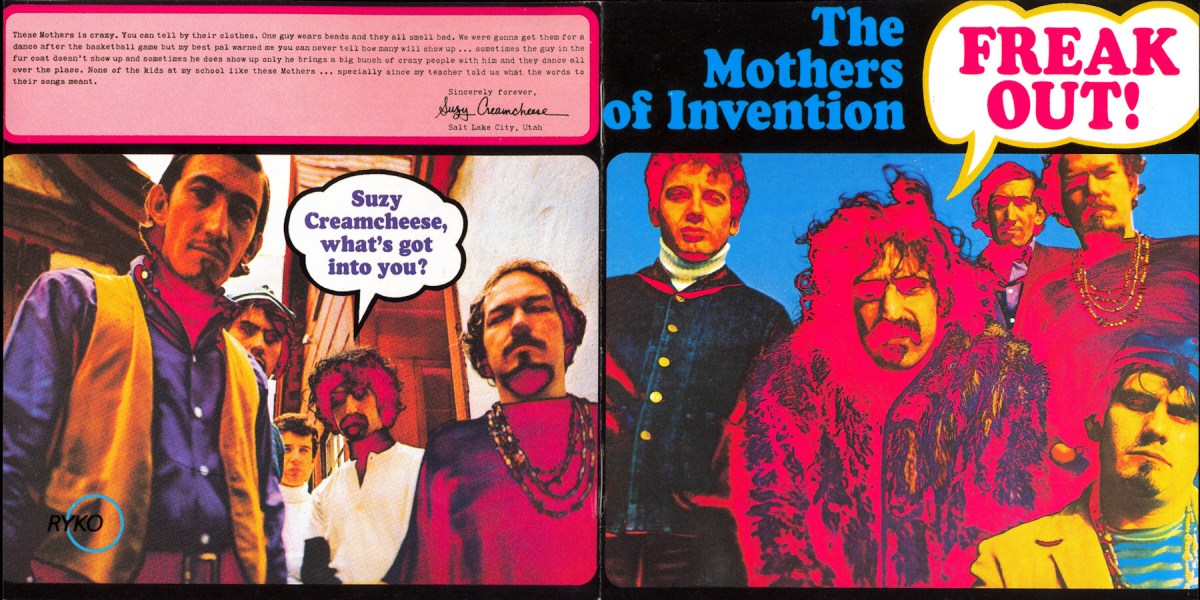
Freak Out! – 51 Years Ahead of Its Time

Is there a word that means the opposite of nostalgia? Here’s a case of remembering something I didn’t like from the past. To further compound the problem, it’s a work of art that satirized what I did love back then.

I wish I could boast that I first discovered Freak Out! from The Mothers of Invention in June of 1966 when it was first released, but I didn’t buy it until 1968. And even then when I played it on my console stereo in my 11th-grade bedroom I kept saying to myself, “WTF?” Of course, back then we didn’t talk in acronyms. I didn’t hate it, but it was too weird-as-shit to like. I eventually got rid of that LP when I sold my record collection to pay for a travel adventure after my dad died in May 1970.

In 1973 and 1974 I went to see Frank Zappa perform live, I believe for the Over-Nite Sensation and Apostrophe(‘) tours. By then I liked his music because of all the jazz influences but still thought the songs were uncomfortably weird. To be honest, I mostly went to these two concerts because my friend John Williamson was a big Zappa fan.

Over the years I’ve bought a Zappa album here and there but seldom got into them. I do love “Watermelon in Easter Hay” which is on my Spotify all-time-favorite-songs playlist.

For some strange reason, I started playing Freak Out! a couple weeks ago and haven’t stopped. I guess the album was 51 years ahead of its time — at least for me. I mentioned this to a connoisseur of 1955-1975 music I know and he reacted rather badly. I replied, at least you have to admit this music is very creative. Randy said Zappa had no talent whatsoever. That shocked me. Sure in 1968 I might have accepted that criticism, but not in 2019.

This afternoon when I played Freak Out! while eating lunch my wife pleaded with her eyes for me to stop. (She tries very hard to let me have so sonic freedom around the house, but I stopped after I realized how much I was torturing her.)

In the summer of 1966, I was transitioning from the 9th grade to the 10th, and moving from Miami to Charleston, Mississippi. There’s a good reason for not discovering Frank Zappa in the rural deep south. But by 1968 I had returned to Miami and read about this legendary album. But like I said it was too weird for me. I didn’t understand then it was making fun of everything that made me happy. I was wanting to be a hippy when Frank was skewering the whole counter-culture movement along with the clean-cut youth culture. Somehow Frank Zappa and the Mothers of Invention saw through all the crap that I admired.

I didn’t know enough to dig their combination of creative music and absurdist lyrics. I didn’t know what the avant-garde was back then. And to be confessional again, I still don’t.  I just don’t care much for satire or humor in music. However, something has changed, and the gestalt of most of the songs have begun to work on me. I actually crave to hear them.

Why at 67 has this silly nonsense become something deeply real?

Freak Out - Inside

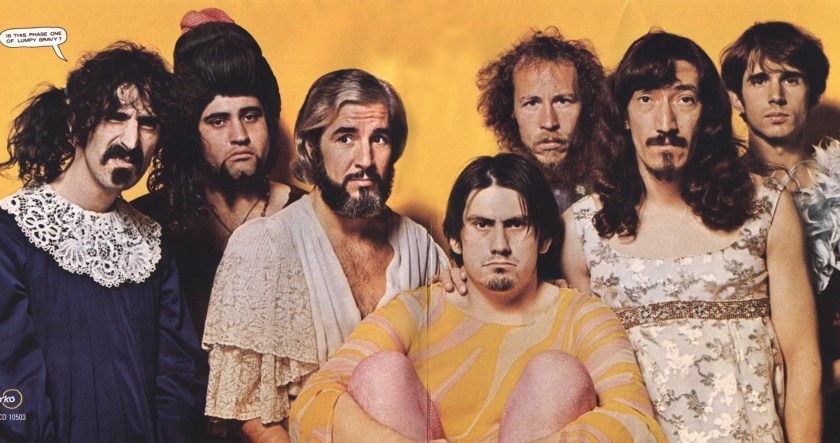
Like I said, it would be cool to brag that I’ve been into The Mothers of Invention since they premiered, but even though I only bought the album two years late, I’m over a half-a-century getting to like this album. The group did have an auspicious beginning, being the first group to have a double LP for their first album and to produce one of the first concept albums. Supposedly, even The Beatles paid musical tribute to it on their Sgt. Peppers album.

It’s very hard to understand how strange an album like Freak Out! was compared to the other albums of 1966. Playing it along with Revolver, Blonde on Blonde, Pet Sounds, Sounds of Silence, Fresh Cream, If You Can Believe Your Eyes and Ears, Fifth Dimension, Buffalo Springfield, Blues Breakers, Sunshine Superman, or even The Monkees,  you can feel its both a part of a larger musical transformation and a reaction to it.

Everyone remembers “For What’s It’s Worth” by the Buffalo Springfield about the Sunset Strip curfew riots, just look at how often it’s been used on a soundtrack. It was recorded on December 5, 1966. But why don’t people remember Frank Zappa’s song “Trouble Every Day” written in 1965 about the Watts riots?

“Trouble Every Day” is far angrier but also captures the soundtrack of the mid-60s like “For What It’s Worth” but it’s never been used to accent a movie that I can tell. I love “For What It’s Worth” but it was a protest song about young hippies not getting to party while “Trouble Every Day” was about a major race riot. “Trouble Every Day” criticizes far more and with more exciting music. In comparison, the new folk-rock sound of “For What It’s Worth” feels kind of wimpy today.

“Freak Out!” had all types of songs that anticipated future trends. Just listen to “Go Cry On Somebody Else’s Shoulder.” Doesn’t that sound like Sha Na Na, a group that didn’t form until 1969? Zappa was making fun of a nostalgic movement that hadn’t even begun. Listening to “Go Cry On Somebody Else’s Shoulder” in 2019 seems even more relevant. On Facebook so many people my age post photos and music clips of Do-Wop nostalgia. One of my friends even said her retirement life was recreating her high school days.

I love “How Could I Be Such A Fool?” but it makes me wonder just how honest we all were about our teenage loves. The music of this tune presses some button in me and I often put it on repeat play. Why was Frank Zappa so cynical when so young?

And isn’t “I’m Not Satisfied” a great teenage angst anthem at least as good as “I Am A Rock” by Simon and Garfunkle?

Why wasn’t it a hit single in 1966? It certainly reminds me of my 15-year-old emotional life in Charleston, Mississippi in 1966.

Zappa rerecorded several of the Freak Out! songs in 1968 as Cruising With Ruben & The Jets, to parody in even more creative musicality the 1950s rock era. I get the feeling that Zappa both loved this music, but also realized it came from a shallow culture.

So what is the word that describes anti-nostalgia? Maybe the word needs to convey both wistful fondness while recognizing what we love so much was essentially childish and unenlightened. And maybe the word should also mean demystifying nostalgia.

The 1960s was a weird time. It was both exciting and frightening. It was creative and brutal. Online I find so much nostalgia for that era, but few people remember the viciousness only the unthinking carelessness that was so fun.

JWH