What Would Have Made Me Want To Study as a Schoolkid?

by James Wallace Harris, Friday, August 23, 2019

I considered my K-12 education a 13-year prison sentence. I did my mediocre best getting mostly Cs and Bs, with rare As and Ds. My good grades didn’t reflect my ability but showed what I was actually interested in. I had a lot of great teachers that tried hard to get me to learn, but I didn’t cooperate. I wish to apologize to all of them now, especially my 12th-grade math teacher. I just didn’t want to pay attention, study, or do homework. Life was full of fun diversions and I found no incentive to make the most of my school years.

I regret that now and it’s really pointless to worry about it now, but it is an interesting problem to think about solving. How do you get kids to want to study? A certain percentage of children respond well to traditional classroom learning, but most don’t. When I’m shopping in used bookstores I look at K-12 textbooks and I’m horrified by how much crap they want to stuff in a young person’s head.

Part of the problem is society wants kids to acquire proficiency in a specific set of subjects before they’re 18. Then they up the ante by a couple of magnitudes for higher education. Before you can start life you have to be programmed with 400,000 facts. We’re told we need that many factoids to succeed in life but I doubt many believe it. I always considered it cruel and unusual punishment. I never knew what crime I committed to deserve such torture.

And it’s not like I didn’t enjoy learning as a child. I was a bookworm from the 4th-grade on, reading several hundred books while serving my K-12 time. I just didn’t want to read the books teachers wanted me to read.

I don’t know if I was a typical child. But I’d guess most kids didn’t like the system either. I’ve often thought about what if I could have designed my own pedagogy. It’s a fun thing to fantasize about. Try it and post a comment. I have come to some conclusions for me only, not a general system.

  1. The most important thing I should have been taught as a kid is about the world of work and how I’d spend forty years doing something that I could either like or dislike. I needed to learn as early as possible if I didn’t find my right vocation I’d spend those years in quiet desperation at best and crushing resentment at worse.
  2. I needed to have been shown by experience that there are many kinds of tasks and work environments. After high school, it took me several jobs to realize I preferred working inside rather than outside. I eventually learned I rather work with machines than people, but I liked an environment with well-educated people, and tasks that produced something useful to humanity rather than the bottom line. And I didn’t need to be the boss. I’m pretty sure I could have learned all of that in grade school.
  3. I learned too late in life that I loved science and technology. Again, I can imagine ways to get kids to learn subjects they like while they are still in grade school. It might require spending some classroom time in real work environments.
  4. What I sorely missed was a real incentive to study. I was told an education led to a good job but I never knew what a good job meant. I think study incentives need to be more immediate. I think the goal of being freed from classes would have been the incentive that would have worked for me. In other words, tell me the week’s goal. If I can finish by Thursday I could have Friday off. If I could finish in four weeks of a six weeks period, I could have two weeks off. If I could finish the year in March, I could have a long summer. Or even, if I could finish at 14 I could bum around for a few years before college. That would have inspired me to study harder. (I know that K-12 schools also serve as babysitters, so being freed from classes might mean more library days, or sports, or clubs, or other school activities. Although I wanted to be out on the streets or at home.)
  5. For such a finish-early system to work we’d need to carefully define and quantify what needs to be learned. Right now schools are one-size-fits-all. Not every kid wants to learn everything every other kid learns. Society needs to decide what subjects form a basic education, and what should be electives. We should find creative ways to test everything. Educators have gone nuts with cultural literacy.
  6. Society is discovering all kinds of learning and teaching methods. They didn’t have personal computers when I was little. But I think if they did I would have learned best in the classroom and taking quizzes at night on the computer for homework. If testing had been more like computer games and trivia contests they would have been fun. Competing for high scores would have pushed me, but grades never did in the least. If every subject had a rating like in chess, that would have been fun.

I’m curious if anything could have motivated me to study as a kid. It’s too bad we don’t have time machines. It would be a fun challenge to go back in time and see if could motivate my younger self.

Uh, maybe that’s an idea for a science fiction novel.

JWH


What’s the Legacy of the 1960s Counterculture Revolution?

by James Wallace Harris, Tuesday, August 20, 2019

Last night I watched “Summer of Love” on PBS’s American Experience. If you have a login for PBS you can follow the link and watch it. Or try your Roku PBS app. I’ve seen this documentary before, it originally appeared in 2007, but I guess PBS wanted to capitalize on the Woodstock 50th anniversary.

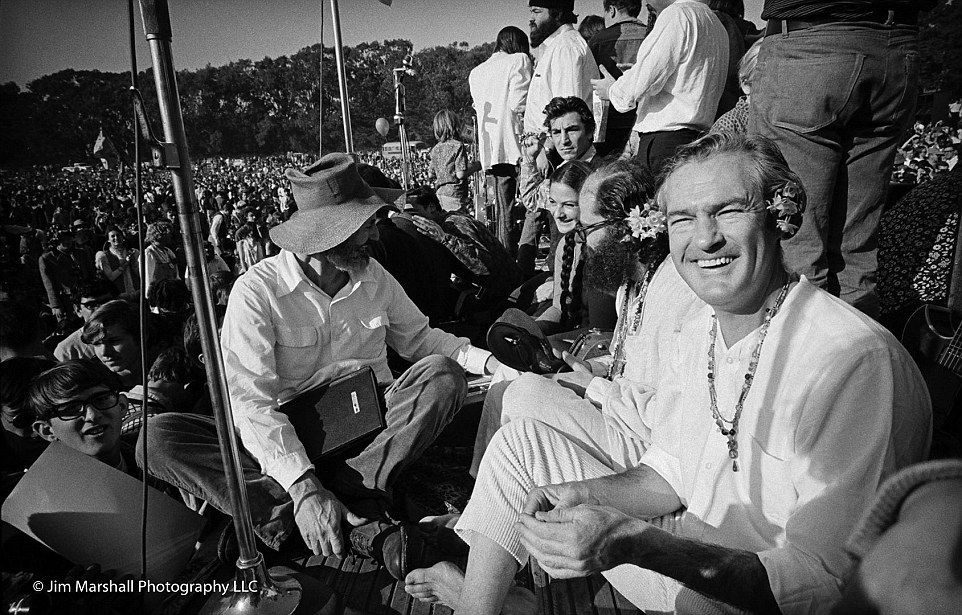
Watching “Summer of Love” was a bummer, a bad trip this time around. I remember back in the 1960s how badly I wanted to run away to San Francisco and become part of the counterculture. I thought a revolution was going on and I was missing out.

Over the years when I’d watch these remembrances of 1960s counterculture it would be with nostalgia. This time around I realized my nostalgia was all gone. At 15 it would have been fun for a while, but you have to watch between-the-scenes. There’s only so much prancing in the park you can do before it gets boring, and you can’t stay high forever. And I’ve lived in communal situations a number of times in the 1970s and it wasn’t all peace and love.

This past week I also watched documentaries on Woodstock and Altamont. Between Monterey Pop Festival on June 16, 1967, and Altamont Speedway Free Festival on December 6, 1969, the 1960s counterculture reached adolescence and then died a tragically early death. However, the dreams of what people wanted from the counterculture still persist. They have haunted us for fifty years.

We kept the long hair, beards, colorful clothes, free love, music, and dope, but we never found peace and harmony, we never freed ourselves from the 9-to-5 grind, we never escaped capitalism. We foolishly believed utopia was possible. We tried very hard to integrate and free ourselves of racism but we’ve never really succeeded. Both women and minorities have made great strides in society but we haven’t reached equality. In the 1960s the counterculture believed we could all transform ourselves. We thought we could clean up the environment, treat all life on Earth with love, and redesign capitalism to be kind and just.

It just didn’t work out. We can see the counterculture legacy in the 2020 candidates for the Democratic Party. We’ve convinced half the world to care about the environment but even the most idealistic of us can’t stop using plastics. Burger King might sell veggie burgers but we still have massive factory farms of animal torture. We know the use of fossil fuels will destroy us yet we still drive cars and electrify our homes with coal.

I think there have always been hippies with dreams of living kinder lives. Jesus and his disciples are one example of keeping a counterculture dream alive for two thousand years. Yesterday I listened to “Episode 38: The new anti-capitalist science fiction” of the podcast Our Opinions Are Correct by Annalee Newitz and Charlie Jane Anders. They just won the Hugo award for Best Fancast. Both are science fiction writers that are leaders in one of the many new countercultures. They assume, they dream a revolution will take place. It’s really the same revolution of 1967. They are full of hope. I still hope, but how much hope do I really have left?

For the 1960s legacy counterculture revolutionaries to succeed capitalism must be transformed. The extreme idealists have always wanted to do away with capitalism but I don’t think that’s possible. Capitalism is too basic to human nature, buying and selling are as natural as eating, even chimpanzees barter and trade. But can capitalism be tamed and civilized? Or will it always be Darwinian, the vicious survival of the fittest?

There is no doubt that society has drastically transformed since the Summer of Love in 1967. That’s proof we can change, but can we change everything about ourselves? If you study history change is constant. We never stay the same. We will never build a society or economic system and then rest with the satisfaction of achieving our goal. Human society is always boiling over with more wants.

The real question we must ask ourselves is: Can we stop being self-destructive? Conservatives want to cling to a dream of a stable past that never existed, while liberals dream of a stable future that’s a fantasy. There’s a type of insanity that grips us all — one where we believe if we all believed the same thing it will solve all our problems. In other words, we’re all revolutionaries. Christians think if everyone was Christian the world would be perfect. Conservatives think if everyone voted their party line we’d solve all our social problems. Counterculture thinkers believe we need to throw out the old for the new. The trouble is there are many counterculture revolutionaries out there now, some quite evil and nasty, and few revolutionaries share the same revolution. It’s chaos, but then isn’t it always chaos?

Read LikeWar: The Weaponization of Social Media by P. W. Singer and Emerson T. Brooking. It chronicles all the revolutions that are going on right now on the internet. The amount of information in this book is staggering. It has 107 pages of notes on sources. I expect the Summer of 2020 to be more heated and dramatic than the Summers of 1967 and 1968 (and if you don’t remember, 1968 was nasty). The hippies of San Francisco were kids at play and even the fiery student activists in Chicago of 1968 were babes in the woods compared to the radical revolutionaries online today.

The real legacy of the 1960s counterculture is more counterculture. It was easy to spot the hippies on Haight-Ashbury, or Yippies of Chicago, or the Black Panthers, or the SDS, or the Weather Underground. The new countercultures are as visible as electricity in the wires of your home. Read LikeWar. Don’t wait 50 years to watch the historical documentary.

What Dylan said back then is still valid, “‘Cause something is happening and you don’t know what it is, Do you, Mr. Jones?”

JWH


Corrupt Biblical Archaeology

by James Wallace Harris, Saturday, August 17, 2019

Yesterday I encountered two reports of Biblical scholarship that depressed the hell out of me. I’m an atheist, but I find historical biblical research fascinating. The first encounter was with the new issue of Harper’s Magazine and its story “Common Ground: The politics of archaeology in Jerusalem” by Rachel Poser, a senior editor for the magazine. (Harper’s offers one free article a month to read behind its paywall, so if you click the link it will count.) Poser’s report is about how right-wing activists have coopted archeology to justify Israel’s reclaiming land in Jeruselum. It’s a long, but fascinating report about right-wing politicians and zealots corrupting the science of archaeology, and their feuds with secular scholars who are seeking an unbiased understanding of the past.

My second encounter was last night on Netflix with the third episode of The Bible’s Buried Secrets entitled “The Real Garden of Eden.” Host Francesca Stavrakopoulou, Professor at the University of Exeter makes a rather strained case that a garden in a palace of ancient Jeruselum was the Garden of Eden, and Adam was their king. Stavrakopoulou uses almost no quotes from Genesis and builds her argument with an hour’s worth of archaeological evidence that seems flimsy at best. I can’t prove she’s wrong, but I’ve heard much better theories.

In both of these encounters with Biblical archaeology, it was obvious that science was being corrupted by shoehorning evidence to fit a cherished hypothesis. Of course, for thousands of years, humans have used ancient scripture as a kind of legal precedent to justify their claims. In both the article and documentary, archaeologists cherry-picked their findings and didn’t offer opposing evidence, either from valid scientists or their counterpart ax-grinders.

If you read the articles returned in this Google search, you’ll see many challenges to Stravrakopoulou’s hypothesis. Everyone has an opinion, everyone has a theory, everyone has their evidence. There are scholars who pursue rigorous biblical scholarship and biblical archaeology, but how do we tell the cranks from honest academics?

Actually, a good place to start is Wikipedia’s entry on The Garden of Eden. At least it summarizes the complexity of the problem. Rachel Poser’s description of Elad’s effort to prove the biblical David existed and the sites Elad’s archaeologists were excavating belong to David’s kingdom are simplistic in their logic and evidence. Stavrakopoulou case for Eden is also simplistic. And if you pay attention to any of the popular documentaries about biblical history and archaeology, they’re often simplistic too. Everyone seems to be trying to deceive other people into accepting their pet theories. Is there any way of not being conned?

First of all, does the Garden of Eden or King David really matter to the modern world? I would distrust anyone who uses any biblical history as validation for any present-day disputes over morality, ethics, land, laws, etc. They are only academic issues. Researching history, and evaluating it with archaeological evidence is a fun intellectual pursuit. But if you use it for any kind of justification of action, then it’s a complete fallacy.

I find it insane that modern minds use ancient thoughts to rationalize how we should live today. We should have laws against using old beliefs for legal precedent. Read Poser’s article. It’s horrifying how we’re using three-thousand-year-old fables to kill each other.

To Christians and Jews, the world began four thousand years ago, and they struggle to overlay that fantasy onto reality. They ignore the fact that more ancient civilizations surrounded the Levant even at the time of Genesis. Even when Adam and Eve were supposed to be walking in the Garden of Eden humans had been around for hundreds of thousands of years, or that David’s Kingdom was an itty-bitty bump in the road between two vast empires.

I don’t know why western civilization is so focused on the tiny Holy Lands of the Bible when Earth is thousands of times bigger. It’s as if we all have a kind of history myopia that fails to see the planet and its history as a whole. I think the main problem is we’re raised with only one set of myths. Would we be more rational if our parents sent us to a different church/temple/synagogue/mosque/shrine every week as a child? Our insanity seems to come from trying to rationalize one viewpoint at the exclusion of all others.

The story of the Garden of Eden in the Book of Genesis is a wonderful work of literature from pre-history. It’s a fascinating challenge to try to understand why it was written, by who, and when. But imagine if three thousands years from now, people revered a copy of Gone with the Wind as their only source of American history.

One solution might be to invite Asian archaeologists to dig up the Holy Lands, ones who had never been exposed to The Bible.

JWH


The Young Are Politically Active Again

by James Wallace Harris, Tuesday, August 13, 2019

Last night I watched the two most recent episodes of The Weekly, a new TV show from The New York Times that premieres on FX Sunday nights and then go to streaming the following day on Hulu. There’s a fascinating contrast between episode 8 “Hard Left” which shows mostly young women activists on the left campaigning hard for The Green New Deal, and episode 9 “Down the Rabbit Hole” with mostly male activists on the extreme right making political change in Brazil. Young people are getting elected in Brazil because of their YouTube skills. Young liberals are making swift progress coopting the 2020 Democrats using political theater that would have made Abbie Hoffman proud.

Despite their polar philosophies, both sides use social media to a savvy degree. This is why I highly recommend reading LikeWar, a new book about the political weaponization of social media. It’s also why I recommend The Great Hack currently streaming on Netflix. The 2016 election results caught most people by surprise. If you want to stay ahead of the game for 2020 you need to understand how political tactics evolved on the web. If you only watch the nightly news you’re going to be clueless again.

I don’t think the young have been as politically active since the 1960s. The episode “Hard Left” is about how the Sunrise movement is forcing the Democrats to move far to the left and splitting the party. “Down the Rabbit Hole” is about how YouTube’s algorithms help the extremists on the right around the world.

What’s interesting is how the young are aligning themselves with older political extremists. I remember the passions of the activists of the 1960s, and I think that’s happening again. There seems to be a new generation gap, with young extremists on the far left and right, with most of the older Baby Boomers in the middle seeking compromise. The young aren’t in a compromising mood. Things will probably get much nastier.

But watch both episodes, it’s also about gender, starkly revealed in these two documentaries. Once again, the males don’t come off well.

I have a feeling that most folks my age will be horrified by these new radicals. I’m glad to see them. Our time is almost over, the future belongs to the young. Whether they are right or wrong, left or right, they need to take responsibility. I admire the Sunrise movement, they realize inheriting a liveable planet is up to them because our generation ain’t going to do shit.

But isn’t it odd that all this coincides with the 50th anniversary of Woodstock? Civil rights, second-wave feminism, and the ecology movement all peaked back then too. I saw a lot of the 1960s in the two episodes of The Weekly. But watching The Great Hack is something different. It’s like watching science fiction.

The above photos are of Rhiana Gunn-Wright and Kim Kataguiri.

peace-300x300

JWH

Owning a Piece of History

by James Wallace Harris, Friday, August 9, 2019

A few weeks ago I watched “Galileo’s Moon” on the PBS show Secrets of the Dead. It was about a copy of Sidereus Nuncius (1610) by Galileo showing up for sale, one of the most famous science books in history, and it even had Galileo’s signature. The show was about how antiquarian book dealers and scientists worked to authenticate rare books. I thought it would be wonderful to own such a significant piece of history, and it disturbed me that rich people could buy these timeless treasures for themselves.

I’ve long wanted to own a rare scientific book and wondered if I could afford any volume published before 1700. Books by Galileo run in the hundreds of thousands to the millions. I’m sure I could probably find something I could afford, but it’s doubtful I would have ever heard of it.

During the course of the show, they interviewed Marino Massimo De Caro whose home was a museum to Galileo, astronomy, and space history. I realized if you’re going to own such unique treasures you have to preserve and maintain them. Anything that’s over 400 years old needs to be protected so it might exist for another 400 years, or even 4,000 years. I couldn’t handle that responsibility.

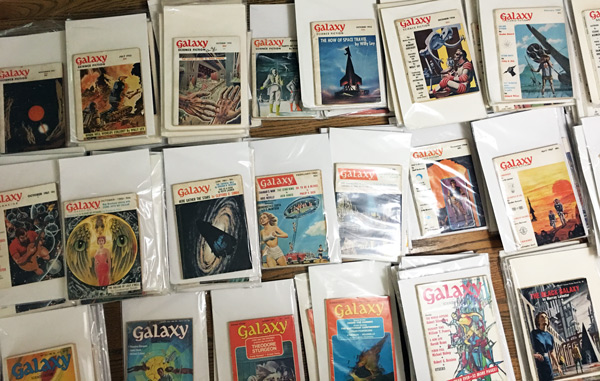
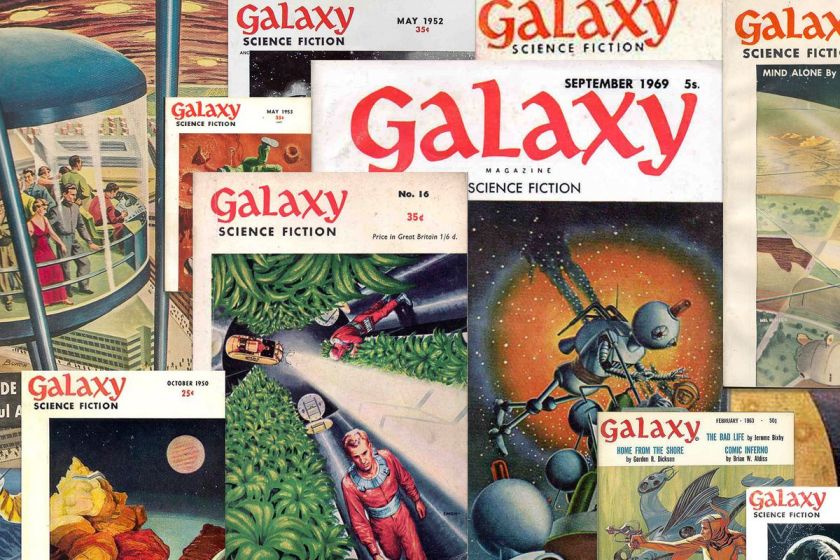
Then I saw three lots of Galaxy Science Fiction on sale at eBay. I already have access to all its issues as digital scans, so I didn’t need reading copies. However, I decided it would fulfill my desire to own something historic. Of course, old science fiction magazines won’t be historic to 99.9999% of Earthlings, but among the people who know the history of science fiction magazines, they would be. There were 355 issues published between 1950 and 1976 and I got 165 of them, just under half. Quite a purchasing coup.

One reason I even checked eBay to see if they were available is that I’m reading, Galaxy Magazine: The Dark and the Light Years by David L. Rosheim. And I read it because I just finished reading The Way the Future Was a memoir by Frederik Pohl who edited Galaxy in the 1960s. Between those two books and other science fiction histories I’ve been reading, I know how important Galaxy Science Fiction was to the genre in the 1950s and 1960s. I started reading Galaxy in the mid-1960s and had collected many back issues then. By 1971 I was even trying to collect the earliest science fiction magazines. My first purchase of pulps was four issues of Amazing Stories from 1928. Amazing Stories began in April 1926 and was the first science fiction magazine. In 1975 I sold all my magazines and decided not to collect anything anymore. Owning objects is a burden, especially stuff that takes a lot of movers to relocate.

In the last couple of years, I’ve rekindled my love of old science fiction magazines but I’ve satisfied my need for them with digital scans I get off the internet. If I hadn’t seen that program about Galileo I doubt I would have had that hunger to own something old. But it’s given me great delight to bid for them on eBay and win the bid. And it’s been big fun going through the issues. But I now realize I’m in the same situation as big-time collectors of rare books – how do I protect and preserve my pieces of history?

I got these Galaxy magazines pretty cheap, so they aren’t precious. But they are historical in a tiny way, and they are disappearing. Most people throw away magazines. I bet my wife will throw these magazines away when I die. I’ll need to make a provision in my will to give them to someone who will cherish them too. However, I would assume such people would also be dying out, but a few lovers of old magazines are born in every generation.

On Facebook, Twitter, and eBay I meet people who collect much older magazines. Today I met a young man online who collects 19th century Dime Novels. If these issues of Galaxy are preserved, there will be a handful of people in the 22nd century that will want them. I could increase their value if I would track down and buy all the other issues too. I might, but I’m already feeling the burden of their weight on my Buddhist soul. I will probably enjoy these issues for a couple years and then sell them.

Even if I could afford a copy of Sidereus Nuncius, I doubt I’d want to own it long. Old stuff really belongs in museums and libraries so everybody can enjoy them.

Galaxy magazines from The Verge

JWH (Happy Birthday Jim Connell)